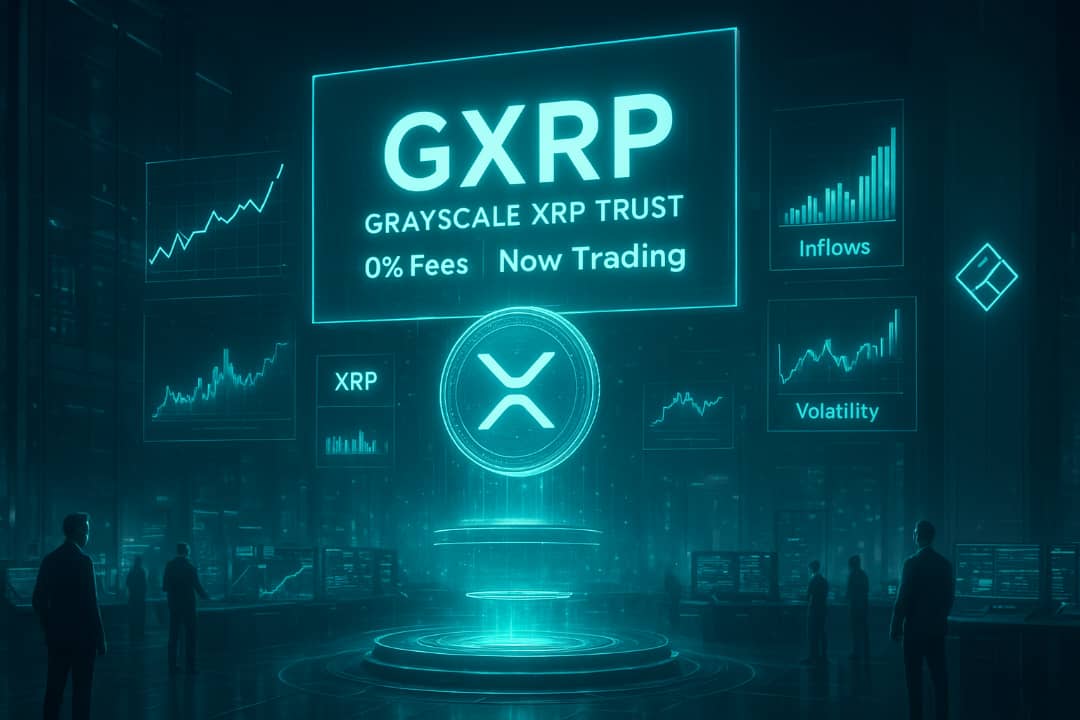
Grayscale has officially launched the Grayscale XRP Trust ETF (ticker: GXRP), opening a new door for institutional and retail investors seeking direct market exposure to one of the most established digital assets in the world. The product now trades with 0% fees for its first three months of activity on up to the first $1 billion in assets, giving early investors an incentive to enter the market while GXRP begins price discovery among brokerage accounts. Grayscale, the world’s largest crypto-focused asset manager by assets under management as of October 31, 2025, expands its ETF lineup at a time when interest in digital assets continues to increase. GXRP gives investors a new, regulated pathway to gain exposure to XRP, currently the world’s 3rd largest digital asset by market capitalization, excluding stablecoins, as of November 19, 2025. But even with these advantages, investors should note that GXRP operates differently than traditional ETFs. The fund is not registered under the Investment Company Act of 1940, meaning it does not carry the same regulatory protections or requirements as 40 Act-registered products. Investing in GXRP carries significant risk, high market volatility, and the possibility of losing the original invested principal. The fund itself does not hold XRP directly on behalf of investors, and owning GXRP is not the same as owning XRP directly. While GXRP makes exposure easier, every share also comes with the risks typical of the crypto markets. Fee Waiver Designed to Fuel Early Adoption The early launch strategy signals how aggressively Grayscale plans to capture market share in the XRP investment category. GXRP trades with a 0% gross expense ratio during the first three months or until the product reaches $1 billion in assets under management. After this period or threshold, the fund moves to a 0. 35% fee. Brokerage costs and other trading expenses may still apply. Grayscale has positioned the waiver as a way for investors to experience the product without immediate management costs, appealing to both crypto-native traders and traditional investors entering the market for the first time. This strategy mirrors recent ETF launches across other top blockchains, where low introductory fees help build early liquidity and tighten spreads. New XRP ETFs Expand Institutional Access GXRP’s debut comes alongside a wave of new XRP investment products, including recent ETFs launched by Franklin Templeton. The sudden expansion in institutional investment vehicles marks a turning point for XRP’s market structure. Until now, most professional exposure to XRP required direct holdings, private trust investment, or bespoke asset management arrangements. The ETF format changes that dynamic. The availability of multiple XRP ETFs gives institutional desks, RIAs, hedge funds, and retail brokerage investors standardized exposure to XRP price movement. Orders run through traditional trading rails, clearing firms, and account structures investors already use. This change lowers onboarding friction and increases the likelihood of XRP becoming part of wider portfolio construction, diversification strategies, or digital asset allocation models. Market participants are now watching whether increased institutional flow can sustain XRP’s recent streak of outperformance. The broader crypto market posted roughly 11. 1% growth in daily movement, but XRP outpaced that performance, continuing a trend that has strengthened in recent days. XRP Maintains Strong Category Positioning XRP continues holding firm positioning within the Layer-1 ecosystem. The asset ranks 4th among major Layer-1 blockchains for daily performance, showing strong relative strength even as overall sector volumes remain uneven. XRP is outperforming the Layer-1 category by roughly 12. 8% over the past 24 hours, pushing more traders to take notice. Interestingly, this performance comes despite lower trading volume compared to the market average of 35. 8%. Typically, strong growth during periods of softer volume signals one of two dynamics: either buy-side liquidity is driving upward pressure, or supply is thinning as traders hold, waiting for higher prices. Both interpretations suggest a market environment where price moves could become more pronounced if volume increases. This is where ETFs like GXRP enter the picture. If institutional demand arrives in size through ETF channels, volume could expand rapidly. That flow could replace what the exchange market currently lacks and help strengthen price stability as more capital enters through brokerage accounts rather than direct crypto markets. ETF Structure Highlights the Shift in Crypto Market Maturity GXRP’s launch shows how quickly digital asset markets are moving toward traditional financial frameworks. Investors no longer need crypto exchange accounts, private keys, or direct on-chain exposure to participate in XRPs price movement. Instead, they can trade the fund directly in brokerage accounts, retirement vehicles, or financial advisory platforms. However, investors must evaluate the differences carefully. GXRP is an exchange-traded product, but not one registered under the Investment Company Act of 1940. That means it does not carry the same regulatory oversight, governance conditions, liquidity requirements, or investor protections that traditional mutual funds and ETFs are required to provide. It also means market performance will reflect XRP price exposure without the operational structure of standard 40 Act products. Crypto ETFs often bridge a gap: they simplify exposure but also require investors to accept the volatility and regulatory differences of digital assets. With XRP known for large price swings, GXRP will likely reflect those dynamics directly in its share price. What Investors Should Watch Next The big question now is how much institutional capital these new ETFs can attract. If inflows scale, they could provide XRP with a steady foundation of long-term market participants, offsetting the lower average trading volumes currently seen across exchanges. If inflows remain slow, XRP could see its price movement weaken against broader market trends, particularly if larger Layer-1 assets draw more trading volume. Investors should monitor: Early AUM growth in GXRP and competing XRP ETFs Whether volume increases in brokerage-driven trading Correlation between ETF inflows and price momentum Market liquidity changes if institutional interest accelerates Grayscale’s launch campaign, including posts from the company’s official channels on X, positions GXRP as a milestone product. With adoption trending up, digital assets increasingly integrated into traditional financial systems, and XRP maintaining strong performance against peers, the coming weeks could define how powerful ETF demand becomes as a market story. As with all investments, especially in digital assets, investors should read the fund’s prospectus carefully and weigh their risk tolerance before participating. The crypto market moves fast, and XRP’s new institutional era now begins in full view of the industry, regulators, and traders worldwide. Disclosure: This is not trading or investment advice. Always do your research before buying any cryptocurrency or investing in any services.
https://themerkle.com/grayscale-xrp-trust-etf-launch-signals-new-phase-for-institutional-xrp-access/
Grayscale XRP Trust ETF Launch Signals New Phase for Institutional XRP Access
Be First to Comment