
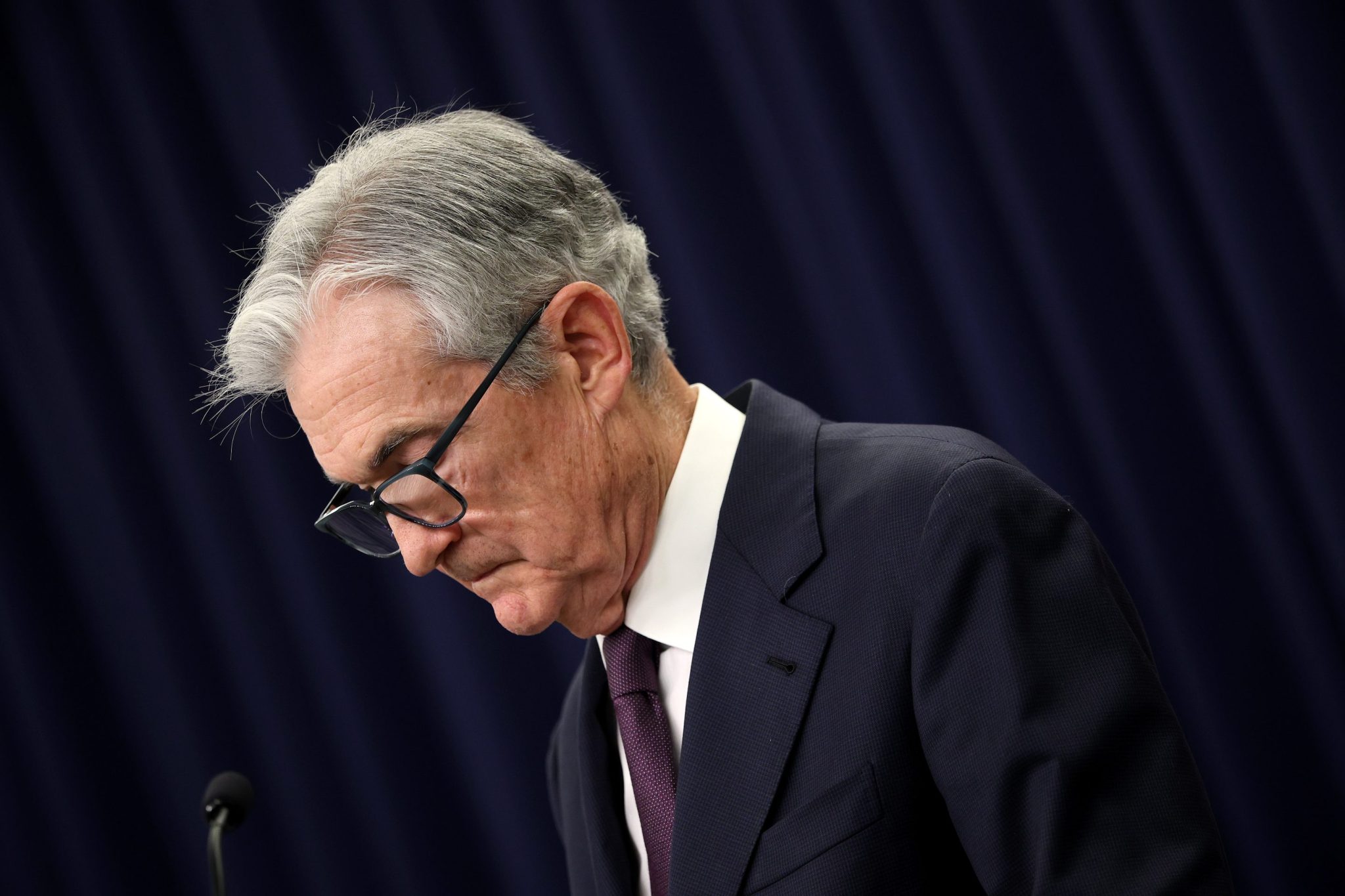
After two earlier cuts, recent comments from policymakers have been leaning hawkish as inflation remains stuck above the Fed’s target, dampening hopes for more easing at the Federal Open Market Committee’s Dec. 9-10 meeting. But New York Fed President John Williams surprised Wall Street on Friday when he said he sees “room for a further adjustment in the near term” to bring benchmark rates closer to neutral. That boosted odds for rate cut next month above 70% from less than 40% the day before, while also sparking a broad stock market rally. But it also potentially sets up some tricky math on the 12-member FOMC. In a note on Friday, economists at Capital Economics attempted to count votes. The four regional Fed bank presidents on the committee-Susan Collins, Austan Goolsbee, Alberto Musalem and Jeffrey Schmid-have sounded skeptical or “downright hostile” to the idea of a rate cut next month. Fed governors Michael Barr and Phillip Jefferson have also signaled caution. On the dovish side, the three Trump-appointed Fed governors-Michelle Bowman, Stephen Miran and Christopher Waller-have been calling for rate cuts, and Williams sounded Friday like he could join them. “That’s still only four ayes in favor of a cut and six nays against but, to the extent that Williams and Fed Chair Jerome Powell often hold the same view (and Governor Lisa Cook usually votes with Powell), we could have a six-six tie,” Capital Economics said. “Then things would get really messy since it’s not clear that Powell has a casting vote, so the vote to change policy might simply fail to be carried.” The Labor Department’s September jobs report released on Thursday after being delayed by the government shutdown is unlikely to tip the scales. That’s because the mixed data showed payrolls grew by more than expected, but prior months were revised lower with August now showing a decline. The unemployment rate also ticked up to 4. 4%, the highest since 2021, from 4. 3%. Separate data on weekly jobless claims still don’t indicate a spike in newly unemployed people, but the steady rise of continuing claims means jobs are difficult to find. What if there’s a tie vote on the Fed? There has never been a tie vote at the Fed, and the FOMC’s rules and procedures don’t discuss such a scenario. Robert Eisenbeis, who previously served as director of research at the Atlanta Fed, told Fortune earlier this year that in the event of a tie vote, the federal funds rate would stay the same. It’s also not clear if policymakers would take another vote during that same meeting or wait until the next scheduled meeting to vote. “There is no precedent here,” Eisenbeis said in August. “I would presume there would be the option for a revote, but if not, then no change in the funds rate. If there is no change in the rate, then the next meeting is where another review and vote would take place.” While the Fed has never had to deal with a tie vote, it has come close a few times. According to a July note from Christopher Hodge, chief U. S. economist at Natixis CIB Americas, there have been three occasions when a decision on the FOMC passed by a one-vote majority, though the last time it occurred was in 1973. Still, the chair has significant authority in guiding meetings and decisions, he said, noting that the FOMC is also a self-governing committee that has the ability to alter its rules. “In the absence of an explicit tie-breaking rule, the chair is generally understood to have the ability to cast a deciding vote or guide the committee toward resolution, as is common in other deliberative bodies with a presiding officer,” Hodge explained in August. “This is not made explicit in any document I have seen and is more of a custom than a rule.” If there’s a tie at the Fed, investors might look to the U. K. for guidance. The Bank of England had to navigate a historic deadlock this summer after four policymakers voted to keep rates steady, four voted to cut by a quarter point, and one voted to cut by a half point. That prompted the bank’s Monetary Policy Committee to hold a decisive revote for the first time since it was created in 1997. The subsequent 5-4 decision lowered rates a quarter point to 4% from 4. 25%.
https://fortune.com/2025/11/22/fed-rate-cut-outlook-fomc-meeting-tie-vote-jerome-powell-john-williams/
Tag: federal open market committee
Fed Governor Miran Calls for 50 bps Rate Cut in December
Federal Reserve Governor Stephen Miran has called for a 50 basis point rate cut at the Federal Reserve’s December meeting, stating that a 25 basis point reduction should be the minimum. Speaking in a CNBC interview, Miran emphasized that the central bank needs to act based on future economic projections rather than solely on current data.
Miran has been the sole dissenter on the Federal Open Market Committee (FOMC) this year. He voted against the smaller 25 basis point cuts implemented at both the September and October meetings, advocating for larger reductions. He pointed to signs of weakness in both inflation and employment, urging policymakers to focus on where the economy will be in 12 to 18 months, as monetary policy changes typically take over a year to fully impact the economy. “If you’re making policy for what the data are now, you’re backward looking,” Miran explained.
Market expectations currently favor another rate cut in December. According to CME FedWatch data, there is a 62.6% probability of a 25 basis point reduction at the December 10 FOMC meeting. Meanwhile, there is a 37.4% chance that rates will remain unchanged.
### Split Among Fed Officials
Federal Reserve Chair Jerome Powell has made clear that a December rate cut is not guaranteed. Fed officials remain divided on whether to hold rates steady or ease further. Some are concerned about persistent inflation, while others are focused on signs of a softening labor market.
San Francisco Fed President Mary Daly highlighted the need for an open mind ahead of the December meeting. In an essay, Daly pointed to the shifting balance of risks between inflation and labor market conditions. She noted that although inflation has gradually declined, it remains elevated, while the labor market has softened significantly this year. While Daly did not specify her stance on the upcoming decision, her comments suggest she is weighing both sides of the debate.
### Divergent Views on the Pace of Policy Easing
Fed Governor Chris Waller supports further rate cuts but believes that the Fed’s current pace of quarter-point reductions is appropriate. Unlike Miran, Waller does not see the need for larger cuts at this time.
So far this year, the Fed has cut interest rates twice, each by 25 basis points—once in September and again in October. The October reduction, made just two weeks ago, set the stage for December’s meeting to be a critical decision point for the central bank’s monetary policy.
Miran acknowledged that his position could change depending on new economic data. He noted that information released between now and the December meeting could influence his views.
### Looking Ahead to December 10
Market odds for a December rate cut have declined slightly in recent days but still remain above 60%. The FOMC meeting on December 10 will be a decisive moment, as Fed officials review fresh economic data before determining whether to implement a third rate cut this year.
As the Fed weighs the complex balance between controlling inflation and supporting employment, investors and observers will keenly watch for signals on the central bank’s next move.
https://coincentral.com/fed-governor-miran-calls-for-50-bps-rate-cut-in-december/