Secrets of the stars ahead of the Oscars: Picture perfect poses, the right dress and more

NEW YORK – The Oscars represent the ultimate intersection of film and fashion, where hard work is rewarded, and unforgettable red carpet moments are made. Each moment is etched into history with one statue and one photograph at a time.

Entertainment reporter Joelle Garguilo set out to uncover some of the secrets stars rely on when preparing for an award show like the Oscars.

Dr. Dendy Engelman of the Shafer Clinic revealed that she has been treating several people attending the Oscars and has been busy for the last six months. “People are getting ready, you know, they’re doing body toning, they’re doing skin tightening,” Engelman said.

She also shared insights into what her celebrity clients often say when they come in. “I need to look perfect without looking done, head to toe perfection, you would be shocked,” Engelman explained.

When asked about the most requested treatment currently, Lucia Miranda from the Shafer Clinic said, “The tight jawlines with the Everest, get them snatched and lifted, and the best thing is I can do it, and they can walk to get their makeup done right away.”

In addition to facial treatments, the team focuses on muscle building and body toning to help clients look their best for the big night.

Regarding the dresses, the days of picking a gown off the rack are long gone. Designers like Natalie De’Banco of Bronx & Banco work closely with celebrities and their stylists to create custom looks — often up until the last minute. De’Banco has dressed stars such as Beyoncé, Jennifer Lopez, and Miley Cyrus.

When asked about her typical preparation time, De’Banco said, “A month if you are lucky. So if you came to me and you asked for a red carpet gown, that’s basically what we create.”

As photos of the stars flood social media immediately after the event, De’Banco emphasized that this kind of exposure is priceless marketing. “In today’s digital age, you have to know how to make it all work when the cameras are flashing.”

That’s where image consultant and posing instructor Britney Hayles comes in. “Practice makes perfect,” Hayles said. “Looking at the cameras in front and to the side. And when you’re done posing, you have a little wave.”

While some secrets of the stars are meant to be shared, one lesson remains clear: looking effortless on the red carpet takes a tremendous amount of effort behind the scenes.
https://abc7.com/post/oscars-red-carpet-what-takes-celebrities-get-picture-perfect-hollywoods-biggest-night/18685769/


Sea levels are already higher than we thought, according to new calculations

For decades, California has been bracing for the sea. Communities from Pacifica to Imperial Beach have grappled with seawalls, buyout programs to relocate residents away from vulnerable shorelines, and the politically charged debate surrounding “managed retreat.”

Now, a new study suggests that many of these plans may have been built on a shaky foundation.

### New Research Challenges Existing Sea-Level Assessments

Published Wednesday in *Nature*, research conducted by Katharina Seeger and Philip Minderhoud at Wageningen University in the Netherlands reveals significant discrepancies in our understanding of current sea levels along coastlines worldwide.

The researchers analyzed 385 peer-reviewed studies on coastal flooding and sea-level rise published between 2009 and 2025. This sample included dozens of reports cited in the United Nations’ most recent major climate assessments.

They found that more than 90% of these studies made a fundamental error when measuring sea level relative to the land: instead of using actual, measured ocean heights, they relied on mathematical models known as geoids.

### What Are Geoids?

Geoids estimate where the ocean surface *should* sit based on Earth’s gravity and rotation. Essentially, they sketch a modeled ocean absent of tides, currents, winds, and temperature differences.

However, the real ocean does not conform to these assumptions. In some regions, this means the actual sea level could be several meters higher than previously believed, placing millions more people at risk of flooding.

### Corrected Estimates Reveal Greater Risk

After recalculating sea-level rise using corrected measurements, the researchers found that:

– Under a scenario of roughly 3 feet of sea-level rise, up to 37% more land could fall below sea level than current models predict.
– Between 77 million and 132 million additional people worldwide might be at risk of inundation.
– On average, real coastal sea levels globally are about one foot higher than prior models suggested.

### Regional Disparities Are Significant

Discrepancies were largest in lower-income regions such as parts of Africa, Southeast Asia, and the Pacific. These areas usually have fewer local tide gauges and rely heavily on geoids that perform poorly there.

For instance, in some parts of Southeast Asia and the Pacific, the difference between modeled and actual sea-level height exceeds 3 feet.

These regions are already among those most vulnerable to rising seas and associated risks.

By contrast, data-rich regions like Western Europe and the eastern United States showed smaller discrepancies, thanks to more robust local ocean monitoring.

### Implications for California and the U.S. West Coast

The study identifies the West Coast of North America — including California — as a region where sea levels have likely been underestimated.

Discrepancies along the Pacific Coast range from approximately 0.25 to 2 meters (about 10 inches to 6.5 feet).

These findings underscore the urgent need for updated assessments to ensure coastal cities are adequately prepared for the true scale of sea-level rise.

### The Urgency of Proactive Planning

Tidal flooding has already increased by over 550% in some California coastal cities since 2000. Current state recommendations plan for between 1 and 6.6 feet of sea-level rise by 2100, with some scenarios forecasting as much as 10 feet under the worst emissions conditions.

Existing reports estimate that a rise of just 20 inches could put $17.9 billion worth of buildings at risk statewide and threaten two-thirds of Southern California’s beaches with disappearance by century’s end.

However, these projections rely on the same hazard research called into question by Seeger and Minderhoud’s study. It remains unclear how updated assessments will change these risk estimates.

### The Politics of Coastal Planning

Los Angeles Times reporter Rosanna Xia has detailed how contentious coastal planning can be, with over 30 municipalities struggling to determine the best approaches.

Now, this new research adds another layer of complexity—one suggesting that many cities and residents may have consistently underestimated the severity of the problem.

### Looking Ahead

This study highlights how planning for a slow-moving, politically charged issue like sea-level rise is inherently complex and evolving. Unlike sudden disasters such as wildfires or earthquakes, sea-level rise demands long-term, adaptive strategies.

The key question moving forward is whether California’s planners and hazard assessments will catch up to the true scale of the threat posed by rising seas.

*Stay tuned for updates as researchers and policymakers respond to these new findings.*
https://www.latimes.com/environment/story/2026-03-06/sea-levels-are-already-higher-than-we-thought-according-to-new-calculations

Ciena Alipio emerging as key piece in UCLA’s championship push

Coming into her senior year, Ciena Alipio wanted to be as present as humanly possible and learn how to trust herself going into every competition. She set forth goals for herself and a bigger one for the UCLA gymnastics team. With the first box checked after clinching their second consecutive Big Ten title, the work toward meeting each of her standards is just beginning.

“You’re seeing the result of every hard practice that we’re having,” Alipio said after Friday’s victory over Maryland. “We’re putting in work and we’re doing what we absolutely have to every single day in the gym and I think it’s just putting it all together on the same day.”

After an unbeaten conference season, Alipio has not only transformed herself into a three-event staple in the lineup, but she was also among the 45 nominees for the 2026 AAI Award, along with her teammate Jordan Chiles—an NCAA honor given to the most outstanding senior female gymnast of the season.

“She’s just one of those athletes that’s really willing to do whatever it takes to be at her best for the team, and she’s an incredibly hard worker,” coach Janelle McDonald said. “She puts her heart into everything she does and she really has a growth mentality that she takes into every aspect of her life.”

During the first three years of her college career, Alipio was known as a balance beam expert. That fact hasn’t changed, except now she has added success on the uneven bars and the floor exercise. She’s currently ranked No. 4 in the nation on beam and leads the team with six individual titles in the event.

Against Nebraska in January, Alipio led the meet in the floor exercise. On her way to another Big Ten title, she has shown consistency by hitting all 23 of her routines without a fall. Alipio is averaging a mark above 9.800 on beam, bars, and floor exercise.

The two-time first-team All-American on beam has been named Big Ten event specialist of the week three times this season for her high performances on multiple apparatuses.

McDonald describes the Big Ten balance beam champion as a steady leader who leads by example, someone who’s willing to put her head down and go through the grind to get better—a valuable asset to any team.

“To see somebody always trying to show up and get better with that growth mindset is so great,” she said. “Ciena really has leveled up in her leadership in that she’s somebody that continually checks in on people.”

When Alipio notices someone needs a little pick-me-up, she’s there to support them, McDonald added. “She’s also just become a really great messenger of our team culture and just [continues] to build and tighten our culture where it’s needed and to step up in those moments when the team needs a leader.”

With two meets left in the regular season—against Stanford on Saturday and Utah on March 14, senior night at Pauley Pavilion—Alipio is just going to have fun competing.

“Coming in as a freshman I was like, ‘Oh, I have so much time,’ and now it has gone by in a blink of an eye,” she said. “But I’m really, really trying to just stay present for the next few weeks and just enjoy every single moment with this team.”

Meanwhile, McDonald and the coaching staff will take a conservative approach to dealing with Katelyn Rosen’s foot injury from Friday’s meet. Resting her and making sure she is 100% to go for the Big Ten championships is the priority.

Replacing her at the top of rotations is an ongoing conversation.

“We really look for that lead-off to be very steady,” McDonald said. “Somebody that doesn’t kind of go with the ups and downs of their emotions. They can show up, be really steady, kick off the event really aggressively, confidently and so those things we’re gonna be looking for this weekend [against Stanford].”
https://www.latimes.com/sports/ucla/story/2026-03-05/ciena-alipio-emerging-as-key-piece-ucla-gymnastics-championship-push

Satellite photos show California’s sudden snowpack meltdown: Now you see it, now you don’t

Just weeks after major storms brought snow to the Sierra Nevada, a winter heat wave has all but eliminated California’s snowpack gains. Satellite photos from NASA reveal the extent of this significant melting event, which took place in late February and early March.

“The extremely rapid loss of the snow that fell during the late February storm cycle, which in many cases dropped multiple feet of snow in the Sierra Nevada over just a couple of days, is genuinely remarkable,” said Daniel Swain, a climate scientist with UC Agriculture and Natural Resources, in an email to The Times.

The images below show the Sierra Nevada from space on February 22 (left) and then on March 3. In less than 10 days, the snowpack receded significantly amid a heat wave that pushed temperatures 15 to 20 degrees above normal across much of California.

As forecasters predict above-average temperatures for the coming weeks, Swain warned that snowpack losses are likely to continue.

California depends on the Sierra snowpack for approximately 30% of its water supply. However, this winter’s extreme warmth across the Western United States has resulted in more precipitation falling as rain rather than snow—a symptom of global warming, experts say. This trend has been pushing average snow lines higher in the mountains and altering the timing of runoff in recent years.

There are 130 monitoring stations across the Sierra Nevada providing electronic readings of the snowpack. Currently, the northern Sierra is at 38% of its average snowpack, while the southern Sierra stands at 83% of average. For comparison, on February 22, the southern Sierra was at 98% of normal.

Another set of images compares the Sierra on February 12 (left) and March 3. Despite heavy snow that blanketed the mountains between those dates, the snow levels had retreated back to early-February conditions by March 3.

Swain noted that although significant moisture remains in California’s mountains, the reduced snowpack is likely to impact the state’s water supply and increase wildfire risk later this summer.

“The very early loss of snowpack will effectively make the long, dry summer that much longer in the mountains,” he said.
https://www.latimes.com/california/story/2026-03-05/satellite-photos-california-snowpack-early-meltdown

U.S. vows to help bring home Americans stuck in Middle East as strikes continue

The Trump administration has stated that it “will not rest” until all Americans in the Middle East who wish to return are safely back in the United States.

This urgent effort to evacuate Americans comes amid escalating tensions, as Israel launched additional strikes in Tehran on Wednesday.

For more details, CBS News reporters Matt Gutman, Charlie D’Agata, and Nancy Cordes provide comprehensive coverage.
https://www.cbsnews.com/video/us-vows-help-bring-americans-stuck-middle-east-home-strikes-continue/

WATCH: Trump on Iran says U.S. ‘doing very well on the war front’

**Trump on Iran: U.S. ‘Doing Very Well on the War Front’**

President Trump addressed the situation in Iran on Wednesday, expressing confidence about the United States’ stance. He stated that the U.S. is “doing very well on the war front.”

This remark comes amid ongoing tensions between the two nations, highlighting the administration’s perspective on the current geopolitical climate. Further developments are expected as the situation continues to evolve.
https://abcnews.com/US/video/trump-iran-us-war-front-130768795

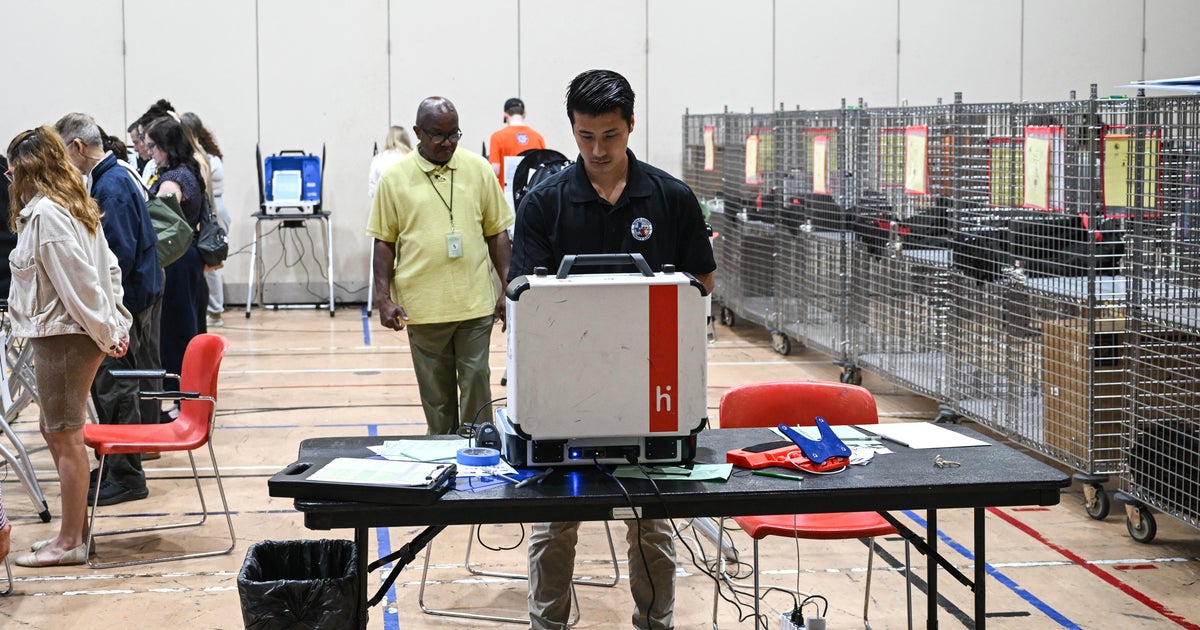
Voting nears to a close in Texas primary that may be crucial to control of the Senate

Two of the most closely watched contests this election night are the primary races for a Senate seat in Texas, currently held by Sen. John Cornyn. Both the GOP and Democratic primaries serve as potential litmus tests for the direction that base voters want their parties to take ahead of the midterm elections this fall, which will determine control of Congress.

Cornyn, a conservative stalwart, is hoping to fend off two main challengers: Ken Paxton, the state’s often embattled attorney general, and Congressman Wesley Hunt. Both challengers argue that they are more closely aligned with former President Trump and the current trajectory of the Republican Party, which has continued a rightward shift over the past decade.

Cornyn, who has held the Senate seat since 2002, has consistently voted in favor of the president while in office. To win the primary outright, a candidate must secure more than 50% of the vote. Since all three candidates have garnered significant support in the polls, it is likely the race will be settled by a runoff in May.

If Cornyn were to lose the primary, the absence of an incumbent could create a unique opportunity for Democrats. They are aiming to flip enough Republican-held seats in the Senate to regain the majority.

On the Democratic side, Congresswoman Jasmine Crockett and James Talarico, an Austin-area state lawmaker, are competing to secure the nomination. Crockett announced her Senate bid after Texas Republicans redrew the state’s congressional lines at Trump’s urging last year. She was among several Democrats effectively drawn out of their districts, which had previously favored the Democratic Party.

Crockett attracted significant attention during her time in Congress for her willingness to verbally spar with Republican colleagues. Her decision to run shook up a primary race that Talarico was already contesting.

Talarico was first elected to the Texas House in 2018 after flipping a seat that had long been held by Republicans. As a seminarian, he often invokes his faith in hopes of connecting with voters that the Democratic Party does not frequently reach.

Initially, the race between Crockett and Talarico was cordial. However, as Election Day approached and more money and attention poured into the contest, tensions between the two candidates grew, despite their agreement on most issues and policies.

The primary divide between them centers on strategy: Talarico aims to win over moderates and disenchanted Republicans, while Crockett is betting on boosting turnout among Democrats to secure victory.

Additionally, this Senate race could provide insight into whether Republicans are maintaining the gains they made with Latino voters—an increasingly influential demographic in Texas—during the 2024 election. Recent polling suggests that Latino voters in Texas, as well as nationwide, are beginning to distance themselves from the Republican Party due to concerns over the economy and immigration enforcement.
https://www.npr.org/2026/03/03/nx-s1-5734515/texas-primary-election-results-james-talarico-jasmine-crockett-john-cornyn-ken-paxton

Polls start closing in today’s primaries in Texas, North Carolina and Arkansas

Voters in three states are heading to the polls Tuesday in a series of primary elections that mark the start of the 2026 midterm cycle. These primaries could highlight internal debates within both the Democratic and Republican parties over their future direction.

**Polling Hours and Extensions**

Polls closed at 7:30 p.m. ET in most of North Carolina. However, the North Carolina State Board of Elections announced on social media that voting would be extended by one hour at a Halifax County voting site due to delays Tuesday morning. As a result, no primary results will be available until polls close at 8:30 p.m.

In Texas, polls will close at 8 p.m. ET across most of the state. However, polls in the westernmost part of Texas will close at 9 p.m. ET, and Dallas County polls will remain open until 10 p.m., delaying the release of primary results from those areas.

Arkansas polls are scheduled to close at 8:30 p.m. ET.

**Political Stakes**

The primaries come at a critical time, as Democrats aim to retake control of both the House and Senate, while Republicans strive to maintain or possibly expand their slim majorities. Historically, the party holding the White House tends to lose seats in the House during midterm elections, posing challenges for Republicans. Meanwhile, Democrats face a difficult Senate map this cycle.

**Key Races in Texas**

In Texas, longtime incumbent GOP Senator John Cornyn is fighting to retain his seat amid competitive primary challenges. Attorney General Ken Paxton has questioned Cornyn’s conservative credentials, while Representative Wesley Hunt has criticized him as a “career politician.”

On the Democratic side, voters will choose between state Representative James Talarico and U.S. Representative Jasmine Crockett. Both candidates are vying to become the first Democrat to win a statewide race in Texas since the mid-1990s.

Several Texas House districts also feature competitive primaries. GOP Representative Tony Gonzales faces a repeat challenge from hard-right gun advocate Brandon Herrera. This race has been complicated by recent allegations surrounding Gonzales, including an affair with a staffer who later died by suicide.

Republican Representative Dan Crenshaw is also defending his seat against a primary challenge from state Representative Steve Toth.

Among Democrats, Tejano musician Bobby Pulido competes against emergency physician Ada Cuellar for the party’s nomination in the heavily GOP-leaning 15th district. Additionally, 11-term incumbent Representative Al Green faces newly elected Representative Christian Menefee in a Houston-area district reshaped by last year’s redistricting.

**North Carolina Highlights**

In North Carolina, former Democratic Governor Roy Cooper and former Republican National Committee Chair Michael Whatley are running for their parties’ Senate nominations. This race is viewed as one of the most hotly contested Senate primaries in the country, with Republicans aiming to hold onto the seat.

The GOP nomination in North Carolina’s 1st House district is also highly competitive. The district was recently redrawn, making it more challenging for Democrats.

These primaries set the stage for a competitive and closely watched 2026 midterm election cycle as both parties aim to define their paths forward. Stay tuned for updates as results come in throughout the evening.
https://www.cbsnews.com/news/texas-north-carolina-arkansas-primaries-polls-close-2026-midterms/

Prediction Market Ban? Senator Brings Legislation Forward, Another Congressman Invests In Polymarket Backer

Prediction Markets Surge Amid Regulatory Debate and ICE Stock Activity

Prediction markets have surged in popularity over the last year, potentially disrupting traditional sports betting companies. However, their growth has also sparked controversy, particularly following the recent U.S. attack on Iran. At least one senator is calling for a ban on certain types of prediction markets, raising questions about the future of this emerging industry.

### Senator Takes Aim at Prediction Markets

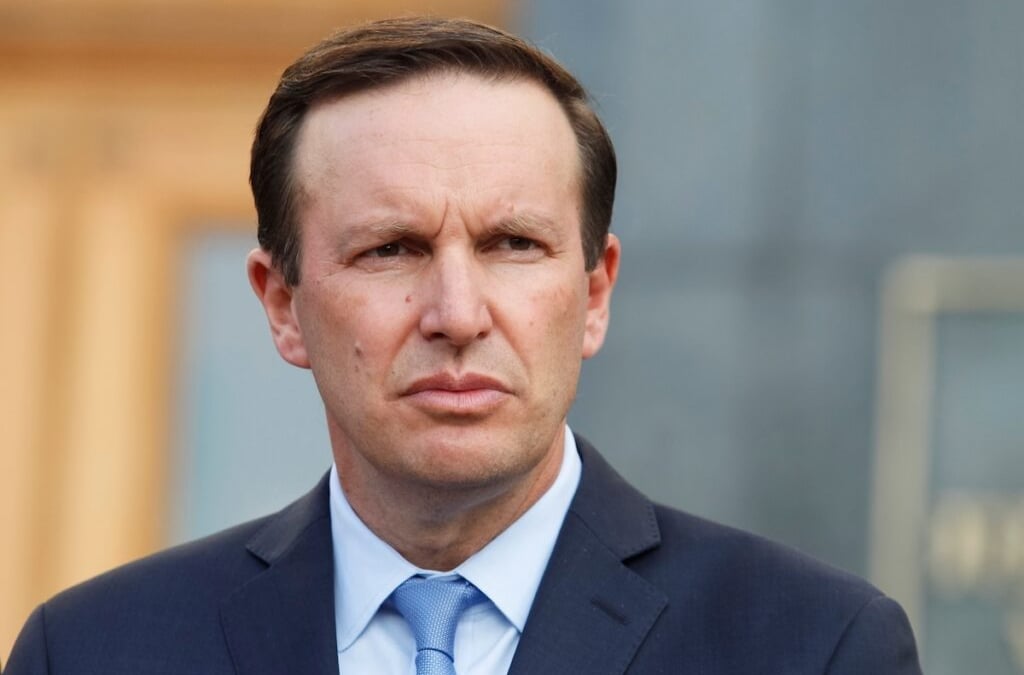
Senator Chris Murphy (D-Conn.) recently announced plans to introduce legislation aimed at outlawing certain forms of betting on prediction markets. His announcement came in response to some accounts reportedly making millions by correctly predicting the timing of the U.S. attack on Iran.

Highlighting concerns over potential insider trading, Murphy stated on social media, “It’s insane this is legal. People around Trump are profiting off war and death. I’m introducing legislation ASAP to outlaw this.”

Prediction markets have become a focal point of regulatory discussion. The current White House administration appears more supportive of these platforms, allowing companies like Polymarket and Kalshi to operate with relatively minimal restrictions. Notably, Donald Trump Jr., the son of former President Donald Trump, is an investor and advisor to Polymarket, adding further complexity to the debate.

### Congressman Invests in Intercontinental Exchange Shares

Intercontinental Exchange (ICE), best known as the parent company of the New York Stock Exchange, stands to benefit from the rising popularity of prediction markets, including platforms like Polymarket.

In a recent disclosure, Representative Josh Gottheimer (D-N.J.) revealed a purchase of ICE stock valued between $1,000 and $15,000. This purchase was among six stock transactions he made in January, according to the Benzinga Government Trades page. With this investment, Gottheimer has become an investor in a company that could profit from prediction market growth, particularly those relating to geopolitical events such as Iran.

This development may set up a clash within the Democratic majority between Gottheimer and Senator Murphy regarding the regulation of prediction markets. While Gottheimer may have various reasons for investing in ICE, the connection between Polymarket and the company’s future valuation cannot be overlooked.

Gottheimer is not alone among members of Congress investing in Intercontinental Exchange. Senator Markwayne Mullin (R-Okla.) and Representative Thomas Kean (R-N.J.) both purchased ICE shares in 2025 and continue to hold them as of today.

*Photo credit: Sen. Chris Murphy via Shutterstock*
https://www.benzinga.com/news/politics/26/03/50989521/prediction-market-ban-senator-brings-legislation-forward-another-congressman-invests-in-polymarket-

Justin Timberlake sues to block release of police video from 2024 drunken driving arrest in New York

**Justin Timberlake Sues to Block Release of Police Body Cam Footage from Hamptons Drunken Driving Arrest**

*NEW YORK —* Pop star Justin Timberlake is suing to block the release of police body camera footage related to his 2024 drunken driving arrest in New York’s Hamptons.

Timberlake’s lawyers filed a lawsuit Monday against the Village of Sag Harbor and its police department, arguing that releasing the video would “devastate” Timberlake’s privacy by revealing “intimate, highly personal, and sensitive details.” They also contend that it would cause “severe and irreparable harm” to his reputation by subjecting him to “public ridicule and harassment.”

“The footage at issue depicts Petitioner in an acutely vulnerable state during a roadside encounter with law enforcement, capturing intimate details of Petitioner’s physical appearance, demeanor, speech, and conduct during field sobriety testing, the subsequent arrest, and Petitioner’s confinement following arrest over the next several hours,” the lawsuit states.

A hearing was held Monday in state court in Riverhead, but Judge Joseph Farneti did not issue an immediate ruling, according to Vincent Toomey, a lawyer representing Sag Harbor. Instead, the judge asked both parties to confer on a potential resolution and report back later in the week.

Timberlake’s lawyers have not yet responded to emails seeking comment.

The NSYNC singer turned solo artist and actor pleaded guilty to impaired driving in September 2024. Police reported that Timberlake ran a stop sign in the village center, veered out of his lane, and exited his BMW smelling of alcohol that June.

The Tennessee native told officers he had consumed one martini and was following friends home in Sag Harbor—a former whaling village among the affluent beach communities of the Hamptons, about 100 miles east of New York City.

As part of his plea deal, Timberlake agreed to give a public safety announcement warning against the dangers of drunken driving. This agreement reduced his initial misdemeanor charge to a noncriminal traffic violation.

He was sentenced to a $500 fine, 25 hours of community service, and a 90-day suspension of his driver’s license.

“Even if you’ve had one drink, don’t get behind the wheel of a car,” Timberlake said following his court appearance. “This is a mistake that I made, but I’m hoping that whoever is watching and listening right now can learn from this mistake. I know that I certainly have.”

According to the lawsuit, Timberlake’s legal team was informed Sunday that village officials intended to release portions of the footage with some redactions to comply with public records requests. The total footage reportedly runs approximately eight hours and includes Timberlake’s initial stop, police questioning, field sobriety tests, and arrest.

The Associated Press was among several media outlets that submitted public records requests seeking the release of the video.

Sag Harbor Mayor Thomas Gardella stated that village officials have carefully reviewed the footage to ensure it does not jeopardize police safety or public security.

“We’re trying to be as transparent as can be with this footage,” Gardella said, noting that New York’s public records law generally mandates the release of police body camera footage.
https://abcnews.com/Entertainment/wireStory/justin-timberlake-sues-block-release-police-video-2024-130697955

Exit mobile version
Sitemap Index