
**Boyertown Commemorates 118th Anniversary of 1908 Rhoads Opera House Fire**
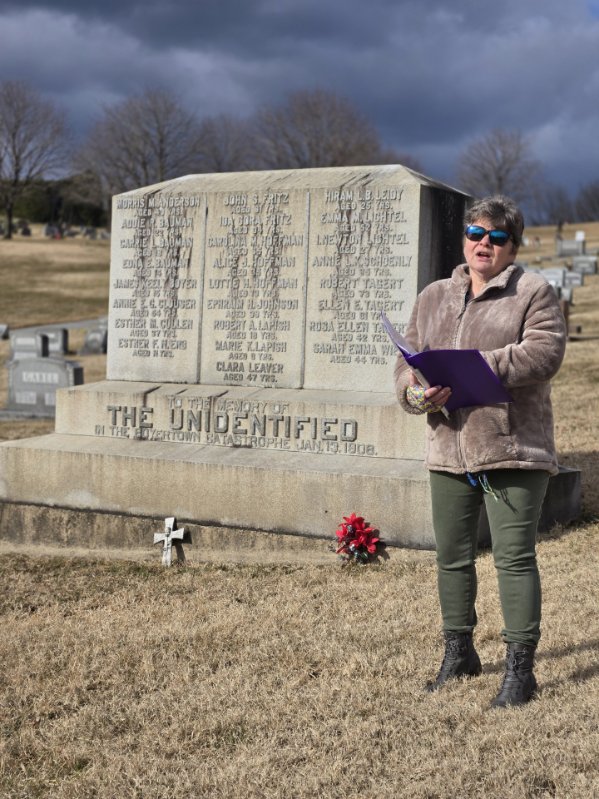
The Boyertown community recently came together to commemorate the 118th anniversary of the tragic 1908 Rhoads Opera House fire. The Boyertown Area Historical Society held a brief remembrance event at Fairview Cemetery on Sunday, January 11.
Despite cloudy skies and blowing wind, the moment the remembrance was about to begin, the clouds parted and sunshine illuminated the gathering. The fire, which occurred on January 13, 1908, claimed the lives of 170 people and played a significant role in changing fire safety laws nationwide.
During the event, Pastor Dave Beitler offered a prayer, and Chris Almendinger provided musical accompaniment. Several attendees joined to pay their respects to those who lost their lives in the tragedy over a century ago.
Luann Zambanini, treasurer of the Boyertown Area Historical Society, shared meaningful insights about some of the victims. She emphasized the importance of understanding the space on a tombstone between the birth and death dates as the time a person lived—filled with sunrises, sunsets, family events, picnics, and everyday joys. Zambanini believes in “bringing the person to life” by sharing stories about selected victims each year, encouraging everyone to remember more than just names and dates.
This year, she highlighted the history of Esther Erb, a 14-year-old girl who perished in the fire, and Martha Weber, a 10-year-old child who also lost her life. Martha was the daughter of the pastor of St. John’s Church in Boyertown, Rev. Adam Weber, who himself suffered severe burns in the fire. Tragically, Rev. Weber was unable to attend his daughter’s funeral or tend to his grieving congregation for several weeks following the disaster.
Zambanini explained, “We want the current and future generations in this area to know the town’s history. This is why we remember the fire each year — to honor those who died and those whose lives were forever changed.”
She also stressed the importance of fire safety awareness today: “We want future generations to understand that when they are in a public building, the exits are marked, and fire escapes are identified because of what happened in Boyertown back in January 1908.”
At the time of the fire, fire escapes were not legally required, although the Rhoads Building did have them. Unfortunately, they were unmarked, and most people did not know of their existence. Another critical safety flaw was that the exits opened inward, causing crowds to become trapped as they struggled to escape.
The Boyertown tragedy, along with a subsequent disaster at a school in Collingwood, Ohio in March 1908, prompted significant changes to fire safety laws. Thanks to these lifesaving regulations, which many now take for granted, thousands of lives have been saved over the past 118 years.
https://www.pottsmerc.com/2026/01/14/boyertown-area-historical-society-remembers-victims-of-1908-rhoads-opera-house-fire/