
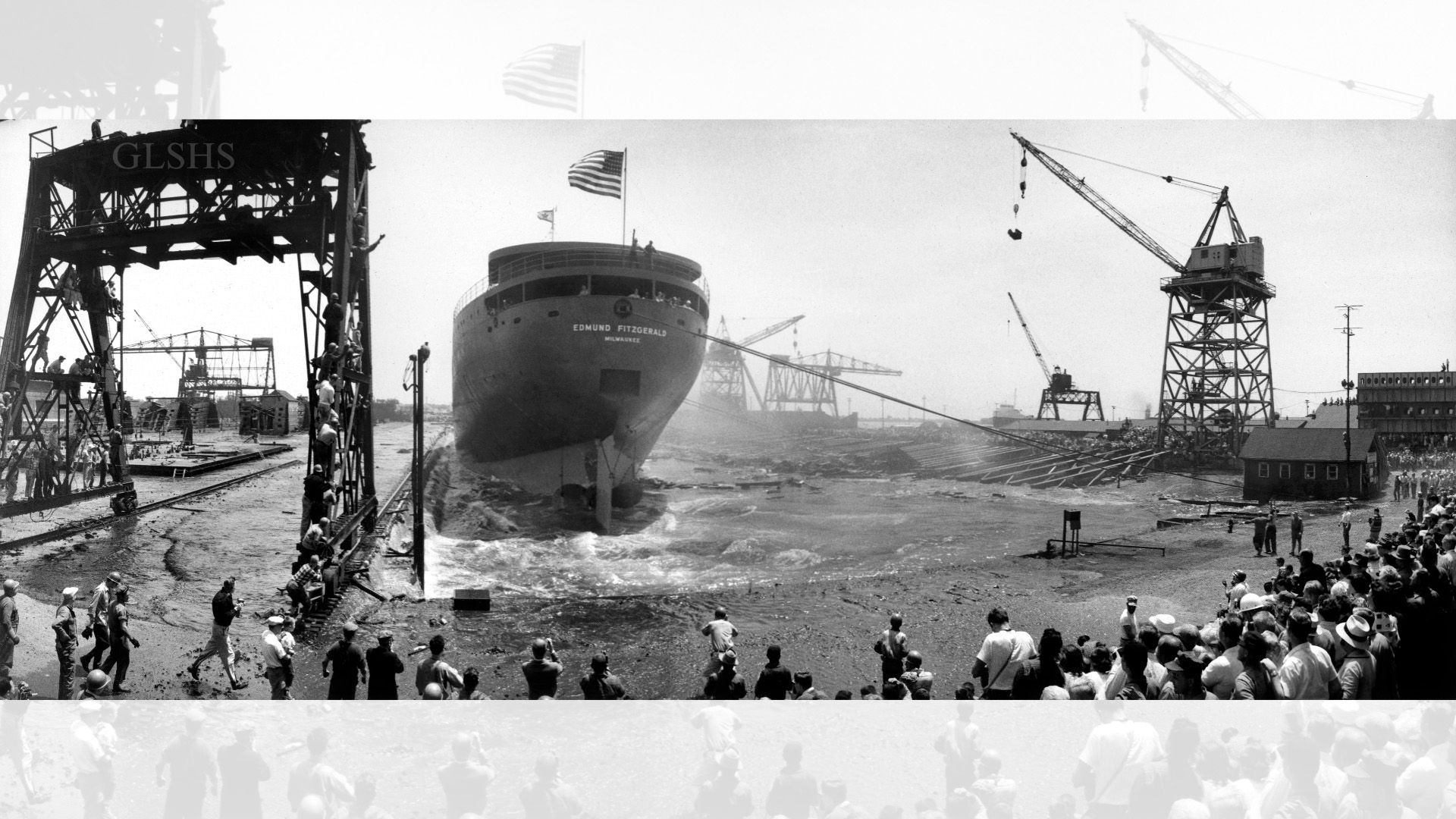
It was a calm and clear afternoon when the Edmund Fitzgerald left port in Superior, Wisconsin, on November 9, 1975. The enormous ship carried more than 26, 000 tons of iron ore in the form of taconite pellets for a journey to the steel mills of Detroit. In many ways, the trip was routine; the Fitzgerald had been traveling this route, from Lake Superior to Lake Huron to Lake Erie and back, for more than 15 years. But the cold waters of Lake Superior had a long history of taking ships down with severe and sudden storms. And the Fitz, by then, had been pushed hard, potentially harboring underlying damage, although that claim remains up for debate. With a storm approaching from the southwest, Captain Ernest M. McSorley steered the Fitz north toward the wind-blocking highlands on the Canadian shoreline before pivoting southeast toward the sheltered waters of Whitefish Bay, Michigan. Following close behind was another ship, the Arthur M. Anderson. The two captains-McSorley on the Fitzgerald and Bernie Cooper on the Anderson-stayed in contact by radio as the wind picked up early the next morning. By the afternoon of November 10, gusts of 90 mph were whipping snow into squalls. Waves swelled to the height of a two-story building and crashed over the ships with such magnitude that, Cooper would later say, up to 12 feet of water accumulated on his deck at times. Trouble began for the Fitz around 3: 30 p. m., when McSorley told Cooper that his ship had some damage: snapped railings on the deck and broken vents on ballast tanks, which could have been taking on water. The ship wasn’t exactly falling apart, but these were signs that the storm was taking a toll. The Fitz started listing to one side. Every time a swell rose, the Fitz dropped off the Anderson’s radar. Next, the Fitz’s radar malfunctioned. McSorley slowed his ship so the Anderson could catch up and keep an eye on it. The end came a few hours later, and it happened quickly. Cooper checked in with McSorley just before 7 p. m., after two huge waves had crashed over the Anderson’s bow before rolling toward the Fitzgerald. McSorley said he was holding his own. But at 7: 15 p. m., the Anderson’s radar lost the Fitz again. This time it never reappeared. The Fitzgerald was gone, along with all 29 crew members. Whitefish Bay was just 17 miles away. Fifty years later, the sinking of the Edmund Fitzgerald remains embedded in cultural memory, in large part because of the Canadian singer Gordon Lightfoot, who wrote a song about the ship’s final voyage that became a top 10 Billboard hit in 1976. (The haunting ballad’s popularity is so enduring that a character on the Apple TV+ show Severance whistled the melody on an episode earlier this year.) Along with many dozens of books, articles, documentaries, and expeditions to the wreck site-with more in the works-the song has helped make the Fitzgerald, like the Titanic, one of history’s most famous sunken ships. It is far from the only one. Thousands of other vessels have gone down in the Great Lakes in the last few hundred years, hundreds of them still undiscovered. Each one embeds untold stories, and a dedicated network of searchers are eager to find them before those stories are lost forever. When it comes to the Fitzgerald, there is one mystery in particular that has fueled years of debate and speculation. The massive ship wasn’t the only vessel on the lake that stormy November night. But it was the only one that sank, despite being built to withstand even worse conditions. It went down rapidly and without any survivors. What happened in those final minutes? The Edmund Fitzgerald was a feat of engineering when it launched in 1958. Commissioned by the Northwestern Mutual Life Insurance Company of Milwaukee and named after the company’s president, it was the longest ship moving through the Great Lakes at the time. At 729 feet, it was designed to just barely fit into the Soo Locks, which connect Lake Superior to Lake Huron through the St. Lawrence Seaway. Workers couldn’t close the main gate of the locks behind it, says Ric Mixter, a former television reporter and the author of Tattletale Sounds: The Edmund Fitzgerald Investigations. Mixter visited the wreck in a submersible in the 1990s and has been researching its demise for decades. “It was just a marvel,” he says. “It was a monster of a vessel.” The Fitzgerald’s rapid disappearance-with an experienced captain during a storm that was bad but not unusual by Great Lakes standards-raised questions from the very beginning. According to Mixter, the National Enquirer ran a story after the accident claiming that the crew had been abducted by aliens. “That’s how weird this was that nobody came off this wreck,” Mixter says. The search started before the night-or the storm-was over. As soon as the Anderson reached Whitefish Bay, the U. S. Coast Guard asked Cooper to go back to the site of the Fitz’s disappearance, where his crew found two lifeboats and some other debris but no signs of survivors or the huge ship. Over the next few days, the Coast Guard sent planes and boats equipped with sonar and magnetic anomaly detectors, according to the Great Lakes Shipwreck Museum. The search team found strong signs that the ship lay hundreds of feet under water. Then winter settled in. After six long, cold months, the search resumed in May 1976, when a Coast Guard crew used a system called side-scan sonar, which sends out an array of sound pulses, measures how long it takes for echoes to return, and then translates that time into distance as well as, in turn, a reconstructed image. Once the crew had pinpointed the location of what they suspected was the wreck, they sent down the U. S. Navy’s cable-controlled undersea recovery vehicle (CURV), a precursor to more modern remotely operated vehicles (ROVs). Over 56 hours of dive time, the CURV collected about 900 photographs and 43, 000 feet of videotape, revealing an upside-down stern marked with the words EDMUND FITZGERALD. Nearly two decades of speculation followed about what, exactly, went wrong. The official Coast Guard report, which was released in July 1977, and a report the following year from the National Transportation Safety Board, concluded that the ship most likely had gone down because of ineffective hatch closures that facilitated flooding of the cargo. That would have caused the ship to list and then sink. “The vessel dove into a wall of water and never recovered, with the breaking up of the ship occuring [sic] as it plunged or as the ship struck the bottom,” the Coast Guard analyst wrote. But the initial investigations were complicated by high-profile lawsuits. Families of the crew members sued Northwestern Mutual and the company it used to operate the ship. A lawyer uncovered rumors that the Fitz had been compromised before it set out and that McSorley knew it. Media reports sensationalized the story, Mixter says, leading to a settlement before the cases could go to trial. In his interpretation, this sequence of events prevented all the facts from coming out. To get to the bottom of what happened, there were government expeditions as well as independent ones. Jacques Cousteau’s son Jean-Michel explored the site in a submarine as a side excursion while he was in the Great Lakes area for other reasons in 1980. An ROV went down for the first time in 1989. Mixter was on a team that visited the site in 1994. During a submersible dive, he saw a screwdriver stuck in the mud and blankets hanging out of the ship’s windows, driving home the reality of all that was lost. Divers from the same expedition vessel who went down 30 minutes after he did spotted a body on the lakebed. The sailor wore a life jacket and coveralls. The number of headlines about the find rivaled those about the initial sinking of the ship, Mixter says. With cameras in their faces and a frenzy of reporters asking for comments, some families of the deceased crewmen became livid. A mother and a daughter led a fight for legislation to prevent diving to the ship-which officially lies in Canadian waters-without a permit. They won. Mixter says the Canadian government stopped issuing permits to look for the Fitz and later updated the law to exclude sonar, too. The seventh and last dive to the Fitz happened in 1995, when the Great Lakes Shipwreck Historical Society retrieved the ship’s 200-pound bronze bell, which served as alarm, timekeeper, and warning signal. (The bell is now on display in the Great Lakes Shipwreck Museum.) The only excavation that has happened since then has been in the form of books, documentaries, podcasts, and intense speculation about what exactly happened. The Great Lakes hold 21 percent of our planet’s surface freshwater, and those water bodies have hosted bustling shipping lanes for hundreds of years, according to the Wisconsin Historical Society. Since at least the 1600s, vessels have transported lumber, copper, grain, taconite, and other materials between ports around the Midwest. Shipping in the Great Lakes remains a valuable industry. As of 2023, according to an economic impact report by a private consulting firm, 241, 000 U. S. and Canadian jobs depend on maritime commerce along the Great Lakes Seaway System, which extends from Duluth, Minnesota, to Montreal, Quebec. Shipping in the region accounts for more than $36 billion in economic activity each year. Many cities on the route trace their origins to trading posts built during the early years of European settlement before railroads or major roads. The waterways were the highways. Navigating the Great Lakes can be dangerous, and it used to be more so. In the early days, vessels tended to be underpowered and overloaded, says Bruce Lynn, executive director of the Great Lakes Shipwreck Historical Society in Sault Ste. Marie, Michigan. Captains didn’t have the luxury of modern weather forecasting or current navigational and communication technologies like cellphones, GPS, and highly accurate radar, all of which could help them detect shallows or avoid collisions. Harbors can be dozens of miles apart from each other along rocky and sparsely populated shorelines, which means there is nowhere to make an emergency stop if you get into trouble. And back then, there was no easy way to call for help. Weather was-and still is-a major hazard, Lynn says. Storms can gather a lot of energy as they move over massive bodies of water. In Lake Superior-which reaches depths of 1, 300 feet and contains more water than all the other lakes combined and then some-waves that struck the Fitzgerald likely exceeded 25 feet, wrote researchers from NOAA’s National Weather Service in an analysis of the storm that swallowed the Fitz. November is an especially treacherous time of year, according to historical records and NOAA data. As fall turns to winter, arctic air blows in from Canada and Alaska, while warm air and moisture come up from the Gulf. These air masses meet over the Rockies, creating low pressure systems that ride the jet stream and pass over the lakes, where clouds build and storms intensify. Because the Great Lakes are enclosed basins, waves can pile up much closer together than ocean waves do, raising the risk that ships will slam into successive swells, strike the bottom in shallow areas between waves, or get swamped. Once trouble strikes, extremely cold water makes surviving a calamity in the Great Lakes difficult. Topography is an added complication-to both navigation and wreck hunting, says Travis White, a research engineer at Michigan Technological University’s Great Lakes Research Center in Houghton. The lakes are so big that it can be hard to fathom their size. Lake Superior alone is the size of Maine and gets as deep as the Empire State Building is tall. The lakes are full of submerged sea mounts, shoals, and bluffs that form sheer cliffs-all hidden underwater. In the depths of the lakes, White adds, you can’t see the bottom from a plane, satellite, or ship without equipment. As famous as the Fitzgerald is, it is far from the only ship that has succumbed to these hazards, says Brendon Baillod, a maritime historian and president of the Wisconsin Underwater Archaeology Association. Although not a Fitzgerald expert, he has spent decades digging through historical records to help produce a database of other stories like it that are far more overlooked. With help from collaborators, he has documented about 6, 000 losses of commercial vessels on the Great Lakes between 1678 and 2000. Most of them sank between 1830 and 1930. Adding abandoned ships, old fish tugs, and burned yachts brings the number as high as 10, 000. Baillod suspects that about 1, 000 shipwrecks are yet to be found both in deep waters and buried under beaches or broken up on reefs. About 700 of those lie offshore. At least seven of the still-undiscovered wrecks are big freighters, Mixter adds, including a 550-footer that went down in Lake Huron in a notorious 1913 storm. And while there are wrecks in all five of the Great Lakes, a substantial number occur in clusters. Among them: a 200-mile stretch of Michigan coastline known as the Shipwreck Coast, where the Fitzgerald lies. In his searches, Mixter has found 14 ships in the region, including an entire lumber fleet that sank in 1914. Given the complexities and dangers embedded through the lakes, hunting for wrecks is also harder than it might seem. It was late on a July night in 1994 when the Anglian Lady left the dock in Sault Ste. Marie carrying a tiny yellow submersible named Delta. Mixter was aboard the tugboat, along with explorer Fred Shannon, Shannon’s wife, Betty, and a crew of 16 that included photographers, boat operators, and submersible pilots. The Lady passed through the Soo Locks around midnight, finally reaching Whitefish Bay in Lake Superior at dawn. Shannon made the first dive a couple of hours later, on a day so gorgeous that Mixter, wearing a wetsuit, jumped into the water to cool off and get some video footage of Delta’s descent. He joined the day’s third submersible dive, starting in the late afternoon. When the sub reached the bottom at 550 feet, Mixter was surprised that there was no sand-just mud and rocks. On the hull of the ship, he saw the word EDMUND, now faded and rusted over. As he filmed and tried to take everything in, he suddenly got spooked at the sight of water on the floor of the sub but then relaxed when the pilot told him it was just condensation from their breath. At around 6 p. m., after two mesmerizing hours underwater, Delta returned Mixter to the surface in time for one more dive, which carried the Lady’s owner and his 12-year-old son. They were the ones who spotted the crewman. He was lying faceup outside the ship by an open door near the bow on the port side. As a media frenzy ensued, the find sparked a slew of new questions. Had the sailor tried to escape through the door, or did he fall off the ship? Was his neck broken, as it appeared to Mixter? Had the crewman even been on the Fitz, or was the body there before the ship went down? These new mysteries compounded the bigger one: What happened here? As the unknowns continue to linger decades later, technological advances have raised a tantalizing possibility: Maybe science could be the key to finding answers. By the time Mixter dived to the wreck, sonar had improved significantly, producing images with better resolution than what the first search crews had been able to get right after the crash. Since then, tools have become far more affordable and accessible, facilitating a new era of mystery solving for shipwreck hunters. ROVs, which could easily cost $100,000 a few decades ago, now go for about $2,000, Baillod says. Submarines, too, are cheaper than they were in the Fitz’s day. Sonar systems have gone DIY. “It used to be if you wanted to get a side-scan sonar, you had to buy commercial scientific equipment that cost probably $50,000,” Baillod says. In 2023, he and a colleague used an off-the-shelf Garmin fishfinder to build a sonar device on a custom-made towfish for about $1,000 total. They called it the Wreck Sniffer Mark 1 and used it to locate a 140-foot schooner, the Trinidad. The ship had been sitting at a depth of 260 feet in Lake Michigan since the 1880s. Figuring out where to aim sonar is now easier with help from accurate GPS, electronic navigation, and Google Earth. Scientists are developing AI programs that incorporate data on known shipwrecks in order to locate new ones. Modern searchers also benefit from sonar-equipped autonomous underwater vehicles (AUVs) and close-range cameras on ROVs. They can get help from magnetometers, autonomous boats that carry sonar, lidar for shallow water, and photogrammetry, a process of turning two-dimensional images into three-dimensional ones. Much of that technology was either nonexistent or operating on much cruder levels when the Fitz was on the water. Today, about 20 groups are involved in serious searches for wrecks in the Great Lakes, Baillod estimates, and they use a range of tools depending on their resources. Many specialize on specific lakes or areas of the lakes. The Great Lakes Shipwreck Museum, where Lynn works and Mixter is on the board, operates on the largest scale with the biggest budget, funded in large part by tens of thousands of visitors who buy tickets to see the museum’s Fitzgerald exhibit each year. Successful wreck searchers also include self-funded individuals who make their own equipment, and a retired bookkeeper who, until recently, parachuted over the lakes after storms. Tamara Thomsen, a maritime archaeologist at the Wisconsin Historical Society in Madison, says jumping out of planes was a hobby for her, and she often spotted exposed wrecks near the shoreline from the air. If it ever becomes possible to return to the site of the Fitz with the technologies available now, Mixter believes, there’s so much more researchers could uncover. Today’s sonar alone, he says, offers 50 percent better resolution. Without even diving, they could collect new information. “We could tow a sonar over the top and it would show us resolution right down to a two-inch rope,” he says. “We could easily see.” As searches continue for shipwrecks in the Great Lakes, the Fitzgerald is once again dominating headlines in 2025. To commemorate the 50th anniversary of its final voyage, planned events include a private memorial service for families, museum tours for the public, and a relay swim that will start where the ship went down and finish 411 miles away in Detroit-the Fitz’s destination in November 1975. Commemorating the anniversary, experts say, offers an opportunity to celebrate the history of the region and to appreciate how much safer the Great Lakes are for ships today than they were 50 years ago. The Fitz was the last large ore ship to sink in the open waters of the Great Lakes, Baillod says. That’s thanks in part to changes in safety regulations and equipment that followed the disaster, including improvements to navigational charts and requirements for GPS devices and depth finders. In one near miss, a vessel called the Michipicoten experienced an age-related hull failure on Lake Superior last year. With modern pumping equipment and the ability to summon immediate help, the ship survived a calamity that 40 years earlier would have sent it to the bottom, Baillod says. At the same time, ship owners no longer take the kinds of chances they used to. As for what happened the night the mighty Fitz went under, theories abound. Some experts have argued that the ship sank first, and then broke once it hit the bottom. Captain Cooper on the Anderson thought the Fitzgerald might have bottomed out in a shoal during the storm and that McSorley knew it was sinking. Investigators with the Great Lakes Historical Society suggest that the bow went under first, but they haven’t been able to explain why it took on enough water to sink. Some think the ship was overloaded. Based on his research and dive to the wreck, Mixter is convinced that the Fitzgerald had structural issues and that the crew had failed to tie down all the hatches, allowing water from the storm to flood the vessel and pull it under. The Coast Guard and a cook who had previously worked on the Fitz told Mixter there were problems with the keel. “Every time they went through a storm, the ship would weaken a little bit,” he says. “By the cook’s own report, he said the captain knew that they fixed the keel, but it was already loose again, and he went through five more storms in 1975.” In a documentary Mixter made about Shannon’s 1994 expedition, video footage shows the front half of the vessel intact, marked with the words EDMUND FITZGERALD. The stern area is “twisted and torn,” Mixter says. From the sub, Mixter says he didn’t see any taconite pellets in the front of the ship, suggesting that the it hadn’t gone down bow first-something he would love to take a closer look at if he could get back to the site. Mixter suspects that a fracture happened on the surface and that the stern flipped over so quickly that nobody could even get to the radio. Nothing has been moved since the Fitz went down, which means plenty of clues are sitting down there, undisturbed. Mixter is hopeful that expeditions will be allowed back now that the most vocal families of the crew members have died. If he could return, he would take a picture of every hatch clamp and investigate the location of the taconite, among other remains. “It’s really simple to say the Edmund Fitzgerald went down in a storm. That’s exactly what happened,” Mixter says. “But the big question is, what were those final moments like? Why couldn’t they get to the radio to call for help? And is everybody trapped inside? No one has done a good survey to know.”.
https://www.popularmechanics.com/science/a68916062/edmund-fitzgerald-mystery/
Author: admin


F.N.B. Corporation 2025 Q3 – Results – Earnings Call Presentation
**F. N. B. Corporation 2025 Q3 Results Earnings Call Presentation**
*October 17, 2025 | 9:02 AM ET*
—
**F. N. B. Corporation (FNB) Stock Summary**
Followers: 155.88K
—
### Q3 2025 Earnings Summary
– **EPS:** $0.41, beating estimates by $0.04
– **Revenue:** $457.44 million, up 10.76% year-over-year and beating estimates by $7.94 million
—
The following slide deck was published by F. N. B. Corporation in conjunction with their 2025 Q3 earnings call.
This article has been prepared by Seeking Alpha’s transcripts team, who are responsible for the development of all our transcript-related projects. We publish thousands of quarterly earnings calls every quarter on our site and continue to grow and expand our coverage.
The purpose of this profile is to keep our readers informed about new developments in transcript publishing.
Thanks,
SA Transcripts Team
—
### About FNB
– **Stock Symbol:** FNB
– **Market Cap:** [Data Not Provided]
– **PE Ratio:** [Data Not Provided]
– **Dividend Yield:** [Data Not Provided]
– **Revenue Growth (YoY):** [Data Not Provided]
– **Short Interest:** [Data Not Provided]
– **Previous Close:** [Data Not Provided]
—
### Trending
– Analysis
– News
– Other updates related to FNB stock
—
*For more detailed insights and updates on F. N. B. Corporation, stay tuned to our channel.*
https://seekingalpha.com/article/4830753-f-n-b-corporation-2025-q3-results-earnings-call-presentation?source=feed_all_articles

‘I don’t see any ceiling – the sky’s the limit.’
**MBW’s World’s Greatest Managers: Ryan Richards on managing Sleep Token and the future of rock**
MBW’s *World’s Greatest Managers* series profiles the best artist managers in the global music business. Here, we speak to Ryan Richards, a rock drummer turned major manager currently guiding the career of one of the biggest breakout bands of recent years, Sleep Token.
*World’s Greatest Managers* is supported by Centtrip, a specialist in intelligent treasury, payments, and foreign exchange created with the music industry’s unique needs in mind.
—
### From Drummer to Manager: Ryan Richards’ Journey
Ryan Richards once looked like he was on top of the world as the drummer and scream vocalist for Welsh post-hardcore legends Funeral For A Friend—one of the most successful UK rock bands of their generation. Touring globally and performing for thousands of adoring fans, the band released five albums and played hundreds of gigs.
However, in 2011 Richards found himself drawn to different thrills—not the typical sex-and-drugs-and-rock’n’roll lifestyle, but the smaller victories of advising and supporting local bands back in South Wales. Alongside a desire to spend more time with his young family in the Valleys, Richards decided it was time to rethink his future.
“I said, ‘I think my touring days are numbered’,” Richards recalls. “‘This management thing is where my passion is and where I see my future going forward.’”
Shortly after, Craig Jennings, the band’s manager at Raw Power Management, called him with an offer: “If you’ve made up your mind to do that, why not come and work with us at Raw Power and learn there?” It was a massive learning experience that helped shape Richards into the manager he is today. “It was the perfect next step.”
—
### Building Future History and Managing Breakout Acts
Fourteen years on, Richards runs his own management company, *Future History*, and is among the most successful rock managers globally. In a UK industry craving new breakthroughs, the remarkable ascent of Sleep Token—one of three bands he managed when leaving Raw Power in 2018 to form Future History—has been a standout success.
The mysterious, masked UK rockers have headlined Download Festival, signed to RCA in America, and scored a No.1 record with their fourth album, *Even In Arcadia*, on both sides of the Atlantic. Their pop sensibilities, highly engaged fanbase, and savvy online marketing have propelled them to heights many rock and metal bands no longer reach: Hot 100 hits, late-night TV appearances, and the biggest US streaming week ever recorded for a hard rock band.
“This is uncharted territory for a rock band in 2025, but I always thought from the start this is where it would end up,” Richards chuckles. “I was always a true believer.”
Richards’ roster continues to grow with fast-rising rock acts such as Those Damn Crows, Holding Absence, Bambie Thug, President, Zetra, and Dead Pony—bands he would have loved growing up in South Wales.
—
### Early Musical Roots and Industry Breakthroughs
Encouraged by his family, Richards began playing piano and keyboards as a child before settling on drums, influenced by a babysitter who introduced him to Bon Jovi and Guns N’ Roses. He played in several local bands before joining Funeral For A Friend.
The band’s breakthrough came when Kerrang! featured them as “The most exciting new band on the planet,” prompting them to take their music seriously. Signing to Atlantic Records UK and Sanctuary Artist Management soon followed, placing Richards in the unofficial role of liaison between band and industry—marking him out as a future executive in the making.
When Sanctuary dissolved, Funeral stayed with Craig Jennings at Raw Power Management, and Richards began helping local bands by providing contacts and gig opportunities. He later joined Raw Power full-time, working his way up before founding Future History to spend more time close to home in Bridgend.
—
### Growing Future History Amidst a Changing Landscape
Initially working solo from a home office—a setup that enabled survival through the COVID shutdown—Future History is now expanding rapidly with Download Festival boss Andy Copping joining as director.
“With rock being such a growing genre, I’d like to think it might empower the scene to have more leverage or influence,” Richards says.
Meanwhile, Richards reunited with Funeral For A Friend for their biggest-ever gigs, including a Cardiff Castle headline show. At the same time, he remains focused on nurturing rising acts like Bambie Thug (who recently signed a publishing deal with Universal) and President, whom he describes as “the quickest out of the traps” he’s ever worked with.
“It’s hard work being a rock band,” he notes in his mellifluous Welsh tones. “Climbing that hill can be slippery and steep. But with rock on the rise, I like to think it might empower the scene to have more influence. We’ll certainly keep trying.”
—
### MBW Interview Excerpts: Streaming, Mystique & Rock’s Future
**Sleep Token’s mystique is rare for a band in 2025. How much has that helped their rise?**
I love that stuff. Social media has changed the dynamic between bands and fans, often eliminating mystique, but I think you *can* choose to keep it. Sleep Token’s anonymity creates a deeper, almost spiritual connection between band and fans because there’s separation. The band doesn’t use social media, interviews, or press in conventional ways. This builds more substance around the story, making live shows a unique, unspoken dialogue.
—
**Will that mystique last, or will the band eventually reveal themselves?**
That’s unlikely. The fanbase respects and indulges it. Unlike the curiosity around bands like Kiss or Slipknot in the past, people today value the mystery and separation. In an age where anyone can find spoilers online, not spoiling the magic is part of the appeal.
—
**Conventional wisdom says rock doesn’t perform well on streaming platforms. How have you bucked that trend?**
A lot of people still have a narrow view of what rock or metal sounds like, shaped by legacy bands like Metallica or Iron Maiden. Sleep Token are often labeled metal because that’s their heaviest element, but they incorporate pop, R&B, electronic, and piano-led music—often more so than heavy guitars.
After more mainstream exposure, listeners realize Sleep Token aren’t strictly a metal band; they paint with many colours to express a wide range of emotions, making their music accessible beyond traditional genre boundaries.
—
**Are Sleep Token receiving the industry respect their success deserves?**
There’s a wave of optimism about rock’s future and its trajectory, so it’ll be interesting to see if that spreads beyond our circle. I’ve been in the industry long enough to know rock is a vital and enduring part of music culture that never truly dies. Whether that recognition manifests in mainstream awards remains to be seen, but for me, fan response is what truly matters.
—
**When you joined Funeral For A Friend, did you expect their success?**
Back then, we measured success a lot differently. Getting a demo on a covermount CD for an indie magazine or playing London felt like ‘making it.’ There was no grand plan, but things escalated quickly from there.
—
**Has your experience as a musician helped you as a manager?**
Absolutely. It’s been the biggest contributor to my success. I always tell bands, “If I’m advising you, it’s because I’ve done it myself.” I’m not some know-it-all; I’ve learned alongside them.
—
**What will Andy Copping bring to Future History?**
Andy is someone I’ve known and respected for years. He’s supported Funeral For A Friend and me personally from early on. Having someone with his experience, contacts, and friendship as a director has been invaluable for our growth and success.
—
**If you could change one thing about the music industry right now, what would it be?**
Streaming compensation for artists, especially emerging ones, needs to improve. It’s vital for new artists to earn a decent income early on to remain independent and develop their craft. Unfortunately, many are forced to sign bad deals just to get some income, which can trap them later with no assets.
—
**Is there a difference between Ryan Richards the rock star and Ryan Richards the manager?**
[Laughs] No! When I’m with Funeral For A Friend, I’m still the one arranging, liaising, and preparing. That experience helps me manage bands well. Rejoining as a musician is a nice treat and a privilege I enjoy when the opportunity arises.
—
**How big can Sleep Token get?**
I don’t see any ceiling for them. They’re some of the best songwriters and most exciting live performers out there. With those two elements, the sky’s the limit—no matter the genre.
—
Ryan Richards continues to shape the future of rock music, blending his experience on stage with a keen understanding of artists’ needs offstage. With Future History’s expanding roster and a focus on innovation and respect for artistry, he’s helping redefine what success means for rock bands in the digital era.
https://www.musicbusinessworldwide.com/sleep-token-manager-ryan-richards-on-guiding-the-career-of-one-of-the-biggest-breakout-bands-of-the-last-few-years/
Angelou and Dickinson, e.g. Crossword Clue
That should be all the information you need to solve the “Angelou and Dickinson, e.g.” crossword clue!
Be sure to check out more clues and answers on our Crossword Answers page for additional help.
The post *Angelou and Dickinson, e.g. Crossword Clue* appeared first on Try Hard Guides.
https://tryhardguides.com/angelou-and-dickinson-e-g-crossword-clue/


Kings’ Jim Hiller gives cryptic Anze Kopitar injury update after losing to Penguins
The Los Angeles Kings were considerably shorthanded when the Pittsburgh Penguins came to town for a Thursday evening matchup at Crypto.com Arena. The absence of team captain Anze Kopitar, sidelined due to a lower-body injury, added insult to injury in a game that ultimately resulted in a 4-2 loss to the Penguins.
With this defeat, the Kings now hold a pedestrian 1-3-1 record through the first five games of the 2025-26 season. Following the game, Kings head coach Jim Hiller provided a somewhat cryptic update on Kopitar’s status. Kopitar, who announced before the season that this would be his last year in the NHL to focus on spending more time with his family, has so far appeared in four games and recorded four assists.
“We’re still kind of evaluating where it’s at,” Hiller said regarding Kopitar’s injury.
The Kings are grappling with multiple injuries to key players. Not only was Kopitar unavailable against the Penguins, but goaltender Darcy Kuemper also missed the game due to a lower-body injury of his own. Additionally, forward Corey Perry remains out after sustaining an injury during a practice session prior to Training Camp. Although Perry is skating again, he is not yet ready to return to play and is expected to miss several more weeks.
Kopitar had shared his personal reasons for retiring at the end of this season, emphasizing the importance of family. “They’re soon going to be teenagers, and we all know that’s a very important time in their lives. I want to be as present as I can be,” he said.
One of the best players in Kings history, Kopitar holds multiple team records and continues to be a vital part of the roster despite his current injury struggles. As the season unfolds, the Kings will be hoping for a quicker recovery for their captain and other key players to turn their fortunes around.
https://clutchpoints.com/nhl/los-angeles-kings/kings-news-jim-hiller-cryptic-anze-kopitar-injury-update

Alliant Energy declares $0.5075 dividend
**Alliant Energy Corporation Declares Quarterly Dividend of $0.5075 Per Share**
*October 17, 2025 – 8:09 AM ET*
Alliant Energy Corporation (LNT) has announced a quarterly dividend of $0.5075 per share, consistent with its previous dividend payment. This marks the fourth consecutive quarter the company has maintained this dividend amount.
The dividend carries a forward yield of approximately 3.0%. It will be payable on November 17, 2025, to shareholders of record as of October 31, 2025. The ex-dividend date is also set for October 31, 2025.
Investors interested in tracking the company’s dividend performance can refer to the LNT Dividend Scorecard, Yield Chart, and Dividend Growth metrics.
—
**Additional Information on Alliant Energy Corporation (LNT):**
– **Market Cap:** [Insert latest data]
– **PE Ratio:** [Insert latest data]
– **Dividend Yield:** 3.0% (forward)
– **Revenue Growth (YoY):** [Insert latest data]
– **Short Interest:** [Insert latest data]
For more insights, Trending News, and analysis on LNT stock, please visit the relevant financial platforms and news outlets.
https://seekingalpha.com/news/4505194-alliant-energy-declares-05075-dividend?utm_source=feed_news_all&utm_medium=referral&feed_item_type=news
5 Dividend Aristocrats Where Analysts See Capital Gains
To become a “Dividend Aristocrat,” a dividend-paying company must accomplish an incredible feat: consistently increase shareholder dividends every year for at least 20 consecutive years.
Companies with this kind of track record tend to attract a lot of investor attention —
https://www.nasdaq.com/articles/5-dividend-aristocrats-where-analysts-see-capital-gains-22
US falls out of top 10 in passport power rankings
For the first time in history, the United States has fallen out of the Top 10 on the Henley Passport Index. This marks a significant shift in global travel rankings, reflecting changes in visa-free access and international mobility. The Henley Passport Index, which ranks passports based on the number of destinations their holders can access without a prior visa, is closely watched as an indicator of a country’s travel freedom and global standing.
https://thehill.com/policy/international/5559801-us-falls-out-of-top-10-in-passport-power-rankings/

Republicans Rush to End Shutdown, but Democrats Aren’t Playing Ball – Liberty Nation News
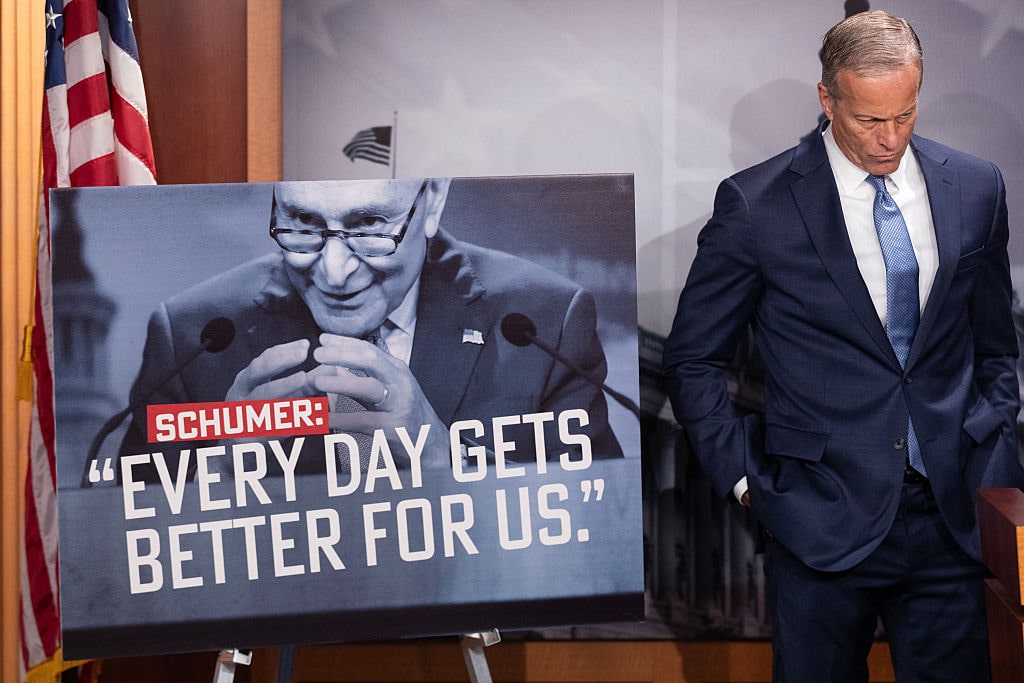
Senate Majority Leader John Thune (R-SD) made Democrats an offer he thought they couldn’t refuse on Thursday, October 16, to end the government shutdown. But as it turns out, they could – and did – refuse it.
In another bill, Republicans offered payment for troops and other federal workers, but Democrats said it was full of “poison pills.” Now Thune says the White House seems willing to roll back some of the steps it took during the shutdown, so long as Democrats agree to reopen the government. But will they?
### An Obamacare Shutdown
Read any left-wing news outlet, and it will tell you the shutdown is all about Obamacare. If Republicans and President Donald Trump would just agree to extend the Affordable Care Act (ACA) subsidies that are set to expire at the end of the year, then Democrats would agree to pass funding to reopen the government.
Is it true? Maybe – but there have been other demands as well, so perhaps not. Still, Sen. Thune decided to dangle that carrot Thursday morning, saying that once the shutdown is over, he’ll call a vote on a bill to extend the ACA subsidies. He just needs another five to side with the GOP and those already backing the stopgap funding bill to keep the government running through November 21.
How’s that for an offer Democrats can’t refuse? Not a very good one, apparently.
“I trust no Republican’s word as long as Donald Trump is saying he refuses to extend health care tax subsidies,” Sen. Richard Blumenthal (D-CT) told reporters. “As much as I respect Leader Thune, he can’t vouch for the House or the White House.”
And, as House Speaker Mike Johnson (R-LA) stands his ground on not passing a new resolution and as the president sticks to his position on the issue, that seems to be a sticking point for many Democrats.
“When the shutdown was just starting, we requested that,” Sen. Jeanne Shaheen (D-NH) told MSNBC on Thursday. “That’s been almost three weeks ago, and they wouldn’t do it, wouldn’t do it, wouldn’t do it. And now he has moved but everybody else has moved, too.”
So much for that carrot.
### White House Flexibility, Senate Stiffness
Sen. Thune also vaguely suggested on Thursday that the president might be willing to roll back some of his administration’s actions during the shutdown. When asked what, specifically, he thought the president might be willing to walk back, Thune admitted he didn’t know – but he did say some furloughed or unpaid federal workers could get their jobs back.
In the House, however, some Democrats now demand the administration undo the entire mass firing as a condition to ending the shutdown – an ask that will almost certainly be rejected as simply too much.
Also too much, apparently, was the GOP bill, already passed by the House, to keep the military funded through the shutdown. As Sen. Blumenthal put it, “I will vote yes on a military appropriations bill to pay our men and women in uniform, but if it has all of the House poison pills, no.”
The House-approved bill would fund the military through the shutdown, but it also ends assistance to Ukraine, reduces vaccine requirements, and limits service members’ access to abortions. To the left, those are poison pills, one and all – and the vote failed 50-44 on Thursday, with three Democrats joining most (but not all) Republicans on the “aye” side.
### The Impasse and Its Consequences
As the shutdown wears on, Republicans seem more inclined to offer – or, at least, dangle as bait – concessions to the left. But Democrats seem to be sticking to that all-or-nothing position.
And as America waits to see who wins this nationwide game of congressional chicken, the list of consequences grows.
Should the shutdown extend into November, for example, the US Department of Agriculture has announced it will cease funding the Supplemental Nutrition Assistance Program (SNAP), long known as Food Stamps to many.
How long until one side buckles – and what price will Americans have to pay for it?
https://www.libertynation.com/republicans-rush-to-end-shutdown-but-democrats-arent-playing-ball/
Hawaii island lawmakers reject effort to ease qualifications for key post
Two proposed charter amendments aimed at altering the qualifications for key Hawaii County department heads have failed to pass the full County Council. The defeat shelves changes that some officials argued might have helped with recruitment for hard-to-fill leadership roles.
**Bill 64: Public Works Director Qualifications**
Bill 64 sought to ease the qualifications for the director of Public Works by requiring a bachelor’s degree in engineering, architecture, business, public administration, or a related field, along with at least two years of experience in public works or a related discipline. Currently, the Public Works director is required to be a licensed professional engineer.
The bill also proposed that the deputy director be a licensed professional engineer responsible for overseeing engineering duties. However, the measure fell short on October 8, receiving only four votes in favor—two short of the six required to pass.
Neil Azevedo currently serves as the acting director of Public Works, filling the vacancy left by Hugh Ono, who retired in March. A permanent replacement has yet to be found.
**Councilmember Concerns**
During the Council meeting, differing viewpoints emerged:
– Councilmember Dennis Onishi questioned the practicality of the proposal, stating, “We’re having a hard time finding a director with a license… how are we going to find a deputy at a lower pay with a license?”
– Councilmember Heather Kimball criticized the county’s recruitment efforts for the deputy position, saying, “If the entire intent of this is to respond to the challenges of finding a person to fulfill this position… I do not think substantial efforts have been made to actually find this person.” She added, “I have done some digging and this has not nearly been advertised to the extent that you would expect.”
Kimball also raised concerns about the Council potentially exceeding the time frame set by the County Charter for appointing a new director. She warned, “We are in… the equivalent of a constitutional crisis, a charter crisis, if you will, because we are actively in violation of the charter as it stands. That becomes a legal issue, and we certainly wouldn’t want it to come to that, because that doesn’t present a desirable outcome for anyone.”
Councilmember Matt Kaneali‘i-Kleinfelder highlighted engineering oversights under former Public Works Director Ikaika Rodenhurst, a licensed engineer who was sworn in early 2021 and left in 2022. Kaneali‘i-Kleinfelder noted, “One piece of very compelling testimony I found very concerning… was from our failed director of Public Works, Mr. Rodenhurst, who also spoke on behalf of the engineering society and spoke to the effect that Bill 64, if passed, would be a public safety concern. I found this paradoxical.”
**Mayor’s Statement**
Mayor Kimo Alameda issued a statement Monday addressing the issue:
“Currently, the County Charter requires the Public Works director to be a registered professional engineer, which unfortunately restricts the pool of applicants. In addition to education, there are other qualifications that should be considered when choosing someone to run a department, such as an individual’s practical experience and leadership abilities.”
“I believe the public deserves a say on whether the existing requirement is truly necessary, and it is disappointing that a majority of the Council members chose not to place this decision before them,” Alameda said. “Still, I hope that this conversation continues and that we can find opportunities to apply a more common-sense approach to our hiring practices.”
**Bill 72: Environmental Management Director Qualifications**
Meanwhile, Bill 72 proposed new qualifications for the director of Environmental Management, including five years of experience in relevant fields. However, it also failed on second reading, receiving only five votes—falling short of the two-thirds majority required.
—
With these charter amendment measures stalled, the challenge of filling critical leadership roles in Hawaii County’s departments remains unresolved, leaving officials and residents alike awaiting further discussions and solutions.
https://www.staradvertiser.com/2025/10/17/hawaii-news/hawaii-island-lawmakers-reject-effort-to-ease-qualifications-for-key-post/