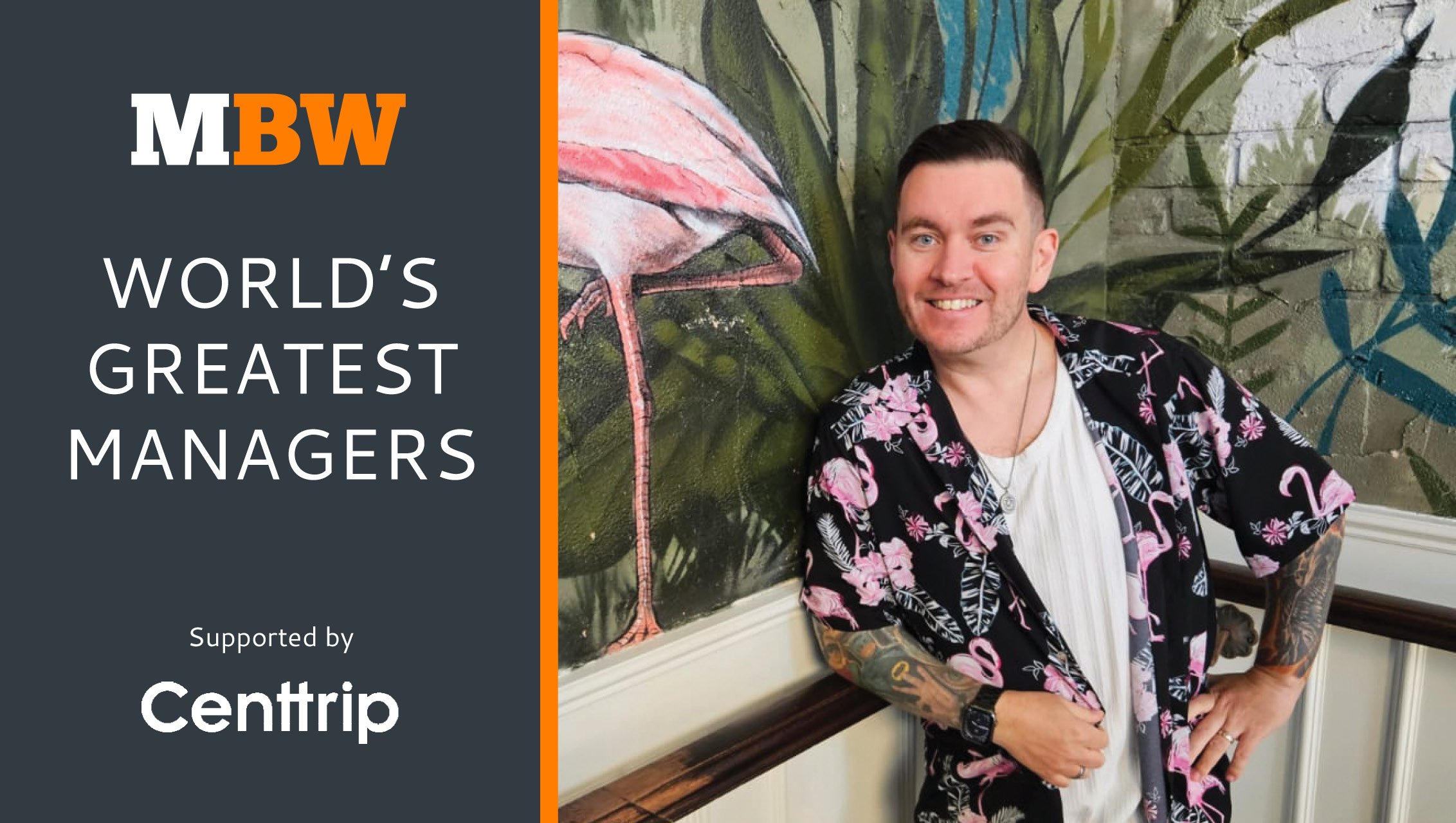
**MBW’s World’s Greatest Managers: Ryan Richards on managing Sleep Token and the future of rock**
MBW’s *World’s Greatest Managers* series profiles the best artist managers in the global music business. Here, we speak to Ryan Richards, a rock drummer turned major manager currently guiding the career of one of the biggest breakout bands of recent years, Sleep Token.
*World’s Greatest Managers* is supported by Centtrip, a specialist in intelligent treasury, payments, and foreign exchange created with the music industry’s unique needs in mind.
—
### From Drummer to Manager: Ryan Richards’ Journey
Ryan Richards once looked like he was on top of the world as the drummer and scream vocalist for Welsh post-hardcore legends Funeral For A Friend—one of the most successful UK rock bands of their generation. Touring globally and performing for thousands of adoring fans, the band released five albums and played hundreds of gigs.
However, in 2011 Richards found himself drawn to different thrills—not the typical sex-and-drugs-and-rock’n’roll lifestyle, but the smaller victories of advising and supporting local bands back in South Wales. Alongside a desire to spend more time with his young family in the Valleys, Richards decided it was time to rethink his future.
“I said, ‘I think my touring days are numbered’,” Richards recalls. “‘This management thing is where my passion is and where I see my future going forward.’”
Shortly after, Craig Jennings, the band’s manager at Raw Power Management, called him with an offer: “If you’ve made up your mind to do that, why not come and work with us at Raw Power and learn there?” It was a massive learning experience that helped shape Richards into the manager he is today. “It was the perfect next step.”
—
### Building Future History and Managing Breakout Acts
Fourteen years on, Richards runs his own management company, *Future History*, and is among the most successful rock managers globally. In a UK industry craving new breakthroughs, the remarkable ascent of Sleep Token—one of three bands he managed when leaving Raw Power in 2018 to form Future History—has been a standout success.
The mysterious, masked UK rockers have headlined Download Festival, signed to RCA in America, and scored a No.1 record with their fourth album, *Even In Arcadia*, on both sides of the Atlantic. Their pop sensibilities, highly engaged fanbase, and savvy online marketing have propelled them to heights many rock and metal bands no longer reach: Hot 100 hits, late-night TV appearances, and the biggest US streaming week ever recorded for a hard rock band.
“This is uncharted territory for a rock band in 2025, but I always thought from the start this is where it would end up,” Richards chuckles. “I was always a true believer.”
Richards’ roster continues to grow with fast-rising rock acts such as Those Damn Crows, Holding Absence, Bambie Thug, President, Zetra, and Dead Pony—bands he would have loved growing up in South Wales.
—
### Early Musical Roots and Industry Breakthroughs
Encouraged by his family, Richards began playing piano and keyboards as a child before settling on drums, influenced by a babysitter who introduced him to Bon Jovi and Guns N’ Roses. He played in several local bands before joining Funeral For A Friend.
The band’s breakthrough came when Kerrang! featured them as “The most exciting new band on the planet,” prompting them to take their music seriously. Signing to Atlantic Records UK and Sanctuary Artist Management soon followed, placing Richards in the unofficial role of liaison between band and industry—marking him out as a future executive in the making.
When Sanctuary dissolved, Funeral stayed with Craig Jennings at Raw Power Management, and Richards began helping local bands by providing contacts and gig opportunities. He later joined Raw Power full-time, working his way up before founding Future History to spend more time close to home in Bridgend.
—
### Growing Future History Amidst a Changing Landscape
Initially working solo from a home office—a setup that enabled survival through the COVID shutdown—Future History is now expanding rapidly with Download Festival boss Andy Copping joining as director.
“With rock being such a growing genre, I’d like to think it might empower the scene to have more leverage or influence,” Richards says.
Meanwhile, Richards reunited with Funeral For A Friend for their biggest-ever gigs, including a Cardiff Castle headline show. At the same time, he remains focused on nurturing rising acts like Bambie Thug (who recently signed a publishing deal with Universal) and President, whom he describes as “the quickest out of the traps” he’s ever worked with.
“It’s hard work being a rock band,” he notes in his mellifluous Welsh tones. “Climbing that hill can be slippery and steep. But with rock on the rise, I like to think it might empower the scene to have more influence. We’ll certainly keep trying.”
—
### MBW Interview Excerpts: Streaming, Mystique & Rock’s Future
**Sleep Token’s mystique is rare for a band in 2025. How much has that helped their rise?**
I love that stuff. Social media has changed the dynamic between bands and fans, often eliminating mystique, but I think you *can* choose to keep it. Sleep Token’s anonymity creates a deeper, almost spiritual connection between band and fans because there’s separation. The band doesn’t use social media, interviews, or press in conventional ways. This builds more substance around the story, making live shows a unique, unspoken dialogue.
—
**Will that mystique last, or will the band eventually reveal themselves?**
That’s unlikely. The fanbase respects and indulges it. Unlike the curiosity around bands like Kiss or Slipknot in the past, people today value the mystery and separation. In an age where anyone can find spoilers online, not spoiling the magic is part of the appeal.
—
**Conventional wisdom says rock doesn’t perform well on streaming platforms. How have you bucked that trend?**
A lot of people still have a narrow view of what rock or metal sounds like, shaped by legacy bands like Metallica or Iron Maiden. Sleep Token are often labeled metal because that’s their heaviest element, but they incorporate pop, R&B, electronic, and piano-led music—often more so than heavy guitars.
After more mainstream exposure, listeners realize Sleep Token aren’t strictly a metal band; they paint with many colours to express a wide range of emotions, making their music accessible beyond traditional genre boundaries.
—
**Are Sleep Token receiving the industry respect their success deserves?**
There’s a wave of optimism about rock’s future and its trajectory, so it’ll be interesting to see if that spreads beyond our circle. I’ve been in the industry long enough to know rock is a vital and enduring part of music culture that never truly dies. Whether that recognition manifests in mainstream awards remains to be seen, but for me, fan response is what truly matters.
—
**When you joined Funeral For A Friend, did you expect their success?**
Back then, we measured success a lot differently. Getting a demo on a covermount CD for an indie magazine or playing London felt like ‘making it.’ There was no grand plan, but things escalated quickly from there.
—
**Has your experience as a musician helped you as a manager?**
Absolutely. It’s been the biggest contributor to my success. I always tell bands, “If I’m advising you, it’s because I’ve done it myself.” I’m not some know-it-all; I’ve learned alongside them.
—
**What will Andy Copping bring to Future History?**
Andy is someone I’ve known and respected for years. He’s supported Funeral For A Friend and me personally from early on. Having someone with his experience, contacts, and friendship as a director has been invaluable for our growth and success.
—
**If you could change one thing about the music industry right now, what would it be?**
Streaming compensation for artists, especially emerging ones, needs to improve. It’s vital for new artists to earn a decent income early on to remain independent and develop their craft. Unfortunately, many are forced to sign bad deals just to get some income, which can trap them later with no assets.
—
**Is there a difference between Ryan Richards the rock star and Ryan Richards the manager?**
[Laughs] No! When I’m with Funeral For A Friend, I’m still the one arranging, liaising, and preparing. That experience helps me manage bands well. Rejoining as a musician is a nice treat and a privilege I enjoy when the opportunity arises.
—
**How big can Sleep Token get?**
I don’t see any ceiling for them. They’re some of the best songwriters and most exciting live performers out there. With those two elements, the sky’s the limit—no matter the genre.
—
Ryan Richards continues to shape the future of rock music, blending his experience on stage with a keen understanding of artists’ needs offstage. With Future History’s expanding roster and a focus on innovation and respect for artistry, he’s helping redefine what success means for rock bands in the digital era.
https://www.musicbusinessworldwide.com/sleep-token-manager-ryan-richards-on-guiding-the-career-of-one-of-the-biggest-breakout-bands-of-the-last-few-years/