History’s unanswered questions

The creation of Pakistan, the Two-Nation Theory proposes, shows that Hindus and Muslims are separate nations incapable of coexisting. This claim prompts several important inquiries:

1. What was the significant role of the Muslim-majority provinces in the establishment of Pakistan?
2. What motivated Jogendranath Mandal, a Dalit leader from Bengal, to advocate for the establishment of Pakistan?
3. What were the reasons for Abul Ala Maududi and other prominent Islamic religio-political parties to oppose the Pakistan Movement?
4. What factors contributed to the separation of East Pakistan from West Pakistan within 24 years?
5. What factors contributed to the nine-year duration required to establish Pakistan’s first constitution, given that the implementation of Islamic laws could have been initiated sooner?
6. What were the reasons behind Quaid-i-Azam Muhammad Ali Jinnah’s appointment of Jogendranath Mandal as the inaugural chairman of the Constituent Assembly and subsequently as the first minister for law and labour?

Let us try to address these important questions.

### The Role of Muslim-Majority Provinces in Pakistan’s Formation

The contribution of Muslim-majority provinces, especially Punjab, to the establishment of Pakistan has been extensively studied in academic literature. Historians examining Pakistani nationalism contend that Punjab’s strategic significance during the Pakistan movement played a crucial role in the All-India Muslim League’s (AIML) success in the 1945-46 general elections.

During the 1946 elections in Punjab, the AIML won 73 of the 175 seats — all 73 were Muslim seats. These seats were secured primarily by notable landlords who allied themselves with the AIML. It has been suggested that this partnership was more a landlord-protection strategy against potential land reforms proposed by the Indian National Congress rather than purely religious nationalism.

Khyber Pakhtunkhwa, formerly known as the North-West Frontier Province, stood out as India’s sole Muslim-majority province without a Muslim League cabinet. Its government strongly resisted the formation of Pakistan, highlighting the complex regional dynamics involved.

### Jogendranath Mandal and Dalit Participation in the Pakistan Movement

Bengali Hindus, notably Dalits under the leadership of Jogendranath Mandal, joined the Pakistan Movement expecting a new political framework addressing systemic inequalities. The caste system curtailed individual freedom, while Islamic equality offered an alternative vision of social justice.

Their participation illustrates a Marxist perspective on class struggle — where the downtrodden seek emancipation through structural and social change, rather than religion or nationalism alone. This suggests that social status challenges, rather than merely religious identification, drove some demand for a new state.

Religion did help gain support in some areas, but the movement’s core struggle was social. Many participants linked the idea of Pakistan simultaneously to religious identity and resistance against colonial and feudal oppression.

### Opposition from Jamaat-i-Islami and Abul Ala Maududi

The Jamaat-i-Islami, led by Abul Ala Maududi, opposed the partition of India because they viewed it as contradictory to the concept of the ummah — the worldwide community of Muslims. Maududi argued that dividing the subcontinent along arbitrary physical borders could weaken the spiritual and cultural ties between Muslims.

For Jamaat-i-Islami, partition was not just a political division but a split of a group’s religious and cultural identity, thereby challenging the very idea of the ummah’s unity.

### Factors Leading to the Separation of East Pakistan in 1971

Many scholars argue that the establishment of Bangladesh, or the separation of East Pakistan from West Pakistan within 24 years, resulted from multiple factors.

Long-term causes include the mistreatment of the Bengali language and provincial autonomy issues. Short-term factors involved the results of the 1970 general elections. Immediate triggers such as the Searchlight Operation and the involvement of foreign powers like India and the USSR also played significant roles.

This multi-causal interpretation contrasts with the often mono-causal narratives about the 1947 partition. A comparative analysis of both partitions, using a consistent theoretical and methodological framework, could provide a more thorough understanding of these complex historical events.

### Delayed Constitution and Debates Over Pakistan’s Political Structure

From its inception rooted in the Two-Nation Theory, Pakistan faced questions regarding the implementation of Islamic laws and the nation’s governance structure.

The nine-year delay in establishing Pakistan’s first constitution sparked debates on crucial issues such as:

– Whether the state should be theocratic or secular
– Parliamentary versus presidential democracy
– Federal versus unitary system
– The division of power between a strong federation and autonomous provinces
– Whether the legislature should be bicameral or unicameral

These discussions reflect the complexities involved in shaping Pakistan’s identity and political institutions in its early years.

### Quaid-i-Azam’s Appointment of Jogendranath Mandal

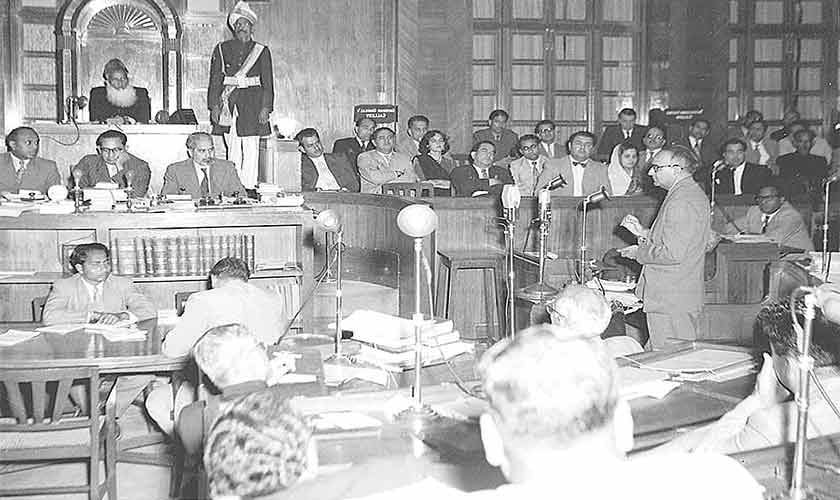
Quaid-i-Azam Muhammad Ali Jinnah appointed Jogendranath Mandal, a Hindu Dalit leader, as the inaugural chairman of the Constituent Assembly and later as the first minister for law and labour.

This appointment prompts critical examination, especially considering the Two-Nation Theory underpinning Pakistan’s creation. Choosing a Hindu for such prominent roles in a newly formed Muslim state raises questions about the practical understanding and application of the theory.

### Conclusion

Analyzing these questions reveals that Pakistan’s creation in 1947, much like the formation of Bangladesh in 1971, was shaped by a complex array of interconnected factors rather than a singular cause.

Both partitions merit examination through a unified analytical framework to better comprehend the intricate social, political, and cultural dynamics at play.

Moreover, the foundation of Pakistan can also be linked to class struggle, especially in Bengal, rather than being driven solely by religious nationalism. Marginalized and disenfranchised groups sought better living conditions within a vision of an Islamic socialist state, reflecting broader aspirations that mobilized various segments of society during the Pakistan Movement.
https://www.thenews.com.pk/tns/detail/1346769-historys-unanswered-questions


NBA: Blazers guard Scoot Henderson injures hamstring, out 4-8 weeks

Portland Trail Blazers guard Scoot Henderson has suffered a left hamstring injury and will be sidelined for four to eight weeks. The team announced on Friday that Henderson sustained the injury during an offseason workout.

This setback comes just as the Trail Blazers are preparing to open training camp next week, impacting their plans for the upcoming season.

READ: [NBA: Portland Trail Blazers reportedly find buyer]
https://sports.inquirer.net/642159/nba-blazers-guard-scoot-henderson-injures-hamstring-out-4-8-weeks

Symbols of offering

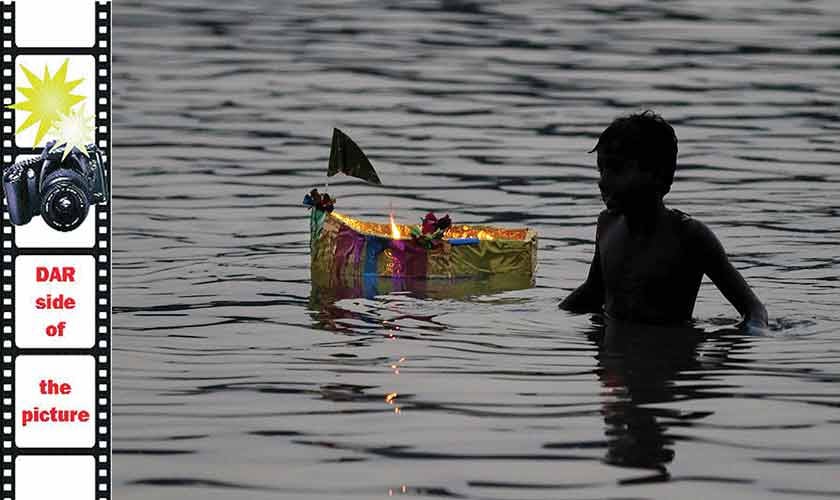
Every year, during the Islamic month of Rabi al-Thani, devotees of Abdul Qadir Gilani gather on the banks of the Ravi River to take part in a meaningful and symbolic ritual. They launch paper boats carrying lighted clay lamps and other symbolic offerings into the river.

This tradition serves as a way for devotees to make wishes or to express gratitude after their wishes have been granted. The practice is an integral part of the celebrations of the Sufi saint’s Urs, which commemorates the death anniversary.

The Urs of Abdul Qadir Gilani, known as the Gyarwin Shareef, falls on the 11th of Rabi al-Thani. It is a significant spiritual event marked by devotion, reflection, and community gatherings along the Ravi River.
https://www.thenews.com.pk/tns/detail/1346831-symbols-of-offering

‘We were back to zero’: Triptii recalls ‘Laila Majnu’ failure

**‘We were back to zero’: Triptii Dimri recalls ‘Laila Majnu’ failure**

*By Isha Sharma | Sep 28, 2025, 10:03 AM*

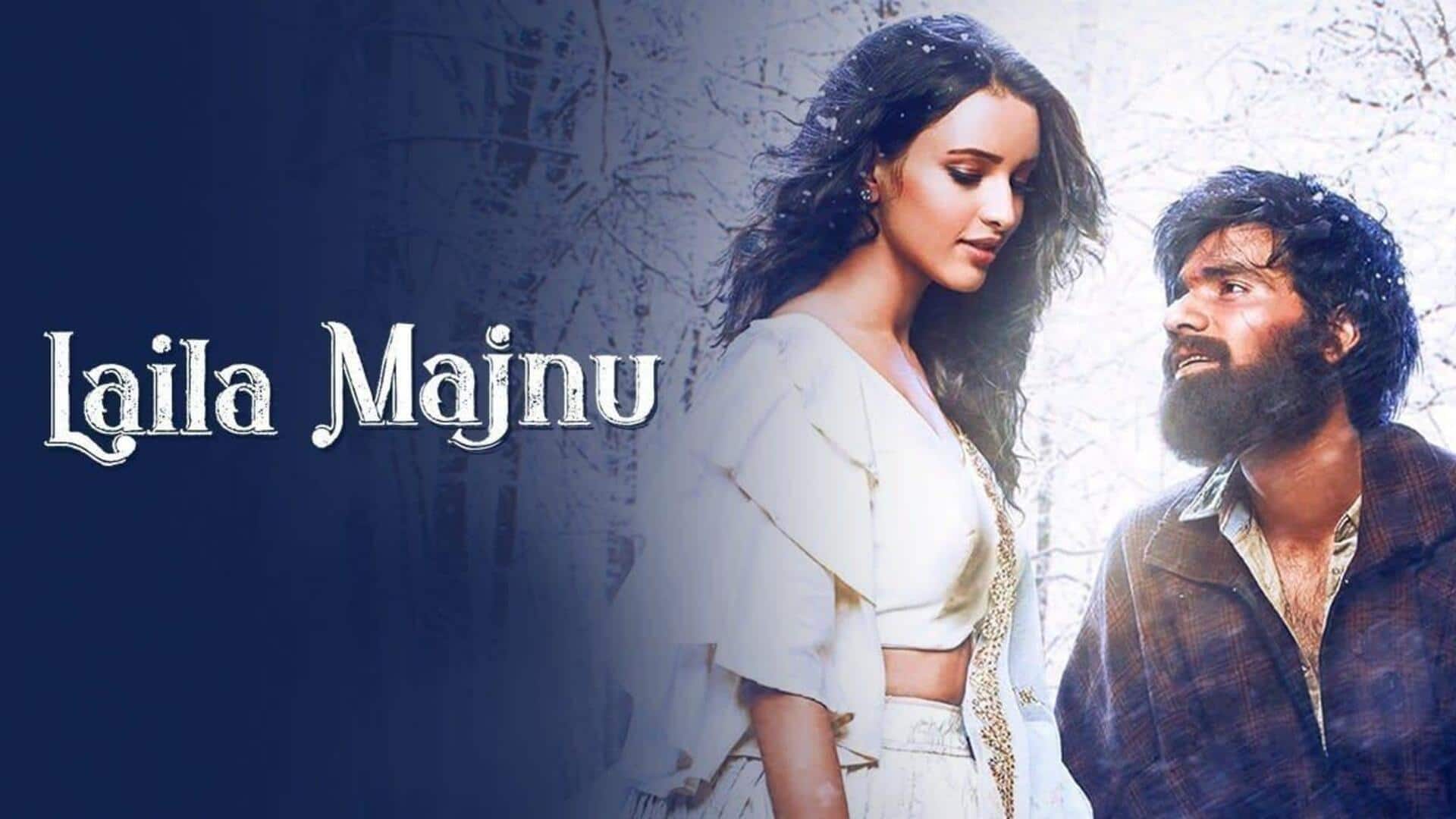
Triptii Dimri, who made her lead debut in the 2018 romantic drama *Laila Majnu*, recently opened up about the film’s initial box office failure in an interview with *Filmfare*. Despite receiving positive reviews, the movie, which also starred Avinash Tiwary, underperformed commercially.

“When the film did not do well, I felt very disappointed because we were back to zero,” Dimri shared, reflecting on the setback.

### Dimri’s Empathy for Co-star Avinash Tiwary

Dimri expressed particular concern for her co-star Avinash Tiwary, who had been in the industry much longer. “I had been around for at least two years, but Avinash Tiwary had been here for 14 years,” she said. “Then we started giving auditions again, and I felt bad for him.”

Despite the initial disappointment, Triptii remained optimistic about the film’s long-term appeal and impact on audiences.

### The Film’s Journey: From Failure to Cult Classic

Though *Laila Majnu* struggled at the box office during its original release, it eventually garnered a huge following and achieved cult status. In 2024, the film was re-released and became a commercial success, surpassing the lifetime collections of its initial run.

“I knew it would receive appreciation, because even today, eight years after its release, people still talk about it,” Dimri remarked.

### Behind the Scenes of *Laila Majnu*

Triptii also reflected on the challenging yet rewarding experience of filming *Laila Majnu*. “There were many challenges on a day-to-day basis because we were shooting in the valleys of Kashmir for 20 or even 24 hours at a stretch,” she recalled.

“Many times, I cried during that period, wondering what I was doing, because none of it was easy.”

Despite these difficulties, Dimri considers *Laila Majnu* to be a special film that taught her a lot about acting and shaped her career.
https://www.newsbytesapp.com/news/entertainment/triptii-dimri-talks-impact-of-laila-majnu-box-office-failure/story

Soundcheck: What Struck A Chord

Music plays a central role in life, culture, and counterculture. Research shows that listening to music reduces stress hormones, slows the heart rate, and improves mood. It is a simple way to cope with everyday pressures. People turn to music when they want to manage anxiety, recover from grief, sharpen focus while studying, or stay motivated irrespective of their goals.

The act of singing or playing an instrument stimulates brain activity, strengthens memory, and builds discipline. It also creates new pathways within the brain and generates new neurons, which is important because it can protect against diseases of the mind that have no cure once the onset begins. Playing an instrument is a skill that carries over to other areas of life. A familiar melody can unlock memories and help us express emotions that some individuals can’t articulate. It’s almost like magic that a single song can transport you back to a specific moment in time.

Beyond individual well-being, music acts as social glue that binds communities together. Shared playlists, family gatherings, weddings, and live concerts create spaces where people connect and celebrate together. These shared experiences foster joy and empathy. Feelings of love, loss, and many other emotions become easier to deal with and find expression in ways that language alone sometimes struggles to match. Even the simple act of exchanging song recommendations can deepen friendships.

Culturally, music preserves history and identity in ways that textbooks simply cannot. In Pakistan, centuries-old folk songs pass down stories of place, language, and folklore. They keep a variety of traditions alive from Sindh to Gilgit-Baltistan. These songs carry the voices of our ancestors—their struggles, celebrations, and dreams. Qawwali, for instance, can open a spiritual door, particularly when all others fail. It is an expression of divine will and consequently lifts the soul.

Meanwhile, contemporary genres such as hip-hop, pop, and electronic music give younger generations a platform to reflect on modern realities and global influences. Streaming services like Spotify and YouTube have widened this reach dramatically. They allow regional artists to find audiences far beyond their own regions. The rules of geography and man-made borders take a backstage. They also make it easier for listeners to explore both ancestral sounds and cutting-edge trends.

Whether ancient or modern, personal or collective, music remains a universal language that speaks to everyone, regardless of background or belief. National shows such as Pakistan Idol add another layer by uncovering hidden singers and giving them a stage to be heard. This serves as a reminder that talent exists everywhere, not just in big cities. These platforms give a chance to extraordinary voices emerging from the most unexpected places—small towns as well as bustling neighborhoods.

### 313 Productions to Produce Pakistan Idol as It Enters Phase 2 with Record Participation

HL Global has named 313 Productions as the official producing partner of Pakistan Idol, with seasoned producer Badar Ikram at the helm. The show is set to premiere today, a date that means a great deal to music fans across the country.

Badar Ikram, a veteran of Pakistan’s television industry, launched Karachi-based 313 Productions in July after eleven years as SVP and Head of Film at a well-known local channel’s film division. In the past, he was also the Managing Director of Geo TV, which produced the programme’s first and only season more than a decade ago. This gives Ikram unique insight into what made the original show work and what needs to be improved for the upcoming second season.

Pakistan Idol hopes to raise production standards and audience engagement while offering a platform to undiscovered singers. The goal is not only entertainment—it’s about creating real opportunities for talented individuals who might otherwise never get their big break. Badar Ikram called the project both an honour and a responsibility, words that reflect the weight of nurturing new talent in a country with an immense pool of potential.

Meanwhile, MHL Global’s Director, Zoya Merchant, praised the energy at auditions and expressed confidence that the show will inspire viewers and highlight new talent. Auditions have been held nationwide, and state-of-the-art sets have been prepared. The competition has now moved into Phase 2, as organisers begin shortlisting contestants from a vast pool of applicants. This is a task that is both exciting and daunting given the sheer volume of talent.

Auditions drew singers from Karachi, Lahore, Islamabad, Rawalpindi, Multan, Sukkur, Quetta, and Peshawar. There was also notable turnout from Azad Jammu and Kashmir, Gilgit-Baltistan, and many smaller towns including Khairpur, Jacobabad, Gujrat, D.G. Khan, D.I. Khan, and Hyderabad. The geographic diversity is remarkable.

Those who auditioned wanted to prove that talent knows no boundaries. While many will not make it as contestants, it was heartening to see such turnout. Venues were busy, often with long queues and hundreds of hopefuls auditioning for a chance to progress to the next round. Many contestants travelled for hours just to perform, carrying dreams that had been years in the making.

Pakistan is more than one thing, and this show is ample proof. The judging panel for Pakistan Idol includes musician and actor Fawad Khan; qawwali and playback singer Rahat Fateh Ali Khan; singer Zeb Bangash; and singer-songwriter, scriptwriter, storyteller, and director Bilal Maqsood.

“What makes Idol special is how it brings Pakistan together through music,” said Zoya Merchant. “From the smallest towns to the biggest cities, every voice matters here. This is where dreams meet opportunity and where the next star is born.” Her words capture something essential about the show’s mission. It’s not just about finding one winner but about celebrating the musical diversity that exists across the country.

As part of the global Idol franchise, the show offers the average individual an opportunity to transform their passion into a profession. Ultimately, Pakistan Idol aims to create a cultural moment that could resonate for years to come. With 313 Productions at the helm and record participation from across the country, the programme has the potential to reshape the local music ecosystem.

The show could become a genuine launchpad for new careers rather than a one-season spectacle. This depends on whether production value, the judging panel, and broadcast partnerships match the ambition shown at auditions. The stakes are high, but so is the potential.

For now, the biggest story is the sheer breadth of talent that turned up. It’s a reminder that opportunity, when paired with the right platform, can change lives and revive interest in the local music scene. In a country where musical talent often goes unrecognised, Pakistan Idol represents hope—hope that the next generation of artists will have better opportunities than those who came before them.

### How to Make the Most of Spotify Free

Spotify, the world’s largest audio streaming platform, is always innovating to keep listeners engaged. Spotify Free is another step in that direction. It puts a huge library in anyone’s pocket, letting listeners search, play, and share without a subscription.

In Pakistan, many users begin their streaming journey on the free tier, and honestly, it’s a good starting point. You can search for any track, play a suggested playlist, or jump straight into a song a friend has shared. The appeal lies in its simplicity and immediate access to millions of tracks.

Personalized lists such as Discover Weekly and Release Radar help you find new music. The more you listen and share, the more accurate the recommendations become. It feels like having a friend who understands your taste in music and keeps introducing you to new favourites.

Daylist adapts throughout the day to match your routine. It provides upbeat tracks for your morning workout and mellow tunes for your evening wind-down. Meanwhile, real-time lyrics make it easy to sing along and share lines on Instagram or WhatsApp. There’s something satisfying about posting those perfect lyrics that capture exactly how you’re feeling at that moment.

For local listeners, Spotify Free is an entry point to both familiar favourites and new voices from across the country. It’s where you might discover that incredible singer from Multan or that indie band from Lahore that’s about to blow up. It lowers the barrier to discovery. There’s no financial commitment, just curiosity and a willingness to explore.

For emerging artists, this openness can lead to real exposure. For listeners, it can spark interest in gigs—particularly local ones—or talent shows such as Pakistan Idol. In that sense, the free tier is more of a beginning than an ending. It’s the first step in an ongoing conversation between artists and audiences that helps keep the music alive—the digital equivalent of discovering new music through word of mouth, just on a much larger scale.
https://www.thenews.com.pk/tns/detail/1346799-soundcheck-what-struck-a-chord

Covering the basics

Thousands of residents of Farash Town and James Town in the twin cities are celebrating as they now have access to clean drinking water. Alongside this vital resource, they have also learned useful skills such as reusing water and recharging the water table through rainwater harvesting techniques. This transformation is the result of a megaproject focused on water security.

The project was a collaborative initiative between the World Wildlife Fund (WWF)-Pakistan and the Australia-Pakistan Water Security Initiative, an Australian Aid-funded program aimed at strengthening cooperation between Australia and Pakistan on urban water resources management. The megaproject consists of a series of smaller projects, all scheduled to be operational by the end of December, with community participation playing a key role in their ongoing maintenance.

The primary goal of the initiative was to tailor, adopt, and demonstrate the Water Sensitive Cities approach in Pakistan, especially as Islamabad and Rawalpindi are among the cities forecasted to face water scarcity in the coming years.

### Focus on Two Neighbourhoods

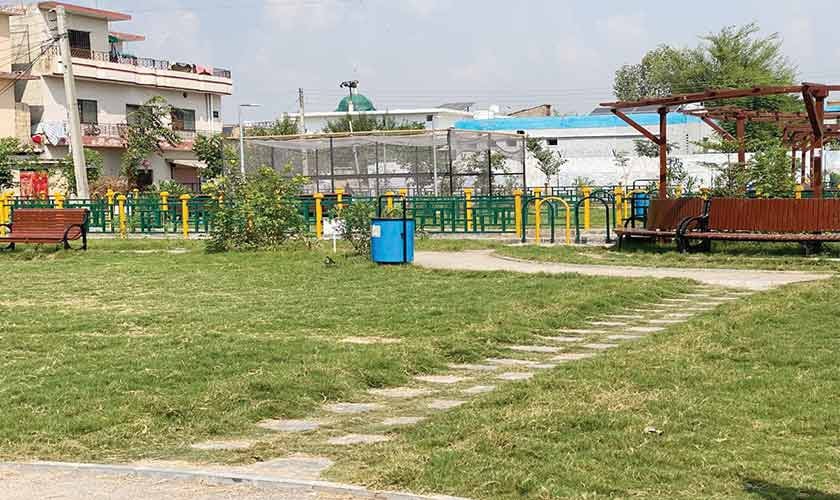
The pilot project targeted two neighborhoods: James Town in Rawalpindi and Farash Town in Islamabad.

James Town is home to over 450 Christian households and has faced an acute water shortage. Farash Town, with a population exceeding 20,000, has similarly suffered from severe water scarcity and a declining water table.

Yasmin Bibi, a resident of Farash Town, shared her experience:
“Our area had a severe water shortage. The water table had also gone down. With the help of these projects, we were able to recharge the aquifer and get water from filtration plants installed at various places in the town.”

### Clean Water Access and Community Engagement

WWF installed seven water filtration plants — five throughout the locality and two in larger schools. These filtration plants now provide clean drinking water to approximately 24,500 people and are maintained by the community itself.

Imran Ali, another Farash Town resident, expressed his relief:
“This is a blessing for us. Earlier, many families would travel to the Chak Shahzad government filtration plant to get water, often hiring rickshaws to fetch it. Now, we have clean drinking water right at our doorstep.”

Before this intervention, water scarcity was so severe that those who could afford to were selling their properties and relocating. Imran adds,
“Now, with this project, our lives and priorities have changed. It is such a relief that we don’t have to go out of our way to get something as basic as water.”

### Project Components and Impact

Since its inception in April 2021, the WWF has implemented multiple measures in both neighborhoods:

– **James Town:**
– 275 rainwater harvesting systems (RWHS)
– 6 water recharge interventions
– 2 green spaces
– 2 large and 1 small filtration plants
– 15 solid waste skips
– 2 rain gardens
– Sewerage system for 450 houses

– **Farash Town:**
– 375 rainwater harvesting system interventions
– 4 ablution water reuse systems
– 31 recharge interventions
– 3 green spaces
– 3 communal RWHS
– 5 large and 2 small filtration plants
– 4 solid waste skips
– 2 rain gardens

Farah Nadeem, the project lead, highlights the importance of such initiatives:
“These projects are significant demonstrations of models creating awareness about water security. We have even incorporated water security issues into the curriculum of local schools as part of this initiative.”

Nadeem further comments,
“Through this project, WWF-Pakistan helped improve access to safe water and sanitation services for two disadvantaged communities, ensured community resilience to climate change and other water-related challenges, and built the capacity of key stakeholders regarding water use and conservation.”

### Addressing Pakistan’s Water Crisis

Pakistan is among the most water-stressed countries in the world, with an average per capita water availability of 964 cubic meters per year. Scientific studies indicate significant depletion of groundwater resources, exacerbating vulnerabilities caused by climate change. This situation impacts millions of people already struggling with shortages of water, food, health services, and energy security.

Projects like this megaproject are crucial steps toward securing sustainable water resources for vulnerable communities and ensuring a resilient future.
https://www.thenews.com.pk/tns/detail/1346830-covering-the-basics

‘We Can Give Little Bit Of Happiness…’: Nepal Skipper Rohit Paudel Dedicates Player Of The Match Award To Martyrs Of Gen Z Protest

**Nepal Captain Rohit Paudel Dedicates Historic Victory Over West Indies to Martyrs of Gen Z Protest**

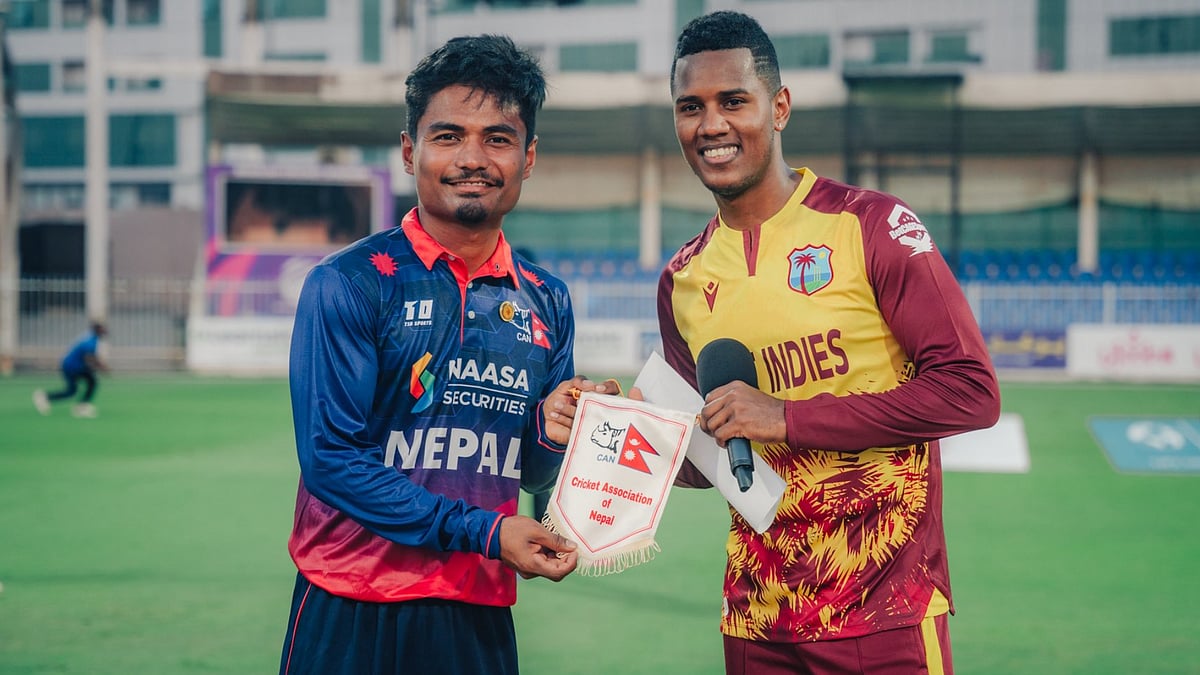
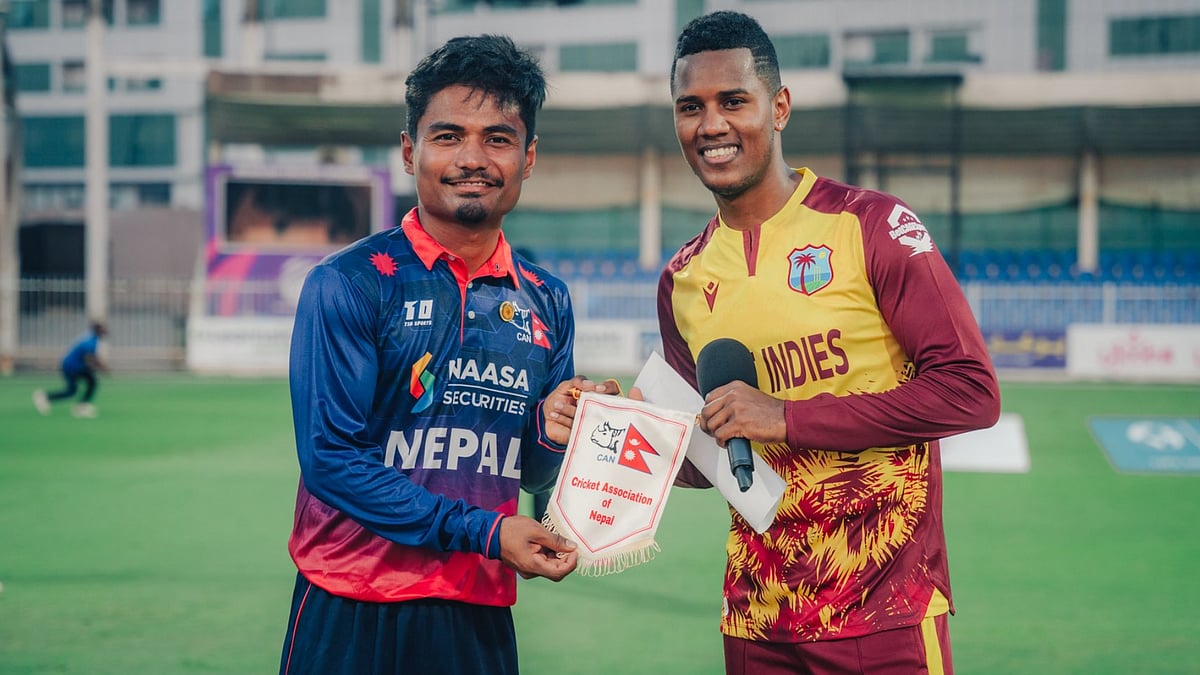
Nepal made cricket history on Saturday by stunning the world with a remarkable 19-run victory over the West Indies. This win marked Nepal’s first-ever triumph against a full member of the International Cricket Council (ICC), a milestone achievement for the Asian minnows.

During the post-match presentation, Nepal captain Rohit Paudel dedicated the victory to the martyrs of the recent Gen Z protests. “I want to dedicate this award to the martyrs back home who participated in the protest,” Paudel said. “The last month has not been great for us, so if we can give a little bit of happiness to the people of Nepal, I think that would be great.”

### Context Behind the Gen Z Protests in Nepal

Earlier this month, Nepal witnessed large-scale protests and demonstrations following a nationwide ban on numerous social media platforms. The protests escalated into violent clashes, with public officials targeted and government and political buildings vandalized.

These upheavals eventually led to the resignation of Prime Minister KP Sharma Oli along with several other government ministers. Following his resignation, Sushila Karki was appointed as the interim Prime Minister of Nepal. The protests gradually subsided by September 13.

### Nepal Stuns West Indies at Sharjah Cricket Stadium

In the highly-anticipated match held at the Sharjah Cricket Stadium, West Indies won the toss and elected to field first against Nepal, an Associate Member team. The West Indies bowlers managed to restrict Nepal to a modest total of 148/8.

Nepal’s innings, anchored by middle-order contributions, saw early setbacks as West Indies pacer Akeal Hosain dismissed Kushal Bhurtel for 5 runs, and Jason Holder removed Aasif Sheikh for 3 runs, reducing Nepal to 12/2 in the fourth over.

However, captain Rohit Paudel (38 off 35 balls), Kusal Malla (30 off 21 balls), and Gulsan Jha (22 off 16 balls) steadied the innings to help Nepal reach a competitive score. Holder finished with impressive bowling figures of 4-20, while Bidaisee took 3-29.

Chasing 149 runs for victory, West Indies had a disastrous start when Kushal Bhurtel ran out opener Kyle Mayers early for just 5 runs off eight balls. Nepal’s bowlers continued to apply relentless pressure on the former T20 World Champions, making it difficult for them to build partnerships.

Nepal’s disciplined bowling restricted the West Indies to 129/9 in their allotted 20 overs. Kushal Bhurtel took two wickets, while Dipendra Singh Airee, Karan KC, Nandan Yadav, Lalit Rajbanshi, and Rohit Paudel each claimed one wicket.

This historic victory not only boosted Nepal’s standing in international cricket but also brought a sense of pride and joy to a nation recently weathering political turmoil.
https://www.freepressjournal.in/sports/we-can-give-little-bit-of-happiness-nepal-skipper-rohit-paudel-dedicates-win-over-west-indies-to-martyrs-of-gen-z-protest

‘We Can Give Little Bit Of Happiness…’: Nepal Skipper Rohit Paudel Dedicates Player Of The Match Award To Martyrs Of Gen Z Protest

**Nepal Captain Rohit Paudel Dedicates Historic Victory Over West Indies to Gen Z Protest Martyrs**

Nepal’s cricket captain Rohit Paudel has dedicated the team’s historic victory over the West Indies to the martyrs of the recent Gen Z protests. On Saturday, the Asian minnows stunned the cricketing world by securing a 19-run win against the West Indies. This marked Nepal’s first-ever victory against a full member of the International Cricket Council (ICC).

During the post-match presentation, Paudel said, “I want to dedicate this award to the martyrs back home who participated in the protest. The last month has not been great for us, so if we can give a little bit of happiness to the people of Nepal, I think that would be great.”

### Why Were the Protests Held in Nepal?

Large-scale protests and demonstrations erupted in Nepal earlier this month following a nationwide ban on numerous social media platforms. The protests led to violence against public officials and vandalism of government and political buildings.

As a result, Prime Minister KP Sharma Oli, along with a few other government ministers, resigned. Following their resignations, Sushila Karki was appointed as the interim Prime Minister of Nepal. The unrest gradually subsided by September 13.

### Nepal Stuns West Indies in Sharjah

The match was played at the Sharjah Cricket Stadium, where the West Indies won the toss and elected to field first against the Associate Member team, Nepal. The West Indies bowlers restricted Nepal to a modest total of 148/8. The innings was anchored by vital contributions from the Nepalese middle order.

After early wickets from West Indies pacers Akeal Hosain and Jason Holder dismissed Kushal Bhurtel (5) and Aasif Sheikh (3) respectively, Nepal found themselves at 12/2 in the fourth over. However, skipper Rohit Paudel (38 off 35 balls), Kusal Malla (30 from 21), and Gulsan Jha (22 off 16) helped their side reach a respectable 148/8.

For the West Indies, Jason Holder was the pick of the bowlers, claiming 4 wickets for 20 runs, while Bidaisee took 3 wickets for 29 runs.

### Brilliant Bowling Effort Seals Victory for Nepal

Chasing a target of 149, the West Indies got off to a poor start when Kushal Bhurtel ran out opening batter Kyle Mayers for just 5 runs off eight balls. Nepal’s bowlers then produced a disciplined performance, making it difficult for the former T20 World Champions to score freely.

This collective bowling effort helped Nepal restrict the West Indies to 129/9 in their allotted 20 overs. Kushal Bhurtel returned with two crucial wickets, while Dipendra Singh Airee, Karan KC, Nandan Yadav, Lalit Rajbanshi, and Rohit Paudel each took one wicket.

Nepal’s stunning win against a cricketing powerhouse has not only marked a significant milestone for the team but also brought joy to a country recovering from recent turmoil.
https://www.freepressjournal.in/sports/we-can-give-little-bit-of-happiness-nepal-skipper-rohit-paudel-dedicates-win-over-west-indies-to-martyrs-of-gen-z-protest

Is it a bird? No, it’s Dickie Bird

Watching most of these men up close and personal must have been special for you, allowing you to pick an eleven of the finest.

I’m thinking, in the years when you went out to umpire, there was a relative simplicity to the game—no DRS, no third umpires, no reviews, and no replays. When you gave a batsman out, that was it. He was out, no one questioned it, and he just walked. I imagine you would have been appalled to have a third person take the final decision for you.

It’s funny—you were most famous for diffusing tense situations with self-deprecating humour and jest. So, I have a question: with all the sledging and non-shaking of hands that’s been going on between us and the Pakistanis, do you feel it was in the spirit of the game? Once two teams have agreed to play, would you have insisted that they conduct themselves amicably, or would you have had something to say?

Last Tuesday’s match was like a gun battle shrouded in a game of cricket. The umpires watched benignly as players let go of their cricket gear for imaginary guns; skilled players became soldiers. How would you have handled it?

More importantly, we meet the Pakistanis tonight in the final of the Asia Cup. Things have gone from bad to worse. In the first encounter, hands weren’t shaken. In the second, planes fell out of the sky—it was nasty stuff. What would you have done then, and what would you do tonight if you were one of the two umpires?

I’m guessing you’d gather all 22 players on the 22 yards and have a wee chat.

“How do, lads? How’s the scene tonight?” you’d joke, about wanting good, clean, competitive cricket—nothing more—in your endearing Yorkshire accent.

Back in the day, you looked over some really colourful characters. Sunny and Imran were both in your greatest Test eleven. Gavaskar, one of your top openers, and Imran, your skipper. Our relations as two cricketing nations were tense, but somehow politics stayed out of the equation. Imran even convinced Sunny to delay his retirement.

One could argue that everything has become more complex and complicated. Umpires now head out to the middle armed to the teeth, yet the modern on-field umpire has the safety net of an air-conditioned third opinion, aided by technology and tracking systems. The stress on his correct or incorrect decision-making is much less.

You, Harold Dennis Bird, just had your two eyes, an instinct and feel for the game, balancing the rule book versus the conditions. An understanding of human beings, the geniality of a gentleman coupled with solid firmness.

Six hours a day of complete focus—picking out no-balls, hearing nicks to the keeper, allowing no nonsense between players, getting those LBW decisions correct in a nanosecond. The massive repercussions between an appeal and your finger going up—and you controlled some of the most volatile folks in the game: Ambrose, Warne, Lillee.

Nudges onto the pads when LBW decisions were demanded, and the sheer knowledge of the game—you had no second chances. There were no instant replays. Just you, having to take an instant decision.

You always knew a batsman was out when the great Dickie Bird raised his finger and said so—like Brian Lara.

Rest well, dear Dickie. The giant cricket stadium in the heavens awaits you.
https://www.mid-day.com/news/opinion/article/is-it-a-bird-no-its-dickie-bird-23596149

Faith, friendship and quiet harmony

At dawn, when the first rays of sunlight hit the snow-capped peaks of Speen Ghar (The White Mountain), the valley below glows in soft gold. Parachinar, the only Shiite-majority city among the Khyber Pakhtunkhwa tribal districts, lies cradled in this rugged frontier along the Pakistan-Afghanistan border.

For decades, these hills were known for sectarian clashes and roadblocks, not peace. Yet, beneath the towering ridges of Speen Ghar, a quieter story unfolds—one of faith, friendship, and lasting coexistence.

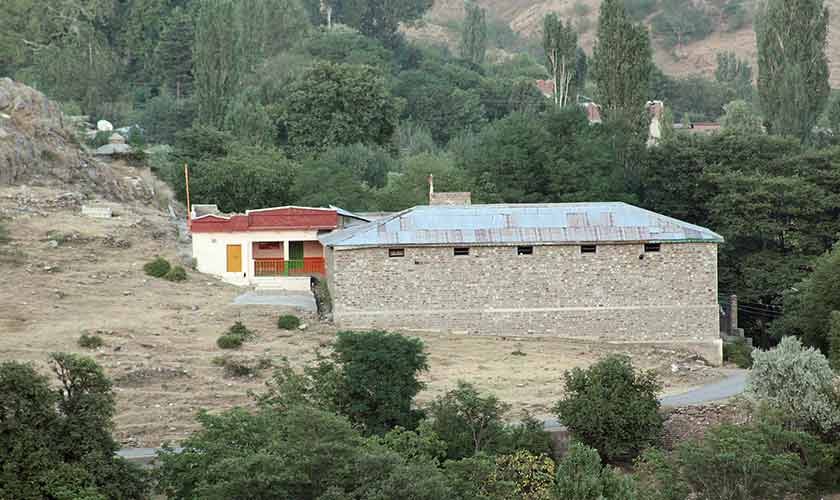
Near Parachinar, in the village of Malana, tucked amid walnut groves and spring-fed streams, an Imambargah and a Sikh Gurdwara stand right next to each other. Their shared wall tells a story older than the conflicts that have scarred this borderland.

“This is Baba Nanak House,” says Barkat Ali, aged 60, the caretaker of the Gurdwara, pointing to the modest building marked by an orange Sikh flag. Inside, a green cloth drapes the Takht, where ceremonial kirpans (daggers) gleam softly in the morning light.

“Sikhs are our brothers. During their festivals, we open our Imambargah doors for them and offer them accommodation. We even provide wood for their cooking,” he adds.

Centuries ago, the Turi tribe, a Shiite Pashtun community in Kurram, donated this very land to the Sikhs and helped build their Gurdwara—a gesture of solidarity that continues to resonate through the village’s stone courtyards and narrow alleys.

Though no Sikh families remain in Malana today, devotees travel from across Pakistan to visit Baba Nanak House, where tradition holds that Guru Nanak, the early 16th-century founder of Sikhism, once stayed.

In nearby Parachinar’s bustling Turi Market, the Singh brothers Mukesh and Rakesh carry that legacy into the present. In their early thirties, the twins run a family spice shop and speak fluent Pashto, dressed in the same shalwar kameez as their Muslim neighbours.

Every Muharram, as Shiite mourners mark the martyrdom of Imam Hussain, the Singhs serve tea, sweet drinks, and baskets of candies to participants.

“This is our way of honouring our friends,” Rakesh says. “Our fathers and grandfathers did it, and we will pass it on to our children.”

“Before 2007, Shiite, Sunni, Sikh, Hindu, and Christian neighbours celebrated each other’s festivals,” he recalls. “We danced the Attan together at weddings. Those were beautiful days.”

Their Muslim neighbours return the affection. Gul Hassan, a dry fruit vendor, recalls attending the brothers’ weddings and gifting them a traditional sehra, a bridal headdress.

“We share tea, lunch, and life,” he says with a smile.

Kurram once had a thriving Sikh community, with three functioning Gurdwaras and nearly 80 families, before sectarian violence erupted in 2007. Today, only seven families—around 45 people—remain. Many left for larger cities such as Peshawar, Lahore, and Hasan Abdal, seeking safety during years when the main Parachinar-Tal Road remained sealed by conflict.

Yet even in those violent times, Sikh lives were spared. Local Muslim elders ensured safe passage for those who chose to leave.

“During the conflict, the roads were opened and security provided so Sikh families could leave safely,” recalls Mukesh Singh.

Santokh Singh, who migrated to Peshawar, remembers the Parachinar of his youth with fondness.

“Before 2007, Shiite, Sunni, Sikh, Hindu, and Christian neighbours celebrated each other’s festivals,” he says. “We danced the Attan together at weddings. Those were beautiful days.”

Despite the shrinking population, acts of generosity continue to knit the communities together. During Ramadan, Mukesh discreetly distributes food to poor Muslim families, fulfilling the Sikh tradition of charity without seeking recognition.

Local Muslim leaders, too, step forward in times of need. Nazir Hussain, secretary of the Parachinar Shopkeepers Union, often donates to Sikh religious events.

“Whenever the Sikh community asks for help, we provide every possible support,” he says.

Farther west in Tirah Valley, near central Kurram, Bhagat Singh, a shopkeeper with a long white beard wrapped in a dark blue turban, reflects on three centuries of shared history.

“Our families have lived here for 300 years,” he says softly. “These valleys are my home. I was born here, and here I will die.”

In a region once synonymous with bloodshed, the quiet companionship of an Imambargah and a Gurdwara offers a different narrative.

As the golden light of Speen Ghar falls over Parachinar, it illuminates not just mountains, but a truth often overlooked: that faith, when rooted in respect, can build bridges where politics too often builds walls.
https://www.thenews.com.pk/tns/detail/1346828-faith-friendship-and-quiet-harmony

Exit mobile version
Sitemap Index