Volcanic Ash: New show or just a rerun for Mauna Kea telescope?

If you wait long enough, the Thirty Meter Telescope (TMT) comes around as regularly as the comets astronomers like to observe. The controversial next-generation observatory proposed for Mauna Kea seemed dead after Native Hawaiian protesters stopped construction starts in 2015 and 2019, costs soared, regulatory approval was a moving target, and a major source of federal funding dried up.

But now, Governor Josh Green is supporting a plan to reduce regulatory uncertainty and community unrest by building TMT on the already disturbed site of a decommissioned telescope instead of the pristine ground originally planned. Particularly attractive is the site occupied until last year by the Caltech Submillimeter Observatory, which sits in a depression where the dome isn’t visible from below.

In a letter to TMT also signed by Hawaii Senators Brian Schatz and Mazie Hirono and Representatives Jill Tokuda and Ed Case, Governor Green agreed to promptly provide the developers with a clear and transparent regulatory path for this scenario—giving TMT the clarity it never had.

There’s good reason TMT remains enticing to many in Hawaii; astronomy is a clean economic driver that provides skilled, well-paying jobs that are desperately needed and seeds other knowledge industries. A photo of Mauna Kea taken from the International Space Station shows it to be an enormously large mountain, on which the telescopes leave the tiniest of footprints. You’d think reasonable people could find a way to share this resource.

However, passionate protesters believe Mauna Kea is sacred and are unlikely to back down, and politicians have feared crossing them. You might recall then-Lieutenant Governor Josh Green undermining Governor David Ige by showing supportive presence in the last protest camp wearing his hospital scrubs.

In 2022, the Legislature transferred management of Mauna Kea from the University of Hawaii to a new Mauna Kea Stewardship and Oversight Authority.

TMT’s problems extend beyond regulatory uncertainty and protests. The original estimated cost of $1 billion has grown to $3 billion, and the National Science Foundation (NSF) has withdrawn major funding, choosing instead to back the Giant Magellan Telescope in Chile.

Hawaii delegates are trying to secure TMT funding in the House and Senate budgets—if the government shutdown ever ends—but it’s a heavy lift with the Trump administration having been determined to slash NSF funding.

The TMT consortium of universities and science institutions from the U.S., China, India, Canada, and Japan is also in talks with Spain about a less desirable but more welcoming site in the Canary Islands.

TMT is unlikely to happen in Hawaii if elected officials are unwilling to defy unhappy protesters. It doesn’t help that the new TMT push comes as a bigger and potentially even uglier fight heats up over continued military use of lands many Hawaiians consider sacred.

The TMT saga is starting to remind me of the Falls of Clyde—the historic sailing ship recently sunk off Oahu due to lack of financial support and patience. Those who tried for years to save the ship had the noblest of intentions, but after many false starts, they could never gather enough money or community support to finish the deal.
https://www.staradvertiser.com/2025/11/09/hawaii-news/volcanic-ash/mauna-kea-telescope-back-new-show-or-just-a-rerun/

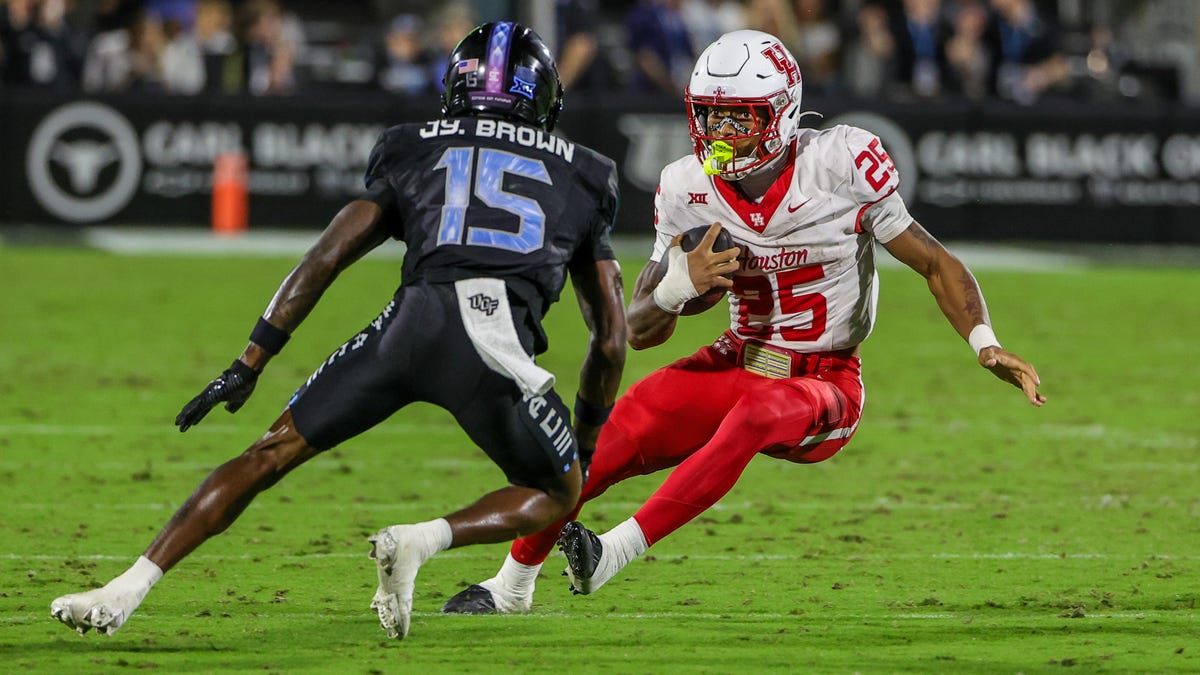
UCF football’s Space Game aura, invincibility comes to abrupt end with loss to Houston

UCF’s defeat was marked by offensive mistakes and defensive lapses in the second half—issues that have been present all season. Despite a strong first half, including a pick-six, the Knights’ offense stalled after halftime, allowing Houston to rally. A last-minute drive led by redshirt freshman quarterback Davi Belfort ended with a game-sealing interception in the end zone.

**ORLANDO** — All good things must come to an end, even UCF’s legendary Space Game voodoo.

The Knights committed the same critical offensive mistakes and temporary defensive lapses that have plagued them all year in their 30-27 defeat to Houston on Friday, Nov. 7.

UCF emerged victorious in its first eight Space Games, often cruising by comically lopsided margins. Each of those victories came by at least two scores, and the Knights piled up a total of 405 points (50.6 per game), including a 70-point outburst against Temple in 2022 during their American Athletic Conference swan song.

Even in their first two years as Big 12 members, during which they endured separate five-game losing streaks, UCF miraculously transformed from subpar to spectacular over the course of four hours.

The first half of this year’s game provided signs that inspired hope UCF would overcome its season-long shortcomings.

Houston’s Mekhi Mews muffed a punt, setting the Knights up for a 1-yard Myles Montgomery touchdown run and a 10-0 advantage. Phillip Dunnam then victimized Cougars quarterback Conner Weigman with a school-record three interceptions, including a 43-yard pick-six that pushed UCF ahead 24-14 before the break.

But UCF’s opening two possessions after halftime foreshadowed more of the same struggles.

Back-to-back three-and-outs stunted the Knights’ momentum, and Houston erased the two-score deficit when Weigman found Dean Connors in the flat for a 9-yard swing pass. As the night wore on, Weigman kept the offense moving, engineering 11- and 15-play drives that drained more than 12 minutes off the clock and produced the game-tying and go-ahead field goals.

Houston accumulated 158 of its 210 rushing yards after halftime, dominating the second half on the ground.

Yet, there was still time for one final twist.

Knights head coach Gus Malzahn pulled off a surprise ahead of UCF’s do-or-die drive by inserting redshirt freshman Davi Belfort at quarterback.

Unlikely heroes have emerged in Space Games of the past. Last year, Dylan Rizk—also a fourth-string quarterback to begin the season—diced up Arizona for 294 passing yards and three touchdowns. In 2023, Demari Henderson earned Walter Camp National Defensive Player of the Week honors after producing three takeaways versus Oklahoma State.

Belfort, the son of mixed martial arts legend Vitor Belfort, delivered the sought-after spark with a 19-yard run on his first snap. He put the Knights in field goal range with a 17-yard scramble on third-and-11.

And for a split second, Belfort had an open window to keep the streak alive.

Duane Thomas Jr. was uncovered downfield for a potential winning touchdown, but Belfort found him too late and left the pass too short. The ball was intercepted in the end zone by Houston’s Katrell Webb, sealing the game.

And thus, an era is over—and with it, the aura surrounding the Space Game.

The tradition will live on, a fitting one given UCF’s foundational roots in providing personnel for NASA’s Kennedy Space Center in Cape Canaveral, despite Houston’s protests.

But no longer can fans feel an air of invincibility or players use the streak as a genuine point of pride like Montgomery did earlier in the week.

“I kind of describe it like a Florida-Georgia or Alabama-Auburn game, or like a Michigan-Ohio State,” Montgomery said. “You can lose every (other) game, but you better not lose that one game.”

Instead, Houston—home to the Johnson Space Center and Mission Control—drew inspiration from UCF’s claim to the final frontier.

Cougars coach Willie Fritz said his team watched a video about the city’s ties to NASA the night before kickoff. After the game, Webb told Rivals, “Space City is our city.”
https://www.news-journalonline.com/story/sports/college/ucf/2025/11/09/ucf-knights-football-space-game-houston-cougars/87125519007/

ZCash Rally Could Be Over – Here Are Potential Support Targets: Analyst

The post **ZCash Rally Could Be Over – Here Are Potential Support Targets: Analyst** appeared on BitcoinEthereumNews.com.

Following an impressive parabolic rally, ZCash (ZEC) has experienced a strong price correction in the last 24 hours, marked by a price loss of 14.54%. As the “darkhorse” tries to find price stability, renowned market analyst Ali Martinez has postulated on a potential market peak and the following implications.

### $325 Or $125 – How Low Can ZCash Go?

In no equivocal terms, ZCash has been one of the best performers of the present crypto market cycle, boasting a price gain of 1136.45% in the last year. Notably, the altcoin and surprise show-stealer has moved from below $40 in April 2025 to a peak value of $750 this November. This remarkable price surge has been strongly driven by heightened interest in privacy coins amid growing concerns over financial surveillance.

However, after climbing above $700, ZCash has witnessed strong selling activity, leading to a price crash of over 10%, dipping to as low as $500.

In a recent video analysis, Martinez outlined the reasons behind this decline while also predicting potential support levels in the event of a sustained downtrend.

According to Martinez, ZCash’s sojourn above $700 allowed the token to encounter major resistance around $750, a level that previously acted as strong opposition to price movement during its last contact in 2018. Based on historical trends, ZCash bulls will need to significantly intensify buying pressure to overcome this barrier.

If the $750 resistance zone holds firm, Martinez warns investors to expect a sustained price correction to around $325, indicating a potential 43% decline from the present price level.

In the event of crushing selling pressure, the analyst also notes the possibility of a continued slide to approximately $125, which is presently the midpoint level of the parallel price range between $23.5 and $750.

Nevertheless, ZCash could still maintain its current bullish structure and potentially surge to higher price points if buying momentum returns.

Stay tuned for more updates on ZCash and the broader crypto market trends.
https://bitcoinethereumnews.com/tech/zcash-rally-could-be-over-here-are-potential-support-targets-analyst/

Die Macht der Mathematik über den Zufall im Monoplay Casino

Monoplay steht für Berechnung statt Vermutung, für Struktur statt Chaos. Jede Zahl entsteht unabhängig und ohne Serien. Hier beginnt das Entdecken ohne Manipulation.

Monoplay gibt an, wie viel Prozent der Einsätze langfristig an die Spieler zurückfließen. Statistisch nähert sich jedes Spiel dem Mittelwert – das nennt man das „Gesetz der großen Zahl“.

Die mittlere Volatilität sorgt für gleichmäßige, ausgewogene Schwankungen. So entsteht Kontrolle über Risiko und Erwartung. Das bedeutet: kein Einfluss von außen, keine menschliche Steuerung, nur pure Wahrscheinlichkeit.

Monoplay arbeitet mit RNG-Verfahren, die auf kryptographischen Hash-Algorithmen basieren. RTP (Return to Player) und Varianz bestimmen, wie sich das Spiel über die Zeit verhält. Spieler, die ihre Entscheidungen auf Basis dieser Werte treffen, agieren strategisch statt impulsiv.

Beispielsweise bieten Einsatzmöglichkeiten wie Rot/Schwarz oder Gerade/Ungerade etwa 48,6 % Gewinnwahrscheinlichkeit. Strategien wie Martingale oder Fibonacci können das Risiko strukturieren, ändern aber nicht den Zufall. Mit optimaler Strategie sinkt der Hausvorteil auf etwa 0,5 %.

Jede Karte, jede Aktion basiert auf objektiver Berechnung – keine Manipulation, keine Täuschung. Jede Hand lässt sich mathematisch analysieren, von der Kartenverteilung bis zur Equity. Poker ist damit kein Glücksspiel, sondern angewandte Statistik.

Das ist kein Nachteil, sondern eine kalkulierbare Struktur. Smartes Bankroll-Management und Statistik führen zu nachhaltigem Spielverhalten. Monoplay Casino bietet ein System, das diese Transparenz sichtbar macht.

Hier ersetzt Wissenschaft den Mythos, Präzision ersetzt Vermutung. Zufall bleibt, aber er folgt definierten Regeln – und diese Regeln sind transparent. Fairness ist hier kein leeres Versprechen, sondern eine Berechnung.
https://cryptoverze.com/die-macht-der-mathematik-uber-den-zufall-im-monoplay-casino/

Predators take 4-game losing streak into matchup with the Rangers

**Nashville Predators (5-8-4) vs. New York Rangers (7-7-2)**
*Central Division vs. Metropolitan Division*
**Location:** New York
**Date & Time:** Monday, 7 p.m. EST

### Bottom Line

The Nashville Predators enter this matchup against the New York Rangers on the heels of a four-game losing streak. Nashville holds a 5-8-4 overall record and is 1-3-2 on the road this season. They have struggled in games where their opponents serve fewer penalty minutes, posting a 2-4-2 record in those matchups.

New York has a 7-7-2 overall record but has had difficulties at home, going 0-6-1. The Rangers are much stronger offensively when scoring at least three goals, boasting a 6-0-1 record in such games. This Monday’s game marks the first meeting between these two teams this season.

### Top Performers

– **New York Rangers:**
– Mika Zibanejad leads the Rangers with four goals and four assists.
– Taylor Raddysh has contributed four goals and one assist over his last 10 games.

– **Nashville Predators:**
– Michael Bunting has tallied four goals and five assists for the Predators.
– Filip Forsberg has been productive recently, scoring five goals and adding four assists in the past 10 games.

### Last 10 Games Performance

– **Rangers:**
Record: 5-4-1
Averages: 2.4 goals, 4.1 assists, 3.6 penalties, and 8.4 penalty minutes per game
Goals allowed: 2.8 per game

– **Predators:**
Record: 3-5-2
Averages: 2.6 goals, 4.4 assists, 3.8 penalties, and 7.6 penalty minutes per game
Goals allowed: 3.2 per game

### Injuries

– **Rangers:** None reported
– **Predators:** None reported

This matchup promises to be a competitive clash as both teams look to improve their standings in their respective divisions. Stay tuned for an exciting game Monday evening.
https://www.yahoo.com/news/articles/predators-4-game-losing-streak-091032749.html

Bears expect D’Andre Swift to play today vs. Giants

After missing last week, Bears running back D’Andre Swift is expected to play today. Although he is listed as questionable with a groin injury, ESPN’s Adam Schefter reports that Swift should be able to take the field.

Swift started the first seven games of the season but missed last week’s win over the Bengals. The Bears didn’t skip a beat in his absence as Kyle Monangai stepped up with a huge performance, carrying the ball 26 times for 176 yards.

Bears coach Ben Johnson mentioned that he plans to give each running back some carries early in the game and then ride the hot hand. This means that even if Swift is fully healthy, he may not receive his full normal workload.

Monangai has proven he can make a big impact on the offense, giving the Bears two running backs they can confidently rely on moving forward.
https://www.nbcsports.com/nfl/profootballtalk/rumor-mill/news/bears-expect-dandre-swift-to-play-today-vs-giants

Smart Wallets Revolutionize Onchain User Experience with Enhanced Features

The emergence of smart wallets is significantly enhancing the user experience in decentralized finance (DeFi), according to a recent article by Uniswap (UNI) Labs. These advanced wallets simplify transactions by enabling one-click swaps and gas abstraction, making onchain interactions more efficient and user-friendly.

### Understanding Smart Wallets

Traditionally, crypto wallets were based on Externally Owned Accounts (EOAs), requiring multiple steps for transactions, including approvals and signature verifications, often accompanied by gas fees. However, smart wallets automate these processes, allowing users to execute transactions with fewer clicks and reduced friction.

Smart wallets function similarly to traditional self-custody wallets but are powered by smart contracts. This enables them to automate tasks like approvals and gas payments, offering a seamless user experience. The transition from EOAs to smart wallets is akin to the shift from dial-up internet to modern WiFi, where complexities are managed in the background.

### Capabilities of Smart Wallets

Smart wallets, such as the Uniswap Wallet, enhance the use of onchain applications with a range of powerful features:

– **Bundled Transactions:** Combine multiple actions, such as approval and swap, into a single transaction.
– **Gas Abstraction:** Allows payment of network fees with any supported token, eliminating the need for ETH to cover gas costs.
– **Gas Sponsorship:** Enables apps or sponsors to cover gas fees, allowing transactions without out-of-pocket costs.
– **Automation & Programmability:** Supports recurring trades, dollar-cost averaging, auto-rebalancing, and executing complex strategies automatically.
– **Built-in Recovery Options:** Provides recovery solutions for lost wallet keys, such as Passkeys or trusted contacts.
– **Upgradability & Delegation:** Permits delegation of permissions to update wallet logic as standards evolve.

These features are already available in the Uniswap Wallet, with more capabilities like gas abstraction expected to roll out soon. Users with existing EOAs can easily delegate permissions to access smart wallet functionalities.

### The Future of Smart Wallets

Smart wallets are now operational within the Uniswap ecosystem, including the Uniswap Wallet and Web App. Users can activate smart wallet functionalities by navigating to **Settings → Smart Wallet** and delegating their existing wallets.

As the DeFi landscape continues to evolve, smart wallets are poised to play a crucial role in shaping the future of onchain user experiences, offering enhanced convenience and flexibility.

For more insights, visit the [Uniswap Labs blog](https://uniswap.org/blog).
https://bitcoinethereumnews.com/tech/smart-wallets-revolutionize-onchain-user-experience-with-enhanced-features/

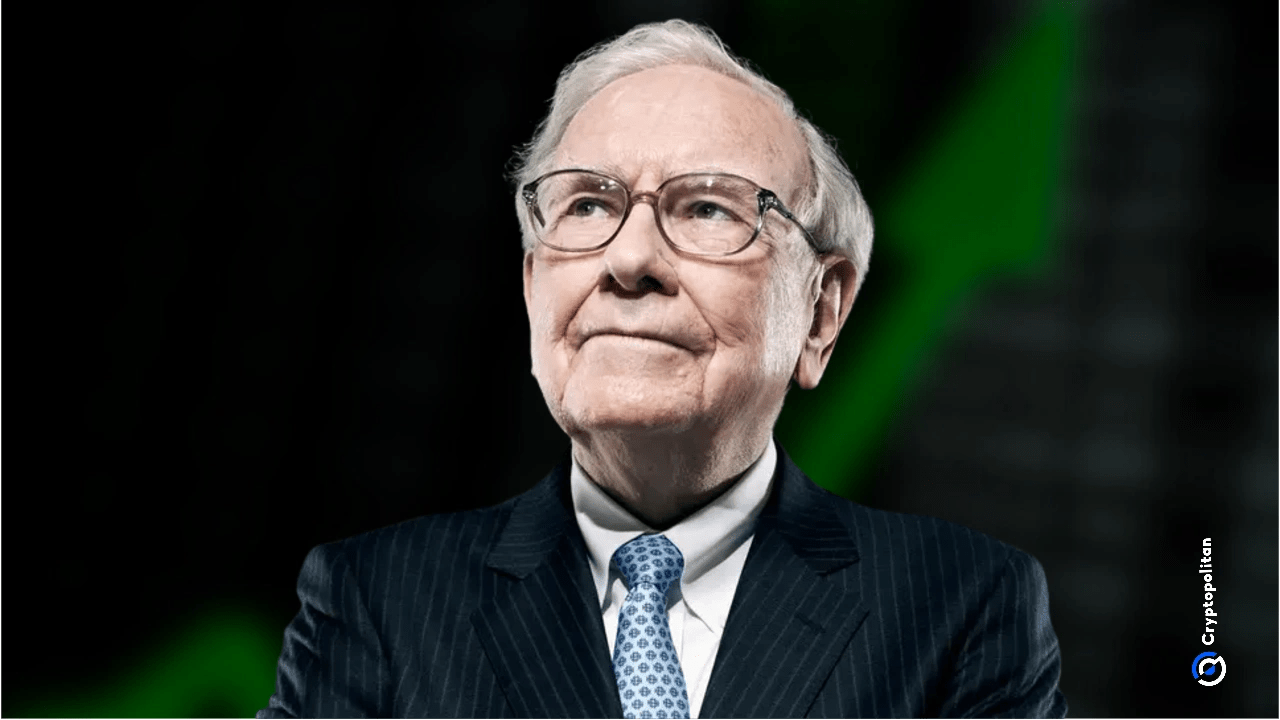
Buffett’s Berkshire moves back in line with the S&P 500

Berkshire Hathaway just erased nearly two-thirds of its lag behind the S&P 500 last week, climbing 4.5% as investors dumped AI names and circled back to companies that actually make money. The rally came after a strong third-quarter earnings report dropped over the weekend, while the Nasdaq cratered 3%, marking its largest weekly fall since April.

The renewed interest in Warren Buffett’s company arrived at a time when markets started worrying that AI plays are too expensive and the U.S. economy might be weakening. According to Barron’s, the rally in Berkshire’s stock cut its underperformance versus the S&P 500 to 4.3 percentage points from 12.2 points as of October 29.

### Berkshire’s Operating Income Surges on Insurance Profits

Berkshire’s operating income surged by 34% to nearly $13.5 billion in Q3, driven mainly by a 200% increase in profit from insurance underwriting.

### Buffett Holds Buybacks, Piles Up Record Cash

Despite the strong quarter, Warren Buffett didn’t greenlight any stock buybacks, signaling that he still doesn’t see Berkshire Hathaway shares as cheap, even after months of trading well below their May highs. With no cash spent on repurchasing its own shares, and with the company selling off more stocks than it bought, Berkshire’s total cash balance reached $381.7 billion at the end of September — a 10.9% increase from June.

When subtracting BNSF Railway’s cash and adjusting for the timing of some Treasury bill purchases, the cash pile still sits at $354.3 billion, up 4.3% over the same stretch.

### Possible Preparations for Warren Buffett’s Departure

Warren Buffett might also be preparing to step away. On Monday, November 10, Berkshire Hathaway is scheduled to release a press statement that will include a message from him about philanthropy, Berkshire, and “other matters that shareholders may find to be of interest.” The company confirmed this to The Wall Street Journal and in a news release last week.

No one is calling it a farewell, but the signs are there. If Warren exits now, he’d be leaving with the company flush with cash, outperforming again, and cutting its reliance on overhyped equities.

### Apple and Bank of America Trimmed as Portfolio Reshuffle Continues

Next Friday, investors will receive a full breakdown of Berkshire’s Q3 portfolio, but there are already signs that Warren Buffett and his team have been selling down major holdings.

Last Saturday’s 10-Q filing showed a $1.2 billion drop in cost basis for the company’s consumer stock category, which includes Apple. Apple rallied 24% during the quarter, making it a prime candidate to cash in profits.

Despite still being Berkshire Hathaway’s largest equity holding — now worth $75.2 billion — the company has cut its Apple position by 69% over the past two years.

Barron’s broke down the $1.2 billion decline, dividing it by Apple’s per-share cost basis of $35. That math points to a sale of about 35 million shares, which would have brought in around $8 billion based on Apple’s average Q3 price of $230 per share.

Apple wasn’t the only holding trimmed. The rest of Apple’s reported $12.4 billion in Q3 equity sales leaves $4.4 billion possibly tied to another name: Bank of America. Buffett has been unloading that stake as well.

Since the beginning of 2024, Berkshire has cut its Bank of America holding by 40%, though it remains the company’s third largest public equity holding at $32.2 billion.

### Significant Holdings Remain in the U.S., Japan, and Hong Kong

Berkshire’s publicly disclosed holdings in the U.S., Japan, and Hong Kong remain substantial. Two Japanese companies, Itochu and Mitsubishi, are exceptions. Those figures are based on data from March 17 and August 28, respectively, with Japanese share prices converted to U.S. dollars.

### State Street Sticks with AI Trade Despite Tech Investors Taking Profits

Meanwhile, State Street continues to back AI investments, even as tech investors take profits. Anna Paglia, the company’s Chief Business Officer, told CNBC’s “ETF Edge” last week that momentum isn’t dead.

“How would you not want to participate in the growth of AI technology?” she said. “Everybody has been waiting for the cycle to change from growth to value. I don’t think it’s happening just yet because of the momentum.”

Anna added that “the rebalancing trade is not going to happen until we see a signal from the market indicating a slowdown in these big trends.”

*Join a premium crypto trading community free for 30 days — normally $100/month.*
https://bitcoinethereumnews.com/finance/buffetts-berkshire-moves-back-in-line-with-the-sp-500/

UNI Price Prediction: Targeting $6.50-$7.20 Recovery Over Next 30 Days

With Uniswap (UNI) trading at $5.93 amid recent market volatility, technical indicators are painting a cautiously optimistic picture for the protocol’s native token. Our comprehensive Uniswap forecast analysis reveals emerging bullish momentum that could drive UNI toward significant recovery levels in the coming weeks.

### UNI Price Prediction Summary

UNI’s short-term target offers a balanced risk-reward setup. The lower band at $5.08 provides strong technical support, while the upper band at $6.81 marks the first major resistance level to watch. Volume analysis shows $32.14 million in 24-hour trading activity, indicating sufficient liquidity to support anticipated price movements. Additionally, the daily Average True Range (ATR) of $0.50 suggests moderate volatility, which could facilitate a recovery without excessive price whipsaw.

### Bull and Bear Scenarios

#### Bullish Case for UNI

The primary bullish target for UNI is $6.50, representing a break above immediate resistance at $6.89. Such a move would confirm a bullish reversal pattern. Key technical factors supporting this scenario include:

– MACD histogram turning positive, signaling a momentum shift
– Price maintaining above the critical $5.00 support level
– Proximity to the lower Bollinger Band, suggesting oversold conditions

If UNI successfully breaks through $6.89, the next forecast target extends to $7.20, aligning with the 50-day moving average and serving as a key psychological resistance. A sustained move beyond $7.20 could pave the way toward $9.22, identified as a strong resistance level in our technical analysis.

#### Bearish Risk for Uniswap

On the downside, a break below the crucial $5.00 support level would invalidate the current bullish setup. This could trigger a decline toward $4.74 (immediate support) or even $4.70, as suggested by analyst consensus. Additional risk factors include broader crypto market weakness, regulatory pressures impacting DeFi protocols, or a failure to keep trading volume above current thresholds.

In an extremely bearish scenario, the 52-week low at $4.78 represents the ultimate downside target.

### Should You Buy or Sell UNI Now?

#### Entry Strategy

Based on our Uniswap technical analysis, the current price around $5.93 presents a reasonable entry point for investors looking to capitalize on UNI’s recovery potential. However, the decision to buy or sell depends largely on individual risk tolerance and investment timeframe.

**Conservative Entry Strategy:**
– Initiate a position at current levels ($5.93)
– Add to the position on dips near $5.50 (close to the 7-day SMA)
– Set a stop-loss at $4.95, just below critical support

**Aggressive Entry Strategy:**
– Take a full position at the current price
– Target profit-taking at $6.50 (first resistance target)
– Hold the remaining position aiming for $7.20

Position sizing should reflect a medium confidence level in this forecast, with a strong emphasis on risk management and capital preservation over chasing maximum gains.

### UNI Price Prediction Conclusion

Our analysis suggests a medium-confidence price target of $6.50 within one week and $7.20 within the next 30 days. The Uniswap forecast is supported by improving technical indicators, analyst consensus, and oversold conditions that historically precede a recovery.

Key indicators to watch for prediction validation include:

– MACD maintaining positive momentum
– RSI rising above 50
– UNI consistently holding above the $5.00 support level

Failure to maintain support at $5.00 would invalidate the bullish outlook and necessitate a reassessment of the forecast.

**Timeline:** We expect initial movement toward the $6.17–$6.50 range within 7–10 days, with the extended target of $7.20 achievable within the following month. This projection depends on broader market conditions and continued buying pressure at key support zones.

Stay tuned for updates as market dynamics evolve and new data emerges on UNI’s price trajectory.
https://bitcoinethereumnews.com/tech/uni-price-prediction-targeting-6-50-7-20-recovery-over-next-30-days/

Colandrea accounts for 4 TDs, UNLV runs for 320 yards in 42-10 win over Colorado State

FORT COLLINS, Colo. (AP) — Anthony Colandrea accounted for four touchdowns, and Jai’Den Thomas rushed for 131 yards, including a 57-yard touchdown on seven carries, as UNLV defeated Colorado State 42-10 on Saturday night.

Colandrea was 15-of-22 passing for 251 yards, connecting on touchdown passes of 68 yards to Troy Omeire and 39 yards to Taeshaun Lyons. His first touchdown run, a 5-yarder with 7:07 left in the second quarter, put UNLV (7-2, 3-2 Mountain West Conference) ahead 14-10 — a lead they would not relinquish.

Jaylon Glover added a 6-yard touchdown run late in the second quarter for the Rebels. Colandrea capped a seven-play, 91-yard drive with a 2-yard touchdown run that extended the lead to 35-10 with 3:11 remaining in the third quarter.

For Colorado State (2-7, 1-4), Jackson Brousseau threw a 3-yard touchdown pass to Rocky Beers to open the scoring, and Isaiah Hankins kicked a 23-yard field goal in the second quarter.

UNLV dominated on the ground, finishing with 320 rushing yards and averaging 7.8 yards per carry. The Runnin’ Rebels outgained the Rams 571-292 in total yards, while Colorado State struggled on third downs, converting just 1 of 13 attempts.

___

Get poll alerts and updates on the AP Top 25 throughout the season. Sign up here.
https://mymotherlode.com/sports/college-sports-game-stories/10163584/colandrea-accounts-for-4-tds-unlv-runs-for-320-yards-in-42-10-win-over-colorado-state.html

Exit mobile version
Sitemap Index