
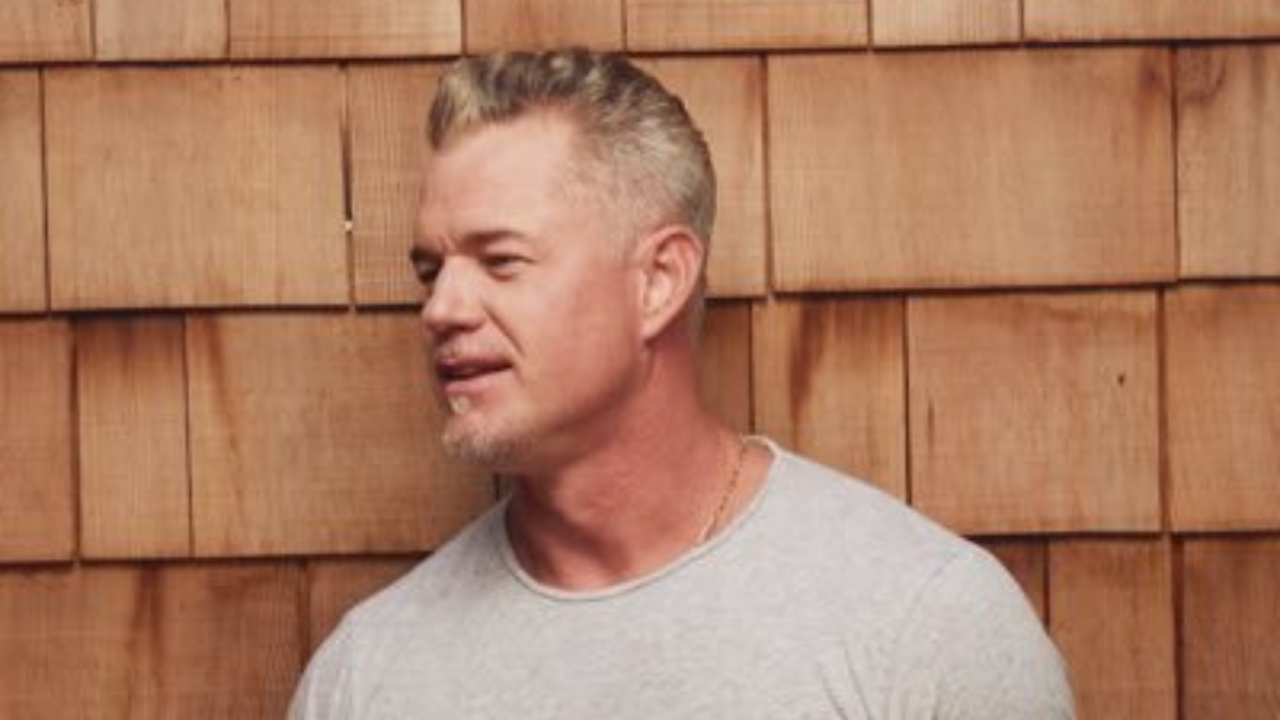
Eric Dane is returning to television in a role that mirrors his real-life battle, bringing the reality of amyotrophic lateral sclerosis (ALS) to the small screen with unprecedented honesty. The 53-year-old actor, known for playing Dr. Mark Sloan, or ‘McSteamy,’ on Grey’s Anatomy, joins the cast of NBC’s medical drama Brilliant Minds as a firefighter facing the same condition he revealed he had been diagnosed with in April. The episode, set to air in late November, marks Dane’s first appearance in the second season of the series. A Role That Reflects Reality Dane portrays Matthew, a firefighter who struggles with an ALS diagnosis while maintaining his role as a protector at home and at the firehouse. According to Johns Hopkins, ALS causes progressive degeneration of nerve cells in the spinal cord and brain, and currently there is no cure. Matthew has not shared the diagnosis with his ex-wife or daughter, fearing it would burden them, and he resists using a BiPAP machine to assist his breathing, stating, ‘Fine, the guys at the station, they got me. But that’s it. I’m not having them deal with strapping me in and out of a machine at night. I got to draw the line.’ When Dr. Oliver Wolf, played by series lead Zachary Quinto, informs Matthew that his disease is progressing faster than expected, the character struggles with accepting help. Dane’s performance brings to life the complex emotions of someone facing a terminal illness while trying to maintain normalcy. ‘What’s it matter?’ Matthew asks his doctor in one scene. ‘Nobody survives this. We both know that, and I know how to take care of my family.’ Collaboration Behind The Scenes Michael Grassi, creator of Brilliant Minds, said he jumped at the opportunity to work with Dane when his team reached out. At the time, Grassi was managing a family health emergency, and he and Dane discussed how families navigate serious diagnoses in real life. ‘And there’s no rule book. There’s no right way or wrong way to do it. And in our conversations, something that he was dealing with very much in real time, and I was dealing with in my life, and a lot of people deal with every day is, how do you navigate, how do you communicate and how do you accept help?’ Grassi told USA TODAY. Dane’s presence on set was described as ‘a joy’ by Grassi. The actor would often arrive and say, ‘Give me a hug.’ Scenes were reportedly full of laughter and camaraderie, providing moments of relief amid the emotionally heavy subject matter. One particular scene, where Matthew records a message about asking for help, moved the cast to their feet. Grassi described it as a ten-minute standing ovation, calling Dane’s performance ‘beautiful and so honest and so real.’ Raising Awareness Through Storytelling.
https://www.ibtimes.co.uk/im-going-fight-until-my-last-breath-eric-dane-confronts-als-powerful-new-tv-role-1757738
Tag: amyotrophic lateral sclerosis
NC doctor’s fashionable way to connect with ALS patients featured in documentary film
**DURHAM, N.C. (WTVD) — A Doctor Who Redefines Hope and Fashion**
How many doctors do you know who ditch their white coats for high fashion? How many doctors believe that “hope” should be taught in medical school? Meet Dr. Richard Bedlack, a neurologist and Director of the Amyotrophic Lateral Sclerosis (ALS) program at Duke University, who is challenging the traditional image of a physician.
Dr. Bedlack doesn’t just treat patients—he makes a statement. Known for wearing high fashion from many well-known designers, he sees his wardrobe as more than just a love for style. “I’ve always felt it’s kind of like putting on a suit of armor,” Bedlack says, adding that his unique fashion sense helps him connect with his patients on a deeper level.
But Dr. Bedlack isn’t your typical doctor in more ways than one. Beyond his work at Duke, he travels worldwide to meet and treat patients where they live. “When I get out there and I see their lives,” Bedlack explains, “I feel like I can be a better doctor to them. I can be a better hope booster for them.”
This compassionate, unconventional approach has made Dr. Bedlack highly sought after and beloved by patients and peers alike. So much so that a documentary film crew followed him for a year, capturing not only his medical work but also his public speaking engagements where he spreads his message of hope.
### More Than Just Hope
“Hope is not just waking up with a smile on your face,” Bedlack clarifies. “That’s optimism. Optimism is nice, but it doesn’t get you very far. Hope is optimism and agency. It means being able to define goals, pathways, and motivations for going down those pathways. That’s why I believe hope is not just an emotion—it’s actually a treatment.”
In the documentary *Stitching Strength*, one of Bedlack’s patients, who communicates through a computer, shares their perspective on ALS: “It is a death sentence. Not a lot to be seemingly hopeful for, right? And yet hope finds a way to muscle its way in.”
Dr. Bedlack backs this up with research. “If we look across every disease where it’s been studied,” he says, “people with more hope do better medically. They have lower symptom burdens, are less likely to be hospitalized, and live longer compared to people with less hope.”
### Progress Fueled by Generosity
Thanks to generous funding from families and supporters outside of Duke, Dr. Bedlack is able to pursue his unconventional ideas. “Just last month,” he shares, “I received roughly $300,000 in donations from families fascinated by some of the things I’m working on right now. That’s going to allow me to spend time on projects that are really out there.”
Unfortunately, some of his ALS patients, including those featured in the 38-minute film, may not have much time left. Speaking about the documentary, Dr. Bedlack says, “Honest to God, every time I see it, I still get goosebumps and tear up. Some of the people in the film are no longer with us.”
Reflecting on his legacy, he adds, “When I’m lying on my deathbed, if I look back and say this was my legacy—to be positive, to bring joy and hope, and to help people see that they are more than their motor neurons—that’s a pretty good legacy. I still hope I can find a cure for ALS, but if I don’t, that’ll be enough.”
### Screening Information
The next screening of *Stitching Strength* will be held on Thursday, Nov. 13th, at The Cary Theatre.
For more information, click on [Stitching Strength].
—