
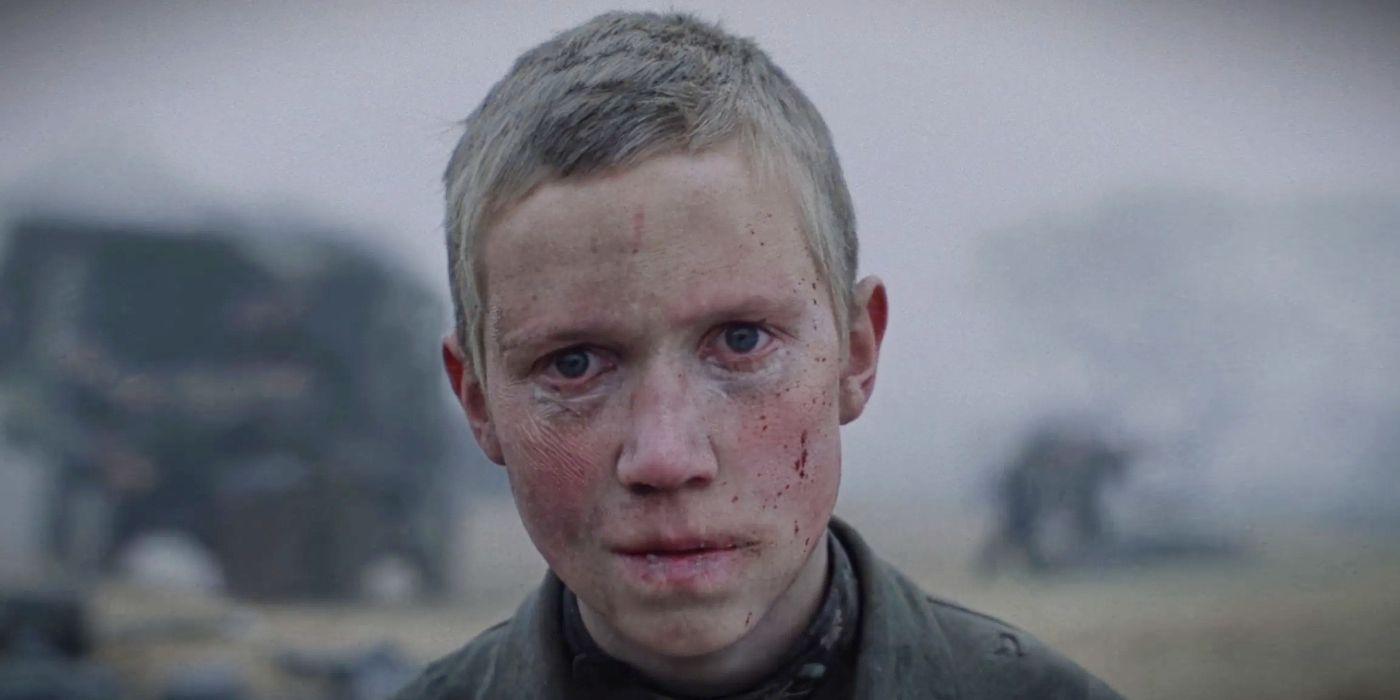
Abandon all hope, ye who enter a cinema playing one of these movies. Or if you’ve got hope and you find it on a streaming service or DVD or something, uh, go ahead and abandon it in that situation, too. These movies are hopeless, but not in a technical sense, because they’re all trying to be heavy and they succeed remarkably at that. They’re hopeless in the sense that they inspire no feelings of hope, or anything very positive, really. Some films, like The Shawshank Redemption or Rocky, might feature hardships and have their characters feel without hope at times, but perseverance is a theme of those two movies, and many other dramas, too. Perseverance might be found in the following films, but it’s either all for nothing, or too much bad stuff happens and hope/the will to go on is for nothing. If you want something feel-bad and despairing, these movies have got your back. Or they’re willing to stab you in the back like, multiple times, and then laugh at you as you collapse to the ground, bleeding out. It depends on your point of view. 10 ‘Angst’ (1983) The appropriately named Angst is an absolute nightmare, and mostly in a way that’s hard to explain to anyone who hasn’t seen the film itself, which is another problem because you probably don’t want to see it. On paper, it’s just about a serial killer who eventually targets a family, and it’s got more of a premise than an actual story, so trying to explain it might make it sound stretched out or kind of boring. And it’s also the kind of thing that’s been done before, so you’d probably ask, “What’s the point?” or “What makes it so bad?” But it is. Angst is one of the most disturbing movies ever made, without a doubt, because it’s uncompromising and filmed in a way that makes it feel like a nightmare, or a bad trip, or both. It’s relentlessly confronting, and the level of despair is both palpable and crushing. 9 ‘Dancer in the Dark’ (2000) Dancer in the Dark is a bleak crime drama and a musical at the same time, and it aims to make you feel a little sad for the first hour or so, and then absolutely drown you in melancholy for the rest of the runtime. That’s to say that there’s something of an unexpected development here, so to keep things vague, it’s about a single mother who has a lot of problems she’s dealing with, and then a new one, suddenly, that’s even more dramatic. Of all the musicals ever made, Dancer in the Dark has a well-earned reputation for being one of the bleakest and most emotionally intense. It’s remarkable, and a highlight of Lars von Trier’s filmography for sure, but it’s only really recommendable to people who are sufficiently readied and at least somewhat prepared for a big old downer. 8 ‘Blonde’ (2022) If you go into Blonde hoping for a Marilyn Monroe biopic, you’ll probably be disappointed, because that’s not really what this is. The film is instead something that uses Monroe to explore an issue inherent to the film industry (and other areas, really), regarding how people are used, exploited, and have their lives destroyed by more powerful individuals. It’s a story that has to be told, but using Monroe specifically to tell it might be a bit much for some. So, in that sense, the controversy around Blonde is understandable, but as something that sheds light on abuse and predatory behavior within purportedly professional spaces, it’s bold and maybe even necessary. If you’re offended by it, you won’t have fun, and if you get what it’s going for and appreciate it for that, you also won’t have fun. Everyone will come away from this feeling bad, but the divide comes from people disagreeing on what the film was going for, and the way it delivered whatever that was. 7 ‘Harakiri’ (1962) In Harakiri, the main character states he wishes to take his own life in a suicide ritual early on, so you know you’re in for a bad time right from the jump. Before doing it, though, he tells a clan of samurai why he’s been driven to such a state, and his tragic backstory makes the whole movie feel progressively more upsetting and confronting, and before the knife gets twisted literally, it figuratively twists again and again in (again, the figurative) stomach of the viewer. Harakiri is not a fun sort of samurai or martial arts film, and is instead intended to brutally deconstruct a whole class/group from Japan’s history. There is some swordplay here, and if you count samurai films as belonging to the martial arts genre, you can technically call Harakiri one. But it’s not a fun sort of samurai or martial arts film, and is instead intended to brutally deconstruct a whole class/group from Japan’s history, and suggest a lack of morality that’s sometimes assumed and associated with such people. It’s a fantastic film for sure, but also an immensely challenging one. 6 ‘Come and See’ (1985) Perhaps the most nightmarish of all war movies (or it’s at least a contender), Come and See offers nothing by way of thrills or excitement in its depiction of war, seen through the eyes of a child who loses his innocence and appears to age decades in the space of a couple of hours. He joins some resistance fighters in Belarus, but the invading German forces prove to be too strong, and so things just go from bad to worse and then keep sinking to new lows. It’s one of the more despairing movies out there, and though it’s not a horror film, Come and See is terrifying in just about every conceivable way. The feeling of heaviness comes about here because the weight of war on a physical and psychological front has seldom been this crushing, which is to the film’s credit while also being something that makes it difficult to recommend. 5 ‘Killers of the Flower Moon’ (2023) At the time of writing, Killers of the Flower Moon is the most recent film directed by the great Martin Scorsese, and it also could well be his heaviest. The Irishman certainly gives it a run for its money, with that one being like a Scorsese gangster film but creakier, slower, and more somber than usual, and uncompromising as an exploration of aging and regret. There’s not as much of a personal angle to Killers of the Flower Moon, and it’s instead more sprawling, showing a series of crimes that occurred on a massive scale and over multiple years. It’s technically a Western, or a kind of Western, and a great one, but also a hugely soul-crushing one in the way it unpacks greed and the manner some people can normalize or try to personally justify the most abhorrent crimes imaginable. If you haven’t already lost your faith in humanity, a film like this could be the one to push you over the edge. 4 ‘Manchester by the Sea’ (2016) Manchester by the Sea is a straightforward drama if you’re looking at things purely from a genre standpoint, but it stands out and excels because it’s such an emotionally brutal drama. It follows a man trying to make sense out of his various misfortunes and the feeling that his life is going downhill, with things being pretty sad for a while, until his past is fully explained, and then it all becomes devastating. This does feel human, and maybe calling it “cruel” would itself be cruel to do, but Manchester by the Sea makes you squint pretty damn hard if you want to scan it to find any sort of hope or even marginally uplifting thing in it. Instead, it’s more just a film about anguish and the most intense sort of grief, all done in an attempt to make it feel as real as possible, and mortifyingly believable. Mission, perhaps unfortunately, accomplished. 3 ‘An Elephant Sitting Still’ (2018) Though it’s four hours long, it’s hard to call An Elephant Sitting Still an epic movie in the traditional sense, because the drama here is all very personal, and the timeframe covered is surprisingly short. It’s a debatable epic in the way Magnolia is, and though that 1999 film is also long and heavy, it’s not entirely crushing or 100% devoid of hope, whereas An Elephant Sitting Still is all about despair. It was made by Hu Bo, who only ever directed this one feature film, and took his own life before it was released, and then subsequently praised for being about as uncompromising an exploration of depression and despair as there’s ever been on-screen. An Elephant Sitting Still is slow, but it’s also absorbing and undeniably tense, albeit in a quiet way, and it’s very much worth watching if you have both the time and the stomach for it. 2 ‘Twin Peaks: Fire Walk with Me’ (1992) David Lynch was no stranger to harrowing movies, but he had a lighter side too, and wasn’t just a cynic or pessimist by any means. There’s hope to be found, eventually, at the end of the otherwise mortifying Blue Velvet, for example, but then you come to something like Twin Peaks: Fire Walk with Me, and it’s just non-stop with all the crushing things that happen and the overall sense of despair. It does have to be that way, since Twin Peaks started with a horrifically tragic event, and Twin Peaks: Fire Walk with Me details the lead-up to that event, and then the event itself happening in unflinching detail. It also ends up making the more soul-crushing and tense parts of Twin Peaks, the show, feel even more intense once you have all that added context, so it’s a pretty remarkable achievement as far as surreal horror/mystery/tragedy movies go. 1 ‘The Human Condition’ (1959-1961) A film that lives up to its title by showing how rough it is to be human, The Human Condition actually does more than that, in all honesty, since it’s about World War II, shown from the perspective of a pacifist. He resists the war early on, finds himself unable to get out of it completely, and then after Japan surrenders, he’s left alone and forced to survive with the slim hope of returning to his old life.
https://collider.com/heaviest-movies-of-all-time-ranked/
Tag: appropriately


Fans find Mass Effect 5 art of a Krogan civil war hidden in BioWare’s N7 Day post, studio lead says “I want you to see stuff. But it’s not the time…yet”
BioWare made it pretty clear that there was a secret lingering in its N7 Day celebrations, and fans have finally cracked the hidden message. The result? A piece of concept art teasing a Krogan civil war.
That’s a bounty for lore enthusiasts, but for those hoping to see more of the actual gameplay in Mass Effect 5, today’s news has been somewhat disappointing.
According to executive producer Mike Gamble, it simply isn’t the right time to reveal more about the RPG just yet. In a tweet, Gamble addressed fans frustrated by the lack of new information during N7 Day:
> “For everyone yelling at me because we didn’t use N7 Day to provide a whole bunch of info. I mean, I get it. I’m a fan too. I want you to see stuff. But it’s not the time. yet. Has it been years since announce? Yes. Have we been busy? Yes. Are we NOW 100% on Mass Effect? Also yes.”
This tweet landed shortly before fans uncovered what appears to be the final piece of Mass Effect 5 news from the event. Hidden within Gamble’s blog post was a string of italicized letters spelling out “URL KROGAN.”
It took the community a while to decode the precise meaning, until the official Mass Effect Twitter account dropped a clue: “A20N7S12].” This combination of letters and numbers turned out to be a cipher—with “N,” fittingly, representing 7.
Applying that cipher to “KROGAN” yielded the sequence 411826207, which directed fans to a page on the official Mass Effect website. There, they found a high-quality piece of concept art featuring a group of Krogans engaged in battle, accompanied by the caption “civil war.”
This perhaps hints at a story thread we’ll see explored in Mass Effect 5. However, there’s only so much information one can extract from a single image.
Unfortunately, this kind of teaser has been the extent of Mass Effect 5 reveals for years now, which doesn’t offer much for a fandom that’s been eagerly awaiting a new entry in the series for nearly a decade.
With BioWare now fully focused on the game, hopefully, more substantial news will arrive soon. Still, it’s easy to understand why fans are growing tired of vague teasers and cryptic clues.
https://www.gamesradar.com/games/mass-effect/fans-find-mass-effect-5-art-of-a-krogan-civil-war-hidden-in-biowares-n7-day-post-studio-lead-says-i-want-you-to-see-stuff-but-its-not-the-time-yet/

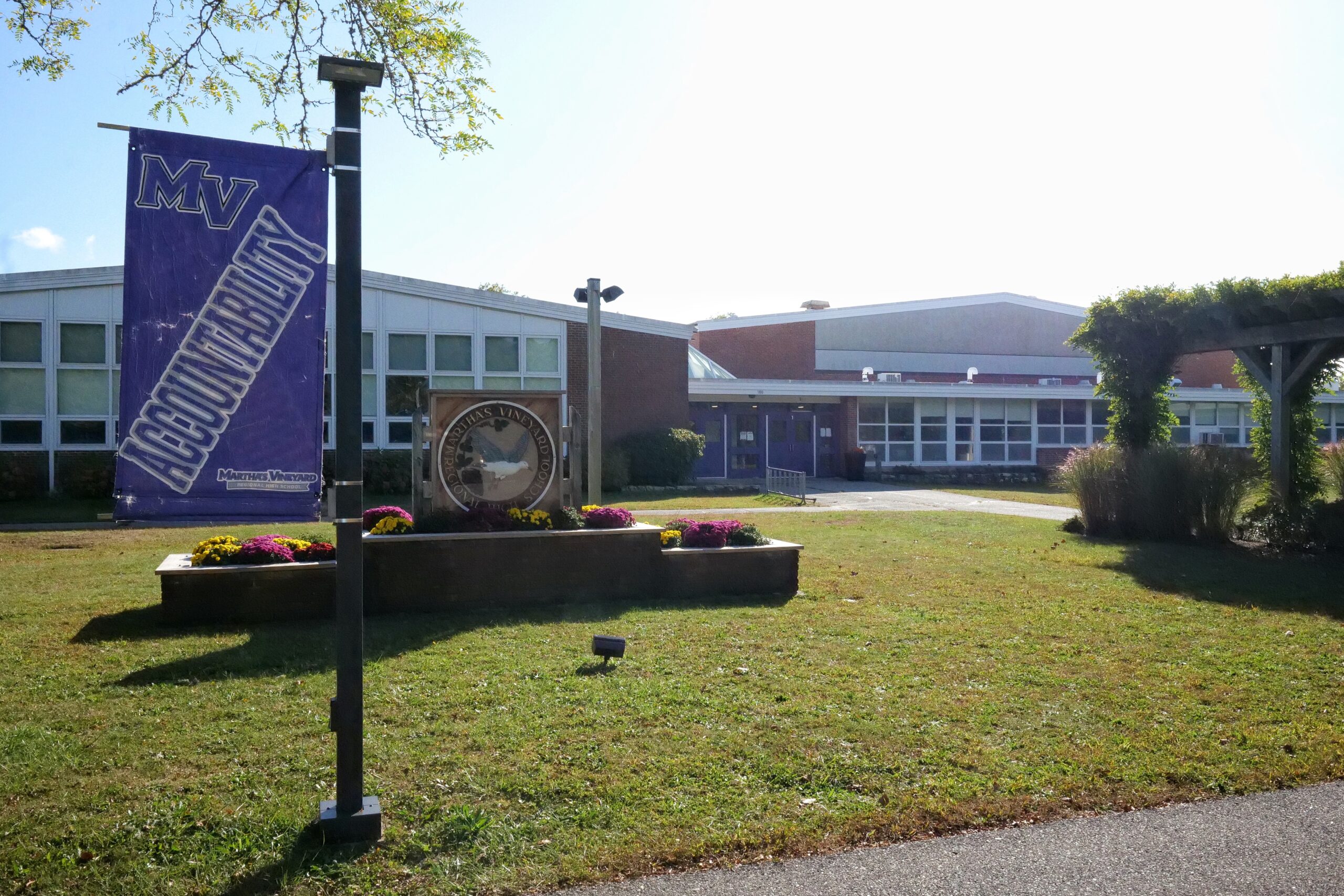
Island-wide vote chosen for school building project
Following a contentious discussion on Monday evening, the Martha’s Vineyard Regional High School Committee decided to forgo traditional town meetings and instead move forward with an Island-wide vote to fund the renovation and addition project for the regional high school.
The committee convened in the school library to determine which voting process to pursue. Previously, the vote had been postponed from early October, allowing members time to consult with town officials, residents from all six towns, and each other to ensure the best path forward.
“I understand that there’s a lot of trepidation and concern. But I see confidence in our ability to take this vote tonight,” committee member Robert Lionette told the room, which included about a dozen attendees from local town officials to fellow school committee members. He noted the committee had evolved and thoroughly considered the decision. “Because of that, I am fully supportive of one, Island-wide vote,” Lionette affirmed.
### The Voting Options
Two options were on the table for how the Island community would vote on the project:
1. **Traditional Town Meetings:** Residents of each of the six towns would vote individually. However, if even one town rejected the project, the committee would need to return to the Massachusetts School Building Authority (MSBA)—the funding body that offers roughly a 30 percent reimbursement on the project cost, which is currently projected at about $334 million. There are no guarantees that MSBA would continue funding if the project was initially voted down in this manner.
2. **Island-wide Vote:** Residents would vote at their respective polling locations with a simple “yes” or “no” ballot on funding the project. Since the project cost will ultimately be distributed among individual taxpayers, approval rests in the hands of the entire Island public.
Committee member Amy Houghton expressed strong support for the Island-wide vote. “There’s no removing the community’s input,” she assured attendees. Houghton shared that some Tisbury residents prefer this method after their own school building project lost approximately $30 million in MSBA reimbursement due to dissenting town voters in the past. “This is a regional school district, and we need to be able to support the school and move the project forward,” she said.
### Concerns and Opposition
Only one committee member, chair Skipper Manter, voted against the Island-wide vote. Manter voiced his belief in the traditional town meeting structure and worried about potential fallout among the towns. “I think, in small town government, there’s nothing more important than town meetings. Everybody gets a fair opportunity to express their views,” he said.
Public opposition to the Island-wide vote echoed Manter’s concerns during the meeting. Richie Smith, superintendent of all public schools on the Island, expressed unease about bypassing town meetings. “I think we need to work within the confines of what we’ve done in a traditional manner,” Smith remarked.
He emphasized the necessity of the renovation beyond simple code upgrades—such as mechanical, central air, and electrical system improvements—that alone would cost about $190 million. The planned renovation and addition are vital for the wellbeing of staff and students, Smith said, and urged the committee to focus on educating the public about the project’s importance to ensure affirmative votes, rather than changing the voting system.
Dion Alley, chair of the school building committee, shared a similar viewpoint: “I would strongly urge you to follow the path we’ve been on. I think you need to put your trust in the community, and I think the community nine out of ten times will do the right thing.”
### Voices from the Towns
Several town officials were present to weigh in on the issue. Chilmark Select Board Chair Marie Larsen voiced support for a town meeting vote. “Doing the nuclear option right off the bat is just not a good thing in my opinion,” Larsen said. “We need to get the Island behind this, and this [choosing the Island-wide vote] is the opposite of that.”
Rachel Orr, a member of Tisbury’s finance and climate committees, expressed ongoing concerns about fairness within the funding formula under an Island-wide vote. With towns paying different rates, she questioned the equity of a regional vote. Tisbury residents and officials have been vocal for months about this issue, as the town is slated to contribute more than others under the current system.
While school committee members noted that the regional agreement and funding formula had previously been approved by Tisbury officials, the reality remains that Tisbury residents face multiple capital project burdens and fear adding another financial strain.
“I had three children go through the school. I’m very grateful for the facility and I love that it’s an Island-wide institution. But there are real winners and losers here,” Orr commented.
### Final Thoughts from Committee Members
School committee member Kathryn Shertzer admitted she had struggled with the decision for months. “There are no guarantees about this project. I really hope this project moves forward regardless of the way it’s voted,” she said.
Citing the Tisbury School project, where MSBA funding fell through and residents paid significantly higher taxes than planned, Shertzer expressed caution. “I can’t fathom our Island making repeated mistakes,” she said before ultimately voting in favor of the Island-wide vote.
—
As the project moves ahead with an Island-wide vote, the community awaits a decision on a renovation that has been in the works for about a decade, balancing regional interests with individual town concerns and the vital goal of upgrading a critical educational facility.
https://www.mvtimes.com/2025/11/03/island-wide-vote-chosen-school-building-project/


Ray Enhances Scheduling with New Label Selectors
Ray, the distributed computing framework, has introduced a significant update with the release of label selectors—a feature designed to enhance scheduling flexibility for developers. According to a recent announcement by Anyscale, this new capability enables more precise placement of workloads on appropriate nodes within a cluster.
### Enhancing Workload Placement
The introduction of label selectors is part of a collaboration with the Google Kubernetes Engine team. Available in Ray version 2.49, this feature is integrated across the Ray Dashboard, KubeRay, and Anyscale’s AI compute platform. It allows developers to assign specific labels to nodes in a Ray cluster, such as `cpu-family=intel` or `market-type=spot`. This labeling system streamlines the scheduling process for tasks, actors, or placement groups on specified nodes, providing greater control and efficiency.
### Addressing Previous Limitations
Previously, scheduling tasks on specific nodes presented challenges for developers. Many had to rely on workarounds that mixed resource quantities with placement constraints, leading to convoluted and less effective solutions. Label selectors overcome these issues by enabling more flexible expressions of scheduling requirements. They support exact matches, any-of conditions, and negative matches—such as avoiding GPU nodes or specifying particular regions like `us-west1-a` or `us-west1-b`.
### Integration with Kubernetes
Ray’s label selectors are inspired by Kubernetes labels and selectors, enhancing interoperability between the two platforms. This development aligns with ongoing efforts to integrate Ray more closely with Kubernetes, allowing users to leverage familiar APIs and semantics for more advanced scheduling use cases.
### Practical Applications
With label selectors, developers can achieve a wide range of scheduling goals, including:
– Pinning tasks to specific nodes
– Selecting CPU-only placements
– Targeting nodes with specific accelerators
– Keeping workloads within designated regions or zones
The feature supports both static and autoscaling clusters. Anyscale’s autoscaler takes into account resource shapes and label selectors to appropriately scale worker groups based on current needs.
### Future Developments
Looking ahead, Ray plans to expand the label selector feature with enhancements such as:
– Fallback label selectors
– Library support for common scheduling patterns
– Improved interoperability with Kubernetes
These improvements aim to simplify workload scheduling further and enhance the overall user experience.
For more detailed instructions and API information, developers are encouraged to consult the Anyscale and Ray official guides.
*Image source: Shutterstock*
https://Blockchain.News/news/ray-enhances-scheduling-with-new-label-selectors