
Final Hours To Claim LivLive’s SPOOKY40 Bonus: The 5 Best Crypto Presales To Watch Now

What if every real-life action could earn rewards in crypto? From a simple walk to leaving a restaurant review, imagine turning your daily habits into passive income. LivLive (IVE) is making that happen, merging lifestyle with blockchain in ways that redefine engagement. For anyone watching the next wave of game-changing presales, this is where attention belongs.

But LivLive isn’t alone in heating up investor interest. Projects like Jet Bolt, Nexchain, Coldware, and SUBBD are creating their own waves across the crypto presale scene, each promising innovation across AI, security, and data ownership.

This article covers the developments and updates of all five coins—LivLive, Jet Bolt, Nexchain, Coldware, and SUBBD—and explores how they’re shaping the future of Web3 investment.

### LivLive (IVE): The Best Crypto Presale Bridging Real Life and Blockchain

LivLive (IVE) isn’t just another metaverse promise; it’s the bridge between real-world activity and blockchain rewards. Built on Ethereum with a total supply of 5 billion tokens, the project introduces a bold $0.02 listing target, creating an ambitious yet realistic growth path for early investors.

At its core, LivLive transforms how people interact with technology by rewarding engagement, action, and authenticity. The current presale has already attracted over $2,055,194, backed by 180 holders. The token is priced at just $0.02, and the private sale has already reached 100% of its $2 million goal. Stage 1 of the public presale is now 2.2% filled, creating immense anticipation among early buyers.

LivLive accepts all major payment methods, from Visa and Mastercard to popular cryptocurrencies like ETH, USDT, and BTC. Every purchase is payable after the presale ends, ensuring a transparent and user-first checkout system.

To make the deal even more enticing, investors can use the **SPOOKY40** bonus code to get 40% more IVE tokens, a limited-time offer that’s driving significant traction.

### Real-World Gamification Layer: Turning Daily Life Into Tokenized Rewards

LivLive’s Real-World Gamification Layer changes the way users interact with digital incentives. Instead of locking rewards inside a virtual game, LivLive gamifies real life.

Users earn IVE tokens and XP by completing real-world “quests,” such as walking, attending events, or reviewing a local spot. These aren’t fictional leaderboards; they’re verifiable proof-of-action milestones that reflect actual engagement. This structure gives IVE genuine utility and an emotional connection.

Participants don’t chase pixels—they earn recognition and value for living actively and authentically. LivLive replaces the traditional influencer metric system with measurable achievements. A simple check-in becomes a badge of credibility. Each action, each quest, becomes an asset, bridging lifestyle, entertainment, and financial reward in one seamless ecosystem.

### Verifiable Trust Protocol: Redefining Transparency in Blockchain Interaction

Transparency isn’t just a feature in LivLive—it’s the foundation. The Verifiable Trust Protocol ensures that every user action and reward on the platform is recorded and authenticated on-chain.

This means no bots, no fake engagement, and no manipulation. The system’s proof-of-action model guarantees that every interaction—whether walking into a venue or completing a sponsored challenge—is genuinely verifiable.

This verifiable layer builds confidence between users, brands, and partners. Businesses can verify campaign engagement in real time, while users enjoy peace of mind knowing their rewards are secure and legitimate.

LivLive’s approach promotes ethical participation, credibility, and long-term sustainability in ways that few presale cryptos have ever achieved.

### LivLive (IVE) Presale and Investment Outlook: The Numbers Tell the Story

LivLive (IVE) is structured to deliver lasting value through reward mechanics, deflationary supply, and a transparent economic framework. The project’s $0.02 presale price presents an appealing entry point, especially considering the $0.2 listing target—a potential 10x gain for early buyers.

Unsold tokens are set to be burned, and liquidity will be locked after launch, fortifying investor confidence.

Consider this: a $5,000 investment at the current presale rate secures 250,000 IVE tokens. With the **SPOOKY40** bonus, that number increases to 350,000 tokens.

When LivLive lists at $0.2, that same position could be worth $70,000—a staggering potential gain. If momentum drives the price to $1 as projected, the investment could soar to $350,000, representing a 70x return.

That’s the power of early participation in a presale designed for value, engagement, and trust.

The clock is ticking on LivLive’s biggest reward yet. Use code **SPOOKY40** before November 1 to grab 40% more tokens before the offer disappears.

### Jet Bolt: Building the Future of Speed and Scalability

Jet Bolt is emerging as one of the most technically ambitious presale cryptos in the DeFi ecosystem. It focuses on creating ultra-fast transaction capabilities for blockchain networks.

With lightning-speed processing and AI-optimized throughput, Jet Bolt aims to set new benchmarks in decentralized performance. Its architecture supports multi-chain scaling and zero-latency smart contracts, giving developers and enterprises the power to build without friction.

Jet Bolt’s presale has drawn attention from institutional players seeking next-generation transaction efficiency, a critical step toward mainstream adoption.

### Nexchain: Pioneering Data Connectivity Across Blockchains

Nexchain offers a data bridge that allows seamless interaction between isolated blockchains. This interoperability is becoming increasingly vital as crypto networks evolve.

By providing a unified layer for data exchange, Nexchain ensures that blockchain ecosystems can share information and value efficiently. Its presale momentum is growing rapidly, driven by strong developer interest and backing from early-stage funds.

The platform’s goal is to power decentralized apps that rely on continuous, accurate data sharing—a necessity for real-world blockchain scalability.

### Coldware: Redefining Cybersecurity in Crypto

Coldware is tackling one of crypto’s biggest challenges: security. This presale project introduces a decentralized firewall that protects Web3 users from exploits and data breaches.

Coldware’s system leverages real-time threat detection powered by AI, enabling it to react faster than traditional cybersecurity protocols.

Investors view Coldware as a long-term stability asset within the presale crypto list. It provides essential protection for decentralized apps, wallets, and transactions, positioning itself as a guardian of the DeFi world.

### SUBBD: Empowering Creators Through Decentralized Media

SUBBD addresses the creator economy by building a decentralized publishing model where artists, writers, and influencers retain full ownership of their content.

Through blockchain-based subscriptions and community governance, SUBBD eliminates middlemen, ensuring fairer profit distribution.

The project’s early traction suggests strong cultural appeal. Its presale has attracted creators seeking an equitable revenue model.

As content ownership becomes a defining issue in digital media, SUBBD’s mission is well-timed for major impact.

### Why Joining the LivLive (IVE) Presale Is the Smartest Move Right Now

Joining the LivLive (IVE) presale is more than an investment—it’s participation in a lifestyle revolution.

While other presales bring technical innovation, LivLive blends human experience with blockchain utility. Every feature, from its real-world quests to its transparent trust system, gives users tangible value that connects to their daily lives.

Compared to Jet Bolt, Nexchain, Coldware, and SUBBD, LivLive stands out by bridging real-world utility with digital economics. It doesn’t just exist on a screen; it exists in people’s routines, relationships, and achievements.

With the **SPOOKY40** bonus still active, buyers gain an immediate advantage by securing 40% more tokens before the next pricing tier increases.

### Conclusion: The Future of Presale Crypto Lies in Purpose

The crypto presale landscape is buzzing with opportunity, and these five projects—LivLive, Jet Bolt, Nexchain, Coldware, and SUBBD—each bring something remarkable to the table. They represent innovation, transparency, and real-world application.

Yet, among them, LivLive (IVE) shines as the project most deeply rooted in practical, human value. With over $2 million raised, a $0.02 entry point, and a $0.2 target, LivLive isn’t just a presale; it’s the start of a movement redefining how everyday actions create wealth.

The time to act is now. Those who move early could be holding tomorrow’s most valuable lifestyle token.

LivLive just dropped a Halloween surprise. Claim 40% more IVE tokens with code **SPOOKY40** while it’s still live. Once the bonus allocation is gone, it’s gone for good.

### Find Out More Information Here

– Website: [Insert URL]
– X (Twitter): [Insert URL]
– Telegram Chat: [Insert URL]

*Don’t miss your chance to be part of this exciting journey!*
https://bitcoinethereumnews.com/crypto/final-hours-to-claim-livlives-spooky40-bonus-the-5-best-crypto-presales-to-watch-now/?utm_source=rss&utm_medium=rss&utm_campaign=final-hours-to-claim-livlives-spooky40-bonus-the-5-best-crypto-presales-to-watch-now
Ananta’s ‘kitchen sink’ approach to game design is as overwhelming as it is impressive

Some folks will tell you that comparisons are a lazy crutch for critics. Don’t tell your reader what a game is like; tell them how it stands on its own merits. The problem is that game design is an iterative process. One of the first video games was *Tennis for Two*, but the first breakout hit was eerily similar, yet much more refined: *Pong*. Hell, we used to call FPSs “Doom clones.”

Comparison is a useful tool because so much of game design is based on iterating on the competition. *Ananta* takes this logical endpoint by essentially acting as a blender to emulsify popular game mechanics together for something bizarrely unique in its sheer lack of new ideas.

### An Everything Bagel Game

So what is NetEase’s next big game? Well, to use a useful crutch, it is one part *Grand Theft Auto* open world, one part *Batman Arkham* combat. There is a dash of *Like A Dragon’s* zany side missions, a touch of *Spider-Man* movement, alongside some of the bones of a linear Sony first-party action game. There is also a sprinkle of *Persona* character building.

All of this is held loosely together with an anime aesthetic and gacha structure that amounts to a game feeling like a dozen experiences you’ve had before—resulting in something less than the sum of its many parts.

In a lot of ways, it’s like an everything bagel, or, more accurately, it’s like when you were a kid and your friends mixed together every flavor drink at the freestyle machine for something truly nightmarish. *Ananta* won’t make you want to throw up like a Coke, Pepsi, Seven-Up, and milk combo drink, but even after a thirty-minute demo, I can tell that its “everything, everywhere, all at once” game design approach is making me wince in places.

None of these elements are bad; in fact, in isolation, they are excellent distillations of the core ideas they are borrowing from other games. Developer Naked Rain clearly understands that video game innovation comes from iteration. However, when this many elements are combined together after being recreated so authentically, the disparate pieces quickly rub against each other and cause an untold amount of friction while playing *Ananta*.

### Concessions in the Name of Volume

This first became apparent as soon as I started playing. The demo kicks off with a story mission where our Spider-Man in a sharp business suit is ambushed by countless assailants. This is where you’re introduced to the first form of combat: hand-to-hand Arkham-style brawling.

In theory, this combat plays out just like a *Batman: Arkham* game, or *Middle-earth: Shadow of Mordor*-like, or *Mad Max*-like. Take your pick. However, in practice, because so many buttons on the controller have been reserved for movement abilities you use in the open world, punching and blocking are shifted to the shoulder buttons—making the controls feel much less comfortable.

This is further exacerbated when you take out a gun, as the triggers are reserved for special moves, meaning aiming and shooting are also assigned to the shoulder buttons. That said, in scripted missions like the one I played, it’s not like you’ll need to worry about hitting your shots. The car chase segment I played through was nearly impossible to fail.

In these sequences, you magically forgo the need to reload with your assault rifle, letting loose an endless barrage of bullets.

These issues are far from deal breakers, but every element of the game feels like it has to cede ground to several other mechanics and ideas in order for things to keep functioning.

This game does have GTA-inspired driving, which I describe that way because the driving model feels just like GTA rather than other open-world driving games. However, why would you ever use that when playing as the main character, or Captain, who can literally swing above the traffic at twice the speed? Or when you could fast travel on the subway—which, yes, also has the Spider-Man-esque loading screens of the Captain commuting with city locals?

### Gacha Theft Auto

It’s worth noting that this gameplay diversity is somewhat justified both narratively and structurally.

You see, *Ananta* will apparently be a free-to-play gacha game. This means you’ll take on the role of an ever-growing cast of characters, expanded through updates and endless pulls. So, yeah, it makes sense that one character controls like Peter Parker and another has an electric unicycle to get around quickly.

In fact, gacha mechanics are one of the few things that seem cleanly integrated with the overall GTA-like open world. You’ll be able to create a roster of three characters you can quickly swap between with a “zoom out on a world map and then zoom back in” quick menu—directly inspired by GTA 5. Usually, you’ll pick up with your new character in the middle of a funny little encounter.

Keeping up the pattern of borrowing beloved mechanics, the character building from *GTA: San Andreas* is also present. After trying some side missions, I found myself taking one of my characters to the gym to level up their stats and abilities—like CJ trying to get cut.

Are gacha pulls and character leveling really something I wanted in my GTA-like game? Not really. I can’t exactly see myself excited to spend a bunch of money to pull a legendary future cop. However, I am apparently in the minority, considering the game’s recent Tokyo Game Show trailer has over five million views on the official PlayStation YouTube channel alone.

### Like Like A Dragon

After all that, and having played the game myself, I still can’t help but wonder: What am I doing in *Ananta*? What is this game?

Yes, it will have a main narrative focusing on the Captain, with set pieces and the like, but what am I doing with the roster of gacha characters? Why would I continue to put time and money into a free-to-play GTA-like?

It seems like each character you gain access to will have their own set of missions. These missions seem to lean into the wackiness of *Like A Dragon* sub-stories, with the structure of GTA filler content.

In the mission I played, I was tasked with delivering a mysterious crate in the back of a kei truck to a destination. After a quick hand-to-hand brawl and some driving, it quickly became clear that what I was delivering was a sleeping vampire—who eventually awoke due to our rough driving and vomited rainbows.

Yeah, I don’t really know either.

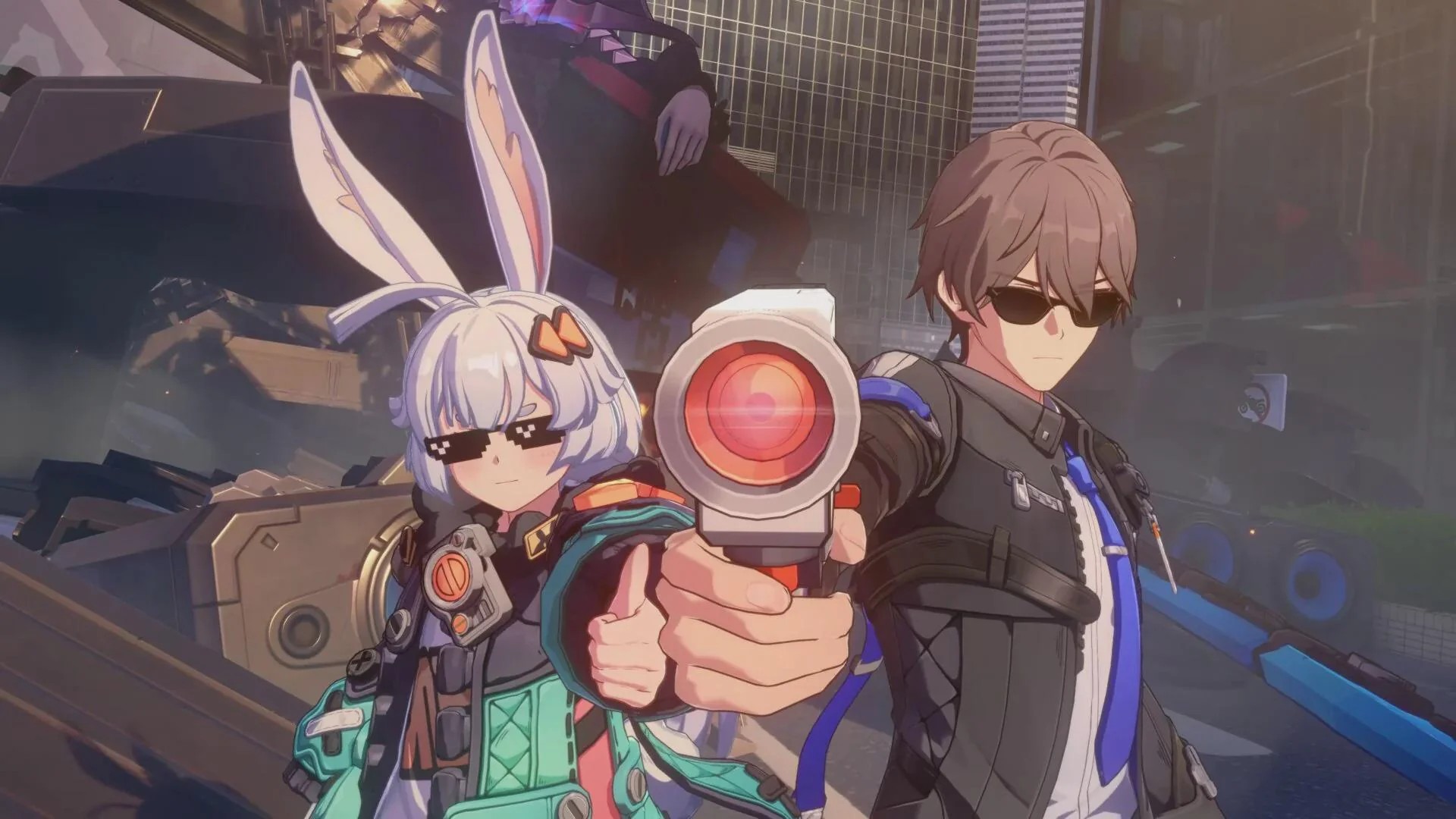
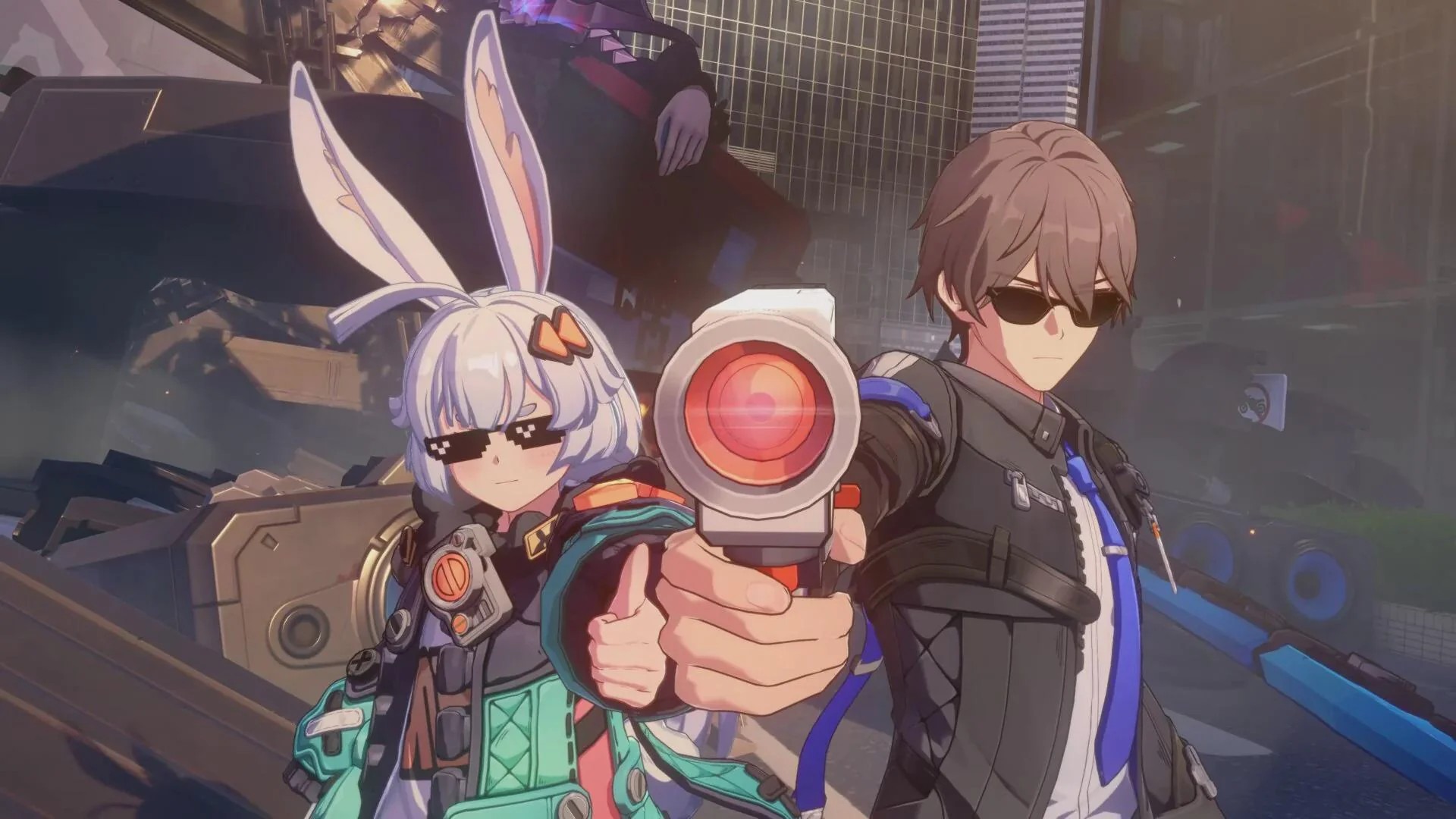
This mission capped off with an admittedly pretty funny sequence where the bunny girl I was playing as was recruited to continue making similar deliveries before she could even protest.

While this cutscene was fun, I realized I was ultimately partaking in the much-derided GTA mission structure, which has rightfully been called out as padded filler since *GTA 3*. I drove to a place, beat up some guys, got in a car, listened to some character dialogue as I drove, and finished the mission.

While games like *Genshin Impact* and *Honkai Star Rail* have similarly repetitive mission structures, the gameplay that they’re based on is inherently more engaging moment to moment. Genshin’s exploration and Honkai’s turn-based combat both lend themselves to a satisfying rhythm of completing dailies.

I am skeptical I would ever find similar joy driving the same streets repeatedly for missions like the one I played in *Ananta*.

### Less Is More

The more I think about it, the more *Ananta* might well be the everything bagel of video games. It sounds great on paper because I am getting a bunch of all the things I love, all filled with salmon and other toppings.

However, halfway through eating an everything bagel, I usually have the same thought: “I kinda wish I was just having a poppy-seed bagel with cream cheese. Nothing fancy, but doing one thing better than anyone else.”

I may well end up eating my words, but I wish *Ananta* was doing less.

The idea of an anime-style GTA-like game is fun, but there are so many systems and ideas taken wholesale from other games that it ends up cluttering itself with constant bloat.

While gaming innovation usually starts with borrowing someone else’s good idea and building on it, I don’t know if yanking a dozen different ideas and adding nothing to them will lead to anything other than an overcomplicated bagel.
https://www.shacknews.com/article/146329/anantas-kitchen-sink-approach-to-game-design-is-as-overwhelming-as-it-is-impressive

Ananta’s ‘kitchen sink’ approach to game design is as overwhelming as it is impressive

Some folks will tell you that comparisons are a lazy crutch for critics. Don’t tell your reader what a game is like; tell them how it stands on its own merits. The problem is that game design is an iterative process. One of the first video games was *Tennis for Two*, but the first breakout hit was eerily similar, yet much more refined: *Pong*. Hell, we used to call FPSs “Doom clones.”

Comparison is a useful tool because so much of game design is based on iterating on the competition. *Ananta* takes this logical endpoint by essentially acting as a blender to emulsify popular game mechanics together for something bizarrely unique in its sheer lack of new ideas.

### An Everything Bagel Game

So, what is NetEase’s next big game? Well, to use a useful crutch, it is one part *Grand Theft Auto* open world, one part *Batman Arkham* combat. There is a dash of *Like A Dragon*’s zany side-missions, a touch of *Spider-Man* movement, alongside some of the bones of a linear Sony first-party action game. There is also a sprinkle of *Persona* character building.

All of this is held loosely together with an anime aesthetic and gacha structure that amounts to a game feeling like a dozen experiences you’ve had before—resulting in something less than the sum of its many parts.

In a lot of ways, it’s like an everything bagel. Or, well, maybe more accurately, it’s like when you were a kid and your friends mixed together every flavor drink at the freestyle machine for something truly nightmarish.

*Ananta* isn’t going to make you want to throw up like a Coke-Pepsi-Seven-Up-milk combo drink. But even after a thirty-minute demo, I can tell that its “everything, everywhere, all at once” game design approach is making me wince in places.

### Great Alone, Cluttered Together

None of these elements are bad; in fact, taken in isolation, they are excellent distillations of the core ideas they borrow from other games. Developer Naked Rain clearly understands that video game innovation comes from iteration.

However, when this many elements are combined together after being recreated so authentically, the disparate pieces quickly begin to rub against each other, causing an untold amount of friction in the act of playing *Ananta*.

### Concessions in the Name of Volume

This first became apparent as soon as I started playing. The demo kicks off with a story mission where our Spider-Man in a sharp business suit is ambushed by countless assailants. This is where you are introduced to the first form of combat: hand-to-hand Arkham-style brawling.

In theory, this combat plays out just like a *Batman: Arkham* game, or *Middle-earth: Shadow of Mordor*, or *Mad Max*. Take your pick.

However, in practice, because so many buttons on the controller are reserved for movement abilities used in the open world, punching and blocking are shifted to the shoulder buttons, making combat feel much less comfortable.

This is further exacerbated when you take out a gun, as the triggers are reserved for special moves, meaning aiming and shooting are also mapped to the shoulder buttons.

Although, when you are in a scripted mission like the one I played, it’s not like you’ll need to worry about hitting your shots—the car chase I went through was nearly impossible to fail.

In these segments, you magically forgo the need to reload your assault rifle, letting loose an endless barrage of bullets.

These issues are far from deal breakers, but every element of the game feels like it has to cede ground to several other mechanics and ideas in order for things to keep functioning.

The game does have GTA-inspired driving, which I describe that way because the driving model feels just like GTA rather than other open-world driving games. However, why would you ever use that when playing as the main character, or Captain, who can literally swing above the traffic at twice the speed? Or when you could just fast travel on the subway (which, yes, also has the Spider-Man-esque loading screens of the Captain commuting with city locals)?

### Gacha Theft Auto

It is worth noting that this gameplay diversity is somewhat justified both narratively and structurally.

You see, *Ananta* will apparently be a free-to-play gacha game, meaning you’ll take on the role of an ever-growing cast of characters, expanded through updates and endless pulls.

So, yeah, it makes sense that one character controls like Peter Parker while another has an electric unicycle to get around quickly.

In fact, gacha mechanics are one of the few things that seem cleanly integrated with the overall GTA-like open world.

You can even create a roster of three characters to quickly swap between via a “zoom out on a world map and then zoom back in” quick menu, which is right out of *GTA 5*—down to the fact that you’ll usually pick up with your new character in the middle of a funny little encounter.

Keeping up the pattern of borrowing beloved mechanics, the character building of *GTA: San Andreas* is also here. After trying some side-missions, I found myself taking one of my characters to the gym to level up their stats and abilities like CJ trying to get cut.

Are gacha pulls and character leveling really something I wanted in my GTA-like? Not really. I can’t exactly see myself excited to spend a bunch of money to pull a legendary future cop.

However, I am clearly in the minority, considering the game’s recent TGS trailer has over five million views on the official PlayStation YouTube channel alone.

### Like Like A Dragon

So after all that, and having played the game myself, I still can’t help but wonder: what am I doing in *Ananta*? What is this game?

Yes, it will have a main narrative focusing on the Captain, with set pieces and the like, but what am I doing with the roster of gacha characters? Why would I continue to put time and money into a free-to-play GTA-like?

It seems like each character you gain access to will have their own set of missions. These missions lean into the wackiness of *Like A Dragon* sub-stories, with the structure of GTA filler content.

In the mission I played, I was tasked with delivering a mysterious crate in the back of a kei truck to a destination. After a quick hand-to-hand brawl and a bit of driving, it quickly became clear that what I was delivering was a sleeping vampire, who eventually awoke due to our driving to vomit up rainbows.

Yeah, I don’t really know either.

This mission was capped off with an admittedly pretty funny sequence where the bunnygirl I was playing as was recruited to continue making similar deliveries before they could even protest.

However, while this cutscene was fun, I realized that I was ultimately partaking in the much-derided GTA mission structure, which has rightfully been called out as padded filler since *GTA 3*.

I drove to a place, beat up some guys, got in a car, listened to some character dialogue as I drove, and finished the mission.

While games like *Genshin Impact* and *Honkai Starrail* have similarly repetitive mission structures, the gameplay they’re based on is inherently a bit more engaging moment to moment.

*Genshin’s* exploration and *Honkai’s* turn-based combat both lend themselves to you finding a satisfying rhythm of completing dailies.

I am skeptical that I would ever find similar joy driving the same streets, over and over, for missions like the one I played in *Ananta*.

### Less Is More

The more I think about it, the more *Ananta* might well and truly be the everything bagel of video games.

It sounds great on paper because I am getting a bunch of all the things I love, all filled with salmon and other toppings.

However, halfway through eating an everything bagel, I usually have the same thought: “I kinda wish I was just having a poppy-seed bagel with cream cheese. Nothing fancy, but doing one thing better than anyone else.”

I may well end up eating my words, but I wish *Ananta* was doing less.

The idea of anime-style GTA is fun, but there are so many systems and ideas taken wholesale from other games that it ends up cluttering itself with constant bloat.

While gaming innovation usually starts with borrowing someone else’s good idea and building on it, I don’t know if yanking a dozen different ideas and adding nothing to them will lead to anything other than an overcomplicated bagel.
https://www.shacknews.com/article/146329/anantas-kitchen-sink-approach-to-game-design-is-as-overwhelming-as-it-is-impressive

Exit mobile version