
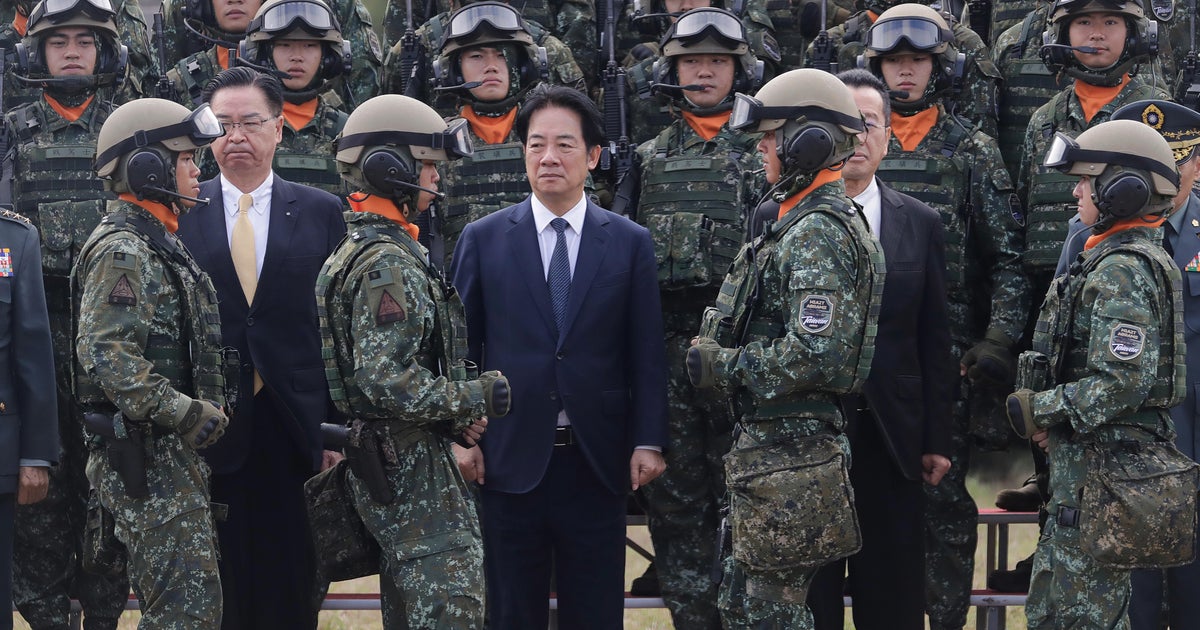
Taiwan’s President Lai Ching-te announced a $40 billion budget for arms purchases on Wednesday. The plans include building an air defense system with high-level detection and interception capabilities called Taiwan Dome, as the U. S. pressures the island to increase its defense spending. According to the leader, this budget will be allocated over eight years, from 2026 to 2033, and comes after Lai already pledged to raise defense spending to 5% of the island’s GDP, as part of his strategy amid China’s threats of invasion. “China’s threats to Taiwan and the Indo-Pacific region are escalating,” Lai said on Wednesday. “Recently, various types of military intrusions, maritime gray zones and disinformation campaigns have been occurring in Japan, the Philippines and around the Taiwan Strait, causing deep unease and distress to all parties in the region. Taiwan, as the most important and most critical part of the first island chain, must demonstrate our determination and take on a greater responsibility in self-defense,” he said, referring to the string of islands stretching from Japan’s East China Sea through the Philippines in the Pacific Ocean. Last week, Japan said that it scrambled aircraft after detecting a suspected Chinese drone near its southern island of Yonaguni, which is close to Taiwan. Currently, Taiwan has set an increase in its defense budget to 3. 3% of its GDP for 2026, allocating $949. 5 billion Taiwan dollars ($31. 18 billion). President Donald Trump has demanded Taiwan raise its defense spending to as much as 10% of GDP, a proportion well above what the U. S. or any of its major allies spend. The U. S. State Department on Wednesday said it welcomes Taiwan’s budget announcement and “supports Taiwan’s acquisition of critical defense capabilities, commensurate with the threat it faces.” It also said it welcomes commitments by Lai’s administration to increase defense spending to at least 5% of GDP by 2030, “which demonstrates resolve to strengthen Taiwan’s self-defense capabilities.” Taiwan, a self-ruled island, is claimed by China. In recent years, China has deployed warplanes, navfy ships and drones toward the island on a daily basis in military exercises as part of its efforts to exert pressure. Wellington Koo, Taiwan’s defense minister, said Wednesday the $40 billion is an upper limit for the special budget and that it will be used to buy precision-strike missiles and work toward the joint development and procurement between Taiwan and the U. S. of equipment and systems. Lai also said his government would focus on finding ways to increase its defense against Beijing’s “psychological warfare” as China attempts to “weaken our unity.” He said the government will monitor and increase public awareness of China’s interference attempts during major events and elections.
https://www.cbsnews.com/news/taiwan-40-billion-budget-weapons-purchases-us-defense-spending/
Tag: lai

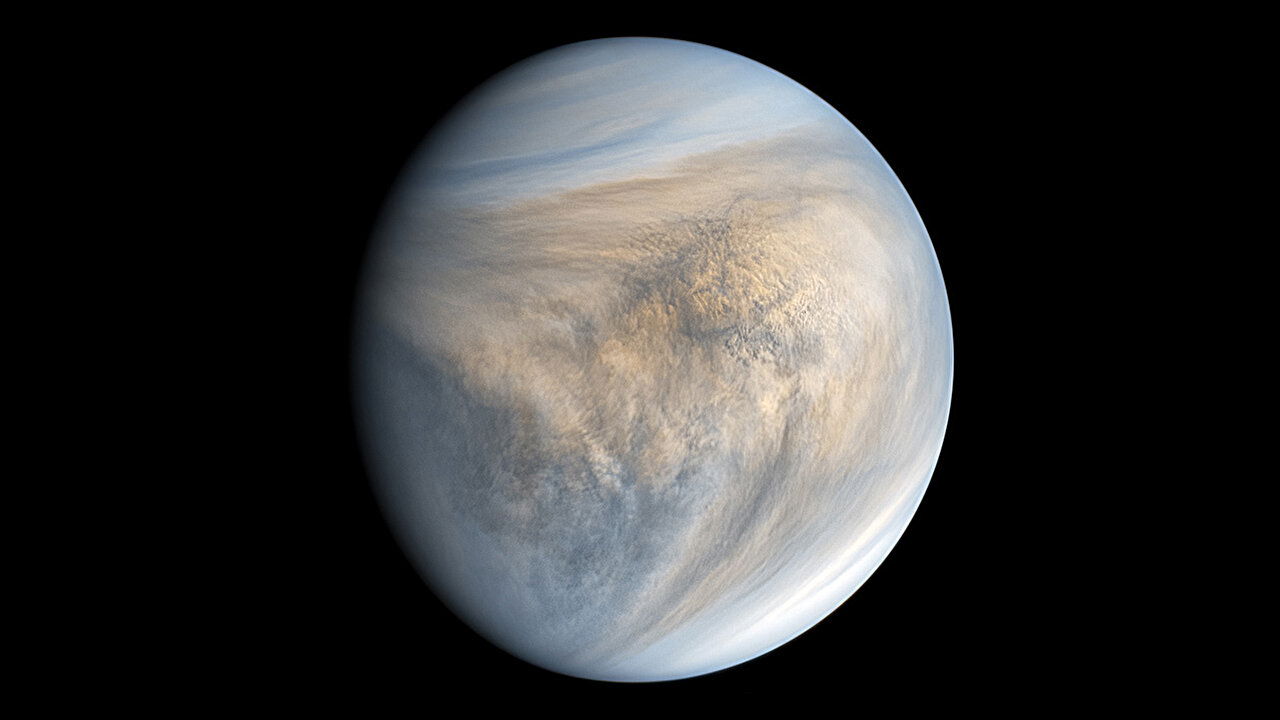
Scientists discover what really powers Venus’s wild, planet-encircling winds
Imagine storms fiercer than the strongest hurricanes on Earth, blowing nonstop all the way around an entire planet. This is exactly what happens on Venus, where winds at the cloud tops race around the planet at speeds of more than 100 metres per second. Even more astonishing is that Venus itself rotates very slowly so slowly that one full day on Venus lasts about 243 Earth days. Yet its atmosphere completes a full trip around the planet in just four Earth days. This extreme mismatch is called “superrotation,” and for years scientists have struggled to fully explain it. Now, new research has revealed an important clue: a daily rhythm in Venus’s atmosphere, driven by the heat of the Sun, may be a major force behind these extraordinary winds. The study, led by Lai and colleagues and published in AGU Advances, provides fresh insight into the hidden mechanics of Venus’s atmosphere. Unlike Earth, where the atmosphere generally moves at roughly the same speed as the planet’s surface, Venus’s atmosphere behaves more like a separate, fast-moving system. Researchers suspected that different types of atmospheric waves and circulation patterns were helping drive the superrotation, but it was unclear which ones were most important. To investigate, the research team examined data collected over 16 years by two spacecraft: the European Space Agency’s Venus Express and Japan’s Akatsuki satellite. These spacecraft studied Venus’s atmosphere by measuring how radio waves bent as they passed through its thick clouds, revealing details about temperature, pressure, and motion. In addition, the scientists used a computer model to simulate how Venus’s atmosphere behaves under these extreme conditions. The team focused on something called “thermal tides.” These are large-scale movements of air caused by uneven solar heating. When sunlight warms the dayside of Venus, the heated air rises and sets off waves that travel around the planet. There are two main types of thermal tides on Venus. Diurnal tides follow a once-per-day cycle, while semidiurnal tides repeat twice per day. Past studies suggested the semidiurnal, or twice-daily, tides were mainly responsible for helping push the atmosphere into superrotation. However, this new research paints a different picture. By including data from the planet’s southern hemisphere for the first time, the scientists found that the diurnal, or once-per-day, tides play a much bigger role than previously believed. These diurnal tides help move energy and momentum upward, toward the tops of Venus’s thick cloud layers. This transfer of momentum acts like a global engine, constantly pushing the atmosphere forward and keeping the winds racing around the planet at extreme speeds. Although more research is still needed to fully understand every detail, this discovery significantly changes scientists’ understanding of Venus. It also offers valuable lessons for studying other planets that rotate slowly or orbit close to their stars. Understanding Venus’s atmosphere could even help astronomers interpret weather patterns on distant, Earth-like worlds in other solar systems. Venus may be our closest planetary neighbor, but with its scorching temperatures and furious winds, it remains one of the most mysterious worlds we know. This new finding brings us one important step closer to understanding its alien climate.
https://knowridge.com/2025/11/scientists-discover-what-really-powers-venuss-wild-planet-encircling-winds/