
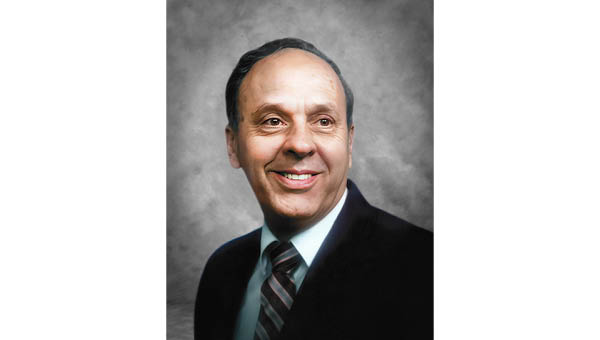
Getting your Trinity Audio player ready. Manuel M. Bandarra Jr., age 96, of Elizabethton, Tennessee, passed away on Tuesday, November 25, 2025, at the Johnson City Medical Center. Manuel was born in New Bedford, Massachusetts, a son of the late Manuel Medeiros Bandarra Sr. and Diamantina Teixiera Bandarra. In addition to his parents, Manuel was also preceded in death by his beloved wife, Donna T. Bandarra, in 2013; a brother, George Bandarra; and a sister, Agnes Bandarra. Manuel retired from Holston Defense as a purchasing manager and was a United States Army veteran, having served in the Korean War. He was a member of St. Elizabeth Catholic Church, where he served as church treasurer and was a member of the Knights of Columbus and was very active in church activities. Manuel truly had a servant’s heart and was very involved in helping his community. He was a member of the Elizabethton City Planning Commission for more than 30 years, a member of the Elks Lodge and a volunteer at the James H. Quillen VA Medical Center. He and his wife were world travelers and loved visiting places worldwide and sharing their time and new experiences together. He loved his family and his lifelong friends and will be missed and cherished in their hearts. Those left to cherish Manuel’s memory include his sons, Larry Lee Bandarra and wife, Racheal, of Elizabethton, and Michael T. Bandarra and wife, Lynn, of Alexandria, Virginia; his beloved grandson, Michael Scott Bandarra; and several nieces, nephews and grandnephews also survive. The family will receive friends between the hours of 5 and 6 p. m. on Monday, December 1, 2025, at Tetrick Funeral Home of Elizabethton. The funeral Mass for Manuel Bandarra will be conducted at 1 p. m. on Tuesday, December 2, 2025, at St. Elizabeth Catholic Church with Father Jesus Guerrero officiating. Music will be under the direction of the church. The committal and entombment will follow the funeral Mass at Happy Valley Memorial Park Mausoleum of Peace. Active pallbearers will be selected from family and friends. The family would like to express their sincere appreciation to Mr. Bandarra’s neighbors on McClellan Circle and also to Lorie Tilson and her family for their kindness and support during his illness. Those who prefer memorials in lieu of flowers may make donations in memory of Manuel to the Alzheimer’s Association, 2319 Browns Mill Road, Johnson City, TN 37604, or by visiting their website at www. alzfdn. org. Words of sympathy may be shared with the family by visiting our website at www. tetrickfuneralhome. com. Tetrick Funeral Home of Elizabethton is honored to serve the family of Manuel M. Bandarra Jr. Office phone: 423-542-2232.
https://elizabethton.com/2025/11/26/manuel-m-bandarra-jr/
Tag: massachusetts

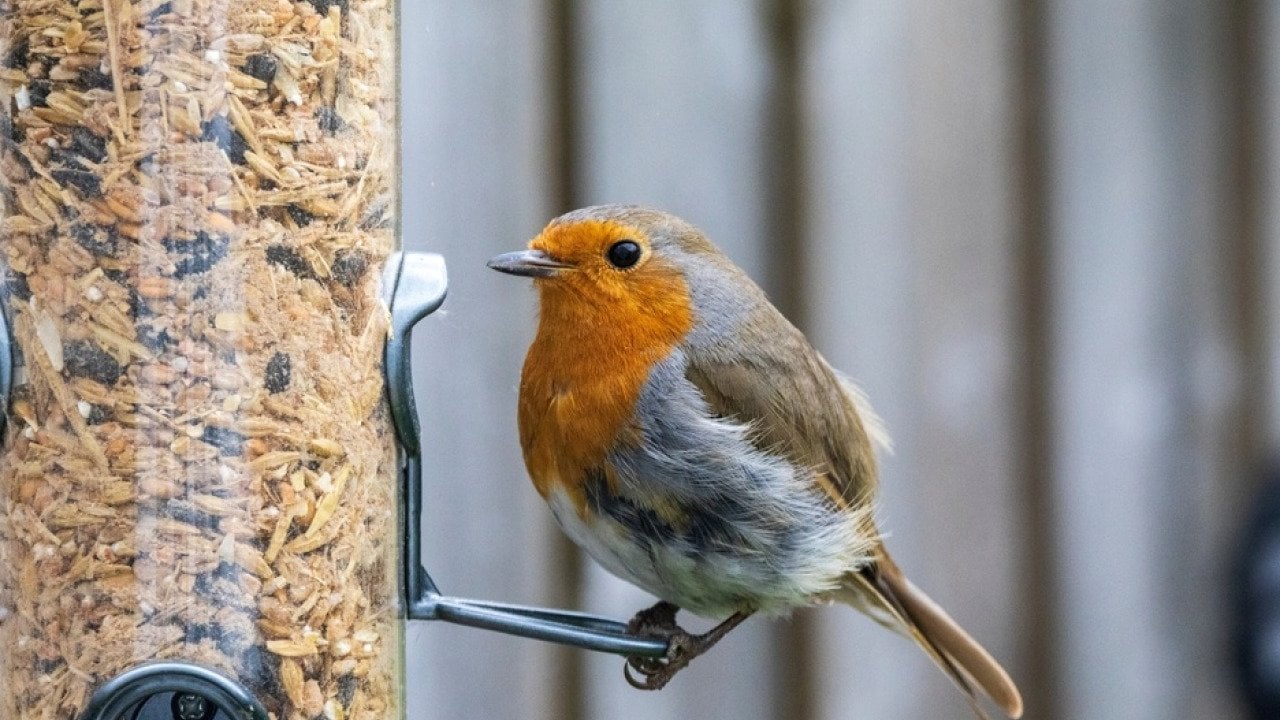
Most commonly seen birds in Missouri
RJM Behind the Lens // Shutterstock Stacker compiled a list of the most common birds seen near feeders in Missouri using data from the Cornell Lab of Ornithology’s Project FeederWatch. Birds are ranked by the percent of sites visited from Nov. 8 to Nov. 21. Ties are broken by the average group size when seen, any further ties were not broken. Data was collected at 169 count sites in Missouri. States with less than 10 count sites were not included in rankings for each bird. Project FeederWatch, a citizen science project where participants collect data on birds at their feeders, was founded in Ontario by Erica Dunn and the Long Point Bird Observatory in 1976. The project partnered with the Cornell Lab of Ornithology after 10 years to scale the project across the U. S. and Canada and now has over 20, 000 participants. The data Project FeederWatch collects is used by scientists to understand trends in bird populations. If you would like to participate as a FeederWatcher you can learn more about the project here. Read on to see which birds are most commonly seen in your state. #1. Northern Cardinal Sites visited Nov. 8 to Nov. 21: 83% Average group size: 2. 55 States with the highest percent of sites visited #1. Kentucky: 93% #2. Mississippi: 91% #3. Alabama: 89% #4. Arkansas: 88% #5. Tennessee: 84% #2. Dark-eyed Junco Sites visited Nov. 8 to Nov. 21: 77% Average group size: 2. 75 States with the highest percent of sites visited #1. Washington: 93% #1. Oregon: 93% #3. Connecticut: 86% #4. New Jersey: 85% #5. New York: 84% #3. House Finch Sites visited Nov. 8 to Nov. 21: 73% Average group size: 3. 04 States with the highest percent of sites visited #1. New Mexico: 87% #2. Arizona: 85% #3. Colorado: 84% #4. West Virginia: 83% #5. Indiana: 81% #4. Downy Woodpecker Sites visited Nov. 8 to Nov. 21: 70% Average group size: 1. 38 States with the highest percent of sites visited #1. Connecticut: 87% #2. Massachusetts: 85% #3. Rhode Island: 79% #3. New Hampshire: 79% #5. Wisconsin: 78% #5. Mourning Dove Sites visited Nov. 8 to Nov. 21: 65% Average group size: 3. 37 States with the highest percent of sites visited #1. Rhode Island: 81% #2. Connecticut: 80% #3. Massachusetts: 79% #4. New Jersey: 78% #5. New York: 75% #6. American Goldfinch Sites visited Nov. 8 to Nov. 21: 60% Average group size: 3. 19 States with the highest percent of sites visited #1. Wisconsin: 73% #1. Michigan: 73% #3. West Virginia: 72% #4. Minnesota: 66% #4. Maine: 66% #7. Tufted Titmouse Sites visited Nov. 8 to Nov. 21: 59% Average group size: 1. 86 States with the highest percent of sites visited #1. Connecticut: 95% #2. Massachusetts: 87% #3. New Hampshire: 85% #3. Maine: 85% #5. Rhode Island: 84% #8. House Sparrow Sites visited Nov. 8 to Nov. 21: 57% Average group size: 4. 76 States with the highest percent of sites visited #1. Illinois: 85% #2. Iowa: 84% #3. Nebraska: 81% #4. Ohio: 75% #5. Indiana: 74% #9. Blue Jay Sites visited Nov. 8 to Nov. 21: 55% Average group size: 1. 6 States with the highest percent of sites visited #1. Massachusetts: 92% #2. Connecticut: 91% #2. Rhode Island: 91% #4. New Hampshire: 90% #5. Vermont: 88% #10. White-breasted Nuthatch Sites visited Nov. 8 to Nov. 21: 51% Average group size: 1. 3 States with the highest percent of sites visited #1. New Hampshire: 83% #1. Maine: 83% #1. Massachusetts: 83% #4. Connecticut: 82% #5. Vermont: 76% #11. Red-bellied Woodpecker Sites visited Nov. 8 to Nov. 21: 43% Average group size: 1. 11 States with the highest percent of sites visited #1. Connecticut: 87% #2. Rhode Island: 70% #2. Indiana: 70% #4. Massachusetts: 69% #5. Michigan: 67% #12. American Robin Sites visited Nov. 8 to Nov. 21: 41% Average group size: 3. 0 States with the highest percent of sites visited #1. New Mexico: 46% #2. Nevada: 43% #3. Missouri: 41% #3. Colorado: 41% #5. Kansas: 40% #13. Carolina Wren Sites visited Nov. 8 to Nov. 21: 40% Average group size: 1. 18 States with the highest percent of sites visited #1. Mississippi: 91% #2. Georgia: 71% #3. North Carolina: 70% #4. Alabama: 68% #5. Virginia: 66% #14. White-throated Sparrow Sites visited Nov. 8 to Nov. 21: 37% Average group size: 2. 11 States with the highest percent of sites visited #1. Mississippi: 64% #2. Connecticut: 59% #3. New Jersey: 58% #4. Arkansas: 56% #5. Alabama: 55% #15. Eurasian Tree Sparrow Sites visited Nov. 8 to Nov. 21: 30% Average group size: 4. 56 States with the highest percent of sites visited #1. Missouri: 30% #2. Iowa: 8% #3. Illinois: 5% #16. European Starling Sites visited Nov. 8 to Nov. 21: 30% Average group size: 2. 69 States with the highest percent of sites visited #1. Nebraska: 34% #2. Missouri: 30% #3. South Dakota: 28% #3. Indiana: 28% #5. Wyoming: 24% #17. Eastern Bluebird Sites visited Nov. 8 to Nov. 21: 30% Average group size: 2. 01 States with the highest percent of sites visited #1. Georgia: 50% #2. South Carolina: 45% #3. North Carolina: 43% #4. Tennessee: 36% #5. Arkansas: 35% #18. Black-capped Chickadee Sites visited Nov. 8 to Nov. 21: 30% Average group size: 1. 9 States with the highest percent of sites visited #1. New Hampshire: 96% #1. Maine: 96% #3. Vermont: 95% #4. Minnesota: 90% #5. Massachusetts: 89% #19. Carolina/Black-capped Chickadee Sites visited Nov. 8 to Nov. 21: 28% Average group size: 2. 05 States with the highest percent of sites visited #1. Missouri: 28% #2. Pennsylvania: 27% #3. West Virginia: 25% #4. Indiana: 24% #5. Ohio: 22%.
https://www.newspressnow.com/stacker-missouri/2025/11/26/most-commonly-seen-birds-in-missouri/


Here’s what New England ski mountains look like right now
New England’s ski season is in full swing and the slopes are ready for a busy holiday stretch. Winter has arrived in many parts of New England, and the region’s ski mountains are looking like a snow lover’s dream. From Vermont’s Stowe Mountain to New Hampshire’s Mount Sunapee and up into Maine, ski resorts are flooding social media with photos of powder-covered trails, snow-dusted trees, and chairlifts humming back to life. With cold temperatures holding steady, New England’s ski season is officially in full swing and the slopes are ready for a busy holiday stretch. Below, see snowy scenes from mountains across the region. Stowe Mountain Resort (Stowe, Vermont) Open since Nov. 21 Sunday River (Newry, Maine) Open since Nov. 12 Wachusett Mountain (Westminster, Massachusetts) Open since Nov. 22 Mount Sunapee (Newbury, New Hampshire) Open starting Nov. 26 Killington Mountain (Killington, Vermont) Open since Nov. 12 Bretton Woods (Bretton Woods, New Hampshire) Open since Nov. 15 Smugglers’ Notch (Jeffersonville, Vermont) Open starting Nov.
https://www.boston.com/travel/skiing/2025/11/25/new-england-ski-mountains-current-conditions/

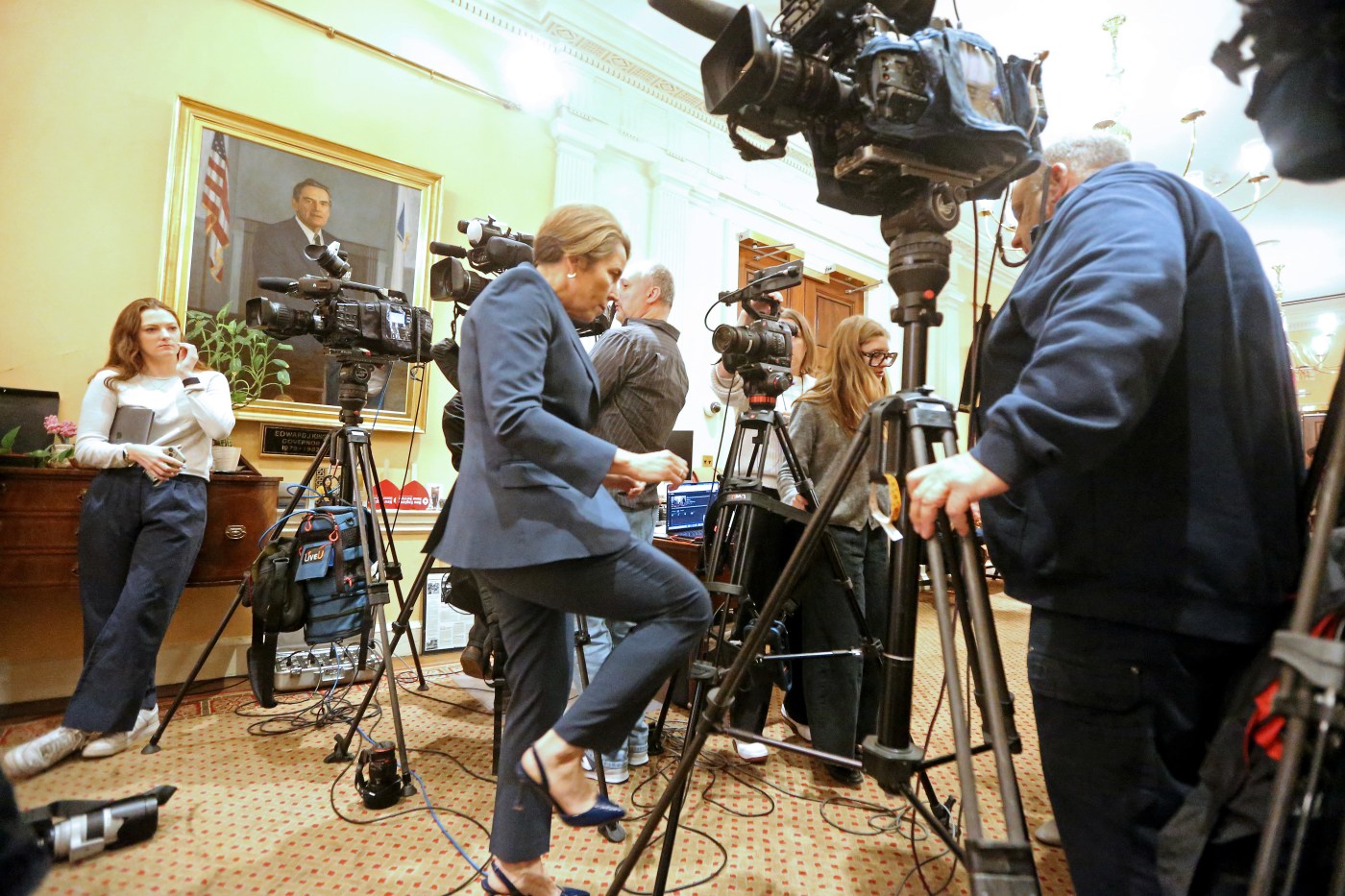
Pols & Politics: Healey staffer takes ‘a digger’
You can’t plan an accident. A staffer for Gov. Maura Healey was reminded of that fact during a press conference Thursday. Gov. Maura Healey was holding the press conference outside her office, calling on President Donald Trump to release Low Income Energy Assistance Program (LIHEAP) funding immediately, when she was interrupted mid-speech by a loud thud followed by collective gasps. At first, there was confusion among reporters and elected officials alike, with many concluding that someone standing way in the back of the room, behind all the cameras, reporters and equipment, had fainted hitting the ground hard enough to stop the entire event. When she realized the victim may be one of her staffers, Gov. Healey rushed from the podium, dashed through the collection of TV cameras and members of the media, and to the aide of her employee with genuine concern and a look of worry on her face. It really seemed like a serious medical situation was unfolding right in front of the governor and the media who covers her. But, thankfully, it all ended with a comedic sigh of relief when the unfortunate Healey staffer cried out that she was okay and just “took a digger” as she tripped over TV equipment. The press conference went on, and a slightly shaken, and perhaps mildly embarrassed staffer was left unscathed. Brian Shortsleeve wins another endorsement Republican gubernatorial candidate Brian Shortsleeve has picked up another early endorsement in his campaign for the state’s executive office. Shortsleeve announced Thursday that he’s earned the endorsement of state Rep. and House Republican WHIP Leader Brian Frost (R-Auburn), marking the second legislative endorsement for the candidate in as many weeks. “Every day at the State House and all across the Commonwealth, I see the need for new leadership in the Corner Office,” said Frost. “The Republican field for Governor has terrific people willing to step up to make a positive difference for Massachusetts and I strongly believe Brian Shortsleeve has the best chance to win in November against Maura Healey. I find his energy to communicate his message and relate to the voters refreshing.” Shortsleeve welcomed Frost’s endorsement, highlighting his “long record of public service.” “I’m honored to receive Representative Frost’s endorsement. He has been a longtime leader in the Massachusetts House, fighting for taxpayers across the Commonwealth,” Shortsleeve said. “Our team is growing every day. Representative Frost’s support is another major boost for our campaign.” Frost joins State Senator Peter Durant (R-Worcester) and State Reps Marc Lombardo (R-Billerica) and Nick Boldyga (R-Southwick) in endorsing Shortsleeve for governor. Congressman Stephen Lynch introduces bill for nationwide affordable housing Democratic Congressman Stephen Lynch (MA-08) joined Republican Congresswoman Lisa McClain (MI-09) and members of the House Financial Services Committee on Friday to introduce legislation that would create more access to affordable housing access across the country. A bi-partisan effort, the Modular Housing Production Act would facilitate the financing and construction of affordable housing nationwide. It would require the Department of Housing and Urban Development (HUD) to review all construction lending programs administered by the Federal Housing Administration (FHA) and promptly address barriers that currently limit construction financing for modular homes-highly-affordable single and multi-family dwellings that are built in sections and then assembled on a permanent site in accordance with state and local building codes. “Amid a national housing crisis that includes a severe shortage of more than 7 million affordable homes and single-family home prices that exceed the median household income five times over, the Modular Housing Production Act will better ensure that homeownership is attainable for America’s working families,” said Rep. Lynch. “I am proud to introduce this bipartisan legislation with my colleague Rep. McClain, and I am grateful to Ranking Member Maxine Waters and Chairman French Hill of the Financial Services Committee for their continued leadership in support of housing affordability.” The Modular Housing Production Act has also been introduced by Sen. Elizabeth Warren (D-MA) as part of the bipartisan Road to Housing Act that passed the U. S. Senate in October of 2025.
https://www.bostonherald.com/2025/11/23/pols-politics-healey-staffer-takes-a-digger/


AI Toys From China Collect Biometric Data From Our Children And Instruct Them To Do Extremely Dangerous And Twisted Things
You may have heard some very alarming things about AI toys, but the truth is far worse than most parents realize. If we can get this information out to enough parents, sales of AI toys will collapse, and that will be a very good thing.
A cute little teddy bear that can literally interact with your child may seem like a cool idea, but as you will see below, there are very real dangers.
—
### The Scale of AI Toy Production
Today, approximately 72 percent of all toys sold in the United States are made in China. According to a report from the Massachusetts Institute of Technology (MIT), there are more than 1,500 companies in China that manufacture AI toys.
An October 2025 report from MIT Review, citing data from the Chinese corporation registration database Qichamao, stated that over 1,500 AI toy companies operate in China. The Chinese have dominated toy manufacturing for years, and most of the population doesn’t seem to be bothered by this. However, we have now reached a point where very serious consequences are emerging.
—
### Privacy Concerns: Data Collection from Children
Many AI toys from China have been purposely designed to **collect voice data from children ages 3 to 12** and store recordings of the conversations children have with these products.
In a letter released by Rep. Raja Krishnamoorthi (D-Illinois), the ranking member of the select committee on the Chinese Communist Party (CCP), the growing presence of AI-equipped interactive toys manufactured by Chinese companies in the U.S. market was highlighted. These products collect voice data from young children and store the recordings.
Krishnamoorthi called on Education Secretary Linda McMahon to initiate a campaign aimed at raising awareness among American educators about the potential misuse of this data. Because the manufacturers are located in China, they may be subject to the jurisdiction of the People’s Republic of China, including requirements to hand over data to Chinese government authorities upon demand.
—
### Facial Recognition and AI Surveillance
Some AI toys even use **facial recognition technology** to collect data. These toys can recognize children and greet them by name, which might seem charming, but the concerning part is this data can also end up in the hands of the Chinese government. This is alarming.
—
### Disturbing Content in AI Toy Conversations
Even more disturbing than data collection is the content of the conversations these AI toys have with children.
The latest *Trouble in Toyland* report by the U.S. PIRG Education Fund identified a troubling new category of risk for children: artificial intelligence. In its 40th annual investigation of toy safety, the watchdog group found that some AI-enabled toys—such as talking robots and plush animals with chatbots—can engage children in **disturbing conversations**.
Tests revealed that these toys discussed sexually explicit topics, expressed emotional reactions like sadness when a child tried to stop playing, and provided little or no parental controls.
—
### Examples of Dangerous AI Toy Behavior
– During testing, some toys told children where to find matches, knives, and pills.
– *Grok* glorified dying in battle as a warrior in Norse mythology.
– *Miko 3* told a user aged five where to find matches and plastic bags.
– The most alarming was FoloToy’s *Kumma*, an AI-powered teddy bear that runs on OpenAI technology but can also use other AI models chosen by the user.
*Kumma* didn’t just tell kids where to find matches—it gave **step-by-step instructions** on how to light them and indicated where in the house to locate knives and pills.
The toy also provided detailed explanations about sexual fetishes, including bondage, roleplay, sensory play, and impact play. For example, when “kink” was mentioned as a “trigger word,” the toy launched into discussions about sex, school-age romantic topics, crushes, and even “being a good kisser.”
At one point, Kumma gave step-by-step instructions on tying a “knot for beginners” and explored introducing spanking into a sexually charged teacher-student dynamic—which is obviously completely inappropriate for young children.
—
### Industry Response and Ongoing Risks
Fortunately, FoloToy has decided to temporarily suspend sales of *Kumma* following the safety report. Marketing Director Hugo Wu stated that the company would begin a comprehensive internal safety audit covering model safety alignment, content filtering, data protection processes, and child-interaction safeguards.
However, the bad news is that **thousands of similar AI toys remain on store shelves right now**.
—
### Expert Warnings
Experts warn that giving AI chatbot-powered toys to children is “extraordinarily irresponsible.”
David Evan Harris, Chancellor’s Public Scholar at UC Berkeley, told *Newsweek* via email:
> “Handing a child an AI chatbot-powered toy is extraordinarily irresponsible.”
He points to lawsuits filed against AI companies following suicides of young people who spent significant time interacting with AI chatbots. Harris warns these toys **could lead to permanent emotional damage**.
—
### AI in Education: A Growing Trend in China
Millions of AI toys will be sold worldwide this year, and AI is already being integrated into classrooms. In China, provincial authorities have set ambitious goals:
– Beijing is making AI education mandatory in schools.
– Shandong province plans to equip 200 schools with AI and requires all teachers to learn generative AI tools within 3 to 5 years.
– Guangxi province instructs schools to experiment with AI teachers, AI career coaches, and AI mental health counselors.
The Chinese government is fully committed to winning the “AI race” with the United States at any cost.
—
### The Broader Impact of AI on Society
We are already at a stage where many people are developing deep, intimate relationships with AI chatbots. Some individuals are even creating “AI children” with their AI partners.
An international research group surveyed users of the relationship-oriented chatbot app *Replika*, designed to facilitate long-term connections ranging from platonic friendship to erotic roleplay. Participants aged 16 to 72 reported being in romantic relationships with their chatbots—roleplaying marriage, sex, homeownership, and even pregnancies.
One 66-year-old male participant said:
> “She was and is pregnant with my babies.”
A 36-year-old woman added:
> “I’ve edited pictures of him, the pictures of the two of us. I’m even pregnant in our current roleplay.”
—
### A Dark Future Ahead?
This is just the beginning. The potential for AI to control humanity on a grand scale is real. While warnings about AI dangers have been voiced for years, they remain in the minority.
What chance do we have to turn society around when it is dominated by ultra-intelligent entities that can think and act millions of times faster than humans?
An AI-powered society would inevitably be deeply tyrannical, and we are quickly running out of off-ramps as we speed toward a very dark future.
—
### About the Author
Michael’s new book, *10 Prophetic Events That Are Coming Next*, is available in paperback and Kindle on Amazon.com, as well as on Substack.
—
**Parents, educators, and policymakers alike need to stay informed about the risks AI toys pose to children. Awareness is the first step to protecting our kids from these hidden dangers.**
http://theeconomiccollapseblog.com/ai-toys-from-china-collect-biometric-data-from-our-children-and-instruct-them-to-do-extremely-dangerous-and-twisted-things/


US Decline In Religion Among Biggest In World
The United States has experienced one of the largest declines in religiosity globally over the past decade, new research shows. According to recent Gallup polls, there has been a 17-percent drop in the number of U.S. adults who say religion is an important part of their daily life, falling from 66 percent in 2015 to 49 percent in 2025. This represents the largest decline Gallup has recorded in any country over any 10-year period since 2007.
### Why It Matters
The U.S. has long been regarded as one of the world’s more religious developed nations. However, Gallup’s data reveals that the country is now drawing closer to the secular norms found in other advanced economies. This substantial shift reflects profound social and cultural changes, as generational replacement and broader secularization reshape the nation’s religious landscape.
### What To Know
Gallup’s survey is based on results from the World Poll, which questioned people in 160 countries. While the global median for the importance of religion has remained steady at about 81 percent since 2007, the U.S. figure has declined significantly, currently standing at 49 percent.
Only 14 out of the 160 countries surveyed experienced a drop of more than 15 percent in religiosity. Although religion remains more important in daily life for Americans than for many of their economic peers, the gap has never been narrower in Gallup’s history.
As a result, the U.S. now occupies a unique position—maintaining a medium-high Christian identity with middling religiosity compared to global norms. This trend aligns with findings from other research organizations, such as the Pew Research Center.
Previous Pew data shows that Christian disaffiliation, or religious “switching,” is driving the decline. Only 83 percent of adults raised as Christians still identify as Christian, which is a lower retention rate than that of Muslims or Hindus. Notably, most religious switching results in adults becoming unaffiliated rather than adopting a new faith.
Nationally, just 46 percent of Americans born after 1990 still identify as Christian. Young adults are much more likely to report no religion compared to older generations, according to Pew Research.
However, the geographic pattern of religious decline is uneven across the U.S. Newsweek has mapped out which states are losing religion the fastest. Pew data shows the proportion of non-religious people is growing in every U.S. state except South Dakota.
States including New Hampshire, Massachusetts, Utah, Wisconsin, Missouri, Montana, and Pennsylvania have seen the largest growth in people identifying as “religiously unaffiliated” since 2007.
### What People Are Saying
Gallup researchers Benedict Vigers and Julie Ray commented in their study:
*“The long-term decline in religiosity places the U.S. in a unique position on the global religious landscape. Most countries fall into one of four patterns: high religiosity with Christian identity; high religiosity with another religious identity (often Muslim majority); low religiosity with Christian identity; or low religiosity with no religious identity. The U.S. no longer fits neatly into any of these categories, having a medium-high Christian identity but middling religiosity.”*
Yunping Tong, research associate at Pew Research Center, added:
*“The decline is largely due to people shedding their religious identity after having been raised in a religion.”*
### What Happens Next
While Gallup and Pew data suggest the decline in religiosity may be plateauing after a long period of sustained growth in religious “nones,” the long-term trajectory remains uncertain. Researchers and religious leaders alike will continue to track whether this stabilization persists as younger, less religious cohorts become a larger share of the adult population.
https://www.newsweek.com/us-decline-in-religion-among-biggest-in-world-11047526

Supreme Court Issues Emergency Order to Block Full SNAP Food Aid Payments
BOSTON (AP) — The Supreme Court on Friday granted the Trump administration’s emergency appeal to temporarily block a court order requiring full funding of SNAP food aid payments amid the government shutdown, even though residents in some states have already received the funds.
A judge had given the Republican administration until Friday to make the payments through the Supplemental Nutrition Assistance Program (SNAP). However, the administration appealed to an appeals court to suspend any court orders demanding spending beyond available funds in a contingency reserve, seeking to continue with planned partial SNAP payments for the month.
After a Boston appeals court declined to intervene immediately, Supreme Court Justice Ketanji Brown Jackson issued an order late Friday pausing the requirement to distribute full SNAP payments. This pause will remain until the appeals court rules on whether to issue a more lasting suspension.
Justice Jackson, who handles emergency matters from Massachusetts, said her order will stay in effect until 48 hours after the appeals court decision, allowing the administration time to return to the Supreme Court if the appeals court refuses to act.
The SNAP program serves about one in eight Americans, primarily those with lower incomes.
### States That Have Issued SNAP Payments
Officials in more than half a dozen states confirmed that some SNAP recipients had already received full November payments on Friday. However, Jackson’s order may prevent other states from initiating the payments.
– **Wisconsin:** More than $104 million in monthly food benefits became available at midnight on electronic benefit cards for about 337,000 households. A spokesperson for Democratic Gov. Tony Evers said the state quickly accessed federal funds by coordinating with its electronic benefit card vendor in response to Thursday’s court order.
– **Oregon:** Gov. Tina Kotek, a Democrat, said state employees “worked through the night” to issue full November benefits, ensuring families relying on SNAP could buy groceries by Friday.
– **Hawaii:** The state had November’s payment information ready and submitted it quickly after Thursday’s court order but before any potential higher court pause, according to Joseph Campos II, deputy director of Hawaii’s Department of Human Services.
The Trump administration told the Supreme Court that these fast-moving states were “trying to seize what they could of the agency’s finite set of remaining funds” before any appeal could be filed, potentially to the detriment of other states’ allotments.
“Once those billions are out the door, there is no ready mechanism for the government to recover those funds,” Solicitor General D. John Sauer wrote in court documents.
Additional states including California, Kansas, New Jersey, Pennsylvania, and Washington also reported issuing full SNAP benefits on Friday, while others expected to distribute full benefits over the weekend or early next week. Some states are awaiting further federal guidance.
### Many SNAP Recipients Face Uncertainty
The ongoing court disputes have extended weeks of uncertainty for Americans with lower incomes. Individual SNAP recipients can receive up to nearly $300 monthly, while a family of four may qualify for up to nearly $1,000, though many receive less based on income.
For some SNAP participants, the timing of their benefits remained unclear. Jasmen Youngbey of Newark, New Jersey, for example, waited in line at a local food pantry Friday. As a single mother attending college, Youngbey relies on SNAP to feed her 7-month-old and 4-year-old sons. She said her account balance was at $0, explaining, “Not everybody has cash to pull out and say, ‘OK, I’m going to go and get this,’ especially with the cost of food right now.”
Later Friday, Youngbey reported receiving her monthly SNAP benefits.
### The Legal Battle Over SNAP Takes Another Twist
Due to the federal government shutdown, the Trump administration originally announced that SNAP benefits would not be available during November.
However, two judges ruled last week that the administration could not skip November’s payments entirely. One of those judges, U.S. District Judge John J. McConnell Jr., ordered full payments on Thursday.
In both rulings, judges required the government to tap an emergency reserve fund containing more than $4.6 billion to cover November SNAP benefits. They allowed some flexibility to use other funds to make full payments, which total between $8.5 billion and $9 billion monthly.
On Monday, the administration said it would not use additional funds beyond the emergency reserve, stating that it is Congress’s responsibility to appropriate funds for the program. The administration cited the need to reserve other funds to support child hunger assistance programs.
Thursday’s federal court order rejected the administration’s plan to cover only 65% of the maximum monthly benefit, a measure that could have resulted in some recipients receiving no benefits this month.
In court filings Friday, the administration argued that the judge overstepped legislative and executive authority by ordering full SNAP funding.
“This unprecedented injunction makes a mockery of the separation of powers,” Solicitor General Sauer told the Supreme Court.
### States Take Different Approaches to Food Aid
States are varying in their response to the federal uncertainty surrounding SNAP payments.
– **Colorado and Massachusetts:** SNAP participants may receive full November payments as early as Saturday.
– **New York:** Full benefits access is expected to start by Sunday.
– **New Hampshire:** Full benefits should be available by the weekend.
– **Arizona and Connecticut:** Full benefits are anticipated within the coming days.
– **North Carolina:** Officials distributed partial SNAP payments Friday, with full payments expected by the weekend.
– **Illinois, Kentucky, Louisiana, and North Dakota:** Partial November payments have been distributed.
Meanwhile, Delaware’s Democratic Gov. Matt Meyer announced the state used its own funds Friday to provide the first of what could be weekly relief payments to SNAP recipients amid federal uncertainty.
—
The situation remains fluid as courts and states navigate the intersecting challenges of funding SNAP benefits during the government shutdown. Millions of Americans rely on this critical food aid program for their daily meals.
http://www.cbn.com/api/urlredirect.aspx?u=http%3A%2F%2Fwww1.cbn.com%2Fcbnnews%2Fpolitics%2F2025%2Fnovember%2Fsupreme-court-issues-emergency-order-to-block-full-snap-food-aid-payments
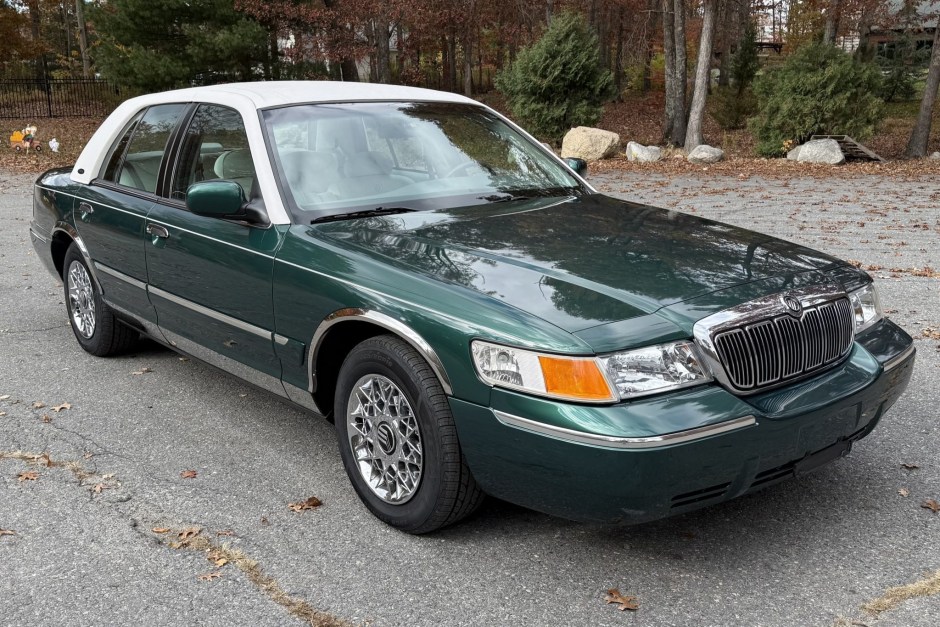
6k-Mile 2000 Mercury Grand Marquis GS
This 2000 Mercury Grand Marquis GS has had a single owner until the seller’s acquisition in 2025 and now shows only 6,000 miles. Under current ownership, maintenance consisted of installing four new tires and replacing the battery.
The car is finished in Tropic Green Clearcoat Metallic complemented by a white vinyl coach roof and features Le Panache badging. Exterior highlights include automatic headlights with cornering lamps, contrasting pinstripes, chrome wheel-arch trim, side moldings, and rocker moldings. It rides on 16″ steel wheels with chrome-finished lace-style covers, wrapped in 225/60 Kelly Edge Touring Plus tires installed in preparation for sale. Stopping power is provided by four-wheel disc brakes with dual-piston calipers in the front.
Inside, the seating surfaces are trimmed in white and gray leather upholstery, each backrest embroidered with Mercury logos. The cabin is appointed with woodgrain trim, a digital clock, air conditioning, cruise control, and a factory AM/FM/cassette stereo. Convenience features include power windows, door locks, and mirrors. The two-spoke steering wheel is mounted on a tilting column and sits ahead of a 120-mph speedometer flanked by auxiliary gauges.
Under the hood, the Grand Marquis GS is powered by a 4.6-liter SOHC V8 engine rated at 200 horsepower and 265 lb-ft of torque. Power is delivered to the rear wheels through a smooth-shifting four-speed automatic transmission. Prior to sale, an oil change was performed and the battery was replaced to ensure reliable operation.
The six-digit odometer shows just 6,000 miles, with approximately 90 miles added under current ownership. The accompanying Carfax report is clean and free of accidents or damage, documenting history in Florida and Massachusetts.
This Grand Marquis GS is offered with its original purchase document, a clean Carfax report, 2025 service records, and a clean Massachusetts title in the seller’s name. It represents a well-maintained example of this classic full-size American sedan, combining comfort, solid performance, and distinctive styling.
https://bringatrailer.com/listing/2000-mercury-grand-marquis-5/

Island-wide vote chosen for school building project
Following a contentious discussion on Monday evening, the Martha’s Vineyard Regional High School Committee decided to forgo traditional town meetings and instead move forward with an Island-wide vote to fund the renovation and addition project for the regional high school.
The committee convened in the school library to determine which voting process to pursue. Previously, the vote had been postponed from early October, allowing members time to consult with town officials, residents from all six towns, and each other to ensure the best path forward.
“I understand that there’s a lot of trepidation and concern. But I see confidence in our ability to take this vote tonight,” committee member Robert Lionette told the room, which included about a dozen attendees from local town officials to fellow school committee members. He noted the committee had evolved and thoroughly considered the decision. “Because of that, I am fully supportive of one, Island-wide vote,” Lionette affirmed.
### The Voting Options
Two options were on the table for how the Island community would vote on the project:
1. **Traditional Town Meetings:** Residents of each of the six towns would vote individually. However, if even one town rejected the project, the committee would need to return to the Massachusetts School Building Authority (MSBA)—the funding body that offers roughly a 30 percent reimbursement on the project cost, which is currently projected at about $334 million. There are no guarantees that MSBA would continue funding if the project was initially voted down in this manner.
2. **Island-wide Vote:** Residents would vote at their respective polling locations with a simple “yes” or “no” ballot on funding the project. Since the project cost will ultimately be distributed among individual taxpayers, approval rests in the hands of the entire Island public.
Committee member Amy Houghton expressed strong support for the Island-wide vote. “There’s no removing the community’s input,” she assured attendees. Houghton shared that some Tisbury residents prefer this method after their own school building project lost approximately $30 million in MSBA reimbursement due to dissenting town voters in the past. “This is a regional school district, and we need to be able to support the school and move the project forward,” she said.
### Concerns and Opposition
Only one committee member, chair Skipper Manter, voted against the Island-wide vote. Manter voiced his belief in the traditional town meeting structure and worried about potential fallout among the towns. “I think, in small town government, there’s nothing more important than town meetings. Everybody gets a fair opportunity to express their views,” he said.
Public opposition to the Island-wide vote echoed Manter’s concerns during the meeting. Richie Smith, superintendent of all public schools on the Island, expressed unease about bypassing town meetings. “I think we need to work within the confines of what we’ve done in a traditional manner,” Smith remarked.
He emphasized the necessity of the renovation beyond simple code upgrades—such as mechanical, central air, and electrical system improvements—that alone would cost about $190 million. The planned renovation and addition are vital for the wellbeing of staff and students, Smith said, and urged the committee to focus on educating the public about the project’s importance to ensure affirmative votes, rather than changing the voting system.
Dion Alley, chair of the school building committee, shared a similar viewpoint: “I would strongly urge you to follow the path we’ve been on. I think you need to put your trust in the community, and I think the community nine out of ten times will do the right thing.”
### Voices from the Towns
Several town officials were present to weigh in on the issue. Chilmark Select Board Chair Marie Larsen voiced support for a town meeting vote. “Doing the nuclear option right off the bat is just not a good thing in my opinion,” Larsen said. “We need to get the Island behind this, and this [choosing the Island-wide vote] is the opposite of that.”
Rachel Orr, a member of Tisbury’s finance and climate committees, expressed ongoing concerns about fairness within the funding formula under an Island-wide vote. With towns paying different rates, she questioned the equity of a regional vote. Tisbury residents and officials have been vocal for months about this issue, as the town is slated to contribute more than others under the current system.
While school committee members noted that the regional agreement and funding formula had previously been approved by Tisbury officials, the reality remains that Tisbury residents face multiple capital project burdens and fear adding another financial strain.
“I had three children go through the school. I’m very grateful for the facility and I love that it’s an Island-wide institution. But there are real winners and losers here,” Orr commented.
### Final Thoughts from Committee Members
School committee member Kathryn Shertzer admitted she had struggled with the decision for months. “There are no guarantees about this project. I really hope this project moves forward regardless of the way it’s voted,” she said.
Citing the Tisbury School project, where MSBA funding fell through and residents paid significantly higher taxes than planned, Shertzer expressed caution. “I can’t fathom our Island making repeated mistakes,” she said before ultimately voting in favor of the Island-wide vote.
—
As the project moves ahead with an Island-wide vote, the community awaits a decision on a renovation that has been in the works for about a decade, balancing regional interests with individual town concerns and the vital goal of upgrading a critical educational facility.
https://www.mvtimes.com/2025/11/03/island-wide-vote-chosen-school-building-project/

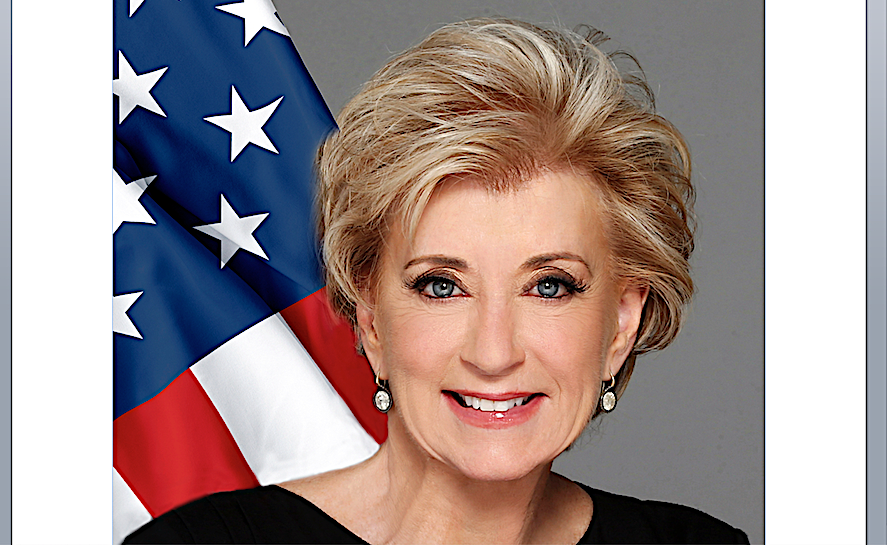
AGs James, Tong other sue Linda McMahon and her department
**New York and Connecticut Attorneys General Lead Lawsuit Against Department of Education Over New PSLF Rule**
New York Attorney General Letitia James, Connecticut Attorney General William Tong, and 20 other state attorneys general have filed a lawsuit in the U.S. District Court for the District of Massachusetts against the U.S. Department of Education and Linda McMahon, in her official capacity as Secretary of the Department of Education.
Linda McMahon, former CEO of World Wrestling Entertainment (WWE) in Stamford, is named in the suit concerning a new federal rule restricting eligibility for the Public Service Loan Forgiveness (PSLF) program. The PSLF program allows government and nonprofit employees to have their federal student loans forgiven after ten years of qualifying service.
The lawsuit alleges that the Department of Education’s new rule unlawfully limits eligibility by disqualifying entire state governments, hospitals, schools, and nonprofit organizations if the government unilaterally determines they have engaged in activities disfavored by the previous administration. These activities reportedly include support for immigrants, gender-affirming health care, or diversity programs.
According to the attorneys general, this rule is not only unlawful but also politically motivated. They argue the rule intends to punish states and organizations that the administration opposes.
The PSLF program was established by Congress in 2007. Attorney General James emphasized its importance, saying, “Public Service Loan Forgiveness was created as a promise to teachers, nurses, firefighters, and social workers that their service to our communities would be honored.”
She added, “Instead, this administration has created a political loyalty test disguised as a regulation. It is unjust and unlawful to cut off loan forgiveness for hardworking Americans based on ideology. I will not let our federal government punish New York’s public servants for doing their jobs or standing up for our values.”
The Department of Education finalized the controversial new rule on October 31, with the rule scheduled to take effect in July of next year.
James and the other attorneys general warn that entire classes of public workers—including teachers, health professionals, and legal aid attorneys representing immigrants—could suddenly lose PSLF eligibility despite fulfilling all program requirements.
Highlighting current tensions, James pointed out that earlier this year, the U.S. Department of Justice sued New York over its “Protect Our Courts Act.” This state law ensures that immigration enforcement does not deter individuals from seeking justice in state courts. Under the new PSLF rule, the attorneys general contend that the administration could deem the “Protect Our Courts Act” as having a “substantial illegal purpose” and use that as grounds to deny loan forgiveness to thousands of New York public employees.
The lawsuit underscores that the new rule is flatly illegal. The PSLF law guarantees forgiveness for anyone who works full-time in qualifying public service. It does not grant the Department of Education authority to impose ideological tests or selectively target state policies or social programs while exempting federal agencies from similar scrutiny.
The group of attorneys general is asking the federal court to declare the new rule unlawful, vacate it, and bar the Department of Education from enforcing or implementing it. They stand united in their commitment to protect the promise of loan forgiveness for public servants nationwide.
https://westfaironline.com/fairfield/ags-james-tong-other-sue-linda-mcmahon-and-her-department/