Dutch centrists declare victory in election, right-wing calls it ‘arrogance’

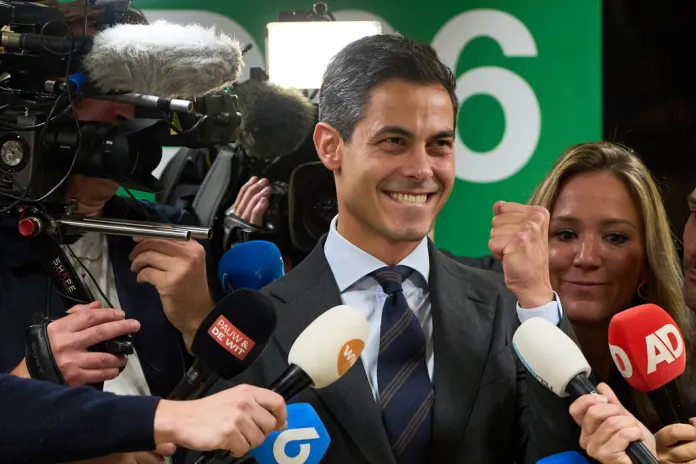
“We are the biggest party in the Netherlands! Now we’ll get to work for all Dutch people,” D66 leader Rob Jetten declared on social media Friday.

“I think we’ve now shown the rest of Europe and the world that it is possible to beat populist movements if you campaign with a positive message for your country,” Jetten added.

### D66 and PVV Neck-and-Neck in Election

In Wednesday’s election, D66 and the Party for Freedom (PVV) finished neck-and-neck, with both parties expected to secure 26 seats in the Dutch parliament. Jetten had earlier expressed caution, saying D66 was “waiting in suspense for the definitive result” due to the extremely narrow polls. However, after media outlets began projecting his victory, his stance appeared to change.

National news agency ANP reported that D66 edged out the Party for Freedom by a narrow margin of 15,000 votes and projected that the party would gain an additional seat. The official binding results will be released by the nation’s Electoral Council no earlier than Monday.

### Historic Milestone for the Netherlands

If confirmed, the 38-year-old former consultant would become the Netherlands’ youngest-ever prime minister and the first openly gay person to lead the national government.

“The positive forces have won!” Jetten declared regarding D66’s significant gains. “I want to get to work for all Dutch people because this is the land of us all!”

### Party for Freedom Responds

The Party for Freedom, led by lawmaker Geert Wilders, experienced a marked decline from its first-place finish in the 2023 elections. Wilders rebuked Jetten’s declaration of victory, emphasizing the importance of waiting for the official announcement.

“What arrogance not to wait for that!” Wilders said. He continued, “But even if D66 becomes the largest, the PVV will not let the Netherlands be dismantled by Jetten and his ilk and will oppose his left-liberal mismanagement with full force from day one, 26 seats strong!”

Wilders established the PVV such that he is the only registered member, allowing candidates who win seats to act as lawmakers while Wilders retains sole control of the party’s platform.

### Significant Decline for PVV

Regardless of whether D66 is officially declared the largest party, the election results highlight a marked drop in support for the PVV. Earlier projections in September showed PVV candidates winning 33 seats out of the 150-seat legislature.

The PVV triggered this week’s election after leaving a fragile governing coalition in June due to disagreements over asylum application and family reunification freezes. The PVV was the largest party in the coalition, but other parties refused to join if Wilders were to lead the government.

### Impact of Teenager’s Murder on Election

Support for the right-wing PVV, known for its vocal anti-immigration stance and skepticism of Islam, surged months ago following the high-profile murder of a 17-year-old girl named Lisa in Amsterdam.

Lisa was reportedly cycling home after a night out when she was fatally stabbed by a 22-year-old asylum seeker. Reports say she was stabbed multiple times in the neck as she attempted to call authorities. Emergency responders arrived too late, finding her deceased. The suspect, a resident of the city’s Central Agency for the Reception of Asylum Seekers facility, has been arrested and is also believed to have attacked and sexually assaulted another woman in Amsterdam just five days earlier. His identity remains undisclosed pending trial, in line with Dutch law.

### D66’s Migration Platform

D66’s platform proposes continuing current migration policies with a stronger emphasis on fairness for arriving immigrants.

“We want asylum procedures to be fast and fair, and our reception facilities to be humane and fairly distributed across the country,” their platform states. “We will also support the implementation of the European Migration Pact in June 2026 as an important step toward a fair, humane, and effective asylum system across Europe. Newcomers should have the opportunity to work as soon as possible or pursue an education.”

### Uneasy Coalition Prospects

Forming a coalition government will prove challenging due to the diverse range of parties in the legislature.

The center-right People’s Party for Freedom and Democracy (VVD) avoided catastrophic losses, losing just two seats and placing third.

In contrast, the GreenLeft-Labor alliance suffered setbacks, dropping five seats to finish fourth. Following the underperformance, leader Frans Timmermans resigned on Wednesday.

### Gains for Christian Democrat Alliance and Smaller Right-Wing Parties

Although the Christian Democrat Alliance did not surpass any of the largest parties, it made significant strides, increasing its seats from five to 18, bringing it close to the GreenLeft-Labor and VVD.

Many of the votes lost by the PVV migrated to smaller right-wing parties, including JA21—a movement focused on curbing migration and increasing police funding—which secured an impressive eight seats.

This election highlights shifting political landscapes in the Netherlands, reflecting broader European trends in immigration policy debates and the rise and fall of populist movements. As the final results await confirmation, all eyes remain on the evolving coalition negotiations and the direction of Dutch governance in the months ahead.
https://www.washingtonexaminer.com/news/world/3870838/dutch-centrists-declare-victory-netherlands-election-right-wing-calls-it-arrogance/

German Political Party Proposes National Bitcoin Reserve to Counter Inflation Risks

Bitcoin: A Political Spark from Berlin Ignites Europe’s Digital-Asset Conversation

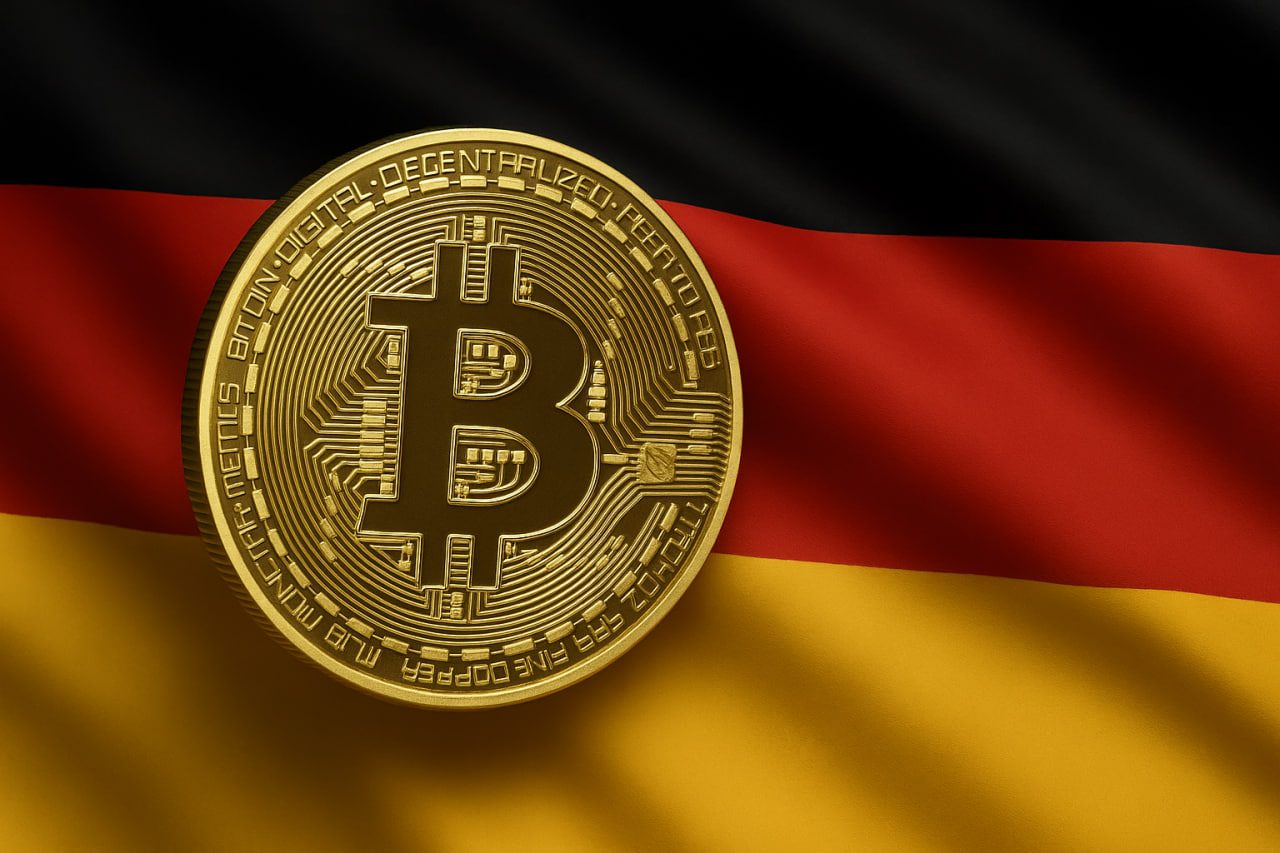
A political spark from Berlin has sent fresh energy through Europe’s digital-asset conversation. The Alternative for Germany (AfD) party has put forward a proposal urging the government to treat Bitcoin as a strategic reserve asset—a move that, if ever adopted, would place Europe’s largest economy on an entirely new monetary trajectory.

The idea appeared in parliament on October 29, wrapped in economic anxiety and political ambition. AfD lawmakers framed Bitcoin not as a speculative token but as a tool of national defense: protection against inflation, fiscal mismanagement, and what they see as creeping overreach from Brussels and the European Central Bank.

Germany’s Bitcoin U-Turn?

Ironically, the proposal arrives just months after Berlin liquidated almost 50,000 BTC seized in past criminal cases. Those coins were sold near $54,000, a price that looks painfully low now that Bitcoin trades roughly twice as high. Had the state held, the stash would be worth more than $5 billion today—a detail that has fueled the online uproar surrounding the AfD motion.

“Politicians mocked Bitcoin until it doubled after they sold,” one user on X wrote, capturing the frustration that many German crypto supporters feel toward the government’s earlier decision.

From Opposition to Opportunity

The AfD, long skeptical of centralized monetary power, has found new ground in Bitcoin. Its recent motion titled Recognizing the Strategic Potential of Bitcoin pushes for lighter regulation, long-term tax exemptions on BTC holdings, and official recognition of the asset as “stateless money.”

The party argues that Germany must encourage ownership rather than taxation if it hopes to lead the next financial cycle. The initiative contrasts sharply with mainstream German policy, which has so far focused on compliance and oversight rather than adoption.

But it taps into a growing European current that sees Bitcoin not as a threat, but as a hedge against institutional fragility.

France, Switzerland, and a Regional Ripple

Only a day before AfD’s announcement, French lawmaker Éric Ciotti and his UDR party introduced a bill in Paris calling for France to build its own Bitcoin reserve—roughly 2 percent of total supply over several years—funded through public mining, seized assets, and savings allocations.

Across the border, Swiss parliamentarian Samuel Kullmann continues his long-running campaign to enshrine Bitcoin in Switzerland’s constitution and add it to the central bank’s balance sheet.

These proposals differ in scope but share a common premise: Europe’s monetary future should include decentralized assets.

Still, few analysts expect rapid adoption. The French motion faces political headwinds, and Germany’s governing coalition is unlikely to hand a major policy win to the AfD. Yet even symbolic gestures can change the tone of debate—and that, observers say, may already be happening.

Europe’s Reserve Gap

For now, Europe’s presence in the Bitcoin treasury landscape is thin. Data from Bitcoin Treasuries shows only the U.K. and Finland holding government-level BTC, while Germany and Bulgaria remain at zero.

AfD’s motion is unlikely to flip that overnight, but it signals a deeper shift: Bitcoin is no longer being dismissed as “magic internet money” inside European politics. It’s being discussed as a policy instrument.

Whether the Bundestag embraces or ignores the idea, the conversation itself marks a change in tone. A few years ago, Bitcoin was a fringe topic; now it’s part of a fiscal argument about sovereignty, monetary independence, and the limits of fiat stability.

Germany may not be ready to buy Bitcoin for its national reserves just yet, but the debate has begun—and it’s spreading faster than most policymakers expected.


The information provided in this article is for educational purposes only and does not constitute financial, investment, or trading advice. Coindoo.com does not endorse or recommend any specific investment strategy or cryptocurrency. Always conduct your own research and consult with a licensed financial advisor before making any investment decisions.

About the Author

Alex is an experienced financial journalist and cryptocurrency enthusiast. With over 8 years of experience covering the crypto, blockchain, and fintech industries, he is well-versed in the complex and ever-evolving world of digital assets.

His insightful and thought-provoking articles provide readers with a clear picture of the latest developments and trends in the market. His approach allows him to break down complex ideas into accessible and in-depth content.

Follow his publications to stay up to date with the most important trends and topics.


Related Stories


https://bitcoinethereumnews.com/bitcoin/german-political-party-proposes-national-bitcoin-reserve-to-counter-inflation-risks/?utm_source=rss&utm_medium=rss&utm_campaign=german-political-party-proposes-national-bitcoin-reserve-to-counter-inflation-risks

Exit mobile version
Sitemap Index