
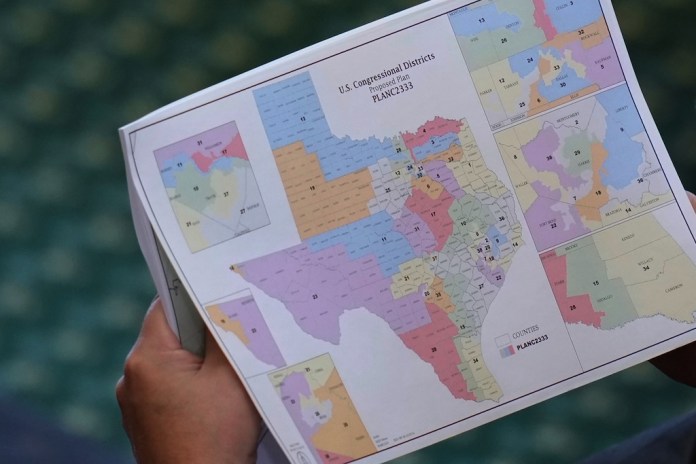
“In 37 years as a federal judge, I’ve served on hundreds of three-judge panels. This is the most blatant exercise of judicial activism that I have ever witnessed,” Smith said in his dissent. “The opinion is caught in an illogical straitjacket from which it cannot escape,” he later added. Brown had written in his Tuesday majority opinion that the map passed by the Texas legislature earlier this year, which would net Republicans up to five additional House seats, amounted to an unlawful racial gerrymander. The panel ordered the state to use its existing maps for the 2026 elections. Smith issued a sharp rebuttal to that finding, stressing repeatedly that “the most obvious reason for mid-cycle redistricting, of course, is partisan gain,” and detailing why the panel reached the wrong conclusion in issuing a preliminary injunction. Texas officials said they would appeal the ruling to the Supreme Court, with state Attorney General Ken Paxton saying he expects the high court to “uphold Texas’s sovereign right to engage in partisan redistricting.” The forthcoming appeal at the Supreme Court comes as the justices are set to rule on a case that could overrule how racial gerrymandering cases are decided and when they can be brought. Louisiana v. Callais, which centers on a challenge to Louisiana’s congressional map, could see the justices strike down the high court’s current Voting Rights Act precedent, which mandates the creation of minority-majority districts if a minority group is compact geographically and makes up a significant portion of the state’s population. Smith pointed to the pending case as a reason why the injunction should be paused pending the outcome of the Louisiana case. “The fact that Callais may fundamentally change the nature of this case also weighs in favor of a stay. It is reckless for this court to proceed with opining on the merits, which amounts to nothing more than a general guess as to whether existing voting-rights jurisprudence will survive Callais,” Smith wrote in his dissent. The circuit judge concluded his 104-page dissent by imploring the high court to reverse the panel’s ruling. REDISTRICTING SETBACKS IN COURT SLOW GOP MAP PUSH AHEAD OF 2026 “This order, replete with legal and factual error, and accompanied by naked procedural abuse, demands reversal,” Smith concluded. Texas officials are expected to appeal the ruling in the coming days, hoping to restore the recently passed map for use in the 2026 election as deadlines for next year’s races approach. The filing deadline for the 2026 elections in Texas is Dec. 8.
https://www.washingtonexaminer.com/news/justice/3893428/fiery-dissent-texas-redistricting-case-paves-path-supreme-court-appeal/
Tag: smith

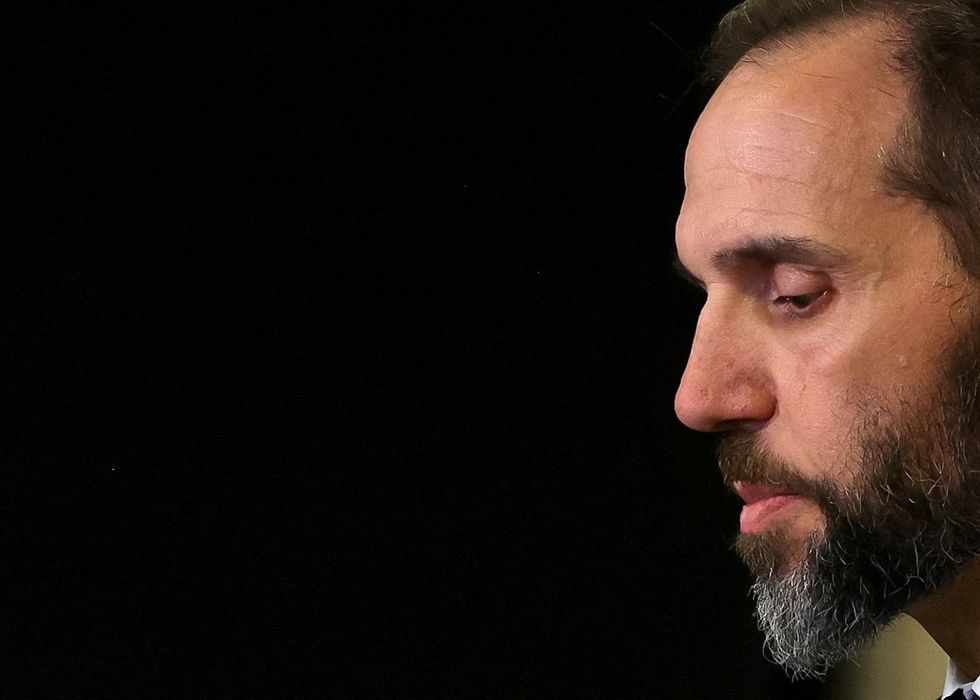
Jack Smith calls Republicans’ bluff with request to testify — on one condition
Former special counsel Jack Smith is calling Republicans’ bluff, turning the tables Thursday by requesting to testify publicly in open hearings before the House and Senate Judiciary Committees. Smith’s attorneys made the request this week in a letter to Senate Judiciary Committee Chairman Chuck Grassley (R-IA).
“As described by various Senators, the toll data collection was narrowly tailored and limited to the four days from January 4, 2021 to January 7, 2021, with a focus on telephonic activity during the period immediately surrounding the January 6 riots at the U.S. Capitol,” Smith’s lawyers wrote.
Grassley has accused Smith of improperly spying on Republican lawmakers during the Department of Justice investigation and prosecution of President Donald Trump.
“I think it’s important that he’s speaking up in a way to kind of demystify what has been grossly misrepresented to the American people by the senators,” former FBI Deputy Director and CNN senior law enforcement analyst Andrew McCabe said Thursday on CNN’s *The Arena* with anchor Kasie Hunt.
In that testimony from a few weeks ago, McCabe explained, “Toll records are a very rudimentary kind of first step investigative technique in many, many, many, almost all investigations. And it’s typically done early in an investigation when you have an allegation and you’re trying to determine — you’re trying to vet an allegation to even see if there’s something worth investigating.”
He added, “So if someone comes to you, let’s say a situation like this, if someone makes an allegation that they have information that the president contacted a particular senator in the process of trying to stall the Congress’s work on certifying the election, one way to vet that information would be to get toll records, to see if there was actually telephonic contact between those people.”
Smith’s public testimony could shed light and clarify what happened in the investigation and the methods behind it, McCabe said.
“And after you’ve proved that if there’s no contact, then you know not to go down that investigative avenue. If there is contact, then there are, of course, more techniques that you can use to get to the bottom of it,” he added.
“I should also say that it takes a grand jury subpoena to acquire those records. This is not something that a prosecutor or an FBI agent just dreams up off the top of their heads and, you know, calls up the phone company and says, ‘Hey, send us everything you have.’ There is a process. These records are accessed lawfully under the purview of the grand jury. So as I said, I think it was grossly misrepresented in that hearing.”
https://www.rawstory.com/jack-smith-2674227924/