
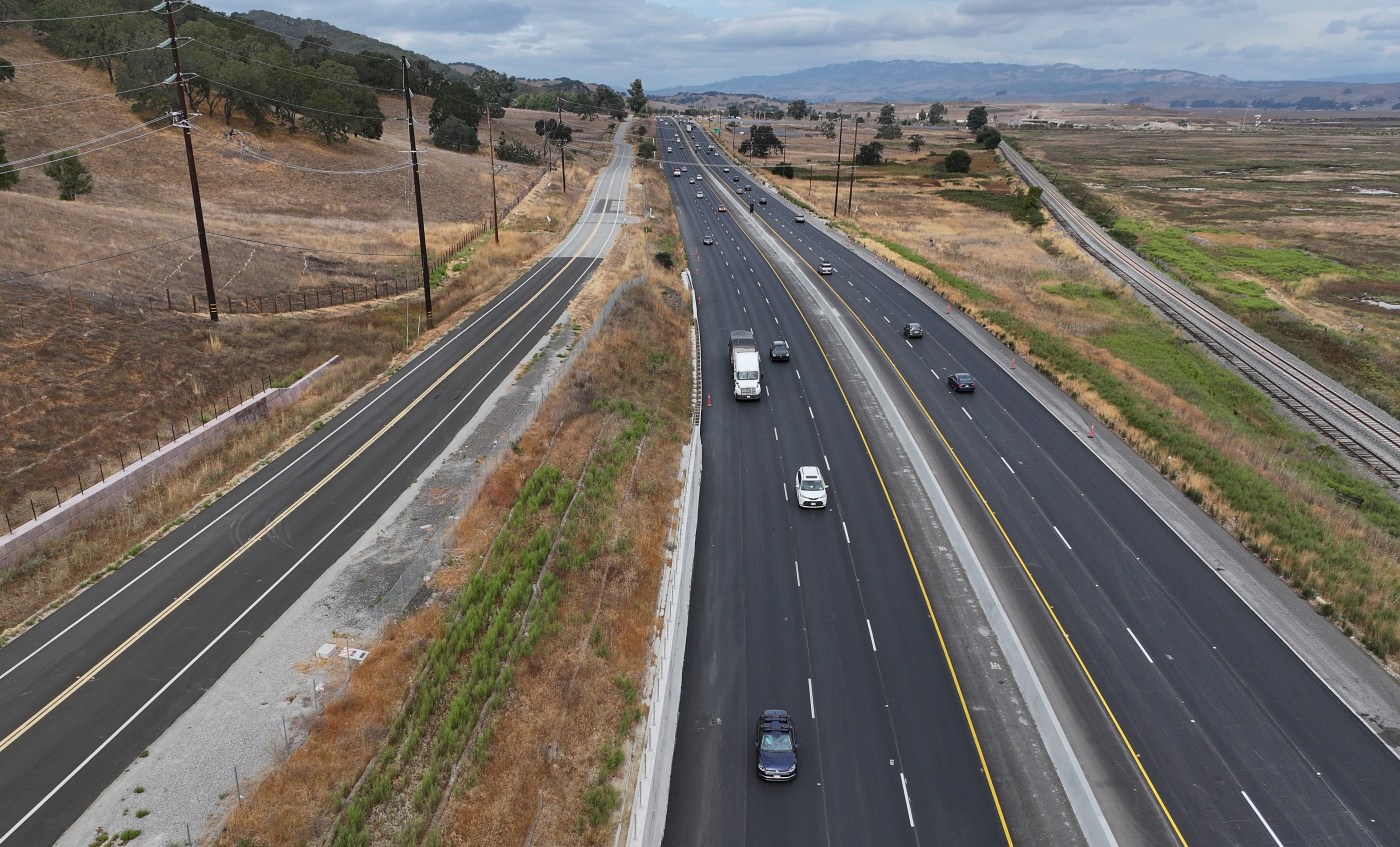
New Highway 101 ramp meters in Sonoma and Marin counties will be activated starting Tuesday to help manage traffic flow, according to Caltrans. Caltrans will turn on seven meters, which are traffic signals at onramps, in Sonoma County and five in Marin County in both northbound and southbound directions, the agency said in a Wednesday news release. All of the Sonoma County meters and both Marin County northbound meters will be switched on Tuesday. Three southbound Marin County meters, which are located along the Marin-Sonoma Narrows project area, will be turned on after some additional drainage and electrical work is completed, likely in early 2026, Caltrans spokesperson Matt O’Donnell said in an email Wednesday. The meters located in Petaluma, Novato, Sausalito and Mill Valley will be active at varying hours Monday through Friday. Signs will be placed ahead of the meters, letting drivers know of the new traffic signals. In Sonoma County, the meters will be on from 6 to 10 a. m. and 3 to 7 p. m. In Marin County, those leading onto the northbound lanes will be active from 2 to 7 p. m. and the meters by the southbound lanes will be on 5 to 11 a. m. The goal of the new meters is to make the highway more efficient and safe by creating room between vehicles and reducing traffic congestion and delays, the release said. Meters will be placed along additional onramps as funding becomes available. These are the locations where meters will be activated in Sonoma County: North Old Redwood Highway and Petaluma Boulevard loop onramp to northbound North Old Redwood Highway diagonal onramp to northbound Kastania Road and South Petaluma Boulevard diagonal onramp to southbound Lakeville Street and Caulfield Lane hook onramp to southbound East Washington Street diagonal onramp to southbound North Petaluma Boulevard and North Old Redwood Highway hook onramp to southbound Old Redwood Highway and North Petaluma Boulevard loop onramp to southbound In Marin County, meters will be activated at: Shoreline Highway and Almonte Boulevard hook onramp to northbound Redwood Highway Frontage Road and De Silva Drive hook onramp to northbound De Long Avenue diagonal onramp to southbound Atherton Avenue diagonal onramp to southbound San Antonio Road and Redwood Sanitary Landfill Road diagonal onramp to southbound All southbound Marin County meters are located along the Marin-Sonoma Narrows project area. While the expanded Highway 101 lanes opened in September, some “minimal” construction forcing some night closures is planned for later in the fall and winter, delaying the opening of the meters in those spots, O’Donnell said. In spring 2026, Caltrans will resume the final overlay paving and striping of the lanes, which is expected to take two months. The meter project was completed in partnership with the Metropolitan Transportation Commission, the Transportation Authority of Marin and Sonoma County Transportation and Climate Authorities.
https://www.pressdemocrat.com/2025/11/26/new-ramp-meters-along-highway-101-in-sonoma-and-marin-counties-to-be-activated-tuesday/
Tag: the metropolitan transportation

This city has the smoothest roads in the Bay Area. Where does your city rank?
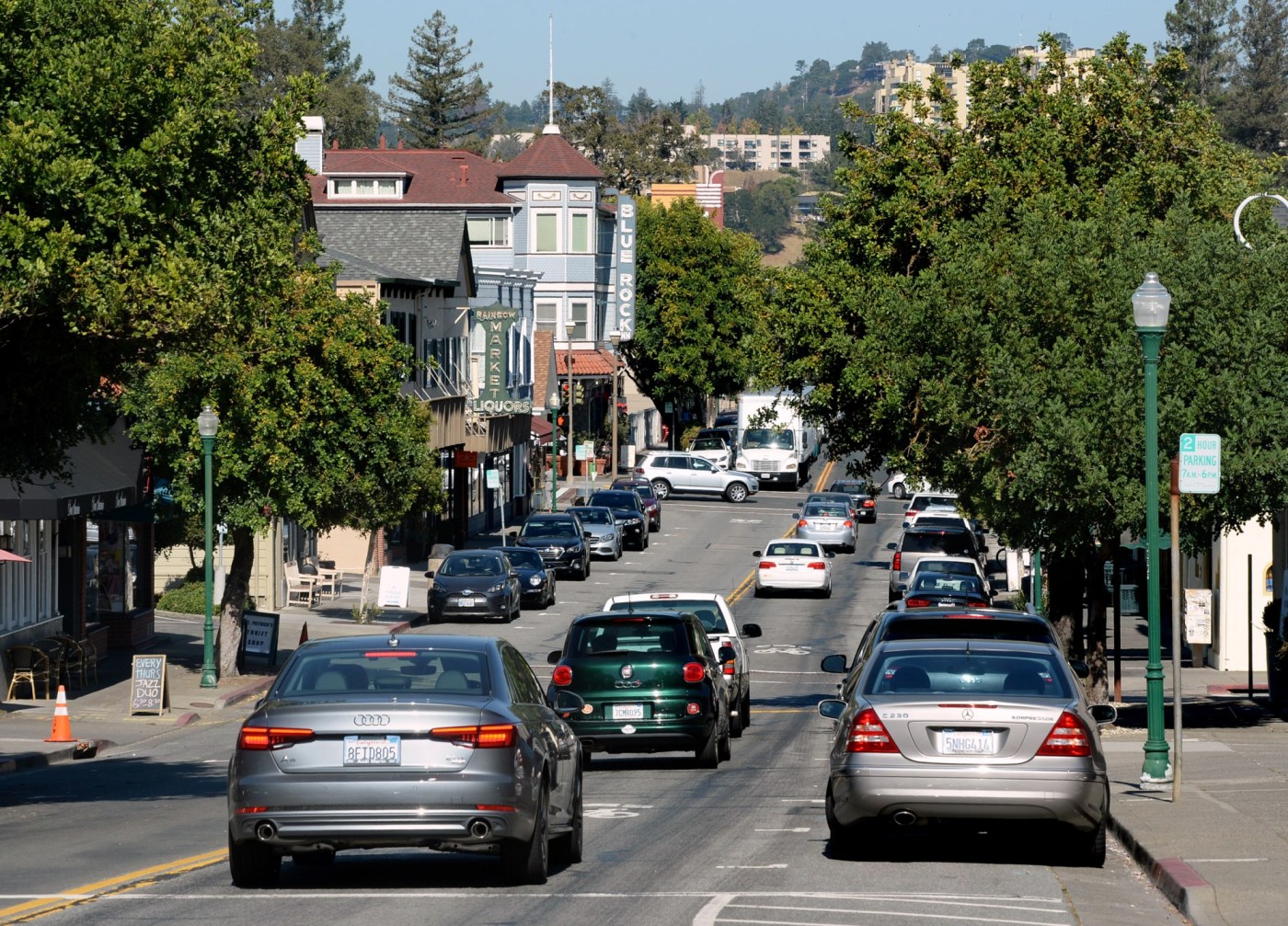
Which city has the best-maintained roads in the Bay Area? The wealthy Marin County suburb of Larkspur lays claim to that title, according to a new report from the Metropolitan Transportation Commission, a regional agency overseeing local transit systems. The city with the most potholes and bumpy streets? Vallejo, the only community in the region where road conditions are considered “poor,” according to the report. Overall, the transit agency found that the Bay Area’s 44, 000 miles of local roads are wearing down, with the typical stretch of roadway likely needing repairs soon. The report assigned each of the 110 cities and counties in the region a score on a 100-point scale. For the tenth year in a row, the Bay Area’s roads registered an average of 67, considered “fair.” “The good news is our cities and counties are continuing to hold the line against major deterioration,” the commission’s chair, Sue Noack, also the mayor of Pleasant Hill, said in a statement. “But the bad news is we’re still just as far away from bringing the regional average into the ‘very good’ range as we were a decade ago.” Affluent cities tend to rank higher in the report, with Larkspur, Palo Alto, Cupertino, Orinda and Hillsborough all scoring over 80, considered “very good.” That’s not always the case, however. As recently as 2017, Larkspur’s roads were rated “poor” in the annual roads report. But that changed with the city’s passage of two sales tax measures to help rehabilitate its 65 miles of streets. “When the community supported a sales tax measure in November 2017, the (city council) promised that the first thing it would do was fix the roads,” Larkspur City Manager Dan Schwarz said in an email. “It took five years to completely rehabilitate the system. The City is committed to maintaining this important asset. Our goal now is to make it hard to believe Larkspur ever had poor-quality roads.” Some funding for local roads also comes from the state and federal government, though they spend more on highway systems. Vallejo, with among the highest poverty rates in the Bay Area, ranked last with a score of 44. “Years of underfunding in the City of Vallejo has led to significant deterioration of city roads,” the Solano County Civil Grand Jury wrote in a report this year. To upgrade the crumbling streets, Vallejo voters approved a sales tax in 2022 to raise an estimated $18 million annually, with the majority of funds going toward road repairs. Vallejo officials did not respond to a request for comment on the city’s road maintenance efforts. Cities just above Vallejo in the rankings include wealthier communities such as Berkeley and Millbrae, as well as places with higher poverty rates, such as Richmond and Pittsburg revealing that healthier tax bases don’t necessarily translate to better roads. Of the Bay Area’s three largest cities, Oakland came in last with a score of 58, rating its roads as “at risk.” Despite the low score, city officials said they have made progress in fixing Oakland’s notorious pothole-filled streets in recent years, thanks to voter-approved bond measures that contribute to about $45 million a year for road maintenance. Earlier this year, the Alameda County Civil Grand Jury found that over a recent 18-month span, the city filled as many potholes around 85, 000 as it repaired in a 10-year span between 2008 and 2018. “We also know there’s more work ahead, especially on residential streets, which have historically received less maintenance than major corridors,” the Oakland Department of Transportation said in a statement. San Jose ranked above Oakland, with a score of 73, considered “good.” San Francisco scored a 75. Officials in San Jose said the city has maintained or repaved about 10% of its sprawling 4, 469 miles of local streets each year over the past eight years. They attributed the progress in part to a sales tax measure Santa Clara County voters approved in 2016, which has since raised $440 million for local roads across the South Bay. “Huge thank you to the city teams who have repaved over 60% of our roads since 2019 considering we’re the biggest city in Northern California, that’s quite a feat,” San Jose Mayor Matt Mahan said in a statement. More money could soon be available for road repairs. In November 2026, voters in the Bay Area’s five largest counties will decide on a massive transportation bond to raise about $1 billion annually aimed at bailing out the region’s struggling public transit agencies. If approved, about a third of the money would be available for flexible transportation spending, including targeted road repairs, with most of those funds going to Santa Clara County, according to Emily Loper, a senior vice president of public policy at the Bay Area Council, which is backing the bond measure. As part of an agreement to secure Santa Clara County officials’ support for the measure, the county would receive an expected $264 million in flexible funding. San Mateo County would see $50 million, Contra Costa County $26 million, and Alameda County $10 million. All of San Francisco’s funding would go to public transit. “I do expect a significant amount to go to roadway repairs,” the Bay Area Council’s Loper said.
https://www.eastbaytimes.com/2025/11/26/bay-area-roads-potholes-repairs/