
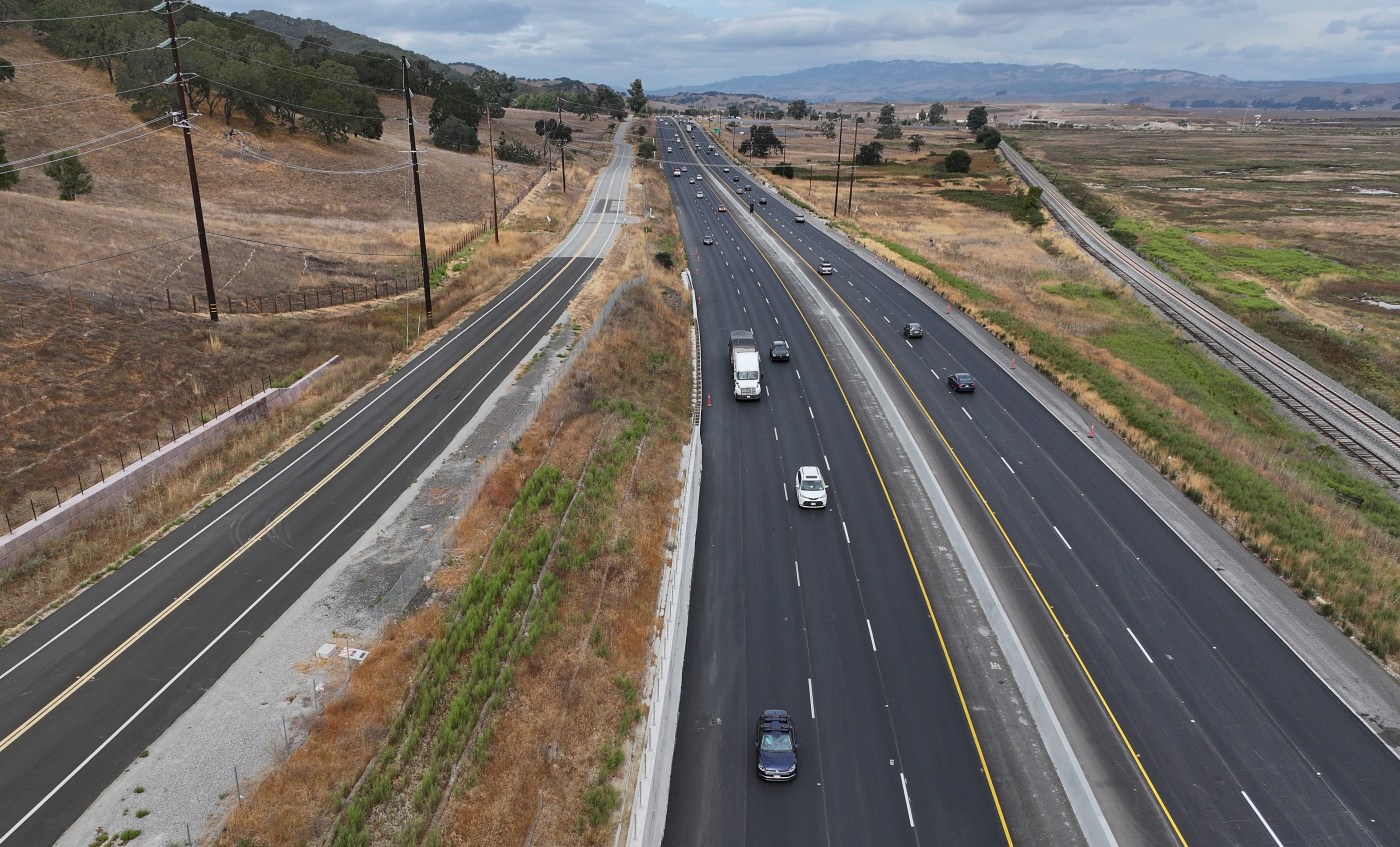
New Highway 101 ramp meters in Sonoma and Marin counties will be activated starting Tuesday to help manage traffic flow, according to Caltrans. Caltrans will turn on seven meters, which are traffic signals at onramps, in Sonoma County and five in Marin County in both northbound and southbound directions, the agency said in a Wednesday news release. All of the Sonoma County meters and both Marin County northbound meters will be switched on Tuesday. Three southbound Marin County meters, which are located along the Marin-Sonoma Narrows project area, will be turned on after some additional drainage and electrical work is completed, likely in early 2026, Caltrans spokesperson Matt O’Donnell said in an email Wednesday. The meters located in Petaluma, Novato, Sausalito and Mill Valley will be active at varying hours Monday through Friday. Signs will be placed ahead of the meters, letting drivers know of the new traffic signals. In Sonoma County, the meters will be on from 6 to 10 a. m. and 3 to 7 p. m. In Marin County, those leading onto the northbound lanes will be active from 2 to 7 p. m. and the meters by the southbound lanes will be on 5 to 11 a. m. The goal of the new meters is to make the highway more efficient and safe by creating room between vehicles and reducing traffic congestion and delays, the release said. Meters will be placed along additional onramps as funding becomes available. These are the locations where meters will be activated in Sonoma County: North Old Redwood Highway and Petaluma Boulevard loop onramp to northbound North Old Redwood Highway diagonal onramp to northbound Kastania Road and South Petaluma Boulevard diagonal onramp to southbound Lakeville Street and Caulfield Lane hook onramp to southbound East Washington Street diagonal onramp to southbound North Petaluma Boulevard and North Old Redwood Highway hook onramp to southbound Old Redwood Highway and North Petaluma Boulevard loop onramp to southbound In Marin County, meters will be activated at: Shoreline Highway and Almonte Boulevard hook onramp to northbound Redwood Highway Frontage Road and De Silva Drive hook onramp to northbound De Long Avenue diagonal onramp to southbound Atherton Avenue diagonal onramp to southbound San Antonio Road and Redwood Sanitary Landfill Road diagonal onramp to southbound All southbound Marin County meters are located along the Marin-Sonoma Narrows project area. While the expanded Highway 101 lanes opened in September, some “minimal” construction forcing some night closures is planned for later in the fall and winter, delaying the opening of the meters in those spots, O’Donnell said. In spring 2026, Caltrans will resume the final overlay paving and striping of the lanes, which is expected to take two months. The meter project was completed in partnership with the Metropolitan Transportation Commission, the Transportation Authority of Marin and Sonoma County Transportation and Climate Authorities.
https://www.pressdemocrat.com/2025/11/26/new-ramp-meters-along-highway-101-in-sonoma-and-marin-counties-to-be-activated-tuesday/
Tag: transportation

This city has the smoothest roads in the Bay Area. Where does your city rank?
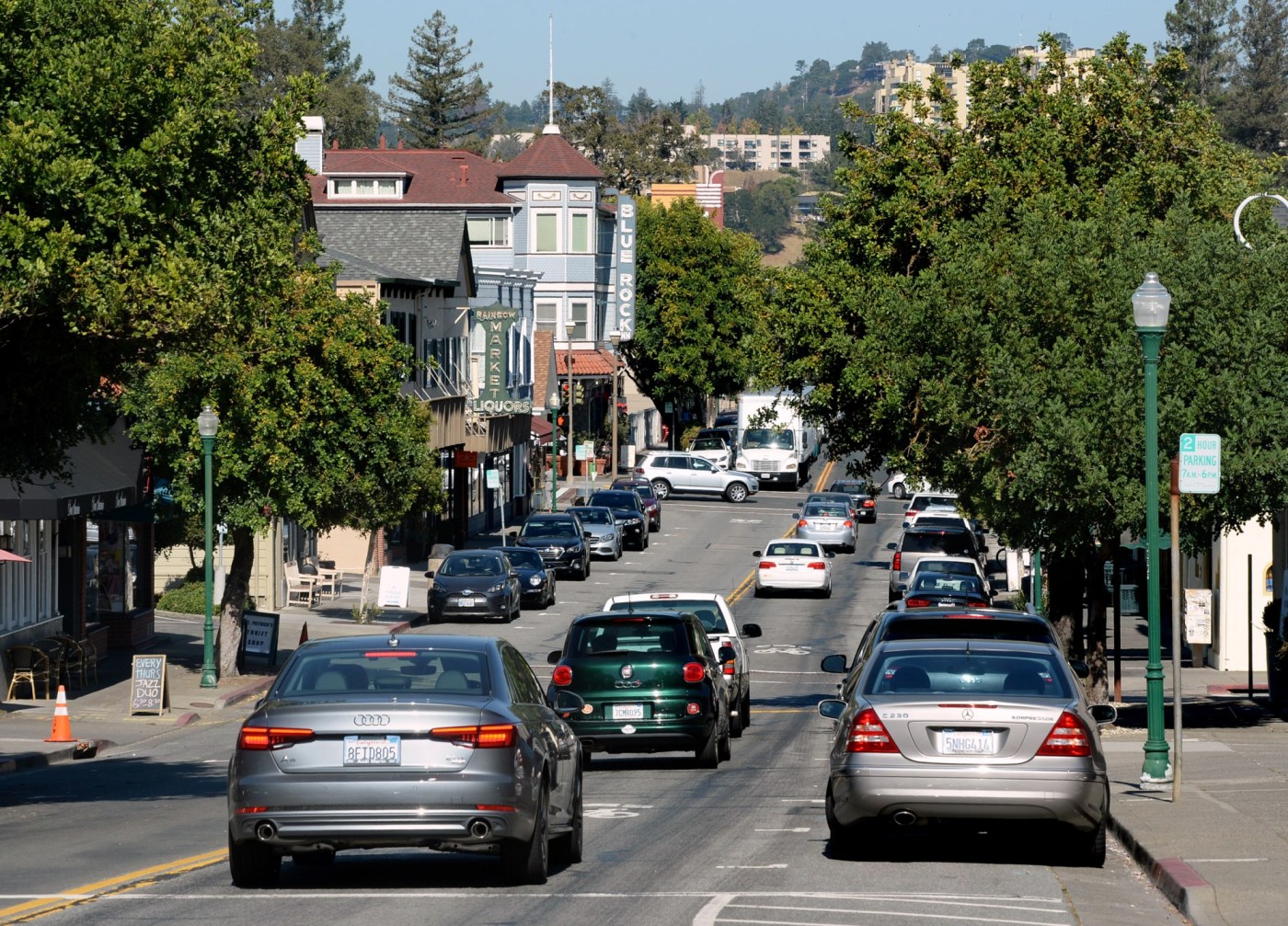
Which city has the best-maintained roads in the Bay Area? The wealthy Marin County suburb of Larkspur lays claim to that title, according to a new report from the Metropolitan Transportation Commission, a regional agency overseeing local transit systems. The city with the most potholes and bumpy streets? Vallejo, the only community in the region where road conditions are considered “poor,” according to the report. Overall, the transit agency found that the Bay Area’s 44, 000 miles of local roads are wearing down, with the typical stretch of roadway likely needing repairs soon. The report assigned each of the 110 cities and counties in the region a score on a 100-point scale. For the tenth year in a row, the Bay Area’s roads registered an average of 67, considered “fair.” “The good news is our cities and counties are continuing to hold the line against major deterioration,” the commission’s chair, Sue Noack, also the mayor of Pleasant Hill, said in a statement. “But the bad news is we’re still just as far away from bringing the regional average into the ‘very good’ range as we were a decade ago.” Affluent cities tend to rank higher in the report, with Larkspur, Palo Alto, Cupertino, Orinda and Hillsborough all scoring over 80, considered “very good.” That’s not always the case, however. As recently as 2017, Larkspur’s roads were rated “poor” in the annual roads report. But that changed with the city’s passage of two sales tax measures to help rehabilitate its 65 miles of streets. “When the community supported a sales tax measure in November 2017, the (city council) promised that the first thing it would do was fix the roads,” Larkspur City Manager Dan Schwarz said in an email. “It took five years to completely rehabilitate the system. The City is committed to maintaining this important asset. Our goal now is to make it hard to believe Larkspur ever had poor-quality roads.” Some funding for local roads also comes from the state and federal government, though they spend more on highway systems. Vallejo, with among the highest poverty rates in the Bay Area, ranked last with a score of 44. “Years of underfunding in the City of Vallejo has led to significant deterioration of city roads,” the Solano County Civil Grand Jury wrote in a report this year. To upgrade the crumbling streets, Vallejo voters approved a sales tax in 2022 to raise an estimated $18 million annually, with the majority of funds going toward road repairs. Vallejo officials did not respond to a request for comment on the city’s road maintenance efforts. Cities just above Vallejo in the rankings include wealthier communities such as Berkeley and Millbrae, as well as places with higher poverty rates, such as Richmond and Pittsburg revealing that healthier tax bases don’t necessarily translate to better roads. Of the Bay Area’s three largest cities, Oakland came in last with a score of 58, rating its roads as “at risk.” Despite the low score, city officials said they have made progress in fixing Oakland’s notorious pothole-filled streets in recent years, thanks to voter-approved bond measures that contribute to about $45 million a year for road maintenance. Earlier this year, the Alameda County Civil Grand Jury found that over a recent 18-month span, the city filled as many potholes around 85, 000 as it repaired in a 10-year span between 2008 and 2018. “We also know there’s more work ahead, especially on residential streets, which have historically received less maintenance than major corridors,” the Oakland Department of Transportation said in a statement. San Jose ranked above Oakland, with a score of 73, considered “good.” San Francisco scored a 75. Officials in San Jose said the city has maintained or repaved about 10% of its sprawling 4, 469 miles of local streets each year over the past eight years. They attributed the progress in part to a sales tax measure Santa Clara County voters approved in 2016, which has since raised $440 million for local roads across the South Bay. “Huge thank you to the city teams who have repaved over 60% of our roads since 2019 considering we’re the biggest city in Northern California, that’s quite a feat,” San Jose Mayor Matt Mahan said in a statement. More money could soon be available for road repairs. In November 2026, voters in the Bay Area’s five largest counties will decide on a massive transportation bond to raise about $1 billion annually aimed at bailing out the region’s struggling public transit agencies. If approved, about a third of the money would be available for flexible transportation spending, including targeted road repairs, with most of those funds going to Santa Clara County, according to Emily Loper, a senior vice president of public policy at the Bay Area Council, which is backing the bond measure. As part of an agreement to secure Santa Clara County officials’ support for the measure, the county would receive an expected $264 million in flexible funding. San Mateo County would see $50 million, Contra Costa County $26 million, and Alameda County $10 million. All of San Francisco’s funding would go to public transit. “I do expect a significant amount to go to roadway repairs,” the Bay Area Council’s Loper said.
https://www.eastbaytimes.com/2025/11/26/bay-area-roads-potholes-repairs/


Fulfilling Lincoln’s dream | Roff
Lincoln was a man of great vision, whose ambitions for America were not limited to the preservation of the union and the abolition of slavery. He wanted his presidency to end with the country united, not just politically but through technology. In 1862, consumed by the search for a general who would fight and in deep contemplation of the ramifications of freeing the slaves in the seceding states, Lincoln managed to secure congressional approval to begin work on the country’s first transcontinental railroad. A longtime dream of the one-time rail-splitter turned railroad attorney, he understood better than most of his era the interconnectedness of prosperity, growth, and national unity. His passions drove him to pursue, in the traditions of Washington and Jefferson, Jackson and Polk, the conquering of the continent, transforming it into an American nation. Today, that same spirit of vision and ambition is reflected in the proposed merger of the Union Pacific and Norfolk Southern railroads. Together, as one entity, they become a partnership creating the first truly coast-to-coast rail network of the modern era. This is no small thing. The efficiencies gained from eliminating redundancies create the opportunity for shipping prices to decline, which will be reflected in retail prices. That’s something we can all appreciate at a time when everyone seems worried about affordability. More than that, we know now what it means when supply chains fail. The consequences are very real and very damaging to every household and small business. Families must pay more for groceries and other supplies when they can get them, while retailers and wholesalers are forced to wait weeks or even months for essential shipments to arrive. There’s no guarantee there won’t be another supply chain crisis like the one we endured during the COVID lockdown. Based on what we now know, we can try to mitigate the impact of a similar crisis in the future. If the federal government permits the Union Pacific-Norfolk Southern merger to go forward, it will be saying “Yes” to the creation of a seamless, coast-to-coast network of more than 50, 000 miles of tracks that run through 43 states, linking nearly 100 ports. The merger will strengthen the nation’s surface transportation system, reduce bottlenecks, increase efficiency, and provide lasting benefits for consumers and businesses alike. Nevertheless, the critics of it, like Calgary-based Canadian Pacific Kansas City, should recall their own history. During its own consolidation effort, Kansas City Southern’s then-CEO, Patrick J. Ottensmeyer, explained why real integration was essential to unlocking the rail system’s full potential. “Unfortunately, as is often the case when two railroads try to collaborate on arrangements such as joint marketing and joint operating agreements, they fail,” Ottensmeyer told federal regulators during the CP-KCS merger proceedings. “This is because each railroad works to protect its interests or not expend its capital on a risky commercial opportunity for which there is no guarantee of adequate returns.” In the Trump administration, trade is an integral part of policy and tariff discussions. The proposed unified rail network connects inland producers to the world more effectively. Creating a way for American goods to reach ports faster and more reliably will create jobs, increase overall GDP, and help U. S. manufacturers better compete abroad. A win-win for all involved. The rail industry currently delivers significant economic benefits. According to the Association of American Railroads, every railroad job creates almost four additional jobs in sectors such as manufacturing, logistics, and technology. The merger’s expansion of operations and infrastructure investment will generate thousands of high-paying jobs and create stability in communities along the rail lines. It will also support long-term workforce growth, guaranteeing stable, lucrative professions for many years to come. Lincoln’s dream was to unite a divided nation through rail. That same ambition should guide us now. The merger of Union Pacific and Norfolk Southern is an opportunity, of course, to strengthen America’s supply chains. It will also expand trade and contribute to lasting economic growth, delivering benefits that reach far beyond the rail industry. The merger will benefit families, workers, and businesses in every state. Policymakers, business leaders, and communities should seize this moment to ensure America remains strong, connected, and competitive on the world stage. Peter Roff is former U. S. News and World Report contributing editor and UPI senior political writer now affiliated with several DC-based public policy organizations. He writes for numerous publications and appears regularly on international television talking about U. S. politics. You can reach him at RoffColumns@gmail. com and follow him on Twitter @TheRoffDraft.
https://www.redbluffdailynews.com/2025/11/26/roff/


Kerung border remains shut, forcing traders into financial hardship
Kathmandu, Nov 24: On July 8, 2024, floods in the Lhende River in China swept away the Miteri Bridge at the Kerung border point, completely halting the movement of goods between Nepal and China. Many people lost their lives in the floods, and traders faced heavy financial losses as trucks and containers were washed away. Traders say hundreds of Nepal-bound trucks and containers were swept away, and with the Miteri Bridge gone, nearly 300 containers have been stuck on the Chinese side in the customs process. More than five months have passed since the disaster, yet transportation has not resumed because the containers loaded with goods for Nepali traders remain stranded in China. This has pushed traders into financial trouble. With the border point closed for months, the government has also failed to meet its revenue collection target. For the four months of July, August, September and October 2024, the target was set at Rs 13. 53 billion. Damage to the Miteri Bridge, the customs yard and the road network led to a revenue loss of more than Rs 14 billion from this border point in five months. Located about 132 kilometers from Kathmandu, this checkpoint had been the country’s fifth largest customs office in terms of revenue collection. This key trade route to northern neighbor China had been growing in importance, but it has now come to a standstill after the massive flood in the Lhende River. On the Chinese side, reconstruction of the bridge has reached its final stage, and on the Nepali side, the obstructed roads have already opened.
https://mypeoplesreview.com/2025/11/24/kerung-border-remains-shut-forcing-traders-into-financial-hardship/
Real ID So Real, Even Real Terrorists Can Get One!
Hot Air ^ | 17 Nov, 2025 | Beege Welborn Posted on by MtnClimber In the middle of last month, and in response to a sudden rash of horrific and fatal semi-truck accidents found to have been caused by illegal aliens with commercial drivers’ licenses (CDL), the Secretary of Transportation, Sean Duffy, announced he was immediately imposing a radical measure in an attempt to get these dangerous, often non-English speaking hazards off American highways. Calling the current use of non-domiciled CDLs a “national emergency” and a “threat to public safety,” the U. S. Department of Transportation plans to drastically reduce eligibility. The new system will make non-citizens ineligible for a non-domiciled CDL unless they meet stricter requirements, including an employment-based visa and a federal immigration status check. During a news conference on Friday, Sept. 26, Transportation Secretary Sean Duffy said the changes are in response to a recent series of fatal crashes caused by non-domiciled drivers. “We have a government system designed to keep families on the road safe, but that system has been compromised,” Duffy said. “I’m talking about non-domiciled commercial driver’s licenses that are issued across the country. In plain English, this is a license to operate a massive 80, 000-pound truck that is being issued to foreign drivers who are not U. S. citizens or lawful permanent residents. The process for issuing these licenses is absolutely 100% broken. It has become a threat to public safety, and it is a national emergency that requires action right now.” He was shutting down the blue states’ ability to issue CDLs to all comers. 1. Limits individuals eligible for non-domiciled CLPs and CDLs to those maintaining lawful immigration status in certain employment-based nonimmigrant categories, certain individuals domiciled in a U. S. territory and individuals domiciled in a state that is prohibited from issuing CLPs or CDLs because the state’s CDL program is decertified 2. Requires non-citizen applicants (except for lawful permanent residents) to provide an unexpired foreign passport and an unexpired arrival/departure record indicating one of the specified employment-based nonimmigrant categories at every issuance, transfer, renewal and upgrade action 3. Requires state driver’s licensing agencies to query the Systematic Alien Verification for Entitlements System to verify the accuracy and legitimacy of provided documents and information 4. Requires the state agencies to retain copies of the application documents for at least two years 5. Requires the expiration date for any non-domiciled CLP or CDL to match the expiration date of the arrival/departure record or to expire in one year, whichever is sooner 6. Requires the applicant to be present in person at each renewal 7. Requires the state agency to downgrade the non-domiciled CLP or CDL if the state becomes aware that the person is no longer eligible This update of regulations would have rendered nearly 190, 000 non-citizens’ licenses invalid. That number alone tells you the size of the problem. On the 10th of this month, a federal court ruled that Duffy’s new rule could be ‘administratively stayed,’ effectively neutering the program before it even began while they looked into it. SNIP TOPICS: Society KEYWORDS: Click here: to donate by Credit Card Or here: to donate by PayPal Or by mail to: Free Republic, LLC PO Box 9771 Fresno, CA 93794 Thank you very much and God bless you. 1 posted on by MtnClimber To: MtnClimber No doubt there will be a judge who puts a stay on this measure. 2 posted on by MtnClimber (For photos of scenery, wildlife and climbing, click on my screen name for my FR home page.) Disclaimer: Opinions posted on Free Republic are those of the individual posters and do not necessarily represent the opinion of Free Republic or its management. All materials posted herein are protected by.
https://freerepublic.com/focus/f-chat/4353202/posts
Kristi Noem hands out $10K bonuses to many TSA officers who worked during shutdown
WASHINGTON Kristi Noem, the secretary of Homeland Security, announced Nov. 13 that Transportation Security Administration workers who provided “exemplary” service during the shutdown would receive $10,000 bonuses. “Their unsung patriotism deserves recognition,” Noem said in recognizing two TSA officers Reiko Walker, who worked double shifts, and Ashley Richardson, who canceled a move at George Bush Intercontinental Airport in Houston. Funding for the bonuses comes from $13. 2 billion Noem said Trump saved in cost-cutting since taking office. About 13, 000 air traffic controllers and 50, 000 TSA officers continued working during the shutdown as essential personnel. But many were absent as they searched for other income during the temporary halt in paychecks. Trump has proposed $10,000 bonuses for air traffic controllers with perfect attendance. The federal government continues to resume operations several days after the end of the longest shutdown in history, but advocates warn of potential continued delays getting back pay out the door, airline flights back on schedule and food benefits. President Donald Trump signed legislation Nov. 12 that ended the 43-day shutdown. For the record book, the White House clocked the shutdown at 42 days, 22 hours and 25 minutes. As the government gets back on its feet, workers expect to get back pay within the next few days, airlines are repositioning crews and planes after flight cancellations and states are scrambling to distribute food benefits heading into the Thanksgiving holiday. DOT Duffy calls air controllers ‘patriots’ who should get bonuses at White House Transportation Secretary Sean Duffy repeated Trump’s pledge to give air traffic controllers with perfect attendance during the shutdown each a $10,000 bonus and said they should get it from the president personally at the White House. About 13, 000 controllers and 50, 000 Transportation Security Administration officers kept working temporarily without paychecks during the shutdown to keep passengers flying. The controllers will get back pay and received paychecks Nov. 14 with 70% of their pay, he said. The number of controllers eligible for bonuses is still being calculated, Duffy said. “Depending on how many we have, they should come to the White House and he should present them with their checks,” Duffy said. “They are patriots. We are grateful to them for the work that they have done.” Transportation Secretary Sean Duffy said nearly 20, 000 flights were delayed during the shutdown due to short staffing. Vance calls out Senate Democrats over shutdown Vice President JD Vance says Democrats made a “huge political mistake” when they made demands to reopen the government that a group of moderates eventually caved on. “They caused a lot of stress for our troops, they made our air traffic controllers not get paid, and they caused a lot of flight cancellations. They had a lot of people thinking they were not going to get their food benefits, all for literally nothing,” Vance said “We could have struck this exact deal 45 days ago.” Most House and Senate Democrats voted against the GOP-backed bill to reopen the government. It passed with the support of six Democrats in the House and seven Democrats and an independent who caucuses with the party in the Senate. The White House Office of Management and Budget quickly put out guidance following the end of the shutdown that directs federal agencies to open, and furloughed workers to return “in a prompt and orderly manner” starting Nov. 13. OMB Director Russell Vought sent out the letter to department and agency heads Nov. 12 saying “employees we were on furlough due to the absence of appropriations should be directed to return to work on November 13.” An estimated 750, 000 workers were furloughed during the shutdown.
https://www.yahoo.com/news/articles/kristi-noem-hands-10k-bonuses-171532957.html


Dream Chaser completes key tests ahead of first flight
**Sierra Space Advances Dream Chaser Testing, Eyes Civil and National Security Missions**
WASHINGTON — Sierra Space has achieved significant testing milestones for its Dream Chaser vehicle as the company explores a range of civil and national security missions for the reusable spaceplane.
On November 13, Sierra Space announced that the first Dream Chaser vehicle, named Tenacity, successfully completed electromagnetic interference and compatibility testing at NASA’s Kennedy Space Center (KSC).
“We completed the electrical system closeout and verified that, as we operate the vehicle, we’re not interfering with ourselves or Dream Chaser’s launch vehicle,” said Dan Polis, vice president of engineering solutions at Sierra Space, in a recent interview.
In addition to electrical testing, the company conducted high-speed tow tests at Space Florida’s Launch and Landing Facility—the former shuttle landing runway at KSC. During these tests, a truck pulled the spaceplane along the runway to evaluate landing operations.
“These tow tests verified the closed-loop performance of the spaceplane’s navigation systems,” Polis explained. The tests also confirmed that Dream Chaser can communicate both in line-of-sight mode and through NASA’s Tracking and Data Relay Satellite System (TDRS) network to Sierra Space’s control center in Colorado.
Looking ahead, Sierra Space plans to conduct launch acoustics testing of the vehicle in December. Polis noted that the company has already completed tests on the separate Shooting Star cargo module, which is designed to fly attached to Dream Chaser.
Dream Chaser has been in development for several years, primarily aimed at providing cargo transportation services to the International Space Station (ISS). In 2016, Sierra Space secured a Commercial Resupply Services 2 (CRS-2) contract from NASA, which originally included seven missions to the ISS.
However, in September 2024, the company revealed that NASA agreed to modify the CRS-2 contract to cover only a single flight planned for late 2026. This upcoming mission will not dock with the ISS but will instead test the vehicle’s capabilities in low Earth orbit. NASA retains the option to order additional cargo flights under the revised contract.
At that time, Sierra Space indicated it was shifting its focus toward potential national security applications of Dream Chaser, though specific details were not disclosed.
Following the upcoming acoustics testing, the company plans to ship Dream Chaser back to Colorado where “modifications for national security applications will be explored and performed,” according to the announcement.
While Polis did not discuss specifics about these applications, he confirmed that further vehicle testing will take place in Colorado. This includes hot-fire tests of Dream Chaser’s propulsion system and comprehensive “day in the life” tests involving hardware and software integration.
After completing these phases, the spaceplane will return to Florida for final launch preparations.
With the decision to forego an ISS mission for this demonstration flight, the test program is being adjusted accordingly. “We will gear our verification so there are some pivots away from things we were doing for a station-first mission, and pivot toward our new potential customers,” Polis said.
Tenacity arrived at Kennedy Space Center about a year and a half ago for what Sierra Space described as final vehicle testing. Initially, the plan was to launch Dream Chaser on the second flight of United Launch Alliance’s (ULA) Vulcan rocket in late 2024.
However, in June 2024, Sierra Space agreed to relinquish its launch slot. ULA, facing schedule pressure to certify Vulcan for national security missions, needed to perform a launch before the end of the year.
Polis emphasized there was no singular issue causing delays with Dream Chaser’s launch. “As with any complex vehicle, we’ve worked through non-conformances as we get to final vehicle integration,” he said. “I wouldn’t say there was one thing.”
Another factor influencing the timeline was “getting mutual alignment with NASA” on the vehicle’s future to fully exploit its flexibility for multiple platform applications.
While Sierra Space is placing a strong emphasis on national security uses for Dream Chaser, the company remains open to supporting the ISS or future commercial space stations—also known as commercial low Earth orbit destinations (CLDs).
“NASA is a critical customer,” Polis stated. “We ultimately want to be their service provider after this first flight, and through their CLD partners, so we have an eye on all of those requirements.”
He added, “This is a multi-purpose vehicle, and we see it fitting both national security and civil space. NASA has been a great partner. We believe the contract realignment really showed their commitment to the vehicle.”
As Sierra Space continues advancing Dream Chaser’s development, the space community watches closely to see how this versatile spaceplane will serve a broad spectrum of missions in Earth’s orbit and beyond.
https://spacenews.com/dream-chaser-completes-key-tests-ahead-of-first-flight/
Trump slams air traffic controllers who called out during the government shutdown
President Trump is slamming U.S. air traffic controllers who called out of work during the government shutdown, a period during which they were forced to stay on the job without pay.
Trump expressed his frustration in a post on Truth Social Monday morning, stating that he was “NOT HAPPY” with controllers who took time off. “All Air Traffic Controllers must get back to work, NOW!!! Anyone who doesn’t will be substantially ‘docked,'” he wrote.
Some controllers have taken on second jobs, while others have called in sick. They are set to miss their second full paycheck this week. Meanwhile, Trump praised those controllers who took no time off during the longest shutdown in U.S. history, calling them “GREAT PATRIOTS” and saying he would recommend giving each a $10,000 bonus.
He added that any controllers wishing to quit shouldn’t hesitate but would receive “NO payment or severance of any kind!” and would be “quickly replaced by true Patriots.” It’s important to note that one reason for the shortage of controllers is that it takes years to train and certify new personnel.
In a subsequent post on X, Transportation Secretary Sean Duffy praised “those who have worked throughout the shutdown” and said he would work with Congress to “reward your commitment.”
However, others have sharply criticized Trump’s comments. Former Transportation Secretary Pete Buttigieg responded on X, saying, “The President wouldn’t last five minutes as an air traffic controller, and after everything they’ve been through and the way this administration has treated them from Day One he has no business s****ing on them now.”
Last week, the FAA announced it would reduce flights by up to 10% at 40 of the busiest airports in the country, starting with a 4% reduction implemented on Friday. These cuts contributed to major travel headaches over the weekend.
According to the flight tracking website FlightAware, there were more than 4,500 cancellations and 18,000 delays at airports across the U.S.
At Philadelphia International Airport, passenger Phill Hicks experienced multiple cancellations. His flight to West Palm Beach, Florida, was canceled and rebooked twice on Sunday. Preparing to head home for the night and return for his flight Monday morning, he wasn’t confident his flight would take off either.
“I don’t believe this ticket,” Hicks told NPR, “but I’m going to gas my truck up, and take that trip if I have to.”
Similarly, Seth Alpert faced a two-hour delay on his flight back to Columbus, Ohio. Preparing for uncertainties, he rented a car as a backup plan.
“We’ll see. The incoming flight says it’s on time, or a few minutes delayed so, you know, 50-50,” Alpert said regarding his chances.
Hicks, who was stranded at the airport for several hours before senators announced they had reached a potential deal to reopen the government, expressed frustration with Congress.
“I think little cry babies need to get together and figure it out,” he said. “People elect them to do a job. Do your damn job.”
https://www.npr.org/2025/11/10/nx-s1-5604664/trump-air-traffic-controllers-forced-time-off-bonus

US Shutdown May Jeopardize Thanksgiving Travel and Q4 Economic Growth
**Key Economic Warning: US Federal Shutdown Threatens Holiday Travel and Economic Growth**
White House economic adviser Kevin Hassett has issued a stark warning: the ongoing federal shutdown could trigger a negative GDP in the fourth quarter due to significant travel disruptions during the peak holiday season. Airlines are facing mandatory flight cuts, with the Federal Aviation Administration (FAA) ordering reductions of up to 10% at major airports to address critical staffing shortages in air traffic control.
—
### Flight Disruptions Reach Critical Levels
On Sunday, November 9, more than 2,200 flights were canceled and over 7,200 delayed, according to data from FlightAware, marking the worst day for disruptions since the shutdown began on October 1. These delays and cancellations are escalating rapidly as Thanksgiving approaches, threatening the smooth flow of travel and broader economic activity.
—
### Economic Impact of the Shutdown
In an interview on CBS’s *Face the Nation* on November 9, Kevin Hassett emphasized that the shortage of air traffic controllers is causing severe disruptions just ahead of Thanksgiving, one of the busiest economic periods of the year. If travel grinds to a halt, consumer spending could take a significant hit, potentially pushing the U.S. into a negative GDP quarter in Q4. Hassett highlighted that holiday travel is a critical driver of economic growth, and prolonged disruptions could have ripple effects throughout the economy.
—
### How Flight Delays Are Affecting Thanksgiving Travel
The federal shutdown has resulted in acute staffing shortages at the FAA, with many air traffic controllers furloughed or working without pay. This shortage has forced airlines to implement mandatory flight cuts for three consecutive days. For instance:
– On Saturday, November 8, there were 1,550 cancellations and 6,700 delays.
– Sunday, November 9, saw an even worse day with over 2,200 cancellations and 7,200 delays.
– United Airlines announced cancellations of 190 flights on Monday and 269 on Tuesday following the trend.
Transportation Secretary Sean Duffy warned on CNN’s *State of the Union* that air travel could slow to a “trickle” as the situation worsens. Twelve control towers faced staffing shortages earlier on Sunday, with the number of daily controller retirements rising sharply—from four per day before the shutdown to between 15 and 20 now.
The FAA estimates a shortage of 1,000 to 2,000 controllers, severely impacting millions of travelers planning to fly before Thanksgiving. Analysts have described this recent surge in cancellations as the worst since the shutdown began, raising concerns that many travelers may be stranded if the issue remains unresolved.
—
### Frequently Asked Questions
**What caused the recent surge in US flight delays during the federal shutdown?**
The surge is driven by the ongoing shutdown, which has led to furloughs and unpaid work among thousands of air traffic controllers, creating severe staffing shortages at the FAA. This has forced airlines to cancel thousands of flights to manage the disruptions.
**How long will the federal shutdown continue to impact air travel?**
The impact is expected to worsen in the two weeks leading up to Thanksgiving, with continued controller shortages and increased retirements. Although the Senate is working on a deal to reopen government funding through January 2026, immediate relief remains uncertain. Travelers should prepare for potential ongoing disruptions during the holiday rush.
—
### Key Takeaways
– **Economic risk amplified:** The shutdown threatens to push the U.S. economy into a negative growth quarter if holiday travel falters, underscoring the importance of smooth Thanksgiving travel and spending.
– **Passenger advisory:** With thousands of cancellations and delays on peak days, travelers are urged to monitor flight updates closely and consider alternative travel plans to minimize disruption.
—
### Conclusion
The ongoing US federal shutdown is severely impacting air travel during one of the busiest times of the year. Staffing shortages in air traffic control have forced widespread flight cancellations and delays, threatening not only holiday plans but also broader economic growth. Travelers should stay informed, remain flexible, and prepare for potential disruptions as efforts continue to resolve the shutdown.
Stay tuned for more updates on this developing situation.
https://bitcoinethereumnews.com/tech/us-shutdown-may-jeopardize-thanksgiving-travel-and-q4-economic-growth/
Duffy warns air travel will slow to ‘a trickle’ during holiday season if govt. shutdown persists
**OAN Staff | Blake Wolf**
*2:17 PM Sunday, November 9, 2025*
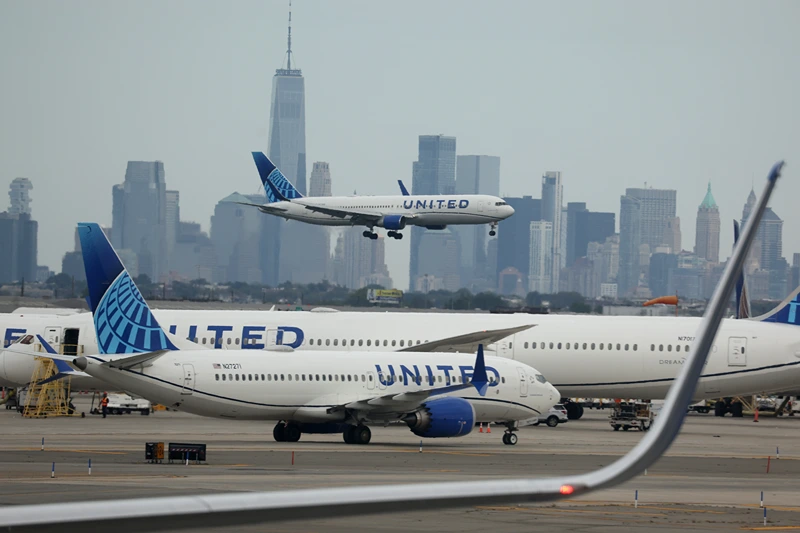
Transportation Secretary Sean Duffy has warned that air travel will slow to “a trickle” as Thanksgiving approaches, due to the ongoing government shutdown negatively impacting the availability of air traffic controllers.
The Federal Aviation Administration (FAA) has notified airlines to reduce flights by 6% starting Tuesday, with a further reduction to 10% on November 14th if the shutdown continues.
“We are seeing signs of stress in the system, so we are proactively reducing the number of flights to make sure the American people continue to fly safely,” FAA Administrator Bryan Bedford said earlier this week.
Duffy also warned that flight reductions could increase to as much as 20% if the shutdown remains unresolved, which would significantly affect the public’s ability to travel during the holidays.
“It’s only going to get worse,” Duffy added, highlighting the growing concerns among travelers.
—
*Subscribe to get the latest updates directly to your inbox for free.*
*What do YOU think? Click here to jump to the comments!*
https://www.oann.com/newsroom/duffy-warns-air-travel-will-slow-to-a-trickle-during-holiday-season-if-govt-shutdown-persists/