
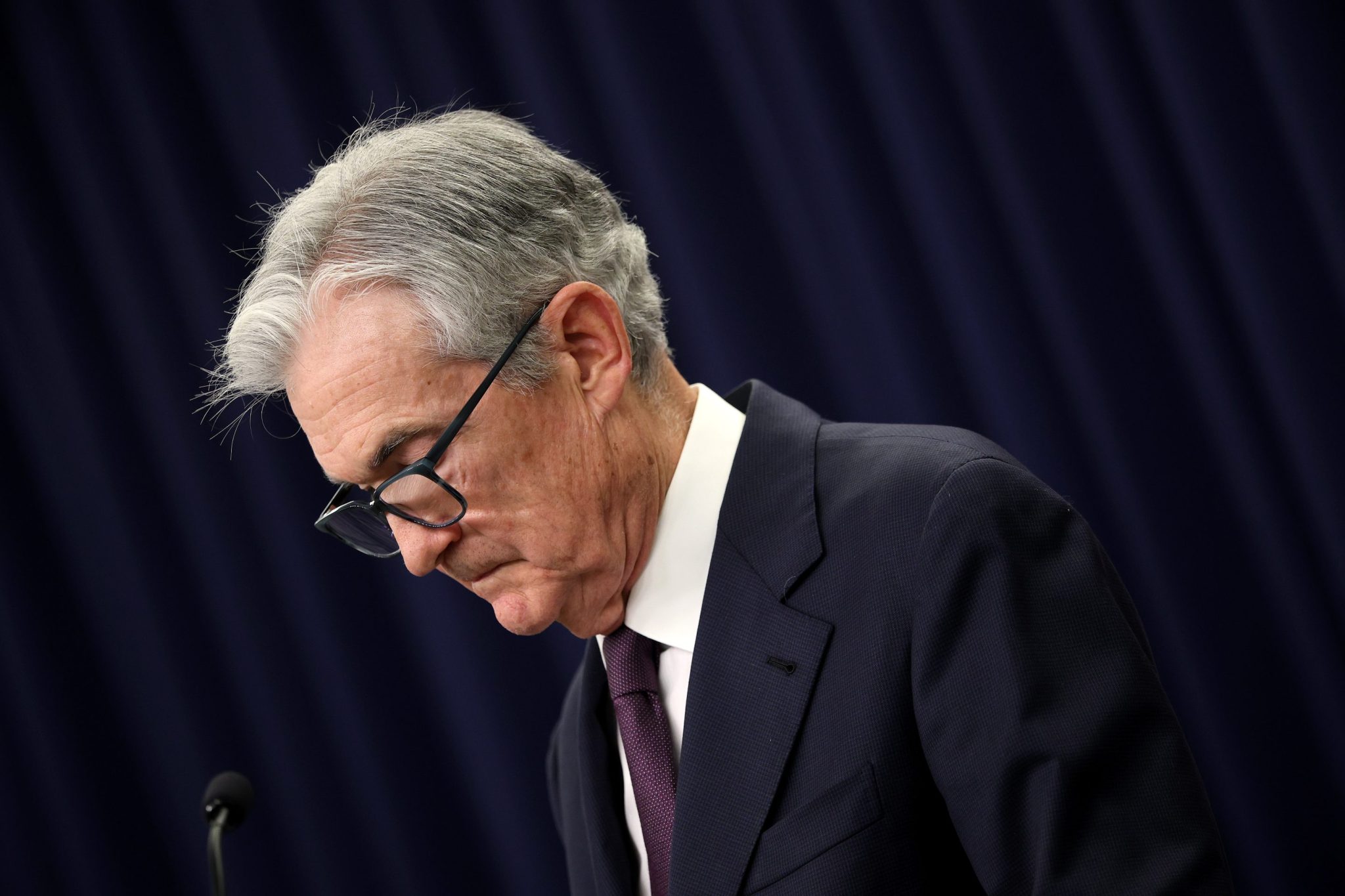
After two earlier cuts, recent comments from policymakers have been leaning hawkish as inflation remains stuck above the Fed’s target, dampening hopes for more easing at the Federal Open Market Committee’s Dec. 9-10 meeting. But New York Fed President John Williams surprised Wall Street on Friday when he said he sees “room for a further adjustment in the near term” to bring benchmark rates closer to neutral. That boosted odds for rate cut next month above 70% from less than 40% the day before, while also sparking a broad stock market rally. But it also potentially sets up some tricky math on the 12-member FOMC. In a note on Friday, economists at Capital Economics attempted to count votes. The four regional Fed bank presidents on the committee-Susan Collins, Austan Goolsbee, Alberto Musalem and Jeffrey Schmid-have sounded skeptical or “downright hostile” to the idea of a rate cut next month. Fed governors Michael Barr and Phillip Jefferson have also signaled caution. On the dovish side, the three Trump-appointed Fed governors-Michelle Bowman, Stephen Miran and Christopher Waller-have been calling for rate cuts, and Williams sounded Friday like he could join them. “That’s still only four ayes in favor of a cut and six nays against but, to the extent that Williams and Fed Chair Jerome Powell often hold the same view (and Governor Lisa Cook usually votes with Powell), we could have a six-six tie,” Capital Economics said. “Then things would get really messy since it’s not clear that Powell has a casting vote, so the vote to change policy might simply fail to be carried.” The Labor Department’s September jobs report released on Thursday after being delayed by the government shutdown is unlikely to tip the scales. That’s because the mixed data showed payrolls grew by more than expected, but prior months were revised lower with August now showing a decline. The unemployment rate also ticked up to 4. 4%, the highest since 2021, from 4. 3%. Separate data on weekly jobless claims still don’t indicate a spike in newly unemployed people, but the steady rise of continuing claims means jobs are difficult to find. What if there’s a tie vote on the Fed? There has never been a tie vote at the Fed, and the FOMC’s rules and procedures don’t discuss such a scenario. Robert Eisenbeis, who previously served as director of research at the Atlanta Fed, told Fortune earlier this year that in the event of a tie vote, the federal funds rate would stay the same. It’s also not clear if policymakers would take another vote during that same meeting or wait until the next scheduled meeting to vote. “There is no precedent here,” Eisenbeis said in August. “I would presume there would be the option for a revote, but if not, then no change in the funds rate. If there is no change in the rate, then the next meeting is where another review and vote would take place.” While the Fed has never had to deal with a tie vote, it has come close a few times. According to a July note from Christopher Hodge, chief U. S. economist at Natixis CIB Americas, there have been three occasions when a decision on the FOMC passed by a one-vote majority, though the last time it occurred was in 1973. Still, the chair has significant authority in guiding meetings and decisions, he said, noting that the FOMC is also a self-governing committee that has the ability to alter its rules. “In the absence of an explicit tie-breaking rule, the chair is generally understood to have the ability to cast a deciding vote or guide the committee toward resolution, as is common in other deliberative bodies with a presiding officer,” Hodge explained in August. “This is not made explicit in any document I have seen and is more of a custom than a rule.” If there’s a tie at the Fed, investors might look to the U. K. for guidance. The Bank of England had to navigate a historic deadlock this summer after four policymakers voted to keep rates steady, four voted to cut by a quarter point, and one voted to cut by a half point. That prompted the bank’s Monetary Policy Committee to hold a decisive revote for the first time since it was created in 1997. The subsequent 5-4 decision lowered rates a quarter point to 4% from 4. 25%.
https://fortune.com/2025/11/22/fed-rate-cut-outlook-fomc-meeting-tie-vote-jerome-powell-john-williams/
Author: admin


First Native woman drives Oklahoma’s iconic covered wagon mascot
For the first time in its 60-year history, the Sooner Schooner, the University of Oklahoma’s iconic covered wagon mascot, is being driven by a Native American woman. Brianna Howard, a junior at OU and a citizen of the Choctaw Nation, first drove the Schooner onto the field during the football team’s season opener against Illinois State. “I only had a minute to get on the Schooner, get the reins and go,” Howard said Saturday before the Sooners’ game against Missouri in Norman. “I didn’t have enough time to get too nervous. When I went out there, it was amazing. I could not even hear the audience I was so zoned into driving.” Members of the RUF/NEKS and the all-female spirit group Lil’ Sis take care of the Schooner and its ponies, and they take turns driving it during the game. First introduced in 1964, the Sooner Schooner is pulled across the field before the game and after Oklahoma scores by matching white ponies named “Boomer” and “Sooner.” Because the scaled-down Conestoga wagon is reminiscent of those pioneers used while settling Oklahoma Territory in the late 1800s, Howard acknowledged that some see the Schooner mascot as a symbol of oppression against Native people. But she said to her, driving the wagon represents taking ownership of that symbol. “I know that for me, it’s a representation of taking back something that was used to oppress my people and my culture, and now that I’m in charge, it’s giving us the power,” she said. “Not everyone’s going to see it that way, and that’s OK.” Jack Roehm, a senior at OU and president of the RUF/NEKS, drove the Schooner during Saturday’s game against Missouri and described the Sooner Schooner tradition as one of college football’s most unusual. “It’s a historic tradition after every score having the ponies run across the field,” Roehm said. “There’s nothing like it in college football.”.
https://www.cbsnews.com/news/first-native-woman-drives-oklahoma-iconic-sooner-schooner-mascot/

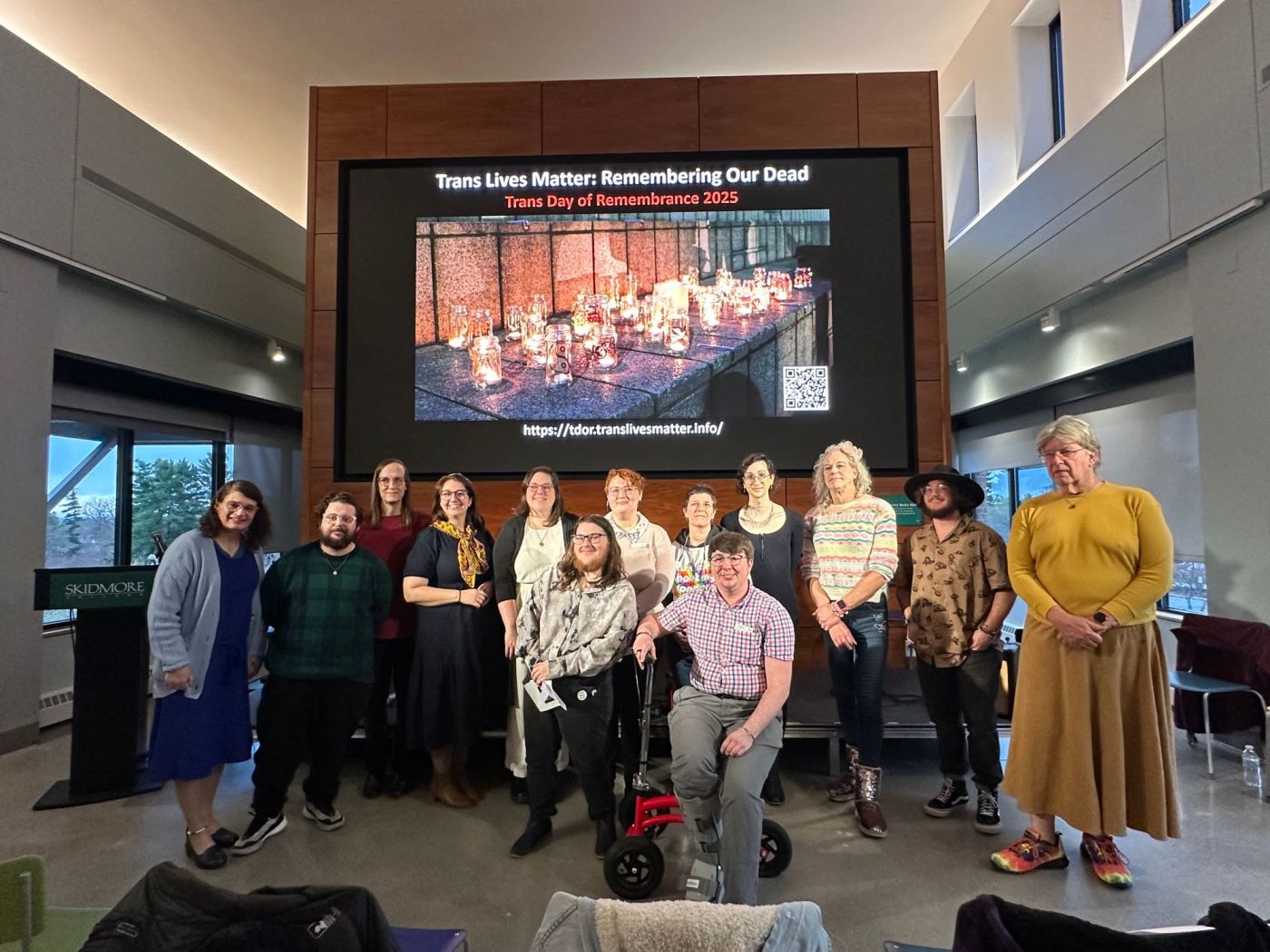
‘Lift us all up’: Lives lost honored at Transgender Day of Remembrance
SARATOGA SPRINGS, N. Y. The Transgender Day of Remembrance seeks to honor the memory of transgender and nonbinary individuals who were lost in 2025, either to homicide or to suicide. People in the Capital Region recently gathered to pay their respects and pay tribute to the individuals who died too soon. During the ceremony, members of the transgender/nonbinary community read the 64 names of those who died, followed by a call and response portion. Rauch Passaro was one of the individuals who participated, sharing that they felt very heartened to see a ceremony like this take place in their community. “Especially in years where we’re affected by the loss in our own community, it really hits home, so I am so grateful to be able to have everyone come together and see the community support for this year after year,” Passaro said. “These times are undeniably scary it’s contentious, but it’s events like this that really underline how these are the things that bind us. In life, across the board, everyone has something that they can relate to each other on. “I hope those who attend leave with just a little more thoughtfulness, a little more patience and a desire to understand each other and stay connected to people and to find things that lift us all up.” Attendees were able to take part in a candlelight vigil and listen to readings from Rabbi Illana Symons of Temple Sinai and Rev. Jo Urrriola-Shonewolf of Saratoga United Methodist Church, as well as musical performances of “Whisper” and“Take Me Down to the Water’s Edge” by Trace Ellis. The ceremony, which took place in the Wyckoff Center on the Skidmore College campus, was put together in partnership between Saratoga Pride and Skidmore College. Mariel Martin, director of the Wyckoff Center, shared with the Saratogian ahead of the ceremony not only how fitting a location it was to hold such a ceremony, but how proud she was to be a part of this annual remembrance. “The Wyckoff Center is a space for cross-cultural communication, community engagement, connection across identity, culture across difference and so really it is a space to affirm all members of our community, so it feels like a really fitting space to have it,” Mariel Martin, director of the Wyckoff Center, shared ahead of the ceremony. “Skidmore College does not exist in isolation, we are connected to the wider Saratoga community and creating really intentional spaces where we invite in members of the community . especially in this space and on our campus and in our wider Saratoga community, I think it’s so important to hold space for everybody who lives, works, learns and is part of this community and really uplifting and affirming them in all of their identities. “Creating a space to say you’re seen and you’re validated in all that you bring to our community, because you’re part of us too.” The Transgender Day of Remembrance has been observed internationally on Nov. 20 since 1999, with a local event taking place in Saratoga Springs for the last six years. Cindy Swadba, a volunteer with Saratoga Pride, shared that the organization was challenged by a former speaker they had at one of their events to host a Transgender Day of Remembrance ceremony, and it has been something the organization has committed to doing annually in the years since. “This is a memorial, and it’s also an educational opportunity. We’re talking about what it means to be transgender, the speakers today, with a couple of exceptions, are all transgender and from the local area,” Swaba said. “It’s a very solemn event, and we speak about the transgender and non-binary members of our community, and those who’ve lost their lives to violence or suicide. “We gather in this place to do that, to remember and to lift our transgender members of this community to show them that we care that we’re here.” Swaba added that she hopes attendees of the ceremony feel inclined to share their experience with other people in their lives, just let those they know how meaningful it was and let them know that they stood by the transgender, non-binary community. “I hope they take away a new understanding and a new peace to be at peace with themselves and certainly with others.” For more information about The Transgender Day of Remembrance and to see the list of names read, visit.
https://www.troyrecord.com/2025/11/22/lift-us-all-up-lives-lost-honored-at-transgender-day-of-remembrance/


Trump promete fin “de inmediato” a TPS para somalíes en Minnesota, desatando temor y dudas legales
Por JAKE OFFENHARTZ La promesa del presidente Donald Trump de poner fin a las protecciones legales temporales para los somalíes que viven en Minnesota ha desatado una ola de temor en una comunidad inmigrante sumamente arraigada en el estado, así como dudas sobre si la Casa Blanca tiene la autoridad legal para promulgar la directiva tal como se describe. El mandatario publicó la noche del viernes en su plataforma de redes sociales Truth Social que a los residentes somalíes de Minnesota se les retiraría “de inmediato” el Estatus de Protección Temporal (TPS por sus iniciales en inglés), una salvaguarda legal contra la deportación para inmigrantes de ciertos países. El anuncio provocó una respuesta inmediata de algunos líderes estatales y expertos en inmigración, quienes se refirieron a las amenazas de Trump como un intento sin muchos fundamentos legales para sembrar miedo y sospecha hacia la comunidad somalí de Minnesota, la más grande del país. “No hay un mecanismo legal que le permita al presidente poner fin al estatus de protección para una comunidad o estado en particular con el que tenga problemas”, aseguró Heidi Altman, directora de políticas del National Immigrant Justice Center. “Trump está haciendo lo que siempre hace: demagogia contra los inmigrantes sin justificación ni evidencia y usar esa demagogia en un intento por retirar importantes protecciones que salvan vidas”, agregó. La protección para los somalíes ha sido extendida 27 veces desde 1991, después de que las autoridades estadounidenses han determinado que las condiciones en Somalia no son lo suficientemente seguras para que las personas que ya se encuentran en Estados Unidos puedan regresar a ese país. Sin embargo, el gobierno de Trump podría tomar medidas para retirar las protecciones legales para los somalíes a nivel nacional. Pero eso afectaría sólo a una pequeña fracción de las decenas de miles de somalíes que viven en Minnesota. Según un informe elaborado para el Congreso en agosto pasado, únicamente hay 705 somalíes al amparo del TPS a nivel nacional “Soy ciudadana, al igual que la mayoría de los somalíes en Estados Unidos”, señaló la representante por Minnesota Ilhan Omar, una demócrata de origen somalí. “Buena suerte celebrando un cambio de política que realmente no tiene mucho impacto en los somalíes a los que amas odiar”. Aún así, grupos activistas advirtieron que la medida podría avivar el odio contra una comunidad en un momento de creciente islamofobia. “Esto no es sólo un cambio burocrático”, dijo Jaylani Hussein, presidente del Council on American-Islamic Relations para su oficina en Minnesota. “Es un ataque político a la comunidad somalí y musulmana impulsado por una retórica islamofóbica y de odio”. En su publicación en redes sociales, Trump afirmó, sin ofrecer evidencia, que las pandillas somalíes han atacado a los residentes de Minnesota y se refirió al estado como un “centro de actividad fraudulenta para el lavado de dinero”. Fiscales federales han presentado cargos en las últimas semanas contra decenas de personas que forman parte de un plan de fraude de servicios sociales. Algunos de los acusados son originarios de Somalia. El gobernador de Minnesota, el demócrata Tim Walz, ha señalado que su estado se ubica consistentemente entre los más seguros del país. “No es de sorprender que el presidente haya elegido atacar de manera generalizada a toda una comunidad”, señaló Waltz el viernes. “Esto es lo que hace para cambiar de tema”. Activistas comunitarios destacan que la diáspora somalí en Minnesota ha ayudado a revitalizar los corredores del centro de Minneapolis y juega un importante papel en la política del estado. “La verdad es que la comunidad somalí es querida y está profundamente entrelazada en muchos de los vecindarios y comunidades de Minnesota”, subrayó Altman. “Desestabilizar a familias y comunidades nos deja a todos menos seguros, no más”. Como parte de un impulso más amplio por adoptar políticas de inmigración más estrictas, la Casa Blanca ha tomado medidas para retirar varias protecciones que les habían permitido a los inmigrantes permanecer en Estados Unidos y trabajar legalmente. Entre ellas se incluye el fin del TPS para 600. 000 venezolanos y 500. 000 haitianos que recibieron protecciones durante la presidencia de Joe Biden. ___ Esta historia fue traducida del inglés por un editor de AP con la ayuda de una herramienta de inteligencia artificial generativa.
https://www.bostonherald.com/2025/11/22/trump-promete-fin-de-inmediato-a-tps-para-somales-en-minnesota-desatando-temor-y-dudas-legales/


Saint Charles Market Hosts Final Event of the Season Nov. 29
The City of Saint Charles invites residents and visitors to close out the 2025 farmers market season at the annual Holiday Market on Saturday, November 29, from 7: 30 AM to 1: 00 PM. This festive finale, taking place on North Main Street between Clark and Monroe Streets, will bring together holiday shopping, seasonal activities, and feature the market’s first Christmas Cookie Bake Off. Shoppers can browse for the perfect holiday gifts from local vendors while families enjoy a kids craft, warm up by the fire pits, and roast free s’mores while supplies last. From 9: 00 AM to 11: 00 AM, guests can also meet live reindeer and get their photo taken with Santa, adding a magical touch to this winter morning at the market. The Christmas Cookie Bake Off invites bakers of all experience levels to show off their best holiday treats. Contestants should bring their top three Christmas cookies, with at least three of each kind for judging. Participants may also bring a dozen cookies to sell if they choose. Entries must be dropped off at the City of Saint Charles tent by 9: 30 AM, with judging to begin at 11: 00 AM. Winners will be announced immediately after judging. Entry is five dollars. Rumor has it that Santa himself may join the judging panel, and everyone knows he has plenty of experience when it comes to Christmas cookies! The City of Saint Charles encourages the community to bundle up, shop local, and enjoy a cheerful close to another successful market season.
https://www.mycnews.com/articles/news-saintcharlescounty/saint-charles-market-hosts-final-event-of-the-season-nov-29/


Pacifica football unable to slow Hillcrest in Division 10 semifinals
For the second consecutive season, the season ended for the Pacifica football team in the CIF-SS Division 10 semifinals. Pacifica traveled to Riverside on Friday to face Hillcrest and lost, 39-20, at Hillcrest High. The Mariners fell to St. Anthony in the semifinals in 2024. Pacifica finished this season 9-4 overall and won the Omicron League championship for the second consecutive time. “I’m thankful I had the opportunity to work with such an amazing group of young men, particularly the seniors,” Pacifica coach Kyle Murphy said. “They poured their hearts into this program for the last three years and this season was a culmination of that work.” Mike Lee had two rushing touchdowns for the Mariners, including a long touchdown run that cut Hillcrest’s lead to 16-14 in the first quarter. James Anema threw a 40-yard touchdown pass to David Carlsson on a screen in the third quarter to cut the Hillcrest lead to 25-20. Hillcrest (8-5) ran for 311 yards with four touchdowns against Pacifica. Reyez Ortiz ran for 192 yards with three touchdowns and quarterback Matthew Ramos ran for 119 with a score. Ramos also threw for 149 yards with a touchdown. “Unfortunately we didn’t play well enough to win and Hillcrest was a huge reason why,” Murphy said. “They were physical and executed at a high level. Our guys gave all they had and that’s all I ever ask them to do.” Hillcrest, which beat St. Margaret’s in the quarterfinals, will host Tahquitz in the Division 10 championship game on Friday or Saturday, Nov. 28-29. Pacifica was seeking its first championship appearance since 2007. The Mariners had a seven-game winning streak entering Friday and beat El Rancho and Liberty in the first two rounds of the playoffs.
https://www.ocregister.com/2025/11/22/pacifica-football-unable-to-slow-hillcrest-in-division-10-semifinals/


XRP Shows Signs of Recovery as ETFs and Buy Signals Strengthen Outlook
Historical 1. 8B XRP accumulation highlights $1. 75 as a key support, reinforcing the level’s importance. TD Sequential flashes a buy signal, boosting confidence in XRP’s short-term recovery. ETF inflows and upcoming XRP ETF launches strengthen the market outlook. Amid bearish momentum, the XRP price reached an intraday low of $1. 89, a decline of over 2% in the last 24 hours and more than 16% in the last week. Notably, some analysts had predicted XRP could even fall below $1 as the bearish momentum intensified. However, the coin soon found support at the $1. 85 level and is now making another attempt at the $2 level. 1. 8 Billion XRP Bought at Key Level According to a chart shared by analyst Ali Martinez, 1. 8 billion XRP were previously purchased at around $1. 75, establishing this as a significant support level. Furthermore, the analyst said in a separate post that the TD Sequential indicator has flashed a buy signal for XRP. This indicator has historically predicted XRP’s bottoms, often leading to notable upside moves. Specifically, Martinez noted that XRP rebounded by 14% and 18% in the last two instances when the TD Sequential indicator flashed a similar signal. XRP ETF Inflows to Boost Outlook Another factor supporting the bullish outlook is the ongoing trend of inflows into XRP ETFs. On Friday, XRP ETFs from Bitwise and Canry Capital recorded total inflows of $11. 89 million. Cumulative total net inflow into XRP ETFs has now reached $422. 66 million just one week after launch. More ETFs Set to Launch Grayscale will list its XRP (GXRP) spot ETF on NYSE Arca on Monday, expanding the company’s lineup of more than 40 crypto products. Meanwhile, 21RP ETF is nearing launch. Related: Bitwise and 21RP Price Rebound Next? The firm has been preparing the product for launch and updated its S-1 on Nov. 7, though earlier filings included language suggesting the debut might not happen in late November. Analysts remain optimistic about an imminent launch. A fresh filing on Nov. 20 confirms that the ETF will list on Cboe BZX under the ticker TOXR, carry a 0. 50% fee, and start with $500,000 in seed capital (20, 000 shares at $25 each).
https://bitcoinethereumnews.com/tech/xrp-shows-signs-of-recovery-as-etfs-and-buy-signals-strengthen-outlook/


UN climate talks end with deal for more money to countries hit by climate change
The Associated Press ^ | November 22, 2025 | BY SETH BORENSTEIN, MELINA WALLING AND ANTON L. DELGADO Posted on by Oldeconomybuyer BELEM, Brazil To: Oldeconomybuyer What those countries need is government change. 3 posted on by Texas Eagle (“Throw me to the wolves and I’ll return leading the pack”- Donald J. Trump) To: Oldeconomybuyer What countries are giving the money? NOT USA 4 posted on by RWGinger To: Oldeconomybuyer 5 posted on by OttawaFreeper (“The Gardens was founded by men-sportsmen-who fought for their country” Conn Smythe, 1966 ) Disclaimer: Opinions posted on Free Republic are those of the individual posters and do not necessarily represent the opinion of Free Republic or its management. All materials posted herein are protected by.
https://freerepublic.com/focus/f-news/4354030/posts

Running Man Revival Director Explains His Arnold Schwarzenegger Gag
The Running Man director explains why the new movie imagines Arnold Schwarzenegger as president and how a different film inspired the nod. The Running Man is back on the big screen with a new dystopian twist. This time around, Edgar Wright’s recent 2025 revival adapts Stephen King’s novel more closely than the 1987 Arnold Schwarzenegger film, following Ben Richards, a desperate father who enters a deadly televised game show to win money for his sick daughter. Contestants, known as Runners, have to survive thirty days while hunters and even regular citizens chase them for cash rewards, all broadcast as the most popular show in a corporate-ruled future America. The remake also finds a playful way to tip its hat to the star who made the original a cult favorite. Rather than bringing Schwarzenegger back as Ben Richards, the film imagines an alternate 2025 where the rules have changed and foreign-born citizens can run for president. In that timeline, the former governor of California has become President Arnold Schwarzenegger, and his face pops up on a one-hundred-dollar bill during a Running Man prize segment, a quick gag that doubles as a franchise Easter egg. Speaking to CinemaBlend, Wright explained the choice and shouted out another sci-fi classic. Edgar Wright Talks President Schwarzenegger in The Running Man Wright tells the outlet, “We decided that in slightly alternate 2025 is that they change the rules, and people not born in the United States can run for president. So, the governor of California eventually became the president and in our version of events, he’s Arnold. He’s not Ben Richards, he’s Arnold Schwarzenegger, the president.” He later added, “I have to give credit to Daniel Waters, the great writer who wrote Demolition Man because he made that joke first in Demolition Man. They make a brief mention of President Schwarzenegger. So, I wanted to continue that joke.” Front and center this time is Glen Powell as Ben Richards, joined by an ensemble that includes Josh Brolin as ruthless producer Dan Killian, Colman Domingo as slick host Bobby Thompson, Lee Pace as masked hunter Evan McCone, Michael Cera, Emilia Jones, Daniel Ezra, Jayme Lawson, and William H Macy. The Running Man premiered in early November and opened in United States theaters on November 14, where it is currently playing exclusively on the big screen before an eventual move to digital and Paramount+.
https://bleedingcool.com/movies/running-man-revival-director-explains-his-arnold-schwarzenegger-gag/


My Measure-With-Your-Heart Chicken Salad Includes A Surprising Ingredient From The Spice Rack
Before becoming a parent, it’s quite easy to say, “My kids are going to eat what I make for dinner, and that’s all that will be offered.” Once you become a parent, you realize that reality looks a little different in practice. I do feed my toddler the same meal that my husband and I have for dinner, and most nights, he eats some, most, or all of his plate. But also most nights, he gets hungry before bed again and requires another bite of something. If he’s already tried what we had for supper that night, I’m not going to send him to bed hungry if he doesn’t want to eat it again. Heck, if I want a pre-bedtime snack, I’m usually not going back to what I had for dinner, either. It’s for times like these that toddler parents must have a few “sure thing” meals and snacks in the kitchen. For us, there’s always yogurt, berries, bananas, and peanut butter, which can be mixed and matched with each other. But another no-cook favorite of my son (and myself) that’s even more filling is chicken salad. My Go-To Chicken Salad “Recipe” My chicken salad “recipe” is more of a formula. There are no measuring cups involved. It’s a “measure-with-your-heart” recipe, if you will. I don’t have much spare time on my hands, so my chicken salad is always going to start with a store-bought rotisserie chicken. I shred up the whole chicken as my dog drools by my side, and add it to a big bowl. Next, I add in sliced or chopped celery, eyeballing a ratio that feels appropriate with the amount of chicken in the bowl. Now don’t clutch your pearls, but for my chicken salad mixture, I like to do a combo of mayonnaise and Greek yogurt. Not only does Greek yogurt lighten it up a bit and add protein, but it has a nice tangy flavor that mayo alone can’t provide. The only other solid I add to my bowl is chopped Wickles (and yes, only Wickles, not any-old-pickle). I also toss in some of the juice from the Wickles jar and a bit of spicy brown mustard. For seasonings, I don’t make many dishes without salt, pepper, garlic powder, and onion powder. For chicken salad, I usually swap table salt for celery salt and add in some Beau Monde as well. But the surprise seasoning that makes this chicken salad stand out from the rest? Curry powder. Just like in Senior Travel and Culture Editor Tara Massouleh McCay’s mom’s recipe, curry powder punches up the flavor and adds a beautiful color to a dish that can often taste and look bland without it. Then, it’s a taste-as-you-go experience, adding a splash of Wickles juice here or another dash of curry powder there until I’ve reached my desired consistency and flavor. To Review: One store-bought rotisserie chicken, shredded Mayonnaise (I’m a Duke’s loyalist) Plain Greek yogurt Thinly sliced or chopped celery Chopped Wickles Wickles Juice Spicy brown mustard (or whatever mustard you like best) Celery salt (or table salt) Pepper Garlic powder Onion powder Beau Monde Seasoning (here’s how to make your own if you can’t find it at the store) Curry powder Measure all the ingredients with your heart and stir together, tasting as you go. Why I Love This Recipe.
https://www.southernliving.com/curry-chicken-salad-review-11852302