
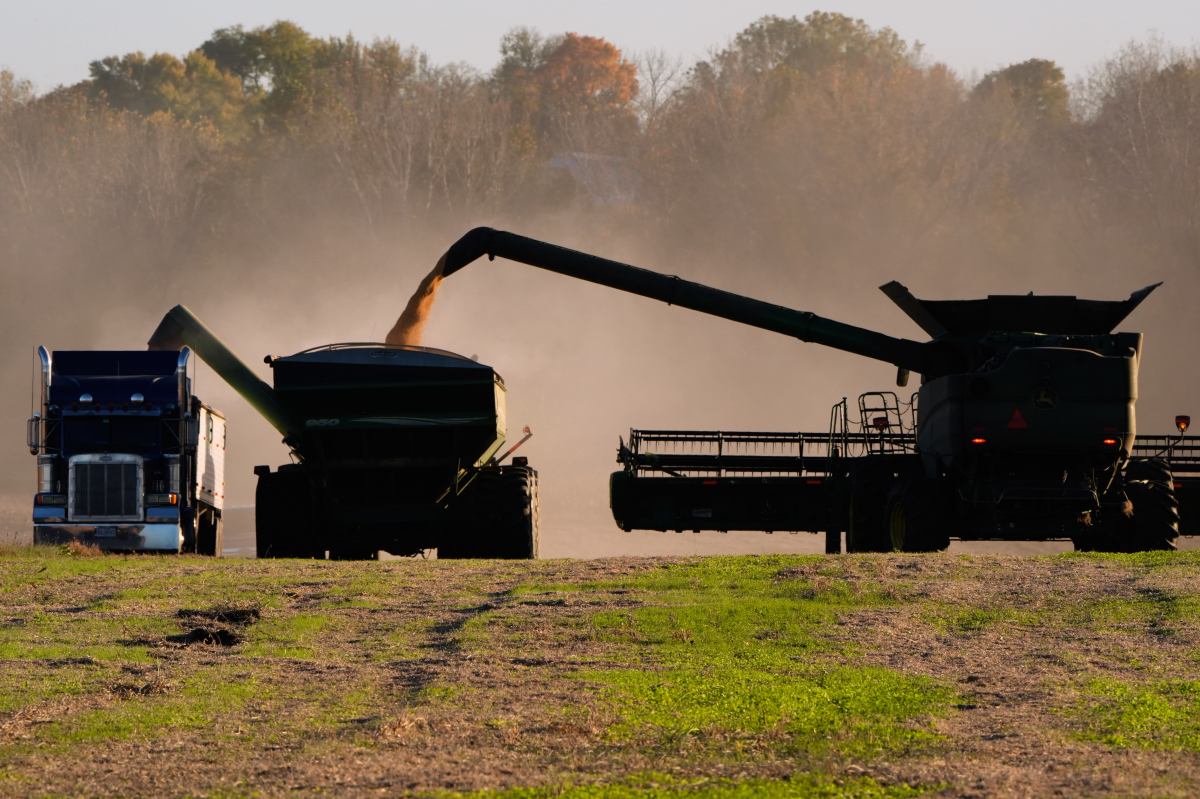
U. S. President Donald Trump says he is near an agreement with Chinese President Xi Jinping on greater and faster Chinese purchasing of U. S. farm products, predicting that the U. S. will be “pleasantly surprised.” Newsweek contacted the Chinese government for comment. Why It Matters China is the world’s largest soybean importer and has long been the top buyer of U. S. soybeans, but its purchases ground to a near halt this year in retaliation for Trump’s tariffs on Chinese goods, stinging American farmers. Trump announced a deal on soybeans-the most valuable U. S. agricultural export-on October 30, after talks with Xi in South Korea, to the relief of U. S. farmers. Greater Chinese purchasing of U. S. farm produce will boost U. S. exports as well as support for Trump in rural America. What To Know “I spoke to President Xi about buying our farm products and he said he agreed with me,” Trump told reporters on Air Force One, referring to his Monday phone call with the Chinese leader. Trump did not say specifically what Xi has agreed to, but mentioned more Chinese purchases of U. S. farm products. “I asked him, ‘I’d like you to buy it a little faster. I’d like you to buy more,’ and he’s more or less agreed to do that. I think we will be pleasantly surprised by the actions of President Xi,” Trump said. Treasury Secretary Scott Bessent said earlier that China would be buying a bounty of U. S. soybeans during the coming years. “The Chinese are right on schedule in terms of the cadence of their purchases. Over the next 3 1/2 years, we are going to see 87. 5 million metric tons purchased by the Chinese-minimum-and they are right on schedule,” he told CNBC in an interview Tuesday. The agreement Trump reached with Xi last month will bring total U. S. soybean exports to China this year to 18 million metric tons-down 32 percent from last year and marking the weakest year for American soy since 2018. China has diversified its imports this year by increasing purchases of lower-cost soybeans from Brazil-its top supplier-and Argentina, and analysts have said China is unlikely to reverse that trend, even if relations with the U. S. stabilize. The October deal included trade and tariff concessions from both sides. Trump agreed to delay his threatened 100 percent tariff on Chinese goods and reduce an existing duty on certain fentanyl precursor chemicals from 20 percent to 10 percent. In return, China postponed for at least one year its planned export restrictions on rare earth elements, which are crucial for defense and high-tech industries. What People Are Saying Trump, referring to Xi, to reporters: “I think he’s going to very much surprise you with the upside.” What Happens Next Trump has confirmed that he will be visiting China in April and that Xi would later visit the U. S. Bessent said Xi would also attend a G20 meeting in the U. S. next year and that Trump might visit China for an Asia-Pacific Economic Cooperation summit.
https://www.newsweek.com/donald-trump-floats-potential-surprise-after-trade-talks-with-chinas-xi-11110208
Tag: agricultural

‘Climate smart’ beef? After a lawsuit, Tyson agrees to drop the label.
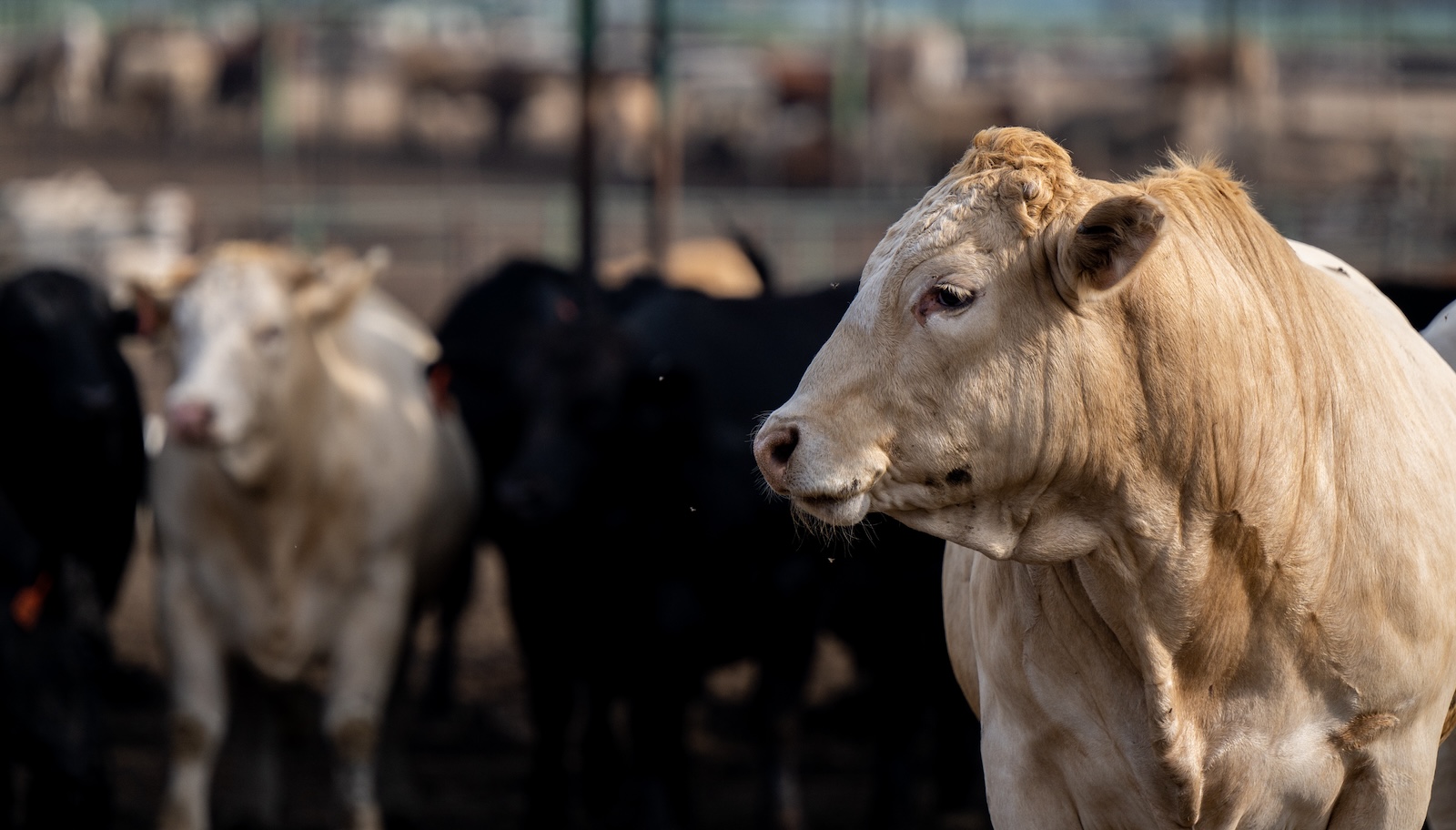
Shoppers have long sought ways to make more sustainable choices at the supermarket and for good reason: Our food system is responsible for a third of global greenhouse gas emissions. The vast majority of emissions from agriculture come from raising cows on industrial farms in order to sell burgers, steak, and other beef products. Beef production results in two and a half times as many greenhouse gases as lamb, and almost nine times as many as chicken or fish; its carbon footprint relative to other sources of protein, like cheese, eggs, and tofu, is even higher. If you want to have a lighter impact on the planet, you could try eating less beef. (Just try it!) Otherwise, a series of recent lawsuits intends make it easier for consumers to discern what’s sustainable and what’s greenwashing by challenging the world’s largest meat processors on their climate messaging. Tyson, which produces 20 percent of beef, chicken, and pork in the United States, has agreed to drop claims that the company has a plan to achieve “net zero” emissions by 2050 and to stop referring to beef products as “climate smart” unless verified by an independent expert. Tyson was sued in 2024 by the Environmental Working Group, or EWG, a nonprofit dedicated to public health and environmental issues. The group alleged that Tyson’s claims were false and misleading to consumers. (Nonprofit environmental law firm Earthjustice represented EWG in the case.) Tyson denied the allegations and agreed to settle the suit. “We landed in a place that feels satisfying in terms of what we were able to get from the settlement,” said Carrie Apfel, deputy managing attorney of Earthjustice’s Sustainable Food and Farming program. Apfel was the lead attorney on the case. According to the settlement provided by Earthjustice, over the next five years, Tyson cannot repeat previous claims that the company has a plan to achieve net zero emissions by 2050 or make new ones unless they are verified by a third-party source. Similarly, Tyson also cannot market or sell any beef products labeled as “climate smart” or “climate friendly” in the United States. “We think that this provides the consumer protections we were seeking from the lawsuit,” said Apfel. The settlement is “a critical win for the fight against climate greenwashing by industrial agriculture,” according to Leila Yow, climate program associate at the Institute for Agricultural and Trade Policy, a nonprofit research group focused on sustainable food systems. In the original complaint, filed in D. C. Superior Court, EWG alleged that Tyson had never even defined “climate smart beef,” despite using the term in various marketing materials. Now Tyson and EWG must meet to agree on a third-party expert that would independently verify any of the meat processor’s future “net zero” or “climate smart” claims. Following the settlement, Apfel went a step further in a conversation with Grist, arguing that the term “climate smart” has no business describing beef that comes from an industrial food system. “In the context of industrial beef production, it’s an oxymoron,” said the attorney. “You just can’t have climate-smart beef. Beef is the highest-emitting major food type that there is. Even if you were to reduce its emissions by 10 percent or even 30 percent, it’s still not gonna be a climate-smart choice.” A Tyson spokesperson said the company “has a long-held core value to serve as stewards of the land, animals and resources entrusted to our care” and identifies “opportunities to reduce greenhouse gas emissions across the supply chain.” The spokesperson added: “The decision to settle was made solely to avoid the expense and distraction of ongoing litigation and does not represent any admission of wrongdoing by Tyson Foods.” The Tyson settlement follows another recent greenwashing complaint this one against JBS Foods, the world’s largest meat processor. In 2024, New York Attorney General Letitia James sued JBS, alleging the company was misleading consumers with claims it would achieve net zero emissions by 2040. James reached a $1. 1 million settlement with the beef behemoth earlier this month. As a result of the settlement, JBS is required to update its messaging to describe reaching net zero emissions by 2040 as more of an idea or a goal than a concrete plan or commitment from the company. The two settlements underscore just how difficult it is to hold meat and dairy companies accountable for their climate and environmental impacts. “Historically, meat and dairy companies have largely been able to fly under the radar of reporting requirements of any kind,” said Yow, of the Institute for Agriculture and Trade Policy. When these agrifood companies do share their emissions, these disclosures are often voluntary and the processes for measuring and reporting impact are not standardized. That leads to emissions data that is often “incomplete or incorrect,” said Yow. She recently authored a report ranking 14 of the world’s largest meat and dairy companies in terms of their sustainability commitments including efforts to report methane and other greenhouse gas emissions. Tyson and JBS tied for the lowest score out of all 14 companies. Industrial animal agriculture “has built its business model on secrecy,” said Valerie Baron, a national policy director and senior attorney at the Natural Resources Defense Council, in response to the Tyson settlement. Baron emphasized that increased transparency from meat and dairy companies is a critical first step to holding them accountable. Yow agreed. She argued upcoming climate disclosure rules in California and the European Union have the potential to lead the way on policy efforts to measure and rein in emissions in the food system. More and better data can lead to “better collective decision making with policymakers,” she said. But, she added: “We need to actually know what we’re talking about before we can tackle some of those things.” Editor’s note: Earthjustice and the Natural Resources Defense Council are advertisers with Grist. Advertisers have no role in Grist’s editorial decisions.
https://grist.org/food-and-agriculture/climate-smart-beef-after-a-lawsuit-tyson-agrees-to-drop-the-label/