Putin Mocks Trump’s Ukraine Peace Push: Russia Hammers Zelenskyy’s Forces Hours Before Crucial US Summit

The roar of air raid sirens echoed across the Ukrainian capital just hours before President Donald Trump and Ukrainian President Volodymyr Zelenskyy were set to meet and discuss a peace summit involving Ukraine and Russia. Russia’s sudden attack on Kyiv was unexpected and raised eyebrows as it took place amid ongoing peace talks aimed at ending the war.

The timing of the assault suggests a deliberate attempt by the Kremlin to undermine the legitimacy of the upcoming discussions. The massive wave of at least 500 drones and 40 missiles is widely interpreted as Russian President Vladimir Putin’s violent and contemptuous response to Trump’s repeated boasts that he could end the war “within 24 hours.”

### Why Russia Launched a Pre-Summit Blitz on Kyiv

In the early hours of Saturday, Moscow directed a massive wave of drones and missiles toward Kyiv, the capital of Ukraine. This high-intensity bombardment surprised many because it occurred shortly before Zelenskyy and Trump were scheduled to discuss ending the conflict between the two nations.

Military analysts suggest that the scale of this operation was designed to project Russian strength before any formal negotiations began. Joey Contino, a news creator at Premiere Networks, weighed in on Russia’s recent attack on Ukraine. He expressed his belief that there was a clear motive behind the assault — to stall the peace process.

“They actually want the war to continue because they feel like if they keep beating down Ukraine, then Ukraine’s partners will give up on Ukraine,” Contino claimed on TikTok. “And then Russia can get everything they want and more.”

The physical destruction in Kyiv was accompanied by a tragic loss of life, sparking fresh international condemnation. Local authorities confirmed that at least one person died—a 47-year-old woman—and 22 others were injured during the strikes, according to Al Jazeera.

President Zelenskyy reported that Russia targeted “energy facilities and civilian infrastructure.” Speaking to the press on Saturday, he declared, “Russia doesn’t want peace,” as reported by the BBC.

### Trump’s Diplomatic Gamble and the Leaders’ Responses

Donald Trump has positioned himself as a potential peacemaker between Russia and Ukraine. Even before seeking reelection, Trump openly expressed his desire to end the conflict, often making it sound like an easy task.

“We will have the horrible war between Russia and Ukraine settled. It will be settled. The war is going to be settled,” Trump stated during a rally in Pennsylvania in 2023. “I’ll get them both. I know Zelensky, I know Putin, it’ll be done within 24 hours, you watch. They all say, ‘That’s such a boast.’ It will be done very quickly.”

Prior to his meeting with Zelenskyy, Trump remained optimistic about a quick resolution. He told Politico, “I think it’s going to go good with [Vladimir] Putin.” Trump was scheduled to meet Zelenskyy and hear the Ukrainian president’s 20-point peace plan, which includes a demilitarized zone and key conditions such as Russia’s withdrawal from Donetsk.

However, Putin has seemingly publicly belittled the initiative. The recent attack on Kyiv appears to mock the feasibility of a swift resolution. In February, Trump claimed he spoke with Putin, who supposedly agreed to negotiate with Zelenskyy. Both leaders reportedly shared the same sentiment about ending the war.

Yet, Putin’s actions suggest he may have had a change of heart or never truly supported the peace summit after all. Zelenskyy has clearly received the message.
https://www.ibtimes.co.uk/putin-mocks-trumps-ukraine-peace-push-russia-hammers-zelenskyys-forces-hours-before-crucial-us-1766295


Immigrants peel crawfish, but cannot eat them. How sad.

There is a scene many people have witnessed without ever really seeing it. You drive past a crawfish processing plant, and the picture is always the same. Steam rises from the kettles. Trucks back in. Inside, rows of immigrant women peel crawfish for hours at a time. Their hands move quickly and their work is steady.

It is honest, physical work that keeps a Louisiana tradition alive. The same visual exists in other parts of our state. You can drive past a sugarcane field and see immigrant workers cutting cane in the heat or cold, planting rows before the sun is up.

Many of these men and women are legally here. They are hired through formal programs that allow farmers and processors to pay them fairly and provide the labor that our industries desperately need. These workers contribute to local economies and perform jobs that have become harder and harder to fill with a domestic workforce.

The problem is that most people do not understand the difference between legal immigrant workers who follow the process and illegal aliens who enter the country outside of the law. One group participates in the system and plays by the rules. The other group bypasses that system entirely.

The issue becomes even more confusing when both groups often end up working in similar industries. The average person driving by does not see who arrived legally and who did not. They only see a workforce that looks unfamiliar, and they draw their own conclusions.

This is where the conversation becomes complicated. Immigration in the United States is not a simple issue. It is not as easy as open the borders or close them. And it is not a matter of liking or disliking immigrants.

I understand why people risk everything to come here. They want safety. They want a future. They want opportunities their home countries cannot offer. It is impossible to see that and feel nothing.

At the same time, Americans have spent generations building the systems that make this country function. Taxes, schools, healthcare, infrastructure, and the daily stability we rely on all depend on participation in that system.

When people enter the country illegally, they live outside of that structure. They do not pay into it in the same way. They are not part of the programs that hold the country together. This is not sustainable for any nation, and no country in the world allows uncontrolled entry because they cannot.

This is the catch twenty-two. Our economy quietly depends on immigrant labor, especially in agriculture, food processing, hospitality, and construction. Legal immigrant workers keep these industries moving.

At the same time, illegal immigration strains the system and creates confusion, mistrust, and political division. Both realities exist at once.

I support enforcing immigration law because a country must have borders and rules. Illegal entry cannot be ignored. It is not fair to the people who follow the process, and it destabilizes the system everyone depends on.

But that support does not cancel out empathy for the people who come here searching for something better. We can acknowledge their humanity and still say that laws matter. We can be compassionate without abandoning structure.

The real question is how to fix this. Is it a border infrastructure issue? Is it a broken legal immigration process? Is it a labor market problem where certain industries depend on workers that citizens will not replace? Is it a class issue? Probably all of the above.

Until we are honest about that, we will keep arguing without moving toward solutions.

Legal immigrants who work in crawfish plants, cane fields, hotels, restaurants, and factories are part of the American story. They contribute. They follow the rules. They help build industries that keep food on our tables.

Illegal immigration is a different issue entirely, and it deserves a different response.

The image of workers peeling crawfish they may never taste is symbolic. It reminds me that immigration is not just policy or politics. It is real life. It affects families, industries, and communities. It affects citizens who depend on affordable food and stable jobs. And it affects the men and women who come here hoping to earn a living.

If we want an honest conversation about immigration, we must separate legal participants in our system from those who enter outside of it. Only then can we talk about practical solutions that protect America while still respecting the dignity of the people who want to be part of it.

For now, that simple picture of immigrant workers doing difficult work for the benefit of others reminds me that the issue is layered. It deserves thoughtful solutions, not emotional reactions.
https://www.avoyellestoday.com/immigrants-peel-crawfish-but-cannot-eat-them-how-sad/

Federal Bureau of Prisons says falling concrete is forcing it to close Terminal Island prison

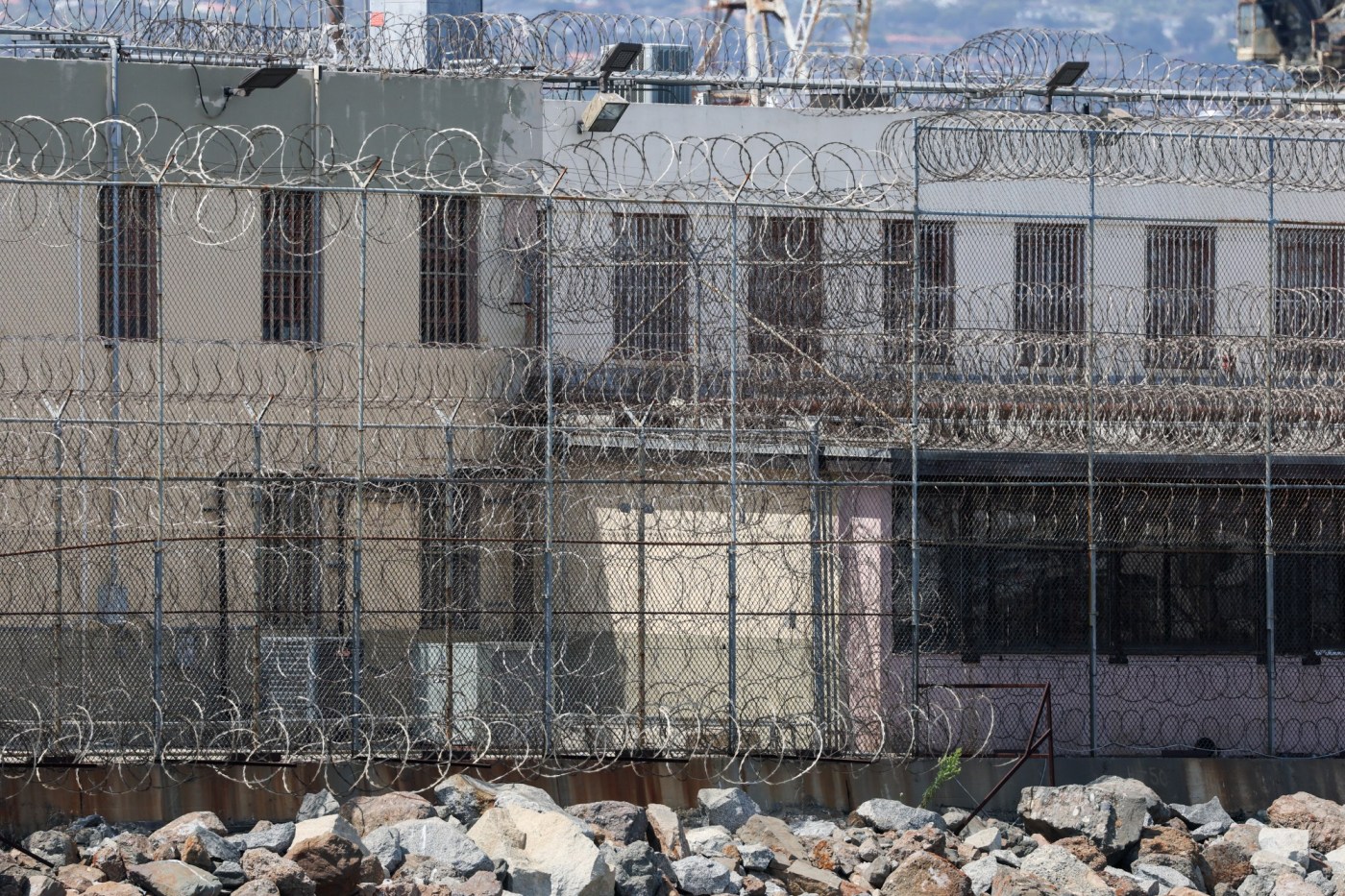
By MICHAEL R. SISAK | Associated Press The federal Bureau of Prisons is closing a lockup adjacent to the Port of Los Angeles that was once home to Al Capone and Charles Manson over concerns about crumbling infrastructure, including falling concrete that threatens to knock out the facility’s heating system, according to an internal memo obtained by the Associated Press. Director William K. Marshall III told staff on Tuesday that the agency is suspending operations at the Federal Correctional Institution, Terminal Island, a low-security prison. It currently houses nearly 1, 000 inmates, including cryptocurrency fraudster Sam Bankman-Fried and disgraced celebrity lawyer Michael Avenatti. The decision to close the facility, at least temporarily, “is not easy, but is absolutely necessary,” Marshall wrote, calling it a matter of “safety, common sense, and doing what is right for the people who work and live inside that institution.” FCI Terminal Island, opened in 1938, is the latest Bureau of Prisons facility to be targeted for closure as the beleaguered agency struggles with mounting staff vacancies, a $3 billion repair backlog and an expanded mission to support President Donald Trump’s immigration crackdown by taking in thousands of detainees. Marshall cited problems with underground tunnels containing the facility’s steam heating system. Ceilings in the tunnels have begun to deteriorate, causing chunks of concrete to fall and putting employees and the heating system at risk, he said. “We are not going to wait for a crisis,” Marshall told employees. “We are not going to gamble with lives. And we are not going to expect people to work or live in conditions that we would never accept for ourselves.” Bureau of Prisons spokesperson Randilee Giamusso, responding to the AP’s questions about FCI Terminal Island, confirmed that the agency is taking “immediate action” to “safeguard staff and inmates.” Inmates at the facility will be moved to other federal prisons “with a priority on keeping individuals as close as possible to their anticipated release locations,” Giamusso said. In his memo to staff, Marshall indicated that the process could take several weeks. The facility’s future will be decided once the Bureau of Prisons has “assessed the situation further and ensured the safety of all those involved,” she said. The Bureau of Prisons has long been bedeviled by FCI Terminal Island’s aging infrastructure, Giamusso said. In April 2024, an architectural and engineering firm contracted by the agency identified more than $110 million in critical repairs needed over the next 20 years. Site’s checkered past The prison’s opening dates back to the 1930s and it has undergone many changes over the decades. The first prisoners, 610 men and 40 women, filed into the new 21-acre federal prison near the southern end of Terminal Island on June 1, 1938. Back then, the Terminal Island Federal Correctional Institution consisted of three cell blocks built around a central quadrangle, and cost $2 million to build. In 1942, the U. S. Navy took control of the prison for use as a receiving station, and then as a barracks for court-martialed prisoners. After the Navy deactivated the facility in 1950, the state of California took it over for use as a medical and psychiatric institution. The state ceded control to the U. S. Bureau of Prisons in 1955, which converted the facility back into a low-to-medium security federal prison. The prison has housed the famous and the infamous over the years. Al Capone spent the last few months of his 10-year sentence for income tax evasion at Terminal Island in the late 1930s. In 1974, LSD guru Timothy Leary and Watergate co-conspirator G. Gordon Liddy were incarcerated there at the same time. Sara Jane Moore came to Terminal Island in 1976 after her failed assassination attempt on President Gerald Ford. Hustler publisher Larry Flynt spent time there after shouting obscenities at a judge during one of his trials in the early 1980s; he was transferred after allegedly punching prison staff members. The prison was coed, with women prisoners housed in a separate area, until overcrowding forced authorities to transfer the women to the federal prison in Pleasanton in 1977. It has been male-only ever since then. During the 1970s, Terminal Island became known for escape attempts. In December 1979, the San Pedro News Pilot reported 12 escapes during a single 2 1/2-month period. Fortification including more barbed wire and increased armed guards were added to dispel the facility’s “Club Fed” image in the early 1980s. Other inmates included Wall Street fraud artist Barry Minkow of ZZZZ Best fame, automaker John DeLorean (briefly, following his drug trial), and jazz singer Flora Purim, who served 18 months for drug charges before the prison returned to its current all-male make-up. The prison was rocked by a corruption scandal in the early 1980s that resulted in the indictment of six Terminal Island federal employees between 1982 and 1984. The charges involved bribes, cover-ups, marijuana sales to inmates and other types of corruption. Up until that time, the scandal was the most serious in the history of the federal prison system, because of the high-ranking officials involved. These included Charles DeSordi, the prison’s former chief investigator of crimes committed, the highest-ranking federal prison official ever to be indicted. In June, hundreds gathered in San Pedro to protest against U. S. Immigration and Customs Enforcement’s apparent use of Terminal Island as a staging area for its operations across Los Angeles County, but the prison was not involved in those concerns. Officials from the ports of Long Beach and Los Angeles which also share portions of Terminal Island said at the time that ICE wasn’t using any of their properties for operations, despite the U. S. Department of Homeland Security’s request to L. A. to do so. The prison system Tuesday’s news of the closure echoes that of the agency’s federal jail in Manhattan in 2021. The Bureau of Prisons, the Justice Department’s largest employer, has more than 30, 000 workers, 122 facilities, about 155, 000 inmates and an annual budget that exceeds $8. 5 billion. But the agency’s footprint has shrunk over the last year as it wrestles with financial constraints, chronic understaffing and changing priorities. An Associated Press investigation has uncovered deep, previously unreported flaws within the Bureau of Prisons, including rampant sexual abuse, widespread criminal activity by employees, dozens of escapes and the free flow of guns, drugs and other contraband. In December 2024, in a cost-cutting move, the agency announced it was idling six prison camps and permanently closing a women’s prison in Dublin, California, that was known as the “rape club” because of rampant sexual abuse by the warden and other employees. In February, an agency official told Congress that 4, 000 beds meant for inmates at various facilities were unusable because of dangerous conditions like leaking or failing roofs, mold, asbestos or lead. At the same time, the agency is building a new prison in Kentucky and, at Trump’s direction, exploring the possibility of reopening Alcatraz, the notorious penitentiary in San Francisco Bay that last held inmates more than 60 years ago. Marshall, his top deputy and Attorney General Pam Bondi visited in July, but four months later, Alcatraz remains a tourist attraction and a relic of a bygone era in corrections. In addition to failing facilities, the Bureau of Prisons has been plagued for years by severe staffing shortages that have led to long overtime shifts and the use of prison nurses, teachers, cooks and other workers to guard inmates. That problem has only worsened in recent months, in part because of a hiring freeze and recruiting by U. S. Immigration and Customs Enforcement, which has lured correctional officers away with promises of signing bonuses of up to $50,000. In September, Marshall said the Bureau of Prisons was canceling its collective bargaining agreement with workers. He said their union had become “an obstacle to progress instead of a partner in it.” The union, the Council of Prison Locals, is suing to block the move, calling it “arbitrary and capricious.” Southern California News Group staff writer Donna Littlejohn and columnist Sam Gnerre contributed to this report.
https://www.dailybreeze.com/2025/11/25/federal-bureau-of-prisons-says-falling-concrete-is-forcing-it-to-close-terminal-island-prison/

Hadron by Tether Partners with Crystal Intelligence to Harden Tokenization Controls

Tether’s asset tokenization arm, Hadron by Tether, said Tuesday that it has struck an agreement with blockchain analytics firm Crystal Intelligence to boost compliance and monitoring for tokenized real-world assets (RWAs). The deal will give institutions using Hadron streamlined access to Crystal’s analytics and forensic tools, a move Tether frames as a step toward making tokenized instruments safer, more transparent, and fit for large-scale institutional use. The announcement arrives as the RWA market is experiencing explosive growth. Industry trackers report that tokenized real-world assets have expanded roughly 380 percent over the past three years and reached about $24 billion in 2025, a surge observers say reflects growing appetite from traditional finance to deploy blockchain rails for familiar instruments. Some forecasts see the broader tokenization opportunity climbing toward the trillions over the next decade as markets, standards, and infrastructure mature. Boosting RWA Compliance Hadron’s agreement with Crystal is designed to address one of the chief hurdles to that institutional adoption: compliance readiness. Under the partnership, Hadron customers will be able to access Crystal’s suite of tools, from AML screening and transaction monitoring with configurable risk scores to on-chain forensic capabilities and solutions tailored for RWA risk profiles, as part of the token issuance and lifecycle workflow. Tether and Crystal position the integration as a way to fold enterprise-grade controls into tokenization from day one. “Secure and compliant infrastructure is essential for real-world asset markets to operate at scale,” Paolo Ardoino, CEO of Tether, said in the company’s release, stressing that institutional participation depends on systems combining transparency, accountability, and resilience. “Through Hadron by Tether and Crystal, we’re providing streamlined access to the technology and analytics needed to meet those expectations and bridge traditional financial markets with blockchain-based systems.” Navin Gupta, CEO of Crystal Intelligence, echoed that line, saying the collaboration lowers the barrier for institutions and establishes a benchmark for secure tokenization. The statement underscores a wider industry trend: as regulators and custodians raise the bar for due diligence, tokenization platforms are increasingly partnering with compliance specialists to reassure banks, asset managers, and sovereign issuers that on-chain products can meet off-chain regulatory and operational standards. Hadron by Tether bills itself as a platform that simplifies converting traditional assets into digital tokens, with tools for issuing and burning tokens, KYC, blockchain reporting, capital market management and regulatory guidance. The platform has been pitched not only to corporate and fund issuers but to a range of actors that could use tokenized collateral to raise funds, from businesses to nation-states. By bundling compliance tooling into that stack, Hadron aims to make tokenization a less risky proposition for institutions that demand full auditability and robust controls. Industry observers say the timing is logical: tokenization has moved out of pilots and into products that need strong guardrails. With the market’s rapid expansion and regulators around the world clarifying, and in some cases tightening, rules for tokenized products, platforms that can offer both issuance convenience and enterprise-grade surveillance are likely to have an edge when large asset managers and banks decide whether to participate. For Hadron participants, access to Crystal’s analytics could be the difference between cautious experimentation and scaled deployment. For now, the pact between Hadron by Tether and Crystal Intelligence is part of a broader wave of integrations and partnerships aimed at turning tokenized real-world assets from an experimental niche into an institutional plumbing layer. As the tokenization market grows, so too will the demand for the kind of compliance and reporting tooling that makes mainstream buyers comfortable moving traditional value onto blockchains.
https://bitcoinethereumnews.com/tech/hadron-by-tether-partners-with-crystal-intelligence-to-harden-tokenization-controls/

Republic Steel in Lorain could reopen next year

Ongoing discussions between Lorain Mayor Jack Bradley and Republic Steel’s parent company have given the city “a ray of hope” that one of the city’s largest former employers may be up and running again in as little as a year, officials said. Republic Steel’s parent company, Grupo Simec, which is headquartered in Guadalajara, Mexico, “has engaged in encouraging discussions with several international steel producers interested in establishing operations in Lorain,” according to a news release issued by Alonna Lopez, executive assistant to Bradley. The Mexican family who owns Grupo, which does business in Lorain and Canton as Republic Steel, have been speaking to the city in near weekly meetings, Bradley said. Due to recently increased tariff prices, steel producers recognize a strategic and economic advantage in operating within the United States rather than producing steel in other countries. Lorain’s industrial infrastructure, workforce potential and strategic location make the city an attractive option for these prospective investors, according to the release At one time, Republic Steel’s facility was booming until it idled operations in 2021. Jobs were cut slowly until the facility was abandoned and left in disrepair, officials said. Eighteen months ago, the city obtained a search warrant for the property. The city’s administration couldn’t make contact with the owners of Republic at the time, and the warrant was executed to assess the buildings. Three to four buildings of the many buildings were beyond repair and nearly were demolished, Bradley said. The next steps will include a personal visit from the owner who resides abroad. The owner intends to ask for an electric usage estimate as a next step to potentially starting up operations in Lorain again, Bradley said. “He gave us some positive news,” the mayor said. “We are encouraged by the strong interest shown in Lorain as a site for renewed steel production. “Republic Steel has been working with FirstEnergy to guarantee that sufficient power can be delivered for steel production in Lorain.” Due to nondisclosure agreements, the mayor couldn’t divulge more information. However, he did say the businessman approved the notion of the public announcement. Early information shared with the city’s administration indicates the potential for significant economic impact with the possible reopening. Currently, job creation is estimated between 500 and 1, 200 positions, marking what could be one of the most substantial industrial revitalization efforts in the region in recent years, Bradley said. “The city of Lorain will continue to collaborate closely with Grupo Simec and prospective steel partners as discussions advance,” he said.
https://www.morningjournal.com/2025/11/25/republic-steel-in-lorain-could-reopen-next-year/

Klarna stablecoin debuts on Tempo to reshape payments

Payment giant Klarna is taking its first major step into digital assets as it prepares to launch the klarna stablecoin within a new blockchain ecosystem. What is Klarna planning with its new stablecoin? Payment solutions company Klarna has announced the launch of a new stablecoin on Tempo, an independent blockchain designed specifically for payments by Stripe and Paradigm. The project targets global retail transactions and aims to reduce frictions in cross-border commerce. According to the company, this new asset will be fully integrated into Klarna’s payment stack. Moreover, it is expected to support both online and in-store transactions, providing instant settlement and predictable pricing for consumers and merchants. How does Tempo position itself in the payments ecosystem? Tempo is being developed as an infrastructure layer dedicated to high-volume, low-cost transactions. Backed by Stripe and Paradigm, the network focuses on payments rather than speculative trading, with architecture optimized for speed, security and scalability in everyday commerce. However, the initiative also signals growing competition with traditional card networks and bank transfers. By offering programmable settlement rails, Tempo could enable new financial products while keeping transaction costs low for global users. What did Klarna’s CEO say about the crypto strategy? In a press release, Klarna CEO and co-founder Sebastian Siemiatkowski highlighted the scale of the company’s operations. “With 114 million customers and $112 billion in annual transaction volume, Klarna has the scale to transform payments globally,” he said, underlining the firm’s reach in key markets. “With Tempo’s infrastructure, we can challenge the old networks and make payments both faster and cheaper for everyone. Crypto is now fast, cheap, secure, and scalable enough. This is the beginning of Klarna’s journey into crypto, and I look forward to continuing to shape the future of payments together with Stripe and Tempo,” Siemiatkowski added, framing the move as a long-term strategic shift. When will KlarnaUSD go live on Tempo? The new asset, named KlarnaUSD, will be launched on Tempo’s main network in 2026. That said, the company has not yet disclosed technical details such as reserve structure, on-chain governance, or regulatory framework for the token. However, Klarna has confirmed that the klarna stablecoin will be native to Tempo’s settlement layer, suggesting a tight integration with merchant tools and consumer apps once the mainnet is fully operational. Moreover, the launch timeline indicates that Klarna, Stripe and Paradigm are aligning around a shared vision for next-generation digital settlement, using stable-value assets to make everyday transactions more efficient at global scale. In summary, KlarnaUSD on Tempo positions Klarna to compete more directly in the evolving crypto payments landscape, while Stripe and Paradigm reinforce their roles as core infrastructure providers for the future of blockchain-based commerce.
https://bitcoinethereumnews.com/tech/klarna-stablecoin-debuts-on-tempo-to-reshape-payments/

A day after Trump announced ‘something good may be happening’ about the Russia-Ukraine war, Putin has launched an attack on Kyiv

While President Donald Trump was busy bullying Ukraine into thanking him for his “efforts,” Russia launched another attack on Kyiv. Ironically, the offensive came just a day after Trump suggested there might be favorable developments in peace talks. Recommended Videos After discussions with Ukrainian leadership in Geneva on Sunday, Trump shared a hopeful Truth Social post on Monday. “Is it really possible that big progress is being made in Peace Talks between Russia and Ukraine?” he said, hinting at progress. “Don’t believe it until you see it, but something good just may be happening,” he declared. Earlier on Friday, Zelenskyy expressed his discontent with Trump’s original 28-point plan, which included ceding Ukraine’s eastern territories to Russia. Though Trump initially said that Ukraine “will have to like” his plan, he later clarified that he’s open to suggestions. Then, in Geneva, officials proposed amendments to the plan. Europe’s counterplan to Trump’s 28-point plan The counterplan included a crucial point of discussing territorial exchange at the point of contact, only after a peace agreement. It also increased the cap on the size of its military and tweaked the NATO membership terms. In a joint statement, officials called the talk “constructive, focused, and respectful.” But Russian leadership probably didn’t like it. Putin had backed the previously proposed 28-point plan since it explicitly favored Russia. The original plan, if it had been agreed upon, would’ve snatched away Ukraine’s NATO membership dreams. That’s something Russia has always pressed on, since it makes Ukraine an easier target for them in the future. But since Ukraine rejected the plan and Europe proposed its own deal, Russia lost its cool. Russia attacked Kyiv on Tuesday During the early morning hours on Tuesday, Nov. 25, Moscow launched an explosive attack on Kyiv. According to reports thus far, the attack destroyed several residential buildings, as well as major energy infrastructure. Videos showing a nine-story building in Dniprovskyi were shared on Telegram, providing proof of the attack. Tymor Tkachenko, the head of Kyiv city administration, revealed that at least four people were injured. While Kremlin spokesperson Dmitry Peskov said that Russia hasn’t reviewed the updated plan, it’s being debated. There’s a possibility that the attack was launched in response to amendments proposed to the original 28-point plan. The sudden attack also comes across as a slap in the face of the U. S. administration. Trump claimed to be respected by Russia while brokering the peace deal, but Russia’s actions have proved otherwise. Despite the peace talks being actively pursued, Putin refused to put a pause to his offensive. If anything, it’s a sign that it’s not the U. S., but Russia that’s dictating the peace talks.
https://www.themarysue.com/a-day-after-trump-announced-something-good-may-be-happening-about-the-russia-ukraine-war-putin-has-launched-an-attack-on-kyiv/

Bitfinex Expands XAUT0 Support to Plasma Network

Bitfinex, a leading digital asset trading platform, has announced the integration of XAUT0 on the Plasma network, allowing users to deposit and withdraw this tokenized version of gold. This development, effective from November 24, 2025, aims to enhance the accessibility and utility of digital gold by leveraging a high-performance, interoperable blockchain infrastructure. Plasma Network Integration The integration allows Bitfinex users to engage in faster cross-chain transactions that are both secure and cost-efficient. The Plasma network, a Layer-1 blockchain designed for stablecoins, boasts over $2. 5 billion in total value locked (TVL), aligning with Bitfinex’s mission to promote financial freedom globally. This move is considered a significant advancement in the stablecoin infrastructure supporting real-world assets. Growth in Tokenized Gold Sector The announcement comes at a time when the tokenized gold sector has surpassed $3 billion in market value. Bitfinex’s support for XAUT0 on Plasma follows its previous integrations with The Open Network (TON) and Solana, reflecting the platform’s commitment to providing greater flexibility and utility for tokenized assets. Users can now convert between XAUT0 and XAUT at a 1: 1 ratio using Bitfinex’s Currency Conversion tool. Enhanced User Experience Anoush Bhasin, Head of Listings at Bitfinex, expressed enthusiasm for this integration, stating that it advances the goal of providing seamless access to digital assets within the crypto ecosystem. This initiative allows users to manage their gold across multiple chains, setting new standards for tokenized gold transactions. Deposits and withdrawals for XAUT0 on Plasma commenced at 12: 00 PM on November 24, 2025. Interested users can access XAUT0 through Bitfinex’s official platform. However, it is important to note that XAUT0 is not directly issued or redeemable by Tether. Bitfinex, established in 2012, continues to offer advanced trading features and services for global traders and liquidity providers. The platform focuses on innovation, superior support, and providing tools for experienced traders worldwide.
https://bitcoinethereumnews.com/tech/bitfinex-expands-xaut0-support-to-plasma-network/

Bitfinex Integrates XAUT0 with Plasma Network for Enhanced Digital Gold Trading

Bitfinex, a leading digital asset trading platform, has announced its support for deposits and withdrawals of XAUT0 on the Plasma network. This strategic move, effective from November 24, 2025, aims to enhance the accessibility and utility of digital gold through a high-performance blockchain infrastructure, according to Bitfinex. Expanding Digital Gold Accessibility XAUT0 is a tokenized version of gold, designed to facilitate seamless transactions in the digital realm. The integration with the Plasma network allows Bitfinex users to execute faster and more secure cross-chain transactions, offering a cost-efficient solution for digital gold trading. This development comes at a time when the tokenized gold sector has surpassed a market value of $3 billion, highlighting the growing interest and demand for digital gold assets. Plasma Network’s Role and Market Impact Plasma, a Layer-1 blockchain specifically designed for stablecoins, has launched with over $2. 5 billion in total value locked (TVL). Its decentralized and scalable payment infrastructure aligns with Bitfinex’s mission to promote financial freedom globally. By supporting real-world assets, Plasma enhances the stablecoin infrastructure, marking a significant milestone in the evolution of digital finance. Seamless Integration with Other Networks The integration of XAUT0 with the Plasma network follows its successful adoption on The Open Network (TON) and Solana. This expansion reflects Bitfinex’s commitment to providing greater flexibility and utility for tokenized assets. Customers can convert between XAUT0 and XAUT at a 1: 1 ratio using Bitfinex’s Currency Conversion tool, further simplifying the management of digital gold across multiple blockchain networks. Strategic Vision and Future Prospects Anoush Bhasin, Head of Listings at Bitfinex, emphasized the significance of this integration, stating, “Integrating with Plasma advances our goal to continuously provide seamless access to digital assets within the crypto ecosystem.” This collaboration not only sets new standards for tokenized gold but also reflects Bitfinex’s strategic vision to enhance user experience and accessibility in the digital asset space. Deposits and withdrawals for XAUT0 on the Plasma network commenced at noon on November 24, 2025. Interested users can access XAUT0 through Bitfinex’s official website. However, it is important to note that XAUT0 is not directly issued or redeemable by Tether. About Bitfinex Established in 2012, Bitfinex offers state-of-the-art trading services for digital tokens, providing advanced trading features, charting tools, and access to peer-to-peer financing, an OTC market, and margin trading. The platform is dedicated to supporting global liquidity providers and experienced traders with innovative tools and superior support.
https://bitcoinethereumnews.com/tech/bitfinex-integrates-xaut0-with-plasma-network-for-enhanced-digital-gold-trading/

Exit mobile version
Sitemap Index