
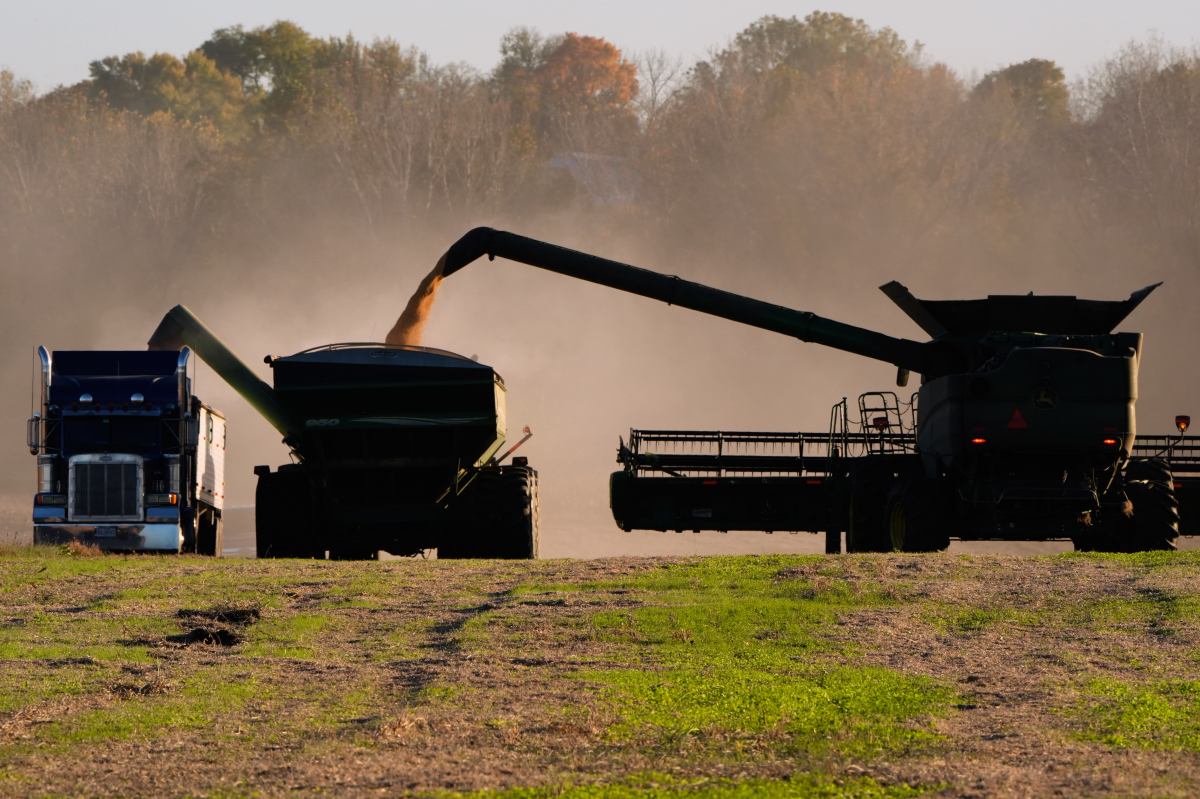
U. S. President Donald Trump says he is near an agreement with Chinese President Xi Jinping on greater and faster Chinese purchasing of U. S. farm products, predicting that the U. S. will be “pleasantly surprised.” Newsweek contacted the Chinese government for comment. Why It Matters China is the world’s largest soybean importer and has long been the top buyer of U. S. soybeans, but its purchases ground to a near halt this year in retaliation for Trump’s tariffs on Chinese goods, stinging American farmers. Trump announced a deal on soybeans-the most valuable U. S. agricultural export-on October 30, after talks with Xi in South Korea, to the relief of U. S. farmers. Greater Chinese purchasing of U. S. farm produce will boost U. S. exports as well as support for Trump in rural America. What To Know “I spoke to President Xi about buying our farm products and he said he agreed with me,” Trump told reporters on Air Force One, referring to his Monday phone call with the Chinese leader. Trump did not say specifically what Xi has agreed to, but mentioned more Chinese purchases of U. S. farm products. “I asked him, ‘I’d like you to buy it a little faster. I’d like you to buy more,’ and he’s more or less agreed to do that. I think we will be pleasantly surprised by the actions of President Xi,” Trump said. Treasury Secretary Scott Bessent said earlier that China would be buying a bounty of U. S. soybeans during the coming years. “The Chinese are right on schedule in terms of the cadence of their purchases. Over the next 3 1/2 years, we are going to see 87. 5 million metric tons purchased by the Chinese-minimum-and they are right on schedule,” he told CNBC in an interview Tuesday. The agreement Trump reached with Xi last month will bring total U. S. soybean exports to China this year to 18 million metric tons-down 32 percent from last year and marking the weakest year for American soy since 2018. China has diversified its imports this year by increasing purchases of lower-cost soybeans from Brazil-its top supplier-and Argentina, and analysts have said China is unlikely to reverse that trend, even if relations with the U. S. stabilize. The October deal included trade and tariff concessions from both sides. Trump agreed to delay his threatened 100 percent tariff on Chinese goods and reduce an existing duty on certain fentanyl precursor chemicals from 20 percent to 10 percent. In return, China postponed for at least one year its planned export restrictions on rare earth elements, which are crucial for defense and high-tech industries. What People Are Saying Trump, referring to Xi, to reporters: “I think he’s going to very much surprise you with the upside.” What Happens Next Trump has confirmed that he will be visiting China in April and that Xi would later visit the U. S. Bessent said Xi would also attend a G20 meeting in the U. S. next year and that Trump might visit China for an Asia-Pacific Economic Cooperation summit.
https://www.newsweek.com/donald-trump-floats-potential-surprise-after-trade-talks-with-chinas-xi-11110208
Tag: asia-pacific economic cooperation

China just purchased its first U.S. soybeans from this year’s harvest before Trump and Xi meet at economic summit
The firm plays a key role in the global supply and trade of grains, oils, and food products. Its core trading arm, COFCO International, reported $38.5 billion in revenue last year, handling 108.4 million metric tons of agricultural crops and commodities.
Recently, COFCO placed a purchase order for 180,000 metric tons of U.S. soybeans, scheduled for shipment in December and January. Reuters first reported the order on Tuesday, citing two oilseed traders. This marks China’s first purchase of U.S. soybeans in several months. COFCO did not immediately respond to Fortune’s request for comment.
Experts familiar with the transaction told Reuters that the purchase volume was relatively small, amounting to just three cargoes or shiploads of soybeans. They also noted that demand for U.S. soybeans is not expected to increase significantly in the near future, following recent large purchases from South America.
China accounts for about 60% of the world’s soybean imports, and in 2024, it made up 51% of U.S. soybean exports. However, trade tensions have created a significant divide between the U.S.—the world’s second-largest soybean producer—and China. The rift has been so pronounced that China had not previously placed any orders for the U.S. soybean growers’ autumn harvests.
This situation has raised concerns among farmers in rural America, who warn of an impending economic crisis fueled by losing their top export market, falling crop prices, and high production costs.
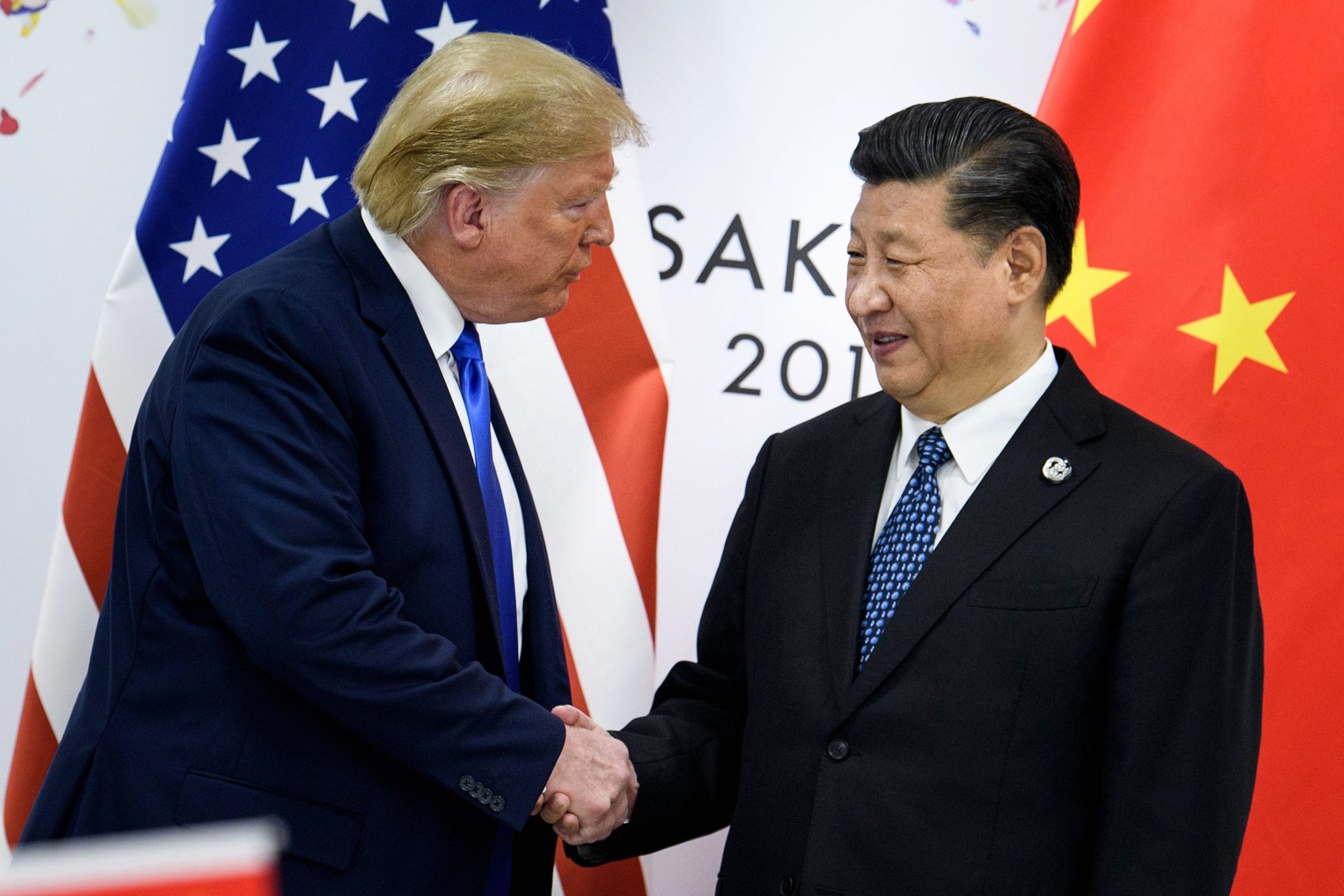
On a hopeful note, former President Trump and China’s president are scheduled to meet for talks regarding trade and tariffs during the Asia-Pacific Economic Cooperation (APEC) Summit in Busan, South Korea, on Thursday. These planned discussions come after Treasury Secretary Scott Bessent hinted at a de-escalation in the trade war under a deal framework he negotiated.
In a recent interview aired on Sunday, Bessent addressed the 100% tariff threat, which followed China’s announcement of strict export controls. These include a ban on rare earth exports for foreign military use and a requirement for foreign entities to obtain Chinese government approval for products containing even trace amounts of Chinese-sourced rare earths. Rare earth elements are crucial for the U.S. in military applications and AI development.
“So, I would expect that the threat of the 100% tariffs has gone away, as has the threat of the immediate imposition of the Chinese initiating a worldwide export control regime,” Bessent said.
While declining to give specific details about the trade agreement to CBS, Bessent expressed optimism for U.S. soybean farmers, saying they will be “extremely happy with this deal for this year and for the coming years.” He added, “I believe that we have brought the market back into equilibrium, and I believe that the Chinese will be making substantial purchases again.”
Babak Hafezi, adjunct professor of international business at American University, told Fortune that negotiations between China and the U.S. have been marked by “leverage diplomacy.”
“The Chinese understood that they could not renegotiate unless they had leverage, and they used rare-earth minerals as a key lever, bringing the U.S. to the table,” Hafezi explained.
Following China’s move in mid-October, negotiations accelerated, including the U.S. requirement to purchase soybeans—an order COFCO had not placed this year, he added.
“This is a quid pro quo in the negotiation process and helps us stabilize relations with China more quickly,” Hafezi concluded.
https://fortune.com/2025/10/30/china-buys-us-soybeans-trump-xi-summit-deal-trade-tariffs/