

By KEN SWEET, AP Business Writer NEW YORK (AP) President Trump nominated Stuart Levenbach as the next director of the Consumer Financial Protection Bureau, using a legal maneuver to keep his budget director Russell Vought as acting director of the bureau while the Trump administration continues on its plan to shut down the consumer financial protection agency. Levenbach is currently an associate director inside the Office of Management and Budget, handling issues related to natural resources, energy, science and water issues. Levenbach’s resume shows significant experience dealing with science and natural resources issues, acting as chief of staff of the National Oceanic and Atmospheric Administration during Trump’s first term. Levenbach’s nomination is not meant to go through to confirmation, an administration official said, speaking on condition of anonymity to discuss personnel matters. Under the Vacancies Act, Vought can only act as acting director for 210 days, but now that Trump has nominated someone to the position, that clock has been suspended until the Senate approves or denies Levenbach’s confirmation as director. Vought is Levenbach’s boss. The CFPB has been nonfunctional much of the year. Many of its employees have been ordered not to work, and the only major work the bureau is doing is unwinding the regulations and rules it put into place during Trump’s first term and during the Biden administration. While in the acting director role, Vought has signaled that he wishes to dismantle, or vastly diminish, the bureau. The latest blow to the bureau came earlier this month, when the White House said it does not plan to withdraw any funds from the Federal Reserve, which is where the bureau gets its funding, to fund the bureau past Dec. 31. The White House and the Justice Department used a legal interpretation of the law that created the bureau, the Dodd-Frank Act, that the Fed must be profitable in order to fund the CFPB’s operations. Several judges have rejected this argument when it was brought up by companies, but it’s never been the position of the government until this year that the CFPB requires the Fed to be profitable to have operating funds. “Donald Trump’s sending the Senate a new nominee to lead the CFPB looks like nothing more than a front for Russ Vought to stay on as Acting Director indefinitely as he tries to illegally close down the agency,” said Sen. Elizabeth Warren, the top Democrat on the Senate Banking Committee, in a statement. The bureau was created after the 2008 financial crisis as part of the Dodd-Frank Act, a law passed to overhaul the financial system and require banks to hold more capital to avoid another financial crisis. The CFPB was created to be a independent advocate for consumers to help them avoid bad actors in the financial system.
https://www.dailybreeze.com/2025/11/19/trump-cfpb-nomination/
Tag: and atmospheric administration

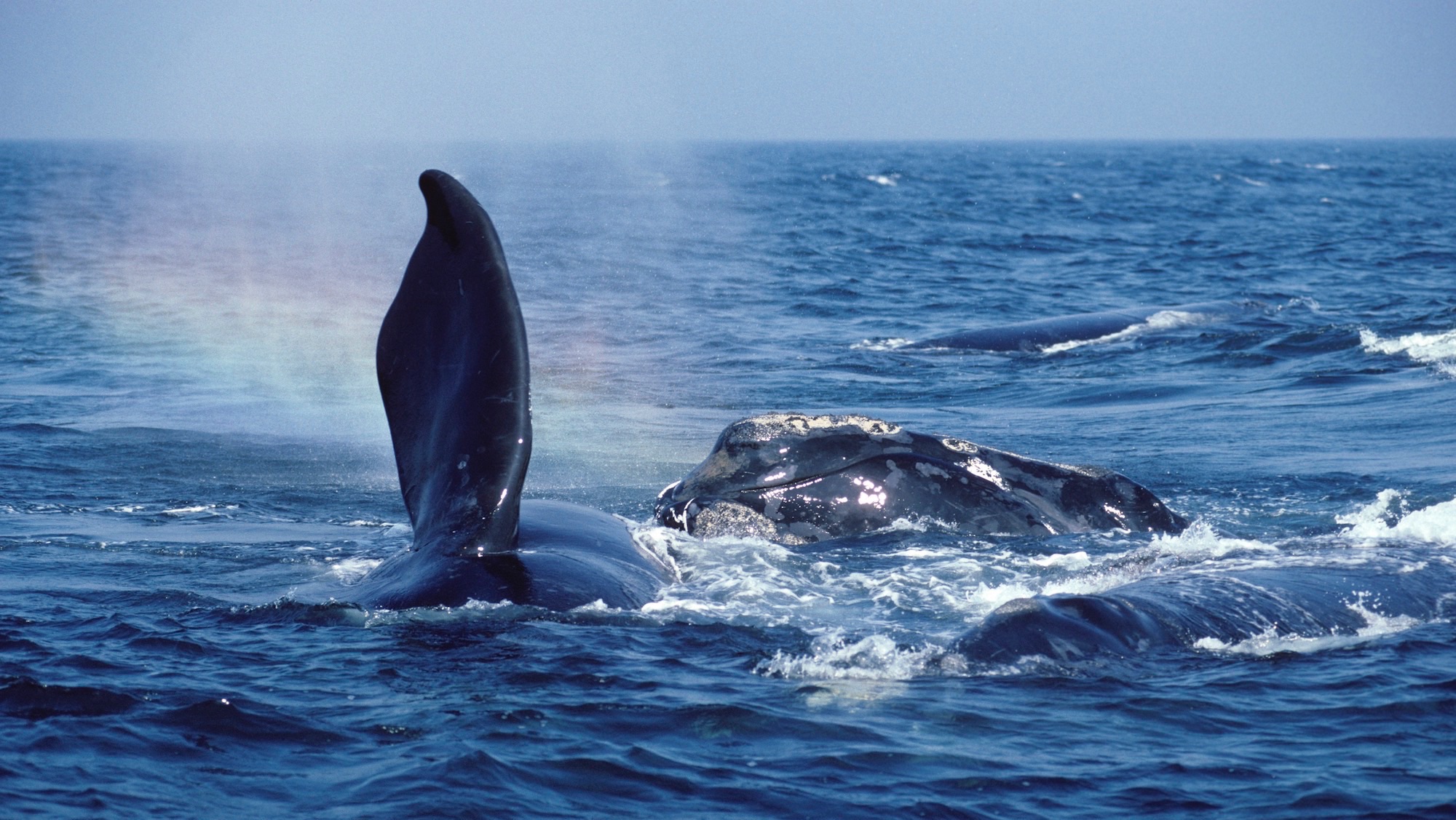
Endangered North Atlantic right whales are making a slow comeback
Get the Popular Science daily newsletter💡
Breakthroughs, discoveries, and DIY tips sent every weekday.
[Email address]
—
**Slow but Steady: North Atlantic Right Whale Population Shows Signs of Recovery**
The North Atlantic right whale (*Eubalaena glacialis*) is one of the most endangered large whales in the world. Their very name reflects their tragic history: these whales were considered the “right” whales for whalers to target, as they floated after being killed, making them easier to harvest.
Today, their biggest threats are ship collisions and entanglement in fishing gear. However, for once, there’s some good news from the marine conservation community.
According to a statement from the New England Aquarium, estimates for North Atlantic right whale populations are slowly increasing. Researchers from the North Atlantic Right Whale Consortium, New England Aquarium, and the National Oceanic and Atmospheric Administration (NOAA) estimate that, in 2024, there were around 384 individuals—a 2.1 percent increase from the previous year’s count.
So far, 2025 has also shown promise. Heather Pettis, senior scientist at the New England Aquarium, shared with *Popular Science* that there have been 11 known calf births, zero detected deaths, and notably fewer significant entanglements and vessel strikes this year.
“The population increase is really good news, and so far, what we’ve seen in 2025 is also encouraging,” Pettis explains. However, she cautions, “We’re talking about a population of 384 individual whales—that’s still incredibly low. Yes, we’re seeing increases. They’re small, and we still are seeing injuries to animals from human activities. So, I say that we’re cautiously optimistic.”
Pettis emphasizes that conservation efforts must continue with urgency. Both regulatory processes and initiatives beyond regulation are essential. Creative industry solutions and public awareness campaigns play a critical role in protecting these whales.
In Massachusetts, for example, Cape Cod has implemented fishing limits during times when right whales are known to be present as part of its mitigation strategy.
One promising innovation involves new on-demand fishing technology currently being trialed in the U.S. and Canada. This technology aims to prevent whale entanglements by keeping vertical ropes—those that connect traps on the seafloor to buoys at the surface—out of the water column until fishermen need to retrieve their gear.
“Removing those vertical ropes from the water is a huge conservation benefit to right whales,” Pettis explains.
When it comes to reducing ship collisions, many stakeholders are exploring ways to better connect with mariners, informing them when they are entering areas where slowing down would benefit the whales.
Another potential avenue is related to right whale eyesight. A study on humpback whales published earlier this year suggests that their vision may be poorer than previously thought, meaning they might not see fishing gear until it’s too late to avoid it.
While similar studies on right whale eyesight haven’t been published, Pettis notes that there are discussions about which colors right whales might see better underwater. “Are there ways in which we could alter the color of ropes? Might that help? So that’s a lingering question,” she says.
As the North Atlantic right whale population slowly recovers, ongoing efforts combining science, technology, and community engagement remain vital to ensuring its future survival.
https://www.popsci.com/environment/endangered-north-atlantic-right-whales-are-making-a-slow-comeback/