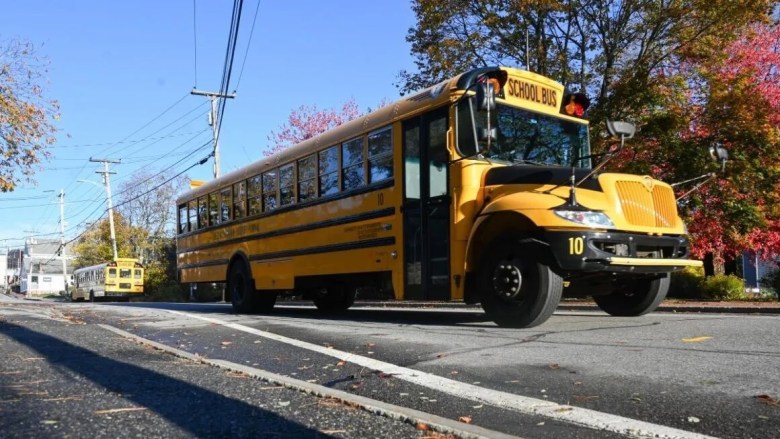
These Maine students are sinking to the bottom

Maine, once a national competitor in student achievement, now sits at or below the national average for standardized test performance. While scores nationwide have dropped since the COVID-19 pandemic, Maine student performance has been sliding for more than a decade.

A Maine Monitor analysis of 20 years of student test scores on the National Assessment of Educational Progress (NAEP) revealed that some students are sinking to the bottom faster than others. Low-income students and children with disabilities saw peak test scores on the NAEP starting around 2007. After that, these students began experiencing significant declines.

Between 2007 and 2024, the portion of all Maine students reaching at least a partial, basic level of understanding in reading and math fell by more than 14 percent. However, the declines were much steeper for certain groups. The percentage of students with disabilities reaching this bare-minimum performance level or higher dropped by more than 32 percent in some subjects—and in some cases, more than 40 percent. Low-income students meeting the same level fell by more than 23 percent during the same period.

Overall, the percentage of Maine test takers performing at or above the basic level is lower than the national average. It is important to note that NAEP results are presented only as percentages, not total numbers, and the exact losses in performance vary depending on the subject and grade level.

To ensure accuracy, The Maine Monitor consulted two education researchers who confirmed that children with disabilities and those from low-income households are sliding significantly. Students with disabilities often have individualized plans that provide accommodations for learning and may include conditions such as autism and dyslexia. Economically disadvantaged students are defined as those from low-income households, homeless children, or those who qualify for programs such as free and reduced-price lunch.

Other groups have been struggling as well. Black students and English language learners have seen significant losses in test scores, although data collection for both groups has been inconsistent over the years due to their relatively small populations in Maine.

NAEP categorizes student performance into four levels:

– **Below Basic:** Students cannot demonstrate even fundamental knowledge in reading or math.
– **Basic:** Students show partial, but not complete, understanding of grade-level skills. For example, fourth graders meeting the basic level in reading can make simple inferences from text, and eighth graders can answer specific questions about the text.
– **Proficient:** Considered the goal for all student performance by the National Assessment Governing Board, this level indicates a solid understanding of challenging math and reading skills.
– **Advanced:** Students have mastered math and reading skills beyond the proficient level.

Maine saw its percentage of students performing at the proficient level begin to decline between 2013 and 2017 across grade levels and subjects. Meanwhile, the proportion of students performing at the advanced level has remained fairly consistent over time, typically between 2 and 10 percent across grade levels and subjects.

Unfortunately, the percentage of students performing below the basic level has been growing since 2007. For instance, about 59 percent of fourth graders with disabilities tested below basic in reading in 2007; by 2024, that number had risen to roughly 78 percent. Similarly, 41 percent of low-income fourth graders tested below basic in 2007, increasing to 59 percent by 2024.

These trends highlight growing challenges in educational equity and achievement in Maine, especially among vulnerable student populations. Addressing these issues will be critical to improving outcomes for all students in the state.
https://www.centralmaine.com/2025/10/27/these-maine-students-are-sinking-to-the-bottom/

Exxon sues California over new laws requiring corporate climate disclosures

**ExxonMobil Files Federal Lawsuit Challenging California’s Greenhouse Gas Reporting Laws**

ExxonMobil has filed a lawsuit in federal court challenging two California laws that require the oil giant to report the greenhouse gas emissions resulting from the use of its products worldwide.

The company submitted a 30-page complaint on Friday in the U.S. District Court for the Eastern District of California. ExxonMobil argues that these laws violate its First Amendment free speech rights by compelling it to “trumpet California’s preferred message even though ExxonMobil believes the speech is misleading and misguided.”

**Overview of the California Climate Legislation**

Senate Bill 253, known as the Climate Corporate Data Accountability Act of 2023, mandates the California Air Resources Board (CARB) to adopt regulations this year. These regulations require public and private companies with over $1 billion in annual revenue to publicly disclose their greenhouse gas emissions across three different “scopes”:

– **Scope 1:** Direct greenhouse gas emissions from the company and its branches.
– **Scope 2:** Indirect emissions, such as electricity purchased by the company.
– **Scope 3:** Emissions from the company’s supply chain, including waste, water usage, business travel, and employee commutes. Notably, these account for about 75% of a company’s greenhouse gas emissions in many industries.

Reporting on Scope 1 and Scope 2 emissions will begin in 2026, with Scope 3 reporting starting in 2027.

**ExxonMobil’s Objections**

According to the lawsuit, the Air Resources Board solicited public input during the rule-making process but has yet to respond to ExxonMobil’s September 5 letter, which detailed its objections to the proposed reporting methods.

ExxonMobil contends that the legislative history reveals the laws aim to unfairly single out companies like ExxonMobil “for being large” and to spur public criticism. The complaint states, “California may believe that companies that meet the statutes’ revenue thresholds are uniquely responsible for climate change, but the First Amendment categorically bars it from forcing ExxonMobil to speak in service of that misguided viewpoint.”

**Expert and Legislative Perspectives**

Michael Gerrard, a prominent climate change legal expert at Columbia University, commented, “These laws do not require Exxon to make any changes in the way it produces, transports, refines or sells oil. They are just about information that Exxon doesn’t want to provide to the public.” He continued, “If Exxon thinks any of the information would be misleading, it’s free to explain why so that readers can draw their own conclusions.”

Supporters of the legislation argue it discourages corporate greenwashing—the practice of falsely portraying a company’s efforts to reduce climate emissions. Sen. Scott Wiener (D-San Francisco), the bill’s author, stated at the time of adoption, “We need the full picture to make the deep emissions cuts that scientists tell us are necessary to avert the worst impacts of climate change.”

**Additional Legislation and Legal Challenges**

Another related bill, Senate Bill 261, requires corporations with revenues over $500 million to disclose their climate-related financial risks. In its lawsuit, ExxonMobil claims this law would force it “to engage in granular conjecture about unknowable future developments and to publicly disseminate that speculation on its website.”

**Defendants Named in the Lawsuit**

The lawsuit names as defendants California Attorney General Rob Bonta, Air Resources Board Chair Lauren Sanchez, Executive Officer Steven S. Cliff, and two officials from the Board’s Industrial Strategies Division.

Neither the Attorney General’s office nor ExxonMobil responded to requests for comment on Saturday. The case is expected to bring significant attention to the intersection of climate policy, corporate responsibility, and free speech rights.
https://www.latimes.com/california/story/2025-10-25/exxonmobil-lawsuit-california-greenhouse-emissions

.
Privacy Policy Data
Exit mobile version