
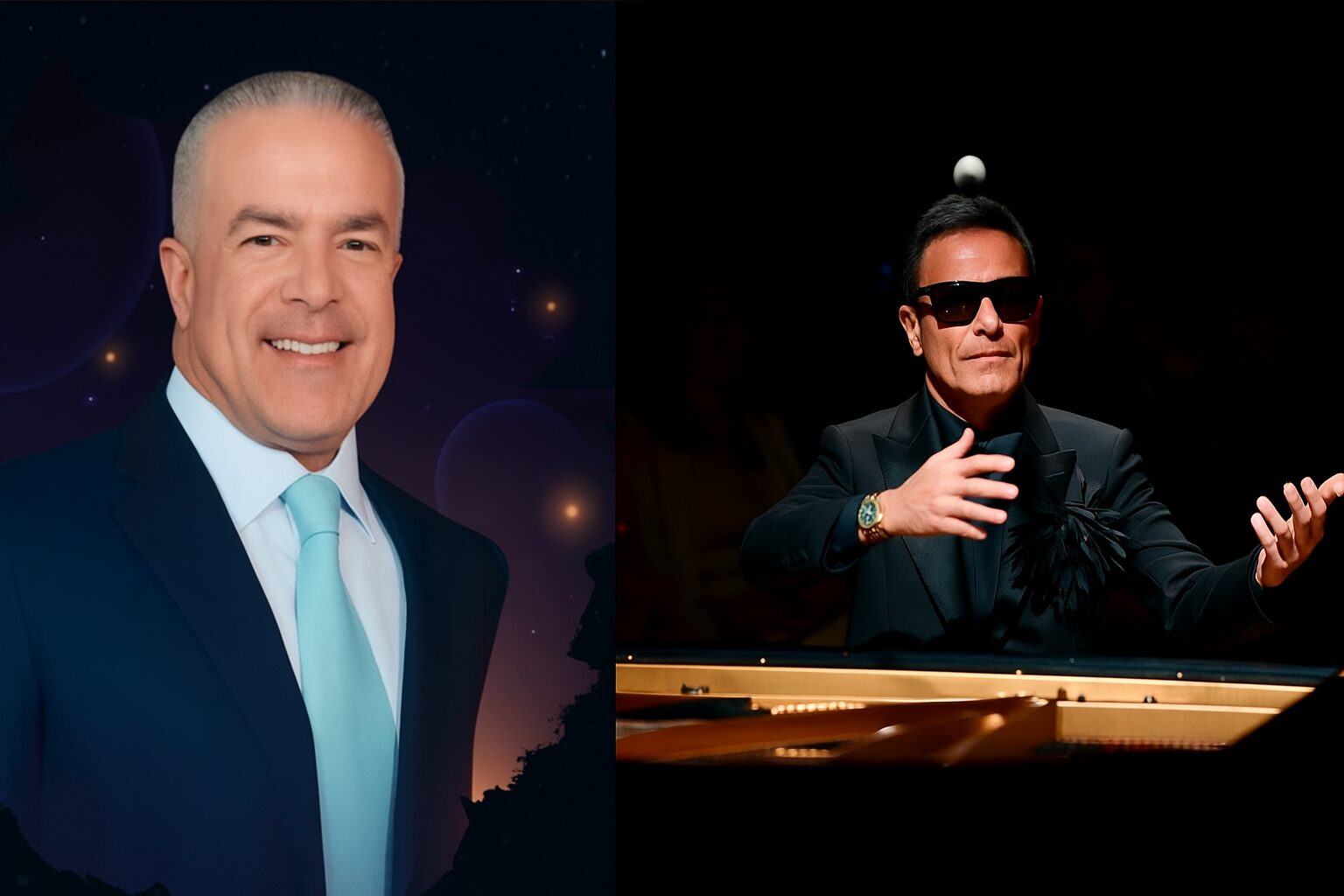
Miss Universe Organization president Raúl Rocha Cantú (left) and former judge Omar Harfouch (right) appear in separate photos. Rocha Cantú has denied Harfouch’s allegations of irregularities in the 2025 pageant, while Harfouch maintains his claims after resigning days before the finals. (Photo Sources: Miss Universe Organization and Omarharfouch. com) Miss Universe leaders and former judge Omar Harfouch issue conflicting explanations over alleged irregularities in the 2025 pageant, which MUO firmly denies BANGKOK The Miss Universe Organization (MUO) and former judge Omar Harfouch have issued conflicting accounts of events behind the Miss Universe 2025 competition, after Harfouch resigned days before the finals and publicly alleged that the selection process leading to Fátima Bosch’s victory lacked transparency. MUO has strongly denied the allegations and has not announced any independent review. Harfouch, a Lebanese-French businessman, pianist, and political activist known for his anti-corruption advocacy, served briefly on the judging panel before stepping down. Harfouch’s allegations In public posts released shortly before the coronation, Harfouch said he resigned after questioning how semifinalists were chosen. He alleges that the Top 30 candidates were “pre-selected” by what he calls an “impromptu jury,” a group he claims operated outside the official panel. He also alleges that some of those involved had personal relationships or affiliations with certain contestants. Harfouch says he raised his concerns directly with MUO leadership, including organization president Raúl Rocha Cantú, and described their exchange as unsatisfactory. He then withdrew from all pageant-related duties, including a planned musical performance. He later described the pageant results as “rigged” and referred to Bosch as a “fake winner.” These remarks reflect Harfouch’s own characterization; he has not released evidence to support the claims, and no outside body has confirmed them. MUO denies allegations and defends its process MUO, led by Rocha Cantú, has categorically rejected Harfouch’s statements. In an official response, the organization said his claims “incorrectly suggested” that an unauthorized committee had chosen semifinalists. MUO stated that all scoring followed established Miss Universe protocols and confirmed that no external group was permitted to select finalists. The organization said Harfouch may have misunderstood “Beyond the Crown,” a social-impact initiative that plays no role in competition scoring. MUO also said Harfouch is no longer authorized to use Miss Universe trademarks following his public allegations. Rocha Cantú has not made additional statements beyond MUO’s official release. The organization maintains that Bosch’s win is legitimate. Other judges raise concerns, though not about rigging Former footballer Claude Makélélé, originally part of the judging roster, withdrew shortly before the finals for personal reasons and has not echoed Harfouch’s claims. Former Miss Universe Natalie Glebova, who served on the final judging panel, wrote online that Thailand’s Praveenar Singh, the first runner-up, was her personal choice. She noted that earlier editions included an onstage independent auditor and expressed interest in restoring that practice. She did not endorse allegations of misconduct. A competition already under scrutiny The 2025 Miss Universe season had drawn major attention even before the dispute. A livestreamed encounter in which Thai pageant figure Nawat Itsaragrisil reprimanded Bosch during a pre-pageant activity led to criticism and a brief walkout by several contestants before Nawat apologized. Separately, Miss Jamaica Gabrielle Henry was hospitalized after falling from the stage during preliminaries, prompting safety questions. Other contestants faced online harassment or political scrutiny, adding to the heightened tension surrounding this year’s competition. Ownership and leadership shifts Miss Universe is co-owned by JKN Global Group of Thailand and Legacy Holding Group USA, each with a 50 percent stake. JKN Global acquired MUO in 2022 and later sold half of its stake to Legacy Holding, whose principal Raúl Rocha Cantú serves as MUO president. In October 2025, MUO announced Mario Búcaro as its new Chief Executive Officer, succeeding Anne Jakapong Jakrajutatip, who stepped down earlier in the year.
https://asianjournal.com/entertainment/miss-universe-leadership-and-ex-judge-in-public-dispute-over-rigging-allegations/
Tag: characterization
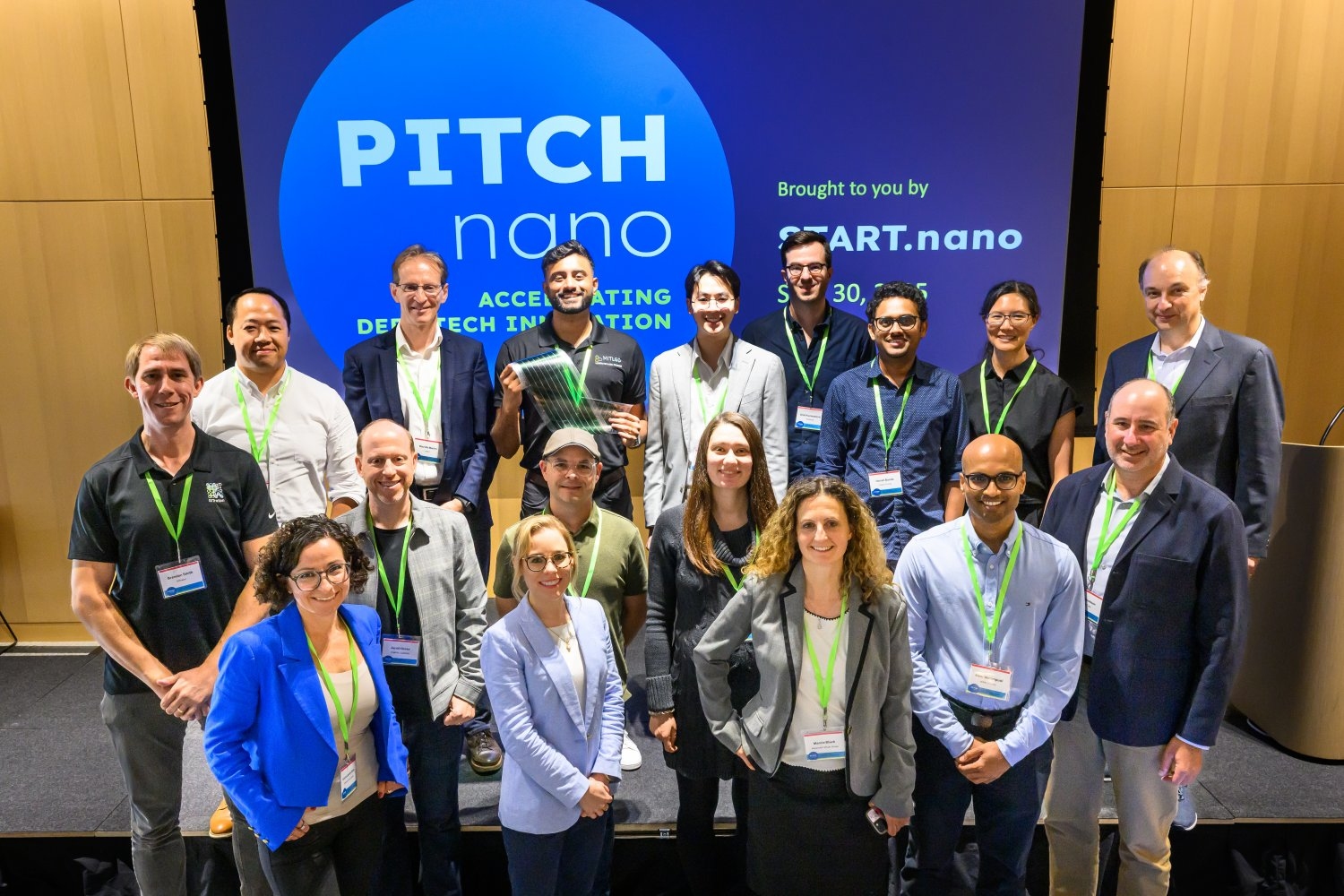
Solar energy startup Active Surfaces wins inaugural PITCH.nano competition
The inaugural PITCH.nano competition, hosted by MIT.nano’s hard technology accelerator START.nano, provided a platform for early-stage startups to present their innovations to MIT and Boston’s hard-tech startup ecosystem.
The grand prize winner was Active Surfaces, a startup generating renewable energy exactly where it is needed through lightweight, flexible solar cells. Active Surfaces aims to reimagine how photovoltaics are deployed in the built environment with its ultralight, peel-and-stick panels. Shiv Bhakta MBA ’24, SM ’24, CEO and co-founder, delivered the winning presentation to an audience of entrepreneurs, investors, startup incubators, and industry partners at PITCH.nano on September 30.
Active Surfaces received the grand prize of 25,000 nanoBucks—equivalent to $25,000—that can be spent at MIT.nano facilities.
“Why has MIT.nano chosen to embrace startup activity as much as we do?” asked Vladimir Bulović, MIT.nano faculty director, at the start of PITCH.nano. “We need to make sure that entrepreneurs can be born out of MIT and can take the next technical ideas developed in the lab out into the market, so they can make the next millions of jobs that the world needs.”
Bulović explained that the journey of a hard-tech entrepreneur takes at least 10 years and $100 million. By linking open tool facilities to startup needs, MIT.nano can make those first few years a little easier, helping more startups reach the scale-up stage.
“Getting VCs [venture capitalists] to invest in hard tech is challenging,” explained Joyce Wu SM ’00, PhD ’07, START.nano program manager. “Through START.nano, we provide discounted access to MIT.nano’s cleanrooms, characterization tools, and laboratories for startups to build their prototypes and attract investment earlier and with reduced spend. Our goal is to support the translation of fundamental research to real-world solutions in hard tech.”
In addition to discounted access to tools, START.nano helps early-stage companies become part of the MIT and Cambridge innovation network.
Inspired by the MIT 100K Competition, PITCH.nano was launched this year as a new opportunity to introduce hard-tech ventures to the investor and industry community. Twelve startups delivered presentations that were evaluated by a panel of four judges—venture capitalists and startup founders themselves.
“It is amazing to see the quality, diversity, and ingenuity of this inspiring group of startups,” said judge Brendan Smith PhD ’18, CEO of SiTration, a company that was part of the inaugural START.nano cohort. “Together, these founders are demonstrating the power of fundamental hard-tech innovation to solve the world’s greatest challenges in a way that is both scalable and profitable.”
The startups presenting at PITCH.nano spanned a wide range of focus areas:
– **Climate, Energy, and Materials:** Addis Energy, Copernic Catalysts, Daqus Energy, VioNano Innovations, Active Surfaces, and Metal Fuels
– **Life Sciences:** Acorn Genetics, Advanced Silicon Group, and BioSens8
– **Quantum and Photonics:** Qunett, nOhm Devices, and Brightlight Photonics
A common thread among these companies is their use of MIT.nano to advance their innovations.
“MIT.nano has been instrumental in compressing our time to market, especially as a company building a novel, physical product,” said Bhakta. “Access to world-class characterization tools normally out of reach for startups lets us validate scale-up much faster. The START.nano community accelerates problem-solving, and the nanoBucks award is directly supporting the development of our next prototypes headed to pilot.”
In addition to the grand prize, a 5,000 nanoBucks audience choice award went to Advanced Silicon Group, a startup developing a next-generation biosensor to improve testing in pharma and health tech.
Now in its fifth year, START.nano has supported 40 companies across diverse market areas including life sciences, clean tech, semiconductors, photonics, quantum, materials, and software. Fourteen START.nano companies have graduated from the program, proving its success in helping early-stage ventures progress from prototype to manufacturing.
“I believe MIT.nano has a fantastic opportunity here,” said judge Davide Marini, PhD ’03, co-founder and CEO of Inkbit, “to create the leading incubator for hard tech entrepreneurs worldwide.”
https://news.mit.edu/2025/active-surfaces-wins-inaugural-pitchnano-competition-1020