
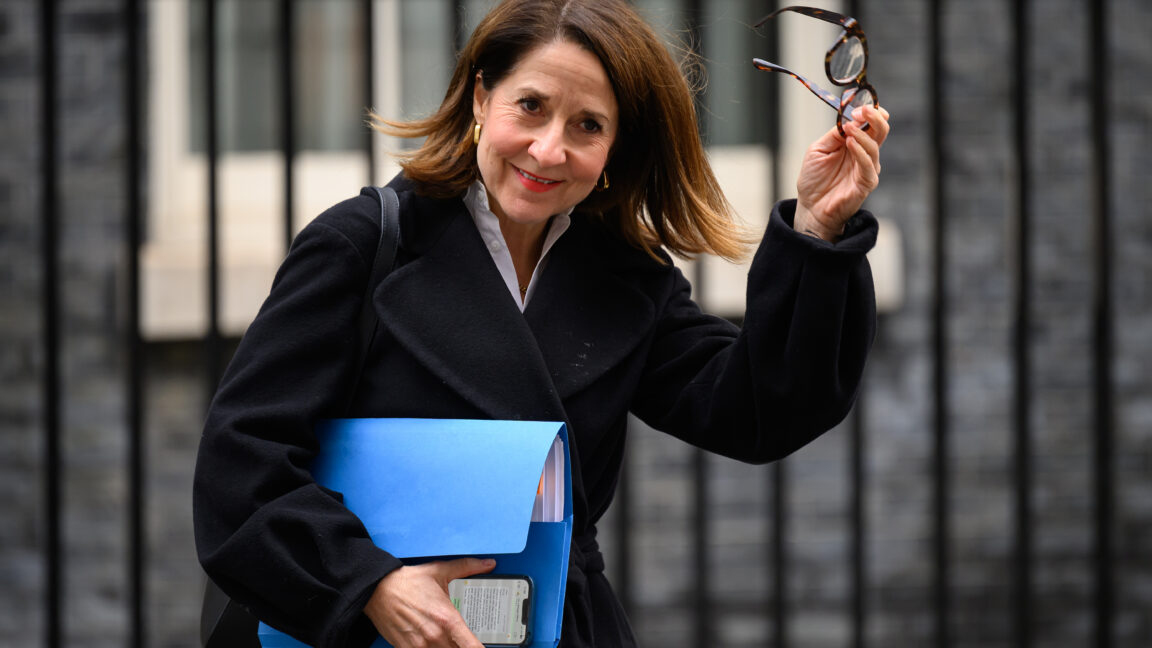
The UK government will promise to buy emerging chip technology from British companies in a 100 million pound ($130 million) bid to boost growth by supporting the artificial intelligence sector. Liz Kendall, the science secretary, said the government would offer guaranteed payments to British startups producing AI hardware that can help sectors such as life sciences and financial services. Under a “first customer” promise modeled on the way the government bought COVID vaccines, Kendall’s department will commit in advance to buying AI inference chips that meet set performance standards. Kendall acknowledged that 100 million pounds “sounds small compared to the billions being spent” in the US and China but argued it was about “government showing leadership in the areas where we think we will be absolutely world-leading.” Valued at over 72 billion pounds ($94 billion), the UK’s AI market is the third largest in the world following the US and China, according to the British government. However, investment in AI in the UK lags behind the US. In 2024, US private investment in AI was at $109. 1 billion-significantly higher than the UK’s $4. 5 billion, according to the Stanford AI Index. The science secretary did not provide precise details on how the “advance payment mechanism” would work but said “cutting-edge chip companies” based in Britain will be told “the government will buy that when the technology reaches a certain standard.” “Our particular strengths as a country lie in areas like life sciences, financial services, the defense sector, and the creative sector. And where we will really lead the world is where we can use the power of AI in those sectors,” Kendall told the Financial Times. The plans came as part of a wider AI package designed to upgrade Britain’s tech infrastructure and convince entrepreneurs and investors that Labour is backing the sector ahead of next week’s Budget, which is expected to raise taxes on the wealthy. The UK has sought to attract investment from US AI companies such as OpenAI and Anthropic. The government has signed several “strategic partnerships” with American groups in a bid to attract foreign investment in UK AI infrastructure and talent, in exchange for adopting their technology in the public sector. Sue Daley, of lobby group TechUK, said the plan showed “real ambition” but warned: “Advanced market commitments of this kind must be designed carefully to avoid unintentionally distorting competition.” The government also announced that James Wise, a venture capitalist at Balderton, would chair the government’s 500 million pound sovereign AI unit, which has been set up to back AI startups alongside the British Business Bank. Additional reporting by Ivan Levingston © 2025 The Financial Times Ltd. Not to be redistributed, copied, or modified in any way.
https://arstechnica.com/information-technology/2025/11/uk-government-will-buy-tech-to-boost-ai-sector-in-130m-growth-push/
Tag: entrepreneurs

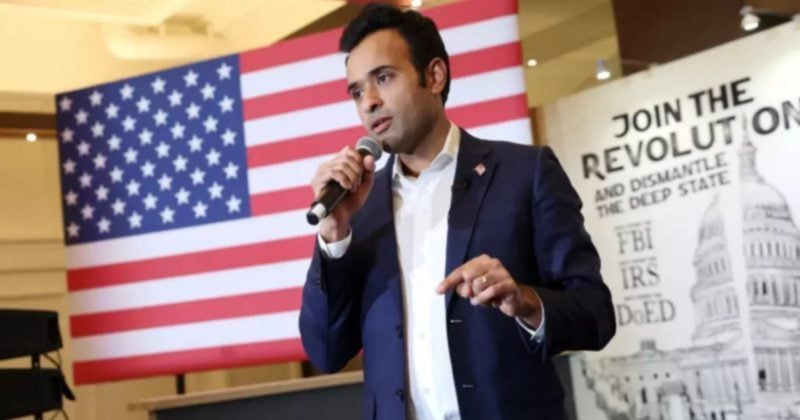
Strive raises $160M in oversubscribed SATA IPO as Vivek Ramaswamy buys in
**Key Takeaways**
Vivek Ramaswamy purchased 15,625 shares of Strive Inc.’s Variable Rate Series A Perpetual Preferred Stock at $80 per share. Strive Asset Management, co-founded by Ramaswamy, positions itself as ‘anti-woke’ and focuses on maximizing shareholder value.
Strive, backed by Vivek Ramaswamy, announced on Monday that it had successfully closed its oversubscribed initial public offering (IPO) of its Variable Rate Series A Perpetual Preferred Stock (SATA Stock) on Nasdaq. Due to high demand, the number of shares offered was increased from 1.25 million to 2 million.
According to a recent SEC filing, Ramaswamy purchased 15,625 shares of Strive’s SATA Stock. Additionally, he owns 113.9 million Class B shares and indirectly holds 28.4 million shares through the Ramaswamy 2021 Irrevocable Trust.
The offering forms part of Strive’s strategy to amplify its Bitcoin holdings through perpetual preferred equity. The company plans to use the IPO proceeds for general corporate purposes and to potentially increase its Bitcoin holdings, aiming to boost value for ASST common equity shareholders.
Backed by prominent entrepreneurs including Peter Thiel, JD Vance, and Bill Ackman, Strive is acquiring health-tech firm Semler Scientific in an all-stock transaction. This deal, subject to customary closing conditions, is expected to establish a major Bitcoin treasury entity.
https://bitcoinethereumnews.com/tech/strive-raises-160m-in-oversubscribed-sata-ipo-as-vivek-ramaswamy-buys-in/

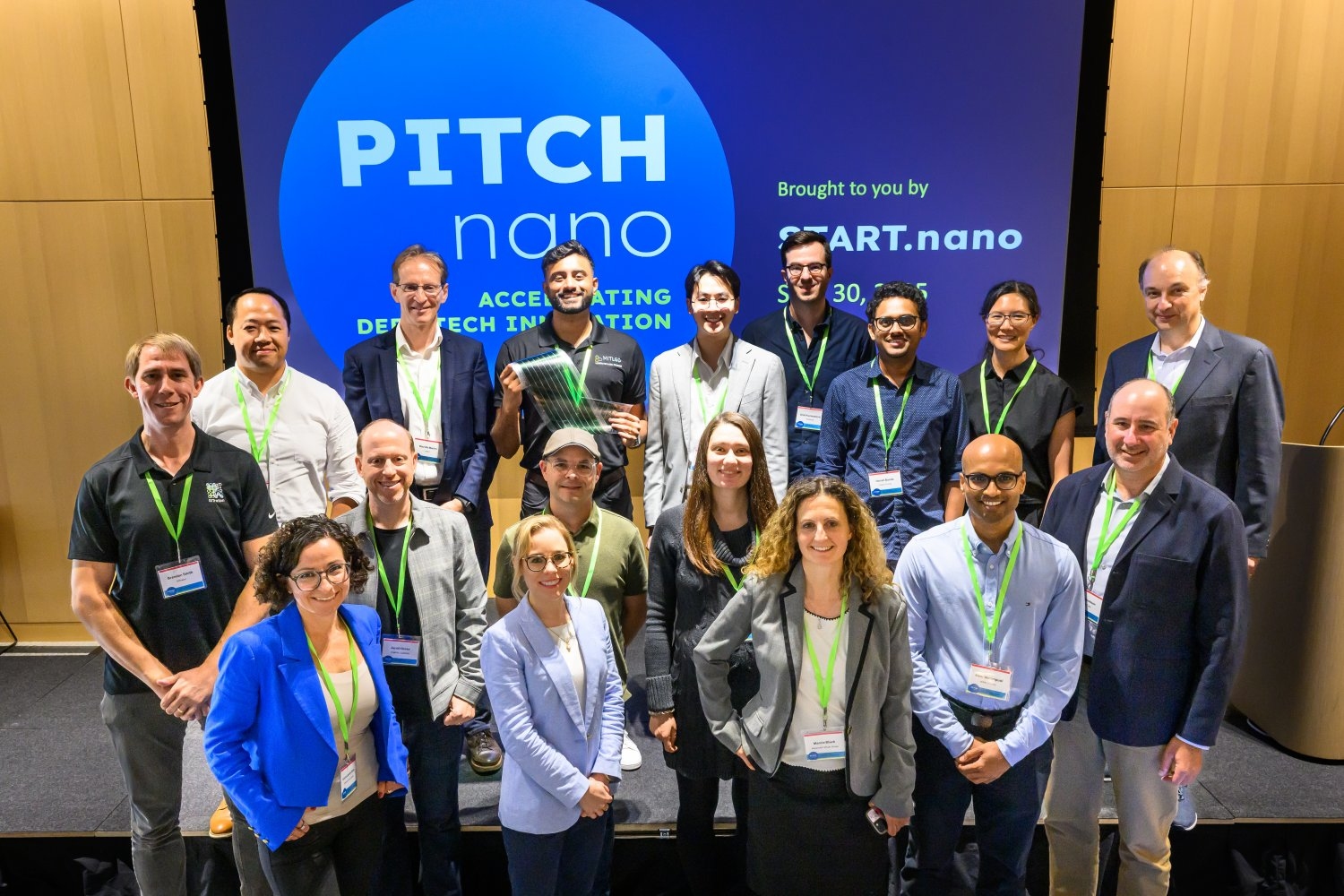
Solar energy startup Active Surfaces wins inaugural PITCH.nano competition
The inaugural PITCH.nano competition, hosted by MIT.nano’s hard technology accelerator START.nano, provided a platform for early-stage startups to present their innovations to MIT and Boston’s hard-tech startup ecosystem.
The grand prize winner was Active Surfaces, a startup generating renewable energy exactly where it is needed through lightweight, flexible solar cells. Active Surfaces aims to reimagine how photovoltaics are deployed in the built environment with its ultralight, peel-and-stick panels. Shiv Bhakta MBA ’24, SM ’24, CEO and co-founder, delivered the winning presentation to an audience of entrepreneurs, investors, startup incubators, and industry partners at PITCH.nano on September 30.
Active Surfaces received the grand prize of 25,000 nanoBucks—equivalent to $25,000—that can be spent at MIT.nano facilities.
“Why has MIT.nano chosen to embrace startup activity as much as we do?” asked Vladimir Bulović, MIT.nano faculty director, at the start of PITCH.nano. “We need to make sure that entrepreneurs can be born out of MIT and can take the next technical ideas developed in the lab out into the market, so they can make the next millions of jobs that the world needs.”
Bulović explained that the journey of a hard-tech entrepreneur takes at least 10 years and $100 million. By linking open tool facilities to startup needs, MIT.nano can make those first few years a little easier, helping more startups reach the scale-up stage.
“Getting VCs [venture capitalists] to invest in hard tech is challenging,” explained Joyce Wu SM ’00, PhD ’07, START.nano program manager. “Through START.nano, we provide discounted access to MIT.nano’s cleanrooms, characterization tools, and laboratories for startups to build their prototypes and attract investment earlier and with reduced spend. Our goal is to support the translation of fundamental research to real-world solutions in hard tech.”
In addition to discounted access to tools, START.nano helps early-stage companies become part of the MIT and Cambridge innovation network.
Inspired by the MIT 100K Competition, PITCH.nano was launched this year as a new opportunity to introduce hard-tech ventures to the investor and industry community. Twelve startups delivered presentations that were evaluated by a panel of four judges—venture capitalists and startup founders themselves.
“It is amazing to see the quality, diversity, and ingenuity of this inspiring group of startups,” said judge Brendan Smith PhD ’18, CEO of SiTration, a company that was part of the inaugural START.nano cohort. “Together, these founders are demonstrating the power of fundamental hard-tech innovation to solve the world’s greatest challenges in a way that is both scalable and profitable.”
The startups presenting at PITCH.nano spanned a wide range of focus areas:
– **Climate, Energy, and Materials:** Addis Energy, Copernic Catalysts, Daqus Energy, VioNano Innovations, Active Surfaces, and Metal Fuels
– **Life Sciences:** Acorn Genetics, Advanced Silicon Group, and BioSens8
– **Quantum and Photonics:** Qunett, nOhm Devices, and Brightlight Photonics
A common thread among these companies is their use of MIT.nano to advance their innovations.
“MIT.nano has been instrumental in compressing our time to market, especially as a company building a novel, physical product,” said Bhakta. “Access to world-class characterization tools normally out of reach for startups lets us validate scale-up much faster. The START.nano community accelerates problem-solving, and the nanoBucks award is directly supporting the development of our next prototypes headed to pilot.”
In addition to the grand prize, a 5,000 nanoBucks audience choice award went to Advanced Silicon Group, a startup developing a next-generation biosensor to improve testing in pharma and health tech.
Now in its fifth year, START.nano has supported 40 companies across diverse market areas including life sciences, clean tech, semiconductors, photonics, quantum, materials, and software. Fourteen START.nano companies have graduated from the program, proving its success in helping early-stage ventures progress from prototype to manufacturing.
“I believe MIT.nano has a fantastic opportunity here,” said judge Davide Marini, PhD ’03, co-founder and CEO of Inkbit, “to create the leading incubator for hard tech entrepreneurs worldwide.”
https://news.mit.edu/2025/active-surfaces-wins-inaugural-pitchnano-competition-1020


The art of crypto
Crypto was once like an unruly teenager: misunderstood, uninvited, and not allowed near the family savings. But Pakistani authorities have now decided that they cannot beat the blockchain; they might as well try to regulate it. Hence the Virtual Assets Ordinance and the proposed Virtual Assets Bill.
Pakistan has pivoted hard, mirroring what’s happening globally, especially in the EU, where the Markets in Crypto-Assets Regulation (MiCA) is now standard.
### The Early Wild West of Crypto
In the unregulated days of crypto, ICOs were the gold rush. Entrepreneurs waved shiny white papers in the air like some magic spell, promising financial freedom and decentralisation. What they delivered was often closer to a group text scam. The lack of regulation meant that scammers could moonwalk around securities laws with nothing but a white paper and a dream.
That’s why some countries began taking things more seriously. MiCA was the EU’s answer to crypto: sure, decentralise all you want, but please fill out these forms.
### Pakistan Joins the Regulatory Renaissance
Pakistan is now joining this regulatory renaissance—but with some local flair. The 2025 Ordinance gave birth to the Pakistan Virtual Assets Regulatory Authority (PVARA), tasked with keeping the crypto circus from catching fire. Think of PVARA as the chaperone at the school dance, making sure nobody spikes the punch (or launders money).
Regulators are taking a hard look at what tokens actually are, as opposed to what they say they are and what they do. MiCA has its categories—asset-referenced tokens, e-money tokens, utility tokens, security-ish ones. Pakistan is leaning into the same “don’t trust the brochure” approach.
The State Bank of Pakistan (SBP) and the Securities and Exchange Commission have now joined the Pakistan Crypto Council, a group essentially hashing out token taxonomies.
### From Ban to Embrace
Remember when Pakistan banned crypto in 2018? The SBP has hinted that the advisory may soon be shredded. They are now toying with the idea of linking crypto to foreign exchange laws. Your Bitcoin might one day officially be worth something in Pakistan.
### Remaining Challenges
There are still issues. For instance, white papers—the crypto version of the “trust me, bro” sales pitch—remain unregulated in Pakistan. MiCA requires that if you’re going to promise the moon, your white paper better explain how you plan to build the rocket. Unfortunately, Pakistan has yet to impose such regulations.
Investor protection? Maybe next.
On the bright side, anti-money laundering (AML) and counter-terrorism financing (CTF) controls are front and centre in the ordinance. This includes provisions from the Anti-Money Laundering Act (AMLA) 2010. PVARA gets to play financial watchdog, audit snoop, and compliance enforcer all at once.
That’s good, because nothing kills an empty fintech dream faster than a FATF blacklist.
### Opening Doors for International Players
International players are now being invited to get licenses and set up shop in Pakistan. However, the ordinance is temporary. So yes, there’s a framework—but no formal act of parliament yet.
### The Philosophical Dilemma of Regulation and Decentralisation
Then there’s the real philosophical dilemma: can a heavily centralised regulatory regime handle the wild world of decentralisation?
Pakistan seems to be opting for a state-led innovation model. This is like trying to dance to a remix of techno and the national anthem at the same time.
National Bitcoin reserves and allocating 2,000 megawatts to blockchain and AI infrastructure are bold moves. But they also risk turning crypto into a VIP club for banks and government projects—potentially leaving smaller, community-driven projects stuck in the parking lot arguing with the bouncer.
### What Pakistan Needs Going Forward
To avoid that fate, the law will need to be smart and nimble. Token types should be clearly defined, disclosure standards must be firm, and investor protections real. Sandbox programmes and tiered regulations could help level the playing field.
If Pakistan pulls this off—if it can balance oversight with openness and formality with flexibility—it could emerge not just as a participant in the global digital asset race, but as an actual contender.
If it clings too hard to control or fails to pass actual legislation, it risks becoming just another cautionary tale in the crypto museum of almost-but-not-quite.
https://www.thenews.com.pk/tns/detail/1350032-the-art-of-crypto