
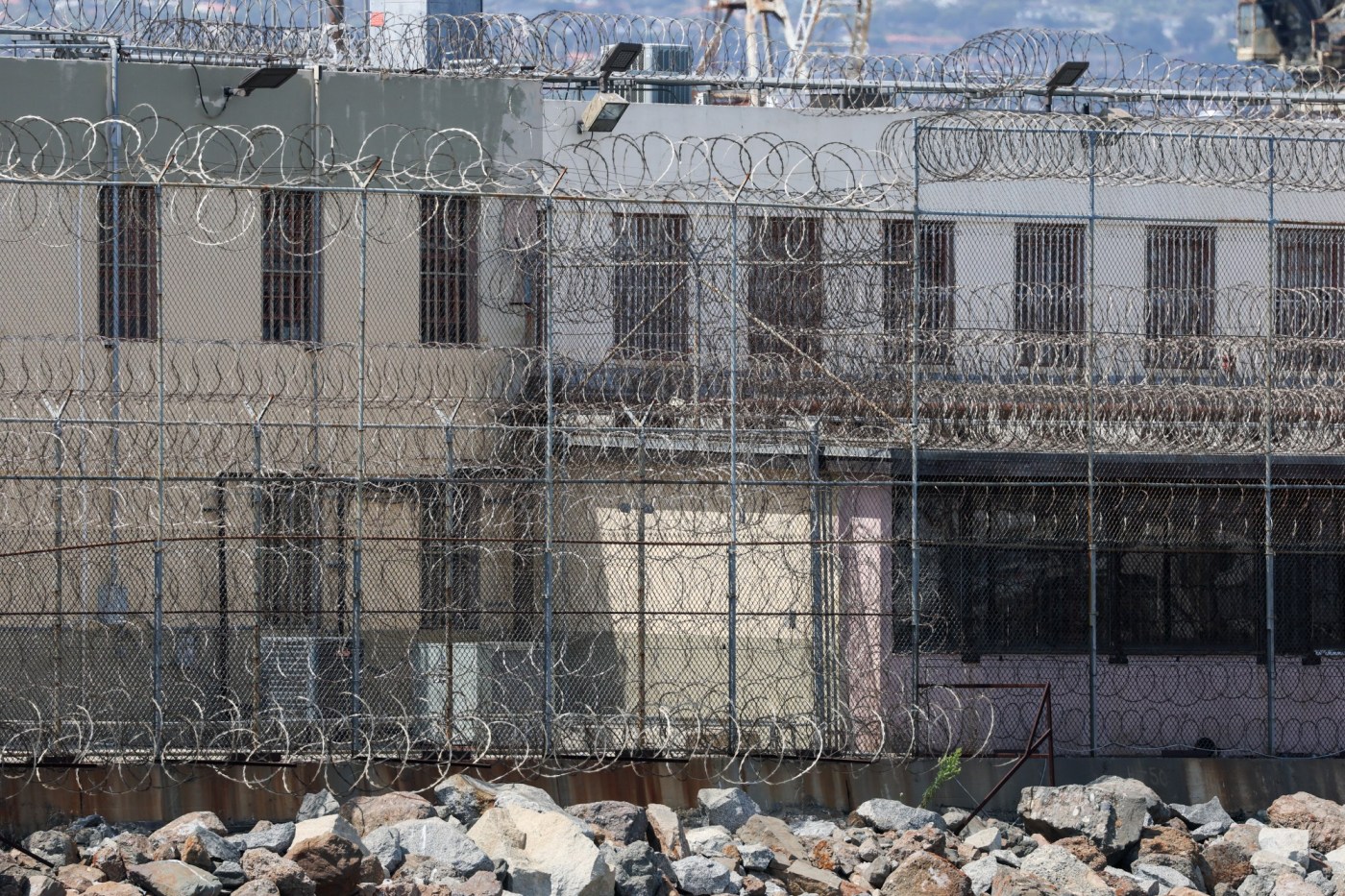
By MICHAEL R. SISAK | Associated Press The federal Bureau of Prisons is closing a lockup adjacent to the Port of Los Angeles that was once home to Al Capone and Charles Manson over concerns about crumbling infrastructure, including falling concrete that threatens to knock out the facility’s heating system, according to an internal memo obtained by the Associated Press. Director William K. Marshall III told staff on Tuesday that the agency is suspending operations at the Federal Correctional Institution, Terminal Island, a low-security prison. It currently houses nearly 1, 000 inmates, including cryptocurrency fraudster Sam Bankman-Fried and disgraced celebrity lawyer Michael Avenatti. The decision to close the facility, at least temporarily, “is not easy, but is absolutely necessary,” Marshall wrote, calling it a matter of “safety, common sense, and doing what is right for the people who work and live inside that institution.” FCI Terminal Island, opened in 1938, is the latest Bureau of Prisons facility to be targeted for closure as the beleaguered agency struggles with mounting staff vacancies, a $3 billion repair backlog and an expanded mission to support President Donald Trump’s immigration crackdown by taking in thousands of detainees. Marshall cited problems with underground tunnels containing the facility’s steam heating system. Ceilings in the tunnels have begun to deteriorate, causing chunks of concrete to fall and putting employees and the heating system at risk, he said. “We are not going to wait for a crisis,” Marshall told employees. “We are not going to gamble with lives. And we are not going to expect people to work or live in conditions that we would never accept for ourselves.” Bureau of Prisons spokesperson Randilee Giamusso, responding to the AP’s questions about FCI Terminal Island, confirmed that the agency is taking “immediate action” to “safeguard staff and inmates.” Inmates at the facility will be moved to other federal prisons “with a priority on keeping individuals as close as possible to their anticipated release locations,” Giamusso said. In his memo to staff, Marshall indicated that the process could take several weeks. The facility’s future will be decided once the Bureau of Prisons has “assessed the situation further and ensured the safety of all those involved,” she said. The Bureau of Prisons has long been bedeviled by FCI Terminal Island’s aging infrastructure, Giamusso said. In April 2024, an architectural and engineering firm contracted by the agency identified more than $110 million in critical repairs needed over the next 20 years. Site’s checkered past The prison’s opening dates back to the 1930s and it has undergone many changes over the decades. The first prisoners, 610 men and 40 women, filed into the new 21-acre federal prison near the southern end of Terminal Island on June 1, 1938. Back then, the Terminal Island Federal Correctional Institution consisted of three cell blocks built around a central quadrangle, and cost $2 million to build. In 1942, the U. S. Navy took control of the prison for use as a receiving station, and then as a barracks for court-martialed prisoners. After the Navy deactivated the facility in 1950, the state of California took it over for use as a medical and psychiatric institution. The state ceded control to the U. S. Bureau of Prisons in 1955, which converted the facility back into a low-to-medium security federal prison. The prison has housed the famous and the infamous over the years. Al Capone spent the last few months of his 10-year sentence for income tax evasion at Terminal Island in the late 1930s. In 1974, LSD guru Timothy Leary and Watergate co-conspirator G. Gordon Liddy were incarcerated there at the same time. Sara Jane Moore came to Terminal Island in 1976 after her failed assassination attempt on President Gerald Ford. Hustler publisher Larry Flynt spent time there after shouting obscenities at a judge during one of his trials in the early 1980s; he was transferred after allegedly punching prison staff members. The prison was coed, with women prisoners housed in a separate area, until overcrowding forced authorities to transfer the women to the federal prison in Pleasanton in 1977. It has been male-only ever since then. During the 1970s, Terminal Island became known for escape attempts. In December 1979, the San Pedro News Pilot reported 12 escapes during a single 2 1/2-month period. Fortification including more barbed wire and increased armed guards were added to dispel the facility’s “Club Fed” image in the early 1980s. Other inmates included Wall Street fraud artist Barry Minkow of ZZZZ Best fame, automaker John DeLorean (briefly, following his drug trial), and jazz singer Flora Purim, who served 18 months for drug charges before the prison returned to its current all-male make-up. The prison was rocked by a corruption scandal in the early 1980s that resulted in the indictment of six Terminal Island federal employees between 1982 and 1984. The charges involved bribes, cover-ups, marijuana sales to inmates and other types of corruption. Up until that time, the scandal was the most serious in the history of the federal prison system, because of the high-ranking officials involved. These included Charles DeSordi, the prison’s former chief investigator of crimes committed, the highest-ranking federal prison official ever to be indicted. In June, hundreds gathered in San Pedro to protest against U. S. Immigration and Customs Enforcement’s apparent use of Terminal Island as a staging area for its operations across Los Angeles County, but the prison was not involved in those concerns. Officials from the ports of Long Beach and Los Angeles which also share portions of Terminal Island said at the time that ICE wasn’t using any of their properties for operations, despite the U. S. Department of Homeland Security’s request to L. A. to do so. The prison system Tuesday’s news of the closure echoes that of the agency’s federal jail in Manhattan in 2021. The Bureau of Prisons, the Justice Department’s largest employer, has more than 30, 000 workers, 122 facilities, about 155, 000 inmates and an annual budget that exceeds $8. 5 billion. But the agency’s footprint has shrunk over the last year as it wrestles with financial constraints, chronic understaffing and changing priorities. An Associated Press investigation has uncovered deep, previously unreported flaws within the Bureau of Prisons, including rampant sexual abuse, widespread criminal activity by employees, dozens of escapes and the free flow of guns, drugs and other contraband. In December 2024, in a cost-cutting move, the agency announced it was idling six prison camps and permanently closing a women’s prison in Dublin, California, that was known as the “rape club” because of rampant sexual abuse by the warden and other employees. In February, an agency official told Congress that 4, 000 beds meant for inmates at various facilities were unusable because of dangerous conditions like leaking or failing roofs, mold, asbestos or lead. At the same time, the agency is building a new prison in Kentucky and, at Trump’s direction, exploring the possibility of reopening Alcatraz, the notorious penitentiary in San Francisco Bay that last held inmates more than 60 years ago. Marshall, his top deputy and Attorney General Pam Bondi visited in July, but four months later, Alcatraz remains a tourist attraction and a relic of a bygone era in corrections. In addition to failing facilities, the Bureau of Prisons has been plagued for years by severe staffing shortages that have led to long overtime shifts and the use of prison nurses, teachers, cooks and other workers to guard inmates. That problem has only worsened in recent months, in part because of a hiring freeze and recruiting by U. S. Immigration and Customs Enforcement, which has lured correctional officers away with promises of signing bonuses of up to $50,000. In September, Marshall said the Bureau of Prisons was canceling its collective bargaining agreement with workers. He said their union had become “an obstacle to progress instead of a partner in it.” The union, the Council of Prison Locals, is suing to block the move, calling it “arbitrary and capricious.” Southern California News Group staff writer Donna Littlejohn and columnist Sam Gnerre contributed to this report.
https://www.dailybreeze.com/2025/11/25/federal-bureau-of-prisons-says-falling-concrete-is-forcing-it-to-close-terminal-island-prison/
Tag: federal correctional institution

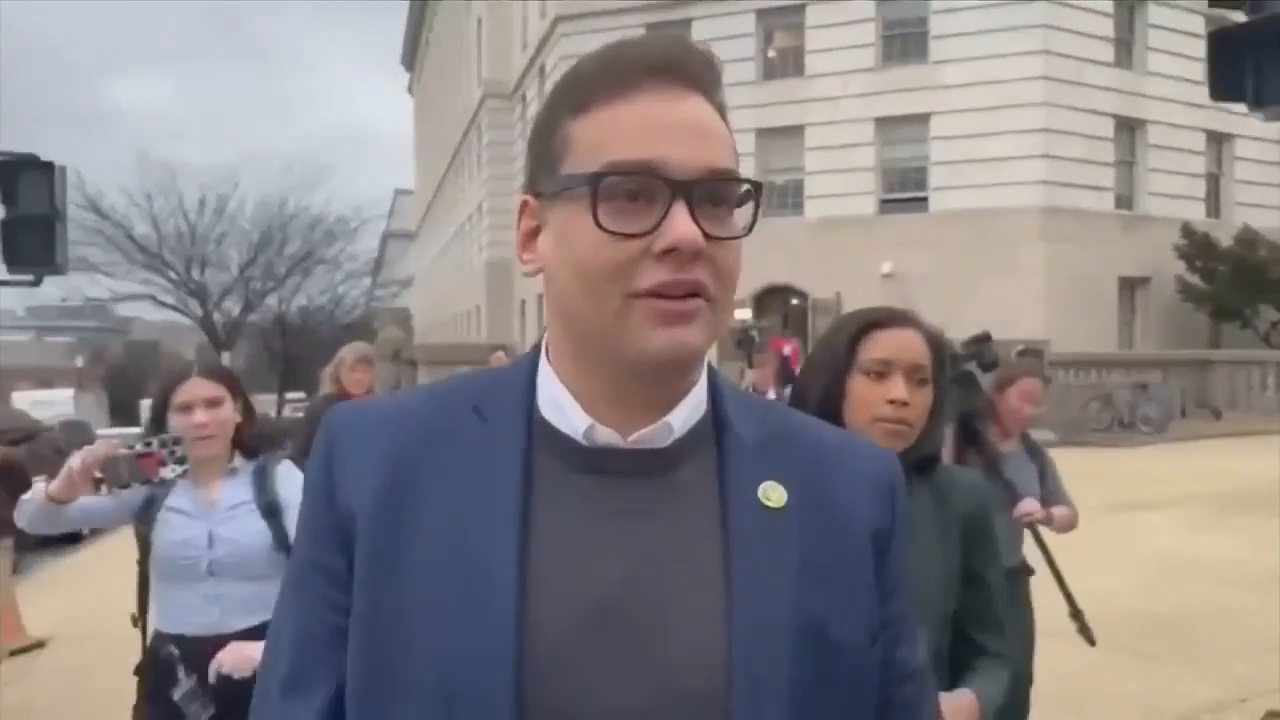
Trump says he has commuted sentence of former US Rep. George Santos in federal fraud case
NEW YORK (AP) — President Donald Trump announced Friday that he had commuted the sentence of former U.S. Rep. George Santos, who is serving more than seven years in federal prison after pleading guilty to fraud and identity theft charges.
The New York Republican was sentenced in April after admitting last year to deceiving donors and stealing the identities of 11 people, including his own family members, to make donations to his campaign. He reported to the Federal Correctional Institution in Fairton, southern New Jersey, on July 25, and is currently housed in a minimum security prison camp with fewer than 50 other inmates.
“I just signed a Commutation, releasing George Santos from prison, IMMEDIATELY,” Trump posted on his social media platform. “George Santos was somewhat of a ‘rogue,’ but there are many rogues throughout our Country that aren’t forced to serve seven years in prison,” he added.
Andrew Mancilla, one of Santos’ lawyers, expressed his satisfaction with the decision. “I am very, very happy with the decision,” Mancilla said Friday, though he noted it’s unclear at this point when Santos will be released. “The defense team applauds President Trump for doing the right thing,” he added. “The sentence was far too long.”
Santos has been in prison for 84 days. During his time behind bars, he has been writing regular dispatches in the local Long Island newspaper, The South Shore Press. In his latest letter, published October 13, Santos directly appealed to Trump, citing his loyalty to the president’s agenda and the Republican Party.
“Sir, I appeal to your sense of justice and humanity, the same qualities that have inspired millions of Americans to believe in you,” he wrote. “I humbly ask that you consider the unusual pain and hardship of this environment and allow me the opportunity to return to my family, my friends, and my community.”
A prominent former House colleague, U.S. Rep. Marjorie Taylor Greene, also urged the White House to commute Santos’ sentence. In a letter sent just days after Santos began his prison term, Greene called the punishment “a grave injustice” and a product of judicial overreach.
The judge in Santos’ case had agreed with federal prosecutors that a stiffer sentence was warranted because Santos did not appear remorseful, despite his and his lawyers’ claims to the contrary.
Santos’ commutation marks Trump’s latest high-profile act of clemency for former Republican politicians since resuming the presidency in January. In late May, he pardoned former U.S. Rep. Michael Grimm, a New York Republican who pleaded guilty in 2014 to underreporting wages and revenue at his Manhattan restaurant. Trump also pardoned former Connecticut Governor John Rowland, whose promising political career was derailed by a corruption scandal and two federal prison stints.
Trump himself was convicted last year in a New York court in a case involving hush money payments, which he dismissed as part of a politically motivated witch hunt.
Once considered an up-and-coming star for the GOP, Santos became the first openly gay Republican elected to Congress in 2022, flipping a House seat representing parts of Queens and Long Island. However, he served less than a year in office after it was revealed that he had fabricated much of his life story. This revelation prompted investigations into how the then-unknown politician had funded his winning campaign.
A son of Brazilian immigrants, Santos claimed he was a successful business consultant with Wall Street credentials and a sizable real estate portfolio. He later admitted he had never graduated from Baruch College, nor had he been a standout player on the school’s volleyball team, as he had claimed. He never worked at Citigroup or Goldman Sachs and was not Jewish, contrary to his claims. Santos insisted he meant he was “Jew-ish” because of his mother’s Jewish heritage, although he was raised Catholic.
In reality, the then-34-year-old Santos faced financial struggles and even risked eviction. In 2023, he was charged with stealing from donors and his campaign, fraudulently collecting unemployment benefits, and lying to Congress about his wealth. Within months, he was expelled from the U.S. House of Representatives — just the sixth member in history to be ousted by colleagues.
Santos pleaded guilty the following year just as he was set to stand trial.