
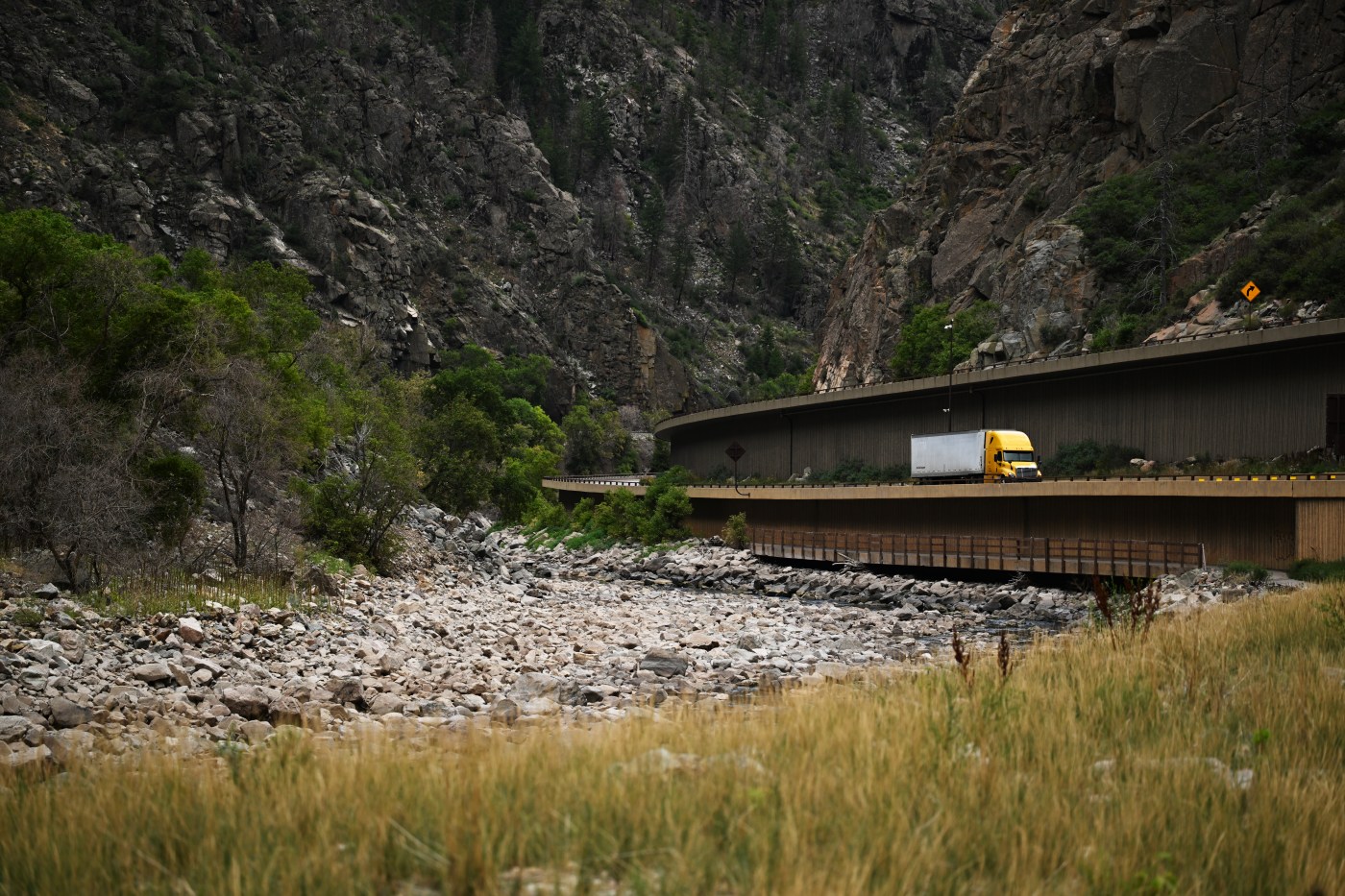
A yearslong effort to purchase two of the most powerful water rights on the Colorado River has cleared another hurdle after the state water board agreed to manage the rights alongside Western Slope water officials. The Colorado Water Conservation Board voted unanimously Wednesday night to accept the two water rights tied to the Shoshone Power Plant into its environmental flow program. The approval is a critical piece in the Colorado River District’s $99 million deal with the owner of the aging plant in Glenwood Canyon Xcel Energy but the deal has faced pushback from Front Range water providers that fear the change could impact their supplies. Backers of the deal aim to make sure the water now used by the small hydroelectric plant and then put back in the river will always flow westward. “The importance of today’s vote cannot be overstated as a legacy decision for Colorado water and the Western Slope,” Andy Mueller, general manager of the Colorado River District, said in a news release. “It secures an essential foundation for the health of the Colorado River and the communities it sustains.” Colorado water officials hailed the decision as a monumental achievement for the state that will help protect the river and its ecosystem. The state’s instream flow program allows the Water Conservation Board to manage dedicated water rights for the health of rivers, streams and lakes. “Acquiring the Shoshone water rights for instream flow use is a once-in-a-lifetime opportunity to preserve and improve the natural environment of the Colorado River,” Dan Gibbs, the executive director of the Colorado Department of Natural Resources, said in a news release. One of the main sticking points during the hourslong meeting Wednesday was whether the board should manage the water rights with the River District. That would include decisions on how and when to require upstream users like Front Range utilities to send more water downstream. Generally, the board is the sole manager of water rights in its instream flow program, which the Shoshone rights are now a part of. Several Western Slope entities said they would withdraw their financial support from the purchase if the Colorado River District was not allowed to co-manage the right with the board. Local governments and other organizations across the Western Slope promised more than $16 million toward the purchase. Front Range water providers argued that the statewide board is the sole authority that can manage such rights and should have final decision-making power. The water board instead approved the co-management strategy, which means that the two authorities will decide together how to act when there is not enough water to meet the right’s obligations. The Colorado River District a taxpayer-funded agency that works to protect Western Slope water wants to purchase the Shoshone rights to ensure that water will continue to flow west past the plant and downstream to the towns, farms and others who rely on the Colorado River, even if the century-old power plant were decommissioned. A stream of Western Slope elected officials, water managers and conservation groups testified in support of the deal and the rare opportunity it presented. “The Shoshone call is one of the great stabilizing forces on the river a heartbeat that has kept our valley farms alive, our communities whole and our economies steady even in lean years,” Mesa County Commissioner Bobbie Daniel said, urging the board to approve the plan. The meeting on Wednesday came after weeks of extensive mediation between the River District and Front Range entities. However, the representatives from opposite sides of the Continental Divide could not come to a consensus on a way forward. Representatives from Front Range utilities have said repeatedly that they supported the purchase as a whole, but they stated concerns about the purchase changing the status quo on the river. The water rights connected to the plant are the oldest major water rights on the main stem of the Colorado River, which means that they must be fulfilled before any rights established afterward. Those include more junior rights held by Front Range utilities to divert water from the river and bring it under the Continental Divide to their customers. The plant’s rights can command up to 1, 408 cubic feet of water per second year-round, or about 1 million acre-feet a year enough water for 2 million to 3 million households’ annual use. The Water Conservation Board’s approval is one of several that must be acquired by the River District. The deal now must go through the state’s water court and its Public Utilities Commission. Along with the $16 million coming from Western Slope entities, the district will pay $20 million and the Water Conservation Board allocated another $20 million. The financial plan also includes $40 million awarded under the federal Inflation Reduction Act by the Biden administration, but that money remains frozen as part of the Trump administration’s broad halt to spending by the previous president.
https://www.denverpost.com/2025/11/20/colorado-river-shoshone-water-rights-vote/
Tag: taxpayer-funded


Here’s How Obamacare Really Works, and It’s Disgusting
**It’s Been Over 15 Years Since Democrats Passed Obamacare — And the Promises Have Failed Miserably**
*By Matt Margolis | PJ Media | November 9, 2025*
It’s been more than 15 years since Democrats passed the Affordable Care Act, commonly known as Obamacare, under the promise that it would make healthcare more affordable for Americans. The public was assured that they would save money, keep their doctors, and finally benefit from a healthcare system that worked for them — not for big insurance companies.
Today, those promises look like a bad joke.
A recent post shared by our sister site Twitchy highlights the reality behind the Obamacare debacle and why it doesn’t actually serve the interests of everyday people. Instead, the system was built to enrich the healthcare industry — and the numbers prove it.
### How Obamacare Really Works
Here’s a rundown of how the system functions, if you can stomach learning how the sausage is made:
Each year, the federal government quietly funnels around $40 billion directly to insurance companies through cost-sharing reduction subsidies. These payments are disbursed automatically — there’s no congressional vote, no annual debate, and no accountability. The money just flows.
Meanwhile, everyday Americans continue to face sky-high deductibles and co-pays, often high enough to make anyone think twice before visiting a doctor. The supposed “affordability” of Obamacare is largely an illusion built on taxpayer-funded handouts that prop up corporate profits.
### Who Really Benefits?
Nonprofit hospitals, those institutions commonly waving the banner of community service, aren’t exactly struggling, either. They collect more than $125 billion each year in tax breaks due to their “nonprofit” status. This means they avoid paying property, income, and sales taxes — all while continuing to generate significant revenue from every direction.
Moreover, Medicare alone overpays these hospitals by roughly $28 billion annually. Hospitals also charge between 60% to 80% more than independent doctors for the exact same procedures.
### The Bottom Line
Instead of making healthcare affordable and accessible, Obamacare has largely become a means to enrich insurance companies and hospitals — leaving everyday Americans to shoulder the burden of high costs and limited access.
—
*Comments from readers on Free Republic:*
– **Rummyfan:** “They’re ALL traitors. Except maybe the kid.”
– **SaveFerris:** *(Luke 17:28)* “As it was in the days of Lot; they did eat, they drank, they bought, they sold…”
– **Crusty old prospector:** “Long past time they abolish the ACA.”
– **Round Earther:** 😀😃😄🤣🤣🤣🤣😛😜😝
*Disclaimer: Opinions posted on Free Republic are those of the individual posters and do not necessarily represent the opinion of Free Republic or its management. All materials posted herein are protected by copyright.*
https://freerepublic.com/focus/f-news/4351710/posts