

Which city has the best-maintained roads in the Bay Area? The wealthy Marin County suburb of Larkspur lays claim to that title, according to a new report from the Metropolitan Transportation Commission, a regional agency overseeing local transit systems. The city with the most potholes and bumpy streets? Vallejo, the only community in the region where road conditions are considered “poor,” according to the report. Overall, the transit agency found that the Bay Area’s 44, 000 miles of local roads are wearing down, with the typical stretch of roadway likely needing repairs soon. The report assigned each of the 110 cities and counties in the region a score on a 100-point scale. For the tenth year in a row, the Bay Area’s roads registered an average of 67, considered “fair.” “The good news is our cities and counties are continuing to hold the line against major deterioration,” the commission’s chair, Sue Noack, also the mayor of Pleasant Hill, said in a statement. “But the bad news is we’re still just as far away from bringing the regional average into the ‘very good’ range as we were a decade ago.” Affluent cities tend to rank higher in the report, with Larkspur, Palo Alto, Cupertino, Orinda and Hillsborough all scoring over 80, considered “very good.” That’s not always the case, however. As recently as 2017, Larkspur’s roads were rated “poor” in the annual roads report. But that changed with the city’s passage of two sales tax measures to help rehabilitate its 65 miles of streets. “When the community supported a sales tax measure in November 2017, the (city council) promised that the first thing it would do was fix the roads,” Larkspur City Manager Dan Schwarz said in an email. “It took five years to completely rehabilitate the system. The City is committed to maintaining this important asset. Our goal now is to make it hard to believe Larkspur ever had poor-quality roads.” Some funding for local roads also comes from the state and federal government, though they spend more on highway systems. Vallejo, with among the highest poverty rates in the Bay Area, ranked last with a score of 44. “Years of underfunding in the City of Vallejo has led to significant deterioration of city roads,” the Solano County Civil Grand Jury wrote in a report this year. To upgrade the crumbling streets, Vallejo voters approved a sales tax in 2022 to raise an estimated $18 million annually, with the majority of funds going toward road repairs. Vallejo officials did not respond to a request for comment on the city’s road maintenance efforts. Cities just above Vallejo in the rankings include wealthier communities such as Berkeley and Millbrae, as well as places with higher poverty rates, such as Richmond and Pittsburg revealing that healthier tax bases don’t necessarily translate to better roads. Of the Bay Area’s three largest cities, Oakland came in last with a score of 58, rating its roads as “at risk.” Despite the low score, city officials said they have made progress in fixing Oakland’s notorious pothole-filled streets in recent years, thanks to voter-approved bond measures that contribute to about $45 million a year for road maintenance. Earlier this year, the Alameda County Civil Grand Jury found that over a recent 18-month span, the city filled as many potholes around 85, 000 as it repaired in a 10-year span between 2008 and 2018. “We also know there’s more work ahead, especially on residential streets, which have historically received less maintenance than major corridors,” the Oakland Department of Transportation said in a statement. San Jose ranked above Oakland, with a score of 73, considered “good.” San Francisco scored a 75. Officials in San Jose said the city has maintained or repaved about 10% of its sprawling 4, 469 miles of local streets each year over the past eight years. They attributed the progress in part to a sales tax measure Santa Clara County voters approved in 2016, which has since raised $440 million for local roads across the South Bay. “Huge thank you to the city teams who have repaved over 60% of our roads since 2019 considering we’re the biggest city in Northern California, that’s quite a feat,” San Jose Mayor Matt Mahan said in a statement. More money could soon be available for road repairs. In November 2026, voters in the Bay Area’s five largest counties will decide on a massive transportation bond to raise about $1 billion annually aimed at bailing out the region’s struggling public transit agencies. If approved, about a third of the money would be available for flexible transportation spending, including targeted road repairs, with most of those funds going to Santa Clara County, according to Emily Loper, a senior vice president of public policy at the Bay Area Council, which is backing the bond measure. As part of an agreement to secure Santa Clara County officials’ support for the measure, the county would receive an expected $264 million in flexible funding. San Mateo County would see $50 million, Contra Costa County $26 million, and Alameda County $10 million. All of San Francisco’s funding would go to public transit. “I do expect a significant amount to go to roadway repairs,” the Bay Area Council’s Loper said.
https://www.eastbaytimes.com/2025/11/26/bay-area-roads-potholes-repairs/


Man Named Adolf Hitler Poised for Second Election Victory in Namibia: Should We Be Concerned?
A politician named Adolf Hitler is set to win another local election in Namibia comfortably. Yes, you read that correctly. And no, the name is not a stage persona, parody candidate, or internet stunt. It belongs to Adolf Hitler Uunona, a 59-year-old local politician whose very ordinary political career continues to collide with one of the most infamous names in history. As Uunona prepares to retain his seat on 26 November, the global response has ranged from mild confusion to full-blown alarm bells. But the man at the centre of the headline insists the story is far less sinister than it sounds. Who is Adolf Hitler Uunona? Uunona represents the left-wing Swapo party in northern Namibia, where he previously secured a landslide win with 85 per cent of the vote in 2020. His name first attracted worldwide attention after that victory and understandably led to a lot of questions. According to Uunona, his father simply did not understand the gravity of naming a child ‘Adolf Hitler,’ nor the horrors associated with it. In a past interview, the politician said he grew up believing it was just a normal name, only later realising the historical weight attached to it. ‘I have nothing to do with any of these things,’ he told the media, distancing himself entirely from the Nazi dictator. Even so, he keeps the name in official documents, calling it ‘too late’ to change. His wife calls him Adolf, but publicly, he avoids using the full name. In Namibia, once under German colonial rule, the name Adolf isn’t unusual, though Hitler definitely is. And it hasn’t helped that in 2020, a car in his region displaying the name ‘Adolf Hitler’ next to a swastika went viral online. Uunona denied owning it or having any connection to what he called a ‘sick stunt.’ Why His Re-Election Feels Surreal to the Rest of the World On paper, Uunona is simply a local politician doing his job. But his name inevitably changes how the story lands internationally. It forces people to confront an uncomfortable thought experiment: What if you had to go through life with a name synonymous with one of history’s greatest villains? Would anything from friendships to job opportunities be the same? That exact question is explored in Matt Ogens’ 2014 documentary ‘Meet the Hitlers,’ which profiles people around the world who share the name, either by accident or by choice. Some are ordinary individuals carrying an unfortunate legacy; others deliberately adopted the name for extremist reasons. What the film reveals is that identity, self-perception, and confidence heavily influence how each person copes. Ogens says the topic is inherently strange and emotionally complicated. For many with the name, life is a constant obstacle course of judgment, crank calls, wrong assumptions, and uncomfortable introductions. As one subject put it: ‘A name is just a name. It doesn’t define your heart.’ True, but it certainly raises eyebrows, especially when it appears on an election ballot. No, He’s Not A Nazi Given Uunona’s insistence that he has no ties, ideological or otherwise, to the dictator he shares a name with, the answer appears to be no. There’s no evidence suggesting extremist leanings, hidden agendas, or anything beyond a deeply unfortunate naming choice made decades ago. The real concern, if any, is symbolic. Moments like this expose how names carry cultural weight, historical memory, and emotional reactions far beyond their literal meaning. According to reports, Uunona may be nothing like the man whose name he bears, but every election cycle, he is reminded that the world never forgets. And so, as Namibia heads to the polls again, Adolf Hitler Uunona’s victory is seemingly secured not because of his name, but despite it.
https://www.ibtimes.com/man-named-adolf-hitler-poised-second-election-victory-namibia-should-we-concerned-3791380


Bitcoin Faces More Downside After Recent Crash, Data Shows
Christian’s journey with the written word began long before the age of Bitcoin. In the hallowed halls of academia, he honed his craft as a feature writer for his college paper. This early love for storytelling paved the way for a successful stint as an editor at a data engineering firm, where his first-month essay win funded a months-long supply of doggie and kitty treats a testament to his dedication to his furry companions Think Christian’s all work and no play? Not a chance! When he’s not at his computer, you’ll find him indulging his passion for motorbikes. A true gearhead, Christian loves tinkering with his bike and savoring the joy of the open road on his 320-cc Yamaha R3. Once a speed demon who hit 120mph (a feat he vowed never to repeat), he now prefers leisurely rides along the coast, enjoying the wind in his thinning hair. Speaking of chill, Christian’s got a crew of furry friends waiting for him at home. Two cats and a dog. He swears cats are way smarter than dogs (sorry, Grizzly), but he adores them all anyway. Apparently, watching his pets just chillin’ helps him analyze and write meticulously formatted articles even better. Here’s the thing about this guy: He works a lot, but he keeps himself fueled by enough coffee to make it through the day and some seriously delicious (Filipino) food. He says a delectable meal is the secret ingredient to a killer article. And after a long day of crypto crusading, he unwinds with some rum (mixed with milk) while watching slapstick movies. Looking ahead, Christian sees a bright future with NewsBTC. He says he sees himself privileged to be part of an awesome organization, sharing his expertise and passion with a community he values, and fellow editors and bosses he deeply respects. So, the next time you tread into the world of cryptocurrency, remember the man behind the words the crypto crusader, the grease monkey, and the feline philosopher, all rolled into one.
https://bitcoinethereumnews.com/bitcoin/bitcoin-faces-more-downside-after-recent-crash-data-shows/

Christian Leaders of USA (CLOUSA) supports Hurricane Melissa relief through Sandals Foundation partnership
Submitted byJohn McGowan Christian Leaders of USA, Inc. (CLOUSA) has announced its substantial support for humanitarian recovery efforts in Jamaica following Hurricane Melissa’s severe impact. Demonstrating a dedicated commitment to global aid, CLOUSA has channelled a monetary contribution to the Sandals Foundation, the non-profit arm of Sandals Resorts International, which is actively engaged in leading relief and rebuilding missions across the affected island nation. To continue reading this article.
https://unionsprings.news/christian-leaders-usa-clousa-supports-hurricane-melissa-relief-through-sandals-foundation


Mick Schumacher gives IndyCar contract clarity as he searches for a new “home” after F1
Mick Schumacher has given clarity on how long he intends to race in IndyCar, having joined Rahal Letterman Lanigan Racing for the 2026 season. The German racer will return to open-wheel racing, his first love, after over three years away since leaving F1 at the end of 2022. Ad His F1 debut was memorable because the initials ‘MSC’ returned to the timesheets for the first time in over a decade, since his father Michael Schumacher’s retirement in 2012. However, Mick Schumacher’s time at Haas wasn’t all flowery. After 43 F1 race starts, including a career-best P6 finish, he was let go from the American team. Schumacher’s time with Alpine in the World Endurance Championship in 2024 and 2025 was more rewarding, with three podiums in two seasons. However, his heart longed for a return to open-wheel racing, which IndyCar will fulfil in 2026, with him joining RLL on a one-year contract. Ad Trending In an interview on the Marshall Pruett podcast on YouTube, the No. 47 RLL driver was asked if he envisioned a future in IndyCar past 2026. “I wouldn’t say no to it,” the 26-year-old replied. “Obviously, I haven’t done the first race, or I haven’t done any sort of race yet. I’ve just done one test so far, so I wouldn’t be here if I didn’t think this was something that I want to do long-term. So I will start the season, see how it feels, and I’m sure if I feel the same way I feel right now, this definitely can be a home for a while.” Ad For Mick Schumacher, IndyCar was the next best thing after F1. He hopes it facilitates his dream of racing in a premier open-wheel racing series and proving his worth. “As a driver, I think you always want to compete in the best championship possible. In my case, obviously, F1 wasn’t possible, and I felt that IndyCar was the best thing where I could show my potential and do well, potentially. I’m just happy to be in this place now,” the German added. Ad IndyCar reminds Mick Schumacher of the “good old karting days” Mick Schumacher’s first experience of IndyCar with RLL at the Indianapolis Motor Speedway road course turned out to be exactly what both parties expected from the other. The feedback he received from a couple of other experienced IndyCar drivers about the wheel-to-wheel racing that the series offers also hit the right note. Ad IndyCar racing tends to be more competitive than F1, with ten times the overtakes across a full season. “Yeah, I think it (IndyCar) reminds me a little bit of good old karting days,” Schumacher said in a press conference on Tuesday. “I think pretty similar to how WEC racing was. There’s a lot of side-by-side and maybe a little touch here and there. From what I understand, the cars are pretty robust, as well, when it comes to side-by-side action, and I’ve talked to a couple other drivers, and they really enjoy the racing side of things.” Rahal Letterman Lanigan Racing has an extensive testing schedule planned for Mick Schumacher, with four oval tests, two road course tests, and a street course test before the first race of the 2026 season in St. Petersburg on March 1. × Feedback Why did you not like this content? Clickbait / Misleading Factually Incorrect Hateful or Abusive Baseless Opinion Too Many Ads Other Was this article helpful? Thank You for feedback Stay updated with the 2025 IndyCar schedule, standings, qualifying, results today, series news, and the latest IndyCar racing news all in one place. Edited by Yash Kotak.
https://www.sportskeeda.com/indycar/news-mick-schumacher-gives-indycar-contract-clarity-searches-new-home-f1

State focused on increasing attainable housing
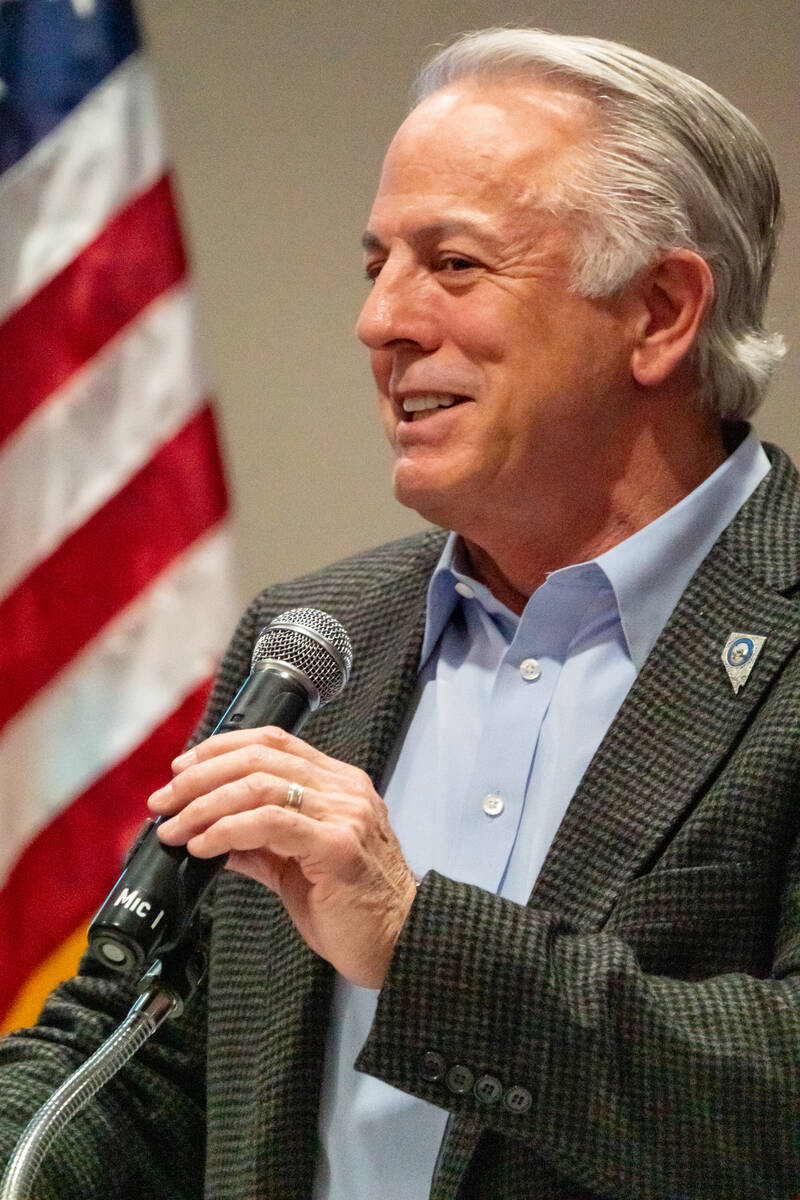
During the 2025 Nevada Legislative Session, state lawmakers passed Assembly Bill 540, a bill intended to ease the strain Nevadans are feeling due to the rising cost of housing. Titled the Nevada Housing Access and Attainability Act, AB540 met with unanimous approval in the state Assembly and a 15-6 vote in favor by the Nevada State Senate. The act led to the creation of the Nevada Attainable Housing Account in the State General Fund and, to oversee the administration and allocation of that fund, the Nevada Attainable Housing Council. “The act represents a bold, innovative and comprehensive approach to address our state’s housing challenges by lowering the cost of housing, expanding attainable housing options and eligibility for Nevada residents and eliminating barriers to development,” information from the Nevada Housing Division states. “The act appropriated $133 million to support the development and construction of new attainable homes; provide financial assistance for low- and moderate-income properties; aid in land acquisition for attainable housing development; provide homebuyer assistance for essential workers (including teachers, nurses and law enforcement); and match grants for local governments who commit to increasing the attainable housing supply,” the division details. “An additional $50 million in bonds will be issued to fund the Attainable Housing Infrastructure Account to help lower home prices and homebuyer assessments for attainable housing built in Special Improvement Districts and Special Assessment Districts by funding the infrastructure associated.” Another aspect of the act addresses the laws regarding contractor licensing in the state and a recent declaration from Nevada Gov. Joe Lombardo and the Nevada Dept. of Business and Industry has officially enacted these provisions in each of the state’s 15 rural counties, a major step forward in the implementation of the Housing Access and Attainability Act. “Information compiled by the Department of Business and Industry and Nevada’s rural counties reveal a significant shortage of skilled tradespeople and licensed contractors, a challenge that has slowed the construction of much-needed attainable housing,” a news release from the governor’s office stated. “The declaration removes unnecessary administrative barriers and introduces measures to make it easier for qualified contractors to operate in Nevada’s rural regions.” The news release highlighted an expansion of licensing reciprocity, which simplifies the process for contractors who are already licensed in another state seeking Nevada credentials, along with fee waivers for out-of-state contractors for a three-year period. Workforce mobility is also part of the act’s provisions, encouraging interstate cooperation to allow skilled workers to cross state lines more efficiently to meet rural construction demands, the governor’s office reported. The Declaration of Shortage of Skilled Labor or Licensed Contractors in Rural Areas of Nevada was issued on Nov. 4 and will remain in effect until the director of the Dept. of Business and Industry determines there is no longer a shortage that is impacting attainable housing in the state. “By enhancing licensing reciprocity for contractors, we can finally tackle the severe workforce shortages plaguing rural Nevada,” Lombardo remarked. “Local stakeholders have been urging us to cut through the red tape and eliminate unnecessary fees for years-this change is a long-overdue fix that will make a real difference.” For more information on the act visit Housing. NV. gov Contact reporter Robin Hebrock at rhebrock@pvtimes. com.
https://pvtimes.com/news/state-focused-on-increasing-attainable-housing-158155/

EUV laser-maker Trumpf explores quantum computing to improve laser tech
Trumpf, the manufacturer of the lasers used in ASML’s EUV chipmaking tools, is turning to quantum computing to explore new ways to optimize its lasers. Trumpf is teaming up with its partners from Fraunhofer ILT and the Dahlem Center at Freie Universität Berlin to explore whether modern quantum computers can indeed be used more effectively than today’s classical supercomputers. If quantum computers prove to be more efficient, they could improve next-generation CO2 laser systems. CO2-based laser units are widely deployed in semiconductor production (specifically in light sources for DUV and EUV lithography tools, such as those developed by Cymer for ASML’s NXE and EXE tools), the broader non-semiconductor industry, and silicon photonics used for connectivity. Hence, the group will explore two vectors of technology: typical industrial applications of CO2 lasers and the scientific direction of microscopic explorations. The initiative is supported with roughly €1. 8 million from Germany’s Federal Ministry of Education and Research. Quantum computing × Quantum mechanics Quantum computers may outperform classical supercomputers in modeling CO2 lasers because the physics of these lasers vibrational and rotational energy exchanges, molecular collisions, and population-inversion dynamics are inherently quantum-mechanical. Classic supercomputers tend to approximate these processes, since fully representing a many-state quantum system requires storing an exponentially growing number of amplitudes, which is becoming difficult for existing supercomputers that companies like Trumpf can access. Meanwhile, a quantum computer can represent quantum states natively: n qubits can encode a 2ⁿ-dimensional state space without using amounts of DRAM that limit classical simulations. This makes quantum hardware much better suited to simulate decoupled, many-body interactions that order gain, losses, and energy-transfer behavior inside CO2 lasers. As quantum machines mature in general, they could enable far more accurate predictions and faster optimization of industrial laser designs. Let’s give it a try? The main task of the first task force is to determine whether quantum hardware can handle complicated quantum-mechanical interactions that command how particles generate and amplify light. Fraunhofer ILT contributes its experience in simulating semiconductor devices, while the Dahlem Center provides expertise in describing molecular collision dynamics. A major technical component of the work involves translating established descriptions of energy-transfer behavior into forms suitable for quantum algorithms. Trumpf is developing the first versions of these quantum algorithms and coordinating their testing. One of the early targets is the set of processes governing CO₂-laser amplification, where accurate prediction of how energy moves between different molecular states is crucial for optimizing optical output and overall system performance. The researchers have started by reviewing current simulation methods and benchmarking early quantum approaches to see where they may offer advantages. Since today’s quantum computers are essentially prototypes and lack the robustness needed for large industrial workloads, the emphasis is on building the know-how required to exploit more capable quantum machines once they arrive. This includes validating whether certain parts of the laser-physics models can run more efficiently on quantum hardware than on conventional supercomputers. Another part of the plan is to use the improved understanding of microscopic behavior to guide future laser designs, from refining gain media to adjusting how pump sources interact with active materials. More accurate predictions could eventually lead to higher performance, reduced power consumption, or more compact devices, potentially impacting actual devices that use Trumpf’s lasers, including lithography tools. Last but not least, Trumpf notes that advances in CO₂-laser modeling enabled by quantum algorithms could lower the environmental impact of laser-based devices. Yet, given that the study is in its early stages of development, the actual impact of quantum computing on devices that use CO2 lasers is barely even imaginable at this point.
https://www.tomshardware.com/tech-industry/semiconductors/euv-laser-maker-trumpf-explores-quantum-computing-to-improve-laser-tech


WWE legend to turn heel for the first time and cost John Cena Intercontinental Title? Potential Survivor Series finish explored
At WWE Survivor Series 2025, John Cena will defend his Intercontinental Championship against Dominik Mysterio in a rematch.
https://www.sportskeeda.com/wwe/wwe-legend-turn-heel-first-time-cost-john-cena-intercontinental-title-potential-survivor-series-finish-explored
Delist Alibaba — And All Other China Companies by Gordon G. Chang
“Alibaba provides tech support for Chinese military ‘operations’ against targets in the U. S.” That is what a White House memo charges, according to a November 14 report in the Financial Times. The White House has declined comment. The Chinese giant reportedly provided “access to customer data that includes IP addresses, WiFi information and payment records, as well as different AI-related services.” Whether the FT report is accurate or not-it sounds accurate-it is time to delist Alibaba from the New York Stock Exchange and remove all other Chinese companies from U. S. stock listings. All of them are integral parts of a hostile regime assaulting America. As an initial matter, China’s embassy in Washington denied the accuracy of the White House memo and charged the U. S. with a “complete distortion of facts.” The embassy claims that China protects privacy. Alibaba was more emphatic. “The assertions and innuendoes in the article are completely false,” the company told CNBC. “We question the motivation behind the anonymous leak, which the FT admits that they cannot verify.” For one thing, the denials of the embassy cannot possibly be true. There are no real privacy protections in China’s total surveillance society. The Communist Party of China runs a unitary state and demands absolute obedience from all individuals, businesses, and institutions in the country. Businesses operate as separate entities and report to separate controlling government bodies, but they are not separate. Washington must stop assuming that Chinese society is organized the same way as America’s. All Chinese entities-businesses or institutions of any type-should, therefore, be treated as one single organization, the way the Party views them. Xi Jinping reinforces this view with his doctrine of “military-civil fusion.” In other words, the People’s Liberation Army has access to everything any Chinese company, state-owned or privately owned, or Chinese institution possesses. “The Chinese Communist Party has exceeded the extreme lengths taken by the Soviet Communist Party to integrate and subordinate its ‘civilian economy’ to serve the larger goals of its ‘military economy,’” Richard Fisher of the International Assessment and Strategy Center told Gatestone this month. “All Chinese companies, factories, universities, and local governments either directly or indirectly support the military.” The fundamental problem is that free-market societies do not understand the nature of totalitarian ones and, as a consequence, do not protect themselves as they should. “Even Wendell Willkie, the 1940 Republican presidential candidate and globalist foreign policy icon, understood it was perilous to integrate market economies with state-directed ones,” Alan Tonelson, referring to the work of American economist Benn Steil, told this publication. “This integration, Willkie believed, distorts production and trade flows, finishes off enterprises in free-market economies, fuels imbalances, and ultimately breeds resentment.” “Tragically, for America’s economy and national security, Willkie’s successors completely neglected his warning in their rush first to reestablish normal trade relations with Communist China and then admit it to the World Trade Organization,” Tonelson, who blogs on the intersection of trade and geopolitics at RealityChek, added. Willkie was prescient. China’s predatory and criminal trade practices created imbalances that accelerated the 2008 global downturn and, more importantly, eroded support for free trade. Moreover, China’s relentless gaming of the global trading system has given the worst elements in the Chinese political system the resources to accomplish their predatory ends. Did Alibaba in fact support the Chinese military as the White House memo charges? Only those with access to classified information know. Yet the truth of the White House’s charge does not matter. What matters is that Alibaba is part of the Communist Party’s system. The Party has declared the United States to be its enemy and is now waging its brand of “people’s war,” which the Chinese military defines as “total war.” The regime, although it denies employing “Unrestricted Warfare” tactics against America, is in fact doing so every day. In these circumstances, it is strategically wrong to support any element of a system that is assaulting the free world in general and the United States in particular. It is also morally wrong to do so. It is time to delist Alibaba and all other Chinese companies from American stock exchanges and to prohibit Americans from doing business with any of them. All of them are America’s enemies.
http://www.ruthfullyyours.com/2025/11/26/delist-alibaba-and-all-other-china-companies-by-gordon-g-chang/


Form 8.5 (EPT/RI) – Inspecs Group Plc
FORM 8. 5 (EPT/RI) PUBLIC DEALING DISCLOSURE BY AN EXEMPT PRINCIPAL TRADER WITH RECOGNISED INTERMEDIARY STATUS DEALING IN A CLIENT-SERVING CAPACITY Rule 8. 5 of the Takeover Code (the “Code”) 1. KEY INFORMATION (a) Name of exempt principal trader: Shore Capital Stockbrokers Ltd(b) Name of offeror/offeree in relation to whose relevant securities this form relates: Use a separate form for each offeror/offereeInspecs Group Plc(c) Name of the party to the offer with which exempt principal trader is connected: Inspecs Group Plc(d) Date dealing undertaken: 25 November 2025(e) Has the EPT previously disclosed, or is it today disclosing, under the Code in respect of any other party to this offer? No 2. DEALINGS BY THE EXEMPT PRINCIPAL TRADER (a) Purchases and sales Class of relevant securityPurchases/ sales Total number of securitiesHighest price per unit paid/receivedLowest price per unit paid/receivedOrdinaryPurchasesN/AN/AN/AOrdinarySales5, 00072p72p (b) Derivatives transactions (other than option) Class of relevant securityProduct description e. g. CFDNature of dealing e. g. opening/closing a long/short position, increasing/reducing a long/short positionNumber of reference securitiesPrice per unit (c) Options transactions in respect of existing securities (i) Writing, selling, purchasing or varying Class of relevant securityProduct description e. g. call optionWriting, purchasing, selling, varying etc. Number of securities to which option relatesExercise price per unitType e. g. American, European etc. Expiry dateOption money paid/ received per unit (ii) Exercising Class of relevant securityProduct description e. g. call optionNumber of securitiesExercise price per unit (d) Other dealings (including subscribing for new securities) Class of relevant securityNature of dealing e. g. subscription, conversionDetailsPrice per unit (if applicable) The currency of all prices and other monetary amounts should be stated. Where there have been dealings in more than one class of relevant securities of the offeror or offeree named in 1(b), copy table 2(a), (b), (c) or (d) (as appropriate) for each additional class of relevant security dealt in. 3. OTHER INFORMATION (a) Indemnity and other dealing arrangements Details of any indemnity or option arrangement, or any agreement or understanding, formal or informal, relating to relevant securities which may be an inducement to deal or refrain from dealing entered into by the exempt principal trader making the disclosure and any party to the offer or any person acting in concert with a party to the offer: If there are no such agreements, arrangements or understandings, state “none” None (b) Agreements, arrangements or understandings relating to options or derivatives Details of any agreement, arrangement or understanding, formal or informal, between the exempt principal trader making the disclosure and any other person relating to: (i) the voting rights of any relevant securities under any option; or (ii) the voting rights or future acquisition or disposal of any relevant securities to which any derivative is referenced: If there are no such agreements, arrangements or understandings, state “none” None Date of disclosure: 26 November 2025Contact name: Justin BallTelephone number: 0207 601 6116 Public disclosures under Rule 8 of the Code must be made to a Regulatory Information Service and must also be emailed to the Takeover Panel at monitoring@disclosure. org. uk. The Panel’s Market Surveillance Unit is available for consultation in relation to the Code’s dealing disclosure requirements on +44 (0)20 7638 0129. The Code can be viewed on the Panel’s website at www. thetakeoverpanel. org. uk.
https://www.globenewswire.com/news-release/2025/11/26/3194928/0/en/Form-8-5-EPT-RI-Inspecs-Group-Plc.html