Crime that unsettles

Netflix has released the second chapter of its *Monsters* anthology, *The Lyle and Erik Menendez Story*, a dramatization that revisits a case that has remained part of American popular culture for more than three decades. The series focuses on the 1989 murders of Jose and Kitty Menendez by their two sons, Lyle and Erik, and the subsequent trials that became a national spectacle.

The production raises uncomfortable questions about privilege, secrecy, and abuse, concentrating not only on the violence itself but also on the social environment that shaped the brothers. Across nine episodes, the story unfolds in a strictly chronological order. It uses alternating perspectives, shifting between the courtroom, the family home, and the media frenzy that surrounded the brothers. This approach keeps the narrative tense while reflecting the fragmented way the public encountered the case during the early 1990s.

By doing so, viewers are constantly reminded that the truth is both layered and contested, heightening the unease that defines the series from start to finish.

At the center of the production are the performances of Nicholas Alexander Chavez as Lyle Menendez and Cooper Koch as Erik Menendez. Chavez captures the intensity and defiance of the elder brother, while Koch conveys the fragility and self-doubt of the younger sibling. Together, they create a portrait of two young men deeply tied to one another yet burdened with conflicting emotions about their parents and themselves. The bond between the brothers—carrying both tenderness and despair—feels authentic, making the story resonate on a deeply human level.

What sets this production apart from other true crime dramatizations is its refusal to offer clear answers. The series does not suggest whether the brothers should be viewed as cold-blooded killers or victims of long-term abuse. Instead, it presents evidence, perspectives, and memories, leaving viewers to wrestle with the contradictions. This openness invites a more thoughtful engagement, acknowledging the complexity of the case rather than simplifying it.

Javier Bardem delivers a commanding performance as Jose Menendez, portraying him as a man driven by ambition and a desire for control. His presence dominates the household scenes, embodying both the promise of success and the fear it instilled in his children. Chloe Sevigny plays Kitty Menendez with a mix of vulnerability and volatility, suggesting a woman caught between dependence and resentment.

Their portrayals ensure that the parents are seen not merely as victims but as flawed individuals with their own contradictions. This nuance prevents the narrative from descending into moral simplicity.

The dialogue throughout the series is precise and effective. Courtroom exchanges are brisk yet intense, while domestic scenes often rely on silences and hesitations that carry as much weight as spoken words. This balance allows viewers to experience both the noise of public spectacle and the quiet pain of private life, building tension through subtlety rather than melodrama. The resulting atmosphere is deeply unsettling and compelling.

One of the show’s most challenging aspects is its depiction of abuse. The series neither sensationalizes nor obscures it. By presenting detailed accounts, the show forces viewers to confront the disturbing claims that shaped the brothers’ defense. Whether or not these accounts are accurate matters less than the impact they have on the viewer. The series effectively conveys how trauma can remain hidden in families that outwardly appear secure and successful. This thematic choice makes the series difficult to watch but also contributes to its lasting impression.

The supporting cast enriches the production further. Ari Graynor as defense attorney Leslie Abramson demonstrates both empathy and strategic determination, while Nathan Lane as journalist Dominick Dunne highlights the media’s role in shaping public perception of the case. Their performances add important dimensions, reminding viewers that the Menendez story was never just about the family but became part of a larger conversation about wealth, justice, and the spectacle of televised trials.

As a viewing experience, *The Lyle and Erik Menendez Story* is demanding. It is not casual entertainment—it requires attention, patience, and a willingness to endure disturbing material. However, it rewards that effort with a portrayal that is both emotionally powerful and intellectually engaging.

Combining strong performances with thoughtful storytelling, the series unsettles rather than comforts and questions rather than simplifies. It succeeds precisely because it avoids sensational shortcuts, presenting a disturbing family tragedy with honesty and care. The show creates a complex picture rather than a caricature.

For viewers prepared to sit with discomfort, *The Lyle and Erik Menendez Story* offers an absorbing portrayal of one of the most notorious cases in American criminal history and serves as a reminder that beneath the public spectacle often lies private pain.
https://www.thenews.com.pk/tns/detail/1346827-crime-that-unsettles-in-1989-two-brothers
Bagram back in play

If Afghanistan doesn’t return Bagram Airbase to those who built it—the United States of America—bad things are going to happen, warned former US President Donald Trump.

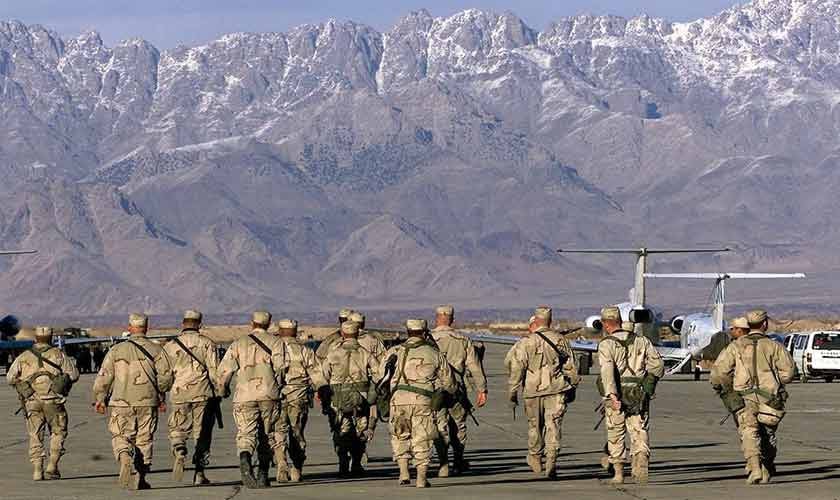
Bagram Airbase, the largest US military site in Afghanistan, has been described as the “original sin” of the evacuation in *Left Behind*, the US Senate Committee on Foreign Relations minority report released in February 2022. President Trump recently reiterated his intention to regain control of Bagram during his state visit to the UK. However, this isn’t the first time he has brought up the issue.

When the US withdrew from Afghanistan in 2021, many Republicans criticized the Biden administration for not retaining Bagram Airbase. They argued that the US could have at least kept control of this crucial facility. From this standpoint, Trump’s focus on Bagram makes sense, as it addresses a grievance among his supporters regarding the previous administration’s handling of the US exit, explains Dr. Paul Poast, Deputy Dean of Doctoral Education, Social Science Division, and Associate Professor in the Department of Political Science at the University of Chicago.

Trump has claimed that the US effectively “gave the Taliban Bagram for nothing.” It is important to recall, however, that the decision to withdraw US forces was based on an agreement struck in 2020 during Trump’s first term, with the withdrawal itself completed under President Joe Biden in 2021.

According to *Left Behind*, Secretary of Defense Lloyd Austin defended the decision to vacate Bagram during testimony before the House Armed Services Committee. Austin argued that maintaining the airbase would have required putting as many as 5,000 US troops in harm’s way just to operate and defend the facility.

In March, speaking to the BBC, Trump shared that his desire to retain Bagram Airbase was not primarily about Afghanistan, but about countering China. During a press conference on his UK state visit alongside British Premier Keir Starmer, Trump emphasized the strategic importance of Bagram, saying, “It’s an hour away from where China makes its nuclear weapons.”

What Trump referred to is most likely China’s Lop Nur nuclear testing site located in the desert of the Xinjiang Uyghur Autonomous Region. Under the Doha Agreement, however, the United States pledged not to use or threaten force against the territorial integrity or political independence of Afghanistan, nor interfere in its internal affairs.

Professor Poast notes that having access to the Bagram Airbase could be quite useful for the US. It would enhance American capabilities to conduct operations in or near China—as Trump himself indicated—and Iran. This suggests that Trump might have recognized the broader value of maintaining a strong US global military presence.

A BBC Verify investigation conducted in July found that the nuclear testing facility lies roughly 2,000 km away in northwestern China. After reviewing 30 satellite images from late 2020 through 2025, the investigation found minimal activity at the base since the Taliban’s return and uncovered no evidence of any Chinese military presence there.

Zabihullah Mujahid, the chief Taliban spokesman, addressed the issue on X (formerly Twitter), urging Washington to pursue realism and rationality rather than repeating past mistakes. He reaffirmed that the Islamic Emirate prioritizes Afghanistan’s independence and territorial integrity in all bilateral negotiations with the United States.

Mujahid emphasized that, under the Doha Agreement, the US pledged not to use force against Afghanistan’s sovereignty or interfere in its internal affairs. Therefore, the Taliban expects Washington to remain faithful to these commitments and adopt a policy grounded in realism and rationality instead of repeating failed approaches.

The regional implications of any attempt by the US to re-establish its presence at Bagram could be significant. Neighboring countries should be cautious of the potential consequences. Pakistan, which has recently risen in prominence and walks a fine geopolitical balance between the US and China, must be particularly wary of an American base in the region.

Furthermore, Pakistan and Saudi Arabia are now bound by a landmark Strategic Mutual Defence Agreement, which treats an attack on either country as an attack on both. The world is watching closely, and some Arab nations may enter into similar mutual defense deals.

The re-establishment of a US presence at Bagram Airbase could force Pakistan into a perilous geopolitical tightrope, caught between its alliances and regional security concerns. The situation remains complex, and the international community awaits developments with keen interest.
https://www.thenews.com.pk/tns/detail/1346842-bagram-back-in-play

2025 SkS Weekly Climate Change & Global Warming News Roundup #39

Climate Change: Common Arguments

  • Climate’s changed before
  • It’s the sun
  • It’s not bad
  • There is no consensus
  • It’s cooling
  • Models are unreliable
  • Temperature record is unreliable
  • Animals and plants can adapt
  • It hasn’t warmed since 1998
  • Antarctica is gaining ice

View All Arguments

User Access


New? Register here | Forgot your password?


Latest Posts

  • 2025 SkS Weekly Climate Change & Global Warming News Roundup #39
    Skeptical Science New Research for Week #39 2025
  • The Cartoon Villain’s Guide to Killing Climate Action
    Fact brief
  • Has the IPCC overestimated climate change impacts?
    Koonin providing clarity on climate?
    What you need to know about AI and climate change
  • 2025 SkS Weekly Climate Change & Global Warming News Roundup #37
    Skeptical Science New Research for Week #37 2025
  • The Fix is In
    Fact brief
    Has Arctic sea ice recovered?
    The merchants of doubt are back
  • 2025 SkS Weekly Climate Change & Global Warming News Roundup #36
    Skeptical Science New Research for Week #36 2025
  • Climate Adam: The Dumbest Climate Denial Ever?
    Fact brief
    Is global warming actually happening?
    Climate Sensitivity 2025
  • 2025 SkS Weekly Climate Change & Global Warming News Roundup #35
    Skeptical Science New Research for Week #35 2025
  • Another pause?
    The surprising reasons floods and other disasters are deadlier at night
    Record solar growth keeps China’s CO2 falling in first half of 2025
  • 2025 SkS Weekly Climate Change & Global Warming News Roundup #34
    Fact brief
    Are surface temperature records reliable?
    Skeptical Science New Research for Week #34 2025
  • Getting climate risk wrong

2025 SkS Weekly Climate Change & Global Warming News Roundup #39

Posted on 28 September 2025 by BaerbelW, John Hartz, Doug Bostrom

A listing of 27 news and opinion articles we found interesting and shared on social media during the past week: Sunday, September 21, 2025 thru Saturday, September 27, 2025.

Stories We Promoted This Week, by Category:

Climate Change Impacts

  • Has the IPCC overestimated climate change impacts?
    The Intergovernmental Panel on Climate Change compiles the consensus of thousands of models, and many independent lines of research suggest its estimates were more conservative than what was subsequently observed.
    Skeptical Science, Sue Bin Park, Sep 23, 2025
  • Trump delivers dumbest climate speech of all time
    The president’s easily-debunked 10-minute climate tirade at the U.N. was so stupid and unoriginal, it was actually kind of funny.
    HEATED, Emily Atkin, Sep 24, 2025
  • Tackling Climate Change Helps Every Human on the Planet, Says Scientist
    Newsweek, Gemma Watson, Sep 25, 2025
  • News roundup: Scientists challenge misleading Department of Energy climate report
    “The report received nearly 60,000 comments, some of which were written by climate scientists whose work was misrepresented.”
    News Roundup, Yale Climate Connections, SueEllen Campbell, Sep 25, 2025

Miscellaneous

  • Relaunching the Climate Litigation Database: Tracking the Law in a New Era
    Climate Law Blog, Maria Antonia Tigre and Margaret Barry, Sep 25, 2025
  • Nations deliver new climate targets ahead of climate summit
    With just weeks to go until the international climate conference, nations are stepping up to submit new climate targets for 2035. But will they be enough to prevent a climate catastrophe?
    Climate, Deutsche Welle
  • Why we must reframe climate change as a human problem, not a planetary one
    World Economic Forum (WEF), Gaurav Sharma & Avi Aggarwal, Sep 25, 2025

Thanks! 0 0

Printable Version | Link to this page

https://skepticalscience.com/2025-SkS-Weekly-News-Roundup_39.html

History’s unanswered questions

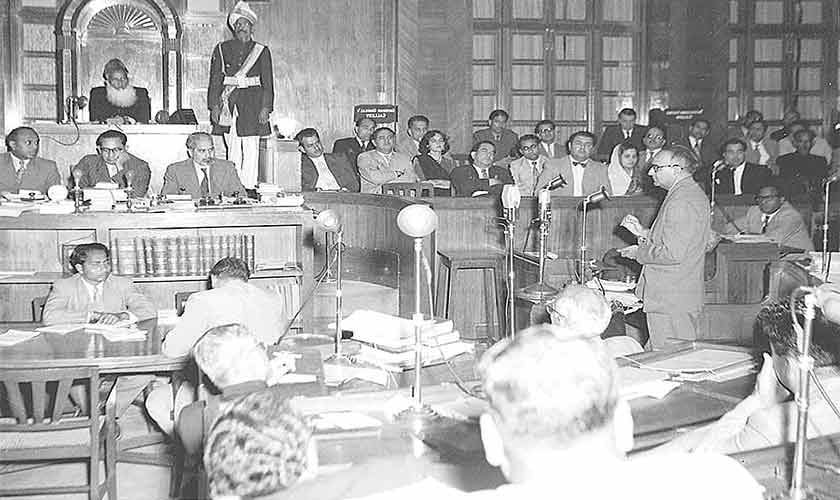
The creation of Pakistan, the Two-Nation Theory proposes, shows that Hindus and Muslims are separate nations incapable of coexisting. This claim prompts several important inquiries:

1. What was the significant role of the Muslim-majority provinces in the establishment of Pakistan?
2. What motivated Jogendranath Mandal, a Dalit leader from Bengal, to advocate for the establishment of Pakistan?
3. What were the reasons for Abul Ala Maududi and other prominent Islamic religio-political parties to oppose the Pakistan Movement?
4. What factors contributed to the separation of East Pakistan from West Pakistan within 24 years?
5. What factors contributed to the nine-year duration required to establish Pakistan’s first constitution, given that the implementation of Islamic laws could have been initiated sooner?
6. What were the reasons behind Quaid-i-Azam Muhammad Ali Jinnah’s appointment of Jogendranath Mandal as the inaugural chairman of the Constituent Assembly and subsequently as the first minister for law and labour?

Let us try to address these important questions.

### The Role of Muslim-Majority Provinces in Pakistan’s Formation

The contribution of Muslim-majority provinces, especially Punjab, to the establishment of Pakistan has been extensively studied in academic literature. Historians examining Pakistani nationalism contend that Punjab’s strategic significance during the Pakistan movement played a crucial role in the All-India Muslim League’s (AIML) success in the 1945-46 general elections.

During the 1946 elections in Punjab, the AIML won 73 of the 175 seats — all 73 were Muslim seats. These seats were secured primarily by notable landlords who allied themselves with the AIML. It has been suggested that this partnership was more a landlord-protection strategy against potential land reforms proposed by the Indian National Congress rather than purely religious nationalism.

Khyber Pakhtunkhwa, formerly known as the North-West Frontier Province, stood out as India’s sole Muslim-majority province without a Muslim League cabinet. Its government strongly resisted the formation of Pakistan, highlighting the complex regional dynamics involved.

### Jogendranath Mandal and Dalit Participation in the Pakistan Movement

Bengali Hindus, notably Dalits under the leadership of Jogendranath Mandal, joined the Pakistan Movement expecting a new political framework addressing systemic inequalities. The caste system curtailed individual freedom, while Islamic equality offered an alternative vision of social justice.

Their participation illustrates a Marxist perspective on class struggle — where the downtrodden seek emancipation through structural and social change, rather than religion or nationalism alone. This suggests that social status challenges, rather than merely religious identification, drove some demand for a new state.

Religion did help gain support in some areas, but the movement’s core struggle was social. Many participants linked the idea of Pakistan simultaneously to religious identity and resistance against colonial and feudal oppression.

### Opposition from Jamaat-i-Islami and Abul Ala Maududi

The Jamaat-i-Islami, led by Abul Ala Maududi, opposed the partition of India because they viewed it as contradictory to the concept of the ummah — the worldwide community of Muslims. Maududi argued that dividing the subcontinent along arbitrary physical borders could weaken the spiritual and cultural ties between Muslims.

For Jamaat-i-Islami, partition was not just a political division but a split of a group’s religious and cultural identity, thereby challenging the very idea of the ummah’s unity.

### Factors Leading to the Separation of East Pakistan in 1971

Many scholars argue that the establishment of Bangladesh, or the separation of East Pakistan from West Pakistan within 24 years, resulted from multiple factors.

Long-term causes include the mistreatment of the Bengali language and provincial autonomy issues. Short-term factors involved the results of the 1970 general elections. Immediate triggers such as the Searchlight Operation and the involvement of foreign powers like India and the USSR also played significant roles.

This multi-causal interpretation contrasts with the often mono-causal narratives about the 1947 partition. A comparative analysis of both partitions, using a consistent theoretical and methodological framework, could provide a more thorough understanding of these complex historical events.

### Delayed Constitution and Debates Over Pakistan’s Political Structure

From its inception rooted in the Two-Nation Theory, Pakistan faced questions regarding the implementation of Islamic laws and the nation’s governance structure.

The nine-year delay in establishing Pakistan’s first constitution sparked debates on crucial issues such as:

– Whether the state should be theocratic or secular
– Parliamentary versus presidential democracy
– Federal versus unitary system
– The division of power between a strong federation and autonomous provinces
– Whether the legislature should be bicameral or unicameral

These discussions reflect the complexities involved in shaping Pakistan’s identity and political institutions in its early years.

### Quaid-i-Azam’s Appointment of Jogendranath Mandal

Quaid-i-Azam Muhammad Ali Jinnah appointed Jogendranath Mandal, a Hindu Dalit leader, as the inaugural chairman of the Constituent Assembly and later as the first minister for law and labour.

This appointment prompts critical examination, especially considering the Two-Nation Theory underpinning Pakistan’s creation. Choosing a Hindu for such prominent roles in a newly formed Muslim state raises questions about the practical understanding and application of the theory.

### Conclusion

Analyzing these questions reveals that Pakistan’s creation in 1947, much like the formation of Bangladesh in 1971, was shaped by a complex array of interconnected factors rather than a singular cause.

Both partitions merit examination through a unified analytical framework to better comprehend the intricate social, political, and cultural dynamics at play.

Moreover, the foundation of Pakistan can also be linked to class struggle, especially in Bengal, rather than being driven solely by religious nationalism. Marginalized and disenfranchised groups sought better living conditions within a vision of an Islamic socialist state, reflecting broader aspirations that mobilized various segments of society during the Pakistan Movement.
https://www.thenews.com.pk/tns/detail/1346769-historys-unanswered-questions

NBA: Blazers guard Scoot Henderson injures hamstring, out 4-8 weeks

Portland Trail Blazers guard Scoot Henderson has suffered a left hamstring injury and will be sidelined for four to eight weeks. The team announced on Friday that Henderson sustained the injury during an offseason workout.

This setback comes just as the Trail Blazers are preparing to open training camp next week, impacting their plans for the upcoming season.

READ: [NBA: Portland Trail Blazers reportedly find buyer]
https://sports.inquirer.net/642159/nba-blazers-guard-scoot-henderson-injures-hamstring-out-4-8-weeks

Symbols of offering

Every year, during the Islamic month of Rabi al-Thani, devotees of Abdul Qadir Gilani gather on the banks of the Ravi River to take part in a meaningful and symbolic ritual. They launch paper boats carrying lighted clay lamps and other symbolic offerings into the river.

This tradition serves as a way for devotees to make wishes or to express gratitude after their wishes have been granted. The practice is an integral part of the celebrations of the Sufi saint’s Urs, which commemorates the death anniversary.

The Urs of Abdul Qadir Gilani, known as the Gyarwin Shareef, falls on the 11th of Rabi al-Thani. It is a significant spiritual event marked by devotion, reflection, and community gatherings along the Ravi River.
https://www.thenews.com.pk/tns/detail/1346831-symbols-of-offering

‘We were back to zero’: Triptii recalls ‘Laila Majnu’ failure

**‘We were back to zero’: Triptii Dimri recalls ‘Laila Majnu’ failure**

*By Isha Sharma | Sep 28, 2025, 10:03 AM*

Triptii Dimri, who made her lead debut in the 2018 romantic drama *Laila Majnu*, recently opened up about the film’s initial box office failure in an interview with *Filmfare*. Despite receiving positive reviews, the movie, which also starred Avinash Tiwary, underperformed commercially.

“When the film did not do well, I felt very disappointed because we were back to zero,” Dimri shared, reflecting on the setback.

### Dimri’s Empathy for Co-star Avinash Tiwary

Dimri expressed particular concern for her co-star Avinash Tiwary, who had been in the industry much longer. “I had been around for at least two years, but Avinash Tiwary had been here for 14 years,” she said. “Then we started giving auditions again, and I felt bad for him.”

Despite the initial disappointment, Triptii remained optimistic about the film’s long-term appeal and impact on audiences.

### The Film’s Journey: From Failure to Cult Classic

Though *Laila Majnu* struggled at the box office during its original release, it eventually garnered a huge following and achieved cult status. In 2024, the film was re-released and became a commercial success, surpassing the lifetime collections of its initial run.

“I knew it would receive appreciation, because even today, eight years after its release, people still talk about it,” Dimri remarked.

### Behind the Scenes of *Laila Majnu*

Triptii also reflected on the challenging yet rewarding experience of filming *Laila Majnu*. “There were many challenges on a day-to-day basis because we were shooting in the valleys of Kashmir for 20 or even 24 hours at a stretch,” she recalled.

“Many times, I cried during that period, wondering what I was doing, because none of it was easy.”

Despite these difficulties, Dimri considers *Laila Majnu* to be a special film that taught her a lot about acting and shaped her career.
https://www.newsbytesapp.com/news/entertainment/triptii-dimri-talks-impact-of-laila-majnu-box-office-failure/story

Soundcheck: What Struck A Chord

Music plays a central role in life, culture, and counterculture. Research shows that listening to music reduces stress hormones, slows the heart rate, and improves mood. It is a simple way to cope with everyday pressures. People turn to music when they want to manage anxiety, recover from grief, sharpen focus while studying, or stay motivated irrespective of their goals.

The act of singing or playing an instrument stimulates brain activity, strengthens memory, and builds discipline. It also creates new pathways within the brain and generates new neurons, which is important because it can protect against diseases of the mind that have no cure once the onset begins. Playing an instrument is a skill that carries over to other areas of life. A familiar melody can unlock memories and help us express emotions that some individuals can’t articulate. It’s almost like magic that a single song can transport you back to a specific moment in time.

Beyond individual well-being, music acts as social glue that binds communities together. Shared playlists, family gatherings, weddings, and live concerts create spaces where people connect and celebrate together. These shared experiences foster joy and empathy. Feelings of love, loss, and many other emotions become easier to deal with and find expression in ways that language alone sometimes struggles to match. Even the simple act of exchanging song recommendations can deepen friendships.

Culturally, music preserves history and identity in ways that textbooks simply cannot. In Pakistan, centuries-old folk songs pass down stories of place, language, and folklore. They keep a variety of traditions alive from Sindh to Gilgit-Baltistan. These songs carry the voices of our ancestors—their struggles, celebrations, and dreams. Qawwali, for instance, can open a spiritual door, particularly when all others fail. It is an expression of divine will and consequently lifts the soul.

Meanwhile, contemporary genres such as hip-hop, pop, and electronic music give younger generations a platform to reflect on modern realities and global influences. Streaming services like Spotify and YouTube have widened this reach dramatically. They allow regional artists to find audiences far beyond their own regions. The rules of geography and man-made borders take a backstage. They also make it easier for listeners to explore both ancestral sounds and cutting-edge trends.

Whether ancient or modern, personal or collective, music remains a universal language that speaks to everyone, regardless of background or belief. National shows such as Pakistan Idol add another layer by uncovering hidden singers and giving them a stage to be heard. This serves as a reminder that talent exists everywhere, not just in big cities. These platforms give a chance to extraordinary voices emerging from the most unexpected places—small towns as well as bustling neighborhoods.

### 313 Productions to Produce Pakistan Idol as It Enters Phase 2 with Record Participation

HL Global has named 313 Productions as the official producing partner of Pakistan Idol, with seasoned producer Badar Ikram at the helm. The show is set to premiere today, a date that means a great deal to music fans across the country.

Badar Ikram, a veteran of Pakistan’s television industry, launched Karachi-based 313 Productions in July after eleven years as SVP and Head of Film at a well-known local channel’s film division. In the past, he was also the Managing Director of Geo TV, which produced the programme’s first and only season more than a decade ago. This gives Ikram unique insight into what made the original show work and what needs to be improved for the upcoming second season.

Pakistan Idol hopes to raise production standards and audience engagement while offering a platform to undiscovered singers. The goal is not only entertainment—it’s about creating real opportunities for talented individuals who might otherwise never get their big break. Badar Ikram called the project both an honour and a responsibility, words that reflect the weight of nurturing new talent in a country with an immense pool of potential.

Meanwhile, MHL Global’s Director, Zoya Merchant, praised the energy at auditions and expressed confidence that the show will inspire viewers and highlight new talent. Auditions have been held nationwide, and state-of-the-art sets have been prepared. The competition has now moved into Phase 2, as organisers begin shortlisting contestants from a vast pool of applicants. This is a task that is both exciting and daunting given the sheer volume of talent.

Auditions drew singers from Karachi, Lahore, Islamabad, Rawalpindi, Multan, Sukkur, Quetta, and Peshawar. There was also notable turnout from Azad Jammu and Kashmir, Gilgit-Baltistan, and many smaller towns including Khairpur, Jacobabad, Gujrat, D.G. Khan, D.I. Khan, and Hyderabad. The geographic diversity is remarkable.

Those who auditioned wanted to prove that talent knows no boundaries. While many will not make it as contestants, it was heartening to see such turnout. Venues were busy, often with long queues and hundreds of hopefuls auditioning for a chance to progress to the next round. Many contestants travelled for hours just to perform, carrying dreams that had been years in the making.

Pakistan is more than one thing, and this show is ample proof. The judging panel for Pakistan Idol includes musician and actor Fawad Khan; qawwali and playback singer Rahat Fateh Ali Khan; singer Zeb Bangash; and singer-songwriter, scriptwriter, storyteller, and director Bilal Maqsood.

“What makes Idol special is how it brings Pakistan together through music,” said Zoya Merchant. “From the smallest towns to the biggest cities, every voice matters here. This is where dreams meet opportunity and where the next star is born.” Her words capture something essential about the show’s mission. It’s not just about finding one winner but about celebrating the musical diversity that exists across the country.

As part of the global Idol franchise, the show offers the average individual an opportunity to transform their passion into a profession. Ultimately, Pakistan Idol aims to create a cultural moment that could resonate for years to come. With 313 Productions at the helm and record participation from across the country, the programme has the potential to reshape the local music ecosystem.

The show could become a genuine launchpad for new careers rather than a one-season spectacle. This depends on whether production value, the judging panel, and broadcast partnerships match the ambition shown at auditions. The stakes are high, but so is the potential.

For now, the biggest story is the sheer breadth of talent that turned up. It’s a reminder that opportunity, when paired with the right platform, can change lives and revive interest in the local music scene. In a country where musical talent often goes unrecognised, Pakistan Idol represents hope—hope that the next generation of artists will have better opportunities than those who came before them.

### How to Make the Most of Spotify Free

Spotify, the world’s largest audio streaming platform, is always innovating to keep listeners engaged. Spotify Free is another step in that direction. It puts a huge library in anyone’s pocket, letting listeners search, play, and share without a subscription.

In Pakistan, many users begin their streaming journey on the free tier, and honestly, it’s a good starting point. You can search for any track, play a suggested playlist, or jump straight into a song a friend has shared. The appeal lies in its simplicity and immediate access to millions of tracks.

Personalized lists such as Discover Weekly and Release Radar help you find new music. The more you listen and share, the more accurate the recommendations become. It feels like having a friend who understands your taste in music and keeps introducing you to new favourites.

Daylist adapts throughout the day to match your routine. It provides upbeat tracks for your morning workout and mellow tunes for your evening wind-down. Meanwhile, real-time lyrics make it easy to sing along and share lines on Instagram or WhatsApp. There’s something satisfying about posting those perfect lyrics that capture exactly how you’re feeling at that moment.

For local listeners, Spotify Free is an entry point to both familiar favourites and new voices from across the country. It’s where you might discover that incredible singer from Multan or that indie band from Lahore that’s about to blow up. It lowers the barrier to discovery. There’s no financial commitment, just curiosity and a willingness to explore.

For emerging artists, this openness can lead to real exposure. For listeners, it can spark interest in gigs—particularly local ones—or talent shows such as Pakistan Idol. In that sense, the free tier is more of a beginning than an ending. It’s the first step in an ongoing conversation between artists and audiences that helps keep the music alive—the digital equivalent of discovering new music through word of mouth, just on a much larger scale.
https://www.thenews.com.pk/tns/detail/1346799-soundcheck-what-struck-a-chord

Covering the basics

Thousands of residents of Farash Town and James Town in the twin cities are celebrating as they now have access to clean drinking water. Alongside this vital resource, they have also learned useful skills such as reusing water and recharging the water table through rainwater harvesting techniques. This transformation is the result of a megaproject focused on water security.

The project was a collaborative initiative between the World Wildlife Fund (WWF)-Pakistan and the Australia-Pakistan Water Security Initiative, an Australian Aid-funded program aimed at strengthening cooperation between Australia and Pakistan on urban water resources management. The megaproject consists of a series of smaller projects, all scheduled to be operational by the end of December, with community participation playing a key role in their ongoing maintenance.

The primary goal of the initiative was to tailor, adopt, and demonstrate the Water Sensitive Cities approach in Pakistan, especially as Islamabad and Rawalpindi are among the cities forecasted to face water scarcity in the coming years.

### Focus on Two Neighbourhoods

The pilot project targeted two neighborhoods: James Town in Rawalpindi and Farash Town in Islamabad.

James Town is home to over 450 Christian households and has faced an acute water shortage. Farash Town, with a population exceeding 20,000, has similarly suffered from severe water scarcity and a declining water table.

Yasmin Bibi, a resident of Farash Town, shared her experience:
“Our area had a severe water shortage. The water table had also gone down. With the help of these projects, we were able to recharge the aquifer and get water from filtration plants installed at various places in the town.”

### Clean Water Access and Community Engagement

WWF installed seven water filtration plants — five throughout the locality and two in larger schools. These filtration plants now provide clean drinking water to approximately 24,500 people and are maintained by the community itself.

Imran Ali, another Farash Town resident, expressed his relief:
“This is a blessing for us. Earlier, many families would travel to the Chak Shahzad government filtration plant to get water, often hiring rickshaws to fetch it. Now, we have clean drinking water right at our doorstep.”

Before this intervention, water scarcity was so severe that those who could afford to were selling their properties and relocating. Imran adds,
“Now, with this project, our lives and priorities have changed. It is such a relief that we don’t have to go out of our way to get something as basic as water.”

### Project Components and Impact

Since its inception in April 2021, the WWF has implemented multiple measures in both neighborhoods:

– **James Town:**
– 275 rainwater harvesting systems (RWHS)
– 6 water recharge interventions
– 2 green spaces
– 2 large and 1 small filtration plants
– 15 solid waste skips
– 2 rain gardens
– Sewerage system for 450 houses

– **Farash Town:**
– 375 rainwater harvesting system interventions
– 4 ablution water reuse systems
– 31 recharge interventions
– 3 green spaces
– 3 communal RWHS
– 5 large and 2 small filtration plants
– 4 solid waste skips
– 2 rain gardens

Farah Nadeem, the project lead, highlights the importance of such initiatives:
“These projects are significant demonstrations of models creating awareness about water security. We have even incorporated water security issues into the curriculum of local schools as part of this initiative.”

Nadeem further comments,
“Through this project, WWF-Pakistan helped improve access to safe water and sanitation services for two disadvantaged communities, ensured community resilience to climate change and other water-related challenges, and built the capacity of key stakeholders regarding water use and conservation.”

### Addressing Pakistan’s Water Crisis

Pakistan is among the most water-stressed countries in the world, with an average per capita water availability of 964 cubic meters per year. Scientific studies indicate significant depletion of groundwater resources, exacerbating vulnerabilities caused by climate change. This situation impacts millions of people already struggling with shortages of water, food, health services, and energy security.

Projects like this megaproject are crucial steps toward securing sustainable water resources for vulnerable communities and ensuring a resilient future.
https://www.thenews.com.pk/tns/detail/1346830-covering-the-basics

‘We Can Give Little Bit Of Happiness…’: Nepal Skipper Rohit Paudel Dedicates Player Of The Match Award To Martyrs Of Gen Z Protest

**Nepal Captain Rohit Paudel Dedicates Historic Victory Over West Indies to Martyrs of Gen Z Protest**

Nepal made cricket history on Saturday by stunning the world with a remarkable 19-run victory over the West Indies. This win marked Nepal’s first-ever triumph against a full member of the International Cricket Council (ICC), a milestone achievement for the Asian minnows.

During the post-match presentation, Nepal captain Rohit Paudel dedicated the victory to the martyrs of the recent Gen Z protests. “I want to dedicate this award to the martyrs back home who participated in the protest,” Paudel said. “The last month has not been great for us, so if we can give a little bit of happiness to the people of Nepal, I think that would be great.”

### Context Behind the Gen Z Protests in Nepal

Earlier this month, Nepal witnessed large-scale protests and demonstrations following a nationwide ban on numerous social media platforms. The protests escalated into violent clashes, with public officials targeted and government and political buildings vandalized.

These upheavals eventually led to the resignation of Prime Minister KP Sharma Oli along with several other government ministers. Following his resignation, Sushila Karki was appointed as the interim Prime Minister of Nepal. The protests gradually subsided by September 13.

### Nepal Stuns West Indies at Sharjah Cricket Stadium

In the highly-anticipated match held at the Sharjah Cricket Stadium, West Indies won the toss and elected to field first against Nepal, an Associate Member team. The West Indies bowlers managed to restrict Nepal to a modest total of 148/8.

Nepal’s innings, anchored by middle-order contributions, saw early setbacks as West Indies pacer Akeal Hosain dismissed Kushal Bhurtel for 5 runs, and Jason Holder removed Aasif Sheikh for 3 runs, reducing Nepal to 12/2 in the fourth over.

However, captain Rohit Paudel (38 off 35 balls), Kusal Malla (30 off 21 balls), and Gulsan Jha (22 off 16 balls) steadied the innings to help Nepal reach a competitive score. Holder finished with impressive bowling figures of 4-20, while Bidaisee took 3-29.

Chasing 149 runs for victory, West Indies had a disastrous start when Kushal Bhurtel ran out opener Kyle Mayers early for just 5 runs off eight balls. Nepal’s bowlers continued to apply relentless pressure on the former T20 World Champions, making it difficult for them to build partnerships.

Nepal’s disciplined bowling restricted the West Indies to 129/9 in their allotted 20 overs. Kushal Bhurtel took two wickets, while Dipendra Singh Airee, Karan KC, Nandan Yadav, Lalit Rajbanshi, and Rohit Paudel each claimed one wicket.

This historic victory not only boosted Nepal’s standing in international cricket but also brought a sense of pride and joy to a nation recently weathering political turmoil.
https://www.freepressjournal.in/sports/we-can-give-little-bit-of-happiness-nepal-skipper-rohit-paudel-dedicates-win-over-west-indies-to-martyrs-of-gen-z-protest

Exit mobile version
Sitemap Index