
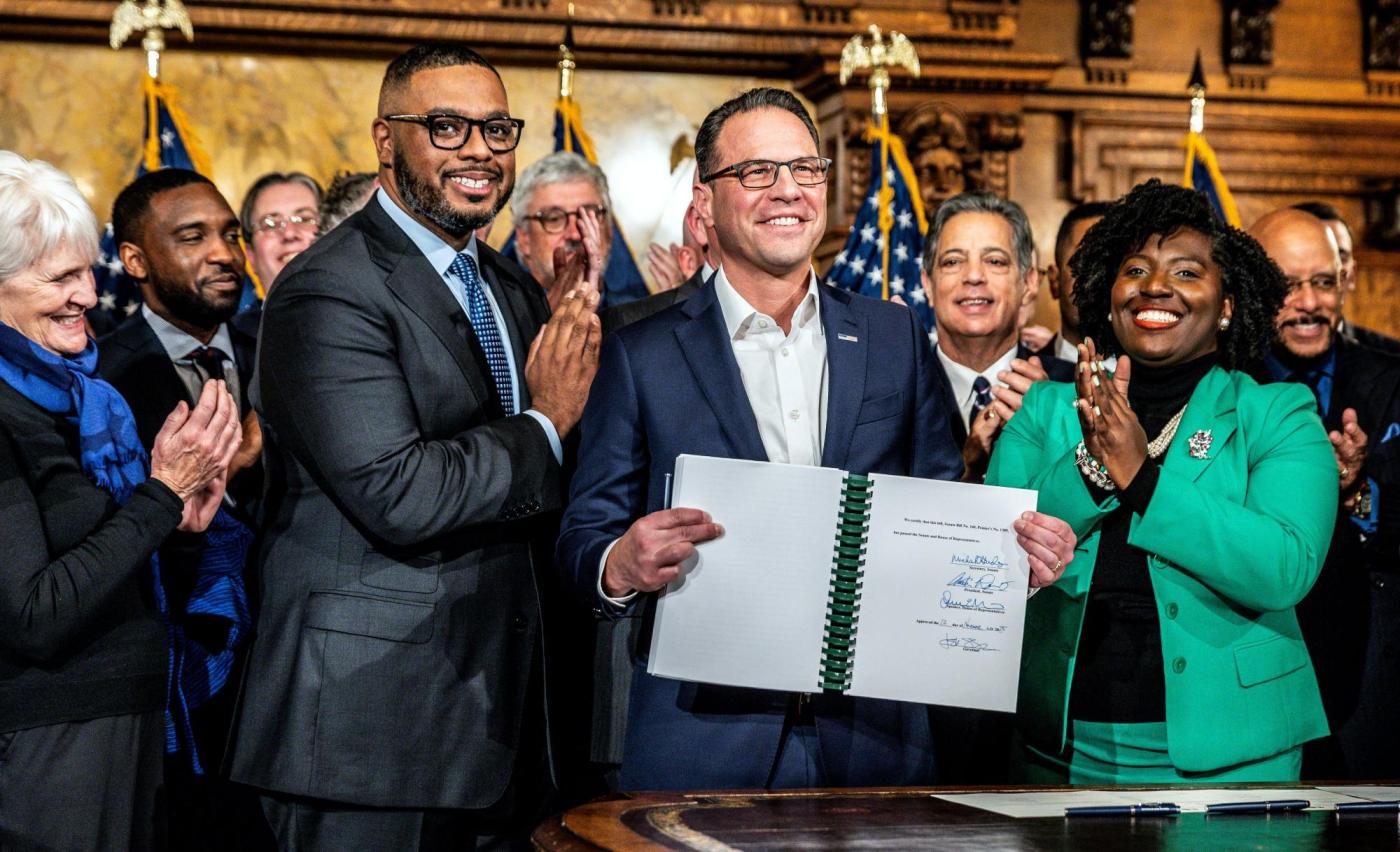
By Zack Hoopes, pennlive. com After 19 weeks of a budget impasse that affected many areas of life among Pennsylvanians, the short-term political problems have been solved through a series of give-and-take compromises. The long-term political problems remain. The quick version of this year’s budget impasse is that Democrats offered to come down from Gov. Josh Shapiro’s original budget request, which featured $51. 5 billion in general fund spending, but were leery of going too far below the $50 billion mark and cutting into the bone of programs they’ve championed. Republicans were adamant that Shapiro’s budget framework ran an excessive deficit and would result in runaway spending, passing a flat-funded budget bill of $47 to $48 billion multiple times to make the point. In the final couple weeks, Republicans were suddenly willing to move their number upward. On Nov. 12, Shapiro signed a budget deal centered on $50. 1 billion in appropriations from the general fund, with most of the 4. 7% increase over last year’s budget going toward additional K-12 education subsidies and shoring up Medicaid. The spending allocations weren’t that different from the $50. 25 billion budget that House Democrats had offered in October, but lawmakers pointed to some concessions and compromises that created a tipping point. Most-often cited was axing the Regional Greenhouse Gas Initiative (RGGI), a cap-and-trade pollution control system long opposed by Republicans. The budget deal includes language striking regulations created under former Gov. Tom Wolf that set up Pennsylvania to join the program, but which were challenged by the GOP in a court case that will now be rendered moot. Many Democrats were surprised that Republicans had given them so much spending leeway in exchange for those items; many Republicans were surprised that Democrats would hand them a win on RGGI in order to get the spending they wanted. “I think part of it was [Republicans] agreeing to do more than $50 billion,” Senate Minority Leader Jay Costa, D-Allegheny County, said when asked what the breakthrough was. “They had been so mired in this $47. 9 billion, then $49. 9 billion, and we just said ‘it needs to start with a five’” in order to be workable. “The second willingness [from Republicans] was to do the earned income tax credit at 10%. Those were the two major things,” Costa said. The budget deal includes a new Working Pennsylvanians Tax Credit, a refundable credit that allows lower-income families to apply 10% of their federal earned income tax credit to their Pennsylvania taxes. Republicans made it clear multiple times that they were uncomfortable with the $50. 1 billion total spend, but had learned to live with it in exchange for booting RGGI and other conservative priorities. “Four months ago, we would not have had the policy that is going to create jobs, create economic growth,” Senate President Pro Tempore Kim Ward, R-Westmoreland County, said when asked why the final dollar figure couldn’t have been settled over the summer. “Any number was going to be high for fiscal hawks, and most of us legislative Republicans are, in fact, that,” said House Minority Leader Jesse Topper, R-Bedford County. “But we understand that in divided government, there has to be a compromise,” Topper said. “In our world, if you were going to increase spending, you had to have policy initiatives that could eventually support that spending,” and those policy initiatives required painstaking negotiation with Democrats. Below are some of those compromises cited by both sides of the aisle. Lost: Carbon cap-and-trade RGGI has long been championed by progressive Democrats concerned about climate change, at the same time it’s been villainized by conservative groups who back the natural gas industry. Letting go of RGGI was both difficult for Democrats, and also gave them a major bargaining chip. “I would say RGGI probably was the hardest piece of it” to sell to his fellow Democrats, Costa said. “But our members understood that the value of other items that were in the fiscal code outweighed the concern for repealing RGGI.” “I, in the past, have supported RGGI myself,” said House Majority Leader Matt Bradford, D-Montgomery County. “The simple reality is, when there is an opportunity to move Pennsylvania forward dramatically, like this budget presented, we would be foolish not to take it.” Many Democrats who voted in favor were clearly torn over the issue. “I still think RGGI would be a good idea for Pennsylvania, but I’m also realistic, and I’m willing to vote yes to end this impasse,” said Sen. Carolyn Comitta, D-Chester County. “If we need to put RGGI aside to move forward, let’s do that, but let’s remember that climate change is real, it’s here, and it’s beginning to impact nearly every aspect of our lives.” RGGI is an 11-state program that puts a cap on greenhouse gas emissions from power plants, with fossil fuel generators having to purchase credits to exceed the limits; those credits are then used to subsidize renewable energy and provide rebates to ratepayers. Republicans believed the program would be uniquely harmful to Pennsylvania, since the commonwealth is a net exporter of electricity largely fueled by natural gas. Sen. Wayne Langerholc, R-Cambria County, described abrogating RGGI as “one of the biggest policy wins in the past ten years” for conservatives. On the campaign trail in 2022, Shapiro had expressed hesitancy to move forward on joining RGGI without legislative buy-in, but kept fighting the lawsuit he inherited from Wolf. Shapiro also offered to pull out of the lawsuit if Republicans agreed to his alternative green energy plan. On Wednesday, the governor framed the agreement to drop RGGI as a way to get Republicans to the table, given that they had largely refused to negotiate on clean energy while the specter of RGGI was still in place. “For years, the Republicans who’ve led the Senate have used RGGI as an excuse to stall substantive conversations about energy production,” Shapiro said. “Today, that excuse is gone,” Shapiro continued, saying he looked forward to “aggressively” adding more clean energy to the grid. Won: Tax breaks for workers The creation of a refundable state earned income tax credit was a major factor in getting more Democrats on board. The maximum federal credit for a family with three children is now over $8,000, meaning that family would get $800 knocked off their Pennsylvania taxes, and get cash back from the state if their tax bill went negative as a result. “I think in Pittsburgh it’s around 90, 000 households, and as the governor said one million households across the commonwealth will be able to get a credit,” Costa said, giving every member of a legislature a significant home-town win. The appeal was bipartisan, with Sen. Lynda Schlegel Culver, R-Columbia County, describing the credit as “not a hand-out, it’s a hand up.” “These are the long-term investments that reduce pressures on social services and strengthen local economies,” she continued. The tax credit wasn’t in Shapiro’s initial budget pitch but has been tossed around by House Democrats for years, with Shapiro crediting Bradford and House Speaker Joanna McClinton, D-Philadelphia, for pushing its inclusion. Lost: The definition of ‘balanced’ In his remarks before signing the budget bills, Shapiro repeatedly referred to the budget as “balanced.” This is only true if one considers an existing cash surplus to be revenue. The $50. 1 billion spend will be offset by only about $47 billion in income this fiscal year, according to projections from the Independent Fiscal Office, meaning the state will likely have to balance the budget by using most of the existing surplus in the general fund, a one-time source of money. This operating deficit was the major concern for fiscal hawks, as Topper noted, and some hardline conservatives opposed the budget because of it. Sen. Dawn Keefer, R-York County, described the deal as “another round of unbridled spending without even a modicum of a policy win that would control this year-over-year break-neck-pace spending.” Won: The integrity of the ‘rainy day’ fund The new budget is not expected to require the state to dip into its “rainy day” reserve fund, currently $7. 4 billion, with several Republicans stressing that the deal while more than they want to spend ensures the reserve will stay untouched for another budget cycle. This point of fiscal restraint was a frequently rallying cry for the GOP during the impasse. “We held the line to keep our promise to the people of Pennsylvania by not raising their taxes and ensuring that our state savings account, also known as our rainy day fund, and the interest [it generates] were not affected,” Ward said, adding that doing so “was very, very important” to limit the possibility of tax hikes in the future. Won: Aid for school districts Along with the added cost to maintain Medicaid, boosting state aid to K-12 school districts was the biggest chunk of new spending. Basic education aid to supplement districts’ local property taxes went up $105 million to $8. 26 billion. More importantly, an extra $562 million was pumped into the budget line for the adequacy and equity formulas intended to make up for Pennsylvania’s unfair school funding system, as decided in the landmark court case. That allocation is now $1. 83 billion. Democrats have long signaled that they weren’t willing to come down much from Shapiro’s proposed numbers on education, which Republicans had criticized as being excessive and unnecessary given the declining student population in many districts. The fact that the final numbers were virtually the same as Shapiro had originally pitched was touted by Democrats as a major win. Lost: Federally-induced tax cuts The biggest single change to the state’s fiscal laws, by dollar value, is one that went virtually unmentioned. The budget package de-couples parts of Pennsylvania’s corporate tax code from that of the federal government, so the rules for things like expensing real estate purchases and amortizing research and development costs are no longer tied to federal law. Without this, the federal tax cut deal that passed in July dubbed the “One, Big, Beautiful Bill” by President Trump would’ve cost the state $1. 1 billion in revenue this fiscal year, according to calculations by Senate appropriations staff. On the flip side, the budget continues the scheduled decrease in Pennsylvania’s base corporate tax rate, bringing the rate down from 7. 99% to 7. 49% as of January 2026. Won: Permitting reform This was frequently cited by Republicans as a huge improvement to the state’s business environment. The new fiscal code puts strict timetables on the Department of Environmental Protection (DEP) to review permits, with applications being deemed approved if the timeline is not met. “We have, for the first time in my ten years in the legislature, real permit reform, said Sen. Greg Rothman, R-Cumberland County, reform that serves as “a message to the people who are willing to invest in this commonwealth” that they won’t be hampered by red tape. Shapiro also welcomed the permitting changes, characterizing them as an extension of some of the programs he has already started, such as putting a money-back guarantee in place for certain DEP permits. Won: Workforce development Many of the items Democrats championed were smaller budget lines that add up to something bigger, with many serving as both a social benefit and job training. Among these is a $25 million grant program to recruit and retain child care workers, and $21 million to raise the wages of care workers who are hired directly by Medicaid patients. The student-teacher stipend program was increased from $20 million to $30 million, and another $20 million each added to the Main Street Matters downtown development program and the minority-owned small business program. Won: Cyber reform The budget brokers a compromise on cybercharter schools albeit one that is still opposed by many cyber schools themselves. The first element of the reform deal focuses on oversight, with provisions requiring cybers to create and report attendance benchmarks to make sure students are actually doing their online lessons. Language on student wellness checks, as well as the requirement for cybers to communicate with students in real-time at least once per week, were also tightened. Some conservatives voted against the education code bill because of these items. The bill “would require parents of a quote-unquote ‘habitually truant’ child to go to court to obtain a judge’s order proving that the transferring of their child to a cyber charters school is in the best interest of the child,” said Rep. Charity Grimm Krupa, R-Fayette County, which she viewed as a violation of parental rights. Further, Shapiro and Democrats had supported putting a hard $8,000 limit on the tuition that school districts must remit to cyber charters for every student in the district who opts into the cyber program. What they ended up getting were major revisions to the existing formula that determines what each district pays, estimated to reduce districts’ cyber rates by an average of 14. 6%, which would’ve equated to $178 million last year. The new formula will go a long way, Shapiro said, in reducing excessive cyber payments that are draining school districts’ coffers. Won: Educational Improvement Tax Credits These credits are claimed by businesses who donate to school scholarship funds, and have been championed by Republicans as a way to support private schools taking on children from struggling districts. Democrats are generally more skeptical, viewing the credits as a subsidy to private and religious schools that could be used to fix public ones. Expanding the credits has long been used as a sweetener to get the GOP to agree to higher public education spending, and this budget was no different, raising the value of EITC from $540 million to $590 million. Won/Lost: Entitlement reform (depending on who you ask) The budget bills beef up laws around public benefits, including more stringent rules for checking the income of Medicaid and Supplemental Nutrition Assistance Program (SNAP) recipients and requiring the state Department of Human Services (DHS) to issue reports about recipients who also report lottery winnings and valuable automobiles. DHS is also required to begin studying how to reduce Medicaid transportation costs by using a third-party broker. Republican leaders called it a major step in cracking down on waste and fraud. “We have brought accountability to our public assistance programs through meaningful, comprehensive reforms to our Medicaid program,” said Senate Majority Leader Joe Pittman, R-Indiana County, Some Democrats were ambivalent toward the changes, given that they don’t make actual cuts to public assistance programs; some conservatives criticized the reforms as only token changes. Lost: New revenue sources When Shapiro rolled out his budget proposal, he included a number of new revenue-generators that would help to solve the deficit problem over time. These included legalizing recreational marijuana, reforming corporate taxes and regulating “skill games” that have skirted the state’s slot machine laws. Agreements failed to materialize, with Shapiro and Democrats blaming it on dissent within the Senate GOP, whose leaders have acknowledged their members have a vast diversity of views on those issues. Even through the end-game of the impasse, legislative leaders were still trying to come up with new recurring revenues. A proposal to add skill games revenue to the general fund, and use an increased tax on online gaming and sports betting to increase transit subsidies, was on the table for a while, according to those with knowledge of the talks. The deal fell apart a few days before the budget was finally passed. With the budget held up for months by the fundamental disagreement over the deficit, it begs the question of whether lawmakers are setting themselves up for the same problem next year. If significant economic growth isn’t realized, the state will find itself with less of a cash cushion and more need for new spending, necessitating cuts, even greater new revenues, or the use of the ‘rainy day’ fund. Asked if he planned to pitch new revenues in the next budget to avoid dipping into the fund, Shapiro joked “I’m signing this year’s budget, how about you give me a minute?” The governor, by law, must present his budget proposal to the legislature by the first week in February, giving Shapiro another 12 weeks to figure it out.
https://www.delcotimes.com/2025/11/19/with-pa-state-budget-signed-who-are-the-winners-and-losers-in-the-final-bargain/
Tag: appropriations
Republicans Inserted a Sinister Provision into the Shutdown Package
Having secured Democratic capitulation on a deal fat with empty promises, Senate Republican leader John Thune made sure that the agreement also addressed one of the president’s most important issues — whitewashing the insurrection of January 6, 2021. And, needless to say, he did so with the tacit approval of seven Democratic senators. It is, as they say, a “bipartisan” bill.
From Politico:
In an interview Monday evening, Sen. Ted Cruz (R-Texas)—who claims he was one of the lawmakers to have his data subpoenaed as part of former special counsel Jack Smith’s investigation into President Donald Trump’s efforts to subvert the 2020 election—said Thune was responsible for the inclusion of the provision.
“Leader Thune inserted that in the bill to provide real teeth to the prohibition on the Department of Justice targeting senators,” Cruz said.
A person close with direct knowledge of the legislation’s negotiations, granted anonymity to speak candidly, confirmed Thune oversaw the inclusion of the provision. It was tucked into the legislative branch spending measure for fiscal year 2026, part of a three-bill “minibus” of appropriations measures that Senators were set to vote on Monday night alongside a continuing resolution to fund the government through January 30.
The House is expected to clear the package for President Donald Trump’s signature as early as Wednesday.
Thune’s involvement is notable as the revelations that Smith collected phone records for several Senate Republicans have emboldened GOP lawmakers, prompting them to deflect Democrats’ accusations of weaponization of the Trump Justice Department and claim that President Joe Biden’s DOJ was looking to target conservatives.
Much as I’d like to believe that the “Tailgunner” ran his mouth about this in order to keep Thune in line, I think the Republican leader is all-in on his president’s project to consign January 6 to political and historical incoherence.
Thune is a bloodless, colorless politician who looks like the guy who chairs the banquet committee at a decent public country club. His career has been unremarkable. He has proven to be as pliable as the president needs him to be—a perfect supporting actor.
A perfect combination of legislator and apparatchik, Thune knows all his lines and how to hit all his marks.
“The abuse of power from the Biden Justice Department is the worst single instance of politicization our country has ever seen,” Cruz continued. “I think it is Joe Biden’s Watergate, and the statutory prohibition needs to have real teeth and real consequences.”
Because, while he is bloodless and colorless, Thune is not stupid. He knows good and well why Smith subpoenaed the limited phone records of the senators. At the time, there was an attempt to overturn the 2020 election that touched, in one way or another, the entire Republican party—very much including its legislative branch.
It was dead center in Jack Smith’s mandate to inquire what contact, if any, the White House of the time had with Republican senators.
https://www.esquire.com/news-politics/politics/a69384900/john-thune-jack-smith-watergate/

Senate Approves Bipartisan Deal To End 41-Day Shutdown
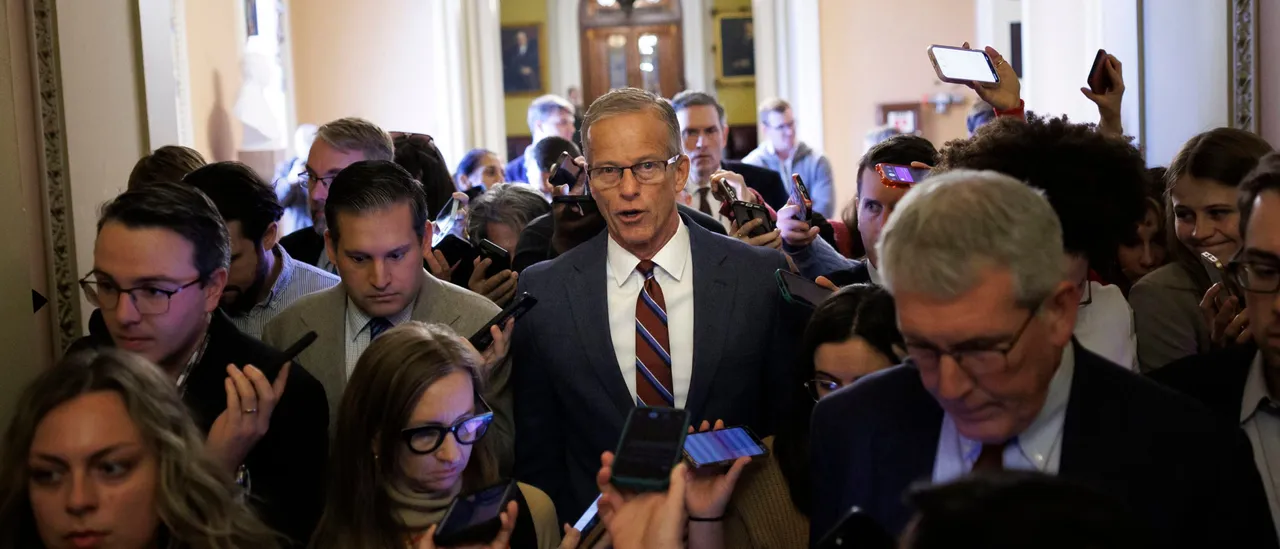
The Senate approved a government funding package to reopen the federal government Monday night, despite objections from Senate Minority Leader Chuck Schumer and a majority of Democrats. Lawmakers voted 60 to 40 in favor of the legislation, with eight Democrats joining Republicans to support the measure. Kentucky Sen. Rand Paul was the lone Republican to vote “no,” citing the measure’s insufficient spending cuts.
Democratic Sens. Catherine Cortez Masto of Nevada, John Fetterman of Pennsylvania, Tim Kaine of Virginia, Jeanne Shaheen and Maggie Hassan of New Hampshire, and Dick Durbin of Illinois voted “yes” on the legislation, bringing an end to the 41-day shutdown standoff. Independent Maine Sen. Angus King, who caucuses with Democrats, also supported the funding package.
The bipartisan shutdown package will fund the government through the end of January and advance a slate of appropriations bills that will fund the Departments of Veterans’ Affairs and Agriculture, the legislative branch, and military construction for the current fiscal year. In return, Senate Republicans have committed to holding a vote on extending enhanced Affordable Care Act (ACA) subsidies slated to expire at year’s end and to rehire federal workers laid off during the shutdown.
President Donald Trump told reporters in the Oval Office Monday that he will abide by the terms of the deal, calling it “very good.” The successful vote brings Congress one step closer to ending the record-breaking shutdown. However, the House of Representatives must approve the legislation before President Trump can sign the measure into law.
The final vote came after the same group of Democratic caucus members advanced the stopgap bill on Sunday night in a notable break with Schumer and House Democratic leadership. The defecting senators argued that the shutdown’s pain for Americans had become too great and that the minor concessions secured from Republicans were sufficient.
“Many of my friends are unhappy. They think we should have kept our government closed indefinitely,” Senate Minority Whip Dick Durbin, the second-ranking Democrat who supported the shutdown deal, said on the Senate floor Monday. “I cannot accept a strategy which wages political battle at the expense of my neighbor’s paycheck or the food for his children.”
“It’s become clear after six weeks of the shutdown that the strategy of shutting down the government and forcing the Republicans to talk about the ACA wasn’t working,” King said in a video posted to social media Sunday night. “The shutdown wasn’t achieving its goal, and it was at the same time hurting a lot of people.”
The group of seven Democrats and King voted to advance the funding package on Monday evening despite scathing criticism from their Democratic colleagues, left-wing activists, and the party’s base.
Fetterman told the Daily Caller News Foundation Monday that more than eight Democratic caucus members supported the Senate deal but were afraid to publicly back the legislation. “There were plenty more than just the eight that wanted to vote [yes], but they were afraid,” Fetterman said.
“What has worked in the past is not working now,” Michigan Sen. Elissa Slotkin, who voted against the government funding package, told reporters Monday regarding Schumer’s strategy during the shutdown. “We need to meet the moment, and we’re not doing that.”
Slotkin and a large chunk of congressional Democrats slammed the shutdown deal as insufficient for failing to secure an ACA subsidy extension. Though Senate Majority Leader John Thune has pledged to hold a vote on an extension bill of Democrats’ choosing in December, Republicans overwhelmingly oppose a clean extension.
Republican Texas Sen. John Cornyn told reporters Monday that a planned vote on a Democratic ACA bill has “no chance” of passing.
Though a number of senators briefly held up the shutdown package Monday, every member ultimately consented to fast-track the legislation to a vote on final passage.
“The American people have suffered for long enough. Let’s not pointlessly drag this bill out,” Senate Majority Leader John Thune said on the Senate floor Monday. “Let’s get it done, and get it over to the House, so that we can get this government open.”
House Speaker Mike Johnson urged lawmakers Monday to return to Washington to vote on the spending measures later this week. Due to Congress observing Veterans Day on Tuesday, the earliest the House could vote on the legislation is Wednesday.
“And as of Sunday, nearly half of all domestic flights and U.S. flights were either canceled or delayed. It’s a very serious situation,” Johnson told reporters. “So, I’m saying that by way of reminder, I’m stating the obvious to all my colleagues, Republicans and Democrats in the House. You need to begin right now returning to the Hill. We have to do this as quickly as possible.”
—
*All content created by the Daily Caller News Foundation, an independent and nonpartisan newswire service, is available without charge to any legitimate news publisher that can provide a large audience. All republished articles must include our logo, our reporter’s byline, and their DCNF affiliation. For any questions about our guidelines or partnering with us, please contact licensing@dailycallernewsfoundation.org.*
https://dailycaller.com/2025/11/10/senate-approves-bipartisan-deal-to-end-41-day-shutdown/

Democrats, Staking Shutdown Dispute on Aid for Illegal Immigrants, Seem To Have No Path Forward
On Thursday, Senate Democrats voted for the 10th time to prolong the federal government shutdown. They also voted against funding the military, thereby necessitating that the Pentagon initiate some innovative accounting to ensure service members are paid on time.
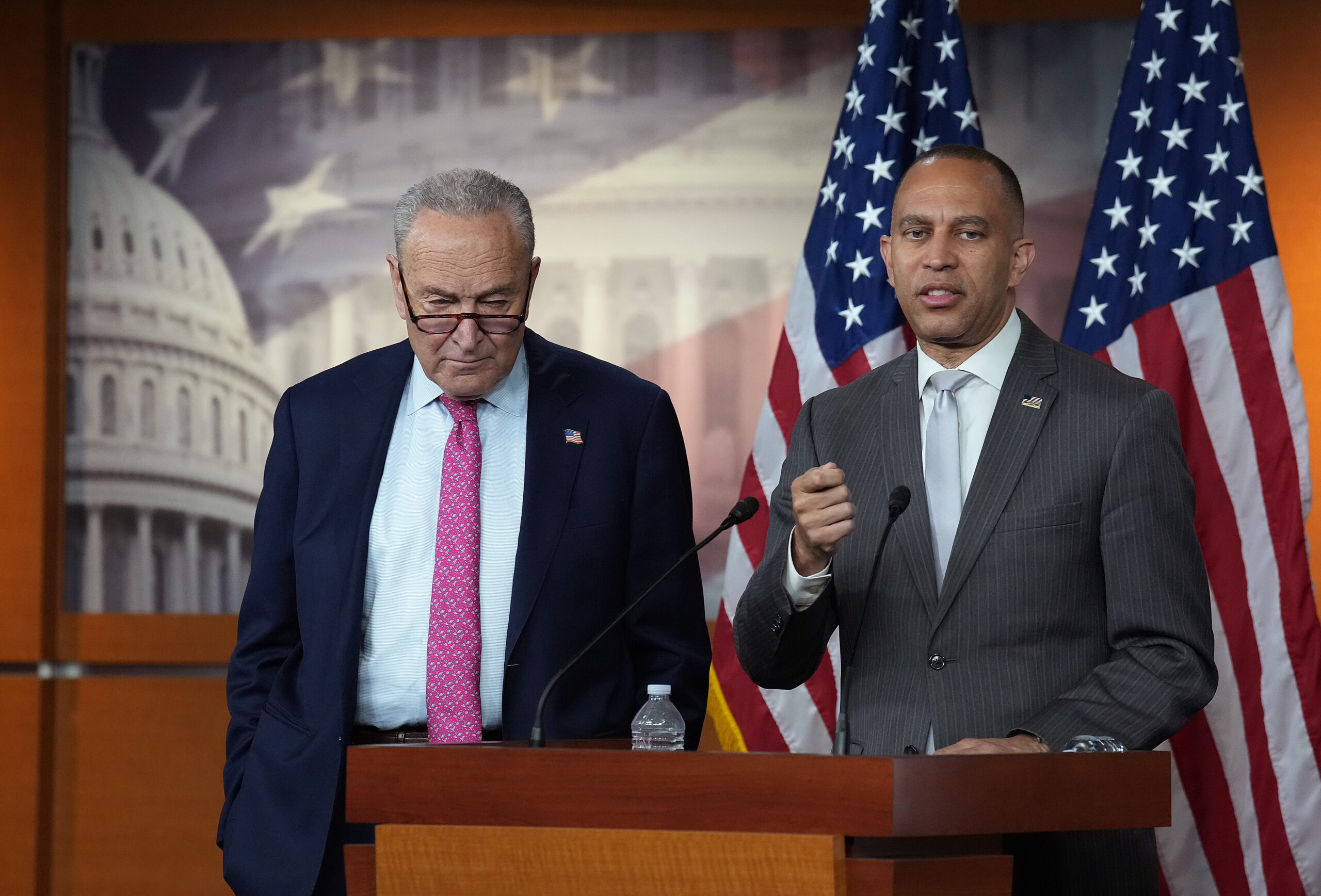
The minority leader, Senator Chuck Schumer, defended his caucus’s latest vote, stating, “It’s always been unacceptable to Democrats to do the defense bill without other bills that have so many things that are important to the American people in terms of health care, in terms of housing, in terms of safety. Most commonsense Americans understand that there is no reason paying America’s warriors should be held hostage to arcane debates over housing policy.”
As Senator John Fetterman, one of three Senate Democrats who joined Republicans on Thursday in support of the defense appropriations bill, put it earlier this week: “You know, if you’re thinking about winning the election, now, that’s all going to come down to seven or eight states. And a lot of the things, the extremism that people turned their back in ’24, and that’s how we kind of came up short.” It’s wise advice.
Yet Mr. Fetterman is likely to pay a political price for being such a rare voice of (relative) reason within the party, facing an impending bruising Senate primary contest. Why exactly are Democrats, who control neither chamber of Congress nor the presidency, continuing to insist on a protracted shutdown battle?
It’s a more complex question than it ought to be. However, the basic disagreement centers on expiring Obamacare subsidies and the scope of Medicaid coverage, particularly concerning illegal aliens.
In short, air traffic control operations are suffering from a potentially dangerous shortage, America’s beautiful national parks are understaffed, and service members could go without pay—all seemingly because Democrats believe more taxpayer dollars should go toward subsidizing the health care of illegal aliens.
This is an astonishingly weak negotiating position. Minority parties completely out of power typically do not get what they want during high-profile Beltway budgetary standoffs or shutdown fights, and there is very little reason to expect Republicans to cave.
As the shutdown continues, polling on which side is more to blame seems to be gradually shifting toward Democrats as the more blameworthy party. It is far from obvious what exactly Mr. Schumer and House Minority Leader Congressman Hakeem Jeffries expect to accomplish as the shutdown barrels toward its third week.
They are not going to prevail, and the longer the shutdown goes on, the worse political shape they will find themselves in. Democrats seem unable to avoid tripping over themselves.
On the issue of illegal immigration, the American people overwhelmingly oppose the Democratic agenda. A Harvard/Harris poll earlier this month revealed that 56 percent of registered voters support deporting all illegal aliens, and 78 percent support deporting criminal illegal aliens.
Regarding taxpayer subsidization of genital mutilation and chemical castration procedures—often euphemistically referred to as “gender-affirming care,” another hot-button culture war issue—another recent poll showed that 66 percent of Americans oppose such funding.
Polling on biological male participation in women’s sports is even starker.
Illegal immigration and gender radicalism are perhaps the two least popular issues currently facing Democrats. Yet, these are arguably the two issues at the forefront of the current Beltway standoff, or at least central to the debate over the scope of taxpayer funding.
The ancient Chinese military strategist Sun Tzu famously taught that a battle is won before it is fought by choosing the terrain on which it is fought. President Trump, a decades-long branding and marketing genius, already has a keen knack for framing issues in such a way—an art this column has called the 80-20 issue.
The Democrats seem all too eager to make his job easier by choosing the side whose loss is a foregone conclusion.
What gives?
A rational political party interested in self-preservation and electoral success would certainly take a different approach. Such a party would ditch the post-2008 obsession with identity politics and wokeism and revert to the Clinton-era message of economic growth and cultural centrism.
That Democratic leadership is so woefully incapable of doing this, even following Mr. Trump’s resounding triumph last November across all the major swing states, indicates that the party is not currently guided by rational calculations.
Instead, Democrats today are guided not by sober empiricism but by fanciful ideology.
The biggest reason Mr. Trump prevailed in the contentious 2016 Republican presidential primary and has since won so much popular support is that he had little use for abstract ideology. He saw the American people as they are and sought to serve them.
Democrats would be wise to follow suit.
— Creators.com
https://www.nysun.com/article/democrats-staking-shutdown-dispute-on-aid-for-illegal-immigrants-seem-to-have-no-path-forward