Senate votes down effort to restrict Trump’s Iran war powers

**Senate Defeats War Powers Resolution Aimed at Limiting Military Action Against Iran**

Washington – The Senate defeated a war powers resolution on Wednesday that sought to block President Trump from escalating the conflict with Iran, as the operation approached its fourth week.

In a 53 to 47 vote, a Democrat-led effort to restrict Mr. Trump from taking military action in Iran fell short for the third time. Sen. John Fetterman of Pennsylvania was the only Democrat to vote against advancing the resolution, while GOP Sen. Rand Paul of Kentucky supported it.

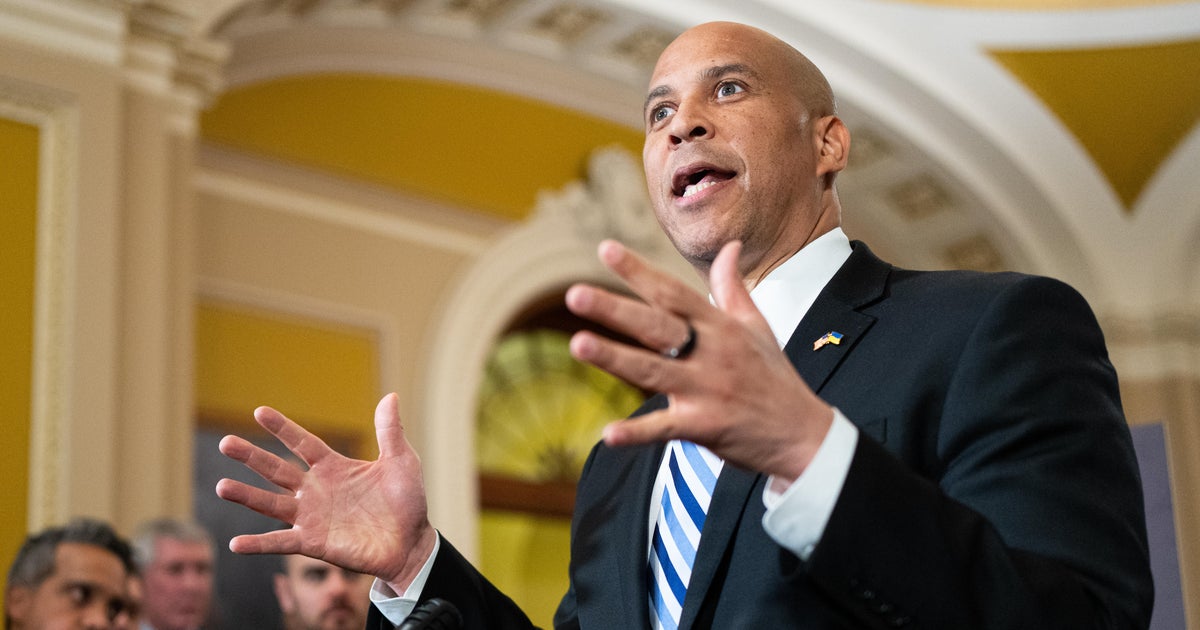
The resolution, led by Democratic Sen. Cory Booker of New Jersey, would have required the president to “remove the United States Armed Forces from hostilities within or against Iran, unless explicitly authorized by a declaration of war or a specific authorization for use of military force.” Notably, Congress has not authorized military force against Iran.

The vote took place amidst an unusual and lengthy debate among Republicans over elections legislation, which was being pushed by Mr. Trump. The president has threatened to withhold his signature from other bills until this measure passes. Despite this “floor takeover,” Democrats were able to force the war powers vote because the resolution is privileged.

This was not the first attempt to limit Mr. Trump’s war powers regarding Iran. The Senate had previously defeated a similar resolution introduced by Democratic Sen. Tim Kaine of Virginia on March 4. This marks the second time in less than a year that an effort to rein in the president’s ability to strike Iran was turned down, the first being after U.S. airstrikes on Iranian nuclear sites last June.

As the war in Iran nears the one-month mark, Mr. Trump has yet to outline a clear exit strategy and has not ruled out deploying ground forces. The president has said he expects the conflict to end “soon,” but has not provided a specific timeline.

Following the early March defeat, a group of Democratic senators vowed to keep pushing the issue. They demanded that Secretary of State Marco Rubio and Defense Secretary Pete Hegseth testify publicly about the war. In a letter to Senate Majority Leader John Thune, a South Dakota Republican, these senators indicated they would drop votes on several resolutions if the Trump officials appeared at public hearings.

“We’re going to use every lever that we have to stop business as usual and force the Senate to do what it should have done already,” Booker told reporters earlier this month.

Sen. Chris Murphy, a Connecticut Democrat, accused the Trump administration of avoiding public hearings on Iran out of fear of losing public support for the war.

“I don’t think they can defend this war,” Murphy said. “I think they’ll lose votes in the Senate if they actually have to go in front of the American public and explain why gas prices are so high, explain whether we’re engaged in regime change or not, and explain how they’re going to secure nuclear weapons and materials without a ground invasion.”

On Wednesday, the Trump administration’s top intelligence officials testified before the Senate Intelligence Committee during a hearing centered on the release of the annual worldwide threats assessment. However, questions largely focused on Iran. Director of National Intelligence Tulsi Gabbard deferred to Mr. Trump when pressed on the president’s claims that Iran posed an “imminent” threat to the United States.

The administration and most congressional Republicans argue that Mr. Trump acted within his legal authority when ordering strikes against Iran. In a letter to Congress in early March, the president justified the strikes as necessary to eliminate threats.

“Despite my Administration’s repeated efforts to achieve a diplomatic solution to Iran’s malign behavior, the threat to the United States and its allies and partners became untenable,” the president wrote. He acknowledged, however, that “it is not possible at this time to know the full scope and duration of military operations that may be necessary.”
https://www.cbsnews.com/news/senate-defeats-trump-iran-war-powers-vote-booker/

Democrats, Staking Shutdown Dispute on Aid for Illegal Immigrants, Seem To Have No Path Forward

On Thursday, Senate Democrats voted for the 10th time to prolong the federal government shutdown. They also voted against funding the military, thereby necessitating that the Pentagon initiate some innovative accounting to ensure service members are paid on time.

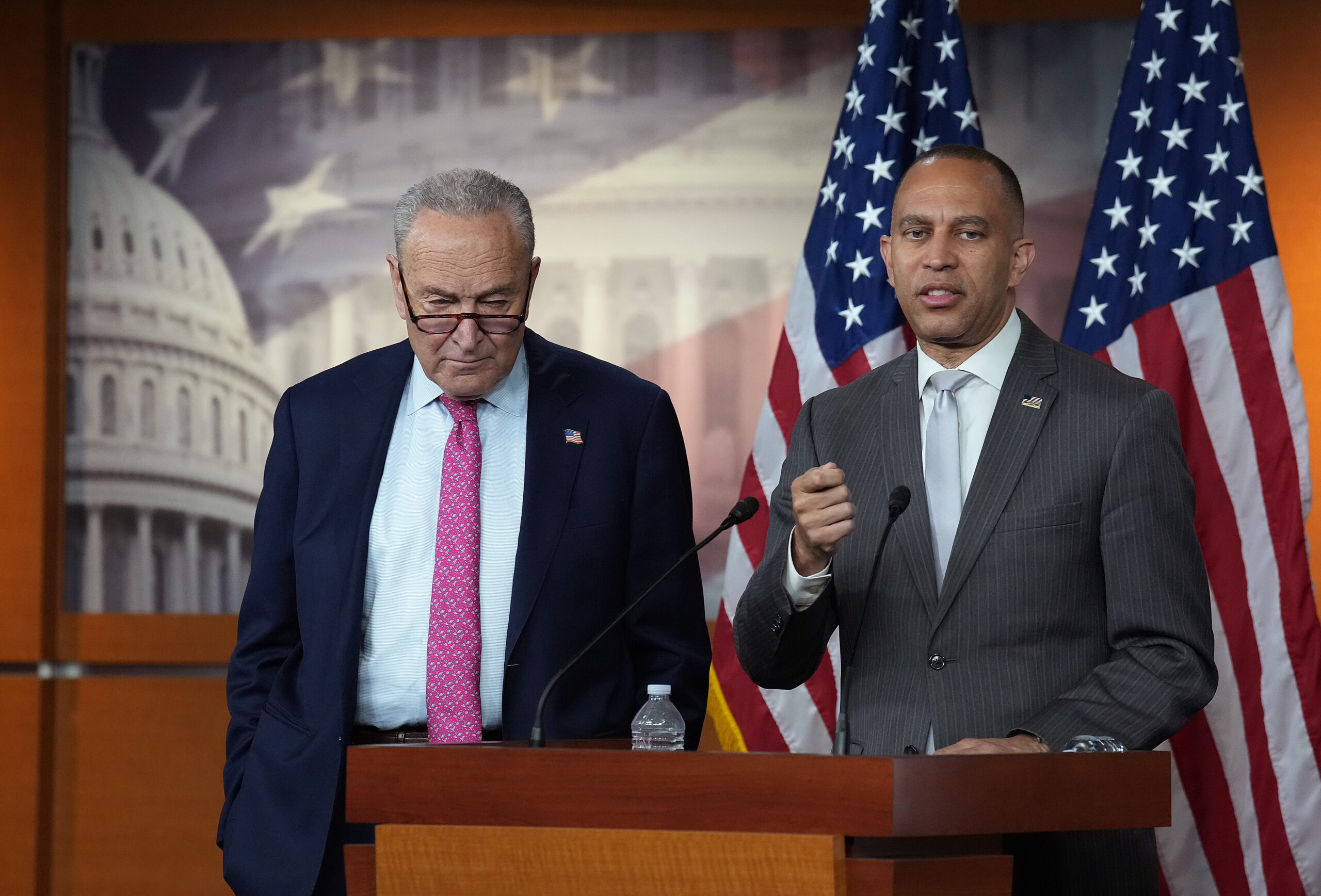
The minority leader, Senator Chuck Schumer, defended his caucus’s latest vote, stating, “It’s always been unacceptable to Democrats to do the defense bill without other bills that have so many things that are important to the American people in terms of health care, in terms of housing, in terms of safety. Most commonsense Americans understand that there is no reason paying America’s warriors should be held hostage to arcane debates over housing policy.”

As Senator John Fetterman, one of three Senate Democrats who joined Republicans on Thursday in support of the defense appropriations bill, put it earlier this week: “You know, if you’re thinking about winning the election, now, that’s all going to come down to seven or eight states. And a lot of the things, the extremism that people turned their back in ’24, and that’s how we kind of came up short.” It’s wise advice.

Yet Mr. Fetterman is likely to pay a political price for being such a rare voice of (relative) reason within the party, facing an impending bruising Senate primary contest. Why exactly are Democrats, who control neither chamber of Congress nor the presidency, continuing to insist on a protracted shutdown battle?

It’s a more complex question than it ought to be. However, the basic disagreement centers on expiring Obamacare subsidies and the scope of Medicaid coverage, particularly concerning illegal aliens.

In short, air traffic control operations are suffering from a potentially dangerous shortage, America’s beautiful national parks are understaffed, and service members could go without pay—all seemingly because Democrats believe more taxpayer dollars should go toward subsidizing the health care of illegal aliens.

This is an astonishingly weak negotiating position. Minority parties completely out of power typically do not get what they want during high-profile Beltway budgetary standoffs or shutdown fights, and there is very little reason to expect Republicans to cave.

As the shutdown continues, polling on which side is more to blame seems to be gradually shifting toward Democrats as the more blameworthy party. It is far from obvious what exactly Mr. Schumer and House Minority Leader Congressman Hakeem Jeffries expect to accomplish as the shutdown barrels toward its third week.

They are not going to prevail, and the longer the shutdown goes on, the worse political shape they will find themselves in. Democrats seem unable to avoid tripping over themselves.

On the issue of illegal immigration, the American people overwhelmingly oppose the Democratic agenda. A Harvard/Harris poll earlier this month revealed that 56 percent of registered voters support deporting all illegal aliens, and 78 percent support deporting criminal illegal aliens.

Regarding taxpayer subsidization of genital mutilation and chemical castration procedures—often euphemistically referred to as “gender-affirming care,” another hot-button culture war issue—another recent poll showed that 66 percent of Americans oppose such funding.

Polling on biological male participation in women’s sports is even starker.

Illegal immigration and gender radicalism are perhaps the two least popular issues currently facing Democrats. Yet, these are arguably the two issues at the forefront of the current Beltway standoff, or at least central to the debate over the scope of taxpayer funding.

The ancient Chinese military strategist Sun Tzu famously taught that a battle is won before it is fought by choosing the terrain on which it is fought. President Trump, a decades-long branding and marketing genius, already has a keen knack for framing issues in such a way—an art this column has called the 80-20 issue.

The Democrats seem all too eager to make his job easier by choosing the side whose loss is a foregone conclusion.

What gives?

A rational political party interested in self-preservation and electoral success would certainly take a different approach. Such a party would ditch the post-2008 obsession with identity politics and wokeism and revert to the Clinton-era message of economic growth and cultural centrism.

That Democratic leadership is so woefully incapable of doing this, even following Mr. Trump’s resounding triumph last November across all the major swing states, indicates that the party is not currently guided by rational calculations.

Instead, Democrats today are guided not by sober empiricism but by fanciful ideology.

The biggest reason Mr. Trump prevailed in the contentious 2016 Republican presidential primary and has since won so much popular support is that he had little use for abstract ideology. He saw the American people as they are and sought to serve them.

Democrats would be wise to follow suit.

— Creators.com
https://www.nysun.com/article/democrats-staking-shutdown-dispute-on-aid-for-illegal-immigrants-seem-to-have-no-path-forward

PA Democrats Plot to Oust John Fetterman in 2028 Primary [WATCH]

Top Democrats in Pennsylvania are quietly organizing plans to challenge Senator John Fetterman in the 2028 Democratic primary, according to Axios.

While Fetterman remains a popular figure across the state, his moderate posture toward former President Trump is drawing ire from segments of his own party, as reported by The Gateway Pundit. Fetterman, who triumphed in 2022 against Republican Mehmet Oz, flipped what had been a GOP Senate seat. Despite that victory, some Democrats argue he has strayed too far from the party base.

According to party insiders, possible challengers include U.S. Representatives Brendan Boyle and Chris Deluzio, as well as former Representative Conor Lamb. Some officials have already begun criticizing Fetterman years ahead of the primary.

At the heart of the backlash is Fetterman’s insistence on restraint in political rhetoric toward Trump supporters. During a recent public event, he said:

“I know and I love people who voted for President Trump. They are NOT fascists, they’re NOT Nazis, they’re NOT trying to destroy the Constitution. I REFUSE to call people Nazis or fascists. I would never compare anybody to Hitler.”

“Like Charlie Kirk, all I could say is let people grieve, give people the space. I’m not going to use that terrible thing and that assassination to make my argument and try to put out my views.”

“It’s like, my God, he’s a father that had his neck blown out by a bullet. And now people have forgotten: President Trump was in my state was shot in the head. Could you imagine where our nation would be if he were hit in the same way as Kirk? We really got to turn the temperature down.”

These remarks underscore Fetterman’s approach: rejecting harsh labels for Trump voters and warning against escalating political hostility.

Internally, Democrats see risk in allowing Fetterman to run unchallenged. Some believe his centrist positions could weaken turnout among progressive voters or invite criticism from within the party. One Axios dispatch describes the looming primary field as a “maneuvering” among insiders aimed at forcing Fetterman off the ticket.

Fetterman, however, has pushed back on the speculation. As of now, none of the potential challengers has formally declared a Senate run in 2028. Some have left the door open to run if Fetterman declines to seek reelection.

The internal debates among Pennsylvania Democrats signal fissures that could influence the 2028 Senate landscape in one of the nation’s key battleground states.
https://www.lifezette.com/2025/10/pa-democrats-plot-to-oust-john-fetterman-in-2028-primary-watch/

Exit mobile version
Sitemap Index