Are American workers being replaced? Inside the H-1B visa controversy

**Understanding the Controversy Surrounding H-1B Visas**

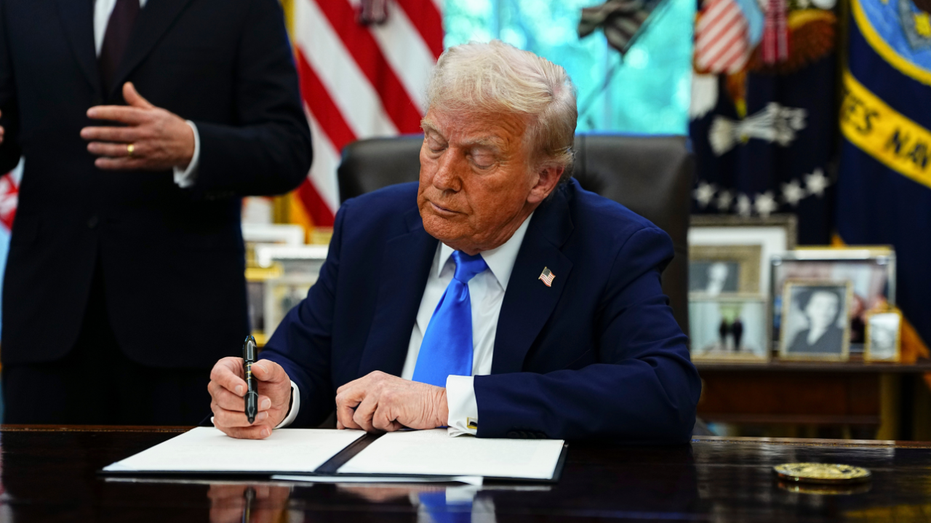
Following months of controversy, President Donald Trump issued a proclamation in September decrying the systemic abuse of the H-1B visa program. He argued that the program is fueling the “large-scale replacement of American workers” and has “undermined both our economic and national security.”

To address this, Trump instituted a $100,000 fee for companies seeking to obtain an H-1B visa, a move that has been widely criticized by business leaders, especially in the tech industry. The debate over the program has split both the American public and the GOP, with one side asserting that visa holders are poaching American jobs, while the other emphasizes the program’s importance to U.S. competitiveness.

So, what exactly are H-1B visas, and why have they become such a political flashpoint?

### What is an H-1B Visa?

An H-1B visa is a non-immigrant work visa that allows U.S. companies to hire highly-skilled foreign workers in specialty occupations. These visas are issued for an initial period of three years and can be extended up to six years.

According to the U.S. Citizenship and Immigration Services (USCIS), the visas are meant for individuals of “exceptional merit and ability.” To qualify, candidates must have at least a bachelor’s degree in a relevant field.

### Which Industries Use H-1B Visas Most?

By far, the tech industry is the largest user of H-1B visas, accounting for roughly 60 to 70 percent of all new applications in recent years. Other prominent sectors include consulting and professional services, engineering and manufacturing, healthcare and medical research, and higher education.

### How Many Foreign Workers Hold These Visas?

There is no official figure for the number of people currently holding H-1B visas. However, there is a yearly cap of 65,000 visas, with an additional 20,000 reserved for individuals holding master’s degrees or higher.

Most universities and non-profit research organizations are exempt from this cap, which further increases the number of people approved each year. The Pew Research Center estimated that about 400,000 H-1B visa applications were approved last year under the Biden administration.

### Where Do Visa Holders Come From?

Nearly three out of every four — 73 percent — of H-1B visa holders come from India, according to Pew. China ranks second, with 12 percent, while the remaining 15 percent come from various other countries, none exceeding a 2 percent share.

### Who Is Against H-1B Visas?

Criticism of the H-1B visa program comes from both sides of the political aisle, including former President Trump and Senator Bernie Sanders (I-Vt.).

Critics contend that the program has strayed from its original purpose — attracting top global talent — and is now being exploited by employers to import cheaper foreign labor, suppress wages, and displace American workers.

In response, Senate Democratic Whip Dick Durbin (D-Ill.) and Senate Judiciary Chair Chuck Grassley (R-Iowa) reintroduced bipartisan legislation in September aimed at reforming the program, closing loopholes, protecting American workers, and preventing outsourcing of jobs.

On the state level, Florida Republican Governor Ron DeSantis issued guidelines in October to combat what he called a university loophole. He directed the Florida Board of Governors to require universities to prioritize American graduates and curb the practice of “importing foreign workers on H-1B visas instead of hiring Americans.”

### Who Supports H-1B Visas?

On the other side, many prominent figures argue that the program is essential for maintaining U.S. competitiveness. Elon Musk, for example, has publicly supported the H-1B program, stating, “The reason I’m in America along with so many critical people who built SpaceX, Tesla, and hundreds of other companies that made America strong is because of H1B.”

Musk also acknowledged that “the program is broken and needs major reform,” proposing to raise the minimum salary threshold and introduce yearly costs for maintaining H-1B status to make overseas hiring more expensive compared to domestic hiring.

Business leaders assert that the H-1B program is crucial for competing with countries like China, which recently launched its own talent visa program called the K-visa. The U.S. Chamber of Commerce also supports the H-1B program.

### Are Visa Holders Taking American Jobs?

On September 19, President Trump issued a proclamation titled “Restriction on Entry of Certain Nonimmigrant Workers,” claiming that the H-1B visa program is being “deliberately exploited to replace, rather than supplement, American workers with lower-paid, lower-skilled labor.”

He argued that this abuse artificially suppresses wages, disadvantages American workers in the labor market, and complicates efforts to attract and retain the highest-skilled subset of temporary workers — with the most significant impact in STEM (science, technology, engineering, and math) fields.

Trump stated that the large-scale replacement of American workers through systemic abuse of the program has undermined both economic and national security.

### New Rules and Fees

To curb abuses, Trump imposed a $100,000 fee on companies applying for H-1B visas, effective September 21, 2025, with the restriction set to expire one year later. His administration has also been directed to initiate rulemaking prioritizing high-skilled and high-paid applicants.

Additionally, the Department of Homeland Security (DHS) plans to narrow the definition of “specialty occupation,” increase worksite compliance inspections, and require employers to submit applications directly, aiming to prevent companies from contracting out H-1B workers to other firms.

### What’s Next?

The debate over H-1B visas is far from over. The U.S. Chamber of Commerce has filed a lawsuit against the Trump administration’s new $100,000 fee, arguing that it would make the program prohibitively expensive for many U.S. employers, particularly small and midsize businesses.

The lawsuit claims the fee is unlawful as it overrides provisions of the Immigration and Nationality Act, which require visa-related fees to be based on the government’s costs to process them.

As the political and economic battles continue, the future of the H-1B visa program remains uncertain, but its impact on the American workforce and technological innovation will continue to be a critical issue.

*Stay tuned for further updates on the evolving H-1B visa policy.*
https://www.foxnews.com/politics/american-workers-being-replaced-inside-h-1b-visa-controversy


Canada Fast-Tracks Stablecoin Rules Ahead of November 4 Budget

Canada’s Crypto Scene Heats Up as Government Moves to Regulate Stablecoins

Canada’s cryptocurrency landscape is rapidly evolving, with the government taking a proactive role in shaping the future of digital assets. Ottawa is moving swiftly to introduce stablecoin regulations, with detailed proposals expected to be unveiled in the upcoming federal budget on November 4. This development comes just days after a record-breaking $126 million fine was levied against a crypto company for anti-money laundering violations. Here’s what you need to know.

Stablecoin Rules Finally on the Way

According to Bloomberg, Canadian officials have spent the past few weeks engaged in intensive discussions with regulators and industry leaders to finalize the framework for stablecoin governance. These talks are anticipated to culminate in clear regulatory proposals when Finance Minister François-Philippe Champagne presents the new budget next week.

Stablecoins play a crucial role as a bridge between digital assets and mainstream finance. However, until now, regulatory treatment of stablecoins in Canada has been unclear. Currently, regulators classify stablecoins as securities or derivatives, creating uncertainty for companies and investors alike.

Meanwhile, the United States has already taken significant steps forward. The Genius Act, enacted in July, empowers US regulators to supervise stablecoin issuers and establish reserve requirements. This legislation categorizes compliant stablecoins as payment instruments, a move that has been widely welcomed by the crypto industry.

Experts Warn of Capital Flight

Industry leaders are urging the Canadian government to act swiftly or risk falling behind in the global crypto race. John Ruffolo, founder of Maverix Private Equity, cautioned that without timely regulations, Canadian investors might increasingly turn to US stablecoins. This shift could dampen demand for Canadian bonds and weaken local financial autonomy.

“Every Canadian who transacts in a US stablecoin funds American debt, enriches American institutions and exports our financial data south,” Ruffolo remarked earlier this month.

The call for a national regulatory framework is echoed by prominent institutions. Both the Bank of Canada and the Office of the Superintendent of Financial Institutions (OSFI) have emphasized the need to close regulatory gaps. Former deputy governor Carolyn Wilkins highlighted the importance of rules that promote “trust, security, stability and competitiveness” within the payments ecosystem.

Crackdown Sets the Tone for Enforcement

The urgency for stronger regulations was underscored last week when FINTRAC, Canada’s financial watchdog, imposed a historic $126 million fine on Cryptomus (Xeltox Enterprises Ltd) for an unprecedented 2,593 anti-money laundering violations—the largest fine ever issued in Canada’s crypto sector.

Investigations revealed the company failed to report suspicious transactions linked to serious crimes including child abuse, ransomware attacks, and Iran-related transfers. These operations were traced back to Uzbekistan and Spain.

FINTRAC criticized the company’s inadequate systems, stating they “significantly impair transparency and accountability.” The agency warned that Canada’s crypto sector still contains significant vulnerabilities that criminals can exploit.

What’s Next for Canada’s Crypto Regulations?

With regulatory clarity on stablecoins expected soon, Canadian crypto firms and investors are watching closely. Effective rules could bolster trust and foster innovation in the digital asset space, while lax oversight risks capital flight and reputational damage.

As the federal budget approaches, all eyes are on Ottawa to deliver a balanced framework that supports growth while safeguarding the financial system.

Also Read: Crypto Regulations in Canada 2025
https://coinpedia.org/news/canada-fast-tracks-stablecoin-rules-ahead-of-november-4-budget/

U.S Health and Fitness App Market Trends and Strategic Analysis 2025–2035

Prophecy Market Insights has released its latest research report on the U.S. Health and Fitness App Market, offering an in-depth study of the market dynamics, growth drivers, opportunities, challenges, and competitive landscape shaping the industry’s future. The report provides detailed segmentation across various categories, comprehensive profiles of leading companies, and revenue projections through 2035.

Designed as an essential tool for business leaders, investors, startups, and policymakers, this report delivers actionable insights to help stakeholders make informed decisions, identify emerging growth opportunities, and maintain a competitive edge in a rapidly evolving marketplace.

### Competitive Landscape

The competitive environment of the U.S. Health and Fitness App Market is highly dynamic. Companies are focusing on innovation, expansion, and collaborations to strengthen their market presence. Key players in this market include:

– Adidas Inc.
– FITBIT INC.
– Appster
– Nike
– MYFITNESSPAL INC.
– Under Armour Inc.
– APPINVENTIV
– FitnessKeeper

These organizations are investing in product launches, mergers & acquisitions, strategic alliances, and geographical expansions. Moreover, startups are entering the space with niche innovations, further increasing market competitiveness.

### U.S. Health and Fitness App Market Overview

The U.S. Health and Fitness App Market is expected to witness significant growth during the forecast period. This growth is driven by rising demand across various applications, technological innovations, and supportive government regulations.

Market participants are investing heavily in research and development (R&D) to expand their product portfolios and strengthen their market positions. Additionally, collaborations, mergers, and acquisitions are reshaping the landscape, enabling companies to enter new regions and industries.

The growing adoption of advanced technologies, coupled with expanding consumer awareness and ongoing digitalization in the industry, underscores the strategic importance of this market in the coming decade.

### U.S. Health and Fitness App Market Dynamics

#### Key Drivers

– **Rapid Adoption of Innovation:** Increasing use of cutting-edge technologies across industries is fueling demand.
– **Supportive Regulatory Frameworks:** Governments are promoting innovation through favorable policies and investments, enhancing market attractiveness.
– **Rising Application Demand:** Industries such as healthcare, automotive, and manufacturing are adopting health and fitness app solutions to improve efficiency and productivity.

#### Restraints

– **High Initial Investment:** Capital-intensive setups may hinder smaller enterprises from entering the market.
– **Data Privacy and Security Concerns:** Increasing reliance on digital technologies raises regulatory and compliance challenges.

#### Opportunities

– **Emerging Applications in Developing Economies:** Expanding industrial and consumer bases in Asia-Pacific and Latin America present significant growth potential.
– **Integration of AI, IoT, and Next-Gen Technologies:** New technological capabilities are enabling faster innovation cycles.
– **Strategic Partnerships and M&A:** Collaborations open new growth avenues and competitive advantages.

### U.S. Health and Fitness App Market Segmentation

To provide granular insights, the market is categorized into several segments:

– **By Type:** Diet and Nutrition, Exercise and Weight Loss, Medication Adherence & Activity Tracking
– **By Device:** Tablets, Smartphones, Wearable Devices
– **By Platform:** Android, iOS, Others

This segmentation enables stakeholders to identify high-growth areas and tailor their strategies accordingly.

### Strategic Insights

– **R&D Focus:** Leading players prioritize innovation to enhance app functionality and reduce costs.
– **Partnerships & Alliances:** Collaborations between corporations and local enterprises drive market expansion.
– **Startups & Disruption:** Smaller firms are introducing cutting-edge technologies, disrupting traditional business models.

### Report Importance

This report offers comprehensive insights into the U.S. Health and Fitness App Market, making it a valuable resource for:

– Investors seeking high-potential opportunities.
– Businesses and startups aiming to expand operations and identify niche markets.
– Industry professionals monitoring future market drivers.
– Policymakers and analysts evaluating regulatory frameworks and regional impacts.

By analyzing market dynamics, opportunities, and competitive strategies, this report acts as a roadmap for business growth and investment planning.

### Why Buy This Report?

– **Comprehensive Market Analysis:** Covers trends, drivers, restraints, and opportunities with forecasts up to 2035.
– **Reliable Data:** Backed by robust primary and secondary research methodologies.
– **Detailed Competitive Landscape:** Profiles of leading market players and their strategies.
– **Support for Business Growth:** Helps organizations identify profitable avenues and expand market share.
– **Customization Available:** Tailored research per specific project or business requirements.

### Conclusion

The U.S. Health and Fitness App Market is projected to grow significantly over the next decade, driven by rising demand, technological integration, and emerging opportunities in developing regions. Companies that invest strategically and adopt innovative approaches will gain a competitive advantage.

This report provides the insights, forecasts, and strategies required for businesses to succeed in a fast-evolving global market. Stakeholders can leverage this comprehensive resource to ensure sustainable growth and long-term success.

**Author:**
Authored by Shweta R., Business Development Specialist at Prophecy Market Insights. This analysis is based on a combination of primary and secondary research, providing strategic insights into the evolving dynamics of the global U.S. Health and Fitness App Market.

**Request a free sample or PDF brochure of the research report to gain detailed insights and data.**
https://www.prnewsreleaser.com/news/115762

Exit mobile version