Satellite images provide view inside Iran at war

Commercial satellite images are providing a unique look at the extent of damage being done to Iran’s military facilities across the country.

The U.S. and Israeli military campaign opened with a daytime attack that struck Iranian leadership in central Tehran. Smoke was still visible rising from Ayatollah Ali Khamenei’s compound following the attack that killed the supreme leader. Israel and the U.S. have since struck multiple targets across Iran.

Reports on social media indicate that numerous military bases and compounds have been attacked throughout the country. In response, Iran has launched attacks across the Middle East. U.S. forces have also targeted Iran’s navy.

In a post on his social media platform, President Trump said he had been briefed that U.S. forces had sunk nine Iranian naval vessels. While U.S. Central Command did not immediately confirm that number, it did confirm striking an Iranian warship in port. Numerous satellite images show burning vessels at the Konarak naval base in southern Iran.

Additionally, images reveal damage to a nearby airbase where hardened hangars were struck by precision munitions, as well as extensive damage at a drone base in the same area.

Iran has launched numerous drones and missiles toward Israel and U.S. military installations in Bahrain, Kuwait, and Qatar. While many drones have been intercepted, videos on social media show that some have evaded air defenses and caused damage in nearby Gulf countries. Notably, debris from an Iranian drone damaged Dubai’s iconic Burj Al Arab, according to a statement from Dubai’s government.

Iran’s most powerful weapons are its long-range missiles. The Iranian Revolutionary Guards have hidden these missiles deep inside mountain tunnels. Images taken Sunday in the mountains of northern Iran indicate that some of these tunnels were hit in a wave of strikes.

Satellite images also showed mourners gathering in Tehran’s Enghelab Square on Sunday.

Iranian Foreign Ministry Spokesperson Esmail Baghaei told NPR that Iran will continue to fight “foreign aggression, foreign domination.” A White House official informed NPR that President Trump plans to speak with Iran’s interim leadership “eventually,” but for now, U.S. operations in the region continue “unabated.”
https://www.npr.org/2026/03/01/nx-s1-5731528/satellite-images-iran-war-us-strikes-israel

When AI becomes a paintbrush, is it art?

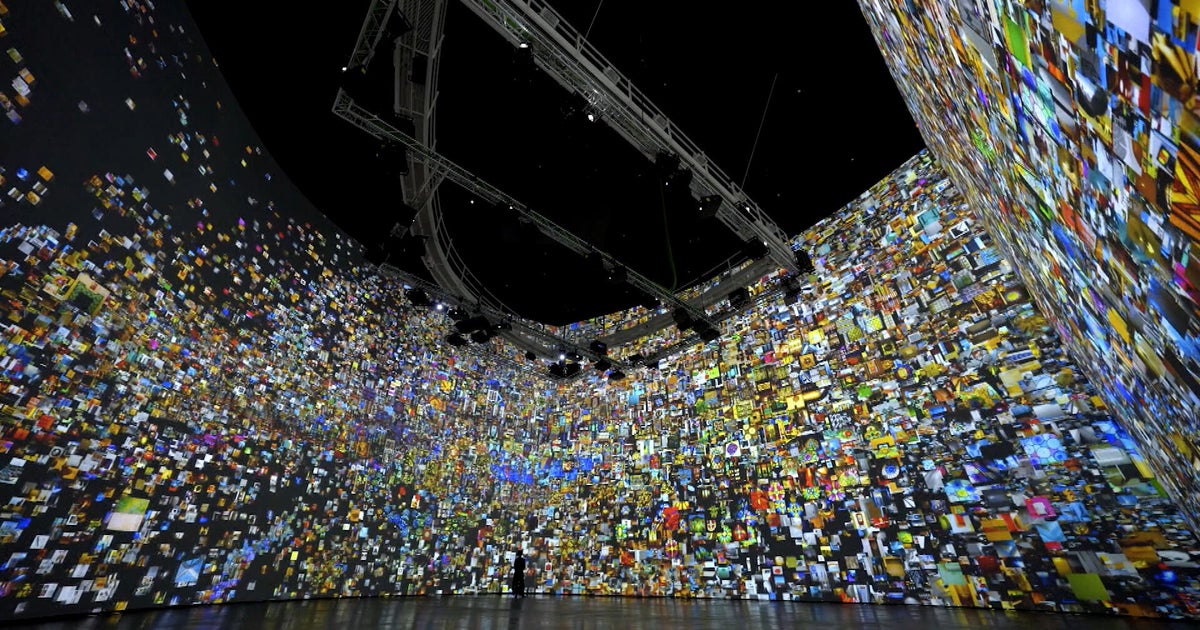
This week on 60 Minutes, correspondent Sharyn Alfonsi stepped into a new frontier of artistic expression: the rapidly evolving world of artificial intelligence-generated art. She profiled Refik Anadol, the 40-year-old Turkish American artist widely regarded as a pioneer of this emerging form. Anadol doesn’t mix acrylics or sculpt with stone. Instead, he paints with data. For one recent work, he fed an artificial intelligence model 200 million photographs of Earth, drawing heavily from archives provided by NASA. The result is a sweeping, immersive digital installation a living canvas of color and motion that feels at once cosmic and intimate. “When I think about data as a pigment,” Anadol told correspondent Sharyn Alfonsi, “I think it doesn’t need to dry. It can move in any shape, in any form, any color, and texture.” It’s a poetic description of a process rooted in code. His installations, projected across walls and ceilings, envelop viewers in constantly shifting landscapes generated by machine learning systems trained on vast image libraries. The effect can feel, as Alfonsi put it, “a little trippy. It is trippy,” Anadol replied. “Because I think as artists we ask what is beyond reality.” The critics weigh in Anadol’s work has appeared in some of the world’s most prestigious museums. But as A. I. art moves from tech labs to galleries, the art world is grappling with a bigger question: How do these creations stack up? Jerry Saltz, the Pulitzer Prize-winning critic for New York Magazine, is both skeptical and curious. “Right now, AI art seems to be an average of averages,” Saltz told Alfonsi. Algorithms are trained on vast datasets of existing images, themselves products of countless influences. The result, he argues, risks becoming “vaster, and more average,” rather than more profound. For Saltz, great art emerges from something machines fundamentally lack: lived experience. “I want the algorithm to experience death,” he said. “I want the algorithm to know the feeling of feeling like you have a fat neck, or bad hair. I want to train the algorithm to experience carnality.” Without sex and death, Saltz suggests, there is no art. And yet, he doesn’t dismiss the technology. “I like to think of it as a material,” Saltz said. “Artists use materials. A digital file is a material.” To reject A. I. outright, he argued, would be like rejecting oil paint or the novel before engaging with them. “I wish it well. And I would never, ever ignore it.” Fear, replacement, and ethics Part of the anxiety surrounding A. I. art is existential. Artists, like professionals in many industries, fear replacement, Saltz said. “We all have a latent fear of being replaced by AI,” Saltz acknowledged. “I guess I think that we will be on some level.” His prescription isn’t retreat it’s reinvention. Artists must become “better, or more useful, or more unique at what we do in order to keep our jobs.” The ethical questions are thornier. Is it fair or legal to train an algorithm on the work of other artists? Saltz thinks so. Artists have always borrowed, referenced, and reinterpreted what came before them. “There are no laws in art,” Saltz said bluntly. “All art comes from other art.” Is it art? Last year, artist Refik Anadol brought his vision to the Guggenheim Museum Bilbao in Spain. For that exhibition, he built a custom A. I. model trained on open-access photographs, sketches, and blueprints from the archive of Frank Gehry, the legendary architect who designed the museum itself. The system processed Gehry’s architectural legacy and reimagined it as a fluid, morphing, digital spectacle. Saltz once dismissed a similar installation at New York’s Museum of Modern Art as a “glorified lava lamp,” dazzling but ultimately decorative. Which raises the central question of this cultural moment: When a machine recombines humanity’s visual history into something new, is that art? Photos & Video courtesy of Refik Anadol Studio, Guggenheim Museum Bilbao, Tom Ross & Getty Images. The video above was edited by Scott Rosann.
https://www.cbsnews.com/news/when-ai-becomes-a-paintbrush-is-it-art/

DeSantis, Democrats, environmentalists join forces to oppose new Gulf drilling

TALLAHASSEE, Fla. In a rare display of political alignment, Florida’s top Republicans, Democrats, environmental groups, and even some of President Donald Trump’s closest allies in the state are loudly rejecting the administration’s new plan to expand offshore drilling near Florida’s coast. Gov. Ron DeSantis, who has long insisted Florida’s beaches and military testing zones remain off-limits, renewed his warnings this week, urging Trump to stick with the protections he signed in 2020. DeSantis, Democrats, environmentalists join forces to oppose new Gulf drilling “Now what the Interior Department is proposing to do is really to go back off that policy,” said DeSantis, Friday. “I think that would weaken protections we worked really hard to establish offshore.” The Interior Department’s proposal would open new waters for oil and gas development, aiming to boost domestic production and lower prices. But in Florida, where drilling in state waters is already barred by the state constitution, the idea has landed with a thud. Military, Environment, and Bipartisan Pushback Opposition is emerging from every corner of the state’s political landscape. U. S. Rep. Jimmy Patronis, a Republican whose district includes major military installations, warned new rigs could jeopardize critical national security operations in the Eastern Gulf. “The right hand is not talking to the left hand,” Patronis said. ”The Department of the Interior is hard charging to try to drive down gas prices. So they’re trying to do everything they can to throw it and see what sticks to the wall.” State Trump administration announces plan for new oil drilling off Florida Matthew Daly and Matthew Brown Patronis argues drilling could disrupt hypersonic missile testing and other weapons development within the Gulf Test and Training Range. He’s circulated a letter to the White House, signed by most of Florida’s GOP delegation, reminding federal leaders that military testing and energy exploration “are not compatible.” It comes as environmental groups say the risks extend far beyond defense. “Floridians don’t want their treasure trashed,” said JP Brooker with Ocean Conservancy. He warns that drilling puts fisheries, sea turtles, beaches, and billions in tourism revenue at risk. “It’s a political no-brainer,” said Brooker. “The ocean in Florida is like corn. It’s like corn in Iowa, right? It’s something that you have to care about and care about supporting, regardless of your political background, if you want to have a chance of getting elected.” Democrats Also Sound the Alarm Democrats, too, say the plan is unnecessary and dangerous. “Big oil does not need any more help right now,” said U. S. Rep. Kathy Castor, Thursday evening. “They are doing fine and they hold over 2, 000 active leases in the Gulf already.” Florida Democratic Party Chair Nikki Fried called the proposal a “nonstarter,” pointing to memories of the Deepwater Horizon disaster just 15 years ago. National Politics Biden permanently bans offshore drilling in 625 million acres of ocean David Goldman, Ella Nilsen and Matt Egan, CNN “Florida has a long history of bipartisan support against drilling off our coastlines,” she said in a statement. “Our state’s fragile ecosystem and economy would be irreparably harmed if this proposal were to move forward.” A History of Avoiding Drilling Near Florida The bipartisan resistance echoes earlier victories for drilling opponents: In 2018, voters approved a constitutional amendment banning drilling in state waters. That same year, then-Gov. Rick Scott secured a pledge from Interior Secretary Ryan Zinke that Florida would be protected: “We are not drilling off the coast of Florida.” In 2020, Trump signed a memorandum extending the federal offshore drilling moratorium until 2032.
https://www.wptv.com/news/state/desantis-democrats-environmentalists-join-forces-to-oppose-new-gulf-drilling

Bitcoin ATM surge in US: October 2025 adoption momentum

On October 31, 2025, Finbold Research, using data from CoinATMRadar, reported that the global Bitcoin ATM network reached its highest level since December 2022. According to Finbold’s analysis, there were an estimated 39,586 active Bitcoin ATMs worldwide at the end of October 2025. This figure marks a significant milestone, approaching the previous peak of 39,989 Bitcoin ATMs recorded in December 2022.

October 2025 saw a net gain of 422 new Bitcoin ATMs, following 80 new machines added in September 2025. This represents a month-on-month increase of 27.5%. Year-to-date, the total number of Bitcoin ATMs rose from 37,643 at the end of 2024 to 39,586 by late October 2025—an addition of 1,943 new machines throughout the year.

The surge in installations indicates a strong recovery for the network, driven by robust growth in October and steady deployments throughout the year.

### Regional Adoption Insights

North America continues to dominate Bitcoin ATM installations, accounting for over 83% of global units. The CoinATMRadar dataset highlights that in October 2025, the United States added 360 new ATMs, bringing its total to 31,037. Canada contributed 44 new machines during the same period.

In contrast, Europe experienced modest growth with eight new Bitcoin ATMs added in October, reaching a total of 1,769. Australia also saw an increase, installing 33 new ATMs.

### Operator Activity and Future Outlook

Operators remain focused on partnering with high-footfall retail locations and convenience stores. This strategy helps explain the concentrated density of Bitcoin ATMs in well-established markets, such as North America, and the more gradual rollout observed in emerging regions like Latin America and Southeast Asia.

Finbold notes that the estimated 39,586 active Bitcoin ATMs worldwide reflect both new placements and ongoing replacement cycles, signaling sustained interest and confidence in the Bitcoin ATM market.

As operator activity continues to prioritize strategic locations, we can expect continued growth in key regions and expansion into new markets, shaping the future landscape of Bitcoin adoption globally.
https://bitcoinethereumnews.com/bitcoin/bitcoin-atm-surge-in-us-october-2025-adoption-momentum/?utm_source=rss&utm_medium=rss&utm_campaign=bitcoin-atm-surge-in-us-october-2025-adoption-momentum

Overrated places in Tyrol, Austria you must skip

**Overrated Places in Tyrol, Austria You Must Skip**
*By Anujj Trehaan | Oct 13, 2025, 01:08 PM*

Tyrol, a picturesque region in Austria, is renowned for its stunning landscapes and rich cultural heritage. However, not all places in Tyrol live up to the hype. Some tourist spots tend to be overcrowded or overpriced, often leaving visitors disappointed.

In this article, we explore some of the most overrated places in Tyrol that you might want to skip on your next trip.

### 1. Innsbruck’s Golden Roof

Innsbruck’s Golden Roof is undoubtedly one of Tyrol’s most famous landmarks. The roof is adorned with 2,657 fire-gilded copper tiles and holds historical significance. However, many tourists find it underwhelming in person due to its small size and the overwhelming crowds.

Instead of spending too much time here, consider exploring other parts of Innsbruck that offer more engaging and authentic experiences.

### 2. Swarovski Crystal Worlds

Swarovski Crystal Worlds promises a magical experience with its crystal art installations and beautiful gardens. Despite this, some visitors feel it falls short of expectations. The entrance fee can be steep compared to what is essentially a brief visit with limited activities beyond viewing the exhibits.

If you’re not a crystal or art enthusiast, you might find greater enjoyment exploring Tyrol’s natural attractions instead.

### 3. Zillertal Alps High Road

The Zillertal Alps High Road offers breathtaking panoramic views that attract many travelers. However, during peak tourist seasons, heavy traffic and congestion can detract from the experience.

If you seek tranquility and solitude surrounded by nature, consider visiting lesser-known mountain passes. These alternative routes provide similar stunning vistas without the crowd and hustle.

### 4. Stubai Glacier Ski Resort

Stubai Glacier Ski Resort is Europe’s largest glacier ski resort and offers year-round skiing opportunities. Nonetheless, it can get crowded during busy seasons, making the slopes hectic.

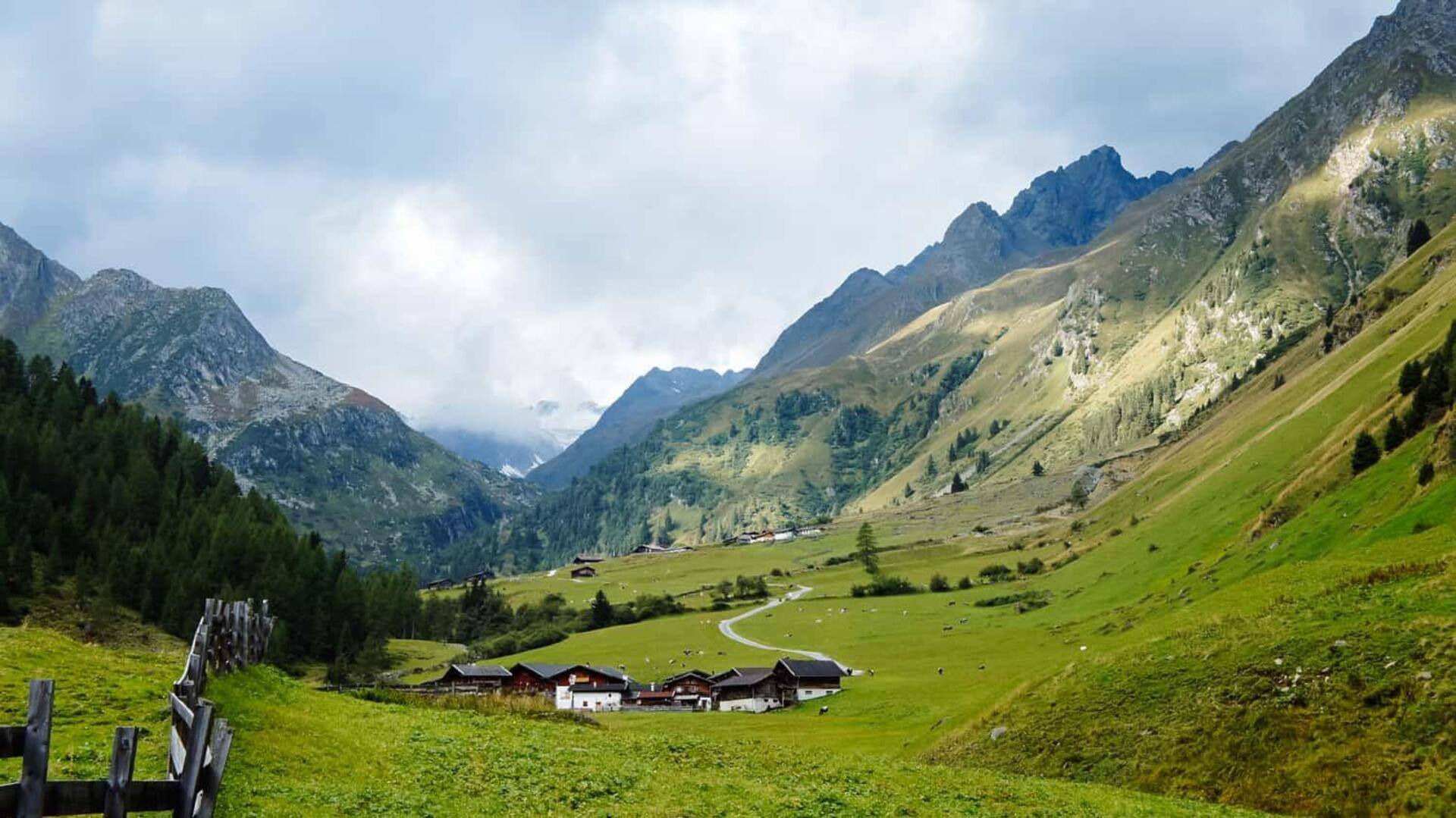
If skiing or snowboarding isn’t your primary interest, explore some of Tyrol’s charming alpine villages instead. These villages offer peaceful alpine scenery perfect for relaxation and exploration—without the rush of tourists on the slopes.

While Tyrol boasts many incredible destinations, being selective about where you go can make your trip much more enjoyable. Skip these overrated spots and discover the authentic charm and serenity that Tyrol truly has to offer.
https://www.newsbytesapp.com/news/lifestyle/overrated-places-in-tyrol-you-must-skip/story

Exit mobile version
Sitemap Index