
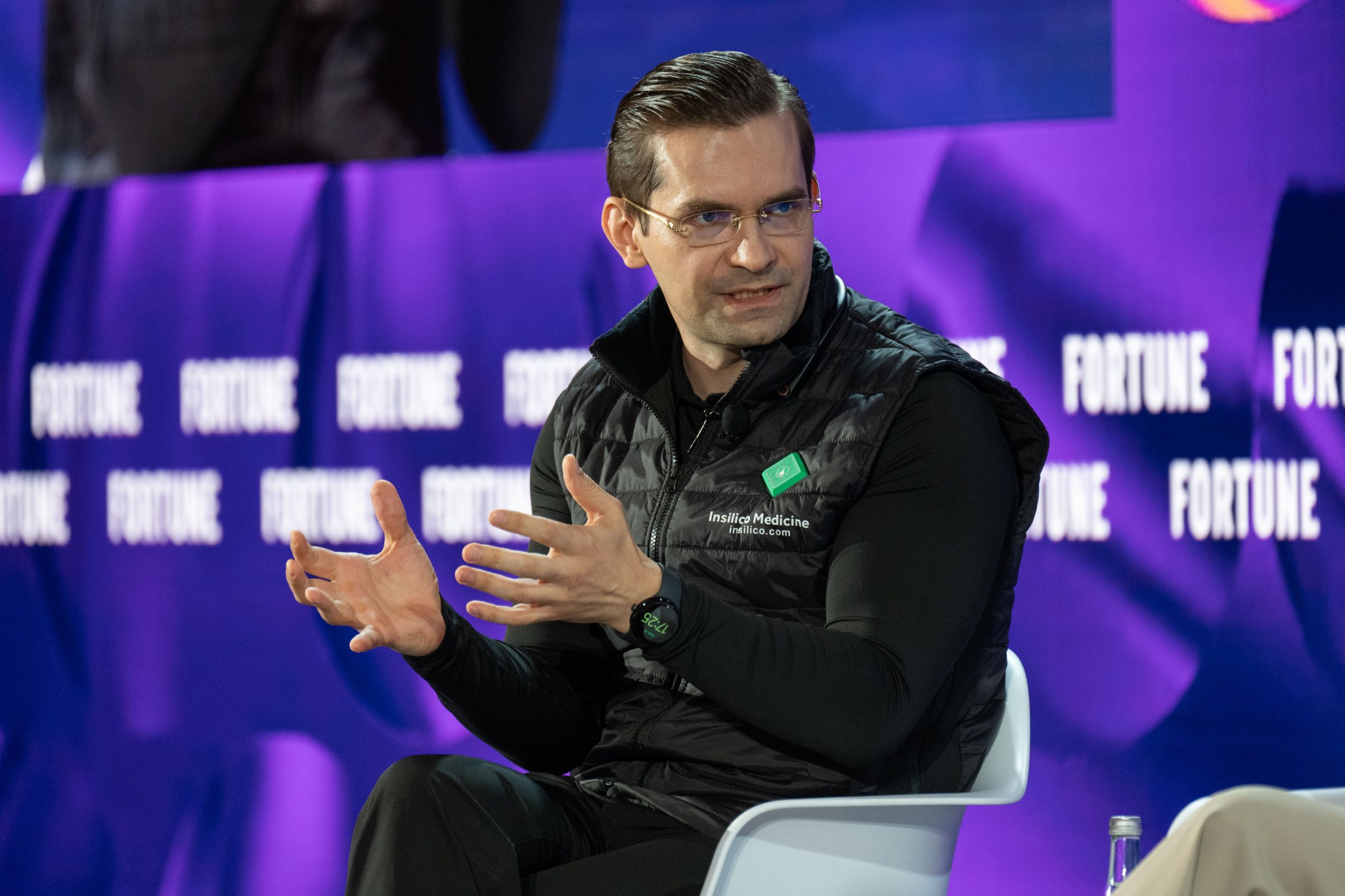
U. S. approval of Novo Nordisk’s anti-obesity drug Wegovy and Eli Lilly’s Zepbound has fueled the meteoric growth of both companies. Now, this lucrative discovery could offer a new benefit to patients: longevity. “There are signals that GLP-1s could be the first true longevity drug,” Alex Zhavoronkov, the founder and CEO of Insilico Medicine, said Monday at the Fortune Innovation Forum in Kuala Lumpur, Malaysia. Top scientists from both Novo Nordisk and Eli Lilly have suggested that GLP-1s could have broader effects than just tackling obesity and diabetes. “They found that the regular intake of this drug may reduce the incidence of many age-related diseases, including some CNS (central nervous system) disorders, liver disease, and kidney disease,” Zhavoronkov said. Global spread Obesity rates are rising worldwide as emerging markets grow wealthier, leading to greater food consumption and more sedentary lifestyles. There’s an “obesity pandemic,” said Adele Wong, a dietitian and nutritionist from Nutrition Track, on Monday. By 2050, over half of adults worldwide will be obese or overweight, predicts a study published in March by The Lancet. Malaysia in particular is at risk. Just over half of Malaysians are already obese, thanks to a cuisine that relies on oily food, greater access to processed food, and the rise of a more sedentary, car-centric lifestyle as the country gets wealthier. This costs the country 64 billion Malaysian ringgit ($15. 4 billion) a year, due to treatment and care, the economic cost of premature death, and lost productivity, Wong said. Still, emerging regions like Southeast Asia are slow to pick up GLP-1s. “It’s still in its early stages,” Wong noted. She pointed to a widespread stigma around both obesity and a narrative that weight-loss drugs are “the easy way out.” “Obesity is a disease, and when you get sick, you do need medication. You do need treatment,” she said. How GLP-1 drugs work Technically speaking, treatments like Wegovy aren’t weight loss drugs. Instead, these treatments help obese patients suppress their appetites. Praful Chakkarwar, general manager at Novo Nordisk, says that this helps patients build and sustain healthy habits. Wong echoed this sentiment. “Food noise. makes it harder for [obese people] to eat their vegetables and get out the door to exercise. But when they’re on these drugs, it’s amazing-they are able to actually do these healthy habits easier,” Wong said. “In my client’s words, it gives them hope.” Looking to the future, Chakkarwar said the pharmaceutical industry is at the cusp of several GLP-1 related discoveries. Many companies are developing drugs to counteract side effects from GLP-1s, which include muscle loss and macular degeneration-an eye disease that may cause vision loss. They are also working to make the intake of GLP-1s more convenient, he said, such as creating pills which can be consumed less regularly. “A lot of these patients have other chronic conditions. They may have diabetes, dyslipidemia, or high blood pressure, so they are on multiple drugs. Some of them might actually be very happy to just take it [GLP-1s] once a week or once a month, rather than taking the tablet on a daily basis,” Chakkarwar said.
https://fortune.com/2025/11/21/glp-drugs-anti-obesity-drugs-longevity/
Tag: pharmaceutical

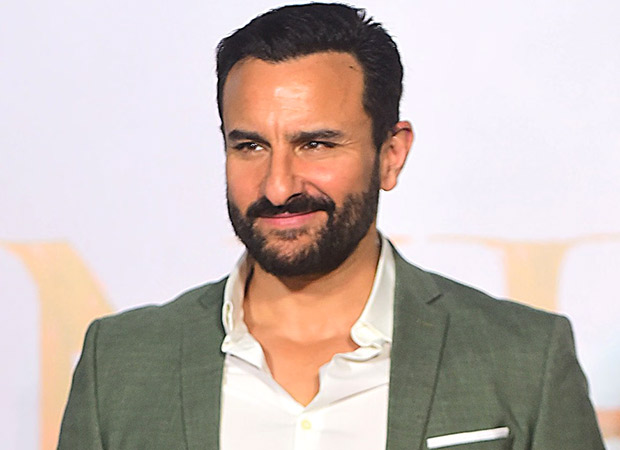
Saif Ali Khan makes major real estate move; buys commercial offices worth Rs. 30.75 Crore in Mumbai
Bollywood actor Saif Ali Khan has added yet another prime asset to his real estate portfolio, this time in Mumbai’s thriving commercial district of Andheri East. According to property registration documents, the actor has purchased two office units in the Kanakia Wallstreet building for a total consideration of Rs. 30. 75 crore. Saif Ali Khan makes major real estate move; buys commercial offices worth Rs. 30. 75 Crore in Mumbai The combined area of the newly acquired offices measures 5, 681 sq ft and includes six dedicated parking spaces. The seller of the property is Apiore Pharmaceutical, a US-based pharma company, as reflected in the registration filings. The deal was arranged by Volney, a real estate advisory and investor network firm. The transaction was officially registered on November 18, 2025, with a stamp duty of Rs. 1. 84 crore and a registration fee of Rs. 60, 000. Industry experts note that Andheri East has rapidly emerged as one of Mumbai’s busiest commercial corridors, attracting corporates, global enterprises, and creative firms due to its improved connectivity and infrastructure. Volney’s founder, Rohan Sheth, described the area as a market that combines accessibility with strong rental prospects, adding that it continues to draw long-term investors. Saif’s new commercial investment also places him among several high-profile names who have recently secured space in the vicinity. Elon Musk’s satellite internet company, Starlink Satellite Communications Private Limited, recently leased a 1, 294 sq. ft. office in the nearby Chandivali area for a five-year period, with total rent valued at Rs. 2. 33 crore. Additionally, the same building previously housed leased offices where Hrithik Roshan and Rakesh Roshan acquired three commercial units earlier this year for about Rs. 31 crores through HRX Digitech LLP. Beyond his latest acquisition, Saif Ali Khan is already known for his premium residential and commercial holdings across Mumbai. He currently resides in a high-end apartment in Bandra West, a property he purchased nearly a decade ago for Rs. 24 crores. Records also show that he bought a sprawling 6, 500 sq. ft. apartment in April 2012 for Rs. 23. 50 crore from Satguru Builders, further cementing his presence in the city’s luxury real estate landscape. With his latest investment, the actor continues to strengthen his position not just in cinema but also in Mumbai’s top-tier property market. Also Read: Dining with the Kapoors Trailer: Netflix brings together Bollywood’s first family for a grand tribute to Raj Kapoor BOLLYWOOD NEWS LIVE UPDATES.
https://www.bollywoodhungama.com/news/bollywood/saif-ali-khan-makes-major-real-estate-move-buys-commercial-offices-worth-rs-30-75-crore-mumbai/


THEY ALWAYS GO AFTER THE MIDDLE CLASS: AN EXAMPLE
Toby Rogers
Substack | November 1, 2025
—
For the last 500 years, if you were a nation that wanted to get rich, the way you did it was by building a bunch of ships, loading them full of soldiers, guns, and horses, then sailing from Europe to the New World to take their stuff. You took their gold, enslaved their people, forced them to work in gold mines and other harsh conditions. That’s how Europe got rich. That’s how the UK got rich. And so that’s the historical pattern for 500 years—500 years of colonialism.
Later, this evolved into neocolonialism, with unfair trade deals that kept enriching Europe and the United States. More recently, with the backing of the U.S. military, Third World nations were persuaded to produce goods for us at low cost, making us feel rich. Historically, for five centuries, that’s been the pattern.
Here’s the problem: at some point, there were no new lands left to conquer. The ruling class then decided that the new source of wealth and exploitation would be the middle class—not just in the United States, but throughout the developed world. And how do you extract wealth from the middle class? You do it through iatrogenic injury.
If you can get the entire population to inject their kids 72 times during childhood, and then have everyone—including kids—take COVID shots, you can injure them and enslave them for life with chronic illness.
In my research, I show that lifetime care costs for autism range between $5 million and $7 million per child. That’s a tremendous amount of money, and it goes somewhere—it flows directly to the pharmaceutical industry, the hospital industrial complex, and the ruling class.
With COVID shots, here’s what happens: picture a middle-aged woman in Orange County, California, who gets a COVID vaccine and then develops myocarditis. Now she has to attend regular cardiologist appointments, is in and out of the hospital, and is sick all the time. Over the next five to ten years, her healthcare costs could reach approximately $2 million. All that money flows to Pharma, doctors, and the pharmaceutical industrial complex.
Compare that to the old model of colonialism: if that same woman were enslaved in a South American gold mine, you could only extract about $20,000 worth of labor from her at most before she perished. But in five to ten years in the U.S., through iatrogenic injury caused by a COVID shot that leads to myocarditis, you can extract $2 million from one person.
Insurance companies pay, the government pays, she mortgages her house, her family pays—it extracts all the wealth from her and her loved ones. After about ten years, the pharmaceutical industry lets her perish.
The crisis we’re in today—and why so many of us are traumatized—is that Western allopathic medicine has become a machine designed to extract wealth from the middle class, working class, and lower classes in the United States. This system enriches the pharmaceutical industry and the ruling class through iatrogenic injury.
This crisis was already unfolding with autism and other chronic illnesses in children before the pandemic, but it exploded during the COVID epidemic and the response, including the rollout of the COVID vaccines.
You can watch the full “Injured America” panel discussion [here], starting at about the 58-minute mark.
—
**Topics:** Conspiracy, Health/Medicine, Science
**Keywords:** Health, Medicine, Slavery
—
*Posted on by Auntie Mame*
*“The rich get richer, the poor get poorer, and the middle class pays for it.”*
—
**Disclaimer:** Opinions posted on Free Republic are those of the individual posters and do not necessarily represent the opinion of Free Republic or its management. All materials posted herein are protected by copyright.
https://freerepublic.com/focus/f-bloggers/4352671/posts