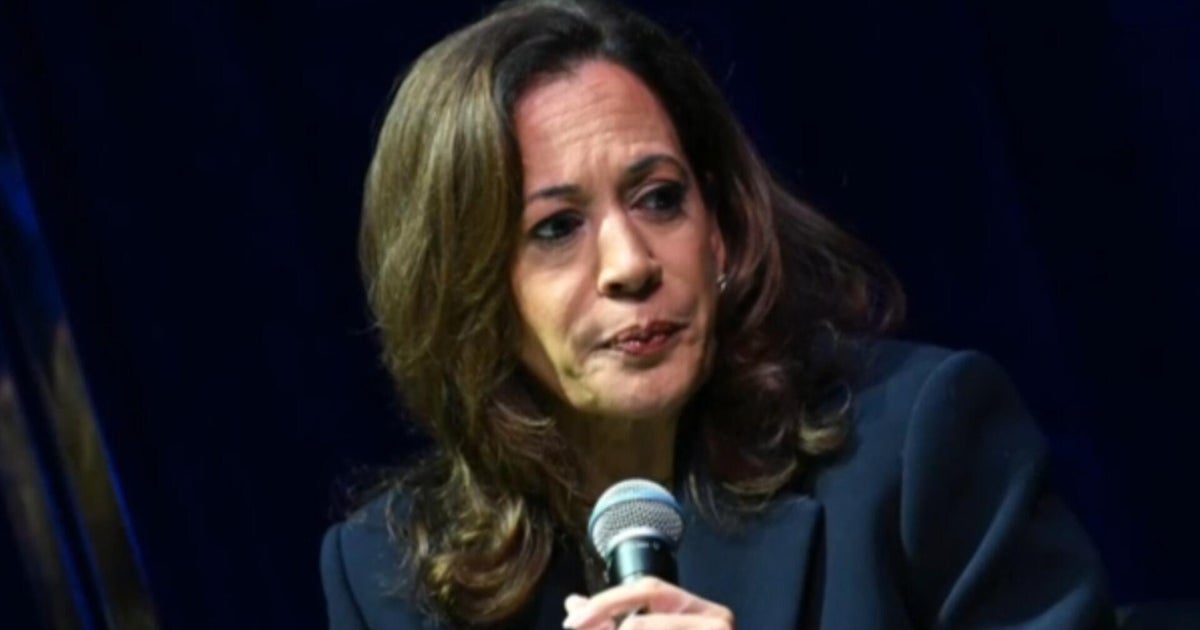
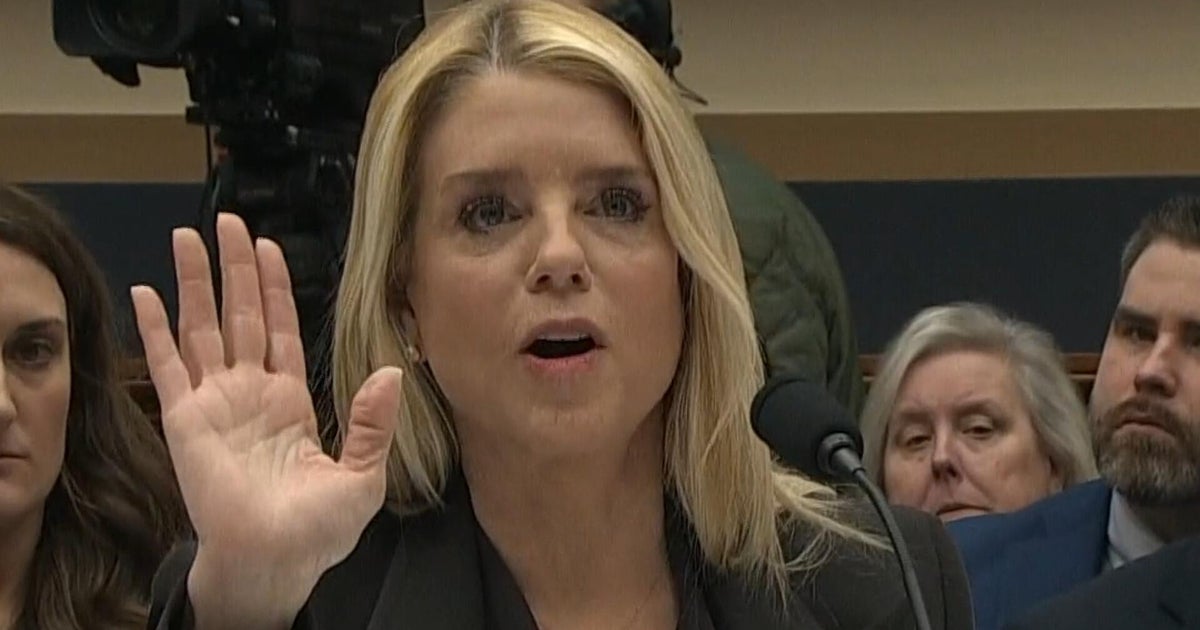
Pam Bondi and House Democrats trade fiery barbs at Epstein hearing

A shouting match broke out as Attorney General Pam Bondi sparred with critics in Congress over her handling of the Justice Department’s release of files related to Jeffrey Epstein.

The heated exchange underscored the intense scrutiny surrounding the case and the department’s transparency.

Scott MacFarlane has more on this developing story.
https://www.cbsnews.com/video/pam-bondi-and-house-democrats-trade-fiery-barbs-at-epstein-hearing/

Trump plans to revoke EPA’s authority to regulate carbon emissions

The Trump administration is preparing what environmental experts are calling one of the most sweeping regulatory rollbacks in modern history. The president plans to revoke the Environmental Protection Agency’s (EPA) legal authority to regulate carbon emissions on Thursday.

If this authority is withdrawn, it could upend decades of U.S. climate policy, significantly impacting efforts to address climate change.

CBS News’ David Schechter has more details on this developing story.

https://www.cbsnews.com/video/trump-plans-revoke-epas-authority-regulate-carbon-emissions/

Lopez: A political earthquake in mayor’s race makes election a referendum on L.A.’s future

L. A. Mayor Karen Bass was having a really bad week. But then it turned into a pretty good week, and she must have breathed a sigh of relief. Until the Saturday morning surprise.

I had to set fire to my scorecard, and to the column I had just drafted, which touched on all the expected big-name challengers who had bowed out of the mayoral race in the past several days: L. A. County Supervisor Lindsey Horvath, billionaire businessman Rick Caruso (who forced a runoff with Bass the last time around), and former L. A. Unified schools chief Austin Beutner. It was looking as though we wouldn’t get a badly needed, monthslong, toe-to-toe face-off about all that’s right and wrong in the sprawling metropolis of high hopes and low expectations.

In a conversation I had with Loyola Marymount University’s Fernando Guerra, a decades-long observer of the local political scene, he made this observation about the dull political season that was shaping up: “What is interesting to me is that no one from the establishment political class is running against [Bass] when she is clearly vulnerable.”

Vulnerable because of her handling of the Palisades fire and its aftermath. Vulnerable because of limited progress on core issues such as homelessness, housing affordability, and the shameful condition of streets, sidewalks, and parks.

But then came Saturday morning, when, in an unexpected move, L. A. City Councilmember Nithya Raman decided to step up, injecting a new element of drama into the race. It was a surprise because Raman and Bass are not political enemies. In fact, they’ve largely been allies and have endorsed each other’s reelection bids.

So what was Raman thinking in signing up for a challenge in which she is clearly the underdog?

“I have deep respect for Mayor Bass. We’ve worked closely together on my biggest priorities and her biggest priorities, and there’s significant alignment there,” Raman told The Times. “But over the last few months in particular, I’ve really begun to feel like unless we have some big changes in how we do things in Los Angeles, that the things we count on are not going to function anymore.”

There’s more to it than that, in political terms. Raman is to the left of Bass and the traditional left in Los Angeles. She and three other council members supported by the Democratic Socialists of America have changed the conversation at City Hall, with more emphasis on social service, housing, and labor issues, and less on traditional law enforcement.

Among their supporters are renters, immigrants, young adults, the underserved, and the frontline workers in the minimum-wage economy. Raman’s candidacy, along with DSA candidates for other city offices, makes the election something of a referendum on the evolving center of political clout in L. A.

It raises the question of whether the city is ready to blow things up and move further in the direction of New York City, which just elected as mayor the ultra-progressive Zohran Mamdani. And for all of that, it also raises the question of whether progressives can both deliver on their promises and also balance a budget. No easy task there.

As for Bass, you don’t get as far in politics as she has—from the state Legislature to Congress to City Hall—without sharp survival skills and without collecting friends you can count on, even when the road to reelection is filled with potholes. And even when an ally comes after you.

“Wow, what a surprise,” Guerra said upon Raman’s entry into the race. He considers her a formidable foe who was the first to prove “that the DSA can win in Los Angeles” and who brings several advantages to a campaign against Bass.

For one, she has a record of some success on homelessness in her district and was involved in that cause in the Silver Lake area before she was in public office, when she identified a startling lack of coordination and continuity. And by virtue of her age, 44, she’s aligned with younger voters hungry for change in political leadership.

It’s possible that with Raman in the race, and the nuts-and-bolts issues of governance now center stage, there will be slightly less emphasis on Bass’s handling and mishandling of the Palisades fire, which destroyed thousands of properties, wiped out a vibrant community, and killed 12 people.

When I said at the top of this column that Bass was having a really bad week, I was referring to the Palisades fire and the latest story from Times investigative reporters Alene Tchekmedyian and Paul Pringle.

They had already established that the Los Angeles Fire Department had failed to pre-deploy adequately for the fire, and that it had failed to extinguish an earlier fire that later triggered the epic disaster. The reporters had also established that the so-called “after-action” report on the fire had been altered to downplay failures by the department and the city, all of which was scandalous enough.

But on Wednesday, Tchekmedyian and Pringle reported that Bass was involved in the revisions despite her earlier denials. The mayor “wanted key findings about the LAFD’s actions removed or softened before the report was made public,” according to sources.

Bass vehemently denied the allegations and blasted The Times. But even before the latest story, Bass’s Palisades report card was one that a prudent person might have fed to the dog. She had left the country just before the fire despite warnings of potentially cataclysmic conditions. And multiple other missteps followed, including the botched hiring and early departure of a rebuilding czar.

Raman has not targeted Bass’ handling of the fire, and we’ll see if that changes.

I don’t consider the response to the ICE raids to be a point of contention between Raman and Bass. One of the mayor’s strengths in office has been her defense of the city’s immigrants and her pushback against President Trump.

“Bass gets high marks resisting ICE,” Guerra said of polling and public opinion surveys he has either conducted or reviewed. “But on other issues, including homelessness, she does not do well.”

Two-thirds of voters in one poll said they would not back Bass in the June primary, Guerra said. But that poll did not offer an alternative to Bass, and now there is one. Actually, several.

The others include Brentwood tech entrepreneur Adam Miller, who’s got money to spend; reality TV personality Spencer Pratt, a Republican who lost his Palisades home and has been hammering the mayor; and minister/community organizer Rae Huang, a Democratic socialist.

Do they matter, given the odds against them and the entry of Raman into the race? Yes, they might.

Bass needs more than 50% of the June primary vote to win outright. But with Raman and the others grabbing varying percentages of the vote, a two-person November runoff is likely—and the candidates will almost surely be Bass and Raman.

After a crazy week in L. A., allies are now foes. And the race for mayor just got interesting.
https://www.latimes.com/california/story/2026-02-07/lopez-column-bass-mayor-race

Trevor Noah Roasts Nicki Minaj at Grammys for Going MAGA: ‘She’s Still at the White House With Donald Trump’

Although Trevor Noah usually keeps his Grammy hosting duties free of political discussion, he used his enthusiastic opening monologue to poke fun at Nicki Minaj’s recent turn to fawning over Donald Trump. After lightly joking with scores of superstars in the audience, Noah pointed out that the A-list rapper wasn’t at the award show.

“Nicki Minaj is not here,” he said. “She’s still at the White House with Donald Trump, discussing very important issues. ‘Actually Nicki, I have the biggest ass! Everybody’s saying it. I know they say it’s you, but it’s me. WAP, WAP, WAP. Look at it, baby.’”

Minaj has caused debate among her fanbase recently by her very visible support of Donald Trump and the MAGA movement.

Last year, Noah’s monologue was subdued, given the recency of the devastating Los Angeles wildfires, but he did take aim at the Trump administration’s tariffs.

The Feb. 1 ceremony marks the sixth time that Noah has hosted the Grammys. This is set to be his final time as well, which the show’s executive producer, Ben Winston of Fulwell Entertainment, revealed in January.

“I am beyond thrilled to welcome Trevor Noah back to host the Grammys for his sixth, and sadly, final time,” Winston said. “He’s been the most phenomenal host of the show. He’s so smart, so funny, and such a true fan of the artists and music. His impact on the show has been truly spectacular, and we can’t wait to do it together one last time.”

Meanwhile, criticism of ICE raids has grown even louder in recent weeks, especially following the Jan. 24 shooting death of Alex Pretti. Several Hollywood figures have spoken out against the killing, including Whoopi Goldberg on “The View,” Sundance attendees during a Park City protest, and actors with films at the Sundance Film Festival.

The 68th Annual Grammy Awards are taking place at the Crypto.com Arena in Los Angeles. Kendrick Lamar leads the night with the most nominations, totaling nine, including record of the year, song of the year, and album of the year.
https://variety.com/2026/music/news/trevor-noah-nicki-minaj-grammys-trump-maga-1236641769/

Sydney Sweeney on “MAGA Barbie” Nickname: “I’ve Never Been Here to Talk About Politics”

Sydney Sweeney Believes in Separation of Arts and Politics

Appearing on the cover of Cosmopolitan, the *Euphoria* actress Sydney Sweeney addressed being at the “center of a lot of culture war conversations,” likely referencing her viral American Eagle jeans ad that sparked widespread backlash.

When asked about being labeled “MAGA Barbie” and her hesitancy to speak about her personal politics, Sweeney reaffirmed that politics is not a topic she wants to discuss publicly.

“I’ve never been here to talk about politics. I’ve always been here to make art, so this is just not a conversation I want to be at the forefront of,” Sweeney said. “And I think because of that, people want to take it even further and use me as their own pawn. But it’s somebody else assigning something to me, and I can’t control that.”

On why she doesn’t clarify or correct speculation about her political views, the *Christy* star explained, “I haven’t figured it out. I’m not a hateful person. If I say, ‘That’s not true,’ they’ll come at me like, ‘You’re just saying that to look better.’ There’s no winning. There’s never any winning. I just have to continue being who I am, because I know who I am. I can’t make everyone love me. I know what I stand for.”

Sweeney also noted that she doesn’t see herself confirming her political beliefs in the future.

“No,” she said when asked. “I’m not a political person. I’m in the arts. I’m not here to speak on politics. That’s not an area I’ve ever even imagined getting into. It’s not why I became who I am. I became an actor because I like to tell stories, but I don’t believe in hate in any form. I believe we should all love each other and have respect and understanding for one another.”

The American Eagle Campaign Controversy

Sweeney’s July 2025 American Eagle campaign stirred controversy, especially a segment where she says, “Genes are passed down from parents to offspring, often determining traits like hair color, personality and even eye color. My jeans are blue.”

Some critics argued that the campaign’s tagline, “Sydney Sweeney Has Great Jeans,” was a play on the term “great jeans” versus “great genes,” suggesting it promoted eugenics. The backlash was so significant that American Eagle issued a statement clarifying,

“‘Sydney Sweeney Has Great Jeans’ is and always was about the jeans. Her jeans. Her story.”

Sweeney previously addressed the controversy in a November interview with *GQ*, saying, “I did a jean ad. I mean, the reaction definitely was a surprise, but I love jeans. All I wear are jeans. I’m literally in jeans and a T-shirt every day of my life.”

She described it as “surreal” to see the president and vice president speak about the ad.

“I knew at the end of the day what that ad was for, and it was great jeans, it didn’t affect me one way or the other,” she told *GQ*. “I’ve always believed that I’m not here to tell people what to think. When I have an issue that I want to speak about, people will hear.”
https://www.hollywoodreporter.com/news/general-news/sydney-sweeney-maga-barbie-not-talk-politics-1236490320/

Debate heats up over potential court expansion in Utah

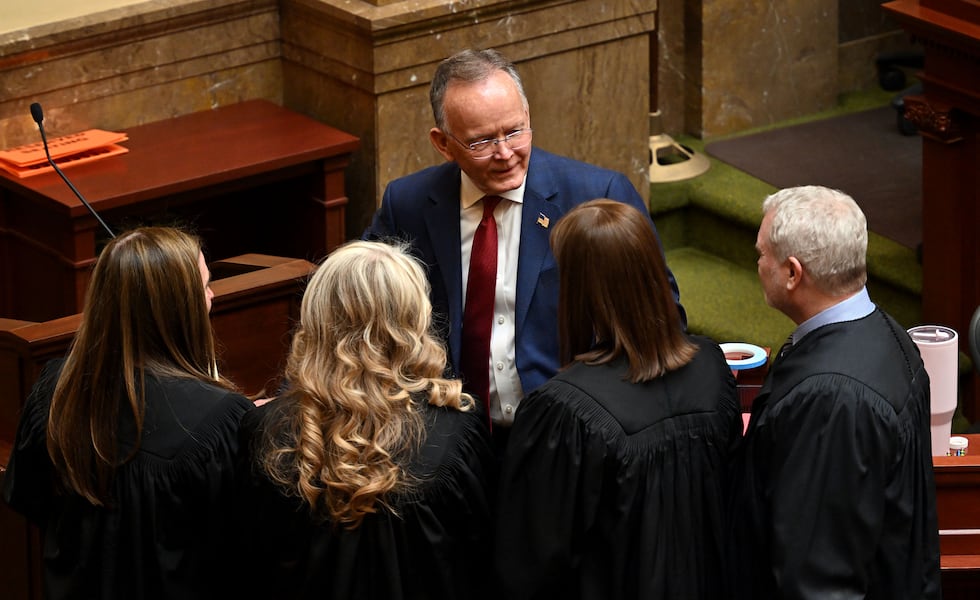
A bill seeking to expand Utah’s judiciary, both in the lower courts and up to the Supreme Court, was introduced with heavy discussion and debate in a state Senate committee on Thursday. The initiative, led by GOP lawmakers, aims to help the court system manage its growing caseload.

The bill, SB134, advanced with a 9-to-1 vote, with Sen. Stephanie Pitcher, D-Millcreek, casting the sole dissenting vote. It proposes adding more judges to the state Supreme Court and Court of Appeals. Additionally, amendments to the bill would add one district court judge each in Salt Lake City, St. George, and Provo.

Currently, the Utah Supreme Court consists of five justices, while the Court of Appeals has seven judges. Sen. Chris Wilson, R-Logan, the bill’s chief sponsor, is proposing to increase the highest court to seven justices and the appellate court to nine judges.

Wilson noted, “In 1896, when Utah became a state, we had 276,000 people and a Supreme Court of three justices. That was expanded to five justices in 1917 when the population was roughly 444,000.” He added, “In 1987, we created the Court of Appeals with seven judges when the state had a population of 1.7 million. Since that time, our population has doubled to 3.5 million.” Utah is now the 30th largest state in the country.

Wilson also pointed out that “there are roughly 35 states with either seven or nine justices. Of those, 10 of the closest states in population to Utah have somewhere between seven and nine justices on their Supreme Courts.” His argument centers on the fact that a growing population naturally leads to a growing judicial caseload.

If the bill passes the Legislature and is signed by Governor Spencer Cox—as expected, since he suggested the idea last month—it would mark the first time since 2016 that a state has increased the number of judges on its Supreme Court bench.

However, not everyone supports the expansion. Sen. Stephanie Pitcher previously told the Deseret News that she views the Supreme Court expansion as politically motivated rather than a response to caseload concerns. She stated, “It has everything to do with the fact that my colleagues are getting rulings they’re not happy with.”

Recent contentious issues, such as abortion and the state’s most recent redistricting dispute, have heightened tensions between the legislature and judiciary.

Most public comments during Thursday’s hearing expressed little concern about adding judges to the lower courts; opposition primarily focused on increasing the number of Supreme Court justices. Law professors, attorneys, and concerned citizens criticized the proposed increase as an attempt by GOP leadership to engage in court-packing—a legislative-driven change versus a voter-initiated change.

Opponents also argued that the legislature should prioritize addressing judicial needs only as identified by the judiciary itself.

Earlier this week, during his State of the Judiciary address, Chief Justice Matthew B. Durrant made it clear that adding more justices to the Supreme Court was not the court’s preference. Regarding caseload concerns, Durrant noted that in 2025, the state’s Supreme Court finally cleared the backlog caused by the COVID-19 pandemic, and its caseload is now considered normal.

“Disagreement is inherent in our system of government. Public disparagement of another branch is not,” Durrant told the Legislature. “While polarized ‘us versus them’ rhetoric has become common in national circles, it is not and should not be the norm here.”
https://www.deseret.com/utah/2026/01/22/utah-bill-seeks-supreme-court-lower-court-expansion-public-dissent/

Trump administration scraps multimillion-dollar

SAN JUAN, Puerto Rico — The administration of U.S. President Donald Trump has canceled solar projects in Puerto Rico worth millions of dollars, even as the island struggles with chronic power outages and a crumbling electric grid.

The canceled projects aimed to help 30,000 low-income families in rural areas across the U.S. territory as part of a now-fading transition toward renewable energy.

In an email obtained by The Associated Press, the U.S. Energy Department expressed concerns that a push under Puerto Rico’s former governor for a 100% renewable future threatened the reliability of the island’s energy system.

“The Puerto Rico grid cannot afford to run on more distributed solar power,” the department’s message stated. “The rapid, widespread deployment of rooftop solar has created fluctuations in Puerto Rico’s grid, leading to unacceptable instability and fragility.”

However, Javier Rúa Jovet, public policy director for Puerto Rico’s Solar and Energy Storage Association, disputed that claim in a phone interview.

He said approximately 200,000 families across Puerto Rico rely on solar power, which generates close to 1.4 gigawatts of energy daily for the rest of the island. “That’s helping avoid blackouts,” Rúa Jovet said, adding that the inverters of those systems also help regulate fluctuations across the grid.

Expressing his disappointment, he called the cancellation of the solar projects “a tragedy.” “These are funds for the most needy,” he added.

Earlier this month, the Energy Department canceled three programs, including one worth $400 million, which would have installed solar and battery storage systems in low-income homes and those with medical needs.

According to the department’s email, on January 9, it planned to reallocate up to $350 million from private distributed solar systems to support fixes aimed at improving power generation in Puerto Rico. It remains unclear if that funding has since been allocated.

One program would have financed solar projects for 150 low-income households on the small Puerto Rican island of Culebra.

“The people are really upset and angry,” said Dan Whittle, associate vice president with the Environmental Defense Fund, which was overseeing that project. “They’re seeing other people keep the lights on during these power outages, and they’re not sure why they’re not included.”

Whittle noted that a privately funded project installed solar panels and batteries on 45 homes just a week before Hurricane Fiona hit Puerto Rico in September 2022. He expressed bafflement at the federal government’s decision.

“They are buying hook, line, and sinker that solar is the problem. It could not be more wrong,” he said.

These solar projects were part of an initial $1 billion fund created by the U.S. Congress in 2022 under former President Joe Biden to help boost energy resilience in Puerto Rico, which is still recovering from Hurricane Maria.

The Category 4 storm devastated the island in September 2017, destroying an already weakened electric grid, which suffered from years of a lack of maintenance and investment. Since then, power outages have persisted, with massive blackouts striking on New Year’s Eve 2024 and during Holy Week last year.

In recent years, residents and businesses able to afford solar energy have increasingly embraced it on an island of 3.2 million people with a poverty rate exceeding 40%. However, more than 60% of Puerto Rico’s energy is still generated by petroleum-fired power plants, 24% by natural gas, 8% by coal, and only 7% by renewables, according to the U.S. Energy Information Administration.

The cancellation of the solar projects comes just a month after the administration of Puerto Rico Governor Jenniffer González sued Luma Energy, the private company overseeing the transmission and distribution of power on the island.

At the time, Governor González criticized the electrical system’s performance, stating it “has not improved with the speed, consistency or effectiveness that Puerto Rico deserves.”
https://abcnews.go.com/Technology/wireStory/trump-administration-scraps-multimillion-dollar-solar-projects-puerto-129474251

Previously postponed measures regarding Denver Summit FC stadium head to city council

**Denver NWSL Stadium Plans Advance as City Council Moves Key Measures Forward**

Four key measures regarding the proposed National Women’s Soccer League (NWSL) stadium in Denver have advanced out of committee and are headed to the full city council. This comes after a previous postponement due to unanswered questions about the stadium’s site and finances.

The action items addressed Wednesday include:
– A property agreement
– An intergovernmental agreement with the Broadway Station Metropolitan District
– Approval to reallocate $50 million from Capital Improvement Projects
– A Department of Finance amendment to the 2025 intergovernmental agreement

These measures were held back during November’s South Platte River Committee meeting, after some documents were incomplete and committee members sought additional details.

**Push for Transparency and Answers**

District 7 Councilmember Flor Alvidrez explained the reason for the delays:
“One of the biggest reasons that these were postponed is we didn’t have all the details, and we were provided some blank pages at committee… now we have the details for those.”

She told Denver7 prior to Wednesday’s meeting that recent work by the council has provided much-needed clarity:
“I feel like we have gotten a lot of answers,” Alvidrez noted. “All of these things seem like positive momentum that will get us before council.”

**Stadium Location Uncertainty and Parallel Negotiations**

During the meeting, city council as well as team leadership addressed concerns about comments made in November by Denver Summit FC. The club had previously stated it was “pursuing a parallel path regarding the stadium site and engaging with other jurisdictions outside of Denver,” raising questions about the project’s future in the city.

Denver Summit FC’s ownership reiterated their commitment to fulfilling obligations to the league and the community, emphasizing a goal to open the stadium by March 2028. However, due to concerns with the current council process, ownership confirmed ongoing conversations about possible stadium sites outside Denver city limits.

Despite these contingencies, ownership remains open to collaboration:
“We will continue to engage in an open and honest dialogue with the Mayor, City Council and Community in Denver. We are grateful for the steadfast support we have received from fans, the community, the Mayor, the business community and small businesses throughout Denver,” a team statement shared.

**Council and Ownership Exchange**

Council President Amanda Sandoval clarified her intentions regarding prior committee actions:
“I did not come in last time thinking I was going to stop this from moving forward,” Sandoval stated. “I was asking questions from the documents that I received, and that’s all I was doing, and that’s what I was elected to do.”

Team president Jen Millet addressed council directly:
“I would like, if I might, to apologize for not doing outreach,” Millet said to Sandoval. “Our effort was to make sure that we lived up to that responsibility and not to push back on this process.”

Team owner Rob Cohen added:
“None of us are happy about how the process evolved. I just wanted it to be on public record that we did not go to the media. We did not make threats. Somebody else went to the media and said we were talking to other jurisdictions … we merely responded to that, and then we were just transparent in the fact that if city council was going to do their homework … we needed to do ours, to make sure we were protecting the club, the fans, the players, etc. in case … the city didn’t approve this.”

He emphasized, “I think that was our fiduciary responsibility … it’s not meant to be personal in any way. I appreciate that everybody is trying to do what’s right … I’m going to assume positive intent from each and every person that we interact with.”

**Next Steps**

At the meeting’s end, committee members entered executive session to discuss “threatened litigation” related to the stadium plans. Afterward, the committee voted to move all four action items to full city council review.

A Denver Summit FC spokesperson provided a statement to Denver7:
“Denver Summit FC is excited to continue to take the next steps towards our goal of a purpose-built, soccer-specific stadium in Denver’s urban core. We appreciate the continued support and collaboration from the Denver Community, Denver City Council, WENU, the Mayor’s Office, local businesses and our fans and supporters. We look forward to next week’s meeting and remain committed to creating something impactful for the Denver community.”

**Looking Ahead**

Denver City Council is expected to have a first reading on the stadium action items on Monday, Dec. 15. A second reading and vote is anticipated for Dec. 22.

Stay tuned for further updates as the project moves forward.
https://www.denver7.com/news/front-range/denver/previously-postponed-measures-regarding-denver-summit-fc-stadium-head-to-city-council

Australia’s top universities say Horizon association is ‘a strategic necessity’

Despite the EU being Australia’s largest foreign research funder, granting €1. 8 billion between 2015 and 2024, the country has never been an associate member of Europe’s Framework Programmes for research and innovation. That could change if exploratory talks launched in September bear fruit. The prize for Australia’s universities was spelled out in a Horizon Europe Capability Statement released on.
https://sciencebusiness.net/news/r-d-funding/international-news/australias-top-universities-say-horizon-association-strategic-necessity

Exit mobile version
Sitemap Index