
In a letter published on the SEC’s website and dated November 21, the World Federation of Exchanges (WFE), whose members include Nasdaq and Deutsche Boerse, stated that the regulator must avoid allowing crypto companies to “bypass regulatory principles that have safeguarded markets for decades.” WFE chief executive Nandini Sukumar stated that exempting unregistered crypto firms would risk allowing products that look like equities to be offered without the protections that accompany real stock ownership. The body representing exchanges voicing its concerns comes as the SEC considers whether to issue a form of “innovation exemption” that would allow crypto companies to offer blockchain-based tokens representing exposure to listed stocks, instruments that would be sold to US retail investors without the platforms registering as broker-dealers. This proposal, which is supported by several crypto platforms, is being considered by SEC chair Paul Atkins, highlighting the agency’s recalibrated approach to digital assets under the Trump administration. The tokenization debate divides traditional and crypto finance This is not the first time the WFE has raised concerns about tokenized equities. In August, it wrote to regulators in the U. S., Europe, and Asia, urging a crackdown on unlicensed platforms offering tokenized stocks, warning of investor-protection issues and reputational risks for listed companies whose names are used without consent. It went further to ask that regulators apply the same rules used on securities to tokenized assets. Despite the body’s concerns, interest in tokenization continues to grow across the financial sector. Large banks, asset managers, and trading venues have begun exploring blockchain-based settlement and token-form assets as part of efforts to modernize financial infrastructure. The trend has gained more traction this year as crypto-native platforms seek direct access to the US equities market, while traditional exchanges experiment with on-chain settlement models. Nasdaq’s push for regulated tokenized securities. Nasdaq, one of the WFE’s most prominent members, has simultaneously been pushing for a regulated path toward tokenization. In September, it submitted a formal rule-change proposal that would allow the exchange to list and trade stocks in tokenized form, assigning the digital instruments the same regulatory treatment, including rights and CUSIP identification, as conventional shares. However, Ondo Finance, a blockchain startup offering financial market solutions, called for delays until Nasdaq provides further details on how trades in tokenized form would be processed through the Depository Trust Company, which operates the core plumbing of US securities settlement. Within the WFE itself, members acknowledge tokenization’s potential. The letter describes blockchain-based equity instruments as a “natural evolution in capital markets.” However, many exchanges argue that innovation must occur within the existing regulatory framework rather than through exemptions granted to unlicensed crypto platforms. James Auliffe, head of the WFE’s technology working group, said equity markets are already “very, very efficient,” and that proponents of moving trading onto blockchains still need to prove the benefits outweigh the costs. High stakes for regulators and markets The SEC’s decision on the matter will shape the future of how equities are traded and accessed in the US. Allowing tokenized stocks to be offered without conventional broker-dealer oversight could potentially enable firms outside the traditional financial system to compete directly with exchanges and brokers that face far stricter compliance obligations. Investor advocates fear that retail traders may not understand the difference between owning a token linked to a stock and holding the real equity itself. Earlier this year, companies including OpenAI warned that tokenized versions of their shares circulating on trading apps did not represent actual ownership. Join Bybit now and claim a $50 bonus in minutes.
https://bitcoinethereumnews.com/crypto/us-nasdaq-germanys-deutsche-boerse-lead-lobby-against-relaxed-sec-crypto-regulation/
Tag: blockchain-based
Hadron by Tether Partners with Crystal Intelligence to Harden Tokenization Controls
Tether’s asset tokenization arm, Hadron by Tether, said Tuesday that it has struck an agreement with blockchain analytics firm Crystal Intelligence to boost compliance and monitoring for tokenized real-world assets (RWAs). The deal will give institutions using Hadron streamlined access to Crystal’s analytics and forensic tools, a move Tether frames as a step toward making tokenized instruments safer, more transparent, and fit for large-scale institutional use. The announcement arrives as the RWA market is experiencing explosive growth. Industry trackers report that tokenized real-world assets have expanded roughly 380 percent over the past three years and reached about $24 billion in 2025, a surge observers say reflects growing appetite from traditional finance to deploy blockchain rails for familiar instruments. Some forecasts see the broader tokenization opportunity climbing toward the trillions over the next decade as markets, standards, and infrastructure mature. Boosting RWA Compliance Hadron’s agreement with Crystal is designed to address one of the chief hurdles to that institutional adoption: compliance readiness. Under the partnership, Hadron customers will be able to access Crystal’s suite of tools, from AML screening and transaction monitoring with configurable risk scores to on-chain forensic capabilities and solutions tailored for RWA risk profiles, as part of the token issuance and lifecycle workflow. Tether and Crystal position the integration as a way to fold enterprise-grade controls into tokenization from day one. “Secure and compliant infrastructure is essential for real-world asset markets to operate at scale,” Paolo Ardoino, CEO of Tether, said in the company’s release, stressing that institutional participation depends on systems combining transparency, accountability, and resilience. “Through Hadron by Tether and Crystal, we’re providing streamlined access to the technology and analytics needed to meet those expectations and bridge traditional financial markets with blockchain-based systems.” Navin Gupta, CEO of Crystal Intelligence, echoed that line, saying the collaboration lowers the barrier for institutions and establishes a benchmark for secure tokenization. The statement underscores a wider industry trend: as regulators and custodians raise the bar for due diligence, tokenization platforms are increasingly partnering with compliance specialists to reassure banks, asset managers, and sovereign issuers that on-chain products can meet off-chain regulatory and operational standards. Hadron by Tether bills itself as a platform that simplifies converting traditional assets into digital tokens, with tools for issuing and burning tokens, KYC, blockchain reporting, capital market management and regulatory guidance. The platform has been pitched not only to corporate and fund issuers but to a range of actors that could use tokenized collateral to raise funds, from businesses to nation-states. By bundling compliance tooling into that stack, Hadron aims to make tokenization a less risky proposition for institutions that demand full auditability and robust controls. Industry observers say the timing is logical: tokenization has moved out of pilots and into products that need strong guardrails. With the market’s rapid expansion and regulators around the world clarifying, and in some cases tightening, rules for tokenized products, platforms that can offer both issuance convenience and enterprise-grade surveillance are likely to have an edge when large asset managers and banks decide whether to participate. For Hadron participants, access to Crystal’s analytics could be the difference between cautious experimentation and scaled deployment. For now, the pact between Hadron by Tether and Crystal Intelligence is part of a broader wave of integrations and partnerships aimed at turning tokenized real-world assets from an experimental niche into an institutional plumbing layer. As the tokenization market grows, so too will the demand for the kind of compliance and reporting tooling that makes mainstream buyers comfortable moving traditional value onto blockchains.
https://bitcoinethereumnews.com/tech/hadron-by-tether-partners-with-crystal-intelligence-to-harden-tokenization-controls/


Avax One increases token holdings after November acquisition
Avax One Technology increases AVAX holdings to 13. 8M in November, launching a buyback program to align long-term growth with Avalanche ecosystem goals. AVAX One Technology Ltd. has increased its AVAX token holdings to over 13. 8 million following an aggressive acquisition campaign in November, according to a company press release. The firm acquired an additional 9, 377, 475 AVAX tokens between November 5 and November 23, 2025, expanding its digital asset treasury as part of a strategy to scale its institutional infrastructure on the Avalanche network. AVAX treasury expansion The treasury expansion aims to increase AVAX per share for investors while supporting the company’s long-term onchain financial infrastructure development, according to the press release. Management stated the growing AVAX holdings represent part of a long-term value creation strategy for shareholders. The company maintains cash reserves alongside its AVAX accumulation for potential stock buybacks or additional token acquisitions, according to the statement. AVAX One indicated it intends to continue purchasing AVAX opportunistically to optimize returns while aligning with its onchain financial economy objectives. The strategy includes deploying yield-generation methods for existing holdings, according to the company’s public statement. The firm completed a corporate rebrand earlier this month to support the treasury initiative. AVAX One recently announced a share repurchase program designed to complement its AVAX accumulation strategy. The company is expected to begin stock purchases soon, according to the press release. Remaining cash reserves provide flexibility for additional AVAX acquisitions or other capital formation opportunities, the company stated. The firm stated it aims to assess market conditions carefully, reflecting a strategic approach to treasury growth. Management indicated both stock buybacks and token purchases currently offer value opportunities. The treasury expansion aligns with AVAX One’s stated objective to become the largest AVAX digital asset treasury. Management confirmed all strategic initiatives are designed to drive AVAX per share growth, according to the press release. AVAX One positions itself as a participant in Avalanche‘s onchain financial economy, with AVAX holdings serving as a foundation for blockchain-based financial services, according to company statements. The firm stated it prioritizes transparency and governance within its digital asset strategy. The company reported it continues to monitor market opportunities for further AVAX accumulation while seeking to preserve financial stability and growth potential.
https://bitcoinethereumnews.com/tech/avax-one-increases-token-holdings-after-november-acquisition/
Tether Partners with Da Nang City to Boost Blockchain-Based Governance
**Tether Partners with Da Nang City to Advance Blockchain-Powered Digital Governance**
Tether, a leading entity in the digital asset industry, has entered into a Memorandum of Understanding (MoU) with the People’s Committee of Da Nang City, Vietnam. This strategic collaboration is set to foster the development of blockchain-powered digital governance and infrastructure in the city.
### Advancing Digital Infrastructure
The MoU lays the foundation for Tether and Da Nang City to jointly explore and implement blockchain technologies, digital assets, and peer-to-peer innovations. By adopting international best practices, the partnership aims to enhance transparency, efficiency, and resilience in Da Nang’s digital governance systems.
### Policy and Innovation Support
A key aspect of the agreement is Tether’s commitment to supporting the development of policies conducive to blockchain technology and digital assets within the city. This involves introducing sandbox experimentation and the tokenization of real-world assets (RWAs). Leveraging its global expertise, Tether will assist Da Nang City in aligning its frameworks with international standards, including elements modeled after the Plan ₿ initiative.
### Educational and Training Initiatives
Tether and Da Nang City will collaborate with Vietnamese universities and research institutions to promote education in blockchain and artificial intelligence (AI) technologies. Together, they plan to design specialized training programs focused on building local capacity for managing blockchain-based payment systems. These efforts aim to modernize the local transactional ecosystem and promote greater financial inclusion.
### Strategic Vision
Paolo Ardoino, CEO of Tether, highlighted Da Nang’s emerging status as a hub for digital governance in Southeast Asia. He emphasized that the city’s forward-looking vision aligns closely with Tether’s mission to build inclusive and efficient digital ecosystems.
Ho Ky Minh, Standing Vice Chairman of the Da Nang People’s Committee, reiterated the city’s ambition to become a trusted destination for global technology and financial corporations. He views the partnership with Tether as a pivotal move in achieving this goal.
—
This MoU reflects Tether’s overarching objective of bridging traditional finance with decentralized innovations—promoting transparency and sustainable growth. Da Nang’s strategic location, robust digital infrastructure, and progressive regulatory environment position it as a key player in attracting global technology investments and driving blockchain innovation.
https://bitcoinethereumnews.com/blockchain/tether-partners-with-da-nang-city-to-boost-blockchain-based-governance/


HBAR Price Climbs as ETF Adds 380 Million Tokens Amid Renewed Demand
Despite short-term consolidation, analysts expect renewed strength in Hedera Hashgraph (HBAR) as ETF inflows and enterprise adoption continue to rise. Currently trading at around $0.17 and exhibiting bullish momentum, investors anticipate potential upside amid expanding network activity and growing market stability.
**Canary HBAR ETF Expands Holdings Above 380 Million Tokens**
New portfolio data released on November 5, 2025, reveals that the Canary ETF (HBR) has significantly increased its exposure to Hedera Hashgraph. The fund now holds over 380 million HBAR tokens. According to market data analyzed by ALLINCRYPTO, the total value of these holdings is approximately $66 million, based on the latest market prices.
This accumulation represents one of the largest institutional positions in Hedera to date, signaling growing investor confidence and participation in the token’s ecosystem. The near-complete allocation toward HBAR highlights the fund’s focused investment strategy on assets underpinned by enterprise adoption and blockchain utility.
With this expansion, Canary ETF has become a key institutional vehicle for gaining exposure to Hedera’s token economy, which continues to garner attention for its scalability and energy-efficient network design.
**Institutional Confidence Builds Around Hedera’s Growth Outlook**
The ETF’s increased holdings align with broader positive developments across the Hedera ecosystem. Over recent months, the token has benefited from a surge in tokenized asset projects, enterprise partnerships, and decentralized applications. These trends have driven stronger institutional engagement, positioning HBAR as a growing component of blockchain-based portfolios.
Canary ETF’s move also reflects rising interest in assets with practical, real-world use cases such as payments, supply chain tracking, and decentralized identity management. Market observers note that funds of this scale often enhance liquidity depth and improve overall market visibility for the underlying asset.
If HBAR maintains its current momentum or records further growth, the ETF’s valuation could approach the $70 million mark. This allocation trend mirrors a gradual institutional shift toward tokens associated with active network use and sustainable infrastructure — areas where Hedera has kept a strong, consistent focus.
**Analysts Anticipate Prolonged Consolidation Before Next Phase**
Analyst BOLUCEE_BLOCK offers a neutral forecast for HBAR’s price trend, suggesting the token may undergo a consolidation phase before its potential recovery. The projection indicates that HBAR could trade sideways through the remainder of 2025, with stabilization possibly extending into early 2026.
According to the analysis, this period of consolidation may reflect cooling momentum following months of accumulation and a lack of new large-scale catalysts. In a less favorable scenario, slower enterprise expansion or reduced adoption rates could keep the asset range-bound for an extended period.
Despite these conditions, the strong presence of institutional holdings is expected to provide underlying market support, helping maintain stability while the ecosystem awaits future adoption triggers.
**Altcoin Price Strengthens Above Key Support Zone**
At press time, Hedera was trading near $0.17, up approximately 4.77% in the past 24 hours. This price increase lifted its market capitalization above $7.3 billion, with a trading volume nearing $295 million, indicating renewed buyer interest.
Intraday data reflected a temporary surge to $0.176, followed by slight profit-taking that brought the price down to around $0.172. At this level, buying pressure has consistently absorbed selling activity, suggesting a strong support zone.
Sustaining prices above this key support could pave the way toward the $0.18 resistance level in the short term. Additionally, the steady rise in trading volume points to growing interest from traders, coinciding with increased institutional accumulation.
As long as demand remains strong, Hedera’s market may continue consolidating gains achieved during the recent ETF expansion phase, setting the stage for potential future growth.
https://bitcoinethereumnews.com/tech/hbar-price-climbs-as-etf-adds-380-million-tokens-amid-renewed-demand/

Pundit Identifies 10 Ways the Ripple and Mastercard Partnership Is Good for XRP
**Ripple Announces Partnership with Mastercard: A Boost for XRP**
*By Sam Wisdom Raphael | TheCryptoBasic | November 5, 2025*
Ripple recently unveiled a significant partnership with global payment giant Mastercard during the Ripple Swell 2025 event held in New York. This collaboration also involves WebBank, a U.S.-regulated financial institution that issues the Gemini Credit Card, and crypto exchange Gemini. Together, these entities plan to pilot blockchain settlement for fiat-based credit card payments using Ripple’s stablecoin, RLUSD, which operates on the XRP Ledger (XRPL).
### Revolutionizing Payment Settlements with Blockchain
The initiative aims to replace traditional, slower financial rails with near-instant blockchain transactions, leveraging the speed and efficiency of the XRPL. Over the coming months, the partners will begin onboarding RLUSD on the XRP Ledger once required regulatory approvals are obtained. Simultaneously, they will plan the integration of this new blockchain settlement process into Mastercard and WebBank’s existing payment systems.
### Why This Collaboration is Good for XRP
Industry experts have pointed out several key benefits this partnership brings to XRP and the XRPL ecosystem:
1. **Boosts XRPL Adoption:** Connecting XRPL to real-world financial services like Mastercard settlements demonstrates blockchain’s practical utility beyond niche applications.
2. **Strengthens Ripple’s Credibility:** Collaborating with respected financial institutions such as Mastercard and WebBank validates Ripple’s technology compliance with major industry standards.
3. **Increases Transaction Activity:** The use of RLUSD for Mastercard payments could significantly increase on-chain transaction volume, enhancing XRP’s utility.
4. **Drives Demand for XRP:** With RLUSD’s circulation recently surpassing $1 billion, growing adoption could naturally elevate demand for XRP.
5. **Key Regulatory Milestone:** The partnership signals Ripple’s ability to develop blockchain payment models that comply with U.S. financial regulations, a major win in the crypto space.
### Additional Potential Benefits for XRP
Beyond these immediate impacts, pundits have identified five more ways XRP could benefit from this collaboration:
6. **Bridges Traditional and Decentralized Finance:** The partnership deepens XRP’s reach by connecting legacy finance systems with decentralized blockchain solutions.
7. **Builds on Previous Successes:** This venture extends Ripple’s earlier achievements, such as the Gemini XRP Credit Card launched in August, which demonstrated XRP’s practical payment use cases.
8. **Improves Market Sentiment:** The announcement is likely to boost investor confidence and reinforce belief in Ripple’s strategic roadmap, which includes ongoing acquisitions and partnerships.
9. **Fuels Broader Ecosystem Growth:** Increased adoption of Ripple’s services, including Ripple Payments, may result from heightened visibility and institutional backing.
10. **Opens Doors for Institutional Adoption:** If Mastercard’s pilot proves successful, similar models could be adopted by other global banks and card issuers, expanding XRP’s footprint in mainstream finance.
—
### Market Insights: XRP and Broader Crypto Developments
– **XRP Rally Target:** Market analyst CasiTrades expects XRP to surge toward a $4.50 rally, signaling an end to its consolidation phase.
– **Cardano Breakout:** A prominent chartist highlights a falling wedge breakout in Cardano, potentially leading to a run above $2 after touching $1.20.
– **Bitcoin Dominance:** Analyst Michaël van de Poppe observes a critical tipping point in Bitcoin dominance that may trigger an altcoin season.
– **Ethereum Gains:** Ethereum has narrowed the gap, nearly matching Bitcoin’s annual performance following strong Q3 gains.
– **Citibank Price Predictions:** Citibank projects Bitcoin to hit $231,000 and Ethereum to reach $7,500 within the next 12 months.
– **XRP Price Scenarios:** Industry leaders speculate on XRP’s growth potential, especially if Bitcoin hits the $1 million milestone.
– **Analyst Price Targets:** EGRAG Crypto maintains a bullish stance, suggesting XRP remains in a strong accumulation zone with macro targets as high as $50.
– **Shiba Inu and Dogecoin Updates:** Shiba Inu recently fell to a 23-month low but could rebound strongly after touching key support levels. Dogecoin shows positive signs of following its initial bull cycle, with analysts forecasting potential price surges.
—
### Disclaimer
This content is for informational purposes only and should not be considered financial advice. The views expressed reflect the author’s personal opinions and do not necessarily represent those of TheCryptoBasic. Readers are advised to conduct thorough research before making any investment decisions. TheCryptoBasic is not responsible for any financial losses incurred.
—
**About the Author**
*Sam Wisdom Raphael* is a seasoned crypto news writer and journalist with five years of experience covering blockchain, DeFi, and cryptocurrency developments. His active engagement with the crypto community and deep knowledge enable him to deliver clear price analyses and explain complex blockchain concepts effectively.
https://thecryptobasic.com/2025/11/06/pundit-identifies-10-ways-the-ripple-and-mastercard-partnership-is-good-for-xrp/

Ripple Expands Real-World Utility — Mastercard Adopts RLUSD on XRP Ledger
Ripple’s RLUSD Pilot Accelerates Blockchain Payments Mainstream Adoption
Ripple’s RLUSD pilot marks a major step toward mainstreaming blockchain-based payments. With increasing competition and ongoing regulatory risks, Ripple’s enterprise-focused strategy and new partnerships are strengthening XRP’s long-term position.
**Major Partnership Announced at Swell 2025**
At its Swell 2025 conference yesterday, Ripple announced a high-stakes partnership with Mastercard, WebBank, and Gemini. This collaboration centers on piloting Ripple USD (RLUSD)—an initiative designed to transform stablecoin remittances and reshape the payments landscape. Stablecoin-based transactions can move money instantly and directly without the need for intermediaries like traditional banks.
This initiative is a pivotal expansion of Ripple’s real-world utility, evolving the XRPL from a cross-border payments specialist into a backbone for everyday fiat settlements.
**Mastercard’s Perspective and the Path to Mainstream**
Sherri Haymond of Mastercard commented:
> “Through our partnerships with Ripple, Gemini, and WebBank, we’re using our global payments network to bring regulated, open-loop stablecoin payments into the financial mainstream.”
Despite excitement, these pilots come with regulatory and operational risks, prompting skepticism until a full-scale rollout is achieved. Nonetheless, analysts highlight that this could become one of the first instances of a regulated U.S. bank settling card payments using a regulated stablecoin on a public blockchain.
**Upcoming Panel Discussion**
A related panel discussion will take place on November 13 at 11:10 AM, where experts will explore key considerations for building alternatives allocations using strategies across private equity, private credit, and liquid alternatives.
**Competition and Ripple’s Unique Advantages**
Meanwhile, competition from rivals like Visa’s stablecoin initiatives continues to intensify. Ripple’s edge lies in its decade-long focus on enterprise-grade blockchain solutions. With RLUSD’s integration—including recent expansions via SWIFT-linked partnerships and acquisitions such as gTreasury—the pilot has the potential to speed up adoption, bridging crypto’s volatility with fiat stability.
**XRPL Technology and Market Outlook**
The XRPL’s decentralized architecture plays a vital role, processing thousands of transactions per second at minimal cost. Built-in compliance tools—including ISO 20022 integration—ensure compatibility with existing financial infrastructure.
The Mastercard partnership injects new energy into XRP’s long-term narrative, supporting a bullish near-term outlook. According to analysts, if regulatory approvals are secured by Q1 2026, XRP could see a 20–30% price increase, potentially pushing the token toward $3 from its current $2.40 range. This would be driven by institutional inflows and improving sentiment.
**XRP Price Update**
Currently, XRP is trading at $2.33, reflecting a 3.8% increase over the past day, following a 7.15% decline over the previous week. By enabling XRPL to support high-volume settlements, the RLUSD pilot is expected to increase demand for XRP as the ledger’s native gas token—even if RLUSD manages the core transfers.
> **See XRP price chart below.**
—
*Recommended for you:*
https://bitcoinethereumnews.com/tech/ripple-expands-real-world-utility-mastercard-adopts-rlusd-on-xrp-ledger/

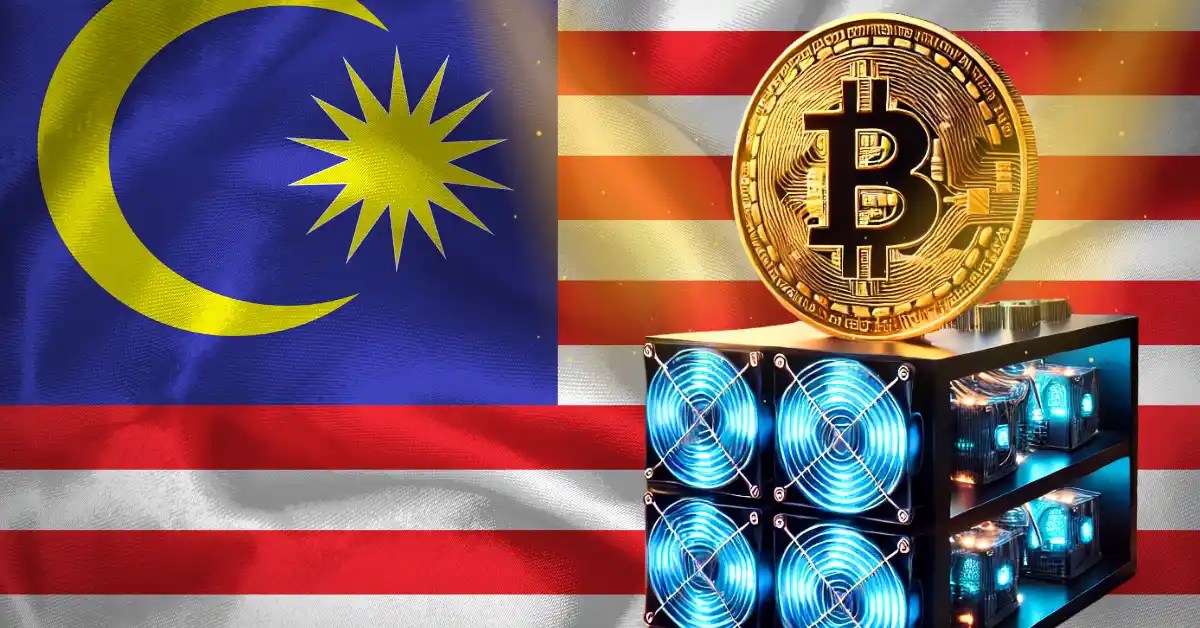
Malaysia Asset Tokenisation Roadmap: BNM’s 3-Year Plan to Build a Digital Asset Innovation Hub
**Malaysia Asset Tokenisation Roadmap: BNM’s 3-Year Plan to Build a Digital Asset Innovation Hub**
Bank Negara Malaysia (BNM) has kicked off a three-year programme to test real-world asset tokenisation. A newly released roadmap aims to explore how blockchain-based tokenisation can transform Malaysia’s financial landscape — from Islamic finance to supply chain management. The central bank is currently gathering industry feedback, with submissions open until March 1, 2026.
—
### Malaysia’s 3-Year Plan for Tokenisation
BNM recently published a Discussion Paper on Asset Tokenisation to collect feedback from the financial and technology sectors. The objective is to establish a **Digital Asset Innovation Hub** and an industry working group to investigate practical applications of tokenisation in financial systems.
The roadmap follows a clear, phased approach over three years:
– **2026:** Focus on proof-of-concept and pilot testing to identify viable solutions.
– **2027:** Expansion of pilot projects into larger-scale trials, guided by early results and stakeholder feedback.
– Stakeholders are encouraged to share ideas and use cases by **March 1, 2026**.
—
### Focus Areas and Selection Criteria
BNM’s working group will prioritize use cases in key sectors such as:
– **Supply Chain Finance:** Using tokenisation to enhance transparency, traceability, and speed of payments.
– **Islamic Finance:** Leveraging blockchain to create more efficient and transparent Shariah-compliant financial products.
However, BNM emphasizes that not all ideas will qualify. Projects must:
– Demonstrate tangible real-world benefits.
– Use blockchain technology only when it is the most suitable solution.
– Be technically feasible within Malaysia’s existing infrastructure.
—
### Why Malaysia Is Exploring Tokenisation Now
BNM aims to address real-world challenges with tokenisation. One primary focus is tackling Malaysia’s **RM101 billion SME financing gap** by converting invoices into digital tokens. This innovation can enable small businesses to access faster and cheaper loans.
Additionally, tokenisation will be applied to Malaysia’s leading **Islamic finance market** (valued at RM2.4 trillion). For example, tokenized sukuk and smart contracts can automate payments, boost liquidity, and maintain full compliance with Shariah principles.
Sustainability is another important area. Tokenized green bonds could link payments directly to verified climate outcomes, reducing greenwashing and increasing investor confidence in Malaysia’s rapidly growing ESG sector.
—
### Looking Ahead
With this comprehensive and structured plan, BNM aims to bridge innovation and practicality. The central bank’s initiative positions Malaysia to become a regional leader in regulated digital finance, fostering inclusive growth and technological advancement.
—
**FAQs**
For more details on Malaysia’s crypto regulations and the broader digital asset landscape, see our related articles.
—
*Have feedback or ideas for asset tokenisation use cases? Submit your input to BNM by March 1, 2026.*
https://bitcoinethereumnews.com/tech/malaysia-asset-tokenisation-roadmap-bnms-3-year-plan-to-build-a-digital-asset-innovation-hub/?utm_source=rss&utm_medium=rss&utm_campaign=malaysia-asset-tokenisation-roadmap-bnms-3-year-plan-to-build-a-digital-asset-innovation-hub


2025 Marks the Year America Became Crypto-Friendly Again
After years of uncertainty and regulatory pressure, the United States has re-emerged as one of the most promising environments for digital assets. According to a16z’s *State of Crypto 2025* report, the world’s largest economy is entering a new era of clarity, confidence, and capital inflows, signaling that crypto’s center of gravity is once again shifting back to U.S. soil.
### From Hostility to Leadership
Just two years ago, the American crypto landscape was defined by enforcement actions, confusion, and hesitation. Many projects relocated offshore to escape unclear rules, and venture funding for U.S.-based blockchain startups plummeted. But 2025 has marked a dramatic reversal.
The bipartisan GENIUS Act, combined with the CLARITY Act, has transformed the tone of U.S. policy toward crypto. Together, these laws provide a structured framework for stablecoins, market oversight, and digital asset classification. This legislation has brought long-awaited predictability to how crypto companies operate — a critical factor for innovation and capital formation.
Complementing these legislative milestones, Executive Order 14178 reversed earlier restrictive measures, mandating federal agencies to coordinate on pro-innovation digital asset policies. A cross-agency task force was established to modernize how government systems interact with blockchain-based infrastructure, creating channels for collaboration rather than confrontation.
a16z notes that this environment has reignited builder optimism across the country.
### The U.S. Capital and Talent Return Home
With the legal fog lifting, capital is flowing back into U.S.-based blockchain ventures. Venture firms, hedge funds, and corporates have resumed large-scale investments in crypto startups and infrastructure providers.
According to the a16z report, several major financial players including JPMorgan, Fidelity, and Mastercard have expanded their blockchain divisions, hiring engineers and product managers to develop payment systems, custody solutions, and tokenized financial instruments.
Tech giants that once distanced themselves from crypto are also re-engaging. PayPal, Stripe, and Square have all deepened their integration with stablecoin payment systems and Web3 wallets. Meanwhile, public companies like Coinbase, Marathon, and Galaxy Digital continue to serve as examples of U.S.-regulated crypto enterprises operating at scale.
Perhaps most tellingly, the venture ecosystem is showing early signs of revival. a16z’s own investments, along with those from other major funds like Paradigm and Pantera Capital, have concentrated heavily on U.S.-based teams building tools for DeFi, AI-integrated protocols, and on-chain infrastructure.
### The Economic Engine of Tokenization
The report emphasizes that regulatory clarity has enabled a new wave of tokenized financial products to emerge. With clearer rules around asset-backed tokens, companies can now issue digital representations of equities, treasuries, and private credit instruments on-chain.
This is not merely a technical upgrade — it’s a structural transformation. The tokenization of real-world assets (RWAs) is already reshaping how capital markets function. Startups and institutions are experimenting with tokenized bond markets, yield-bearing stablecoins, and digitally native treasuries that settle in seconds rather than days.
Such innovation, a16z argues, is turning the U.S. into a testbed for the next generation of global finance.
Whereas the previous decade saw the rise of centralized crypto exchanges, the coming decade may be defined by tokenized capital markets operating with full regulatory oversight.
The implications are far-reaching: as more tokens generate real economic value through fees, staking, or smart contract revenue, the American crypto ecosystem could evolve into a self-sustaining digital economy with transparent cash flows and accountable governance.
### A Foundation for the Next Cycle
a16z’s analysis highlights that the new U.S. policy framework doesn’t just benefit startups and investors — it stabilizes the broader global crypto market. When the U.S. leads with clear standards, it sets the tone for other nations, creating a unified foundation for digital asset interoperability and regulation.
This leadership is especially important as the industry moves into its next phase: integrating blockchain with emerging technologies like artificial intelligence and decentralized infrastructure networks (DePIN). The U.S. regulatory environment, once perceived as a major obstacle, now stands to accelerate this convergence by encouraging both public and private sector collaboration.
The firm’s report characterizes this shift as “crypto’s comeback moment in America.” Builders who once left the country are returning, startups are registering locally instead of abroad, and major exchanges are expanding rather than retreating. Venture inflows are once again matching levels seen before the 2022 downturn.
### A Renewed American Role in Crypto’s Global Future
The United States’ re-engagement in crypto marks a turning point not just for domestic policy but for the global digital asset landscape. With the passage of progressive legislation and the re-establishment of a dialogue between regulators and innovators, America is regaining its status as a central hub for blockchain advancement.
If current trends hold, a16z predicts that the U.S. could become the largest market for regulated tokenized assets within five years. Stablecoins, DeFi products, and tokenized treasuries could drive billions in daily volume under a compliant framework that balances innovation and consumer protection.
In a sense, the U.S. has rediscovered its original role in the digital revolution: not as a gatekeeper, but as a catalyst. By replacing uncertainty with clarity, and hostility with collaboration, the country has positioned itself to lead the next wave of crypto innovation — and perhaps the next era of global finance itself.
—
**Disclaimer:** The information provided in this article is for educational purposes only and does not constitute financial, investment, or trading advice. Coindoo.com does not endorse or recommend any specific investment strategy or cryptocurrency. Always conduct your own research and consult with a licensed financial advisor before making any investment decisions.
—
**Author:**
*Alex*
Reporter at Coindoo
Alex is an experienced financial journalist and cryptocurrency enthusiast. With over 8 years of experience covering the crypto, blockchain, and fintech industries, he is well-versed in the complex and ever-evolving world of digital assets. His insightful and thought-provoking articles provide readers with a clear picture of the latest developments and trends in the market. His approach allows him to break down complex ideas into accessible and in-depth content. Follow his publications to stay up to date with the most important trends and topics.
https://coindoo.com/2025-marks-the-year-america-became-crypto-friendly-again/
Here Is XRP Price If IoT Devices Run 100 Million Daily Transactions on XRPL
**XRP Could Surge Dramatically if IoT Devices Utilize Its Platform for 100 Million Daily Transactions**
*Written by: Sam Wisdom Raphael | Follow TheCryptoBasic*
XRP holds significant potential to reach much higher prices, especially if Internet of Things (IoT) devices begin leveraging its platform. Industry experts speculate that such integration could lead to as many as 100 million transactions daily on the XRP Ledger (XRPL). Currently, XRP trades around $2.43, but many investors argue that it is undervalued and still has tremendous room to grow as adoption and utility expand.
—
### What Are IoT Devices?
For those new to the term, IoT devices are physical objects embedded with sensors, software, and network connectivity, enabling them to collect and exchange data over the internet. Examples include:
– Smart thermostats
– Wearable health trackers
– Industrial sensors
– Connected vehicles
These devices help automate processes, enhance monitoring capabilities, and improve efficiency across various sectors such as homes, industries, healthcare, and smart cities. Despite their many benefits, IoT networks grapple with security and privacy concerns—issues that blockchain technology could help address.
—
### The Growth of IoT
As of 2025, there are approximately 19.8 billion connected IoT devices worldwide. Analysts project this number will soar to over 31 billion by 2030 and exceed 40 billion by 2034. This rapid growth suggests not just more devices but also a corresponding increase in global transaction volume.
Individual devices can send hundreds of messages per day; for example, in Microsoft’s Azure IoT Hub, a single device may publish up to 300 messages daily. Collectively, IoT systems generate hundreds of millions of terabytes of data every day.
—
### How Could Blockchain Enhance IoT?
Blockchain technology offers a secure, decentralized way for IoT devices to conduct transactions. These could include:
– Financial payments
– Automated smart contracts
– Trusted data sharing and authentication
For instance, IoT devices could autonomously pay for electricity right after consumption through smart contracts. Supply chain tracking benefits from tamper-proof, verified data sharing on blockchains. Connected cars might make instant micropayments for tolls or charging sessions with digital currencies. Blockchain-based identity verification can strengthen network security by ensuring only authorized devices participate.
While networks like IOTA’s Tangle are already exploring these possibilities, the XRP Ledger’s scalability and low transaction fees position it as a promising platform to power IoT transactions.
—
### What If IoT Devices Run 100 Million XRPL Transactions Daily?
To explore the impact on XRP’s price, we consulted Google Gemini about the effects of IoT devices executing 100 million daily transactions on the XRPL, using XRP as the gas token. At the time, XRP traded around $2.43.
Gemini suggested that such a surge in network activity could cause an unprecedented demand shock for XRP, potentially driving a dramatic price increase. The price impact would stem from two key effects linked to XRPL’s fee mechanism:
1. **Accelerated Token Burning**
2. **Higher Utility-Driven Demand**
Gemini calculated that at 100 million daily transactions, with a minimum burn rate of 0.00001 XRP per transaction, approximately 1,000 XRP would be burned every day, totaling 365,000 XRP annually. While this burn rate is modest relative to the 59 billion XRP currently in circulation, the real driver would be increased utility.
Corporations and institutions would likely need to acquire large volumes of XRP to facilitate these machine-to-machine payments, creating liquidity shortages on exchanges and intensifying buying pressure. Ultimately, this could lead to an exponential rise in XRP’s market price.
In a bullish projection, Gemini estimated XRP could reach between **$150 and $500 per token** if it became a core component of a global IoT payment network handling 100 million daily transactions.
—
### Disclaimer
This content is for informational purposes only and should not be considered financial advice. The views expressed are the author’s personal opinions and do not reflect those of The Crypto Basic. Readers are encouraged to conduct thorough research before making any investment decisions. The Crypto Basic is not responsible for any financial losses incurred.
—
### About the Author
**Sam Wisdom Raphael** is a seasoned crypto news writer and journalist with five years of experience covering blockchain, DeFi, and crypto developments. His active involvement in the crypto community enhances his ability to provide clear price analysis and explain complex blockchain concepts.
—
### Related Market Updates
– **Market Veteran Targets XRP Rally to $4.50**
Analyst CasiTrades believes XRP’s consolidation is over and foresees a bullish breakout targeting a new all-time high.
– **Cardano Eyes Breakout to $2.91 After Falling Wedge**
Crypto chartists suggest Cardano could reach a four-year peak following technical bullish signals.
– **Analyst Shares Bitcoin Price Projections for the Next Three Months**
With bearish market forces dominating, experts predict Bitcoin’s short-term price movements.
– **Andrew Tate Predicts Bitcoin at $26,000**
Influencer Andrew Tate shares his views on the crypto market’s current capitulation phase.
– **Ethereum Closes Gap on Bitcoin’s Annual Performance**
Ethereum has nearly matched Bitcoin’s annual gains following a strong Q3.
– **Citibank Forecasts $231K Bitcoin and $7.5K Ethereum**
The banking giant releases ambitious 12-month price targets for the two largest cryptocurrencies.
– **XRP Price Could Skyrocket to $18,181 with 50% Liquidity Capture from DTCC and SWIFT**
Recent analysis highlights the potential of XRP’s price if it captures major financial liquidity.
– **XRP Community Pundit Places $1,000 Sell Order for 1 XRP**
Enthusiast Diep Sanh expects XRP’s price to eventually reach four-digit levels.
– **Shiba Inu Faces Strong Sell Signals Amid Price Downtrend**
Technical indicators suggest further corrections for Shiba Inu in the short term.
– **Dogecoin Could Enter Parabolic Phase with Target at $1.5**
Analyst Trader Tardigrade forecasts a potential parabolic rally for Dogecoin.
For more detailed insights and up-to-date crypto news, keep following [TheCryptoBasic](https://thecryptobasic.com).
—