
Tether’s asset tokenization arm, Hadron by Tether, said Tuesday that it has struck an agreement with blockchain analytics firm Crystal Intelligence to boost compliance and monitoring for tokenized real-world assets (RWAs). The deal will give institutions using Hadron streamlined access to Crystal’s analytics and forensic tools, a move Tether frames as a step toward making tokenized instruments safer, more transparent, and fit for large-scale institutional use. The announcement arrives as the RWA market is experiencing explosive growth. Industry trackers report that tokenized real-world assets have expanded roughly 380 percent over the past three years and reached about $24 billion in 2025, a surge observers say reflects growing appetite from traditional finance to deploy blockchain rails for familiar instruments. Some forecasts see the broader tokenization opportunity climbing toward the trillions over the next decade as markets, standards, and infrastructure mature. Boosting RWA Compliance Hadron’s agreement with Crystal is designed to address one of the chief hurdles to that institutional adoption: compliance readiness. Under the partnership, Hadron customers will be able to access Crystal’s suite of tools, from AML screening and transaction monitoring with configurable risk scores to on-chain forensic capabilities and solutions tailored for RWA risk profiles, as part of the token issuance and lifecycle workflow. Tether and Crystal position the integration as a way to fold enterprise-grade controls into tokenization from day one. “Secure and compliant infrastructure is essential for real-world asset markets to operate at scale,” Paolo Ardoino, CEO of Tether, said in the company’s release, stressing that institutional participation depends on systems combining transparency, accountability, and resilience. “Through Hadron by Tether and Crystal, we’re providing streamlined access to the technology and analytics needed to meet those expectations and bridge traditional financial markets with blockchain-based systems.” Navin Gupta, CEO of Crystal Intelligence, echoed that line, saying the collaboration lowers the barrier for institutions and establishes a benchmark for secure tokenization. The statement underscores a wider industry trend: as regulators and custodians raise the bar for due diligence, tokenization platforms are increasingly partnering with compliance specialists to reassure banks, asset managers, and sovereign issuers that on-chain products can meet off-chain regulatory and operational standards. Hadron by Tether bills itself as a platform that simplifies converting traditional assets into digital tokens, with tools for issuing and burning tokens, KYC, blockchain reporting, capital market management and regulatory guidance. The platform has been pitched not only to corporate and fund issuers but to a range of actors that could use tokenized collateral to raise funds, from businesses to nation-states. By bundling compliance tooling into that stack, Hadron aims to make tokenization a less risky proposition for institutions that demand full auditability and robust controls. Industry observers say the timing is logical: tokenization has moved out of pilots and into products that need strong guardrails. With the market’s rapid expansion and regulators around the world clarifying, and in some cases tightening, rules for tokenized products, platforms that can offer both issuance convenience and enterprise-grade surveillance are likely to have an edge when large asset managers and banks decide whether to participate. For Hadron participants, access to Crystal’s analytics could be the difference between cautious experimentation and scaled deployment. For now, the pact between Hadron by Tether and Crystal Intelligence is part of a broader wave of integrations and partnerships aimed at turning tokenized real-world assets from an experimental niche into an institutional plumbing layer. As the tokenization market grows, so too will the demand for the kind of compliance and reporting tooling that makes mainstream buyers comfortable moving traditional value onto blockchains.
https://bitcoinethereumnews.com/tech/hadron-by-tether-partners-with-crystal-intelligence-to-harden-tokenization-controls/
Tag: enterprise-grade

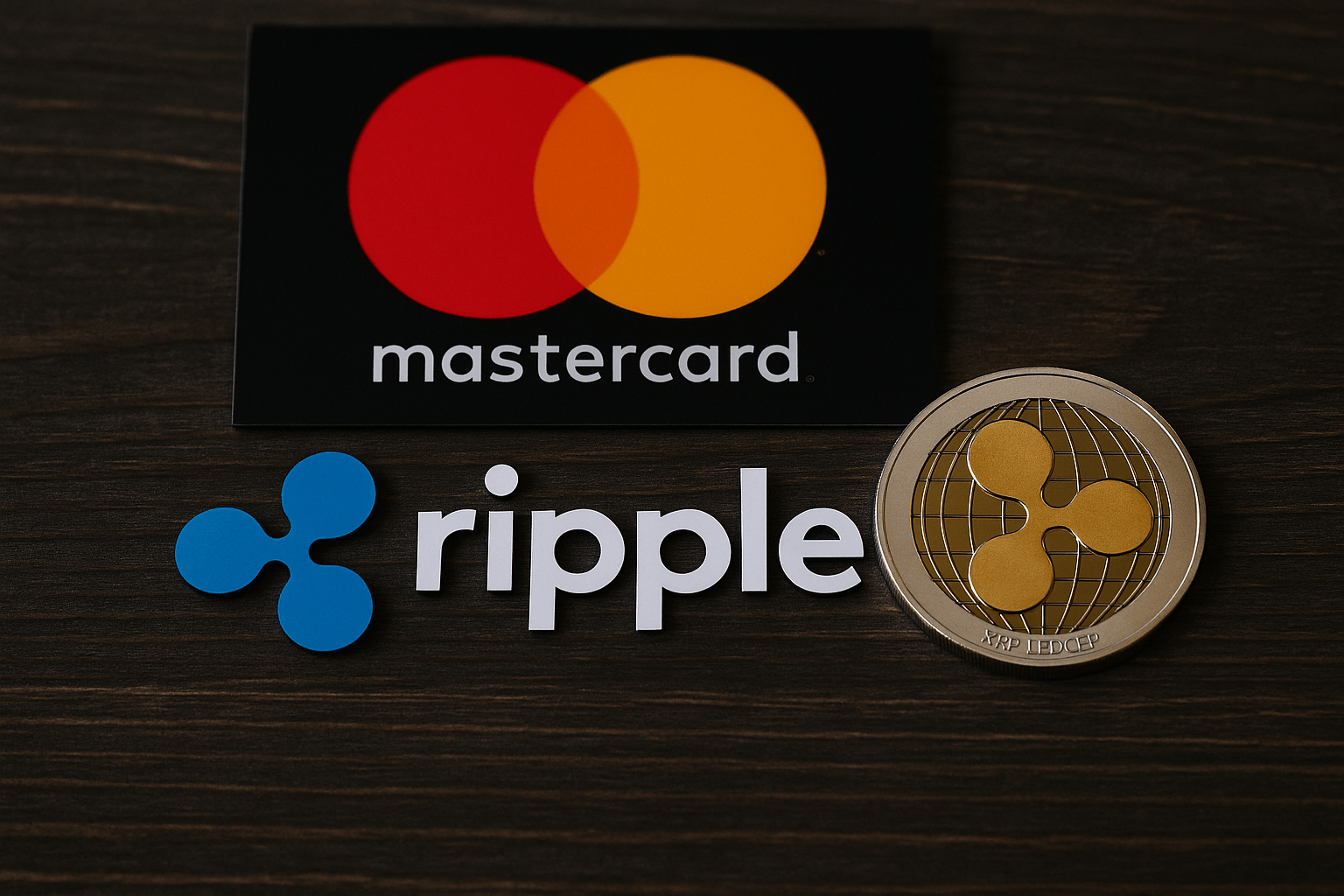
Ripple Expands Real-World Utility — Mastercard Adopts RLUSD on XRP Ledger
Ripple’s RLUSD Pilot Accelerates Blockchain Payments Mainstream Adoption
Ripple’s RLUSD pilot marks a major step toward mainstreaming blockchain-based payments. With increasing competition and ongoing regulatory risks, Ripple’s enterprise-focused strategy and new partnerships are strengthening XRP’s long-term position.
**Major Partnership Announced at Swell 2025**
At its Swell 2025 conference yesterday, Ripple announced a high-stakes partnership with Mastercard, WebBank, and Gemini. This collaboration centers on piloting Ripple USD (RLUSD)—an initiative designed to transform stablecoin remittances and reshape the payments landscape. Stablecoin-based transactions can move money instantly and directly without the need for intermediaries like traditional banks.
This initiative is a pivotal expansion of Ripple’s real-world utility, evolving the XRPL from a cross-border payments specialist into a backbone for everyday fiat settlements.
**Mastercard’s Perspective and the Path to Mainstream**
Sherri Haymond of Mastercard commented:
> “Through our partnerships with Ripple, Gemini, and WebBank, we’re using our global payments network to bring regulated, open-loop stablecoin payments into the financial mainstream.”
Despite excitement, these pilots come with regulatory and operational risks, prompting skepticism until a full-scale rollout is achieved. Nonetheless, analysts highlight that this could become one of the first instances of a regulated U.S. bank settling card payments using a regulated stablecoin on a public blockchain.
**Upcoming Panel Discussion**
A related panel discussion will take place on November 13 at 11:10 AM, where experts will explore key considerations for building alternatives allocations using strategies across private equity, private credit, and liquid alternatives.
**Competition and Ripple’s Unique Advantages**
Meanwhile, competition from rivals like Visa’s stablecoin initiatives continues to intensify. Ripple’s edge lies in its decade-long focus on enterprise-grade blockchain solutions. With RLUSD’s integration—including recent expansions via SWIFT-linked partnerships and acquisitions such as gTreasury—the pilot has the potential to speed up adoption, bridging crypto’s volatility with fiat stability.
**XRPL Technology and Market Outlook**
The XRPL’s decentralized architecture plays a vital role, processing thousands of transactions per second at minimal cost. Built-in compliance tools—including ISO 20022 integration—ensure compatibility with existing financial infrastructure.
The Mastercard partnership injects new energy into XRP’s long-term narrative, supporting a bullish near-term outlook. According to analysts, if regulatory approvals are secured by Q1 2026, XRP could see a 20–30% price increase, potentially pushing the token toward $3 from its current $2.40 range. This would be driven by institutional inflows and improving sentiment.
**XRP Price Update**
Currently, XRP is trading at $2.33, reflecting a 3.8% increase over the past day, following a 7.15% decline over the previous week. By enabling XRPL to support high-volume settlements, the RLUSD pilot is expected to increase demand for XRP as the ledger’s native gas token—even if RLUSD manages the core transfers.
> **See XRP price chart below.**
—
*Recommended for you:*
https://bitcoinethereumnews.com/tech/ripple-expands-real-world-utility-mastercard-adopts-rlusd-on-xrp-ledger/
Solana’s Weekly Cup-and-Handle Breakout May Signal Long-Term Upside Amid Rising Volume and Institutional Support
**Solana Clears Multi-Year Resistance at $190-$200, Confirming Weekly Cup & Handle Breakout**
Solana (SOL) has successfully broken through a critical multi-year resistance zone between $190 and $200, marking a confirmed Cup & Handle breakout on the weekly timeframe. This breakout is supported by smooth pattern symmetry and rising trading volume, suggesting coordinated accumulation. Institutional adoption is advancing as Crypto.com integrates Solana validator services with enterprise-grade custody and staking solutions, deepening SOL’s market infrastructure.
—
### What Is the Solana Cup & Handle Breakout?
The Solana Cup & Handle breakout is a technical event observed on the weekly chart. Here, SOL completed a rounded multi-year base—the “cup”—followed by a shorter consolidation phase known as the “handle.” This price structure culminated in breaching horizontal resistance near $190-$200.
The breakout, confirmed by increased volume and its well-structured shape, signals a potential shift from accumulation to a sustained upside trend.
—
### How Was the Breakout Validated by Price Action and Volume?
The breakout exhibits textbook characteristics: a smooth, symmetrical cup curvature is followed by a descending-handle consolidation and a decisive move above resistance. Weekly trading volume notably increased during the breakout, supporting strong conviction rather than a momentary spike.
Currently, SOL trades near $187.13, with a reported 24-hour volume exceeding $9.9 billion, underscoring active market participation. The combination of chart structure and volume reduces the risk of a false breakout, especially if the new support zone near $180-$200 holds firm.
—
### Multi-Year Accumulation Forms a Robust Base
Solana’s price action since the 2021 correction evolved into a rounded “cup,” reflecting prolonged investor accumulation across multiple market cycles. The pattern formed just below the significant horizontal resistance band around $190-$200.
Over more than two years, repeated support tests saw buyers stepping in during dips, producing the smooth curvature typical of sustained accumulation. By mid-2024, the market entered the “handle” phase—a smaller, descending consolidation that typically precedes price continuation.
This handle acted as a volatility-compressing stage, concentrating supply ahead of the breakout. Once the handle’s upper boundary was breached on the weekly chart, SOL transitioned from consolidation into an expansion phase.
—
### Breakout Validated by Chart Structure and Volume
The well-defined cup curvature and compressed range of the handle point to organic accumulation rather than erratic volatility. A surge in trading volume at the breakout confirms genuine buying demand and lowers the chance of a failed breakout.
The weekly close above the $190-$200 resistance range establishes a new support floor. Technical models often project further gains toward measured targets once such a base is confirmed.
Market analysts praised the structure’s clarity, with one prominent commentator calling it “one of the strongest continuation patterns.” Maintaining this new support zone will be key to sustaining the bullish narrative during upcoming retests and pullbacks.
—
### Institutional Engagement Supports Market Confidence
The breakout coincides with a rise in measurable institutional interest. Crypto.com’s recent integration of Solana validator services paired with enterprise-grade custody and staking infrastructure reduces operational friction for large holders and encourages on-chain staking participation.
These institutional services enhance network utility for major investors and reinforce ecosystem trust. Such fundamental improvements complement the technical strength seen in price action. Better custody solutions lower entry barriers for institutional capital, while validator services increase staking capacity and on-chain security.
—
### Frequently Asked Questions
**How reliable is a weekly Cup and Handle breakout for predicting long-term gains in SOL?**
Weekly Cup and Handle patterns historically have a strong success rate in signaling medium-to-long-term uptrends, especially when accompanied by rising volume and sustained closes above breakout levels. Confirmation depends on SOL holding the new support zone near $180-$200 during subsequent weekly closes.
**What should I watch for next in simple terms?**
Keep an eye on weekly closes relative to the $180-$200 support band, trading volume during retests of this zone, and new institutional custody announcements. If weekly closes remain above the breakout level with supportive volume, the technical outlook for continued gains strengthens.
—
### Key Takeaways
– **Confirmed breakout:** SOL breached a multi-year $190-$200 resistance band after forming a textbook Cup & Handle pattern on the weekly timeframe.
– **Volume confirms conviction:** Rising volume at the breakout underscores market conviction and reduces the risk of a false breakout.
– **Institutional adoption:** Integration of enterprise-grade custody and validator services by Crypto.com enhances Solana’s structural fundamentals and ecosystem trust.
—
Solana’s recent breakout demonstrates a powerful convergence of technical and fundamental factors that could set the stage for sustained upside momentum. Traders and investors should monitor key support levels and institutional developments to gauge SOL’s next moves.
https://bitcoinethereumnews.com/tech/solanas-weekly-cup-and-handle-breakout-may-signal-long-term-upside-amid-rising-volume-and-institutional-support/?utm_source=rss&utm_medium=rss&utm_campaign=solanas-weekly-cup-and-handle-breakout-may-signal-long-term-upside-amid-rising-volume-and-institutional-support