Tether Partners with Da Nang City to Boost Blockchain-Based Governance

**Tether Partners with Da Nang City to Advance Blockchain-Powered Digital Governance**

Tether, a leading entity in the digital asset industry, has entered into a Memorandum of Understanding (MoU) with the People’s Committee of Da Nang City, Vietnam. This strategic collaboration is set to foster the development of blockchain-powered digital governance and infrastructure in the city.

### Advancing Digital Infrastructure

The MoU lays the foundation for Tether and Da Nang City to jointly explore and implement blockchain technologies, digital assets, and peer-to-peer innovations. By adopting international best practices, the partnership aims to enhance transparency, efficiency, and resilience in Da Nang’s digital governance systems.

### Policy and Innovation Support

A key aspect of the agreement is Tether’s commitment to supporting the development of policies conducive to blockchain technology and digital assets within the city. This involves introducing sandbox experimentation and the tokenization of real-world assets (RWAs). Leveraging its global expertise, Tether will assist Da Nang City in aligning its frameworks with international standards, including elements modeled after the Plan ₿ initiative.

### Educational and Training Initiatives

Tether and Da Nang City will collaborate with Vietnamese universities and research institutions to promote education in blockchain and artificial intelligence (AI) technologies. Together, they plan to design specialized training programs focused on building local capacity for managing blockchain-based payment systems. These efforts aim to modernize the local transactional ecosystem and promote greater financial inclusion.

### Strategic Vision

Paolo Ardoino, CEO of Tether, highlighted Da Nang’s emerging status as a hub for digital governance in Southeast Asia. He emphasized that the city’s forward-looking vision aligns closely with Tether’s mission to build inclusive and efficient digital ecosystems.

Ho Ky Minh, Standing Vice Chairman of the Da Nang People’s Committee, reiterated the city’s ambition to become a trusted destination for global technology and financial corporations. He views the partnership with Tether as a pivotal move in achieving this goal.

This MoU reflects Tether’s overarching objective of bridging traditional finance with decentralized innovations—promoting transparency and sustainable growth. Da Nang’s strategic location, robust digital infrastructure, and progressive regulatory environment position it as a key player in attracting global technology investments and driving blockchain innovation.
https://bitcoinethereumnews.com/blockchain/tether-partners-with-da-nang-city-to-boost-blockchain-based-governance/


Google warns North Korea, Iran, and China are using AI to enhance cyberattacks

A new report from Google’s Threat Analysis Group (GTAG) reveals that state-backed hackers from North Korea, Iran, and China are actively experimenting with and optimizing cyberattacks using artificial intelligence (AI) tools—specifically, Google’s Gemini.

According to Google, multiple state-affiliated groups have been leveraging its large language models for a variety of malicious activities, including reconnaissance, social engineering, malware development, and enhancing all stages of their operations. These stages range from reconnaissance and phishing lure creation to command and control (C2) development and data exfiltration.

### AI-Enabled Sophistication in Cyberattacks

The report uncovers evidence of novel and sophisticated AI-enabled attacks, warning that generative AI is lowering the technical barriers for malicious operations. AI helps attackers work faster and with greater precision, making cyber threats more dangerous.

This new insight builds on similar warnings from Microsoft and OpenAI, which disclosed comparable experimentation by the same trio of nation-backed threat actors. Additionally, Anthropic—the company behind Claude AI—released a report detailing how it has been detecting and countering AI-assisted attacks, with North Korea-linked groups prominently identified as key perpetrators.

### North Korean State Actors Turn to AI

Google’s latest threat intelligence update provides detailed examples of how these groups misuse AI:

– **Iranian Group TEMP.Zagros (aka MuddyWater)**: Used Gemini to generate and debug malicious code disguised as academic research aimed at developing custom malware. This operation inadvertently exposed critical operational details, allowing Google to disrupt parts of its infrastructure.

– **China-Linked Actors**: Employed Gemini to improve phishing lures, conduct reconnaissance on target networks, and research lateral movement techniques within compromised systems. In some cases, they used Gemini to explore unfamiliar environments such as cloud infrastructure, Kubernetes, and vSphere, suggesting efforts to expand technical capabilities.

– **North Korean Operators**: Observed probing AI tools to enhance reconnaissance and phishing campaigns. A North Korean threat group known for cryptocurrency theft attempted to use Gemini to write code designed to steal cryptocurrency. Google successfully mitigated these attacks and shut down the involved accounts.

### Anthropic’s Findings on AI Misuse

Anthropic’s report, released in August 2025, supports Google’s findings on AI misuse by state-linked actors. The company found North Korean operatives using its Claude model to pose as remote software developers seeking jobs. They generated resumes, code samples, and technical interview answers with Claude to secure freelance contracts abroad.

While this fraudulent job-seeking behavior was a tactic for gaining access, it potentially paved the way for larger hacking operations against the hiring organizations. Anthropic’s findings reinforce Google’s conclusion that bad actors are systematically testing AI tools for nefarious advantages.

### The Growing Challenge for Cybersecurity

These discoveries present a new challenge for the global cybersecurity community. The very features that make AI models powerful productivity tools also enable them to become potent weapons for harm. As AI technology advances, attackers will continue to adapt, making their tactics increasingly sophisticated.

Governments and technology companies have started responding to these threats. Moving forward, ongoing collaboration among all stakeholders will be essential to mitigate AI-enabled cyberattacks effectively.

**Stay Informed**

The smartest crypto minds already read our newsletter. Want in? Join them today.
https://bitcoinethereumnews.com/finance/google-warns-north-korea-iran-and-china-are-using-ai-to-enhance-cyberattacks/

Peak explores The Roots update today

**Peak’s Latest Free Update: The Roots Brings a Thrilling New Biome and Exciting Challenges**

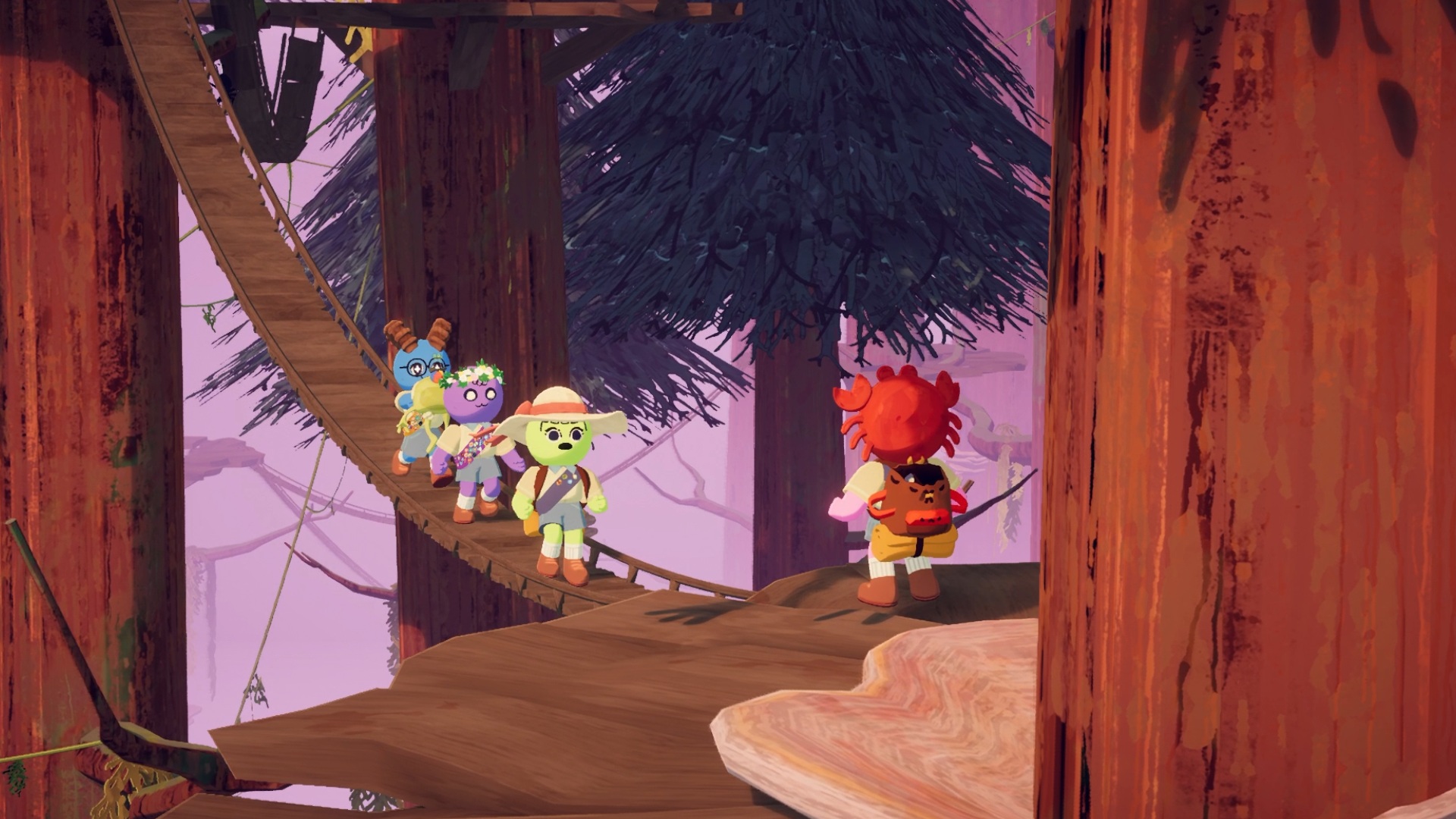
Indie studios Aggro Crab and Landfall have seen surprising success with their game, Peak. As more groups of friends dive in to tackle its harrowing climbs, the developers have released the game’s latest free update, **The Roots**.

This update introduces a brand-new biome inspired by the dense forests of the Pacific Northwest. While Peak’s core gameplay still revolves around climbing, players now find themselves scaling towering trees within this lush, sprawling forest. Climbing these trees presents a unique challenge regardless of party size.

Adding to the tension are giant insects roaming the forest, including massive spiders that can cocoon players in webs and drop them from great heights, leading to potentially perilous falls. Players will need to stay alert and work together to survive these new threats.

The update also adds native mushrooms scattered throughout The Roots biome. Players can choose to consume these mushrooms, but beware—doing so carries risks, including the possibility of turning into a zombie-like state.

In addition to the new biome and creatures, **The Roots** update brings tweaks to Peak’s cooking system. It’s now possible to place non-food items over the fire and observe mysterious effects. The developers haven’t revealed what these effects are, encouraging players to experiment and discover secrets on their own.

Moreover, players can now cook berries to remove their poison, making them safe to eat. However, this cooking method does not work on mushrooms—so handle those fungi with caution while exploring the forest.

For the complete list of changes and updates, be sure to check out the full patch notes available on Steam.

Get ready to climb, survive, and discover all-new dangers in Peak’s thrilling Roots update!
https://www.shacknews.com/article/146689/peak-the-roots-update-release-date

How Dad Reacts to Toddler Cutting Her Own Hair in ‘The Most Hilarious Way’

Once the toddlers are tucked up in bed, parents can finally relax. Right? Wrong.

Amanda Hawkins, 32, shared a now-viral moment with Newsweek when her daughter Juniper decided against going to sleep and chose to play hairdresser instead. The mom-of-eight initially thought Juniper, then 3, had fallen asleep as it was “quiet” in her room. But she went to check on her anyway.

“That’s when I discovered she had seriously hacked her hair,” Hawkins, from California, said.

Juniper had chopped off her golden-blonde locks—once past her shoulders—into a short bob at the front with uneven chunks missing from her fringe. The back was left longer with makeshift layers.

The grand reveal was recently posted on TikTok by Juniper’s aunt Holly (@hollymellissamae), who captioned it: “The one time my niece cut her hair in the most hilarious way.” The clip has since earned over 3 million views.

The footage shows Juniper wearing a brown dress and looking glum while her sisters giggle around her. One sibling suggests a wig, while her dad, Patrick Hawkins, 36, can be seen picking her up and lovingly saying, “She still looks beautiful.”

Amanda told Newsweek, “I was happy, though not surprised, by how gracious my husband was with her. He is always so sweet with our daughters and naturally responds so well when things happen.”

She added, “There may have been some minor incidents with scissors before, but this one by far takes the cake. I was mostly just sad because that same day I was admiring how long and beautiful her hair had gotten while she was spinning on our outdoor swing.”

### What to Do if Your Child Cuts Their Own Hair

Newsweek consulted parenting expert Ana Aznar for insight. She explained several reasons why toddlers might cut their own hair:

– **Experimentation:** “Preschoolers are little scientists, constantly investigating cause and effect—for example, ‘What happens if I cut my hair?’, ‘How would I look?’, or ‘How would my mom react?’”
– **Independence:** “This little girl could also have been asserting her independence.”
– **Pretend play:** “She may have been role-playing as a hairdresser until she realized it wasn’t actually pretend!”

London-based Aznar, founder of REC Parenting—an online platform supporting parents and caregivers—advised parents to avoid overreacting.

“Calmly explain that it is not OK for them to cut their hair. Then explain that scissors are to cut paper, string, cardboard, but not hair. It may also be a good idea to secure scissors for the time being!” she recommended.

### Lesson Learned

Now, two years on, Juniper’s hair still hasn’t grown as long as it used to be. Hawkins, a homemaker, shared, “She has definitely learned her lesson, and this has just become a funny memory captured on camera for our family.”

The moment has become a hysterical hit online too. Since it was posted on October 24, the clip has racked up over 325,000 likes, along with countless comments praising her dad’s response instead of focusing on the haircut.

One user wrote, “I have never understood parents getting SO upset about kids cutting their hair. It’s hair. They’re experimenting, and it will grow back. A hug and some nice affirmations, like Daddy did, are all that’s needed.”

Another commented, “Her father was so loving—he said the perfect words, exactly what she needed to hear.”
https://www.newsweek.com/how-dad-reacts-toddler-cutting-hair-10956536

Dialing down dope: Trump White House moves toward easing restrictions on marijuana

Pot was hardly difficult to find on campuses—and elsewhere—back when it was not just illegal but actively targeted by politicians as a menace to society. In fact, it often found you if you stopped in at parties or even small gatherings. When I was in college, there was a real fear of being busted by police, getting kicked out of school, or fired from your job. It made otherwise law-abiding kids see the cops as their enemy. But that was light-years ago.

### Changing Attitudes Toward Marijuana

Now, the Trump administration is strongly considering loosening the restrictions on weed. It still amazes me to drive up Connecticut Avenue here in Washington and see cannabis shops—like MrGreen and Blunt-and Taste Budz—just a few blocks from the Capitol, openly peddling the stuff. The products are branded under highly marketable names, such as Violet Sky and Hash Burger.

A well-reported story by the Free Press says President Trump is considering reclassifying marijuana from a Schedule I drug to Schedule III. That would put it in the same category as anabolic steroids, ketamine, and Tylenol with codeine. The move “would ease restrictions on it but stop short of making pot entirely legal.”

Of course, medical marijuana is already legal in 40 states and the District of Columbia, and allowed for recreational use in D.C. and 24 states—from New York to Colorado.

### Minimal Opposition and Political Support

So where is the opposition? Uh, there really isn’t that much. And the White House is being open about this. Marijuana advocate Alex Bruesewitz tells the Free Press that the shift to Schedule III “keeps cannabis as a controlled substance but allows for more testing for medicinal purposes,” calling it a “politically savvy move” with strong public support.

It’s perhaps no surprise. Generations have at least tried weed since the 1960s and ’70s, dismissing the dark warnings about its dangers and the claim that it would lead to harder drugs. They scoffed at the infamous 1936 film *Reefer Madness*.

### A History of Political Opposition

Richard Nixon, in his war on drugs half a century ago, tried to associate hippies with pot and Black Americans with heroin. As his top aide John Ehrlichman—who later went to prison for Watergate—said in a 1994 interview: “Did we know we were lying about the drugs? Of course we did.”

Ronald Reagan, who as a candidate called pot “probably the most dangerous drug in the United States,” admitted in his diary that he got mad watching Jane Fonda, Lily Tomlin, and Dolly Parton toking up in the movie *9 to 5*. His wife Nancy Reagan later launched her famous “Just Say No” campaign.

By the time Bill Clinton ran for office, his brief experimentation with pot—he famously said he had tried it but “didn’t inhale”—had become a political punchline.

### Emerging Criticism

Some critics have definitely emerged. Pete Sessions, a GOP congressman from Texas, recently wrote to Attorney General Pam Bondi along with eight other lawmakers, warning that rescheduling marijuana “would send a message to kids that marijuana is not harmful.”

Donald Trump himself doesn’t smoke, drink, or take drugs, partly in reaction to his brother’s death from alcoholism. But the White House seems largely on board with the idea of rescheduling. Trump pollster Tony Fabrizio conducted a survey in March that found 66 percent of respondents backed legalized marijuana, and 70 percent supported rescheduling the drug.

A senior White House official is quoted as saying: “For a lot of the base, it’s an issue like gay marriage that people have gotten comfortable with. It’s good politics.” A decision is expected by the end of the year.

### The Role of Lobbyists and the Cannabis Industry

As with virtually every Beltway issue, well-heeled lobbyists are part of the process. Pot smoking, once an underground pastime, is now a big business.

Bruesewitz’s consulting firm, X Strategies, is reportedly being paid $300,000 by American Rights and Reform, a pro-cannabis group, for “media” services. Another large PR firm, Mercury Public Affairs, represents the U.S. Cannabis Council.

The size of this burgeoning industry was estimated at $38 billion last year—real money, even by jaded Washington standards.

### Mixed Feelings About Today’s Cannabis

I confess to some mixed feelings. For one thing, today’s cannabis is many times more powerful than the nickel-and-dime bags that used to circulate. I always felt pot’s milder effects were preferable to alcohol, especially when it comes to driving. It does give you the munchies, though. And as a parent, I wonder—what about homework?
https://www.foxnews.com/media/dialing-down-dope-trump-white-house-moves-toward-easing-restrictions-marijuana

France: 60-year-old ex-firefighter commits robbery to visit grandson in prison

**Bizarre Acts of Love: A Retired Firefighter’s Desperate Robbery**

Adding to the list of bizarre things people have done for love is the story of a 60-year-old retired firefighter with no prior criminal record who entered a supermarket near a local police station. Wearing a balaclava over his mouth and brandishing a firearm, he demanded all the money in the supermarket. Oddly, he also helped himself to a piece of Emmental cheese and some wine before being arrested.

What makes this incident truly unusual is the man’s calm demeanor when he walked with the police to their car, seemingly wanting to be arrested. It later emerged that his motives were heartbreaking rather than criminal.

According to an interview with his court-appointed lawyer, the man was desperate — he didn’t even want the money. All he wished was to see his grandson or at least be allowed to go on a walk with him. The lawyer revealed that the man was heartbroken after seeing his grandson in a waiting room with a broken tooth, a result of being molested by inmates.

The 60-year-old was prosecuted for armed robbery, aggravated assault, and rebellion. He pled guilty, but his circumstances deeply moved everyone involved, including the judge. Ultimately, the judge ruled that the man acted out of desperation and spared him from the typical three to five years of prison.

In the end, the man was ordered to compensate the victims of the robbery, undergo psychological treatment, and was banned from visiting the supermarket he robbed. Importantly, he retained the legal right to visit his grandson without being incarcerated. This story appears to have a hopeful resolution for all parties involved.

**Invite-Only Burger: The World’s Most Expensive Burger**

While burgers are generally popular as pocket-friendly meals, burger prices are on the rise — but nothing like the $11,000 burger served at the Asador Aupa restaurant in Spain. This exclusive burger, costing approximately Rs 97 lakh, is the result of eight years of research and experimentation by the chefs and remains a closely guarded secret.

Unlike typical food joint burgers, this gourmet creation is not listed on the restaurant’s menu. The owner explains that their concept was that luxury doesn’t need to be flashy but rather unattainable. As such, diners must be invited to try this burger.

The restaurant’s website states: *“If you think you should be on the list, you can request it and the request will be processed.”* The exclusivity surrounding this high-priced burger — with no gimmicks, just high-quality ingredients — is certainly fascinating.

**It’s a Mall World: A Shared Dream Phenomenon on Reddit**

Reddit users have been bonding over a strange shared experience: many of them report having dreams set in the same mall-like environment. Although the events within the dreams vary, the similarity of the setting has sparked curiosity and even conspiracy theories.

To discuss this phenomenon, Redditors have created dedicated spaces where people share their dream experiences related to this “mall world,” fueling speculation about the collective subconscious or other unexplained causes.

**Who Let the Frogs In? A Painful Misguided Remedy**

In China, a woman suffering from back pain turned to an unusual and dangerous folk remedy she heard — swallowing live frogs to cure joint pain. Acting on the rumor, she swallowed eight live frogs.

Unfortunately, this extreme measure led to severe health problems, including multiple parasitic infections and blood disorders. This case serves as a cautionary tale against blindly following unverified remedies or rumors when it comes to health treatments.

**Raw-Dogging Boredom: Gen Z’s New Screen Detox Trend**

In a surprising new trend, Gen Z has found a novel method to reduce screen time — by doing absolutely nothing. This challenge, popularized on TikTok, involves staring blankly without any entertainment, sleep, or distraction, simply enduring boredom.

Nicknamed “raw-dogging boredom,” this practice could unexpectedly help teens manage their screen addiction and improve their attention spans. Whether it becomes a lasting remedy for digital overload remains to be seen, but it’s a unique approach to tackling modern life’s screen-heavy habits.
https://www.mid-day.com/news/world-news/article/france-60-year-old-retired-fire-fighter-robs-supermarket-to-see-grandson-in-jail-23598300

Exit mobile version