Judge strikes down restrictive Pentagon press policy, finding it violates First Amendment

A federal judge has struck down some of the Defense Department’s strict controls on how journalists with access to the Pentagon are allowed to report, effectively ending a policy that caused many news outlets to leave the Pentagon press pool.

U.S. District Judge Paul L. Friedman sided with The New York Times and reporter Julian E. Barnes, who sued in December claiming the Pentagon’s new policy violated the First Amendment, the Fifth Amendment, and the due process provision of the Constitution.

### Pentagon’s Controversial Press Access Policy

The Pentagon introduced its new press access policy last fall, requiring credentialed reporters to agree to a series of restrictions in order to maintain daily access to the building. Many major media organizations, including CBS News, ABC News, NBC News, CNN, and Fox News, declined to sign the new rules and stopped working inside the Pentagon on a day-to-day basis.

As a result, the Pentagon’s in-house press corps is now primarily made up of conservative media outlets that accepted the restrictions.

### Judge Friedman’s Ruling

Judge Friedman’s ruling halts some of the most contentious restrictions, including a provision that suggested reporters who “solicit” classified or sensitive information from military personnel could be considered security risks and barred from the building. He also struck down a section of the policy that described Pentagon access as a “privilege” rather than a “right.”

However, some rules remain in place, such as restrictions on where reporters can go inside the Pentagon without an escort.

### Pentagon’s Defense and Journalists’ Concerns

The Pentagon has maintained that it is not forcing reporters to clear their stories with the military, but is instead aiming to protect national security by preventing leaks of highly sensitive information. The military also asserts it has negotiated with news outlets.

Nonetheless, many reporters covering the military, along with the Pentagon Press Association, argued the policy could effectively restrict journalists from interacting with sources without explicit government permission.

### Impact of the Ruling

Judge Friedman ordered the Pentagon to reinstate Barnes’s and several other Times reporters’ press passes and vacated key parts of the policy. The ruling’s impact on other news organizations remains unclear.

In his statement, Friedman acknowledged the importance of protecting national security, troops, and war plans but emphasized the necessity for the public to have access to diverse perspectives about government actions, especially amid recent events like the country’s incursion into Venezuela and ongoing conflict with Iran.

“It is more important than ever that the public have access to information from a variety of perspectives about what its government is doing — so that the public can support government policies, if it wants to support them; protest, if it wants to protest; and decide based on full, complete, and open information who they are going to vote for in the next election,” he said.

### Concerns Over Vague and Discriminatory Restrictions

Friedman found the policy’s restrictions on “soliciting” information to be so vague that journalists could not clearly understand what behavior was prohibited, potentially discouraging them from asking any questions out of fear of losing their credentials.

He also ruled that the policy violated the First Amendment by engaging in viewpoint discrimination, effectively chilling critical speech and seeking to exclude “disfavored journalists.”

The Pentagon countered that the policy was not intended to punish certain outlets or discriminate against particular viewpoints, citing its efforts to negotiate with news organizations.

### Evidence of Bias Against Mainstream Media

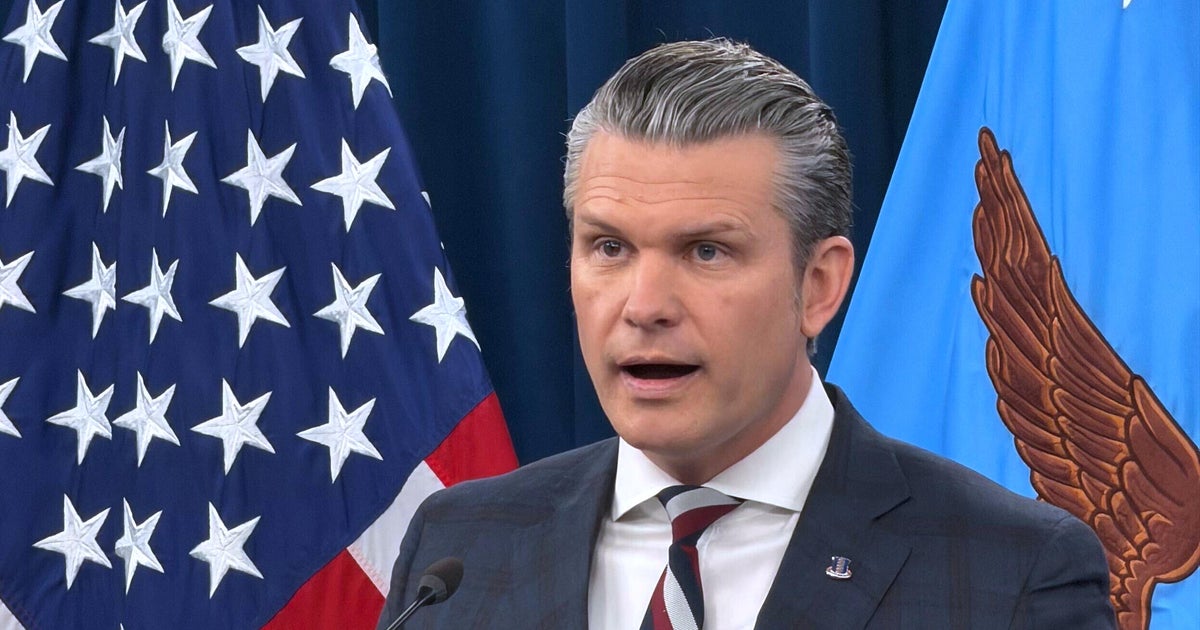
Judge Friedman pointed to instances where Defense Secretary Pete Hegseth and other top Pentagon officials harshly criticized news outlets, highlighting a pattern of hostility toward the “mainstream media” while favoring more supportive outlets.

He also noted a notable inconsistency: right-wing influencer Laura Loomer was granted Pentagon access despite setting up a “tip line,” whereas a similar tip line initiative by The Washington Post was deemed inappropriate.

During a court hearing, Friedman challenged Justice Department lawyers on this discrepancy:

“Is the Washington Post tip line criminal solicitation?” the judge asked.

“I don’t think so, Your Honor,” responded DOJ attorney Michael Bruns.

“So, you’re not clear whether the Washington Post tip line constitutes criminal solicitation?” Friedman pressed.

“No, Your Honor,” Bruns replied.

“So, if you’re not clear, how can they be clear?” Friedman asked pointedly.

Bruns explained that The Washington Post’s tip line asked for information directly from military members, whereas Loomer’s tip line was more general in nature.

### Judge’s Reflection on the Role of the Press

In a tense exchange during the hearing, Friedman shared his personal experience, having lived through many military and national security conflicts, from the Vietnam War to the September 11 attacks. He underscored the critical role the press has played in helping the American public understand government actions throughout these events.

Reflecting on the Vietnam War, he noted, “the public, I think it’s fair to say, was lied to about a lot of things.” He added, “A lot of things need to be held tightly and securely, but openness and transparency allow members of the public to know what their government is doing.”

### Response from the Justice Department and Pentagon

The Justice Department and Pentagon have not yet responded to requests for comment on the ruling.
https://www.cbsnews.com/news/judge-strikes-down-restrictive-pentagon-press-policy-finding-it-violates-first-amendment/


Ukraine offers to drop NATO bid as Trump envoy sees progress in peace talks — Reuters

Ukraine’s President Volodymyr Zelenskiy offered to drop the country’s long-held ambition of joining NATO during five hours of talks with US envoys in Berlin on Sunday, according to Reuters. The discussions, aimed at ending the war with Russia, are set to continue on Monday.

Steve Witkoff, an envoy for former President Donald Trump, noted that “a lot of progress was made” during the talks. This development marks a significant shift for Ukraine, which has fought for NATO membership as a crucial safeguard against Russian aggression. Notably, Ukraine’s aspiration to join NATO is enshrined in its constitution.

The proposal to abandon NATO ambitions aligns with one of Russia’s key demands in the ongoing conflict. However, Ukraine has thus far refused to cede any territory to Moscow.

**Market Reaction**

In response to the latest developments, the gold price (XAU/USD) is up 0.16% on the day, trading at $4,306 at press time.
https://bitcoinethereumnews.com/finance/ukraine-offers-to-drop-nato-bid-as-trump-envoy-sees-progress-in-peace-talks-reuters/

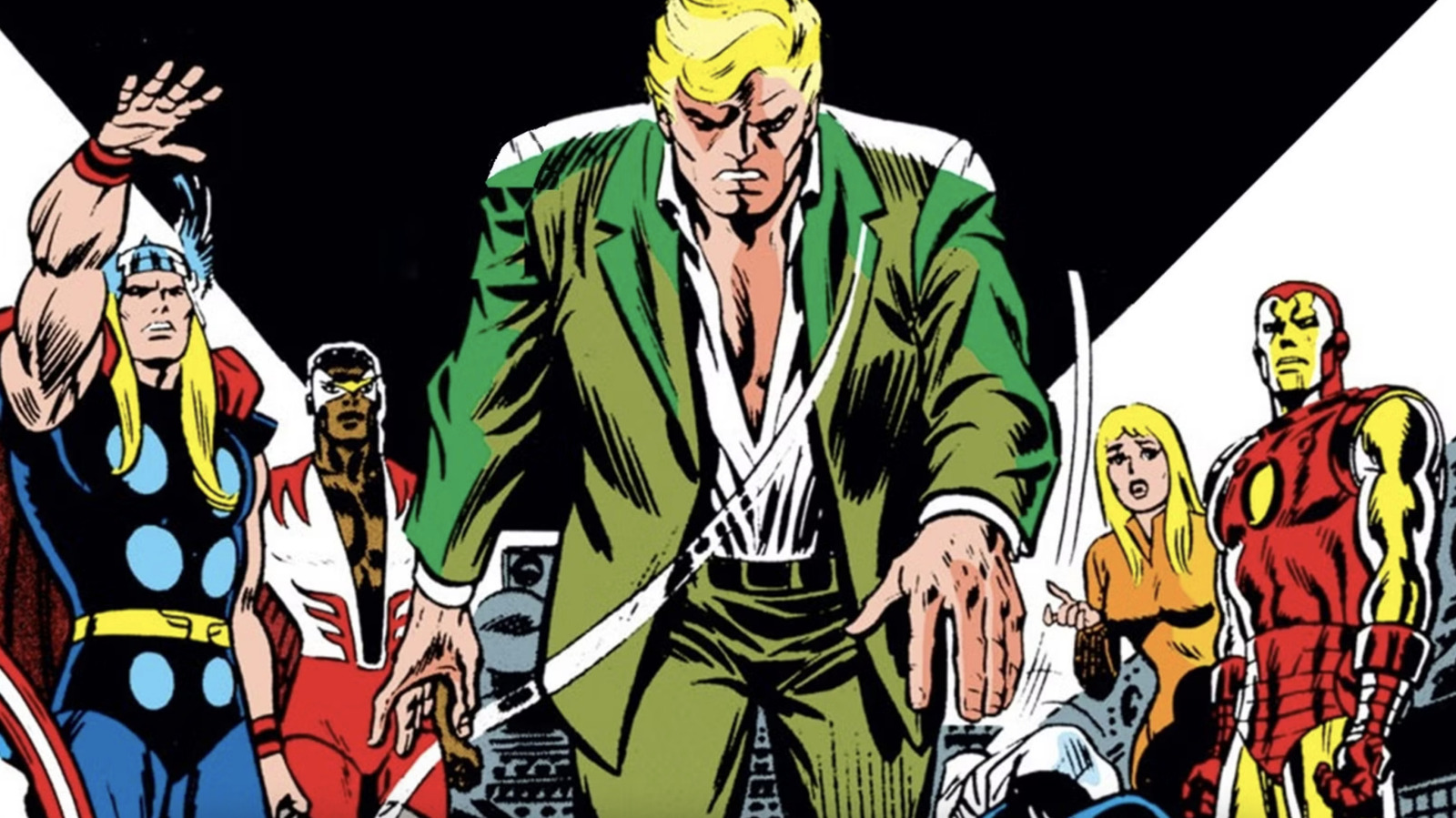
How A Disgraced U.S. President Forced Steve Rogers To Quit Being Captain America

There have been several heroes to take on the mantle of Captain America beyond Steve Rogers. But on at least one occasion, a replacement was needed not because Rogers was gone, but because he no longer wanted to represent the U.S. government.

This pivotal moment happens in a 1974 storyline where Rogers walks away from his role as Captain America after the U.S. President is revealed to be behind a criminal plot. Though the president’s face is never shown, the intention of writer Steve Englehart (who once wrote a Doctor Strange story you’ll never see on the big screen) was that it was the disgraced President Richard Nixon. Englehart confirmed this in a 2017 interview with Newsarama.

“I was reacting to Watergate,” Englehart said, referencing the scandal that saw Nixon caught in a corruption probe and forced to resign. Because Marvel Comics ostensibly takes place in the real world, Englehart felt this level of government scandal had to be addressed by Captain America.
“Some of it was just hubris and luck — they could have convicted Nixon the next day, and I would have been writing a story about something that was already over with. But it looked like it was going on for a while, so I capitalized on that,” he explained.

However, Englehart isn’t sure such a story could work today, even with figures like Donald Trump — the twice-impeached president who regularly flouts the Constitution and ignores court orders.
“In those days, there was a real idealism in the air,” he said. “And the thought that the president of the United States could commit such a crime was unthinkable.”

### Captain America and the Oval Office

The “Secret Empire” storyline wasn’t the only time Steve Rogers has been involved with the White House. Elsewhere in the comics and beyond the Marvel Cinematic Universe (MCU), Captain America has found himself in politics — at times running for office and even assuming the role of President of the United States.

The first run-in with the Oval Office came in 1980, in *Captain America* #250. In that issue, a group of populists tries to persuade Rogers, the Sentinel of Liberty, to run for president. Although Cap ultimately dismisses the idea at that time, he does run in a 21st-century storyline set in an alternate continuity known as the Ultimate Universe.

In *Ultimate Comics: Ultimates* #15, a national crisis prompts an emergency write-in vote for a new American president. Steve Rogers wins and steps in as President of the United States. This storyline is part of a massive arc that sees America torn apart from within, with Hydra once again rising to threaten the nation.

### Captain America as President Onscreen

Steve Rogers’ presidential story doesn’t end in the comics. In the MCU, he also becomes President — but in an unexpected place: the animated *What If…?* series. Although we don’t see much of him serving in this role, Steve Rogers is shown taking the oath of office on television in an alternate timeline.

Could something like this play out in live-action, perhaps with Chris Evans returning to portray President Cap? With rumors swirling about *Avengers: Secret Wars* introducing countless new realities, anything is possible.

Captain America’s legacy as both a superhero and a symbol of American idealism continues to evolve, reflecting the complexities of the world around him — from Watergate to modern political turbulence, and perhaps beyond.
https://www.looper.com/2015695/how-disgraced-us-president-nixon-forced-steve-roger-quit-captain-america/

Venezuela’s Maduro says the US is fabricating a war and seeks to revoke citizenship of opponent

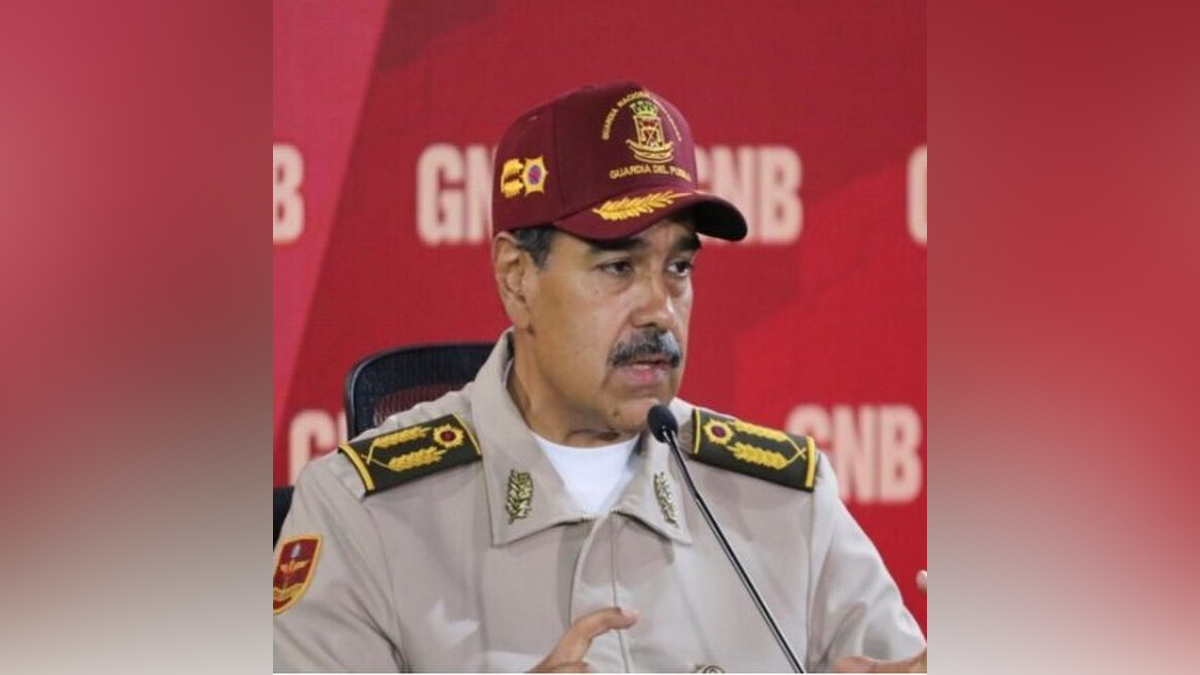
CARACAS (AP) — Venezuela’s President Nicolás Maduro said the U.S. government is “fabricating” a war against him as the world’s biggest warship approached the South American country, while moving to revoke the citizenship of an opponent he accuses of inciting an invasion.

Maduro stated in a national broadcast on Friday night that the administration of President Donald Trump is “fabricating a new eternal war” as the aircraft carrier USS Gerald R. Ford, which can host up to 90 airplanes and attack helicopters, moves closer to Venezuela.

On Saturday, the Venezuelan president also referred to the pressure he has felt from the U.S. government as he initiated legal proceedings to revoke the citizenship and cancel the passport of opposition politician Leopoldo López.

“They promised they would never again get involved in a war and they are fabricating a war that we will avoid,” said Maduro during Friday night’s address.

Trump has accused Maduro, without providing evidence, of being the leader of the organized crime gang Tren de Aragua. “They are fabricating an extravagant narrative, a vulgar, criminal and totally fake one,” Maduro added. “Venezuela is a country that does not produce cocaine leaves.”

American forces have destroyed several boats off the Venezuelan coast, allegedly linked to drug trafficking into the United States. At least 43 people were killed in those attacks.

Tren de Aragua, which originated from a Venezuelan prison, is more known for its involvement in contract killings, extortion, and people smuggling than for playing a major role in global drug trafficking.

Maduro was widely accused of stealing last year’s election, and countries including the U.S. have called for him to step down.

Earlier, Venezuelan Vice President Delcy Rodríguez stated on her Telegram account that Maduro had appealed to the country’s Supreme Court of Justice to revoke López’s nationality for his “grotesque, criminal, and illegal call for a military invasion of Venezuela.”

López, a prominent Venezuelan opposition figure who has been exiled in Spain since 2020, has publicly expressed support for the deployment of U.S. ships in the Caribbean and attacks on suspected drug trafficking vessels.

The vice president said that López’s passport will be revoked “immediately,” and he is also accused of promoting “economic blockage” and “calling for the mass murder of Venezuelans in complicity with enemy and foreign governments.”

In response, López dismissed the move on his X account, stating, “According to the Constitution, no Venezuelan born in Venezuela can have their nationality revoked.” He reiterated his support for U.S. military deployment and military actions in the country.

“Maduro wants to take away my nationality for saying what all Venezuelans think and want: freedom,” López wrote. “After having stolen the 2024 election, we agree to pursue all avenues to end the dictatorship,” he added.

López spent more than three years in a military prison after participating in anti-government protests in 2014. He was sentenced to over 13 years in prison on charges of “instigation and conspiracy to commit a crime.”

He was later granted house arrest and, after being freed by a group of military personnel during a political crisis in Venezuela, left the country in 2020.

https://whdh.com/news/venezuelas-maduro-says-the-us-is-fabricating-a-war-and-seeks-to-revoke-citizenship-of-opponent/

Exit mobile version
Sitemap Index