Legal expert slams Supreme Court Justice for attempt to ‘narrow the forces he unleashed’

The Supreme Court dropped a bombshell on Tuesday by handing President Donald Trump a rare loss, ruling 6-3 to deny a stay on deploying the National Guard to Illinois. However, the rebuke of Trump was not the only notable aspect in the opinion.

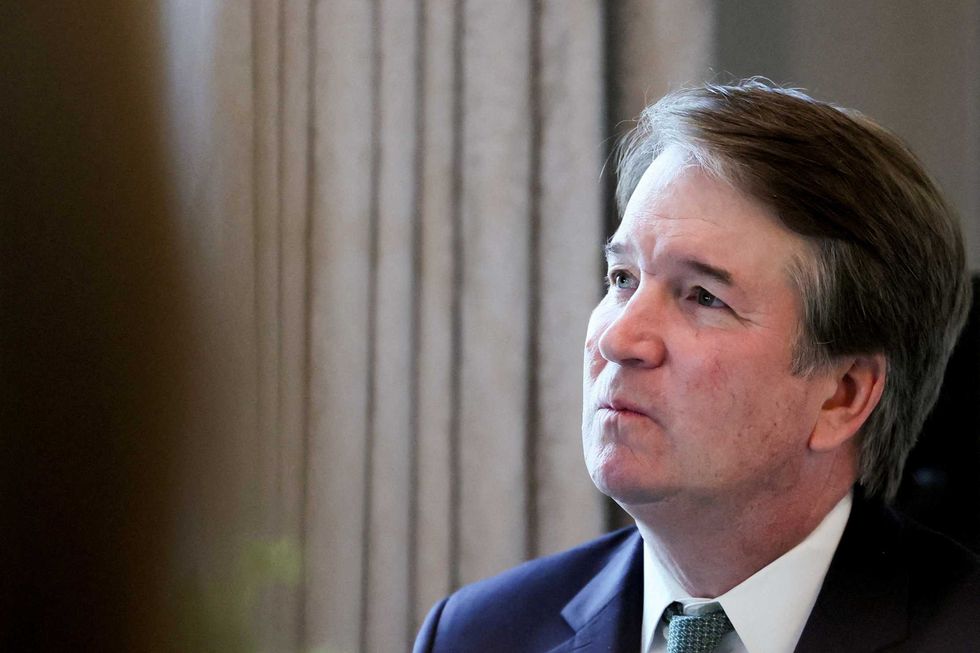
Specifically, Justice Brett Kavanaugh, who drafted a concurrence with the majority on one of the key issues in the decision, made statements in his opinion that suggest he may regret one of the most controversial court decisions in recent months.

In a ruling last September that stayed a lower court block on certain kinds of immigration raids in California, Kavanaugh authored a concurrence in which he appeared to endorse profiling by federal agents outright, while simultaneously denying that American citizens have anything to fear from this.

“The Government sometimes makes brief investigative stops to check the immigration status of those who gather in locations where people are hired for day jobs; who work or appear to work in jobs such as construction, landscaping, agriculture, or car washes that often do not require paperwork and are therefore attractive to illegal immigrants; and who do not speak much if any English,” he wrote.

This ruling sparked a wave of outrage. Several legal and political observers began calling immigration enforcement based on racial or ethnic profiling “Kavanaugh stops,” while tallying up the growing number of alleged incidents of this type occurring under the Trump administration.

All of this may have stung the justice, because he appeared to qualify or walk back this sentiment in his concurrence in the Illinois case.

“The basic constitutional rules governing that dispute are longstanding and clear: The Fourth Amendment requires that immigration stops must be based on reasonable suspicion of illegal presence, stops must be brief, arrests must be based on probable cause, and officers must not employ excessive force,” Kavanaugh wrote.

“Moreover, the officers must not make interior immigration stops or arrests based on race or ethnicity.”

This change of tone was not lost on New York University law professor and former Defense Department special counsel Ryan Goodman.
https://www.rawstory.com/brett-kavanaugh-2674826052/

Wallace shines, but Illinois offense stalls in road loss to Oregon State

**CORVALLIS, OR** — A tough one on the road for the Illini. Traveling west for their first away game of the season, Illinois took on the Oregon State Beavers Friday night. The road challenge proved too big, with the Illini coming up just short in a hard-fought 64-59 loss.

The opening quarter set the tone with fast starts followed by cold spells. Oregon State came out firing from deep, hitting its first two three-pointers, while Illinois responded with back-to-back midrange jumpers. After this early exchange, scoring stalled. The Beavers went over two minutes without a field goal and turned the ball over on three straight possessions.

The second quarter initially swung in Illinois’ favor. A steal and transition layup from Gretchen Dolan extended Illinois’ lead to 22-16, as the Illini looked poised to take control. However, the Beavers’ bench injected energy and sparked an 11-0 run, holding Illinois scoreless for over five and a half minutes. Freshman guard Destiny Jackson finally broke the drought with two free throws, but Illinois still trailed 29-28 at halftime after seeing a six-point lead evaporate.

Coming out of the break, Illinois found a lone offensive spark in sophomore forward Berry Wallace. Wallace dominated the third quarter, scoring all but three of the Illini’s 14 points in the frame, almost single-handedly keeping Illinois in the game. She opened the half with six straight points, briefly putting the Illini ahead 34-31.

Offensive help was scarce beyond Wallace until the final two minutes of the quarter, when Cearah Parchment nailed a clutch three-pointer to tie the game at 41. Even with Wallace’s heroics, Illinois found themselves down 43-41 entering the fourth quarter. Through three quarters, Wallace had 14 points and 3 rebounds, while Oregon State senior guard Tiara Bolden rose for the Beavers with 13 points and 5 rebounds.

The fourth quarter evolved into a battle of big shots. Parchment drilled another of her season-high 4 three-pointers with under two minutes left to cut the Beavers’ lead to three, setting up a tense finish. Yet again, Bolden answered, sinking a step-back three with 45 seconds remaining that stretched Oregon State’s lead to eight and effectively sealed the game.

Bolden finished with 25 points, tying her career high. Wallace kept Illinois alive with a banked-in three in the final seconds, ending with 24 points, but it wasn’t enough. Oregon State closed it out at the free-throw line, handing Illinois its first loss of the season, 64-59.

### Moments That Mattered

– Parchment gave the Illini an early lead with a rare three-pointer.
– Wallace came out of halftime on fire, scoring the first five points for Illinois, including a three and an and-1 layup.
– Wallace’s multiple and-1 plays kept Illinois competitive deep into the game.

### Stat Stuffers

– Illinois shot 42% from beyond the three-point line.
– The Illini grabbed 14 offensive rebounds.
– Oregon State scored 34 points in the paint.

### Up Next

Illinois looks to bounce back when they return home to host Murray State at the State Farm Center. Tip-off is scheduled for 11 a.m. Tuesday and will stream on B1G+.
https://sports.yahoo.com/article/wallace-shines-illinois-offense-stalls-200639217.html

Supreme Court weighing Mississippi mail-in ballot case that could have major impact on Illinois voting laws

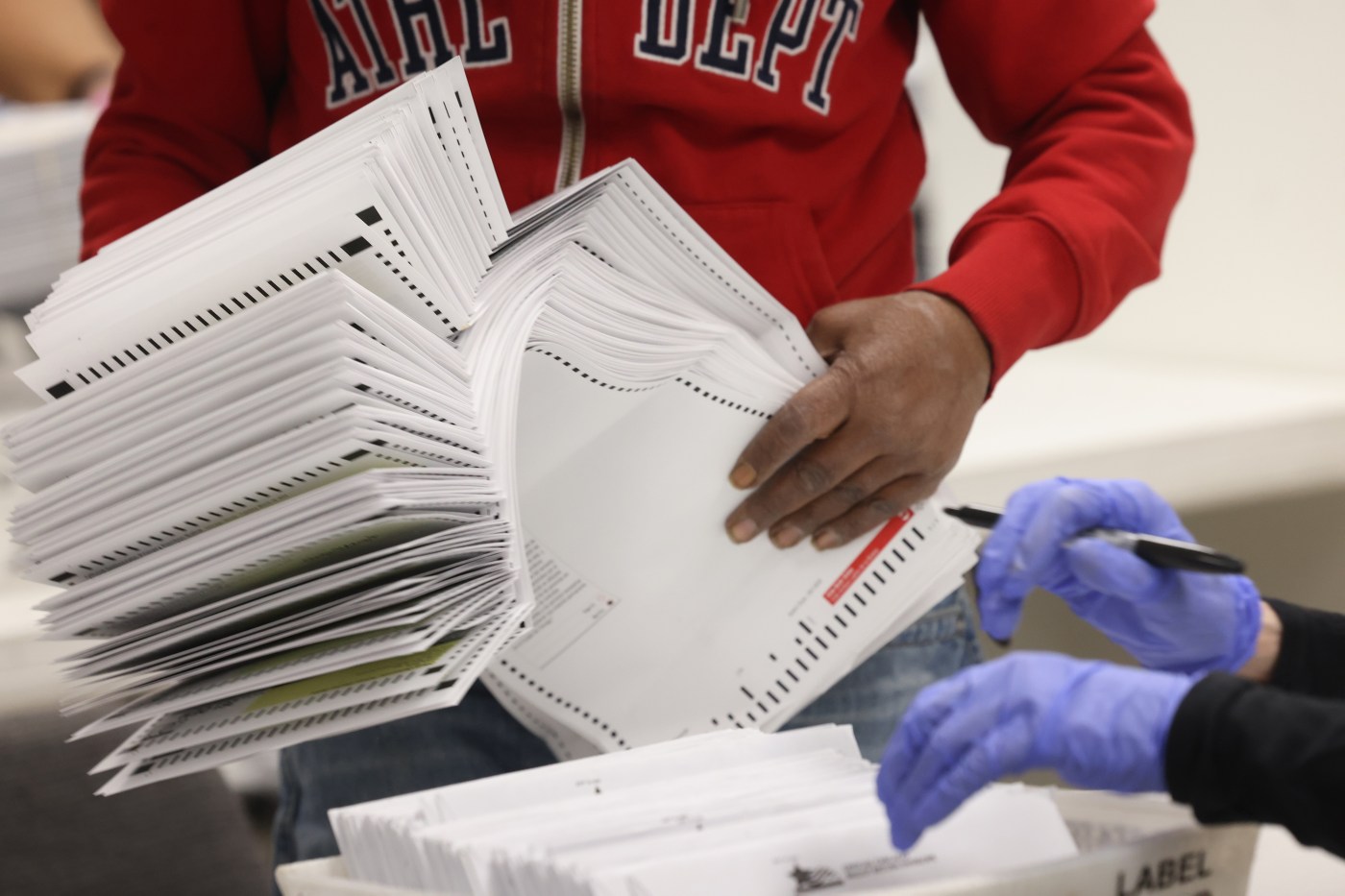
The U.S. Supreme Court has agreed to hear arguments in a Mississippi case that could have a major impact on Illinois’ efforts to promote voting by mail. The high court is expected to decide whether ballots cast and postmarked on or before Election Day in a general election can be counted if received afterward.

The combined suit, brought by the Republican National Committee and the Libertarian Party and supported by the conservative law group Judicial Watch, asks the Supreme Court to uphold a 5th U.S. Circuit Court of Appeals decision. That ruling stated that ballots must be received by Election Day in November to be counted.

Under Illinois law, mail-in ballots postmarked or certified on or before Election Day can be counted by local election authorities up to 14 days after the election. Similarly, a 2020 Mississippi law, enacted during the COVID-19 pandemic, allowed mail-in ballots to be counted within five business days following Election Day.

The Supreme Court’s decision could have wide-ranging effects in Illinois and as many as 27 other states, along with the District of Columbia, where local and state laws allow the counting of ballots received after Election Day. Illinois filed a brief supporting the existing Mississippi law.

Judicial Watch is also behind a similar effort to restrict post-Election Day vote counting in a federal lawsuit filed on behalf of veteran downstate Republican U.S. Rep. Mike Bost of Murphysboro. However, federal courts in Chicago dismissed the lawsuit, ruling that Bost lacked standing. The Supreme Court has already heard oral arguments regarding standing but has not yet issued a ruling.

The Mississippi case ruling could come as early as July 2024, just months before the critical midterm elections that will decide control of Congress. Historically, Democrats have been better organized in early voting and vote-by-mail campaigns. In contrast, former President Donald Trump has repeatedly urged voters to cast ballots only on Election Day, falsely claiming that mail-in ballots are prone to fraud.

Illinois has taken several steps to expand voting access, including mail-in voting. The state recently allowed voters to request that local election authorities send them mail ballots permanently. During the 2020 COVID-19 general election in Illinois, one-third of the nearly 6.1 million ballots cast were by mail. In 2022, mail ballots accounted for nearly 18% of the 4.1 million votes cast. Last year, nearly 1 in 5 of the 5.7 million ballots cast were mail-in ballots.

In the 2022 general election, over 110,000 ballots were returned and counted during the 14-day post-election period, including 3,252 overseas military votes. In last year’s general election, more than 99,000 ballots arrived and were counted after Election Day, including nearly 1,000 military ballots.

At the heart of the case is the October 25, 2024, ruling by a panel of the 5th U.S. Circuit Court of Appeals. The panel asserted that the federal statute establishing a uniform day for federal elections—and the U.S. Constitution’s Elections Clause—require that all ballots be both “cast by voters and received by state officials” by the end of Election Day.

The appeals court ruled that the term “election” includes both the casting and receipt of ballots, with an election considered complete only when all ballots have been received. It stated, “Text, precedent, and historical practice confirm this ‘day for the election’ is the day by which ballots must be both cast by voters and received by state officials.” The court added that a ballot is considered “cast” only when the state takes custody of it, not when a voter fills it out.

Reacting to the Supreme Court’s decision to hear the case, Ken Martin, chair of the Democratic National Committee, called the lawsuit “a multipronged effort by Trump and Republicans to restrict vote-by-mail and early voting.”

“Voting by mail and voting early are safe, secure, and empower more eligible voters to participate in our elections. That is a good thing for our democracy,” Martin said in a statement. “The DNC will fight like hell in this case for the rights of Mississippians and every other citizen to make sure their voices are heard and their votes are counted.”

On the other side, Tom Fitton, president of Judicial Watch, said the Supreme Court “now has an opportunity to reaffirm that ‘Election Day’ means what it says under federal law.”

“Counting ballots received after Election Day not only violates federal law but encourages voter fraud and undermines voter confidence,” Fitton said.
https://www.chicagotribune.com/2025/11/11/supreme-court-mail-in-voting-illinois/

Nebraska volleyball dominates Illinois for 14th straight sweep

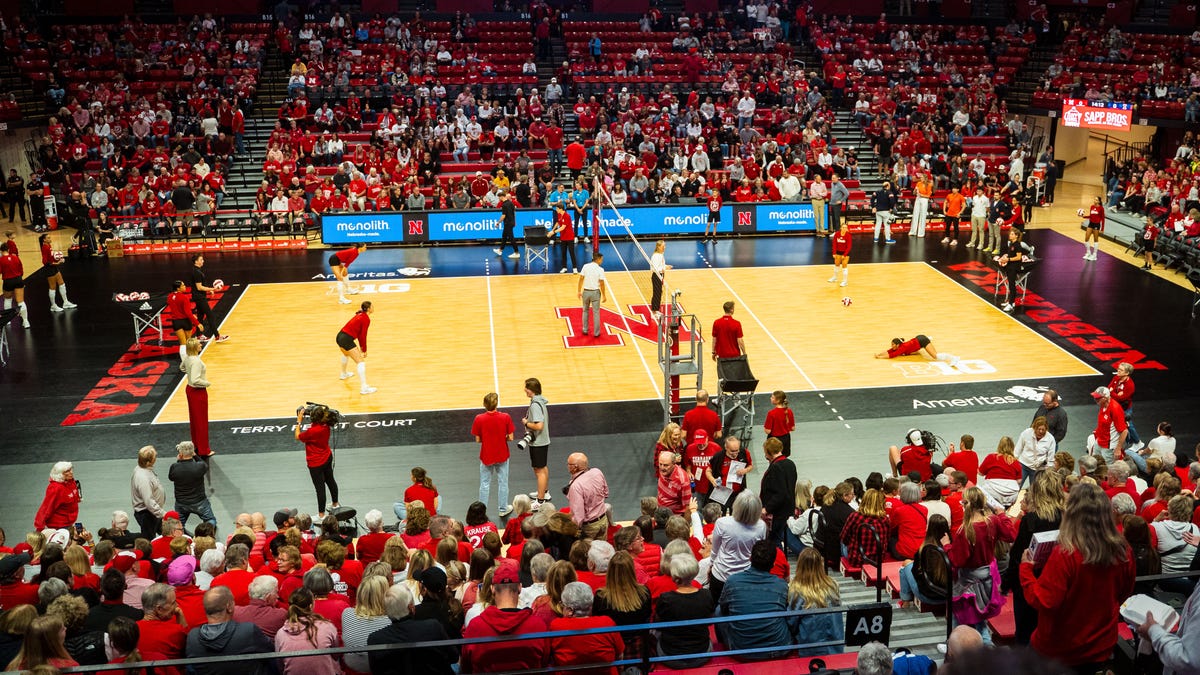
Nebraska (23-0, 13-0) continued their dominant November with a home stand against Illinois (12-10, 7-6) on Thursday night. The Huskers delivered another sweep, overpowering the Fighting Illini in straight sets (25-11, 25-15, 25-14) to secure their 14th consecutive sweep and extend their streak to 43 straight set wins.

The Huskers started strong, finishing the opening set with an impressive .714 attack percentage while holding Illinois to a mere .111. Although the Fighting Illini attempted to mount a comeback in the second and third sets—putting up early resistance in both—the Huskers quickly quelled any momentum and cruised to victory. Nebraska finished the night with 49 kills on 86 attacks, boasting an overall .488 hitting percentage.

Defensively, Nebraska posted 40 digs and seven blocks, limiting Illinois to a .095 hitting percentage. Andi Jackson led the charge with a perfect 9-for-9 in attacks and contributed four blocks. Virginia Adriano and Harper Murray each added eight kills, while Teraya Sigler finished with 6-of-12 attacks and a service ace. Taylor Landfair and Skyler Pierce combined for eight kills on 13 attacks, each contributing four kills. Additionally, Allie Sczech, Rebekah Allick, and Manaia Ogbechie each provided three kills in the win.

Bergen Reilly led Nebraska in both assists and blocks, tallying 29 assists and five blocks, while also recording seven digs. Laney Choboy had a standout performance with a career-high 20 digs alongside two service aces.

Looking ahead, the Huskers will hit the road for their next series of matches starting with a Saturday afternoon battle at Minnesota. First serve is scheduled for 2:30 p.m. CT and will be available to watch on Peacock.
https://cornhuskerswire.usatoday.com/story/sports/college/cornhuskers/volleyball/2025/11/07/nebraska-volleyball-illinois-big-ten-2025-recap/87136871007/

JONATHAN TURLEY: Why blue states’ new anti-ICE laws are unconstitutional virtue signaling

Illinois has joined California and Connecticut in barring federal immigration agents from conducting “civil arrests” of undocumented immigrants in or around state courthouses. This new sanctuary law appears largely symbolic and raises serious constitutional questions.

At the core of the issue is whether a state can restrict federal jurisdiction, especially after the Civil War. Illinois Governor JB Pritzker has intensified rhetoric against ICE and the Trump administration for months, making comparisons to Nazis and warning that democracy is at risk. However, the new law crosses a constitutional line by not only limiting Immigration and Customs Enforcement (ICE) operations but also establishing a 1,000-foot “buffer zone” around courthouses.

This law treats courthouses like churches, creating sanctuary zones where suspects can claim protection from civil arrest not only inside the building but also within 1,000 feet—unless ICE chooses to ignore the law altogether. Recently, the chief judge in Cook County issued a similar order, and some judges in other states have done the same.

### Legal Challenges and Constitutional Issues

The authority for these sanctuary orders is highly questionable. The federal government enforces laws mandating the arrest of certain individuals for immigration violations. These include mandatory detention of aliens removable due to criminal convictions or terrorism-related activities, as well as detention and removal of those with final deportation orders.

Illinois’ sanctuary law conflicts with the Supremacy Clause of the U.S. Constitution, which states:

> “This Constitution, and the Laws of the United States which shall be made in Pursuance thereof… shall be the supreme Law of the Land; any Thing in the Constitution or Laws of any State to the Contrary notwithstanding.”

Additionally, the U.S. Supreme Court has consistently rejected efforts by states to interfere with federal immigration enforcement. In the 1952 case *Harisiades v. Shaughnessy*, the Court affirmed that the federal government has “exclusive” control over immigration policy.

Interestingly, former President Barack Obama once successfully challenged state laws that interfered with federal immigration enforcement. In the 2012 case *Arizona v. United States*, the Supreme Court ruled that:

> “[t]he Government of the United States has broad, undoubted power over the subject of immigration and the status of aliens.”

This federal authority dates back to the 19th century. In the 1893 case *Fong Yue Ting v. United States*, the Court held that Congress has the right to expel aliens of a particular class or allow them to remain, using all proper means to enforce the system.

### Additional Provisions and Implications

Illinois’ new law also creates the ability to sue federal authorities for false imprisonment under state law. Furthermore, the 1,000-foot buffer zone extends around any state court, effectively creating safe zones for undocumented immigrants.

This raises practical questions. For instance, could someone renting an apartment within such a zone claim effective immunity from civil arrest simply by residing there? Could suspects use public sidewalks or spaces within these zones to avoid federal enforcement?

Moreover, with states like Illinois pushing apps that track ICE operations, individuals might evade arrest by stepping into designated safe zones. It remains to be seen whether landlords will increase rents in these areas given the new “immunity” amenity.

If deemed constitutional, states could expand these safe zones beyond courthouses to include city services, clinics, and more, creating a patchwork of sanctuary areas that complicate federal enforcement.

Notably, similar tactics have been attempted by blue states to challenge Second Amendment rights, resulting in ongoing legal battles.

### Conclusion

Despite serious constitutional concerns, these sanctuary laws serve political purposes, allowing lawmakers to signal opposition to federal immigration policies. However, the legal weaknesses of the laws may lead to unintended consequences for individuals who mistakenly believe they are fully protected within these safe zones.

As legal challenges unfold, it remains uncertain how these laws will be enforced or whether courts will uphold them against federal authority.

*For more information, click here.*
https://www.foxnews.com/opinion/jonathan-turley-why-blue-states-new-anti-ice-laws-unconstitutional-virtue-signaling

Exit mobile version
Sitemap Index