That should be all the information you need to solve the Endurance event crossword clue!
Be sure to check out more clues on our Crossword Answers page for additional help.
The post Endurance event Crossword Clue appeared first on Try Hard Guides.
That should be all the information you need to solve the Endurance event crossword clue!
Be sure to check out more clues on our Crossword Answers page for additional help.
The post Endurance event Crossword Clue appeared first on Try Hard Guides.
That should be all the information you need to solve the **Nautical position** crossword clue!
If you’re looking for more help, be sure to check out additional clues on our **Crossword Answers** page.
The post **Nautical position Crossword Clue** appeared first on **Try Hard Guides**.
https://tryhardguides.com/nautical-position-crossword-clue/
The Race Is On: Early Voting Kicks Off in New York City
Early voting in New York City begins at 9 a.m. on Saturday, giving New Yorkers the opportunity to cast their ballots in the hotly contested mayoral race. The candidates include Democratic socialist Zohran Mamdani, Republican Curtis Sliwa, and former Governor Andrew Cuomo, who is running as an independent.
But the mayoral race isn’t the only contest on the ballot. Voters will also be selecting a new City Comptroller and Public Advocate, as well as borough presidents, district attorneys, city council members, and justices. Here’s everything you need to know about casting your vote ahead of Election Day.
### What Are the Dates and Hours for Early Voting?
Early voting starts 10 days before Election Day, which is Tuesday, November 4. Registered voters can cast their ballots during the nine days of early voting at their designated polling places.
– **October 25 – October 27:** 9 a.m. to 5 p.m.
– **October 28 – October 29:** 10 a.m. to 8 p.m.
– **October 30:** 9 a.m. to 5 p.m.
– **October 31:** 8 a.m. to 4 p.m.
– **November 1 – November 2:** 9 a.m. to 5 p.m.
### How to Find Your Polling Place
Voters can locate their closest polling site on the New York City Board of Elections website. Simply enter your address and zip code to be directed to your local polling location.
### Are Early Voting Polling Sites Different from Election Day Locations?
Sometimes. Many Election Day polling sites are housed in public schools, which are typically unavailable during early voting periods. To check whether your early voting site differs from your Election Day location, visit the city Board of Elections website where both options will be listed.
### When Is the Voter Registration Deadline?
The voter registration deadline is today! To confirm your registration status or register to vote, visit the appropriate online portal without delay.
### Do You Need Identification to Vote?
Voters are required to have a New York ID to cast their ballots; however, registered voters do not always need to show ID at the polling site unless they did not provide identification when they registered.
Acceptable forms of ID for those who must present them include:
– A current and valid photo ID, such as a driver’s license
– A copy of a current utility bill, bank statement, government check, paycheck, or another government document showing your name and address
First-time voters who have not provided ID by Election Day can still vote using an affidavit ballot, though they will not be able to use the polling site’s scanner.
### What Else Is on the Ballot?
Besides the mayoral election, New Yorkers will vote in several other important races:
– **City-wide offices:** Public Advocate and City Comptroller
– **Borough offices:** Borough Presidents and District Attorneys
– **Local offices:** City Council members and district judges
Additionally, there are six ballot proposals asking voters to weigh in on issues such as the housing crisis and scheduling of local elections.
You can view a sample version of your specific ballot online to familiarize yourself with what to expect.
### Is the Mayoral Election Still Using Ranked-Choice Voting?
No. Ranked-choice voting is only employed during primary and special elections. This general mayoral election will not use the ranked-choice voting method.
—
Make sure to participate in early voting or prepare for Election Day — your vote matters!
https://nypost.com/2025/10/25/us-news/early-voting-for-nyc-mayoral-election-other-races-and-ballot-proposals-officially-begins-heres-what-to-know/
In **Roblox Parasite.exe**, you can conduct your very own experiments where your creations come to life. You’ll make and release parasites, observing them grow and watching how they infect the test chambers with strange organisms. Each parasite behaves differently — some will evolve, while others might become uncontrollable.
—
## Use Codes to Spawn Dummies in Parasite.exe
To enhance your experiments, you can use codes to spawn dummies in Parasite.exe. Redeeming these codes allows you to begin testing on dummies with your parasites and other creations. Finding working codes on your own can be challenging, but don’t worry — we’ve already gathered all the current codes for you!
—
## All Codes for Parasite.exe
### Active Parasite.exe Codes (Working)
– **BOSS** — Redeem for 2 Free Spins (NEW)
– **FREEMEGA** — Redeem to Spawn a Free Mega Dummy
– **UPDATE6** — Redeem to Spawn a Free Exploding Dummy
– **FOLLOWMATTTHEDEV** — Redeem to Spawn a Free Clone Dummy
Looking for codes for other Roblox games? Check out our [Roblox Games Codes page](#) for more!
—
### Expired Parasite.exe Codes (Not Working)
There are currently no expired codes for Parasite.exe.
—
## How to Redeem Parasite.exe Codes
Redeeming codes in Parasite.exe is easy! Just follow these steps:
1. Press the **&#&*$** button located on the left side of the screen.
2. Enter a working code into the **“Type your code here.”** text box.
3. Click the green **Redeem** button.
If the code is active, you’ll receive your free rewards instantly. If the code doesn’t work, try the following:
– Close the game and reopen it to enter a new server (sometimes updates are required).
– Double-check the code for typos and capitalization.
If you find a code that no longer works, please let us know in the comments!
—
## How to Get More Parasite.exe Codes
Never miss out on new codes by following these tips:
– Bookmark this page (press **Ctrl + D**) and check back regularly for updates.
– Join **The Lab’s Experiment** Roblox Group.
– Join the **Parasite.exe Discord** community.
—
## Why Are Parasite.exe Codes Not Working?
If your code isn’t working, here are some common reasons and solutions:
– **Mistakes Happen:** Make sure you’ve typed the code exactly as it appears. Typos and missing characters are common errors.
– **Codes Expire:** Codes have an expiration date, so use them as soon as you find them.
– **Capitalization Matters:** Pay attention to uppercase and lowercase letters — codes are case-sensitive.
– **Server Glitches:** Sometimes new codes don’t work on certain servers immediately. Try logging out and back in or switching to another server.
If all else fails, the code may have expired. Feel free to leave a comment if you find expired codes so we can update the list!
—
## When Are New Parasite.exe Codes Released?
While the developers of The Lab’s Experiment haven’t announced a fixed schedule for new code releases, here are some common occasions when new codes often appear:
– **Game Updates:** Major updates or patches frequently come with new codes as a bonus.
– **Special Events:** Holidays, milestones, and other special events often trigger code releases.
– **Community Goals:** Developers sometimes reward players with codes when the game reaches milestones like a certain number of likes, favorites, or visits.
– **Apologies or Compensation:** Codes may be issued as compensation for unexpected server shutdowns or game-breaking bugs.
Keep an eye on the official game channels to stay informed about the latest codes and updates!
—
Start experimenting, redeem your codes, and watch your parasites take over the test chambers in Parasite.exe today!
https://tryhardguides.com/parasite-exe-codes/
That should be all the information you need to solve the “Words on a cover” crossword clue!
Be sure to check out more clues on our Crossword Answers page for additional help and solutions.
The post *Words on a cover Crossword Clue* appeared first on Try Hard Guides.
https://tryhardguides.com/words-on-a-cover-crossword-clue/
As much as I’m a fan of partnered sex, I’ve learned that the best (and easiest) way to elevate any sexual experience is by bringing couples’ sex toys into the equation. These are not just toys you use with a partner(s) in the bedroom, but they also include devices that can be controlled remotely—whether you’re in a long-distance relationship or your partner is on a business trip.
Advances in sex tech and overall mainstream acceptance have shed the stigma that using one of these gadgets means something is lacking in a couple’s sex life. Instead, these sex toys are seen as an extra hand, so to speak, allowing for deeper exploration and other ways to experience pleasure together.
Not sure where to start? Don’t worry, I’ve got you covered. I’ve been testing and reviewing sex toys for close to a decade, and I’m here to help you figure out exactly which couples’ sex toy is going to be most compatible for you and your partner.
Not every sex toy on this list may apply to every gender and sexuality, but there’s still something for everyone here. Be sure to check out our other sex tech guides, including the Best Sex Toys, Best Vibrators, Best Clitoral Suction Toys, Best Lubes, Best Sex Machines, and Best Mattresses for Sex.
—
### Why Might You Want a Couples’ Sex Toy?
There’s no one reason why someone might want to give a couples’ sex toy a try. For some, it may be simply a matter of curiosity and seeing what all the hubbub is about, while for others, there could be an interest in wanting to explore other ways in which sexual pleasure can be enjoyed together.
It’s important to realize that wanting to experiment with couples’ sex toys doesn’t say anything negative about your sex life or even remotely suggest that something is lacking. Instead, being open to the idea speaks volumes about how much you and your partner prioritize the sexual aspect of your relationship, your desire to understand each other’s wants and needs better, as well as work on your communication skills when it comes to sex-related topics.
—
### How to Broach the Subject of Sex Toys With Your Partner
If you and your partner have never used couples’ sex toys (or even standard sex toys for that matter), then the first step is broaching the subject in an honest and open way.
If you’re someone who already has a stash of sex toys you use when you’re rolling solo, then you can start the conversation by explaining how much pleasure you derive from using sex toys alone and that it’s something you’d like to share with them.
Although sex toy use has become very mainstream, there are still some people who aren’t totally on board. Some partners might see the subject of couples’ sex toys as you hinting that you’re not satisfied in the relationship.
If this is the feedback you get from your partner, it’s important to explain that using sex toys together isn’t about replacing a partner but rather about enhancing what you already have. After all, sex tech innovation can do things that the human body just can’t, creating other ways to have fun and even tap into possible kinks neither one of you may have realized you had.
—
### What to Look for in a Couples’ Sex Toy?
The first thing to take into consideration is what interests you most.
– Are you looking for a bit of a helping hand in the clitoral stimulation department during penetration?
– Or are you looking for a device that can aid in foreplay so both you and your partner can prolong those intimate sessions?
– If you and your partner are in a long-distance relationship and are hoping to find a vibrating dildo, cock ring, or butt plug that can be controlled by an app, then that’s the direction to take your search.
Reading reviews of couples’ sex toys, as well as the information on the device’s packaging, will really help guide you in your search. You may find yourself dealing with a bit of trial and error, but that’s part of the fun.
No matter what toy you decide on, make sure it’s made of body-safe silicone, especially if it will be used internally.
In addition to material, features are also something to consider:
– Is it waterproof or only splash-proof?
– Is it best for someone with a penis or someone with a clitoris?
Being able to answer these questions before you start your couples’ sex toy shopping will really help you narrow down what’s likely to be the best fit for you and your partner.
—
### Other Sex Toys to Consider
Here are a few other toys that aren’t quite as great as the top picks but are still worth a try.
**Lelo Tor 3 – $116**
If you love cock rings but wish they were app-enabled, meet the Lelo Tor 3. While at first the Tor 3 looks very snug, this ring is extremely flexible, making it a perfect fit for all penises or strap-ons. It’s designed to stimulate the clitoris when paired with a partner who has a vulva.
Although you can score a whopping two hours of playtime with Tor 3, it’s paramount that you don’t exceed 30 minutes of restricted blood flow to the penis. And if at any time things start to hurt — not in a good way — remove the ring immediately.
Unlike the Dame Hug, the Tor 3 doesn’t have pinchable arms, so it’s up to users to be mindful of time limits and potential side effects.
—
**Unbound Bender – $69**
The Unbound Bender isn’t marketed specifically as a couples’ sex toy, but as far as I’m concerned, it absolutely is.
The Bender earns its name because it bends this way and that, making both external and internal stimulation fun. Similar to the Dame Pom, it’s not app-connected but offers couples a chance to experiment with different types of stimulation from head to toe — either as foreplay or the main event.
With 10 vibration modes and two hours of run time, you and your partner can light some candles, put on your favorite album, and explore each other’s bodies. Safe for vaginal and anal play, the Bender’s versatility really allows you to get creative in how you use it.
—
**B-Vibe Rimming Plug 2 – $108**
Ilana Wexler said, “It’s 2014. Anal is on the menu,” in *Broad City*, over a decade ago, so it would be profoundly wrong not to include the remote-controlled B-Vibe Rimming Plug 2.
This toy falls into the couples’ sex toy category thanks to its easy-to-use remote. Whether you’re new to anal stimulation or a seasoned fan, this plug offers everything you’d want.
It’s not too big, and people with prostates will thoroughly enjoy the internal stimulation, not to mention the rotating beads at the base of the plug that stimulate the anus — adding a sensation anyone with a butt can enjoy.
—
Power up with unlimited access to WIRED. Get best-in-class reporting and exclusive subscriber content that’s too important to ignore.
https://www.wired.com/gallery/best-couples-sex-toys/
The grand Diwali release **Thamma** is a part of the much-loved Maddock Horror Comedy Universe. As expected, characters from earlier films make an appearance in this Ayushmann Khurrana-starrer.
Back in July, Bollywood Hungama revealed that Varun Dhawan appears in the film, reprising his role as Bhediya. The actor reportedly shot for six days, and the scene featuring him is said to be a visual spectacle. Now, Bollywood Hungama has uncovered some fascinating details about this sequence.
A source shared, “The makers decided to go all out with the scene of Betaal vs Bhediya. Hence, a mind-boggling amount of Rs. 20 crores was spent just on that sequence. Producer Dinesh Vijan was clear – the fight scene should have top-class VFX that would stun the viewers. After all, this scene is very crucial for the future of the universe.”
The source further revealed, “Amar Kaushik, the founder and mentor of the Maddock Horror Comedy Universe, serves as the producer of Thamma. But for the crucial Bhediya scene, he was personally present on set to supervise. With so much at stake, Amar decided to oversee the filming. Thamma’s director, Aditya Sarpotdar, was informed in advance and completely understood Amar’s point of view. He was more than happy to have Amar on set and appreciated his valuable inputs.”
**Thamma** stars Ayushmann Khurrana, Rashmika Mandanna, Nawazuddin Siddiqui, and Paresh Rawal.
The breathtaking Betaal vs Bhediya showdown has left audiences in awe, blending cutting-edge VFX with Amar Kaushik’s trademark storytelling flair. With *Thamma* now cementing the foundation for the next chapter in the Maddock Horror Comedy Universe, fans can look forward to even grander crossovers and deeper connections in upcoming films.
—
**Also Read:**
[Flam and Maddock Films bring India’s FIRST 3D mixed-reality experience to Thamma]
https://www.bollywoodhungama.com/news/bollywood/scoop-rs-20-crores-spent-grand-bhediya-scene-thamma-shot-amar-kaushiks-supervision/
**Peacock’s New TV and Movie Releases for October 27 – November 2, 2025**
Peacock is bringing an exciting lineup of new TV shows and movies from October 27 through November 2, 2025. Highlighting the week are the release of *Jurassic World Rebirth* and both the regular and extended cuts of *The Fall Guy*, arriving on Thursday, October 30.
—
### Jurassic World Rebirth (Available Thursday, October 30)
*Jurassic World Rebirth* is an action-adventure sci-fi film set five years after the events of *Jurassic World Dominion*. The story centers on Zora Bennett (Scarlett Johansson), a covert operations expert who leads a specialized team tasked with securing genetic material from the world’s three largest dinosaurs. However, their mission takes an unexpected turn when they encounter a family on a boating expedition. Stranded on an island, the group uncovers a shocking truth that has been kept hidden from the world for many years.
—
### The Fall Guy (Available Thursday, October 30)
*The Fall Guy* is an action-comedy featuring Ryan Gosling and Emily Blunt. The film follows a former Hollywood stunt performer who left his career after a near-fatal accident on set. He returns to his old life to track down a missing movie star and win back his ex-girlfriend’s love. Along the way, he uncovers a conspiracy tied to the star’s disappearance. Peacock will offer both the regular version and an extended cut of the film.
—
### Champions (Available Tuesday, October 28)
Directed by Bobby Farrelly with a screenplay by Mark Rizzo, *Champions* is a sports comedy and a remake of the 2018 Spanish film of the same name. The story follows a hotheaded minor league basketball coach who is arrested and sentenced to community service. During his service, he coaches a Special Olympics team made up of athletes with a wide range of disabilities, leading to inspiring and comedic moments.
—
### Full List of New Peacock Releases (October 27 – November 2, 2025)
**Tuesday, October 28**
– Champions
– *Charmed by the Devil*, All Episodes (Oxygen)
**Thursday, October 30**
– The Fall Guy
– The Fall Guy: Extended Cut
– Jurassic World Rebirth
– Touch
**Friday, October 31**
– *The Real Housewives of Orange County: After Show*, Season 1 Finale (Bravo Digital)
*Note: The schedule for November 1-2, 2025, is currently unavailable.*
—
Stay tuned and mark your calendars for these thrilling new additions to Peacock’s streaming library!
https://www.comingsoon.net/guides/news/2047418-peacock-schedule-october-27-november-2-2025-tv-shows-movies
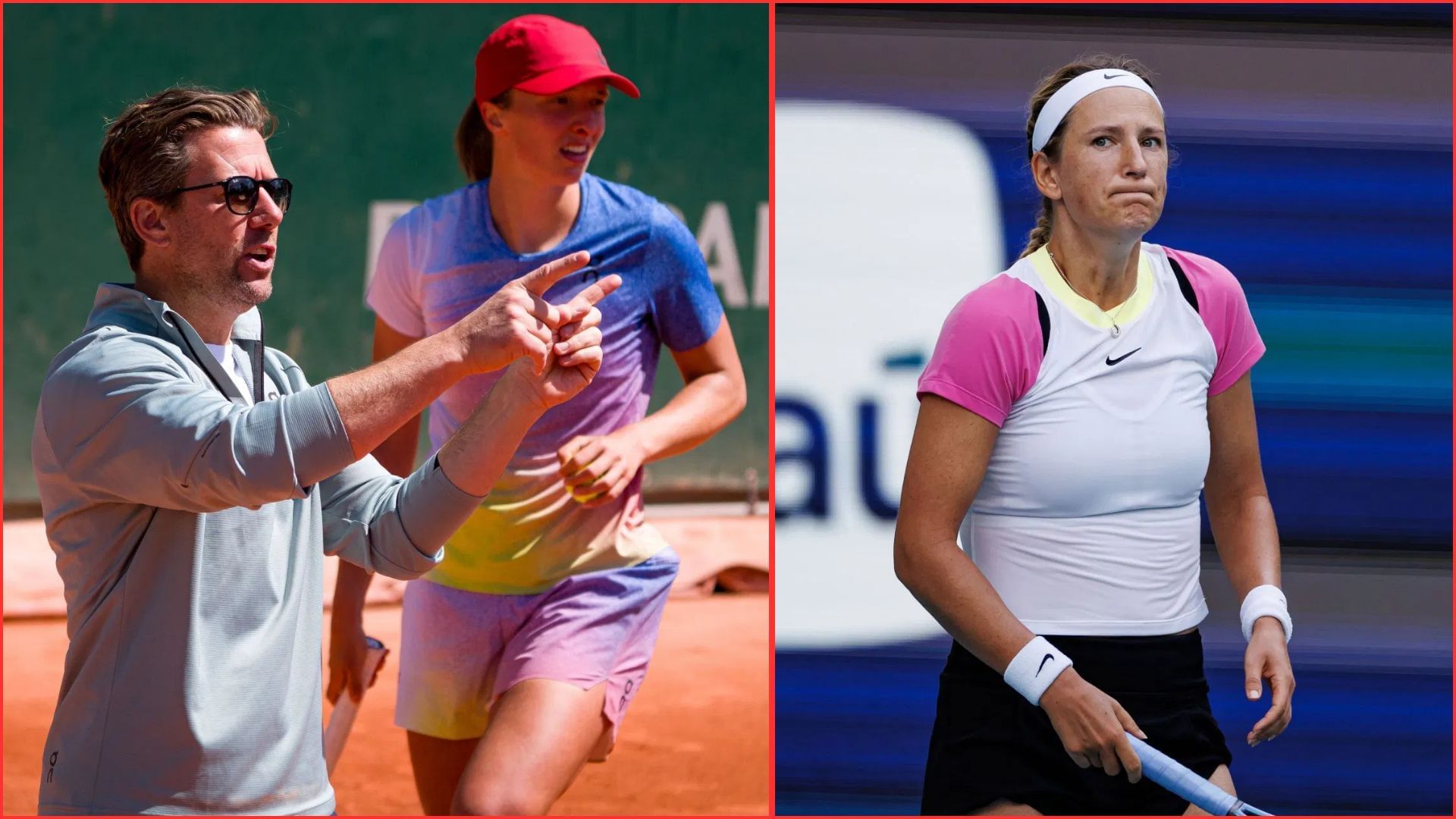
**Wim Fissette Opens Up About Victoria Azarenka’s Role During a Dark Phase in His Life**
Iga Swiatek’s coach, Wim Fissette, recently revealed how Victoria Azarenka played a crucial role in helping him overcome a difficult period in his life. The Belgian coach had initially decided to stay home when his wife was pregnant, but a call from the Belarusian star changed everything.
During his playing career, Fissette did not reach the top echelons of the tour. As a coach, he admitted on the *Inside In* podcast that earning respect in the locker room was a challenge, especially when compared to Hall of Fame players who transitioned into coaching. It took him time to fully believe in his place guiding some of the world’s top players.
Fissette credited Victoria Azarenka for supporting him through a pivotal moment. “One of the players that really kind of helped me with that was actually Vika [Victoria Azarenka]. It was a very important moment in my career where I almost made the decision to stay more home and not be on the tour again. My wife was pregnant at that time, and things didn’t go too well on the tour for me,” he said (from 21:20).
He recalled how Azarenka’s confidence in both him and his family — allowing them to travel with him on tour — showed him it was possible to balance coaching at the highest level alongside a stable family life. “And then I got a call from Vika, and I don’t know, she was so confident in me and also about my family, that my family could travel wherever they wanted, always could join me. And you know, that was really special. And Vika believed in me so much and that’s why also after she gave birth, I went back because we had such a great partnership. I really enjoyed that,” Fissette added.
Although he was not part of Azarenka’s Grand Slam victories, the duo worked together for a total of three years, spanning both her pre- and post-pregnancy periods.
—
### Wim Fissette’s Coaching Career: From Early Success with Kim Clijsters to Iga Swiatek’s Wimbledon Triumph
Wim Fissette began his coaching career after serving as a hitting partner for Kim Clijsters. He quickly transitioned to coaching her and guided Clijsters to major success, including US Open titles in 2009 and 2010, as well as the Australian Open in 2011. Their partnership established Fissette as a rising star on the WTA tour.
Following Clijsters, Fissette worked with players such as Sabine Lisicki and Simona Halep, helping them reach deep runs in major tournaments. He then joined Victoria Azarenka’s team, coaching her until her pregnancy. After her maternity break, Fissette returned to help Azarenka regain her form.
In between his two stints with Azarenka, he coached Angelique Kerber, guiding the former World No. 1 to the 2018 Wimbledon title. Fissette later worked with Naomi Osaka, securing victories at the 2020 US Open and the 2021 Australian Open. He also coached Qinwen Zheng, producing strong performances before returning to Osaka’s team.
Most recently, Fissette began coaching Iga Swiatek, playing a key role in her impressive Wimbledon triumph.
Over the years, Wim Fissette has worked with multiple top players, consistently achieving major results and cementing his reputation as one of the sport’s most accomplished coaches.
https://www.sportskeeda.com/tennis/news-my-wife-pregnant-i-made-decision-stay-home-iga-swiatek-s-coach-wim-fissette-reveals-azarenka-pulled-darkest-phase
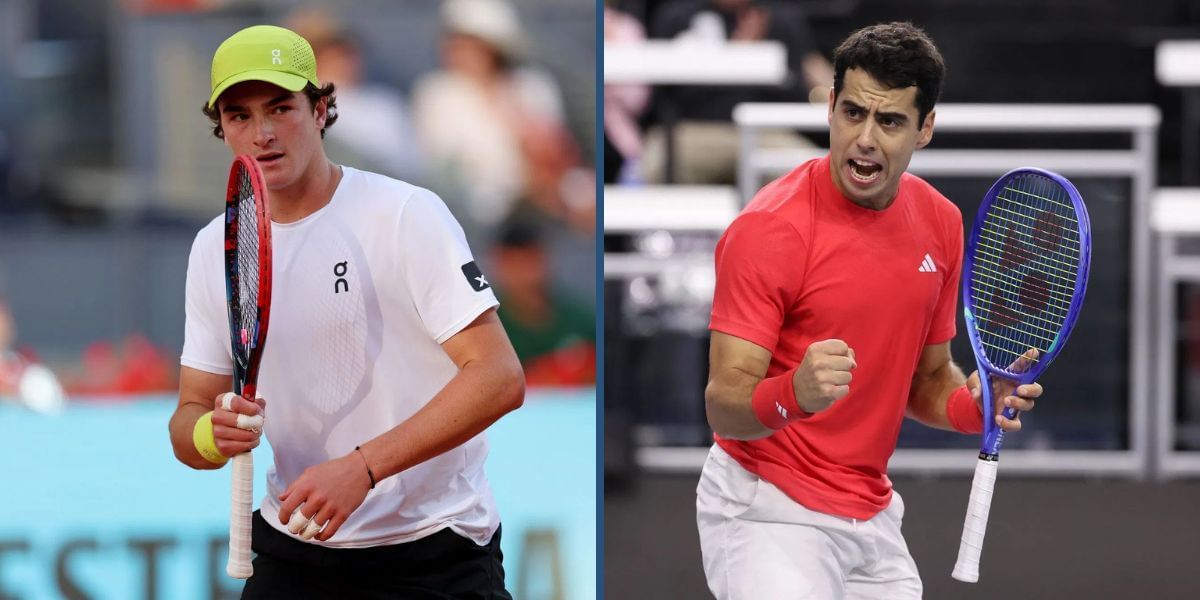
Teen phenom Joao Fonseca will take on Jaume Munar in the semifinals of the Swiss Indoors 2025. Fonseca began his campaign in Basel with a hard-fought 7-6 (8), 6-3 victory over Giovanni Mpetshi Perricard.
He advanced to the quarterfinals without playing his second-round match, receiving a walkover from seventh seed Jakub Mensik. In the quarterfinals, Fonseca faced ninth seed Denis Shapovalov. He broke Shapovalov’s serve early to start the proceedings but couldn’t maintain that level throughout the first set and ultimately dropped it.
However, Fonseca bounced back strongly, taking the second set and leading 4-1 in the decider when Shapovalov retired from the match. This victory secured Fonseca’s place in the semifinals.
On the other side, Jaume Munar had a solid start by defeating Remy Bertola 6-2, 6-4 in the first round. He then pulled off an upset against second seed Ben Shelton, winning 6-3, 6-4.
The quarterfinals saw Munar go head-to-head with fifth seed Felix Auger-Aliassime, who was fresh off winning last week’s European Open. Munar matched the in-form Auger-Aliassime shot for shot, gaining a crucial break in the fourth game to clinch the first set.
The match ended prematurely when Auger-Aliassime retired, allowing Munar to advance to the semifinals.
This upcoming semifinal encounter will mark the first meeting between Joao Fonseca and Jaume Munar, so the head-to-head record currently stands at 0-0.
While they represent different stages of their careers — Fonseca as the promising young talent and Munar as the seasoned veteran — both are enjoying the best seasons of their careers to date.
Fonseca is set to break into the ATP top 40 next week due to his impressive run in Basel. Munar, meanwhile, is also on course to reach a career-high ranking and could crack the top 30 if he reaches the final.
This year, Munar holds a 30-23 win-loss record. His highlights include reaching the fourth round of the US Open and making deep runs at several Masters 1000 events.
Fonseca captured his maiden ATP title at the Argentina Open and has reached the third round of both the French Open and Wimbledon, as well as two Masters 1000 tournaments.
The teenager’s forehand has been especially lethal throughout this week, and if he continues performing at this level, Fonseca will be the favorite to reach the biggest final of his young career.
Pick: Joao Fonseca to win in straight sets.