

Are crypto-hoarding firms setting themselves up for failure? According to Bitwise’s Chief Investment Officer Matt Hougan, companies adopting Digital Asset Treasury strategies face an uphill battle maintaining their stock premiums. This revelation sends shockwaves through the cryptocurrency investment community. Why Crypto-Hoarding Firms Can’t Sustain Premiums Matt Hougan recently took to social media platform X to explain the structural challenges facing crypto-hoarding firms. He argues that most companies implementing DAT strategies will eventually trade at negative premiums. The core issue lies in fundamental business dynamics that work against these firms over time. Hougan identifies three major burdens that accumulate and devalue DAT strategies: Corporate operating costs that continuously drain resources Liquidity problems that limit financial flexibility Execution risks that threaten strategy implementation The Growth Challenge for Crypto-Hoarding Companies What methods can crypto-hoarding firms use to increase their crypto holdings per share? According to Hougan, the options are both limited and uncertain. For the strategy to maintain value, growth must be continuous and substantial. However, most crypto-hoarding firms struggle with this requirement. The structural dynamics create a scenario where the burdens outweigh the benefits. Consequently, these companies face mounting pressure that eventually leads to discounted trading. What This Means for Crypto-Hoarding Investors Investors in crypto-hoarding firms should understand the inherent risks. The premium sustainability issue affects long-term value creation. While short-term gains might appear attractive, the structural challenges pose significant threats. Hougan’s analysis suggests that crypto-hoarding firms need more than just cryptocurrency exposure to succeed. They require robust business models that can withstand the accumulating burdens he describes. The Future of Digital Asset Treasury Strategies Will all crypto-hoarding firms face this premium decline? Hougan believes most will eventually trade at discounts. The structural factors he identifies create persistent headwinds that are difficult to overcome. This doesn’t mean DAT strategies are doomed. However, crypto-hoarding firms must address these challenges proactively. Companies that find ways to mitigate operating costs, improve liquidity, and manage execution risks might still succeed. FAQs: Understanding Crypto-Hoarding Firm Challenges What are crypto-hoarding firms? Crypto-hoarding firms are companies that implement Digital Asset Treasury strategies, holding significant cryptocurrency reserves as part of their corporate treasury management. Why do crypto-hoarding firms struggle with premiums? They face structural challenges including ongoing corporate operating costs, liquidity constraints, and execution risks that accumulate over time and devalue their strategies. Can any crypto-hoarding firms maintain premiums? While challenging, some firms might succeed if they develop methods to continuously increase crypto holdings per share and effectively manage the structural burdens. What should investors look for in crypto-hoarding firms? Investors should evaluate how companies address operating costs, liquidity management, and execution risk mitigation in their DAT strategies. How quickly do premiums typically decline? The timeline varies, but Hougan suggests the structural dynamics eventually cause most DAT companies to trade at discounts as burdens accumulate. Are there successful examples of crypto-hoarding firms? While some companies have shown temporary success, long-term sustainability remains challenging due to the structural factors identified by Hougan. Found this analysis of crypto-hoarding firms insightful? with fellow investors and cryptocurrency enthusiasts on your social media platforms to continue the conversation about Digital Asset Treasury strategies. To learn more about the latest cryptocurrency trends, explore our article on key developments shaping Bitcoin institutional adoption.
https://bitcoinethereumnews.com/tech/bitwise-cio-reveals-structural-flaws/
Tag: implementation
INJ Price Prediction: Technical Recovery to $6.33 Before December Correction to $5.17
INJ Price Prediction Summary • INJ short-term target with a stop-loss at $5. 19. This approach targets the $6. 33 level with a favorable 2: 1 risk-reward ratio. Aggressive Entry: Current levels around $5. 44 offer proximity to strong support, but require a tight stop-loss below $5. 19 to manage downside risk to the $5. 17 target. Position sizing should remain conservative given the mixed analyst sentiment and the proximity to 52-week lows. The technical setup suggests INJ could move decisively in either direction within the next two weeks. INJ Price Prediction Conclusion Our Injective forecast anticipates a near-term recovery to $6. 33 within one week, supported by oversold technical conditions and analyst optimism surrounding the Altria upgrade. However, the medium-term outlook remains cautious, with a potential decline to $5. 17 by December 21 if broader market conditions deteriorate. Confidence Level: Medium for the $6. 33 target, Medium-Low for the $5. 17 bearish scenario. Key indicators to monitor include the RSI breaking above 35 for bullish confirmation and MACD histogram turning positive. Failure to hold $5. 19 support would validate the bearish $5. 17 INJ price target. The timeline for this prediction spans the next 4-6 weeks, with the initial recovery phase expected within 7-10 days. The Altria upgrade remains the wildcard that could invalidate bearish scenarios and propel INJ toward the higher analyst targets of $7. 50-$9. 17.
https://bitcoinethereumnews.com/tech/inj-price-prediction-technical-recovery-to-6-33-before-december-correction-to-5-17/


Fintech Law Company Gofaizen & Sherle Announces Launch of Crypto License Navigator
**Disclaimer:** The below article is sponsored, and the views expressed do not represent those of ZyCrypto. Readers should conduct independent research before taking any actions related to the project mentioned in this piece. This article should not be regarded as investment advice.
—
**Fintech Law Firm Gofaizen & Sherle Launches the Crypto License Navigator**
Fintech law firm Gofaizen & Sherle has announced the launch of the *Crypto License Navigator*, an interactive tool designed to help crypto businesses assess and compare licensing options across jurisdictions. This innovative solution comes ahead of the full implementation of the Markets in Crypto-Assets Regulation (MiCAR) in the European Union, scheduled for 2026.
With MiCAR introducing stricter licensing requirements and heightened regulatory oversight, crypto companies are facing significant challenges in selecting the right jurisdiction for their operations. This decision is critical for companies of all sizes, impacting their ability to comply and grow sustainably in an evolving regulatory landscape.
—
### What is the Crypto License Navigator?
The License Navigator enables businesses to make informed decisions when selecting a crypto jurisdiction, supporting sustainable growth by considering a wide range of factors. These include:
– Minimum capital requirements
– Corporate tax rates in the selected jurisdiction
– License acquisition times
– Access to banking services
– Jurisdiction reputation
By integrating these key regulatory and tax parameters into an interactive dashboard with real-time analytics, users can model a tailored crypto licensing strategy aligned with their goals.
—
### Key Considerations When Choosing a Jurisdiction
According to Gofaizen & Sherle, several factors are vital for crypto companies when choosing the right jurisdiction:
– **Global Recognition:** Being recognized among banks and fintech partners ensures a seamless launch and effective business partnerships.
– **Reputation:** A jurisdiction with a solid reputation helps earn the trust of customers, investors, and regulators, facilitating easier access to capital and partnerships.
– **Scope of Operations:** The jurisdiction should permit a broad range of crypto services aligned with the company’s offerings.
– **Stable Legislation:** Predictable and reliable legal frameworks are preferable to avoid sudden regulatory changes.
– **Operating Costs:** Regular expenses such as office space, personnel, compliance, and license renewal fees must fit within budget constraints.
– **Tax Regime:** The corporate tax rate and any government incentives for crypto businesses directly influence profitability and should be carefully evaluated.
– **Initial Budget and Timeline:** Costs for registration, licensing, and launching operations, along with the time needed to secure a license, are critical planning factors.
– **Local Presence Requirements:** Some jurisdictions require appointing a regional director or compliance officer, adding to operational considerations.
—
### Popular Crypto Jurisdictions in 2026
Using insights gained via the License Navigator, Gofaizen & Sherle have identified several jurisdictions expected to be popular among crypto businesses in 2026. These include:
– El Salvador
– Canada
– Montana (USA)
– Switzerland
– Bosnia and Herzegovina
Common features of these jurisdictions include zero corporate income tax, clear and accessible regulatory frameworks, and straightforward licensing processes.
—
### About Gofaizen & Sherle
With extensive experience in crypto regulations, Gofaizen & Sherle has helped clients obtain more than 800 crypto licenses across over 50 jurisdictions worldwide. The firm offers comprehensive support in licensing, accounting, human resources, and regulatory reporting, guiding crypto companies through every stage—from project planning to hiring staff and opening offices.
—
The launch of the Crypto License Navigator marks a significant step forward in empowering crypto businesses to navigate the increasingly complex regulatory environment with confidence and precision.
https://bitcoinethereumnews.com/crypto/fintech-law-company-gofaizen-sherle-announces-launch-of-crypto-license-navigator/

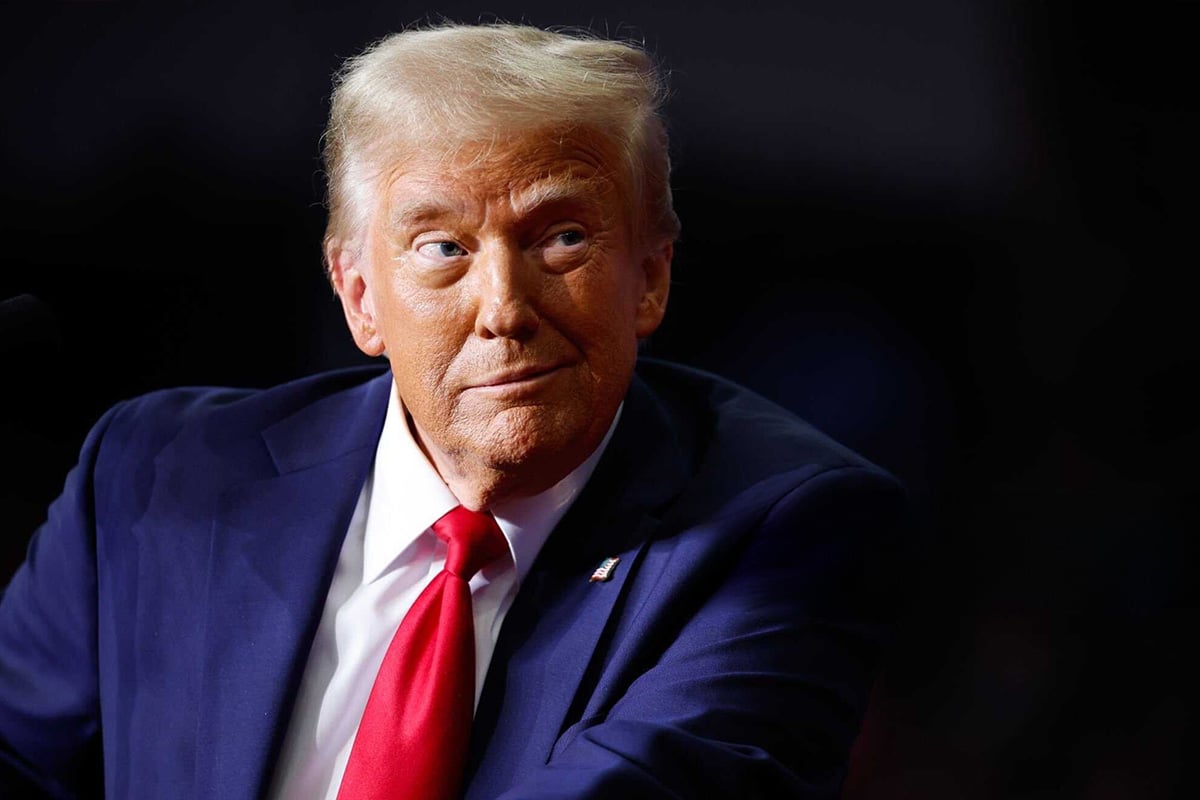
Trump Proposes $2,000 Tariff Dividend as Crypto Markets Rally
**President Trump Announces $2,000 Tariff Dividend for Most Americans**
President Donald Trump announced on Sunday that most Americans will receive a $2,000 dividend funded by tariff revenue. The announcement was made via his Truth Social platform, where he stated that the payments would help reduce the national debt while providing direct financial benefits to citizens. “A dividend of at least $2,000 a person, not including high income people, will be paid to everyone,” Trump wrote in his post, defending his tariff policies amid ongoing legal challenges.
—
**Cryptocurrency Markets React Positively**
Following the announcement, the cryptocurrency market responded with gains. Bitcoin rose by 1.93% over 24 hours, trading above $103,000. Ethereum climbed 4.75% to surpass $3,500, and Solana increased by 2.49% to top $160. The CoinDesk 20 index also saw a rise of more than 1.5%.
This rally comes after a difficult week for crypto markets, during which the CD20 index had fallen nearly 15%. Despite the recent recovery, Bitcoin remains down 5.7% for the week, while Ethereum is still down 7.5%.
—
**Legal and Financial Hurdles Ahead**
The Supreme Court is currently hearing arguments regarding the legality of Trump’s tariff policies. Prediction markets indicate low confidence in court approval, with Kalshi traders assigning just a 23% chance and Polymarket traders slightly lower at 21%.
Beyond legal challenges, implementation of the dividend faces significant hurdles. Andy Constan, CEO of Damped Spring Advisors, emphasized that the President cannot authorize such payments unilaterally. Federal spending requires Congressional approval, meaning any plan to distribute tariff revenues must pass through the legislative branch.
—
**Funding Gap Raises Concerns**
Financial calculations present another major obstacle. Erica York, Vice President of Federal Tax Policy, estimated that if the income cutoff is set at $100,000, about 150 million adults would qualify. This translates to an approximate cost of $300 billion. If children are included in the payments, the cost would be even higher.
However, tariffs have only generated $120 billion in revenue so far, creating a sizeable funding gap.
York also explained that economic effects reduce net tariff revenue further. For every dollar raised by tariffs, approximately 24 cents of income and payroll tax collections are offset. After accounting for these offsets, net tariff revenue stands at about $90 billion—far below the $300 billion needed to fund the proposed dividend program.
—
**Expert Opinions and Market Predictions**
Investment analysts at The Kobeissi Letter estimate that around 85% of U.S. adults would receive these stimulus checks based on COVID-era distribution data.
Bitcoin analyst Simon Dixon suggested that recipients should consider investing the dividend payments in assets to protect against inflation. Similarly, investor Anthony Pompliano noted that stocks and Bitcoin typically rise following stimulus announcements.
Traders appear to be pricing in the possibility of increased inflows into the crypto market if the dividend funds reach recipients.
—
**Summary**
While President Trump’s $2,000 tariff dividend proposal has generated optimism in cryptocurrency markets, legal and financial challenges remain significant. Congressional approval is required, and current tariff revenues fall substantially short of the amount needed to fund the payments. The Supreme Court’s upcoming decision on tariff legality will play a crucial role in determining the proposal’s viability.
https://coincentral.com/trump-proposes-2000-tariff-dividend-as-crypto-markets-rally/

Florida releases nearly $60M to cover missing, frozen voucher funds
Florida Officials Aim to Solve Voucher Program Funding Woes with Nearly $60 Million in Payments
Florida government officials hope that nearly $60 million in payments to families and schools will resolve last year’s financial troubles in the state’s education voucher program. However, lawmakers emphasized Wednesday that fundamental changes are still needed in the way the state and its scholarship funding organizations operate.
“It is my sincere hope that through the work of this subcommittee, together we can explore ways to improve the implementation and administration of our state scholarship programs to ensure that what happened in fiscal year 2024-25 is not repeated going forward,” said Rep. Jenna Persons-Mulicka, R-Fort Myers, chairperson of the House PreK-12 Budget Subcommittee.
Her panel has recently held three hearings to address concerns with the voucher program. Last year, the House rejected Senate efforts to reform the funding model now under scrutiny.
The Problems at Hand
The issues that surfaced last year centered on two main problems:
First, school districts faced a $47 million shortfall in state funding as students who claimed voucher awards attended public schools.
Second, about 22,000 voucher recipients had their accounts frozen after being identified as enrolled in public education.
“The Department [of Education] has come to us, the Legislature, the appropriators, to help resolve those issues because there were no funds left in the [Florida Education Finance Program] for fiscal 2024-25,” Persons-Mulicka told her subcommittee.
Funding Fixes Announced
According to Persons-Mulicka, the solution now appears to be in hand. The Department and scholarship funding organizations—Step Up for Students and AAA—spent months determining which students had their accounts improperly frozen.
On October 29, $16.9 million was released to these organizations for students who were owed money. As of Wednesday, almost all the funds had been distributed to about 3,700 of the initially identified 22,000 children.
“For those families and for those schools that accept scholarship funds,” she said, “I encourage you to all check your scholarship accounts as of today.”
Legislative Action for School Districts
For the affected school districts, the Legislature advanced a $47 million budget amendment on Wednesday.
“This amount will be released to school districts to make them whole for fiscal year 2024-25,” Persons-Mulicka said. She noted that the Department informed districts the money should be received next week.
Continuing Concerns and Next Steps
After announcing the funding fixes, the subcommittee engaged in a lengthy discussion about ongoing challenges. Topics included how students are identified so their vouchers can be properly assigned and issues families have raised about the reimbursement process for voucher-related expenses. These concerns have persisted for several years and have intensified as the program has expanded.
Jeffrey S. Solochek is a reporter covering education for the Tampa Bay Times Education Hub.
You can support the hub through our journalism fund.
©2025 Tampa Bay Times. Visit tampabay.com.
https://www.orlandosentinel.com/2025/11/06/florida-releases-nearly-60m-to-cover-missing-frozen-voucher-funds/


US-China Tariff Reductions Signal Eased Trade Tensions
**China and the United States Initiate Tariff Adjustments Signaling Potential Trade Easing in November 2025**
Following recent economic consultations, China and the United States have begun adjusting tariff measures, indicating a possible easing of trade tensions starting November 2025. These adjustments are poised to enhance bilateral trade, particularly impacting the agriculture and mineral sectors. This shift may also foster growth in commodity-linked cryptocurrencies and decentralized finance (DeFi) protocols, although no immediate effect on principal crypto assets is expected.
### US-China Tariff Easing Spurs Agricultural Expansion
Both nations have implemented tariff removals as a direct result of recent negotiations. The United States announced initiatives to lift the “Fentanyl Tariff” and suspend certain “Counterpart Tariffs,” aligning with ongoing bilateral efforts to stabilize economic exchanges.
In response, the Chinese government initiated corresponding adjustments to ease trade barriers. Immediate changes include targeted tariff reductions to facilitate smoother trade in commodities and agricultural products. Beyond tariffs, the two countries are cooperating on fentanyl drug control efforts and the supply of critical minerals.
Huo Jianguo, a key economic analyst, described these steps as foundational, predicting future agreements covering wider trade topics such as maritime logistics. He explained,
> “The current implementation between the two sides is the first aspect of the consensus outcome, involving tariff adjustment and reciprocal measures; future steps will include origin rules and maritime sector restrictions as well as drug control and agriculture cooperation.”
### Financial and Market Implications
The financial impact of these tariff revisions is significant. Reduction in tariffs is expected to bolster U.S. exports while increasing Chinese imports, helping to counteract the strain from previous trade tensions. The U.S. Treasury has emphasized the importance of monitoring these changes closely to maintain macroeconomic stability.
Community feedback across digital platforms reflects mild optimism, as many in digital markets see these developments as a positive shift toward more stable economic relations.
### Tariff Revisions Echo 2020 Trade Movements
It’s worth noting that the 2025 tariff reductions resemble the Phase One Agreement reached in 2020. That agreement marked a pivotal shift in trade relations through structured purchases and tariff reductions, setting a precedent that appears to be influencing today’s negotiations.
### Cryptocurrency Market Snapshot
– **Bitcoin (BTC)** is currently valued at **$103,434.87**, capturing **59.90%** market dominance, according to CoinMarketCap.
– With a market capitalization of **$2.06 trillion** and a circulating supply of **19,944,128 BTC**, Bitcoin has seen a **2.68%** increase in the last 24 hours despite a **-17.09%** decline over the past 30 days.
– Trading volume reached **$76.26 billion**, down by **30.94%**.
These figures suggest that while principal crypto assets like Bitcoin may not experience immediate effects from the tariff changes, the broader impact on commodity-linked cryptocurrencies and DeFi markets could be more pronounced over time.
—
**Stay tuned for ongoing updates as US-China trade relations continue to evolve and impact global markets.**
https://bitcoinethereumnews.com/tech/us-china-tariff-reductions-signal-eased-trade-tensions/
IREN stock jumps after MSFT deal, analyst ups price target
**IREN Ltd. Stock Price Surges After Major Data Center Partnership with Microsoft**
IREN Ltd., a leading company in the Bitcoin (BTC) mining and data center industry, has seen its stock price continue a strong surge this month after securing a significant data center partnership with Microsoft. The stock jumped to a record high of $75.30, soaring over 1,200% from its lowest level earlier this year. This remarkable increase has pushed IREN’s market capitalization to over $19 billion.
The surge comes on the heels of a $9.7 billion, five-year deal signed with Microsoft. The agreement, set to begin implementation in 2026, includes a 20% prepayment and is estimated to deliver an EBITDA margin of 85%. This deal marks a significant validation for IREN, which recently pivoted to the AI colocation industry.
In its most recent financial results, IREN’s AI colocation business generated only $7 million in the fourth quarter. However, the partnership with Microsoft is expected to attract other potential customers, including major players like Oracle, Meta Platforms, OpenAI, Amazon, and Anthropic. Notably, OpenAI has already entered into a similar agreement with CoreWeave, while Meta Platforms partnered with Nebius.
Wall Street analysts remain optimistic about IREN’s future performance. According to Yahoo Finance data, the average revenue estimate for IREN, which will be announced this Thursday, is $241 million—a staggering 344% annual increase. Projections indicate $257 million in revenue for the second quarter and $1.2 billion for the current financial year. These figures represent substantial growth compared to the $512 million generated in the previous fiscal year.
Importantly, unlike competitors such as CoreWeave, IREN’s business is already profitable. Annual earnings per share are expected to rise to $1.60, up from 35 cents last year. Analysts believe there is additional upside potential for IREN’s stock price. Darren Aftahi of Roth MKM recently raised his price target from $82 to $94, implying a 55% gain from the current level. Similarly, Gautam Chugani, an analyst at Bernstein, projects the stock will climb to $75, reflecting a 24% increase.
**IREN Stock Price Technical Analysis**
Looking at the daily timeframe chart, IREN’s share price has been on a strong uptrend throughout the year, climbing from a low of $5 in April to a high of $75 this week. The stock has consistently remained above all moving averages, indicating bullish dominance.
However, there are some technical concerns. The stock appears to have formed a double-top pattern around $74, with a neckline at $48. Additionally, the MACD indicator shows a bearish divergence, suggesting weakening momentum. This could lead to a strong bearish breakdown as investors potentially “sell the news” when IREN releases its upcoming financial results later this week.
Investors should watch closely for signs of a retreat in the stock price following these important developments.
—
*Stay tuned for updates on IREN Ltd.’s financial results and market reaction.*
https://bitcoinethereumnews.com/tech/iren-stock-jumps-after-msft-deal-analyst-ups-price-target/

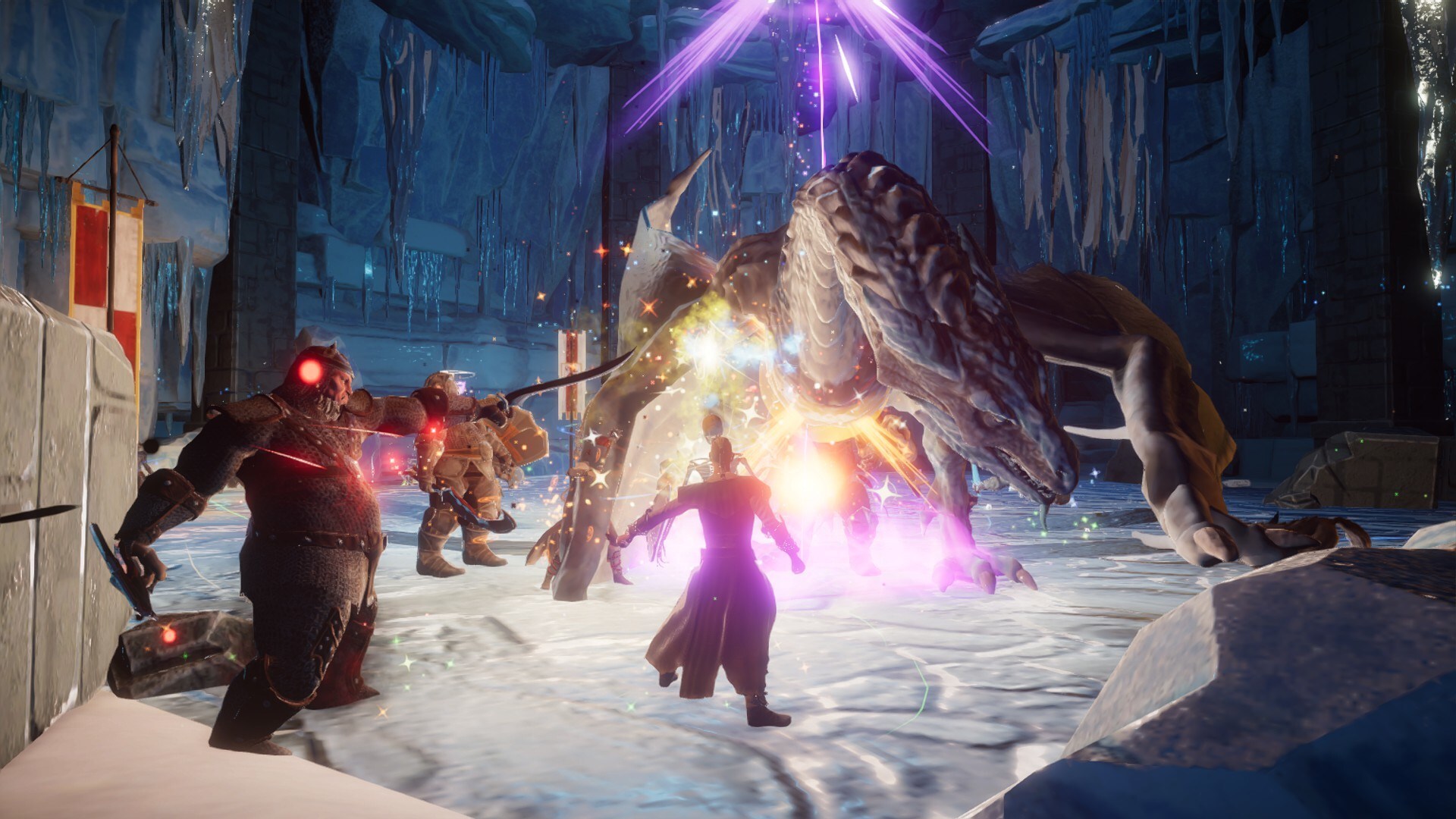
MMORPG Pantheon: Rise of the Fallen secures additional multimillion dollar funding
**Visionary Realms Secures Additional Multimillion Dollar Funding to Accelerate Launch of MMORPG Pantheon: Rise of the Fallen**
*CARLSBAD, Calif., Nov. 4, 2025* — Visionary Realms, the independent game studio behind the highly anticipated MMORPG *Pantheon: Rise of the Fallen*, has secured additional multimillion dollar funding to accelerate and strengthen the game’s upcoming launch.
The new investment will support the expansion of the development team with more artists, programmers, designers, and strengthened project management. This infusion of resources is aimed at enabling Visionary Realms to release the game sooner, delivering a more complete offering of the originally planned content.
This announcement comes amid widespread industry challenges, including layoffs, studio closures, and investor caution. Addressing these conditions, CEO Chris Rowan stated,
> “The industry is suffering a terrible storm right now. We are appreciative of this vote of confidence in our team’s vision, resilience, and dedication to crafting a skill-driven MMORPG.”
*Pantheon: Rise of the Fallen* entered Early Access in December 2024. Throughout 2025, the team has focused on adding content across multiple level ranges, refining systems, and incorporating live player feedback to enhance the game experience.
The new funding will allow Visionary Realms to more fully realize the original vision at launch, providing players with a more robust and immersive MMORPG experience. Rowan emphasized the team’s positive outlook:
> “We’re in a great position now. Uncertainty has been removed, allowing for improved, meticulous planning and focused project management which gives Visionary Realms sustained momentum toward a definitive 1.0 release.”
—
**About Visionary Realms**
Visionary Realms is an independent game development studio dedicated to advancing the MMO genre. Their flagship title, *Pantheon: Rise of the Fallen*, offers a content-rich, challenging, and highly social gaming experience designed to engage and captivate MMORPG players.
—
**Media Contact**
Public Relations, Visionary Realms, Inc.
Phone: 1-760-557-1607
Email: [email protected]
https://www.prweb.com/releases/mmorpg-pantheon-rise-of-the-fallen-secures-additional-multimillion-dollar-funding-302604004.html


20 Great Rap Artists Who Never Had a Top 40 Hit
Last week, hip-hop made headlines for a dubious reason. For the first time in more than 35 years, no rap songs appeared in the Billboard Hot 100’s top 40. This came after “Luther,” Kendrick Lamar’s duet with SZA, was removed from the chart following the implementation of a new rule.
The news sparked dialogue about the lack of hits from rappers on the charts. Even with the dominant success of “Luther” — which spent 13 weeks at No. 1 — rap has had a shaky year commercially.
In some ways, the latest news gave rap doubters more ammunition for a sentiment that has been reoccurring since the end of the pandemic: that the genre is dying, being lapped by fresher, more global sounds like K-pop and Latin music. It’s unclear whether the past couple of years are an aberration or the new normal.
One thing that complicates this narrative is that, historically, the charts haven’t always been the most important factor in hip-hop. In fact, some of the greatest and most genre-defining rap songs of the past 50-plus years—everything from Nas’ “N. Y. State of Mind” to Rick Ross’ “B. M. F.”—were never Top 40 hits, even though those songs are synonymous with hip-hop and, in some cases, have earned plaques. (“N. Y. State of Mind” went gold, while “B. M. F.” went platinum.)
This applies to the artists themselves, too. Some of the greatest and most accomplished rap artists of all time have never had a Top 40 hit. (We’re focusing on the Top 40 because that’s traditionally been the distinction between a hit and a non-hit—a measure that goes back to the 1950s.)
https://www.complex.com/music/a/treyalston/20-rap-artists-who-never-had-a-top-40-hit
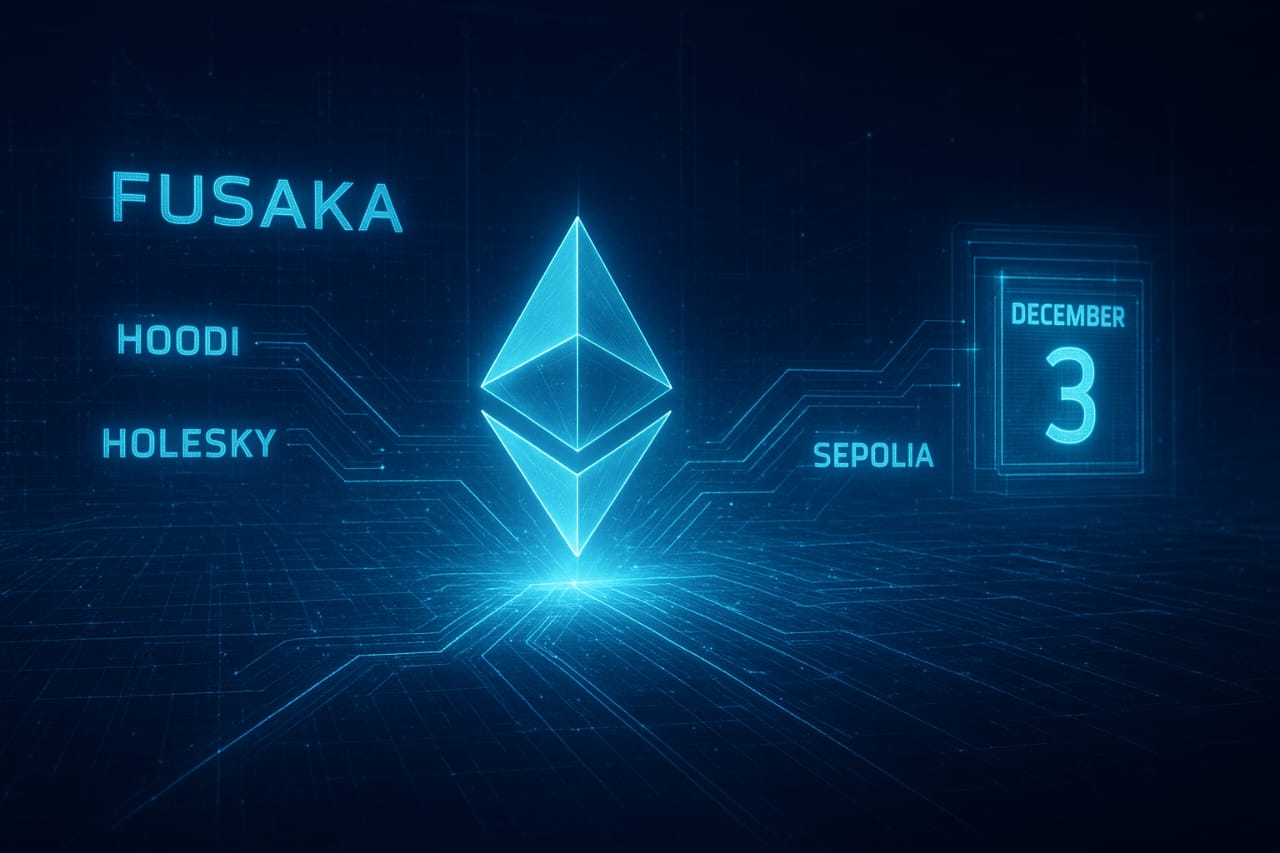
Ethereum’s Fusaka Upgrade Goes Live on Hoodi Testnet Ahead of December Mainnet Launch
Ethereum Nears its Next Major Evolution with Fusaka Hard Fork
Ethereum is moving closer to its next major evolution. On Tuesday, the network’s latest hard fork, Fusaka, went live on the Hoodi testnet, marking the final testing stage before its official mainnet activation later this year.
Hoodi is the third and final testnet for Fusaka, following earlier deployments on Holesky and Sepolia. According to the Ethereum Foundation (@ethereumfndn), the mainnet rollout will occur at least 30 days after Hoodi testing, with December 3 set as the tentative date for the official hard fork.
Fusaka is more than just another upgrade. It represents the next phase of Ethereum’s long-term roadmap, focused on scalability, efficiency, and Layer 2 optimization.
The Road to Fusaka
The Ethereum community has been preparing for this moment for months. Each testnet deployment served as a trial ground for new features and infrastructure refinements.
The first implementation on Holesky tested network synchronization and consensus adjustments. Sepolia followed, validating node performance and gas parameter tuning. Now, with Hoodi live, developers are finalizing tests for rollup scaling and parallel execution—two pillars of the upcoming upgrade.
Fusaka’s mainnet launch on December 3 will be the first step in a three-stage rollout designed to gradually expand Ethereum’s data and transaction capacity.
Rollout Timeline
Ethereum developers have confirmed a structured schedule for Fusaka’s release:
- Dec 3, 2025 → Fusaka mainnet launch
- Dec 17, 2025 → Blob capacity increase
- Jan 7, 2026 → Second blob capacity hard fork
Each stage unlocks new capabilities. The first activation will introduce key Ethereum Improvement Proposals (EIPs), while the later forks will scale blob data capacity, a critical factor for rollups and data availability layers (DALs). The client release window opens on November 3, giving operators and validators 30 days to upgrade their nodes before activation.
What Fusaka Brings to Ethereum
At the core of Fusaka are multiple EIPs designed to improve scalability, reduce gas fees, and enhance the experience for both developers and users.
PeerDAS (EIP-7594)
Perhaps the most anticipated, PeerDAS introduces a new data sampling approach that allows Ethereum to support higher Layer 2 throughput while keeping node requirements reasonable. In plain terms: more capacity, less strain.
EIP-7825 & EIP-7935
These proposals fine-tune Ethereum’s gas limits, paving the way for parallel execution—meaning the network can process multiple transaction threads simultaneously, a major step toward faster and more efficient block validation.
EIP-7939 & EIP-7951
The CLZ (EIP-7939) and secp256r1 (EIP-7951) upgrades aim to boost cryptographic performance and zero-knowledge (ZK) proving support, enhancing Ethereum’s zero-knowledge ecosystem.
Together, these upgrades solidify Ethereum’s foundation for the next generation of rollups and decentralized applications.
Laying the Groundwork for “The Surge”
Ethereum co-founder Vitalik Buterin has long described the network’s roadmap as a series of “eras”: The Merge, The Surge, The Scourge, The Verge, and beyond. Fusaka fits squarely into The Surge, the phase focused on scaling Ethereum to handle tens of thousands of transactions per second.
Once Fusaka is live, developers will begin preparing for Glamsterdam, the next milestone upgrade, which will expand on Fusaka’s groundwork by enabling true parallel processing across the Ethereum Virtual Machine (EVM).
Fusaka is, therefore, more than a technical upgrade—it’s a symbol of Ethereum’s long-term vision: decentralization without compromise.
Ethereum’s Institutional Momentum
Outside the development arena, Ethereum is breaking new ground in institutional adoption. According to CryptoRank, Ethereum now leads in digital asset treasury holdings, surpassing Bitcoin for the first time.
Institutional treasuries now hold 4.1% of ETH’s total supply, compared to Bitcoin’s 3.6% and Solana’s 2.7%. The timing isn’t random—this surge followed Donald Trump’s signing of the GENIUS Act, a landmark stablecoin regulation that strengthened the legal framework for on-chain finance in the U.S.
Since the law’s passage, funds and fintech firms have rapidly increased their exposure to ETH. Institutional investors now view Ethereum not merely as a token, but as the core infrastructure of the decentralized finance (DeFi) economy.
ETH on the Charts
Market sentiment has turned bullish as traders position for the December 3 launch. Analysts expect the Fusaka upgrade to drive a renewed Layer 2 growth cycle, with protocols like Arbitrum, Optimism, and Base benefiting from increased throughput and reduced data costs.
This growing confidence reflects Ethereum’s ability to evolve without breaking. Each upgrade over the past three years—from The Merge to Dencun—has reinforced its dominance in the Layer 1 space.
What Comes After Fusaka
If Fusaka delivers as expected, the next step will be to expand Ethereum’s data availability and execution parallelism. That’s where Glamsterdam comes in—an upgrade designed to take rollup scalability to its full potential.
In parallel, Ethereum researchers are exploring stateless client architecture, proof aggregation, and cross-chain messaging—all aimed at lowering costs and improving network efficiency.
Ethereum’s roadmap remains clear: scale Layer 2s, reduce complexity, and onboard the next wave of global users.
Conclusion
The Fusaka hard fork isn’t just a technical milestone—it’s a statement of resilience and innovation. From testnets to mainnet, Ethereum continues to evolve at a pace unmatched in blockchain history.
The network’s developers are not just building for the next quarter; they’re building for the next decade. And with institutional money flowing in, new laws favoring on-chain assets, and the strongest developer community in crypto, Ethereum stands ready for its next chapter.
The countdown to December 3 has begun.
Disclosure: This is not trading or investment advice. Always do your research before buying any cryptocurrency or investing in any services.