Postrock legends Tortoise keep widening their circles at a concert with the Chicago Philharmonic

More than three decades into their career, Chicago-born instrumental ensemble Tortoise still exemplify the ideals of what’s come to be known as “postrock.” This has less to do with adhering to a specific style—they’ve trafficked in Krautrock, dub, Afropop, minimalist classical, ambient music, and more—than with their devotion to finding new expressive paths inside the sounds they’ve been exploring and evolving since their debut in 1993 with the *Mosquito* seven-inch.

Their October album, *Touch*, is their first full-length release in nine years. However, the long delay shouldn’t be taken as evidence that they’re any less committed to the project. The five members of Tortoise managed to create a coherent album while spread out across three different states. Percussionist, keyboardist, and recording engineer John McEntire lives in Portland, Oregon; guitarist-keyboardist Jeff Parker and percussionist John Herndon are based in Los Angeles; and percussionist-keyboardist Dan Bitney and bassist-guitarist Doug McCombs remain in Chicago.

Released by International Anthem and Nonesuch, *Touch* is Tortoise’s first album not issued on the storied Chicago indie label Thrill Jockey. Parker has already released stellar solo recordings through International Anthem, and Tortoise’s adventurous music helped set the stage for the label to become an institution in its own right.

To my ears, *Touch* nods to this connection. A midsong shift in the crunchy “Vexations,” for instance, emphasizes cool, in-the-pocket handclaps that recall Parker’s 2020 album *Suite for Max Brown*. *Touch* also explores some intriguingly unfamiliar sounds. The cinematic doo-wop of “Night Gang” could have easily served as the score for a futuristic spaghetti western—I never would’ve imagined Tortoise creating a track like this before hearing it.

To commemorate the release of *Touch*, Tortoise will perform a one-off collaboration with the Chicago Philharmonic, marking another bold step onto new turf for the band—one they are well equipped to make their own.

**Event Details:**
**Tortoise with the Chicago Philharmonic**
Tuesday, November 11 | 7:30 PM
Auditorium Theatre, 50 E. Ida B. Wells
Tickets: $71–$224, all ages welcome
https://chicagoreader.com/music/concert-preview/postrock-tortoise-chicago-philharmonic/

Gutsy Gen Z employee requests time off from work for the most head-scratching reason

As the saying goes, honesty is the best policy. While some employees hesitate to take well-deserved paid time off (PTO) because they feel guilty—looking at you, millennials—others, their younger Gen Z counterparts, seem to have no problem asking for time off for reasons straight from the heart.

A manager recently took to X (formerly Twitter) to share a leave request email he received from a young employee that would have many boomers scratching their heads. The email read:

“I recently had a breakup and haven’t been able to focus on work, I need a short break. I’m working from home today, so I’d like to take leave from the 28th to the 8th.”

Short, sweet, and to the heartbroken point.

When the manager publicly shared a screenshot of the email (with names blurred out), he wrote above it: “Got the most honest leave application yesterday. Gen Z doesn’t do filters!”

If you’re wondering, yes — this manager did approve the leave request **without any questions**.

The post quickly went viral, receiving over 14 million views on X. Many people expressed support for the generation born between 1997 and 2012.

One commenter wrote, “Gen Z might not have everything figured out, but when it comes to work—they know their rights, speak up without fear, and refuse to tolerate nonsense.”

Another chimed in, “In an age of AI, you should be hiring people with solid communication skills and great EQ. This person is that.”

And someone else tweeted, “I respect the honesty. Sometimes a breakup hurts more than deadlines.”

This, of course, isn’t the first time a Gen Z employee has had an unexpected reason for requesting time off. Another young worker sent a candid email that read:

“Feeling a bit overwhelmed with all the work and my energy feels a little off, so not getting that vibe right now. I’ll be out from 28th July to 30th July (pls don’t miss me).”

At first, this manager didn’t seem as understanding as the previous one since the employee appeared to be stating what they were doing rather than formally asking for time off. However, by the end of the day, the request was still approved.

“She was frustrated with all the work, so I approved it,” the manager shared.

In the end, it seems that honesty—and a little vulnerability—go a long way in today’s workplace, especially among Gen Z employees who are redefining how we communicate and set boundaries at work.
https://nypost.com/2025/11/02/lifestyle/gen-z-employee-had-unexpected-reason-for-time-off-request/

Sunday stats: Sixers succeeding with small ball, Adem Bona blocking everything and Justin Edwards slumping

Perhaps the only statistic Sixers fans are concerned with right now is 4-1 — the team’s record through a five-game stretch to begin the season. This strong start has incited enormous excitement around a team many expected to cause more misery.

But how did the Sixers win their first four games and nearly complete a 24-point comeback to make it five on Friday night?

This is not a perfect team, but Sixers head coach Nick Nurse has done a stellar job early on juggling a roster with multiple key injuries and not a whole lot of balance. He is finding the right puzzle pieces so far, with some major reinforcements eventually on the way.

In this week’s Sunday Stats, we take a look at a pair of factors behind the Sixers’ strong start to the year — and one disappointing member of Nurse’s rotation.

### +53: Dominance with a Unique Lineup

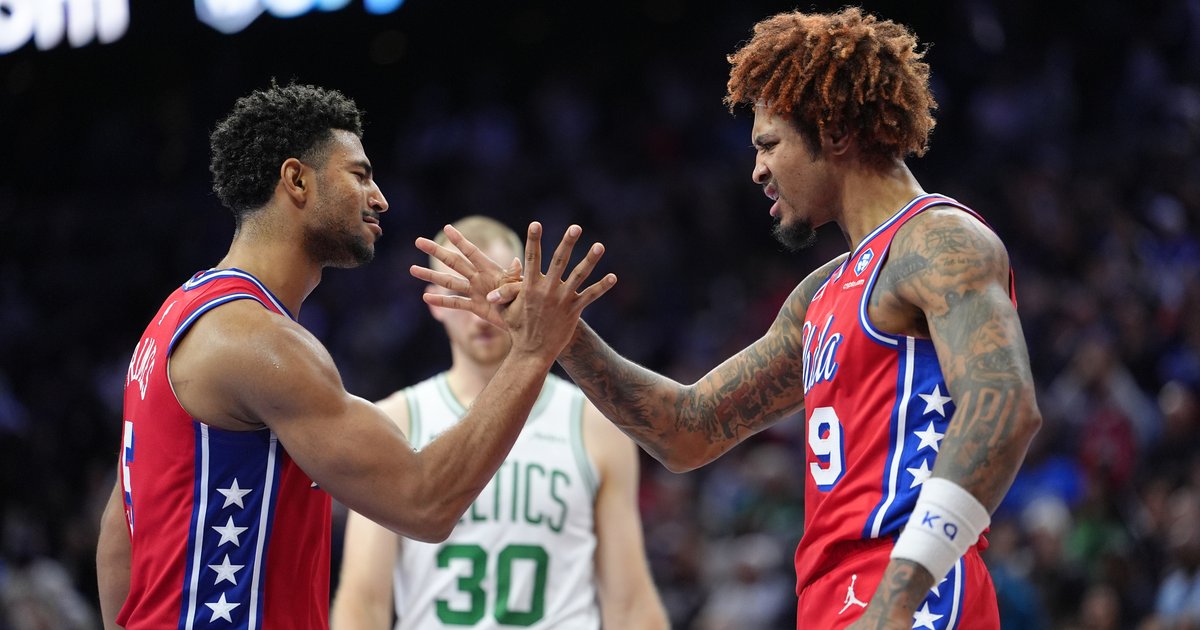
The Sixers’ point differential is an impressive +53 in 53 minutes with Tyrese Maxey, VJ Edgecombe, Quentin Grimes, and Kelly Oubre Jr. all sharing the floor.

Three of the five best players on this team, as currently constructed, are guards — and Jared McCain is on his way. From the jump, it was obvious Nurse would have to make three-guard lineups one of the core looks of his rotation.

However, sliding Kelly Oubre Jr. up to a small-ball power forward role was not something Nurse had planned on doing. Yet, the Sixers have been dominant on both ends of the floor with this high-caliber guard trio playing alongside Oubre and virtually any center.

Their Net Rating (point differential per 100 possessions) with this grouping is a gargantuan +46.9, with elite numbers on offense (138.5 Offensive Rating) and defense (91.6 Defensive Rating).

The sample size remains small, so raw plus/minus is a better indicator than per-100-possession numbers right now. But all the statistics back up what the eye test shows: the Sixers have really found something here.

What makes it such an effective look?

On Friday night, Maxey said the amount of preparation the team did before the season to familiarize itself with that specific three-guard combination has paid dividends. He also highlighted the value of having so much shooting and up-tempo ball-handling on the floor at once.

Just as Grimes is the key to making three-guard lineups work by proving capable of defending wings, Oubre is the key to making these even-smaller units passable by standing his ground against even bigger matchups.

Oubre fears no opponent or assignment, and his two-way contributions early this season have been nothing short of fantastic.

### 5.0: Adem Bona’s Blocks Per 36 Minutes

Adem Bona is averaging 5.0 blocks per 36 minutes through five games in 2025-26, the second-highest figure in the NBA.

Bona laughed on Thursday when asked about Joel Embiid making a comment after Bona’s five-block closing effort in a comeback win over the Wizards on Tuesday. Embiid told reporters that night Bona was the second-best defensive player in the NBA, only trailing Victor Wembanyama of the San Antonio Spurs.

“He actually said that to me in the locker room, too,” Bona said.

After the Sixers’ fifth game of the season on Friday, the NBA leaders in blocks per 36 minutes looked like this:

After failing to record a block in the Sixers’ first game of the year, Bona collected 11 rejections across the next four contests (66 minutes). The five blocks in Washington grabbed headlines, but Bona is legitimately one of the single best shot-blockers in the NBA.

Asked about Bona’s slow start to the season, Nurse said the second-year center has to be more of a force as a shot-blocker around the rim. He is right; Bona does not have much offensive utility and is not a great rebounder for a center. This is his signature skill.

Hours after Nurse’s comments, Bona swatted three shots against the Orlando Magic and altered a bunch of other attempts around the rim. Nurse was pleased.

Bona is not a perfect player, even on defense. Blocking shots and protecting the rim are not exactly the same thing — rejecting shots is only one of a center’s defensive responsibilities.

But blocking shots at an all-world rate like Bona does makes it easier for him to turn into a high-quality rim protector regardless of effort, focus, and execution.

Very few young centers have Bona’s baseline in terms of defensive production.

### 38.9%: Justin Edwards’ Shooting Struggles

Justin Edwards is shooting 38.9% from the field across five appearances (58 minutes) in 2025-26.

Sharing the floor with a bunch of high-usage players is both a blessing and a curse in how it simplifies things for role players like the 21-year-old Edwards. Much of the value for someone in a role like his boils down to spot-up shot-making.

Eric Gordon, the Sixers’ reserve veteran guard, is an example of a player who carved out a career by treating such opportunities as a blessing. His on-ball skills have diminished with age, and he is not a defensive stopper. But when Gordon’s role was largely reduced to spot-up shooting, not many NBA players fit their role better.

The downside of this simplicity is when shots are not falling — the role player looks brutal. Exhibit A: the start to Edwards’ second NBA season, in which he has struggled as a shooter.

Edwards has Nurse’s complete faith as a versatile chess piece on defense. The Philadelphia native has embraced crashing the glass at a higher rate, shows strong feel for the game, and makes quick decisions.

But it is hard to separate all of that from stretches like this one.

Edwards recently acknowledged that separating process from results has been one of his stronger growth points since joining the NBA as an undrafted two-way signee last year.

Despite the lackluster results and some uneasiness from fans, Edwards remains extremely confident.

“I’ve just got to control what I can control,” Edwards said after the Sixers’ shootaround on Friday morning. “It’s a long, long season. Just got to keep putting reps in, and when my name is called, I just go out there and do what I can do.”

The Sixers have found intriguing combinations and promising pieces early in the season. With key players on the way, there is much to look forward to as they seek to build on their 4-1 start.

*More on the Sixers’ season progress and roster updates: What will Sixers look like with Paul George and Jared McCain healthy?*
https://www.phillyvoice.com/sixers-news-analysis-stats-highlights-tyrese-maxey-vj-edgecombe-quentin-grimes-kelly-oubre-jr-justin-edwards-adem-bona-nick-nurse/?utm_source=pv-rss&utm_medium=rss&utm_campaign=pv-site


House of David season 2 episode 6 ending explained: What happens to Ahinoam’s plan of controlling the region?

**House of David Season 2 Episode 6 Recap: Ahinoam’s Downfall and David’s Triumph**

*Disclaimer: The following article contains spoilers from House of David season 2 episode 6. Reader’s discretion is advised.*

**Overview**

House of David season 2 continues the gripping saga following David’s victory over Goliath in season 1. Episode 6, released on November 2, 2025, immerses viewers in the intense political and emotional turmoil as David inches closer to the throne. Available exclusively on Wonder Project via Prime Video in the U.S., this episode marks a pivotal chapter where love, leadership, and betrayal collide, resulting in shocking twists that challenge the characters’ loyalty and will to survive.

**Ahinoam’s Risky Scheme and Its Fallout**

Ahinoam’s plan to manipulate King Saul’s emotions to eliminate David sets the stage for dramatic consequences. Throughout the episode, her efforts to control Saul backfire spectacularly, leading to a drastic reshaping of family and court dynamics. By episode’s end, Ahinoam’s scheme fails disastrously, resulting in her banishment from the kingdom—a devastating blow that marks a turning point both for her character and her relationship with Saul.

**The Climactic Banishment**

The episode culminates in intense drama as David returns from a perilous mission. Saul, enraged by the betrayal and the failure of his plot to kill David, lashes out. David not only survives but surpasses expectations by defeating more Philistines than Saul commanded, earning the adoration of the people.

The real shock comes when Ahinoam’s manipulations are exposed. Saul, furious and emotionally unstable, cruelly drags her from the palace. Humiliated and cast out, Ahinoam faces public ridicule by the royal court and even by her own children. This violent exile effectively strips her of her royal status and influence.

**What Prompted Saul to Exile Ahinoam?**

Saul’s decision to exile Ahinoam stems from a mixture of fear, jealousy, and betrayal. Her attempt to use Saul’s emotions to orchestrate David’s death not only backfires but inadvertently bolsters David’s increasing popularity. Already suspicious and resentful of David’s growing power, Saul cannot tolerate Ahinoam’s failure or David’s success.

Ahinoam’s personal ambitions crumble as Saul’s anger reaches a boiling point. His rage manifests as both verbal and physical violence, marking the collapse of respect and love between the king and his queen.

**Saul’s Growing Hostility**

Throughout the episode, Saul’s paranoia about David intensifies. Initially, Ahinoam’s plan to send David on an extremely dangerous mission appears to align with Saul’s desire to neutralize the perceived threat. However, when David returns victorious, Saul’s frustration turns into uncontrollable rage.

His violent outburst towards Ahinoam and subsequent banishment highlight the unraveling of the royal family’s relationships. The fragile balance of power and trust within the palace is shattered, setting the stage for further political upheaval.

**David’s Heroic Return and Rising Influence**

Despite the risks, David remains loyal to Israel and continues to act with bravery and honor. His successful campaign against the Philistines earns him public admiration and deepens Saul’s mistrust and hatred.

Upon his return, David confidently demands to marry Mychal, signaling his unwavering pursuit of love and respect, even amid betrayal and danger. This moment underscores his emergence as a true leader destined to inherit the throne as the royal family’s foundation crumbles.

**The Betrayal Within Saul’s Court**

Ahinoam’s plan hinged on exploiting Saul’s jealousy by convincing him to send David on a mission designed to be fatal. However, Saul’s own betrayal becomes apparent as he secretly informs Achish of David’s intentions, trying to ensure David’s destruction from multiple fronts.

David’s unexpected success not only exposes Saul’s duplicity but also accelerates Ahinoam’s downfall. Her miscalculation inflames tensions within the palace, compounding the distrust and animosity among its key players.

**Emotional Fallout: Ahinoam’s Children**

Ahinoam’s exile deeply affects her children, each reacting differently to the family crisis.

– **Eshbaal**: His bitter resentment surfaces as he mocks his mother’s humiliation, reflecting a strained and difficult past between them.

– **Mirab**: Heartbroken and devastated by her mother’s expulsion, Mirab’s reaction adds a poignant emotional layer to the story. Her response underlines the personal toll of House of David’s high-stakes political drama and hints at her evolving character arc as she confronts family dysfunction and jealousy.

This touching farewell between mother and daughter accentuates the human cost behind the kingdom’s power struggles.

**Where to Watch**

You can watch *House of David* season 2 episode 6 on Wonder Project through Prime Video in the U.S. Don’t miss this intense and pivotal episode that reshapes the destinies of David, Saul, and Ahinoam.

**Related Reads:**

– [What time will House of David season 2 release on Prime Video? Release timings for all regions](#)
– [Who is Michael Iskander? Meet the actor who plays King David in House of David](#)
– [10 Best Movies and Shows to Watch on HBO Max in October 2025](#)
– [Tulsa King season 3 episode 7 ending explained: What happens to Jeremiah?](#)

Stay tuned for more updates as *House of David* continues to deliver compelling storytelling filled with intrigue, loyalty, and betrayal.
https://www.sportskeeda.com/us/shows/house-david-season-2-episode-6-ending-explained-what-happens-ahinoam-s-plan-controlling-region

Scientists 3D-print muscle tissue in zero gravity

Human health remains one of the greatest challenges in space exploration. When astronauts spend long periods in space, their bodies weaken dramatically—especially their muscles and bones. Now, scientists at ETH Zurich have taken a major step toward solving this problem by successfully 3D-printing human muscle tissue in zero gravity for the first time.

Their groundbreaking work, published in *Advanced Science*, could pave the way for new methods to study diseases and test medicines in space. To simulate the microgravity environment of space, the research team led by Parth Chansoria conducted their experiments during parabolic flights—special aircraft flights that follow an up-and-down trajectory, creating brief periods of weightlessness.

During these fleeting moments of zero gravity, the researchers were able to print tiny, realistic pieces of muscle tissue without the interference of Earth’s gravity.

Printing delicate biological structures such as muscle tissue is a challenging process on Earth. Scientists use a special material known as bio-ink—a gel-like substance that contains living cells. However, when gravity is present, this mixture can sink or deform before it hardens. This often causes 3D-printed structures to collapse or lose their shape, resulting in uneven and less lifelike models of human tissue.

In contrast, microgravity eliminates these issues. The bio-ink and cells remain perfectly suspended, enabling scientists to build muscle fibers that are precisely aligned—just like in the human body. This alignment is critical for creating realistic tissue models needed to accurately study disease progression and drug effects.

To achieve this breakthrough, the ETH Zurich team designed an innovative 3D bioprinting system called G-FLight (short for Gravity-independent Filamented Light). This high-speed printer can produce detailed muscle tissue models within seconds.

During their parabolic flight experiments, the researchers completed 30 cycles of weightless printing using a specially developed bio-resin that keeps the cells alive and stable. The results were impressive: muscle tissue printed in zero gravity exhibited the same cell health and structural integrity as tissue printed on Earth.

Even more promising is that the cell-laden bio-resins can be stored for long periods. This means they could one day be transported to space for experiments aboard the International Space Station (ISS) or future space laboratories.

This achievement marks a crucial step toward tissue engineering in space. By producing realistic human tissues in orbit, scientists can explore medical questions impossible to study on Earth. For example, these tissue models could help uncover the causes of muscle atrophy—the muscle loss astronauts experience in space—or enable the testing of new therapies for muscular diseases such as dystrophy.

According to the ETH Zurich team, their success brings us closer to a future where scientists can grow complex human tissues—and perhaps even miniature organs—beyond Earth’s gravity. In the long run, this technology has the potential to transform both space medicine and human health research here on Earth.
https://knowridge.com/2025/11/scientists-3d-print-muscle-tissue-in-zero-gravity/

JONATHAN TURLEY: Why blue states’ new anti-ICE laws are unconstitutional virtue signaling

Illinois has joined California and Connecticut in barring federal immigration agents from conducting “civil arrests” of undocumented immigrants in or around state courthouses. This new sanctuary law appears largely symbolic and raises serious constitutional questions.

At the core of the issue is whether a state can restrict federal jurisdiction, especially after the Civil War. Illinois Governor JB Pritzker has intensified rhetoric against ICE and the Trump administration for months, making comparisons to Nazis and warning that democracy is at risk. However, the new law crosses a constitutional line by not only limiting Immigration and Customs Enforcement (ICE) operations but also establishing a 1,000-foot “buffer zone” around courthouses.

This law treats courthouses like churches, creating sanctuary zones where suspects can claim protection from civil arrest not only inside the building but also within 1,000 feet—unless ICE chooses to ignore the law altogether. Recently, the chief judge in Cook County issued a similar order, and some judges in other states have done the same.

### Legal Challenges and Constitutional Issues

The authority for these sanctuary orders is highly questionable. The federal government enforces laws mandating the arrest of certain individuals for immigration violations. These include mandatory detention of aliens removable due to criminal convictions or terrorism-related activities, as well as detention and removal of those with final deportation orders.

Illinois’ sanctuary law conflicts with the Supremacy Clause of the U.S. Constitution, which states:

> “This Constitution, and the Laws of the United States which shall be made in Pursuance thereof… shall be the supreme Law of the Land; any Thing in the Constitution or Laws of any State to the Contrary notwithstanding.”

Additionally, the U.S. Supreme Court has consistently rejected efforts by states to interfere with federal immigration enforcement. In the 1952 case *Harisiades v. Shaughnessy*, the Court affirmed that the federal government has “exclusive” control over immigration policy.

Interestingly, former President Barack Obama once successfully challenged state laws that interfered with federal immigration enforcement. In the 2012 case *Arizona v. United States*, the Supreme Court ruled that:

> “[t]he Government of the United States has broad, undoubted power over the subject of immigration and the status of aliens.”

This federal authority dates back to the 19th century. In the 1893 case *Fong Yue Ting v. United States*, the Court held that Congress has the right to expel aliens of a particular class or allow them to remain, using all proper means to enforce the system.

### Additional Provisions and Implications

Illinois’ new law also creates the ability to sue federal authorities for false imprisonment under state law. Furthermore, the 1,000-foot buffer zone extends around any state court, effectively creating safe zones for undocumented immigrants.

This raises practical questions. For instance, could someone renting an apartment within such a zone claim effective immunity from civil arrest simply by residing there? Could suspects use public sidewalks or spaces within these zones to avoid federal enforcement?

Moreover, with states like Illinois pushing apps that track ICE operations, individuals might evade arrest by stepping into designated safe zones. It remains to be seen whether landlords will increase rents in these areas given the new “immunity” amenity.

If deemed constitutional, states could expand these safe zones beyond courthouses to include city services, clinics, and more, creating a patchwork of sanctuary areas that complicate federal enforcement.

Notably, similar tactics have been attempted by blue states to challenge Second Amendment rights, resulting in ongoing legal battles.

### Conclusion

Despite serious constitutional concerns, these sanctuary laws serve political purposes, allowing lawmakers to signal opposition to federal immigration policies. However, the legal weaknesses of the laws may lead to unintended consequences for individuals who mistakenly believe they are fully protected within these safe zones.

As legal challenges unfold, it remains uncertain how these laws will be enforced or whether courts will uphold them against federal authority.

*For more information, click here.*
https://www.foxnews.com/opinion/jonathan-turley-why-blue-states-new-anti-ice-laws-unconstitutional-virtue-signaling

My Current View Of The SP 500 Index: November 2025 (Technical Analysis)

Analyst’s Disclosure: I/we have a beneficial long position in the shares of SPY either through stock ownership, options, or other derivatives. I wrote this article myself, and it expresses my own opinions. I am not receiving compensation for it (other than from Seeking Alpha). I have no business relationship with any company whose stock is mentioned in this article. I also own SPXL.

Seeking Alpha’s Disclosure: Past performance is no guarantee of future results. No recommendation or advice is being given as to whether any investment is suitable for a particular investor. Any views or opinions expressed above may not reflect those of Seeking Alpha as a whole.

Seeking Alpha is not a licensed securities dealer, broker, or US investment adviser or investment bank. Our analysts are third party authors that include both professional investors and individual investors who may not be licensed or certified by any institute or regulatory body.

https://seekingalpha.com/article/4836757-my-current-view-of-the-sp-500-index-november-2025-technical-analysis?source=feed_all_articles

Wall Street Week Ahead

Seeking Alpha News Quiz: Test Your Investing Knowledge

Up for a challenge? Test your knowledge on the biggest events in the investing world over the past week with the newest Seeking Alpha News Quiz. See how you stack up against the competition and stay informed on the latest market developments.

Wall Street Focus This Week

Wall Street’s attention will largely be on the ongoing earnings season, which is ramping up with hundreds of companies scheduled to report. Market participants will also be watching trade developments closely, along with remarks from Federal Reserve speakers.

Earnings Highlights

This week features earnings reports from several major companies, including:

  • Palantir (PLTR)
  • AMD (AMD)
  • Shopify (SHOP)
  • Uber Technologies (UBER)
  • Amgen (AMGN)
  • Pfizer (PFE)
  • McDonald’s (MCD)
  • Qualcomm (QCOM)
  • Airbnb (ABNB)

Additionally, this week marks a significant—and somewhat ignominious—milestone. Without any new actions, the ongoing U.S. government shutdown will officially become the longest on record this Thursday.

Earnings Calendar:

  • Monday, November 3: Palantir (PLTR), Realty Income (O), ON Semiconductor (ON), Clorox (CLX).
  • Tuesday, November 4: AMD (AMD), Shopify (SHOP), Uber Technologies (UBER), Amgen (AMGN), Pfizer (PFE).
  • Wednesday, November 5: McDonald’s (MCD), AppLovin (APP), Qualcomm (QCOM), Arm (ARM), DoorDash (DASH), Fortinet (FTNT).
  • Thursday, November 6: AstraZeneca (AZN), ConocoPhillips (COP), Airbnb (ABNB), Take-Two (TTWO), Block (XYZ).
  • Friday, November 7: Constellation Energy (CEG), KKR & Co. (KKR), Enbridge (ENB), Duke Energy (DUK).

Market Insights & Expert Commentary

Known for his disciplined, contrarian approach, Taylor has successfully taken profits on 200%+ winners and profited by shorting GDX ahead of the recent market correction. Subscribers benefit from model portfolios, Buy/Sell alerts, sentiment indicators, and real-time strategy updates.

Wheaton Precious Metals (WPM)

Wheaton Precious Metals reported record Q2 2025 results, driven by strong gold and silver production stemming from expansions at Salobo and new output from Blackwater. The company continues to maintain industry-leading margins along with a robust growth pipeline targeting approximately 1 million gold equivalent ounces (GEOs) by 2030.

With $1 billion in cash and major projects like Blackwater, Cangrejos, and Kone advancing, WPM remains a top low-risk silver exposure. However, shares offer limited near-term upside above the current price of $98.

Newmont (NEM)

Newmont’s Q3 2025 gold production fell 15% year-over-year to 1.42 million ounces, largely due to asset divestments. Higher output from Cadia and Brucejack partly offset these declines.

The company reported a 20% rise in revenue to $5.52 billion and saw free cash flow double to $1.57 billion, boosted by record gold prices. Despite lower all-in sustaining costs (AISC) at $1,566 per ounce, under-spending and a weaker 2026 outlook suggest that higher costs may be ahead.

Shares appear fairly valued near $95, offering limited upside with stronger alternatives available, such as Agnico Eagle.

Subscribe for More

Subscribers gain access to real-time trade alerts, model portfolios, and expert commentary from Taylor Dart. For a limited time, new members can save 20% on their subscription. Don’t miss out — learn more and get started today!

In case you missed it, stay tuned for more market insights, earnings updates, and expert strategies here on Seeking Alpha.

https://seekingalpha.com/article/4836754-wall-street-week-ahead?source=feed_all_articles

Other voices: Gerrymandering’s slippery slope

To place an obituary, please email the following information to obits@pioneerpress.com. At this time, obituary submissions cannot be made through our website. For any questions, feel free to contact our obituary desk at 651-228-5263.

**General Information Required:**
– Your full name
– Address (City, State, Zip Code)
– Phone number
– Alternate phone number (if available)

**Obituary Specifications:**
– Name of the deceased
– Obituary text
– Photo in JPEG or PDF format is preferable; TIF and other file types are accepted. We will contact you if there are any issues with the photo.
– Ad run dates
– Discounts are available for multi-day runs but must be scheduled at the first run date to apply.
– If a photo is included, it must be used on all days to qualify for the discount. Contact us for more information.

**Policies:**

*Verification of Death*
To publish an obituary, we require the name and phone number of the funeral home or cremation society handling the arrangements. We must contact them during business hours to verify the death.
– If the deceased’s body was donated to the University of Minnesota Anatomy Bequest Program or a similar program, provide their phone number for verification.
– Please allow sufficient time for us to contact them, especially during limited weekend hours.
– Alternatively, a death certificate is acceptable for verification; only one of these options is necessary.

*Guestbook and Outside Websites*
We cannot reference other media sources, guestbooks, or obituaries placed elsewhere in print or online. We may include a funeral home website or a family email for contact instead. Please contact us with any questions.

**Obituary Process:**
After submission, we will fax or email a proof for your review prior to publication. The proof includes pricing and scheduled appearance dates.
– Please review the proof carefully and notify us of any errors or changes before publication deadlines.
– We are not responsible for errors after final proofing and publication.
– Changes to online obituaries may be requested through the obituary desk.

**Payment Procedure:**
Pre-payment is required before publication by the specified deadlines. After approving the proof, please call 651-228-5263 to provide payment information.
– Payment by credit card is accepted by phone only due to PCI regulations.
– EFT payments can be made by phone; please provide routing and account numbers.

**Rates:**
– Minimum charge is $162 for the first 12 lines.
– Each additional line after the first 12 is $12. An ad under 12 lines is charged the minimum $162.
– Obituaries over 40 lines receive a 7.5% discount per line.
– A 20% discount applies to both first and second placements for a second run date.
– Place three obituaries and the third ad will be free.
– Each photo published costs $125 per day. For example, 2 photos run on 2 days equals 4 photo charges totaling $500.

**Deadlines:**
Please adhere strictly to deadline times to ensure publication on the requested date.

**Memoriam (Non-Obituary) Requests:**
Unlike obituaries, memoriam submissions are remembrances of a loved one. Rates differ. Please call 651-228-5280 or email memoriams@pioneerpress.com for more information.

**Hours:** Monday–Friday, 8:00 AM – 5:00 PM (Closed weekends and holidays).

**Gerrymandering and Its Political Impact**

The gerrymandering doom spiral is gaining downward momentum as expected. Virginia is poised to become the second state, after California, where Democrats seek to undo reforms that removed partisan control from redistricting.

In response to Republican power grabs in other states—especially Texas, where the GOP initiated nationwide partisan conflicts this summer to protect its slim House majority—Democrats currently hold six of Virginia’s 11 congressional seats, reflecting the state’s evenly divided electorate.

By calling a special session, Democrats aim to gain an additional two or three districts through aggressive map redrawing.

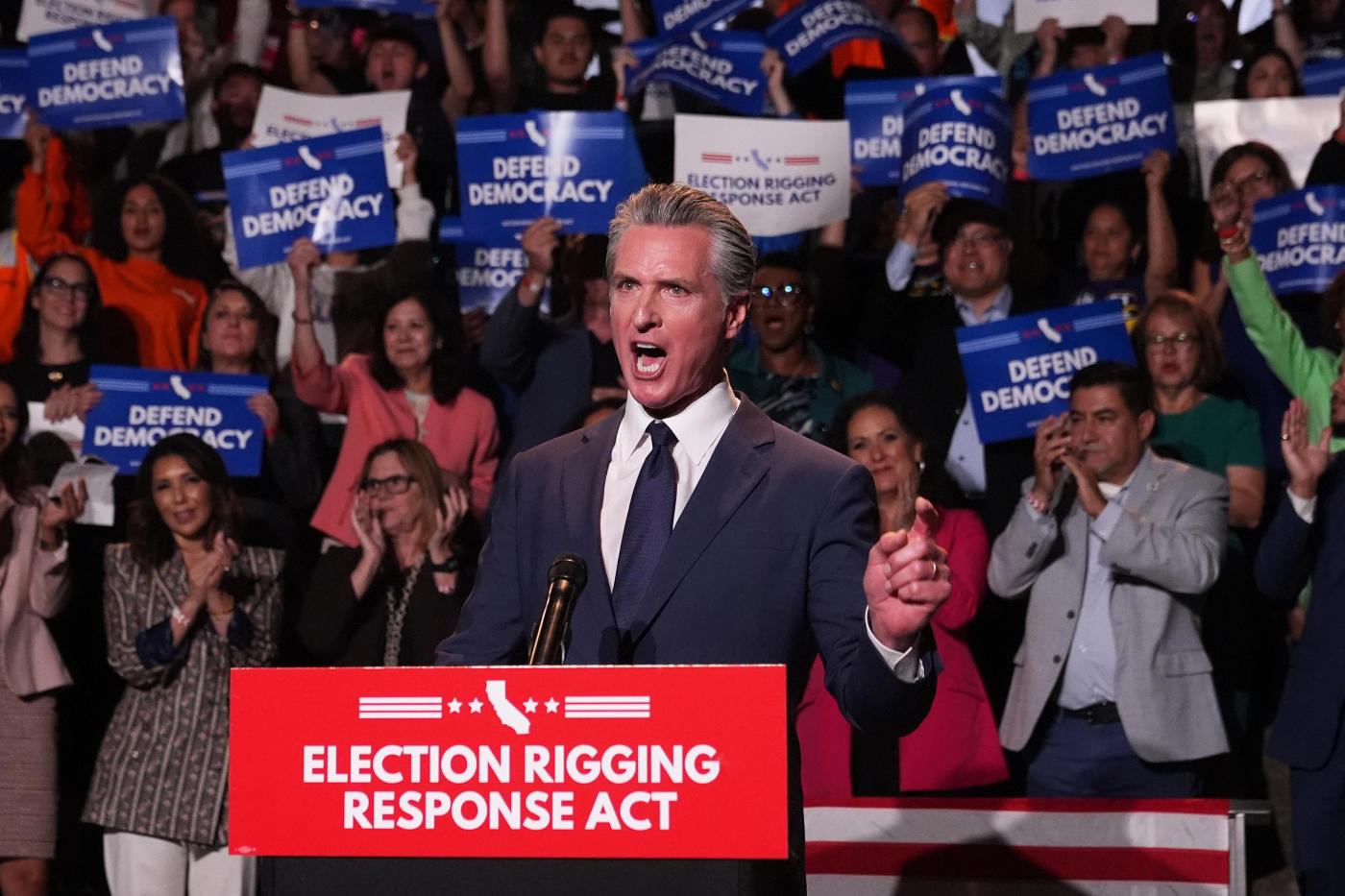
California’s redistricting effort will be decided by voters through a special ballot initiative on November 4. Democrats there, who consider themselves defenders of democracy, argue that the only acceptable response to Texas’s “election rigging” is to rig elections themselves. Polls indicate that more than 60% of likely voters support this logic, making Proposition 50 appear likely to pass.

Last month, North Carolina Republicans pushed through a map expected to help their party gain one more seat in next year’s midterms. Missouri Republicans did the same earlier.

Despite confident claims by partisan analysts about redistricting’s effect on Congress’s balance, the outcome remains uncertain. Texas’s efforts might not yield enough seats to stop a possible Democratic wave, nor is a Democratic wave guaranteed, even if historically typical.

Recent political trends suggest caution, especially as young Hispanic and African American men have increasingly moved toward Republicans.

Texas’s mid-decade gerrymandering could backfire on the GOP, considering California is more solidly blue than Texas is red. It could also result in a wash, with broader political trends playing a larger role.

There is also potential for voter backlash against overt partisanship, which could boost Democrats in Texas, where competitive gubernatorial and Senate races loom.

Ultimately, the biggest losers in these changes are voters. By the midterms next year, there will be fewer competitive districts where candidates must genuinely appeal to Americans, particularly independents.

Credit goes to Republican legislators in Indiana and Kansas who have resisted national pressure to gerrymander their states—at least for now. It is unfortunate that many others, including Democrats in Virginia, compromise principles for perceived short-term partisan gain.

— The Washington Post
https://www.twincities.com/2025/11/02/other-voices-gerrymanderings-slippery-slope/

.
Privacy Policy Data
Exit mobile version