There have been 58 games this season in which a receiver has been thrown at least 12 passes. Only once has that player caught fewer than three passes: Amon-Ra St. Brown on Sunday night in Philadelphia. St. Brown’s stat line of just two catches on 12 targets was ugly, but Lions quarterback Jared Goff said on 97. 1 The Ticket that St. Brown didn’t have an off night. Goff says he’s the one who was off. “I don’t think anything feels off, except for this past week I was off trying to get him the ball,” Goff said. “He’s playing well. I’ve got to find ways to get it to him in space and be more accurate in those instances. I have been in my career so it’s not something I’m worried about. Last week was a little bit off and prior to that I don’t think there’s been any issue.” Goff finished the game 14-for-37, for a career-low completion rate of 37. 8 percent. Even aside from the 10 incompletions to St. Brown, Goff was far less accurate than the Lions expect him to be. It was a bad night for a lot of players on the Lions’ offense, but Goff knows the blame ultimately falls on the quarterback.
https://www.nbcsports.com/nfl/profootballtalk/rumor-mill/news/jared-goff-takes-the-blame-for-a-bad-game-from-amon-ra-st-brown
Month: November 2025


8 Christmas Decor Trends That Will Be Everywhere in 2025
With every holiday season come new Christmas decor trends. Whether it’s an unexpected color scheme, a new ornament style, or the comeback of nostalgic classics, there’s always a fun new way to deck the halls. To get the pulse on this year’s biggest holiday decor trends, we tapped experts from the holiday decor, floral, and interior design industries to tell us what they’re seeing and loving. This year is shaping up to be all about a return to classic decor, embracing natural greenery, and setting a cozy atmosphere with moody color schemes. To give your home a festive refresh, here are the seven Christmas decor trends experts say will define this holiday season. 1. A Return to Classic Decor A return to classics is one of the biggest trends this holiday season. “Decorations such as faux candles to adorn a tree, full wreaths, poinsettias and berries, nutcrackers, and red and green accents all give that nostalgic holiday feeling,” says Shelby Waag, seasonal decor expert at Grandin Road. To really play up the nostalgia, the seasonal decor expert suggests incorporating vintage lighting. “There’s a nod to the olden days with vintage-inspired lights, whether on a tree, wreath, garland, or standalone strands,” she says. 2. A Mix of New, Repurposed, and Secondhand If you’re wondering whether you have to overhaul your entire Christmas decor collection to stay on trend this season, experts say the answer is a resounding no. “The best way to incorporate trends into your home is to echo the style of what you already have,” says designer Jessica Whitley. There are simple ways you can freshen up your home for Christmas and add to your collection of decorations without starting from scratch. “Decorating is a marathon, not a sprint, so you want to think of your holiday decor as a collection you acquire throughout the years, adding in new pieces to keep it fresh, and layering over your festive staples,” Waag says. 3. Statement Bows “Bows are also big this year, showing up in different ways to decorate all areas of the home,” Waag shares. Holiday bows are a classic look for Christmas, but a fun way to give them an updated feel is to play with their scale, the ribbon material, and colors. Go with oversized bows for a touch of holiday drama, or take a nostalgic approach with thin velvet bows in a variety of warm tones such as copper, espresso, or plum. 4. Moody Colors, Neutrals, and Soft Metallics Deep plums and rich espresso hues are putting a moody spin on Christmas color schemes this year. “Those colors bring timeless, warm feelings to a room without being overly fussy,” Whitley says. Floral designer Kaylyn Hewitt Garceau believes rich cranberry reds, white and creamy neutrals, and forest greens will remain timeless, though she suggests a chic update to the classics. “There’s room to incorporate modern twists with muted mauves and soft metallic accents that can be worked in through a vase or table decor,” Hewitt Garceau says. 5. Mixed Greenery Wreaths “Wreaths are getting a refresh this year with a focus on natural designs and mixed greenery textures,” Hewitt Garceau says. The designer shares that layering textures is a big Christmas wreath trend this holiday season, and suggests combining cedar, eucalyptus, and pine for a modern look that feels fresh and festive. “Many are also adding subtle accents like simple berries or even dried oranges for a pop of color,” she says. 6. Elevated Outdoor Decor This year, Hewitt Garceau says outdoor holiday decor is all about elevated simplicity. “We’re seeing a return to cohesive, natural arrangements that seamlessly blend in with what’s happening indoors,” the expert says. One way to achieve the look is to fill outdoor planters with layered greenery and add berry or pinecone accents for a natural finish. “The goal is to create warmth and welcome with something that feels fresh but is still beautifully composed,” she says. 7. Streamlined and Textured Christmas Centerpieces When it comes to floral centerpiece trends this holiday season, Hewitt Garceau says she’s seeing more love for single-focal designs that celebrate one standout bloom type that’s paired with fresh greenery for balance. “I recently did a tablescape using four different types of roses, with each type in one vase, lined them down a table, and it looked so lovely,” she shares. The floral designer suggests using simple, monochromatic clusters of blooms for a strong impact. “Texture is also key, so incorporating seasonal elements like pinecones, berries, or Anemones (a seasonal favorite) gives centerpieces a cozy, seasonal touch without feeling overly traditional,” Hewitt Garceau adds. 8. Simple Garlands and Trees.
https://www.bhg.com/christmas-decor-trends-11826922


BREAKING: Roman Reigns’ next WWE appearance confirmed after RAW return
The latest edition of WWE Monday Night RAW, which took place at Madison Square Garden, was indeed one of the best episodes of the weekly shows this year by far, as it saw major returns including Brock Lesnar and Roman Reigns. Interestingly, the Stamford-based promotion’s official website has added both Reigns and Lesnar as the featured superstars on next week’s episode of Monday Night RAW, which will go live from the Paycom Center in Oklahoma City on November 24. Moreover, alongside the OTC, the Beast Incarnate is also listed. Check the real screenshot below: With that being said, the following week’s edition of the flagship show is going to be jam-packed too, and fans will get yet another banger show heading closer to the Survivor Series: WarGames 2025. Massive traditional match at WWE PLE is all booked The latest episode of the Red Brand from World’s Famous also saw the annual WarGames bout officially fully packed with both teams adding their final members. This year, Paul Heyman Team Vision, which already had Bron Breakker, Bronson Reed, Logan Paul, and Drew McIntyre, is all set to lock horns with Team CM Punk, which has the Second City Saint himself, Undisputed WWE Champion Cody Rhodes, Jey Uso, and Jimmy Uso in a WarGames contest. Both teams needed final members in thier respective groups; the main event of RAW from Madison Square Garden saw all the men from the WarGames teams wreaking havoc, and twists unfolded as first Brock Lesnar returned and joined the heel crew, and then to save team babyface Roman Reigns cameback turning the entire ending into a full blown brawl; giving glimpses of what could go down at Survivor Series 2025 Premium Live Event. With a lot of potential and fans heading toward the final PLE of the year, it will be interesting to see what the creative team has in store for the WarGames bout.
https://www.sportskeeda.com/wwe/news-breaking-roman-reigns-next-wwe-appearance-confirmed-raw-return

Saudi Crown Prince Signals Potential $1 Trillion Investment in the US — Key Takeaways
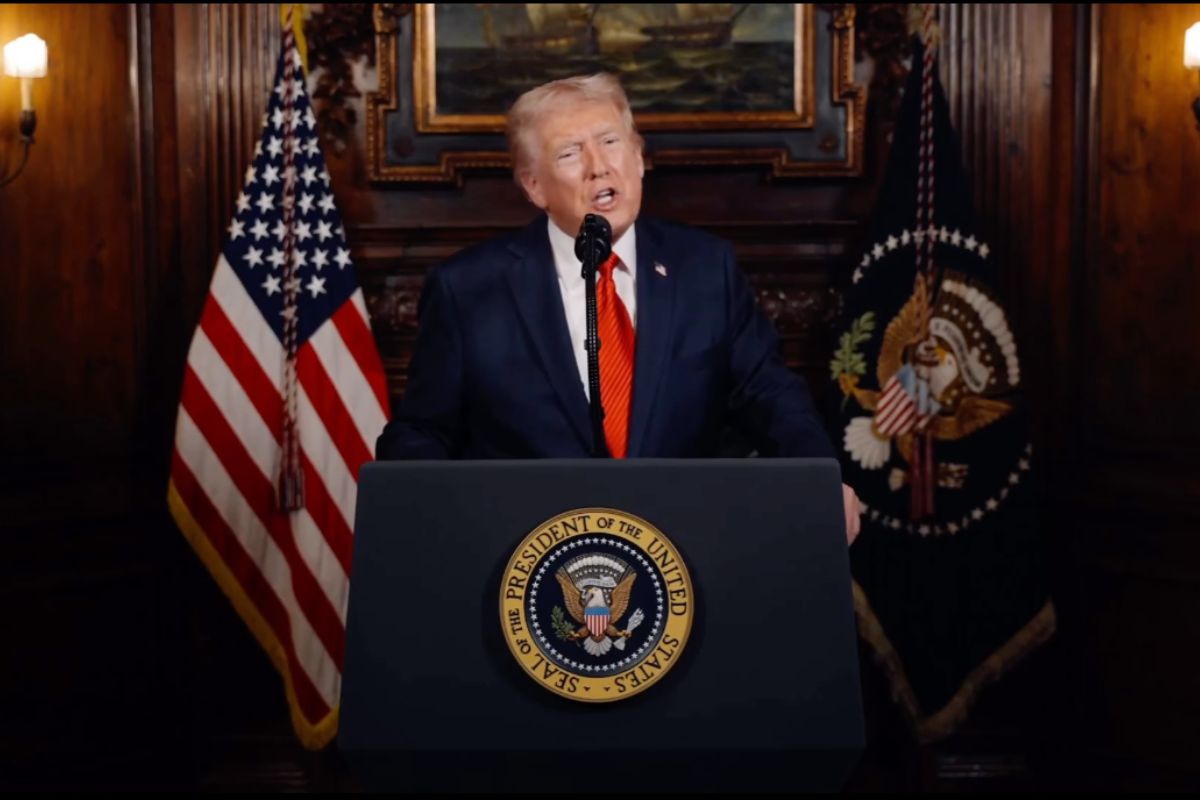
Saudi Arabia’s Crown Prince Mohammed bin Salman (MBS) arrived in Washington, DC, on 18 November 2025, for crucial discussions aimed at strengthening the Kingdom’s relationship with the United States. The most prominent statement from the White House was MBS’s pledge to invest up to $1 trillion in the US, signalling a significant shift in economic engagement. US President Donald Trump welcomed MBS, expressing his appreciation: ‘It’s an honour to be your friend, and it’s an honour that you’re here.’ In response, the Crown Prince indicated that Saudi Arabia was open to joining the Abraham Accords, the historic normalization agreements between Israel and Arab nations. While the Abraham Accords, signed in 2020, include Israel, Bahrain, the United Arab Emirates, and Morocco, MBS reiterated his desire to include the establishment of a Palestinian state in the framework. He emphasised the importance of a clear path towards a two-state solution, highlighting the Kingdom’s broader regional ambitions. The Run-up to the $1 Trillion Investment Earlier in 2025, Trump announced a strategic partnership with Saudi Arabia to foster economic prosperity, with MBS pledging an initial $600 billion investment across sectors such as security, defence, technology, and healthcare. During Tuesday’s talks, it became evident that the $1 trillion figure was more aspirational than definitive. MBS told President Trump that Saudi investments in the US could approach the $1 trillion mark. Trump expressed his support, stating he would work closely with the Crown Prince to help realise this goal. Key Agreements and Strategic Initiatives According to a White House press release, the leaders signed several agreements and memoranda of understanding (MOUs) to deepen cooperation: Civil Nuclear Energy Cooperation: The Joint Declaration on the Completion of Negotiations establishes the legal framework for a long-term, multi-billion-dollar nuclear partnership with Saudi Arabia. Critical Minerals Framework: This enhances collaboration to diversify supply chains and align strategic mineral development efforts. Artificial Intelligence (AI) MOU: The landmark AI agreement grants Saudi access to US technological systems while safeguarding US innovations from foreign influence, ensuring America’s leadership in AI development. In addition, a new US-Saudi Strategic Defence Agreement (SDA) was signed, strengthening the countries’ eight-decade defence partnership and bolstering regional deterrence. Trump indicated that more initiatives are on the horizon, with both sides planning to intensify engagement on trade issues. Focus areas include reducing non-tariff barriers, standard recognition, and creating a more favourable investment climate. Furthermore, the US Treasury Department and Saudi Ministry of Finance agreed to deepen cooperation on capital markets technology, standards, and regulations, aiming to strengthen their financial partnership. Human Rights and Diplomatic Considerations During the press conference, a journalist raised concerns about human rights, particularly the 2018 killing of journalist Jamal Khashoggi at the Saudi consulate in Turkey. Trump responded that Prince Mohammed ‘knew nothing about it,’ dismissing the question and saying, ‘And we can leave it at that. You don’t have to embarrass our guest by asking a question like that.’ Ambitious Economic Goals The pledge of up to $1 trillion emerged as the centrepiece of the Trump-MBS meeting. If realised, this level of Saudi investment could significantly expand US exports, reduce trade barriers, create jobs, and foster long-term economic growth. The move signals a strategic shift, with implications for bilateral relations and global markets. While details remain to be finalised, the pledge underscores the deepening economic ties between Saudi Arabia and the United States, with potential benefits for American industries and the broader economy.
https://www.ibtimes.co.uk/saudi-crown-prince-signals-potential-1-trillion-investment-us-key-takeaways-1756290

Who are the winners and losers in the final Pa. budget bargain?
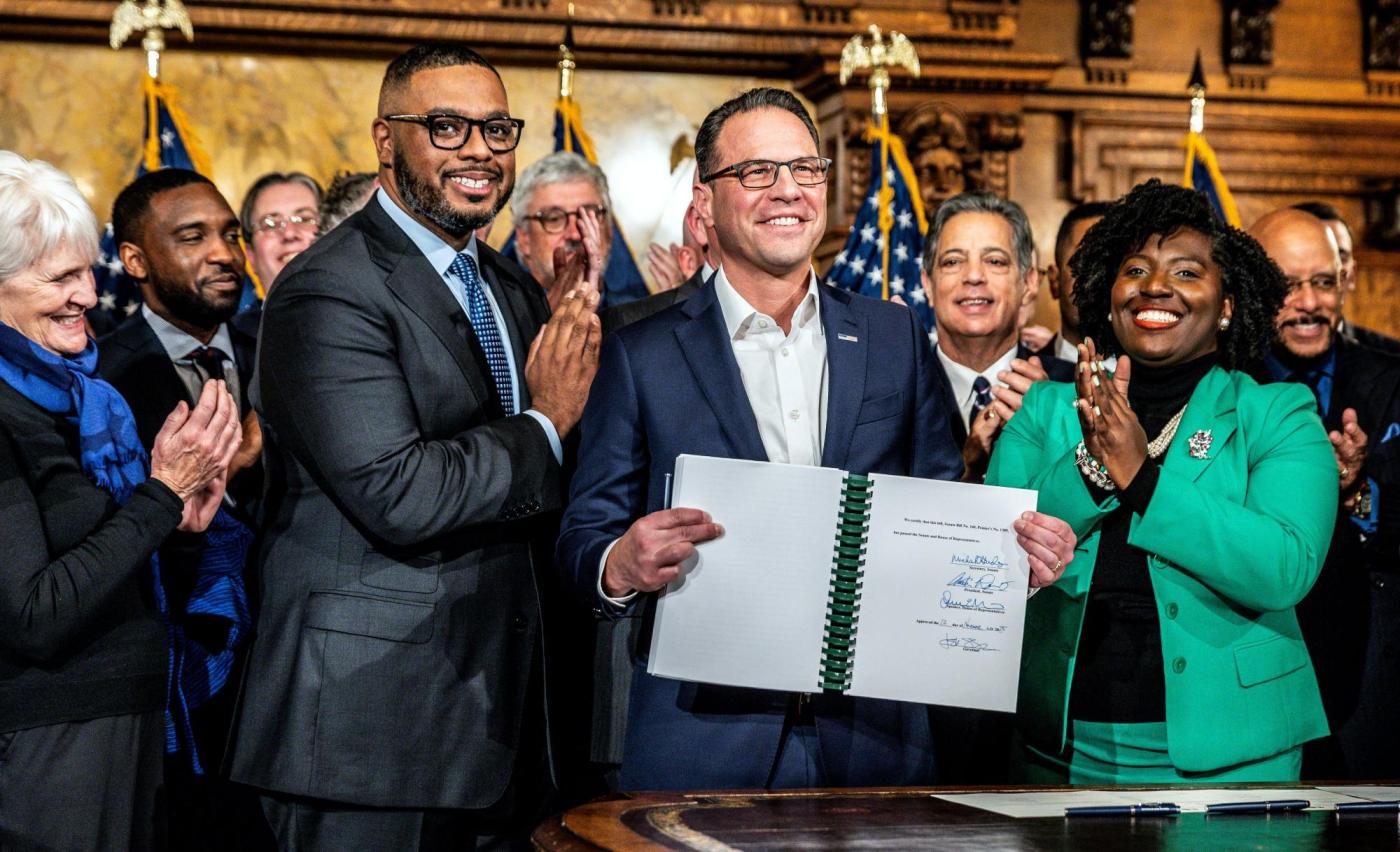
By Zack Hoopes, pennlive. com After 19 weeks of a budget impasse that affected many areas of life among Pennsylvanians, the short-term political problems have been solved through a series of give-and-take compromises. The long-term political problems remain. The quick version of this year’s budget impasse is that Democrats offered to come down from Gov. Josh Shapiro’s original budget request, which featured $51. 5 billion in general fund spending, but were leery of going too far below the $50 billion mark and cutting into the bone of programs they’ve championed. Republicans were adamant that Shapiro’s budget framework ran an excessive deficit and would result in runaway spending, passing a flat-funded budget bill of $47 to $48 billion multiple times to make the point. In the final couple weeks, Republicans were suddenly willing to move their number upward. On Nov. 12, Shapiro signed a budget deal centered on $50. 1 billion in appropriations from the general fund, with most of the 4. 7% increase over last year’s budget going toward additional K-12 education subsidies and shoring up Medicaid. The spending allocations weren’t that different from the $50. 25 billion budget that House Democrats had offered in October, but lawmakers pointed to some concessions and compromises that created a tipping point. Most-often cited was axing the Regional Greenhouse Gas Initiative (RGGI), a cap-and-trade pollution control system long opposed by Republicans. The budget deal includes language striking regulations created under former Gov. Tom Wolf that set up Pennsylvania to join the program, but which were challenged by the GOP in a court case that will now be rendered moot. Many Democrats were surprised that Republicans had given them so much spending leeway in exchange for those items; many Republicans were surprised that Democrats would hand them a win on RGGI in order to get the spending they wanted. “I think part of it was [Republicans] agreeing to do more than $50 billion,” Senate Minority Leader Jay Costa, D-Allegheny County, said when asked what the breakthrough was. “They had been so mired in this $47. 9 billion, then $49. 9 billion, and we just said ‘it needs to start with a five’” in order to be workable. “The second willingness [from Republicans] was to do the earned income tax credit at 10%. Those were the two major things,” Costa said. The budget deal includes a new Working Pennsylvanians Tax Credit, a refundable credit that allows lower-income families to apply 10% of their federal earned income tax credit to their Pennsylvania taxes. Republicans made it clear multiple times that they were uncomfortable with the $50. 1 billion total spend, but had learned to live with it in exchange for booting RGGI and other conservative priorities. “Four months ago, we would not have had the policy that is going to create jobs, create economic growth,” Senate President Pro Tempore Kim Ward, R-Westmoreland County, said when asked why the final dollar figure couldn’t have been settled over the summer. “Any number was going to be high for fiscal hawks, and most of us legislative Republicans are, in fact, that,” said House Minority Leader Jesse Topper, R-Bedford County. “But we understand that in divided government, there has to be a compromise,” Topper said. “In our world, if you were going to increase spending, you had to have policy initiatives that could eventually support that spending,” and those policy initiatives required painstaking negotiation with Democrats. Below are some of those compromises cited by both sides of the aisle. Lost: Carbon cap-and-trade RGGI has long been championed by progressive Democrats concerned about climate change, at the same time it’s been villainized by conservative groups who back the natural gas industry. Letting go of RGGI was both difficult for Democrats, and also gave them a major bargaining chip. “I would say RGGI probably was the hardest piece of it” to sell to his fellow Democrats, Costa said. “But our members understood that the value of other items that were in the fiscal code outweighed the concern for repealing RGGI.” “I, in the past, have supported RGGI myself,” said House Majority Leader Matt Bradford, D-Montgomery County. “The simple reality is, when there is an opportunity to move Pennsylvania forward dramatically, like this budget presented, we would be foolish not to take it.” Many Democrats who voted in favor were clearly torn over the issue. “I still think RGGI would be a good idea for Pennsylvania, but I’m also realistic, and I’m willing to vote yes to end this impasse,” said Sen. Carolyn Comitta, D-Chester County. “If we need to put RGGI aside to move forward, let’s do that, but let’s remember that climate change is real, it’s here, and it’s beginning to impact nearly every aspect of our lives.” RGGI is an 11-state program that puts a cap on greenhouse gas emissions from power plants, with fossil fuel generators having to purchase credits to exceed the limits; those credits are then used to subsidize renewable energy and provide rebates to ratepayers. Republicans believed the program would be uniquely harmful to Pennsylvania, since the commonwealth is a net exporter of electricity largely fueled by natural gas. Sen. Wayne Langerholc, R-Cambria County, described abrogating RGGI as “one of the biggest policy wins in the past ten years” for conservatives. On the campaign trail in 2022, Shapiro had expressed hesitancy to move forward on joining RGGI without legislative buy-in, but kept fighting the lawsuit he inherited from Wolf. Shapiro also offered to pull out of the lawsuit if Republicans agreed to his alternative green energy plan. On Wednesday, the governor framed the agreement to drop RGGI as a way to get Republicans to the table, given that they had largely refused to negotiate on clean energy while the specter of RGGI was still in place. “For years, the Republicans who’ve led the Senate have used RGGI as an excuse to stall substantive conversations about energy production,” Shapiro said. “Today, that excuse is gone,” Shapiro continued, saying he looked forward to “aggressively” adding more clean energy to the grid. Won: Tax breaks for workers The creation of a refundable state earned income tax credit was a major factor in getting more Democrats on board. The maximum federal credit for a family with three children is now over $8,000, meaning that family would get $800 knocked off their Pennsylvania taxes, and get cash back from the state if their tax bill went negative as a result. “I think in Pittsburgh it’s around 90, 000 households, and as the governor said one million households across the commonwealth will be able to get a credit,” Costa said, giving every member of a legislature a significant home-town win. The appeal was bipartisan, with Sen. Lynda Schlegel Culver, R-Columbia County, describing the credit as “not a hand-out, it’s a hand up.” “These are the long-term investments that reduce pressures on social services and strengthen local economies,” she continued. The tax credit wasn’t in Shapiro’s initial budget pitch but has been tossed around by House Democrats for years, with Shapiro crediting Bradford and House Speaker Joanna McClinton, D-Philadelphia, for pushing its inclusion. Lost: The definition of ‘balanced’ In his remarks before signing the budget bills, Shapiro repeatedly referred to the budget as “balanced.” This is only true if one considers an existing cash surplus to be revenue. The $50. 1 billion spend will be offset by only about $47 billion in income this fiscal year, according to projections from the Independent Fiscal Office, meaning the state will likely have to balance the budget by using most of the existing surplus in the general fund, a one-time source of money. This operating deficit was the major concern for fiscal hawks, as Topper noted, and some hardline conservatives opposed the budget because of it. Sen. Dawn Keefer, R-York County, described the deal as “another round of unbridled spending without even a modicum of a policy win that would control this year-over-year break-neck-pace spending.” Won: The integrity of the ‘rainy day’ fund The new budget is not expected to require the state to dip into its “rainy day” reserve fund, currently $7. 4 billion, with several Republicans stressing that the deal while more than they want to spend ensures the reserve will stay untouched for another budget cycle. This point of fiscal restraint was a frequently rallying cry for the GOP during the impasse. “We held the line to keep our promise to the people of Pennsylvania by not raising their taxes and ensuring that our state savings account, also known as our rainy day fund, and the interest [it generates] were not affected,” Ward said, adding that doing so “was very, very important” to limit the possibility of tax hikes in the future. Won: Aid for school districts Along with the added cost to maintain Medicaid, boosting state aid to K-12 school districts was the biggest chunk of new spending. Basic education aid to supplement districts’ local property taxes went up $105 million to $8. 26 billion. More importantly, an extra $562 million was pumped into the budget line for the adequacy and equity formulas intended to make up for Pennsylvania’s unfair school funding system, as decided in the landmark court case. That allocation is now $1. 83 billion. Democrats have long signaled that they weren’t willing to come down much from Shapiro’s proposed numbers on education, which Republicans had criticized as being excessive and unnecessary given the declining student population in many districts. The fact that the final numbers were virtually the same as Shapiro had originally pitched was touted by Democrats as a major win. Lost: Federally-induced tax cuts The biggest single change to the state’s fiscal laws, by dollar value, is one that went virtually unmentioned. The budget package de-couples parts of Pennsylvania’s corporate tax code from that of the federal government, so the rules for things like expensing real estate purchases and amortizing research and development costs are no longer tied to federal law. Without this, the federal tax cut deal that passed in July dubbed the “One, Big, Beautiful Bill” by President Trump would’ve cost the state $1. 1 billion in revenue this fiscal year, according to calculations by Senate appropriations staff. On the flip side, the budget continues the scheduled decrease in Pennsylvania’s base corporate tax rate, bringing the rate down from 7. 99% to 7. 49% as of January 2026. Won: Permitting reform This was frequently cited by Republicans as a huge improvement to the state’s business environment. The new fiscal code puts strict timetables on the Department of Environmental Protection (DEP) to review permits, with applications being deemed approved if the timeline is not met. “We have, for the first time in my ten years in the legislature, real permit reform, said Sen. Greg Rothman, R-Cumberland County, reform that serves as “a message to the people who are willing to invest in this commonwealth” that they won’t be hampered by red tape. Shapiro also welcomed the permitting changes, characterizing them as an extension of some of the programs he has already started, such as putting a money-back guarantee in place for certain DEP permits. Won: Workforce development Many of the items Democrats championed were smaller budget lines that add up to something bigger, with many serving as both a social benefit and job training. Among these is a $25 million grant program to recruit and retain child care workers, and $21 million to raise the wages of care workers who are hired directly by Medicaid patients. The student-teacher stipend program was increased from $20 million to $30 million, and another $20 million each added to the Main Street Matters downtown development program and the minority-owned small business program. Won: Cyber reform The budget brokers a compromise on cybercharter schools albeit one that is still opposed by many cyber schools themselves. The first element of the reform deal focuses on oversight, with provisions requiring cybers to create and report attendance benchmarks to make sure students are actually doing their online lessons. Language on student wellness checks, as well as the requirement for cybers to communicate with students in real-time at least once per week, were also tightened. Some conservatives voted against the education code bill because of these items. The bill “would require parents of a quote-unquote ‘habitually truant’ child to go to court to obtain a judge’s order proving that the transferring of their child to a cyber charters school is in the best interest of the child,” said Rep. Charity Grimm Krupa, R-Fayette County, which she viewed as a violation of parental rights. Further, Shapiro and Democrats had supported putting a hard $8,000 limit on the tuition that school districts must remit to cyber charters for every student in the district who opts into the cyber program. What they ended up getting were major revisions to the existing formula that determines what each district pays, estimated to reduce districts’ cyber rates by an average of 14. 6%, which would’ve equated to $178 million last year. The new formula will go a long way, Shapiro said, in reducing excessive cyber payments that are draining school districts’ coffers. Won: Educational Improvement Tax Credits These credits are claimed by businesses who donate to school scholarship funds, and have been championed by Republicans as a way to support private schools taking on children from struggling districts. Democrats are generally more skeptical, viewing the credits as a subsidy to private and religious schools that could be used to fix public ones. Expanding the credits has long been used as a sweetener to get the GOP to agree to higher public education spending, and this budget was no different, raising the value of EITC from $540 million to $590 million. Won/Lost: Entitlement reform (depending on who you ask) The budget bills beef up laws around public benefits, including more stringent rules for checking the income of Medicaid and Supplemental Nutrition Assistance Program (SNAP) recipients and requiring the state Department of Human Services (DHS) to issue reports about recipients who also report lottery winnings and valuable automobiles. DHS is also required to begin studying how to reduce Medicaid transportation costs by using a third-party broker. Republican leaders called it a major step in cracking down on waste and fraud. “We have brought accountability to our public assistance programs through meaningful, comprehensive reforms to our Medicaid program,” said Senate Majority Leader Joe Pittman, R-Indiana County, Some Democrats were ambivalent toward the changes, given that they don’t make actual cuts to public assistance programs; some conservatives criticized the reforms as only token changes. Lost: New revenue sources When Shapiro rolled out his budget proposal, he included a number of new revenue-generators that would help to solve the deficit problem over time. These included legalizing recreational marijuana, reforming corporate taxes and regulating “skill games” that have skirted the state’s slot machine laws. Agreements failed to materialize, with Shapiro and Democrats blaming it on dissent within the Senate GOP, whose leaders have acknowledged their members have a vast diversity of views on those issues. Even through the end-game of the impasse, legislative leaders were still trying to come up with new recurring revenues. A proposal to add skill games revenue to the general fund, and use an increased tax on online gaming and sports betting to increase transit subsidies, was on the table for a while, according to those with knowledge of the talks. The deal fell apart a few days before the budget was finally passed. With the budget held up for months by the fundamental disagreement over the deficit, it begs the question of whether lawmakers are setting themselves up for the same problem next year. If significant economic growth isn’t realized, the state will find itself with less of a cash cushion and more need for new spending, necessitating cuts, even greater new revenues, or the use of the ‘rainy day’ fund. Asked if he planned to pitch new revenues in the next budget to avoid dipping into the fund, Shapiro joked “I’m signing this year’s budget, how about you give me a minute?” The governor, by law, must present his budget proposal to the legislature by the first week in February, giving Shapiro another 12 weeks to figure it out.
https://www.delcotimes.com/2025/11/19/with-pa-state-budget-signed-who-are-the-winners-and-losers-in-the-final-bargain/
Atos annonce la disponibilité d’Autonomous Data & AI Engineer, une solution d’IA agentique sur Microsoft Azure, optimisée par la plateforme Atos Polaris AI
Les solutions d’IA agentique seront en démonstration sur le stand d’Atos lors du salon Microsoft Ignite, qui se tiendra à San Francisco du 18 au 21 novembre Paris, France 18 novembre 2025 Atos, un leader mondial de la transformation digitale accélérée par l’IA et partenaire Microsoft Frontier pour les technologies d’IA, annonce aujourd’hui la disponibilité d’une solution d’IA agentique, Autonomous Data and AI Engineer, conçue pour augmenter les capacités et la vitesse des équipes d’ingénierie des données et de l’IA. Cette solution s’appuie sur la plateforme Atos Polaris AI lancée plus tôt cette année et aujourd’hui intégrée aux fonctionnalités avancées du cloud et de l’IA d’Azure, permettant l’implémentation de systèmes complets d’agents d’IA travaillant de manière autonome pour orchestrer des flux de travail complexes. Fondée sur les principes d’IA responsable de Microsoft, cette solution agentique est conçue pour gérer et automatiser des tâches d’ingénierie IA basées sur des données complexes nécessitant plusieurs étapes de traitement dans le cadre de processus métiers applicables à tout secteur. Elles est actuellement disponible pour Azure Databricks et Snowflake sur Azure, deux plateformes de données cloud de premier plan disponibles sur Microsoft Azure. Autonomous Data and AI Engineer peut intégrer, traiter et interagir de manière autonome avec des données structurées et non structurées. Après avoir chargé des fichiers à partir de plateformes de données externes, les agents appliquent des règles de qualité et de transformation des données afin de créer des visualisations de données servant de base à la prise de décision humaine. Une fois que les tâches typiques d’ingénierie des données sont exécutées avec succès, les spécialistes peuvent utiliser des agents IA et de visualisation supplémentaires pour interroger facilement les données et obtenir des informations exploitables. Les experts métiers techniques et non techniques peuvent utiliser le Atos Polaris AI Agent Studio no-code intégré pour associer et orchestrer plusieurs agents, les connecter à des LLMs (grands modèles de langage), à divers outils et autres agents à l’aide de normes ouvertes telles que les protocoles MCP (Model Context Protocol) et A2A (Agent-to-Agent). La solution d’IA agentique d’Atos réduit les efforts manuels, et accélère le développement et le déploiement des opérations de données d’environ 60 %. Elle accélère la mise sur le marché en réduisant la dépendance vis-à-vis des équipes centrales d’experts dans la génération d’informations à partir de nouvelles sources de données. La solution réduit également les coûts opérationnels jusqu’à 35 % en s’appuyant sur des agents DataOps qui permettent de réduire le temps moyen de traitement des tickets. Les entreprises peuvent donc s’adapter rapidement à l’évolution des sources de données, aux priorités changeantes et aux exigences de conformité, tout en libérant des capacités de R&D et d’innovation. Notre nouvelle solution agentique permet d’adopter le paradigme des « Service-as-Software » en exploitant l’IA pour gérer des tâches complexes à étapes multiples d’ingénierie de données », a déclaré Narendra Naidu, responsable mondial des données et de l’IA chez Atos. Depuis plus de 20 ans, Atos et Microsoft collaborent pour offrir des services cloud flexibles qui optimisent les ressources, rationalisent les processus et prennent en charge les centres de données mondiaux. Avec l’introduction de la plateforme Atos Polaris AI sur Microsoft Azure, les deux entreprises fournissent une fois encore des solutions de bout en bout à leurs clients pour les appuyer dans leur parcours de transformation numérique. La plateforme d’IA d’Atos Polaris sera en démonstration lors du salon Microsoft Ignite, qui se tiendra au Moscone Center, à San Francisco, du 18 au 21 novembre. Découvrez l’engagement d’Atos pour l’innovation et la croissance grâce aux données et à l’IA, la plateforme Atos Polaris AI, ainsi que nos solutions d’IA et de cloud de bout en bout et bien plus encore sur notre stand numéro 4335. *** À propos d’Atos Group Atos Group est un leader international de la transformation digitale avec près de 67 000 collaborateurs et un chiffre d’affaires annuel de près de 10 milliards d’euros. Présent commercialement dans 61 pays, il exerce ses activités sous deux marques : Atos pour les services et Eviden pour les produits. Numéro un européen de la cybersécurité, du cloud et des supercalculateurs, Atos Group s’engage pour un avenir sécurisé et décarboné. Il propose des solutions sur mesure et intégrées, accélérées par l’IA, pour tous les secteurs d’activité. Atos Group est la marque sous laquelle Atos SE (Societas Europaea) exerce ses activités. Atos SE est cotée sur Euronext Paris. La raison d’être d’Atos Group est de contribuer à façonner l’espace informationnel. Avec ses compétences et ses services, le Groupe supporte le développement de la connaissance, de l’éducation et de la recherche dans une approche pluriculturelle et contribue au développement de l’excellence scientifique et technologique. Partout dans le monde, le Groupe permet à ses clients et à ses collaborateurs, et plus généralement au plus grand nombre, de vivre, travailler et progresser durablement et en toute confiance dans l’espace informationnel. Contact presse : Laurent Massicot laurent. massicot@atos. net Pièce jointe CP Global Atos annonce la disponibilité d’Autonomous Data & AI Engineer, une solution d’IA agentique sur Microsoft Azure.
https://www.globenewswire.com/news-release/2025/11/19/3190623/0/fr/Atos-annonce-la-disponibilit%C3%A9-d-Autonomous-Data-AI-Engineer-une-solution-d-IA-agentique-sur-Microsoft-Azure-optimis%C3%A9e-par-la-plateforme-Atos-Polaris-AI.html


Canaan Inc. Surpasses Revenue Expectations in Q3 2025
Canaan Inc. a new quarterly record and a 37. 7% increase year-over-year. This achievement was fueled by strong demand in Asia and a strategic rebound in North America. Additionally, Canaan’s cryptocurrency treasury expanded to 1, 581. 9 BTC and 2, 830 ETH by the end of Q3 2025. Operational Highlights Nangeng Zhang, Canaan’s Chairman and CEO, noted the company’s strategic advancements, including the introduction of the next-generation air-cooled A16XP model, offering 300 TH/s with energy efficiency of 12. 8 J/TH. Canaan also launched pilot initiatives exploring the synergy between bitcoin mining and energy management, such as grid balancing and stranded natural gas utilization. Financial Metrics Gross profit surged to $16. 6 million from a gross loss of $21. 5 million in the same period last year. The company also reported a net loss of $27. 7 million, a significant improvement from the $75. 6 million loss in Q3 2024. The cash position strengthened to $119. 2 million by the end of the quarter, supported by record-high crypto treasuries. Business Developments Recent developments include a landmark U. S. order for over 50, 000 Avalon® A15 Pro mining machines and the launch of a gas-to-computing pilot project in Canada. Canaan also regained compliance with Nasdaq’s minimum bid-price requirement and completed a $72 million strategic investment from institutional investors. Future Outlook Looking ahead, Canaan anticipates total revenues for Q4 2025 to range between $175 million and $205 million, reflecting ongoing market conditions and customer dynamics. The company remains committed to monitoring global policy environments and market developments to adjust its business strategies accordingly. Image source: Shutterstock.
https://Blockchain.News/news/canaan-inc-surpasses-revenue-expectations-q3-2025

Bybit Opens ‘Vault of Legends’ With 500,000 USDT in Exclusive VIP Rewards
Dubai, UAE, November 18th, 2025, Chainwire Bybit, the world’s second-largest cryptocurrency exchange by trading volume, is thrilled to announce its final and most prestigious event of the year, the Vault of Legends, offering 500, 000 USDT in rewards for elite traders. The event, which runs from Nov. 18, 2025, at 10 a. m. UTC to Dec. 26, 2025, at 10 a. m. UTC, invites top-performing users to earn and redeem points for premium rewards through Bybit’s VIP program. Points can be redeemed until Dec. 31, 2025, at 11: 59 p. m. UTC. Paths to Prestige Participants can choose between two trading paths, each designed to reflect distinct trading styles. The Path of Precision caters to strategic spot traders who prioritize consistency and measured decision-making, while the Path of Momentum rewards derivatives traders who thrive on volatility and quick execution. Each trade contributes to a participant’s point total, allowing users to progress toward the event’s exclusive rewards. Legendary Rewards The Vault of Legends contains four categories of rewards curated specifically for VIP participants: Solid Gold (USDT Airdrops) Symbolizing stability and consistent performance. Everbright Crystal (MNT Airdrops) Representing shared growth within the Bybit ecosystem. Rare Relic (Bybit Mystery Boxes) Collectible items available only to exceptional traders. Golden Compass (Nansen Pro Subscriptions) Advanced analytical tools designed to enhance trading decisions. Each reward highlights an aspect of trading excellence, from reliability and insight to rarity and growth potential. Traders accumulate points through market activity and can redeem them directly within the vault. Points may also be used for Vault Scratch Cards, offering additional opportunities to win during the event period. The more consistent a trader’s engagement, the greater their share of the 500, 000 USDT prize pool. The Vault of Legends marks Bybit’s closing chapter of 2025’s VIP campaigns, underscoring its focus on rewarding consistent performance, trading expertise, and commitment within its global VIP community. Disclaimer: Participation is limited to verified individual and business accounts outside restricted regions, including the European Economic Area. Subaccounts, market makers, institutional users, and Pro users are ineligible. Trading activity generated by bots or 0-fee structures will not contribute to event volume. #Bybit / #CryptoArk / #IMakeIt About Bybit Bybit is the world’s second-largest cryptocurrency exchange by trading volume, serving a global community of over 70 million users. Founded in 2018, Bybit is redefining openness in the decentralized world by creating a simpler, open, and equal ecosystem for everyone. With a strong focus on Web3, Bybit partners strategically with leading blockchain protocols to provide robust infrastructure and drive on-chain innovation. Renowned for its secure custody, diverse marketplaces, intuitive user experience, and advanced blockchain tools, Bybit bridges the gap between TradFi and DeFi, empowering builders, creators, and enthusiasts to unlock the full potential of Web3. Discover the future of decentralized finance at Bybit. com. For more details about Bybit, please visit Bybit Press For media inquiries, please contact: [email protected] For updates, please follow: Bybit’s Communities and Social Media Contact Head of PR Tony Au Bybit [email protected] Disclaimer: This is a sponsored press release and is for informational purposes only. It does not reflect the views of Crypto Daily, nor is it intended to be used as legal, tax, investment, or financial advice.
https://bitcoinethereumnews.com/tech/bybit-opens-vault-of-legends-with-500000-usdt-in-exclusive-vip-rewards/
ADA Price Prediction: Cardano Eyes $0.70 Recovery Despite Oversold Bounce Setup
Cardano (ADA) finds itself at a critical juncture as technical indicators flash oversold signals while the cryptocurrency trades near multi-month lows. With RSI hitting 29. 64 and ADA testing its 52-week low of $0. 47, our comprehensive ADA price prediction analysis reveals a mixed but cautiously optimistic outlook for the coming weeks. ADA Price Prediction Summary • ADA short-term target (1 week): $0. 52 (+10. 6%) bounce from oversold conditions • Cardano medium-term forecast (1 month): $0. 65-$0. 70 range (+38-49%) • Key level to break for bullish continuation: $0. 824 (analyst consensus breakout level) • Critical support if bearish: $0. 46 (immediate) and $0. 27 (major support) Recent Cardano Price Predictions from Analysts The latest analyst predictions for ADA paint a cautiously optimistic picture despite current bearish momentum. InvestingHaven presents the most bullish ADA price prediction with targets ranging from $0. 66 to $1. 88 long-term, contingent on breaking the crucial $0. 824 resistance level. This Cardano forecast aligns with a potential W-reversal pattern formation. Short-term predictions show more conservative expectations, with CoinCodex projecting stability around $0. 51 while their medium-term outlook suggests a 33% increase to $0. 68. The Price Forecast Bot’s technical analysis points to $0. 69 as a realistic ADA price target within the next month. Notably, Journee-Mondiale stands out with an ambitious $1. 00 price prediction citing Q4 seasonal strength, whale accumulation patterns, and potential ETF approval catalysts. However, Changelly’s bearish assessment warns of continued weakness based on declining moving averages. ADA Technical Analysis: Setting Up for Oversold Bounce Current Cardano technical analysis reveals ADA in deeply oversold territory with RSI at 29. 64, traditionally signaling potential bounce conditions. The MACD histogram at -0. 0045 confirms bearish momentum, but the severity suggests exhaustion selling may be near completion. ADA’s position at 0. 07 within the Bollinger Bands indicates the price is hugging the lower band at $0. 46, often a precursor to mean reversion toward the middle band at $0. 55. The 24-hour trading range of $0. 46-$0. 50 shows sellers struggling to push below the psychological support level. Volume analysis from Binance spot market shows $121. 9 million in 24-hour turnover, suggesting institutional interest remains despite the -4. 78% daily decline. The Average True Range of $0. 04 indicates moderate volatility, providing opportunities for swing traders. Cardano Price Targets: Bull and Bear Scenarios Bullish Case for ADA Our bullish ADA price prediction centers on a recovery to $0. 65-$0. 70 within 30 days. This scenario requires ADA to first reclaim the immediate resistance at $0. 52 (EMA 12), followed by a push toward $0. 55 (SMA 20 and Bollinger Band middle). The critical ADA price target for sustained bullish momentum lies at $0. 824, as identified by multiple analysts. Breaking this level could trigger the W-reversal pattern, potentially targeting the $1. 00 psychological level supported by Q4 seasonal trends and whale accumulation. Technical confirmation would come from RSI moving above 50 and MACD turning positive, with volume expansion above $150 million daily average supporting the breakout. Bearish Risk for Cardano The bearish scenario for our Cardano forecast involves a breakdown below the immediate support at $0. 46. This would expose ADA to a test of the major support zone at $0. 27, representing a potential 43% decline from current levels. Warning signs include sustained trading below the 200-day SMA at $0. 73 and failure to generate a meaningful bounce from oversold conditions. A break below $0. 45 would invalidate the near-term bullish thesis and suggest further distribution. Should You Buy ADA Now? Entry Strategy Based on our Cardano technical analysis, a layered approach offers the best risk-reward setup. Consider initial positions at current levels ($0. 47) with stop-loss at $0. 44, targeting the first resistance at $0. 52. For conservative investors, wait for confirmation above $0. 52 before entering, with targets at $0. 65. Aggressive traders might consider the oversold bounce play but should limit position size to 2-3% of portfolio given the bearish momentum. The buy or sell ADA decision ultimately depends on time horizon short-term traders can capitalize on oversold conditions, while long-term investors should wait for confirmation above $0. 55 to ensure trend reversal. ADA Price Prediction Conclusion Our comprehensive ADA price prediction suggests a cautiously optimistic outlook with medium confidence. The combination of oversold technical conditions and analyst consensus around $0. 65-$0. 70 targets supports a recovery scenario within 30 days. Key indicators to monitor for confirmation include RSI breaking above 35, MACD histogram turning positive, and volume expansion above $150 million. For invalidation, watch for breaks below $0. 45 which would signal continued bearish pressure. The timeline for this Cardano forecast extends through December 2025, with the critical $0. 824 breakout level determining whether ADA can achieve the more ambitious $1. 00 targets suggested by bullish analysts.
https://bitcoinethereumnews.com/tech/ada-price-prediction-cardano-eyes-0-70-recovery-despite-oversold-bounce-setup/


Northern Arizona secures 108-79 victory against Embry-Riddle (AZ)
FLAGSTAFF, Ariz. (AP) Isaiah Shaw had 20 points in Northern Arizona’s 108-79 victory against Embry-Riddle (AZ) on Tuesday. Shaw shot 5 for 7 (4 for 5 from 3-point range) and 6 of 7 from the free-throw line for the Lumberjacks (2-2). Traivar Jackson added 16 points while shooting 6 of 7 from the field and 4 for 6 from the line, and also grabbed eight rebounds. Karl Markus Poom had 16 points and shot 5 for 8 (3 for 6 from 3-point range) and 3 of 5 from the free-throw line. Jacey Canalin led the way for the Eagles with 16 points and two steals. Christian Wells added 11 points for Embry-Riddle (AZ), and Noah Gifft added nine points. ___ The Associated Press created this story using technology provided by Data Skrive and data from Sportradar. By The Associated Press.
https://mymotherlode.com/sports/college-sports-game-stories/10203834/northern-arizona-secures-108-79-victory-against-embry-riddle-az.html