House repeal of Canada tariffs shows more in GOP are willing to break from Trump

The House of Representatives passed a resolution Wednesday night to repeal President Trump’s tariffs on Canada. The resolution passed with a vote of 219-211.

Notably, six Republicans joined most Democrats in voting for the repeal.

To discuss the implications of this vote, Daniella Diaz, Congress reporter for NOTUS, and Tia Mitchell, Washington bureau chief for the Atlanta Journal-Constitution, joined the conversation.
https://www.cbsnews.com/video/house-rebuke-canada-tariffs-signals-more-gop-willing-to-break-with-trump/

2/12: The Takeout with Major Garrett

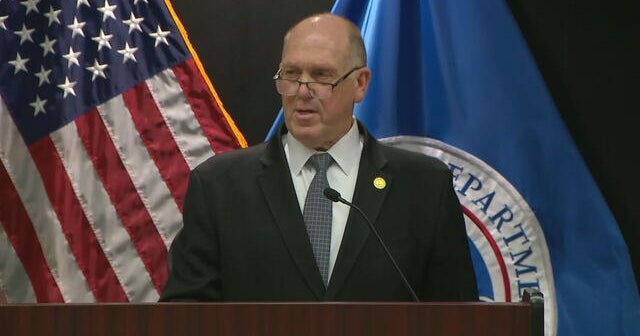
**Border Czar Tom Homan Announces End of ICE Surge in Minnesota**

Tom Homan, the Border Czar, has announced that the recent ICE surge in Minnesota is coming to an end. The surge was part of a heightened enforcement effort in response to border security concerns.

In related news, the House of Representatives has passed a rebuke of the tariffs imposed by Canada. Notably, six Republicans joined Democrats in supporting the measure, signaling bipartisan disapproval of the tariffs.

These developments highlight ongoing efforts to address border issues and international trade challenges.
https://www.cbsnews.com/video/021226-the-takeout/

AI brings Supreme Court decisions to life

**Artificial Intelligence Meets the U.S. Supreme Court**

The U.S. Supreme Court is an institution steeped in tradition, resistant to quick changes in the way it operates. But like it or not, the justices are about to encounter artificially created versions of themselves—essentially avatars—speaking words they actually spoke in court, though those words were only originally heard by the people present in the courtroom.

Since 1996, Northwestern University professor Jerry Goldman has been pioneering ways to make the Supreme Court more accessible to the public. His nonprofit project, **Oyez**, went live on the internet that year, aiming to provide audio recordings of the court’s oral arguments and opinion announcements for every case decided by the Supreme Court dating back to 1955—the year the court began taping its courtroom proceedings.

### The Importance of the Oyez Project

When the Oyez project debuted, it was a significant breakthrough. Until the early 1990s, the public was largely unaware that the Court had been taping its sessions. Moreover, the preservation of these tapes was chaotic, with many recordings lost forever. Access to the audio was severely limited; no one outside the Court had access until months after the case was heard and decided. Usually, tapes from the previous term became available only at the start of the next one.

Everything changed in 2020 when the COVID-19 pandemic forced the Court to allow live broadcasts of oral arguments. The justices, connected by phone lines, opened up for public listening like never before. Surprisingly, after the pandemic, the Court quietly maintained this system, continuing live audio broadcasts without fanfare.

### Yet, One Key Piece Remains Unavailable

Despite this progress, one crucial part of the Court’s public proceedings remains inaccessible on the same day: the announcements of decisions. These announcements include summaries from the bench by the justices as well as occasional oral dissents.

To this day, only those physically present in the courtroom can hear and witness this drama in real-time. The old system limiting access until the following term remains intact, effectively keeping this vital moment under wraps for months.

### Bringing the Court’s Proceedings to Life with AI

Now, Professor Goldman and his team are experimenting with new ways to recreate these moments of drama—even though official audio remains unavailable for months. Using artificial intelligence, they are creating visual and audio representations of what people in the courtroom saw and heard when decisions were announced.

As Goldman says, *“Since it’s public in the courtroom, it should be public for everybody. That’s simple.”*

### How Are They Creating These Visuals Without Cameras?

With no cameras allowed inside the Supreme Court, Goldman’s new site **On The Docket** uses AI-generated avatars to create the visuals.

University of Minnesota professor Timothy R. Johnson, one of the project’s key architects in collaboration with the AI design company Spooler, reveals the challenges they faced. Early AI attempts proved comical, with bizarre results such as justices disappearing from the bench or all bending forward simultaneously.

Ultimately, the team used photos and videos of the justices from public appearances to craft realistic avatars. These avatars mirror mannerisms, head tilts, and hand gestures, synced precisely with the authentic audio recordings.

### Ethical Considerations

The team confronted ethical questions about how realistic the avatars should appear. Should the video be indistinguishable from reality, or should it clearly indicate that it is AI-generated?

They opted to slightly cartoonize the video and explicitly mark it as AI-generated content. This approach ensures viewers understand that while the audio is authentic, the video is a reconstructed visualization.

### A Notable Example: Chief Justice John Roberts’ Summary

Their first AI-animated visual features Chief Justice John Roberts delivering a 14-minute summary from the bench. This was for the Supreme Court’s 6-to-3 decision granting former President Trump—and all future former presidents—complete immunity from prosecution for any official acts taken while in office, no matter how controversial.

Following Roberts is Justice Sonia Sotomayor, presenting her dissent. Together, their passionate spoken words compose a riveting and somewhat eerie 38-minute sequence.

### Resistance from the Court

The Court is likely not pleased with this new interpretation of public access. Historically, the Court resisted sharing recordings of its oral arguments and announcements. Before 1993, these recordings were secret.

Law professor Peter Irons once signed a pledge to keep them confidential but published a book with dubbed cassettes of important oral arguments. The Court sued him but later dropped the case, apparently conceding defeat.

Since then, oral arguments are regularly broadcast—especially due to the pandemic—but bench announcements remain locked away until months after decisions are made.

### Calls for Greater Transparency

Reporters and scholars have long requested live broadcasts of opinion announcements. Professor Goldman notes that even papers from the early Warren Court era in the 1950s show the justices considered recording oral arguments and opinion announcements—not to keep them secret.

However, all such requests have been met with silence from the Court, and even AI technology cannot yet bridge this gap for live audio or video.

**In summary**, AI is offering a new window into Supreme Court proceedings by recreating moments once hidden from public view. While the Court remains cautious about full transparency, projects like Oyez and On The Docket are pushing the boundaries toward a more accessible and engaging understanding of America’s highest court.
https://www.npr.org/2026/02/11/nx-s1-5711607/supreme-court-ai

Pam Bondi and House Democrats trade fiery barbs at Epstein hearing

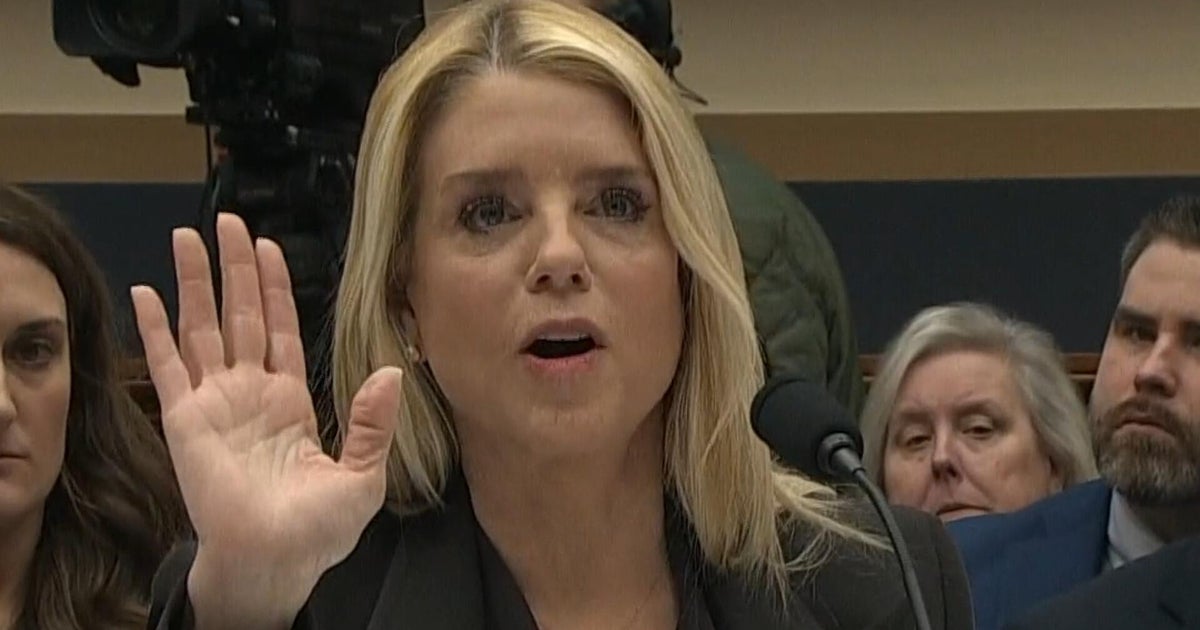
A shouting match broke out as Attorney General Pam Bondi sparred with critics in Congress over her handling of the Justice Department’s release of files related to Jeffrey Epstein.

The heated exchange underscored the intense scrutiny surrounding the case and the department’s transparency.

Scott MacFarlane has more on this developing story.
https://www.cbsnews.com/video/pam-bondi-and-house-democrats-trade-fiery-barbs-at-epstein-hearing/

Trump plans to revoke EPA’s authority to regulate carbon emissions

The Trump administration is preparing what environmental experts are calling one of the most sweeping regulatory rollbacks in modern history. The president plans to revoke the Environmental Protection Agency’s (EPA) legal authority to regulate carbon emissions on Thursday.

If this authority is withdrawn, it could upend decades of U.S. climate policy, significantly impacting efforts to address climate change.

CBS News’ David Schechter has more details on this developing story.

https://www.cbsnews.com/video/trump-plans-revoke-epas-authority-regulate-carbon-emissions/

Maxim Naumov makes Olympic debut one year after parents killed in midair collision

U.S. figure skater Maxim Naumov carried the memory of his late parents with him to the Olympics on Tuesday night, delivering an emotional and heartfelt short program at the Milan-Cortina Games that fulfilled a dream they had long shared together.

Naumov’s parents, former pairs world champions Evgenia Shishkova and Vadim Naumov, were among the 67 people killed—more than two dozen of them members of the figure skating community—when American Airlines Flight 5342 crashed into a military helicopter on approach to Ronald Reagan National Airport and fell into the icy Potomac River on January 29, 2025.

One of the last conversations Naumov had with his parents was about what it would take to make the Olympics.

“I’ve been inspired by them since day one, ever since we stepped on the ice together,” said Naumov, who brought an old photograph of that moment to the kiss-and-cry at the Milano Ice Skating Arena. The photo shows a little tyke standing between his parents as he stepped foot on the ice for the first time, the three of them all smiling for the camera.

“It’s not necessarily thinking about them specifically,” Naumov said, “but their presence. Feeling their presence. With every glide and step that I made on the ice, I couldn’t help but feel their support, almost like a chess piece on a chessboard.”

What made one of the feel-good stories of the Winter Games even more special was Naumov’s performance. While he was a long shot to make the top 10 at the Olympics, much less land on the podium, the 24-year-old nevertheless delivered one of the best short programs of his career.

He opened with a quad salchow as his godmother, Gretta Bogdan, watched from the stands. He followed up with a triple axel and a triple lutz-triple toe loop to finish out the program.

As the last notes of “Nocturne No. 20” by Frederic Chopin reverberated through the arena and the crowd rose to its feet, Naumov slid to a stop on his knees and looked to the sky, telling his parents: “Look at what we’ve done.”

“I didn’t know if I was going to cry, smile, or laugh,” he said afterward, “and all I could do was look up at them. And man, I still can’t believe what just happened. I think it’s going to take me a few hours or maybe a few weeks to know.”

His score of 85.65 was enough to make it through the short program, giving him another opportunity to perform when the men’s free skate takes place Friday night.

The plane carrying Naumov’s parents also had aboard 11 young skaters, two other coaches, and several family members who had been attending a development camp in Wichita, Kansas, following the 2025 national championships. Naumov’s parents were coaches at the Skating Club of Boston, which lost six members in the midair crash.

Naumov had flown out earlier, shortly after he had finished in fourth place for the third consecutive year.

“I can’t describe how difficult it was at the very beginning, and through month after month of really just trying my hardest to keep a positive mindset, and focus on day to day,” Naumov told CBS News Boston last month during his Olympic training at the Skating Club. “Thankfully, skating became a tool that actually helped me overcome that.”

The idea of fulfilling the Olympic dream he harbored with his parents pushed him on. When he finished third at the U.S. championships in January, his spot was all but secured.

“To be honest,” Naumov said Tuesday night, “I wasn’t thinking about executing anything perfectly or anything like that. I wanted to go out there and just give my heart out. Leave everything out there. Have no regrets. And that’s exactly what I felt.”

“To deal with the tragedy that he’s dealt with, and like he said, get up and do the day. And that’s what he’s done. He’s done one day at a time,” Katharine Steeger, the skating club’s director of membership services, told CBS Boston. “To have Max start us off with such an amazing skate for him, it’s just, there’s really no words.”

This marks the first time since 2014 that the Skating Club of Boston has sent athletes to the Olympics. Along with Naumov, they also sent figure skating pair Emily Chan and Spencer Akira Howe.

In the crowd Tuesday, dozens of American flags waved when Naumov’s program came to a conclusion. At one end of the arena, a fan held up a big flag that read, “Tomorrow’s Champions,” and carried the logo of the Skating Club of Boston.

“Tomorrow’s Champions” is the name of the skating school his parents founded and which Naumov now oversees.

“From the time that my name was announced in the warm-up to right before the skate,” Naumov said, “I felt it—the crowd, the energy, the roar. It’s like a buzz, you know? In your body. I couldn’t help but just embrace it. Embrace that love.”
https://www.cbsnews.com/news/maxim-naumov-olympic-debut-after-parents-killed-midair-dc-collision/

San Francisco teachers go on strike, closing schools for nearly 50,000 students

San Francisco Public Schools Shut Down as Teachers Strike Over Pay and Healthcare

San Francisco public schools shut down on Monday as teachers went on strike demanding improved healthcare benefits and pay raises, leaving families of some 50,000 students scrambling for child care and meals.

Members of the United Educators of San Francisco walked off the job for the first time since 1979 after union leaders and the San Francisco Unified School District (SFUSD) failed to reach an agreement during a weekend bargaining session.

San Francisco Mayor Daniel Lurie had pleaded with both sides to keep schools open for three more days while negotiations continued, aiming to “allow kids to stay in the classroom and the adults to keep talking.” Bargaining resumed Monday afternoon, according to a union spokesperson, but there was no set end date for the strike.

The district announced schools would also be closed on Tuesday and urged parents to check the district website “for learning, food, childcare, and district support resources.”

### The Cost of Living and Healthcare Drive Union Demands

In one of the nation’s most expensive cities, “the affordability crisis for those of us devoted to San Francisco’s next generation is real,” said Cassondra Curiel, the teachers’ union president, in a statement.

Curiel added that rising healthcare premiums “are pushing excellent teachers and support staff out of our district,” which currently has hundreds of educator vacancies. “This week, we said enough is enough,” she declared.

On Monday, at school sites across the city, picketing educators marched while rattling cowbells, beating drums, and holding signs reading: “On Strike for Safe and Stable Schools” and “We Can’t Wait / Invest in the Schools Our Students Deserve.”

### Impact on Students and Families

SFUSD Superintendent Maria Su spoke to reporters Monday, emphasizing the strike’s consequences. “Every day this strike continues has real consequences,” she said during a news conference. “Students are losing instructional time. Families are scrambling to take care of their children, to arrange child care.”

She also highlighted concerns for vulnerable students who are losing access to food, mental health support, and connections to their school community, their friends, and trusted educators.

### Labor Unrest in California Education

The San Francisco teachers’ strike may signal more labor unrest in California. Educators in other major districts, including Los Angeles, have indicated readiness to strike for higher pay, smaller class sizes, and more resources.

Last month, members of United Teachers Los Angeles voted overwhelmingly to authorize their leadership to call a strike, increasing pressure amid stalled negotiations and looming staff layoffs and budget cuts in the Los Angeles Unified School District.

Similarly, the San Diego teachers’ union voted prior to winter break to authorize a one-day unfair labor practice strike on February 26 if the San Diego Unified School District does not improve special education staffing.

These labor tensions come as COVID relief funds have ended and public school enrollment in California has plummeted in recent years, leading to reduced state funding. Last year, the California Teachers Association launched the “We Can’t Wait” campaign, encouraging union chapters to unite more forcefully in labor negotiations.

### SFUSD’s Budget Struggles

The San Francisco school district has cited “long-term budget challenges made worse by having fewer students and temporary COVID relief funds that are now gone.”

Several prominent lawmakers, including U.S. Rep. Nancy Pelosi (D-San Francisco) and State Senator Scott Wiener (D-San Francisco), joined Mayor Lurie in calling for a 72-hour pause before the strike commenced, urging union leaders to keep classrooms open.

However, the union stressed that its timeline had been clear for some time. A union spokesperson told The Times that “these are not strike-happy people,” noting it had been nearly 50 years since the last San Francisco teachers’ strike, which lasted over six weeks.

SFUSD is currently facing a $102-million budget deficit and remains under state fiscal oversight due to a long-standing financial crisis. The district has stated that if layoffs become necessary to close the budget gap, employees will receive notices this spring.

Superintendent Su affirmed, “We will be at the table and we will stay for as long as it takes to get to a full agreement. I do not want a prolonged strike.”

### What Teachers Are Demanding

Negotiations between the teachers’ union and the district began in March 2025. The union has requested a 9% pay raise over two years, suggesting that funds could come from reserve resources.

On Saturday, the district offered a 6% raise over two years.

Rising healthcare costs for teachers with families remain a major sticking point. According to the union, SFUSD educators receive some of the lowest contributions toward healthcare costs compared to neighboring districts, prompting many to seek employment elsewhere.

Family healthcare premiums have reportedly risen to $1,500 a month, which the union notes can represent up to 40% of the annual income for some of the lowest-earning classroom support staff.

### Voices from the Classroom

Teanna Tillery, union vice president and representative of paraeducators who often work part-time with individual students, described the challenges. Increasing healthcare costs and the Bay Area’s high cost of living have largely offset the $9,000 permanent salary gains their union negotiated two years ago.

“We’re having to commute to other cities because we just can’t afford to be here,” Tillery said. “Most of us work more than one job to make ends meet, and one job should definitely be enough for all educators.”

Tillery shared that for part-time educators with one dependent, healthcare premiums reach about $900 a month—equivalent to 40% of their biweekly pay. For classified employees with two or more dependents, premiums can be as high as $1,500 monthly, significantly impacting paychecks for those not working full-time.

The union is demanding that the district cover all or the lion’s share of medical premiums for members and their dependents.

### District’s Healthcare Proposal

The Associated Press reported that Superintendent Su said the district has proposed two options: pay 75% of family health coverage directly to Kaiser Permanente or offer an annual $24,000 allowance for teachers to select their own healthcare plans.

### Additional Agreements and Rally Calls

On Saturday, the district and union reached a tentative agreement on a sanctuary school policy. This mirrors the city’s own policy and aims to protect immigrant and refugee students.

At a Monday rally at Mission High School, Cindy Castillo, a social studies and ethnic studies teacher and SFUSD alum, called for full accommodations for students with special needs, retention of students and educators of color, and fully staffed campus security teams to prevent violence.

“In my classroom, we talk about how we make change for the common good,” Castillo said. “I am standing here to walk the talk.”

As negotiations continue, the eyes of educators, families, and policymakers throughout California remain fixed on San Francisco, awaiting resolution and the reopening of classrooms.
https://www.latimes.com/california/story/2026-02-09/san-francisco-teachers-strike

Lindsey Vonn says she has “no regrets” after crash at Winter Olympics

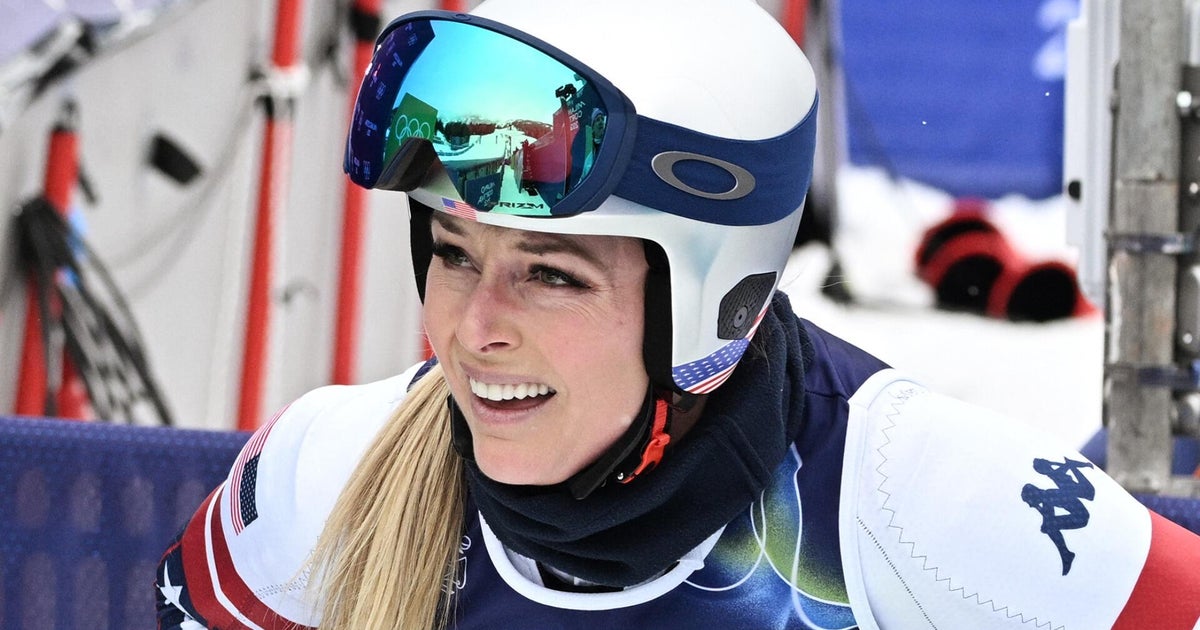
American skier Lindsey Vonn addressed her devastating crash at the Winter Olympics for the first time on Monday. She stated that she had “no regrets” about the incident.

Vonn also shared details about her injuries, revealing that she “sustained a complex tibia fracture that is currently stable but will require multiple surgeries to fix properly.”

CBS News’ Kelly O’Grady has more on the story.
https://www.cbsnews.com/video/lindsey-vonn-no-regrets-crash-winter-olympics/

Breezy Johnson wins gold, while Lindsey Vonn crash ends comeback quest

Listen · 7:15

On the first Sunday of the Olympic Winter Games, downhill skier Breezy Johnson captured the first gold medal for Team USA.

Meanwhile, alpine racer Lindsay Vonn suffered a crash and was transported to the hospital with a broken leg.
https://www.npr.org/2026/02/08/nx-s1-5705939/breezy-johnson-wins-gold-while-lindsey-vonn-crash-ends-comeback-quest

Salman Rushdie: The 60 Minutes Interview

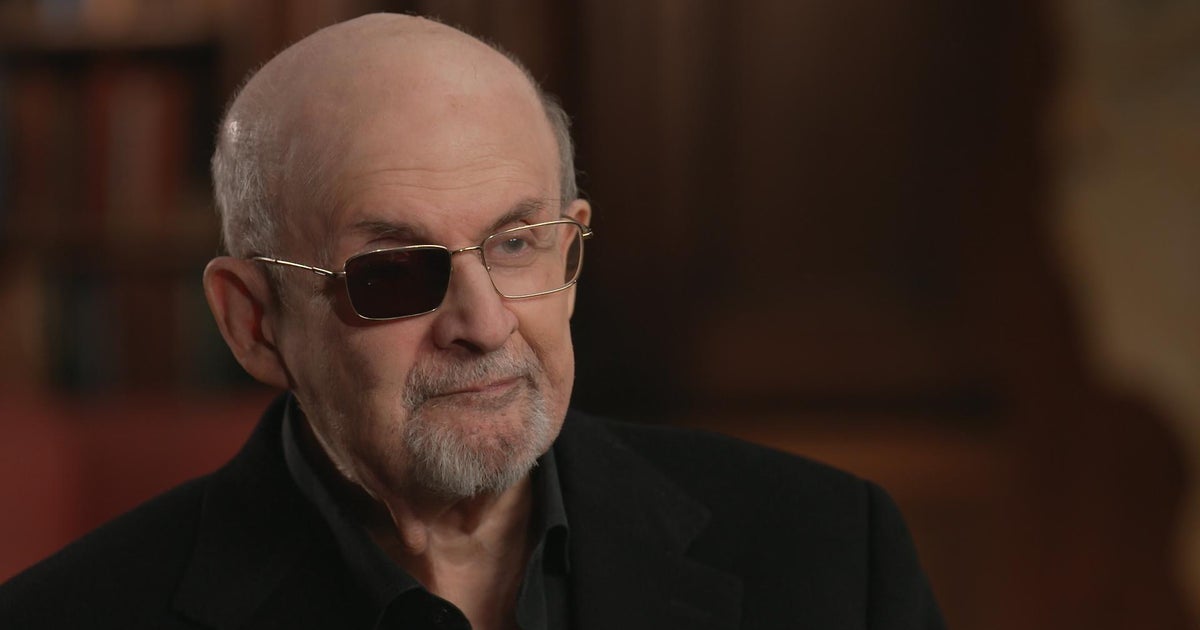
Salman Rushdie has come to terms with the attempt on his life in the only way he knows how: by writing a book about it, titled *Knife*.

He recently detailed the experience in his first television interview since the attack, providing insight into the impact it had on his life and work.
https://www.cbsnews.com/video/salman-rushdie-knife-book-60-minutes-video-2026-02-08/

Exit mobile version
Sitemap Index