

Bitcoin ETF growth shows scale, but investor trust lags behind gold’s long-term stability. Gold remains preferred in crises due to central banks and institutional allocators’ support. Bitcoin’s “digital gold” status hinges on adoption, infrastructure, and crisis performance. Bitcoin’s push toward the digital gold label continues to face strong headwinds despite its rapid ascent in global markets. The asset overtook gold ETFs in late 2024, reaching a level many considered historic. Besides, its total ETF assets now hover near $120 billion, showing lasting investor interest. However, its market character still lacks the stability and trust that define traditional safe-haven assets. This gap forms what Simon Kim, CEO of Hashed, describes as the “digital gold paradox,” a situation where scale grows fast but long-term confidence remains fragile. Why Trust Still Favors Gold Over Bitcoin Kim notes that time shapes investor trust more than any metric. Gold has survived thousands of years of crises, wars, and currency transitions. Bitcoin, meanwhile, has existed for only sixteen years, leaving investors unsure about its crisis behavior. Moreover, capital composition adds another challenge. Bitcoin ETFs attract hedge funds and trading desks that chase volatility. Consequently, the asset often reacts like a high-risk tech stock when markets move. Gold, however, benefits from long-term allocators such as central banks, pensions, and insurers. Their presence helps gold behave steadily during stress events. Correlation trends reinforce this divide. Bitcoin still trades closely with the Nasdaq, often selling off when tech stocks fall. Gold moves differently. Hence, global investors still turn to physical assets when geopolitical and macro tensions escalate. Gold’s surge to over $4,000 in 2025 and the rapid rise in gold ETF assets underline this preference. Central banks drove most of this expansion as they reduced dollar exposure and increased reserve diversification. Bitcoin’s Path to Higher Market Maturity Kim believes Bitcoin must strengthen its qualitative profile before it gains full safe haven recognition. Besides, large sovereign wealth funds and pension plans must adopt clear long-term allocation frameworks. State-level reserve inclusion would also reshape global perception. Moreover, Bitcoin must act reliably during actual crises, not isolated events. Investors want repeatable evidence that Bitcoin can appreciate when traditional systems face stress. Additionally, infrastructure maturity remains critical. Payment layers must scale further, major banks must expand custody services, and mining must meet tougher environmental expectations. Progress is underway, yet Kim argues these changes must accelerate as global markets enter a new macro cycle. Long Transition Period Ahead Kim expects meaningful shifts to begin after 2026 as volatility cools and institutional adoption rises. By 2030, he argues, Bitcoin could finally earn its digital gold title. However, the timeline depends on real-world tests, structural reforms, and growing global confidence.
https://bitcoinethereumnews.com/bitcoin/bitcoins-battle-for-safe-haven-status-intensifies/
Tag: diversification

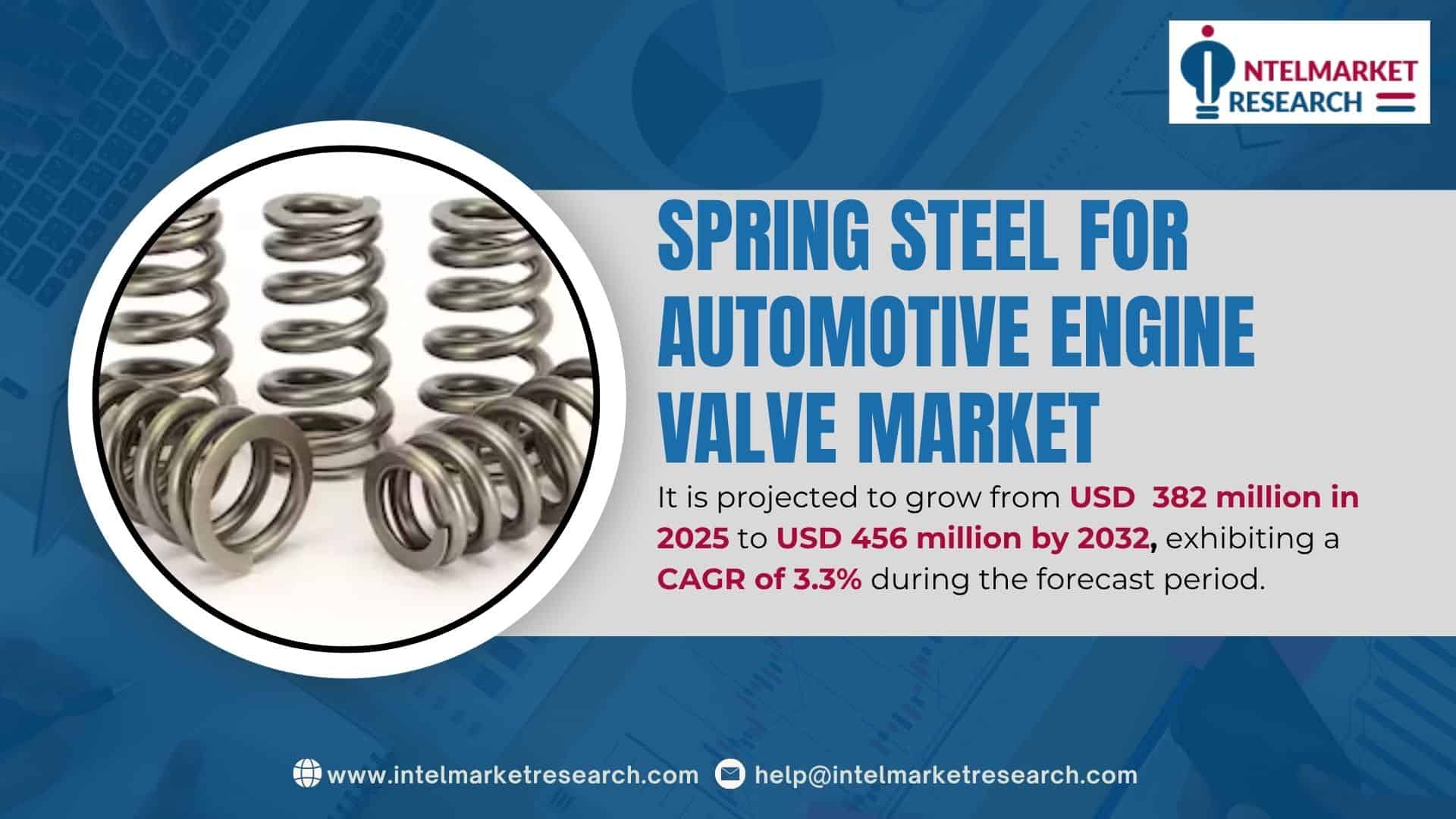
Spring Steel for Automotive Engine Valve Market Size to Reach USD 4.75 Billion by 2032
According to a new report from Intel Market Research, Global Spring Steel for automotive engine valve market is undergoing steady expansion. Valued at USD 382 million in 2024, the market is projected to reach USD 456 million by 2032, reflecting a compound annual growth rate (CAGR) of 2. 7% during the forecast period. Get FREE Sample of this Report at The evolving automotive landscape marked by fuel efficiency regulations, lightweight materials, and hybrid powertrain development is reshaping demand across regions. Major Distribution Channels for Automobile Engine Valves The distribution of automobile engine valves is primarily segmented into two major channels: the Original Equipment Manufacturer (OEM) segment and the Aftermarket segment. The OEM channel involves direct sales to vehicle manufacturers for use in new vehicle production, which is the dominant distribution channel. The Aftermarket channel, which involves sales of replacement parts, is also substantial and growing, fueled by the increasing average age of vehicles globally. This segment includes sales through independent garages, authorized distributors, and online retailers, offering a wide array of cost-effective and specialized replacement options for vehicle repair and maintenance. Emerging Market Trends Shift Toward Lightweight and Durable Materials Manufacturers are increasingly adopting titanium and advanced steel alloys to reduce component weight while improving thermal resistance and durability. These materials not only enhance fuel efficiency but also extend engine life, aligning with stricter emission norms worldwide. Electrification Impact and Hybrid Integration While electric vehicles (EVs) pose challenges to traditional valve markets, hybrid models continue to sustain demand. Engine valves for plug-in hybrids and range-extender systems are being redesigned for improved airflow efficiency and heat management, ensuring relevance in an evolving mobility ecosystem. Automation in Manufacturing Processes AI-driven production and precision machining have become essential in maintaining quality and consistency. Companies are investing in automated inspection and 3D printing technologies to optimize valve geometry and surface finish, improving both performance and sustainability. Regulatory Pressure for Fuel Efficiency Tightened emission regulations in Europe, China, and the U. S. are pushing automakers to integrate advanced valve technologies such as variable valve timing (VVT) systems. This enhances engine responsiveness and fuel economy, supporting the broader goal of decarbonization. Global Supply Chain Diversification The pandemic exposed vulnerabilities in automotive supply chains, prompting OEMs to diversify sourcing. Regionalized manufacturing of engine components, including valves, is now a growing trend across Asia-Pacific and Europe, reducing dependency on single-source suppliers. Get the Complete Report & TOC at Key Market Drivers The market’s growth trajectory is influenced by advancements in internal combustion efficiency, stringent emission standards, and continuous R&D investments in thermal management systems. Increasing production of passenger and commercial vehicles, especially in Asia-Pacific, further accelerates demand. Moreover, the need for high-performance engines in motorsport and premium vehicles continues to sustain specialized segments of the market. Competitive Landscape: Leading Players The global market features a mix of long-established manufacturers and regional innovators driving product evolution. Key players include: Federal-Mogul (Tenneco) Focused on developing high-temperature-resistant materials and expanding partnerships with OEMs. Eaton Corporation Strengthening its presence through technological upgrades in precision valve systems for high-efficiency engines. Mahle GmbH Investing heavily in R&D to develop sustainable materials and smart valve control solutions. Nittan Corporation Enhancing production capacity across Asia and investing in hybrid-compatible valve solutions. Fuji Oozx Inc. Expanding its footprint through product innovation and collaborations in lightweight valve design. Rane Group and Dengyun Auto-parts Consolidating their regional presence through OEM alliances and cost-efficient product lines. These companies are advancing through strategic mergers, material innovations, and automation investments, ensuring competitiveness amid shifting mobility trends. Segment Analysis & Regional Outlook By Type: The market is segmented into intake valves and exhaust valves, with the exhaust segment projected to witness faster growth due to ongoing optimization for high-temperature endurance. By Application: Passenger cars dominate demand, while light commercial vehicles are expected to post steady gains due to logistics and fleet expansion. Regional Outlook: Asia-Pacific remains the market powerhouse, led by China, Japan, and India, where large-scale automotive production and R&D facilities continue to thrive. Europe follows closely, driven by efficiency mandates and hybrid vehicle adoption, while North America focuses on performance and aftermarket innovation. Technological Advancements & Strategic Insights Emerging technologies like variable valve actuation (VVA) and smart valve control are transforming engine efficiency metrics. Manufacturers are experimenting with electromagnetic valve systems that eliminate the need for mechanical camshafts, enabling precise control over air-fuel dynamics. Can AI-Powered Design Optimize Future Engine Performance? AI-based design simulations are revolutionizing how valves are engineered. Predictive modeling and virtual testing now allow companies to cut development time and improve reliability. As AI integrates deeper into automotive engineering, it’s expected to play a pivotal role in enhancing performance and sustainability. Key Benefits of the Report Provides comprehensive insights into the global automotive engine valve market (2024-2032) Includes competitive benchmarking and detailed company profiling Offers strategic recommendations for market entrants and investors Analyzes segment-level revenue forecasts and regional growth patterns Expert Perspective As the automotive industry navigates a complex transition toward electrification, engine valve technologies continue to evolve rather than disappear. Innovation in lightweight materials, automation, and hybrid integration is redefining how traditional components remain relevant in a changing powertrain ecosystem. The next decade will likely witness a blend of internal combustion optimization and hybrid adaptation, with the automotive engine valve market positioned at the intersection of both trends. Get the Complete Report & TOC at Gain access to detailed insights, key data tables, and forecasts by exploring the complete report at Intel Market Research. About Us Intel Market Research is a leading provider of strategic intelligence, offering actionable insights in information technology, digital media solutions, and communication infrastructure. Our research capabilities include: Real-time competitive benchmarking Global technology adoption monitoring Country-specific regulatory and market analysis Over 500+ technology reports annually Trusted by Fortune 500 companies, our insights empower decision-makers to drive innovation with confidence. 🌐 Website: 📞 International: +1 (332) 2424 294 📞 Asia-Pacific: +91 9169164321.
https://www.prnewsreleaser.com/news/124419


(Guest opinion) Carol Hawkins: It’s time to transition off fossil fuels
Colorado faces a difficult choice, transition off fossil fuels to renewable sources of energy or continue to jeopardize our environment and health. Transition, will cause economic and social disruption for workers and communities. Consequently, any “just transition” requires solutions that mitigate the negative consequences while simultaneously eliminating the deadly pollution caused by burning fossil fuels. I have lived in Weld County since purchasing my house in 2017. I lived in Maine at the time, near the end of an ”unexpected journey” watching my partner die from Alzheimer’s. I decided to move back to Colorado where I had family and a history of living in the state since the early 1970s. I wanted familiar surroundings. I searched online and found the perfect bungalow, my retirement home, in Ault, a rural town in a good location between Greeley and Fort Collins. I had no idea of the influx of fracking about to come. Shortly after moving, I received a forced pooling notice. I went from grief and PTSD to a sense of doom. Fracking! What did this mean for my quiet life and my health? The facts about fracking and the impacts were easy to find, but fighting the frack hasn’t been easy. Weld County, otherwise known as “Welled” County, remains the most polluted and fracked in the state. My neighbors, many who work in oil and gas, are mostly working class, and others are first-time home owners looking for affordable housing or long-time residents. Local government is staffed by those who appear unaffected by fracking. When wells were drilled next to the Highland School campus, located in the middle of town, I called the Ault Town Office and Weld County Oil and Gas to question why the drilling was so close to the school when SB 181 called for 2, 000-foot setbacks. The Ault Town Office said that they had no knowledge of drilling near the school, although it was happening just down the street, and the Weld County Oil and Gas Office laughed off my reference to SB 181 with the comment “those rules are easy to get around.” And I’ve come to learn that he is right. All you have to do is look at the loopholes. One is home rule, the other is reverese setbacks. I then turned to the state and began to protest permits, but soon learned that state regulators and the governor support the fossil fuel industry. However, outside of Colorado, a global consensus calls for a “just transition” away from fossil fuels. The planet is heating, driven by greenhouse gases from extracting and burning fossil fuels like oil and fracked gas. Agreements from COP28 called for net-zero emissions by 2050. Current research, developed by analyzing efforts toward a “just transition” around the world, provides principles that guide policy development: governmental support, dedicated funding streams, strong and diverse coalitions, and economic diversification to address the short-term impacts and long-term needs that workers and communities. Colorado must come together around this framework of principles for a “just transition,” but the transition from fossil fuels to renewables will still disrupt existing economies, and some communities may face economic hardship due to the loss of jobs and tax revenue from the fossil fuel industry. However, we must make the hard choice to experience the gains from a clean energy economy and healthy environment. Colorado’s current environmental damage and health impacts are not sustainable and challenge communities reliant on oil and gas to make the hard choice we need a “just transition” off of fossil fuels. Stop the permits and clean up the mess while supporting displaced workers and disproportionately impacted communities, like Ault. Carol Hawkins is a retired English professor who moved back to Colorado from Maine in 2017. She was served a forced pooling notice in 2018 and has been part of the resistance to fracking ever since. Her focus centers on health impacts and damage to our environment, with a particular interest in health care and job training for displaced oil and gas workers, along with support for disproportionately impacted communities like hers in Ault.
https://www.greeleytribune.com/2025/11/19/guest-opinion-carol-hawkins-its-time-to-transition-off-fossil-fuels/

Ripple at $2.30, $NNZ Presale Surges
**Crypto Presales XRP Price Prediction Shows Ripple Steady at $2.30, While Noomez (NZ) Presale Gains Traction Fast**
XRP continues to hold investor attention even as volatility grips the broader crypto market. Currently trading at $2.30, the token is below some expectations amid mixed forecasts for 2025 and beyond.
Despite a solid rebound earlier this quarter, XRP remains down 3.21% in the past 24 hours, leaving traders divided on its short-term momentum. Analysts tracking XRP price prediction models anticipate moderate appreciation in the next cycle; however, the ceiling looks limited compared to newer tokens entering presale phases.
The prevailing question on trading floors is simple: can Ripple reclaim explosive momentum, or are emerging projects like Noomez (NZ) setting the pace for higher returns?
—
### XRP Price Prediction 2025
Market projections for XRP in 2025 suggest gradual growth, but not the acceleration long-term holders are hoping for. According to the latest chart data, XRP could trade between $2.25 and $2.61 next year, averaging around $2.37. This translates to a potential annualized return on investment (ROI) of approximately 12.75%.
While these figures point to steady performance, they also reflect Ripple’s maturity phase. The ecosystem remains largely tied to enterprise partnerships and cross-border payment corridors, which caps the upside compared to more volatile, retail-driven assets.
**Key 2025 Metrics:**
– Minimum Price: $2.25
– Average Price: $2.39
– Maximum Price: $2.61
– Potential ROI: 12.75%
Traders describe XRP as a reliable but slow-moving asset. One analyst noted, “The path to $5 could take years unless there’s a major institutional catalyst.” The broader debate now centers on diversification, especially into early-stage projects offering stronger gain potential through presale accumulation phases.
—
### XRP Price Prediction 2026-2027
Forecasts for 2026 predict more volatility, but the expected surge remains controlled. Projections indicate XRP could reach between $2.41 and $3.61, reflecting a modest breakout from the current range.
By 2027, some analysts foresee highs near $3.68, with potential spikes above $5 during bullish months like August or September.
**Key Data Points:**
– 2026 Max Price: $3.61 (ROI up to 56.15%)
– 2027 Max Price: $5.46 (ROI up to 136.02%)
– Average 2027 Price: $3.53
Although these numbers highlight progress, XRP’s rally is forecasted to unfold gradually, contrasting with the rapid rise of new meme-based and deflationary tokens that have captured the market’s speculative capital.
Investors looking beyond slow compounding models are now turning their attention to early presales that combine transparency with visible momentum. This is where Noomez (NZ) enters the conversation.
—
### Noomez (NZ): The Presale Turning Heads Across the Market
Just days after launch, Noomez has progressed rapidly into Stage 2 of its presale — a development that has caught many analysts’ attention. The token’s price recently climbed from $0.00001 to $0.000012320, backed by $16,365.20 raised and 100 verified on-chain holders.
Unlike most meme-themed tokens, Noomez features a 28-stage deflationary structure where unsold tokens are permanently burned after each phase.
**What Makes Noomez Stand Out:**
– **Deflationary Design:** Unsold tokens are burned after every stage.
– **Referral System:** Buyers and referrers each earn a 10% bonus via share codes.
– **Stage X Million Airdrops:** Each stage ends with a random on-chain airdrop to verified holders.
– **Liquidity Lock:** 15% of the total supply will be locked post-launch through a third-party provider.
—
### Why Traders See Noomez as the Next Major Presale
While Ripple continues its measured path toward enterprise expansion, Noomez directly taps into retail energy. It combines storytelling, verifiable mechanics, and transparent economics into one ecosystem that grows more valuable with each stage.
Upcoming Vault Events at Stages 14 and 28 will introduce token burns, rewards, and staking integration. Analysts believe this hybrid model could outperform traditional tokens once it hits decentralized exchange (DEX) listings, especially given its fixed supply of 280 billion tokens and zero-minting policy.
With every transaction traceable and visible, Noomez is being referred to by some investors as the “first meme coin with math” — a project delivering measurable accountability rather than mere speculation.
For traders deciding which crypto to buy, the comparison is clear: Ripple (XRP) offers slow but stable returns, while Noomez (NZ) offers structure, transparency, and potential upside fueling early-market stories.
As the presale moves toward Stage 3, with more airdrops and burns scheduled, early investors may find this the optimal time to buy Noomez before price increases lock in higher entry costs.
—
### For More Information
– **Website:** Visit the [Official Noomez Website](#)
– **Telegram:** Join the [Noomez Telegram Channel](#)
– **Twitter:** [Noomez Twitter](#)
—
*This publication is sponsored. Coindoo does not endorse or assume responsibility for the content, accuracy, quality, advertising, products, or any other materials on this page. Readers are encouraged to conduct their own research before engaging in any cryptocurrency-related activities. Coindoo will not be liable for any damages or losses resulting from the use or reliance on any content, goods, or services mentioned. Always do your own research.*
—
### About the Author
**Alexander Zdravkov** is a seasoned crypto analyst with over 3 years of experience in the digital currency space. Known for his logical approach, Alexander skillfully identifies emerging trends and delivers in-depth analysis and daily reports, making him a valuable contributor in the world of cryptocurrencies.
—
**Related Stories**
[Insert related stories or links here]
https://bitcoinethereumnews.com/finance/ripple-at-2-30-nnz-presale-surges/

Grayscale Research Chief Forecasts $5B Inflows for US Solana Spot ETFs
**Solana ETFs Poised for Rapid Growth, Could Rival Bitcoin and Ethereum Products**
*By Zabi*
Zach Pandl, head of research at Grayscale Investments, believes Solana exchange-traded funds (ETFs) could soon rival the success of Bitcoin and Ethereum investment products. He expects that within one to two years, about 5% of all Solana tokens could be held in regulated exchange-traded structures—a share worth over $5 billion at today’s prices.
Pandl made this prediction following the launch of the Grayscale Solana ETF (GSOL) and Bitwise Solana ETF (BSOL) this week. Both products mark a new chapter for the fast-growing market of crypto-based investment vehicles.
—
### Strong Debut for New Solana ETFs
Bitwise’s BSOL began trading on Tuesday, drawing $129 million in inflows within its first two days, according to Bloomberg ETF analyst Eric Balchunas. Grayscale’s GSOL, which launched the next day, recorded $4 million on its first trading day.
Despite being a day behind, analysts described GSOL’s early performance as strong, given the increasingly crowded market. Pandl said Grayscale expects Solana ETFs to become multi-billion-dollar businesses as investor interest broadens.
—
### From Niche to Mainstream: Crypto ETFs Gain Ground
Exchange-traded products (ETPs) allow investors to obtain cryptocurrency exposure through traditional brokerage and retirement accounts. This structure enables participation in the asset class without requiring direct ownership of digital tokens.
According to the Investment Company Institute, U.S.-listed ETFs held over $10 trillion in assets by the end of 2024, accounting for 26% of all managed assets. Crypto ETFs represent only a small fraction of this total, but their growth has been rapid. Bitcoin ETPs currently manage $149 billion, while Ethereum products hold $26 billion, across roughly 20 funds.
—
### Regulation Remains a Concern
Not all financial institutions share Grayscale’s optimism. Earlier this week, Charles Schwab warned that crypto remains lightly regulated, even as the U.S. Securities and Exchange Commission (SEC) continues to approve new ETPs.
> “The SEC’s hands-off stance means higher risk for investors,” the firm said, noting that the crypto sector lacks the oversight applied to equities and bonds.
—
### GSOL Evolution: From Trust to ETF
Grayscale’s Solana product, GSOL, originally launched as a private trust in 2021, holding around $100 million in Solana tokens. Its conversion to an ETF this week makes the fund more flexible, allowing it to trade closer to the actual value of its holdings.
The shift eliminates the large premiums and discounts often seen in closed-end crypto trusts. Pandl said the conversion opens access to a broader range of investors while improving liquidity and pricing transparency.
—
### Competition and Diversification Ahead
Solana’s debut comes as Hedera and Litecoin ETFs also enter the market, though their inflows remain modest. More than a dozen additional crypto-based funds are expected to seek approval soon.
Pandl expects investor interest to gradually shift toward diversified crypto ETPs, which provide exposure to multiple tokens simultaneously.
> “Many investors will prefer simpler, diversified options that reduce the complexity of evaluating each token,” he said.
—
### Staking Adds a New Source of Yield
Unlike Bitcoin ETFs, Solana investment products can offer staking rewards, a feature unique to proof-of-stake networks. By locking Solana tokens to help secure the blockchain, investors can earn an estimated annual yield of 5.7%, according to Solana Compass.
Pandl confirmed that GSOL will distribute 77% of staking rewards to its holders, calling it “a game changer for crypto demand.” He described staking as a new income stream that could help investors diversify portfolio returns.
—
### Distinct Roles for Solana and Ethereum
Pandl said Solana and Ethereum will likely develop distinct roles in the digital asset ecosystem, despite both being smart contract platforms. He pointed to growing adoption of stablecoins and tokenized assets as key drivers of institutional interest.
> “They differ in design, and that gives each blockchain its own lane,” Pandl explained. “Investors can benefit from holding both as part of a balanced crypto strategy.”
—
### Disclaimer
This content is informational and should not be considered financial advice. The views expressed in this article may include the author’s personal opinions and do not reflect The Crypto Basic opinion. Readers are encouraged to do thorough research before making any investment decisions. The Crypto Basic is not responsible for any financial losses.
—
### About the Author
**Zabi** is a crypto enthusiast with more than 10 years of experience in managing Google News-approved finance websites. Zabi has a strong background in finance with a thorough understanding of cryptocurrencies and a solid grip on the crypto and financial market industry. Along with his passion for crypto writing, Zabi manages his personal stock and finance-related Google News-approved websites.
—
### Related Market Insights
– **Market Veteran Targets XRP Rally to $4.50**
Experienced market analyst CasiTrades says XRP is heating up after a bullish breakout, with a new target rally to an all-time high of $4.50.
– **Cardano Falling Wedge Breakout Eyes Run to $1.2 Before Uptick to $2.91**
A well-known crypto chartist suggests Cardano could be looking to break into a four-year peak above $2 after a falling wedge breakout.
– **LMAX Group Strategist Sees Bitcoin Ready for a Full Recovery**
LMAX Group strategist Joel Kruger believes Bitcoin and the crypto market are staging a strong comeback after weeks of struggle following the October 10th market drops.
– **Bitwise Says a 5% Capital Rotation from Gold to Bitcoin Could Push BTC to $242,000**
Bitwise recently shared that even a small reallocation from gold to Bitcoin would more than double Bitcoin’s current price.
– **Ethereum Closes in on Bitcoin Annual Performance Following Strong Q3**
Market data shows Ethereum, the king altcoin, has dramatically closed in on Bitcoin’s annual performance after notable Q3 gains.
– **Citibank Predicts Bitcoin to Hit $231K, Ethereum $7.5K in Coming Months**
Global banking giant Citibank has released new 12-month price targets for the world’s two largest cryptocurrencies.
For more updates and detailed analyses, stay tuned to The Crypto Basic.
https://thecryptobasic.com/2025/10/31/grayscale-research-chief-forecasts-5b-inflows-for-us-solana-spot-etfs/

Best Practices for Diversifying Crypto Salary Earnings
A cryptocurrency wage presents promising prospects as well as intricate financial management issues. Cryptocurrency volatility calls for a disciplined strategy and diversification. Many employees and freelancers worldwide already get paid in Bitcoin or other cryptocurrencies.
Solely crypto-based dependence, while innovative, involves volatility and economic risk for them. Smart management ensures salaries retain purchasing power despite market volatility and economic downturns. Systematic transformation of revenues into stable assets provides protection. Diversification into fiat and traditional assets provides stability.
In addition to emergency funds, professional guidance and regulation, diversification helps convert unstable income into more secure, long-term financial foundations. Read on to learn more about the best practices for diversifying crypto salary earnings.
## Dollar-Cost Averaging for Managing Crypto Salary Conversions
Dollar-cost averaging represents an essential principle when managing recurring income from crypto payrolls or digital salaries responsibly. Rather than converting entire salaries immediately, employees allocate portions gradually across consistent intervals.
Multiple conversions yield smoother averages, limiting exposure to sharp downturns or speculative peaks. Employees benefit from natural market corrections while avoiding mistakes caused by emotional, impulsive decisions.
Converting smaller portions over weeks or months enhances predictability and stabilizes personal financial planning. Professional advisors widely endorse this method because it consistently minimizes timing-related risks. DCA transforms volatile crypto payments into reliable assets that maintain purchasing power longer.
By reducing reliance on speculative timing, individuals ensure predictable results with reduced stress.
## Diversifying Into Stablecoins and Traditional Financial Assets
Strategic diversification beyond core cryptocurrency wages remains important for financial long-term endurance. Employees receiving digital pay need to convert fractions into regulated or fiat-collateralized stablecoins relative to fiat currencies.
This approach maintains purchasing power without subjecting themselves to the whim of the extreme volatility of Bitcoin or Ethereum booms and busts. Stablecoins provide liquidity and guarantee ready availability for sudden spending or emergency needs.
Employees can benefit from investing in conventional finance markets and low-risk investments beyond holding stablecoins. For instance, when Ontario opened its regulated iGaming market in 2022, online casino platforms in Canada expanded their options. The payment options include e-wallets, prepaid cards, and bank transfers, giving players safer and more reliable ways to manage money.
Likewise, employees receiving crypto payments should utilize disciplined conversion methods to secure their earnings. Investing in savings accounts, diversified ETFs, or government bonds contributes to long-term financial stability. These traditional instruments have historically provided reliable performance.
ETFs and bonds offer stronger long-term growth potential, while savings accounts mainly provide liquidity and safety. Together, they help hedge against correlated declines in cryptocurrency.
## Establishing a Dedicated Fiat Emergency Fund
A fiat emergency fund remains essential for individuals receiving salaries entirely through cryptocurrencies. Digital assets inherently carry volatility risks that threaten stability during sudden adverse market conditions.
Establishing three to six months’ living expenses within traditional accounts ensures lasting protection. Unlike crypto, fiat funds provide reliable liquidity during emergencies like illness, unemployment, or crises. Employees should convert portions consistently into fiat until emergency savings goals are securely met.
This practice guarantees independence from forced asset liquidation at unfavorable cryptocurrency prices. Dedicated fiat reserves serve as financial buffers shielding individuals from severe market instability.
Building such reserves demonstrates foresight and professionalism when navigating unpredictable economic environments responsibly. Maintaining fiat liquidity balances speculative crypto investments with practical safeguards, securing daily necessities.
Professionals who prioritize emergency funds maintain resilience while continuing to confidently pursue strategic growth elsewhere. A balanced financial structure allows employees to weather downturns without significantly compromising long-term aspirations. Emergency reserves stand as indispensable pillars of financial planning for crypto-paid professionals worldwide.
Establishing fiat safeguards represents disciplined wealth management, ensuring both immediate stability and sustainable prosperity long-term.
—
*This publication is sponsored.*
Coindoo does not endorse or assume responsibility for the content, accuracy, quality, advertising, products, or any other materials on this page. Readers are encouraged to conduct their own research before engaging in any cryptocurrency-related actions. Coindoo will not be liable, directly or indirectly, for any damages or losses resulting from the use of or reliance on any content, goods, or services mentioned. Always do your own research.
—
**Author**
Reporter at Coindoo
Krasimir Rusev is a journalist with many years of experience in covering cryptocurrencies and financial markets. He specializes in analysis, news, and forecasts for digital assets, providing readers with in-depth and reliable information on the latest market trends. His expertise and professionalism make him a valuable source of information for investors, traders, and anyone who follows the dynamics of the crypto world.
https://coindoo.com/best-practices-for-diversifying-crypto-salary-earnings/