KOSPI May Run Out Of Steam On Friday

The South Korea stock market has advanced for three consecutive sessions, gaining nearly 35 points or 1.2% during this period. The KOSPI now stands just above the 2,890-point level, although the rally may face resistance on Friday.

Global forecasts for the Asian markets suggest profit-taking, especially within the technology sectors. While European markets showed gains, U.S. bourses closed lower, and Asian markets are expected to follow the latter trend.

On Thursday, the KOSPI finished modestly higher, supported by gains in financial shares, technology stocks, and industrials. The index climbed 23.36 points, or 0.81%, to close at 2,891.35. Trading volume was robust, with 453 million shares exchanged, valued at 14.4 trillion won. There were 438 gainers compared to 414 decliners.

Among the most active stocks, Shinhan Financial jumped 1.96%, while KB Financial and SK Telecom both rallied 2.15%. Hana Financial rose 0.49%. In the technology sector, Samsung Electronics slipped 0.23%, but Samsung SDI surged 4.42%. LG Electronics gained 0.63%, and SK Hynix advanced 0.84%. Naver declined 0.79%.

In the chemicals and energy sectors, LG Chem soared 2.95%, Lotte Chemical strengthened 1.32%, and S-Oil added 0.60%. Conversely, SK Innovation dropped 1.11%. Metals giant POSCO skyrocketed 6.24%, while KEPCO increased 0.81%. Automotive stocks also showed strength: Hyundai Mobis improved 0.86%, Hyundai Motor climbed 1.46%, and Kia Motors rose 0.25%.

Wall Street’s lead was mostly negative on Thursday as major U.S. averages opened lower. The Dow inched slightly into positive territory, while the S&P 500 and NASDAQ retreated from record highs. The Dow rose by 32.39 points (0.08%) to finish at 39,753.75. However, the NASDAQ plunged 364.04 points (1.95%) to close at 18,283.41, and the S&P 500 fell 49.37 points (0.88%) to end at 5,584.54.

Early optimism regarding interest rate prospects helped Wall Street open strong, but enthusiasm waned as traders appeared to have already priced in a rate cut by the Federal Reserve in September. The subsequent sell-off resulted from investors taking profits after recent market advances, notably in leading tech stocks such as AI favorite Nvidia (NVDA), which led the retreat.

Despite the pullback, the Federal Reserve is still widely expected to lower interest rates in September. This outlook was reinforced by a Labor Department report indicating that prices in the U.S. unexpectedly edged slightly lower in June.

Oil futures settled higher on Thursday, buoyed by hopes for an interest rate cut following the encouraging inflation data. However, West Texas Intermediate (WTI) crude oil futures for August ended down $0.52 at $82.62 per barrel.

*The views and opinions expressed herein are those of the author and do not necessarily reflect the views of Nasdaq, Inc.*
https://www.nasdaq.com/articles/kospi-may-run-out-steam-friday


DHS to charge migrants granted humanitarian parole $1K fee

The Department of Homeland Security (DHS) announced on Thursday the implementation of a new $1,000 immigration fee for migrants paroled into the United States.

According to a statement from the department’s public affairs office, the goal of this fee is to “institute accountability and prevent rampant fraud of the parole system.”

In addition to enhancing accountability, the fee is intended to improve oversight of the parole process, ensuring that resources are used effectively and that the system is protected from abuse.
https://thehill.com/homenews/administration/5559567-homeland-security-migrant-parole-fee/

Florida House rolls out sweeping slate of property tax proposals for 2026 ballot

TALLAHASSEE, Fla. — After months of waiting and several committee meetings, the Florida House is set to offer a slate of ideas for sweeping property tax reform in the next legislative session. The proposed constitutional amendments could significantly reshape how homeowners pay property taxes and how local governments fund essential services.

In a memo released Thursday, House Speaker Danny Perez criticized the Republican plans, labeling them politically motivated and potentially harmful to local communities.

Representative Driskell, speaking earlier this month, echoed these concerns. “The harm that these proposals would cause would not outweigh any potential benefits,” she said. She questioned the practical impact of the reforms, asking, “What firehouse would [Governor DeSantis] close in Tampa? What police station would he close in Orlando? What garbage collection would he stop in South Florida?”

Driskell warned that the proposals could leave small, rural counties struggling to fund basic services. “We’d basically be putting them in a situation where they would be living in a welfare state,” she said. “They would be funded by larger counties.”

Democrats argue that genuine affordability relief should focus on property insurance, healthcare, and overall living costs—not just property taxes. Driskell added, “This all seems to be a distraction. We need to focus on real solutions.”

### What’s Next

The House’s property tax reform proposals will be assigned to committees in the coming weeks, with debates expected to begin early in the 2026 session.
https://www.wptv.com/news/state/florida-house-rolls-out-sweeping-slate-of-property-tax-proposals-for-2026-ballot

Healthcare Triangle files to sell 1.46M shares of common stock for holders

Healthcare Triangle files to sell 1. 46M shares of common stock for holders Oct. 16, 2025 4: 16 PM ETHealthcare Triangle, Inc. filed to sell 1. 46M shares of common stock for holders. This prospectus is not an offer to sell. Filing Recommended For You More Trending News About HCTI Stock SymbolLast Price% Chg 1D 5D 1M 6M 1Y 5Y 10Y Market Cap PE Yield Rev Growth (YoY) Short Interest Prev. Close Related Stocks SymbolLast Price% ChgHCTI–Healthcare Triangle, Inc. Trending Analysis Trending News.
https://seekingalpha.com/news/4504997-healthcare-triangle-files-to-sell-146m-shares-of-common-stock-for-holders?utm_source=feed_news_all&utm_medium=referral&feed_item_type=news

CPS gets $522 million boost from Mayor Brandon Johnson’s budget proposal

Mayor Brandon Johnson’s new budget proposal recommends that the city declare a historic surplus of funds from special taxing districts, shoring up the finances of Chicago Public Schools (CPS) for the academic year.

The draft budget, unveiled Thursday, calls for the city to draw $1 billion from its Tax Increment Financing districts, or TIFs. More than half of that money is slated for CPS, covering the $379 million the district already anticipated and a controversial $175 million municipal pension payment.

This move marks a rare victory for CPS, allowing school officials to maintain their August spending plan—which relied heavily on TIF money—and spare classrooms from deeper cuts.

### Understanding TIF Funds and Surplus

The pooled funds from TIF districts—taxing areas drawn around the city—are intended for local development projects. However, when the TIFs expire or are declared to have a surplus, meaning there is an excess of funds not obligated to specific projects, the money is disbursed across local government bodies. CPS receives roughly 52% of the cut, while the city receives 23%. This year, that amounts to a potential $522 million for the district.

Before the Chicago Board of Education passed the district’s $10.25 billion budget in late August, school officials said they had received assurances from City Council that a declared TIF surplus would allocate at least $379 million to CPS. But questions remained over whether that record surplus would actually materialize, and the district lacked a clear backup plan.

CPS had also pledged to help the city cover the $175 million municipal pension payment for nonteaching employees—but only “contingent on additional revenue.” This payment had become a major point of contention. More than half of the recipients of the Municipal Employees’ Annuity and Benefit Fund are district staff. Up until 2020, the city footed the bill as required by state law. However, Johnson and his predecessor, former Mayor Lori Lightfoot, shifted the responsibility to CPS.

### Political Fallout and Budget Impact

The political back-and-forth over the pension payment contributed to the resignation of the entire school board last year and the subsequent firing of former CPS CEO Pedro Martinez. Johnson’s Thursday budget proposal offers some closure to this protracted debate—at least for now. It remains unclear who will assume liability in future budget seasons.

Chicago Board of Education member Michilla Blaise lauded the move at a Thursday morning press conference, noting it came from direct negotiations between some board members and the mayor’s office.

“The CPS budget passed in August was built on hope and balanced on paper, but not in reality,” Blaise said. “This commitment prevents any mid-year cuts and allows us to maintain stability in our classrooms. It also provides essential support for the pensions of CPS non-teaching personnel—the front line staff who clean our buildings, who feed our children and support our students who have the greatest needs.”

### Covering Additional Funding Gaps

The potential TIF revenue would also cover a canceled $8 million federal grant. Last month, the U.S. Department of Education’s Office for Civil Rights announced it would withhold the funds after CPS refused to end its Black Student Success Program, which Trump administration officials claimed violates federal antidiscrimination laws.

Blaise said the extra revenue helps maintain those inclusivity programs facing government criticism. “Despite pressure from the White House, this agreement is essentially Trump-proofing the CPS budget,” she said.

### Next Steps and Reactions

City Council must approve Johnson’s budget by December 31. Aldermen could still object to declaring such a large TIF surplus, as the funds are intended to drive redevelopment in their wards. However, in August, the majority signed a letter committing to a substantial surplus to help CPS.

Educational nonprofit Kids First Chicago applauded the city yesterday for the potential bump in funding but also advocated that the district not sign any intergovernmental agreement committing funds to Chicago before the TIF surplus amount is decided on or a budget is passed.

Though the prospective funds are a win, the city’s final budget is not yet set in stone, Kids First Chicago’s Chief of Policy Hal Woods told the Tribune ahead of Thursday’s meeting. “It’s going to take negotiations to see how much TIF surplus is ultimately swept. But certainly, we’re celebrating today,” Woods said Wednesday afternoon.

Some budget watchdogs, such as the Civic Federation, argue that relying on TIF surplus money is an unsustainable solution that could exacerbate the city’s structural deficit. Still, recent Chicago mayors have declared increasingly large surpluses to plug budget gaps.

In 2014, the city declared a TIF surplus of $65 million, with CPS receiving a $36 million cut. By 2025, the total surplus amount topped a record $712 million. CPS received $379 million of those funds, which accounted for 4% of its budget.

### CPS’s Continuing Fiscal Challenges

The district continues to grapple with fiscal woes after years of borrowing to cover current expenses and outstanding debt. CPS has about $9.1 billion in long-term debt and $450 million of short-term debt to be paid down over time. Its bond rating is considered “junk” by three of four rating agencies, making borrowing more expensive.

Expenses will only grow as CPS funds the Chicago Teachers Union’s new contract, set to cost $1.5 billion over four years.

Chicago Tribune’s A.D. Quig contributed to this report.
https://www.chicagotribune.com/2025/10/16/proposed-mayor-johnson-budget-cps/

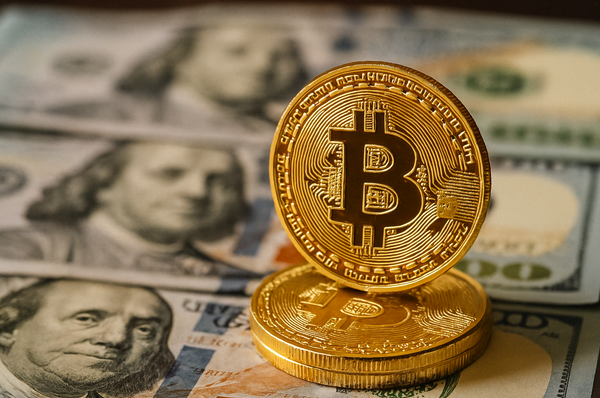
Bitcoin Treasury Inflows Drop to Lowest Levels Since Mid-June 2023

TLDR Bitcoin treasury inflows fell to just 140 BTC per day, the lowest since June 2023. Institutional demand for Bitcoin slowed significantly after the October 6 price peak. About 25% of public Bitcoin treasury firms trade below their net asset value. Bitcoin’s price stabilization around $110,000 may be impacting institutional buying. Bitcoin treasuries, once seen as a major driver for Bitcoin’s market growth, have sharply reduced their purchases of the cryptocurrency in recent months. The sharp decline in daily inflows of Bitcoin to these firms indicates that the momentum seen earlier this year is waning, with many now questioning the sustainability of the digital asset treasury model. Institutional Demand for Bitcoin Drops Bitcoin digital asset treasuries (DATs) have seen a notable reduction in inflows, reflecting a significant cooling in institutional interest. The seven-day moving average of net daily inflows has dropped to 140 BTC, the lowest since mid-June. This marks a drastic decline from the peak in July, when inflows were as high as 8, 249 BTC, according to data from BitcoinTreasuries. net. In fact, recent daily activity has shown even weaker performance. Out of 15 days in October, 12 days recorded inflows of under 500 BTC, with several days experiencing no inflows at all. This trend suggests that the once-aggressive buying activity from institutional investors has significantly slowed down, possibly due to the current market conditions and uncertainty about Bitcoin’s future price movements. Price Stabilization and Market Consolidation Bitcoin’s price has also cooled after reaching an all-time high of over $126,000 on October 6. Currently, it has stabilized above the $110,000 mark, showing signs of market consolidation. According to market analysts, Bitcoin’s price has been range-bound since June, reflecting a balance between bullish optimism and profit-taking among investors. The stabilization of Bitcoin’s price could be playing a role in the decreased appetite for further acquisitions from firms holding digital asset treasuries. As the market experiences this phase of consolidation, the likelihood of significant price jumps in the short term appears to be decreasing, which may reduce the urgency for institutions to increase their holdings. Challenges Faced by Bitcoin Treasury Firms The business model behind Bitcoin treasuries relies heavily on borrowing fiat to acquire Bitcoin, betting that its price will continue to rise. However, this model faces several challenges, particularly the lack of inherent yield from Bitcoin itself. Unlike stocks or bonds, Bitcoin does not generate any regular income for its holders. Therefore, for companies that have borrowed funds to buy Bitcoin, the value of their holdings needs to appreciate significantly to justify the cost of the debt. For many digital asset treasury firms, this has resulted in a dilemma. They are exposed to potential market downturns and may face difficulties if Bitcoin’s price fails to continue rising. As a result, firms that once issued stock or debt to fund Bitcoin purchases now risk seeing their market valuations drop, especially as Bitcoin prices have shown signs of stabilizing or even declining. As NYDIG points out, the relationship between a firm’s net asset value (NAV) and its stock price is closely tied to Bitcoin’s price. A downtrend in Bitcoin could see firms’ market value fall below the value of the Bitcoin they hold. Market Sentiment and the Future of Digital Asset Treasuries While Bitcoin’s price recovery earlier in the year spurred a wave of institutional interest, the recent slowdown in treasury inflows may signal a shift in market sentiment. Moreover, some publicly traded Bitcoin treasury firms are now facing a situation where they trade below their NAV, meaning the value of their stock is less than the Bitcoin they hold. According to NYDIG, this development is concerning, as the premiums tied to Bitcoin’s price may evaporate in a market downturn. Approximately one in four of these publicly traded DATs now trade below their NAV, further highlighting the potential risks these firms face as Bitcoin’s market outlook remains uncertain. In the face of these challenges, it remains to be seen whether Bitcoin treasuries can continue to grow or if institutional interest in them will decline further. The recent reduction in inflows is a sign that firms may be reevaluating their strategies and waiting for clearer market signals before making further Bitcoin purchases.
https://coincentral.com/bitcoin-treasury-inflows-drop-to-lowest-levels-since-mid-june-2023/

Corn Trading Steady on Thursday Morning

Corn futures are holding steady on Thursday morning, with contracts remaining close to unchanged. On Wednesday, the corn market saw gains of 3 to 4 cents across most contracts. Preliminary open interest slipped by 6,238 contracts on Wednesday, signaling some shorts covering.

The CmdtyView national average cash corn price rose by 3¾ cents to $3.74.

Due to the Monday holiday, the Energy Information Administration (EIA) data release has been postponed to Thursday. Market watchers will be closely monitoring whether ethanol production can continue its recent rebound. Normally, Export Sales data would be released on Friday; however, the ongoing government shutdown has suspended this update. Traders estimate that corn bookings ranged between 0.9 to 2 million metric tons (MMT) for the week ending October 9.

In international news, two separate South Korean importers purchased a combined total of 269,000 metric tons of corn in private tenders on Wednesday. No official origins were listed for these purchases.

Corn Contract Closing Prices:
– December 2025 corn closed at $4.16¾, up 3¾ cents and is currently unchanged.
– Nearby cash corn was $3.74, up 3¾ cents.
– March 2026 corn closed at $4.32¼, up 3 cents and is currently unchanged.
– May 2026 corn closed at $4.41, up 3 cents and is currently up ¼ cent.

Disclaimer: As of the date of publication, Austin Schroeder does not hold positions, either directly or indirectly, in any of the securities mentioned in this article. All information and data are provided solely for informational purposes. For more details, please refer to the [Barchart Disclosure Policy](https://www.barchart.com/disclosure).

Additional news from Barchart:
– Grain Traders React to Unexpected Deterioration in U.S.-China Relations
– Five Things to Watch for a Turnaround
– Will Cotton Ever Rally?
– As China Shuns U.S. Agricultural Products, Make This One Trade Now
– Corn and Soybean Bulls Faced Challenges Last Week: What to Watch Next

The views and opinions expressed in this article are those of the author and do not necessarily reflect those of Nasdaq, Inc.
https://www.nasdaq.com/articles/corn-trading-steady-thursday-morning

Multiply Group kondigt plannen aan om 2PointZero en Ghitha Holding over te nemen via aandelenruil

ABU DHABI, Verenigde Arabische Emiraten – Multiply Group (ADX: MULTIPLY), de in Abu Dhabi gevestigde investeringsmaatschappij die wereldwijd investeert in en actief is in verschillende bedrijven, heeft vandaag bekendgemaakt dat haar raad van bestuur een voorstel heeft goedgekeurd om 2PointZero en Ghitha Holding over te nemen via een aandelenruiltransactie.

Volgens de voorgestelde voorwaarden zou Multiply Group aandelen aanbieden om 2PointZero en Ghitha Holding over te nemen, gev…

http://www.businesswire.com/news/home/20251015148664/nl/?feedref=JjAwJuNHiystnCoBq_hl-Rc4vIAVcHHkbDcwJimU8QtrtlakeQ9hNboBqTAWIjTge3KWq9s9jif-UkBjBsFRyYAbRTSLTc1mgvhPlnaBA55M-oupQnbXnhKsYk8RmHF_kAy2gZikaX3QWV6xOvgFlA==

Analysts Expect KIE To Hit $64

At ETF Channel, we analyzed the underlying holdings of the ETFs in our coverage universe by comparing the trading price of each holding against the average analyst 12-month forward target price. From this, we computed the weighted average implied analyst target price for the ETF itself.

For the SPDR S&P Insurance ETF (Symbol: KIE), we found that the implied analyst target price based on its underlying holdings is $63.98 per unit. With KIE trading recently near $58.32 per unit, this suggests that analysts see approximately 9.70% upside for this ETF when looking through to the average analyst targets of its underlying holdings.

Among KIE’s underlying holdings, three stocks stand out with notable upside potential relative to their analyst target prices: The Baldwin Insurance Group Inc (Symbol: BWIN), Globe Life Inc (Symbol: GL), and Allstate Corp (Symbol: ALL).

  • BWIN has recently traded at around $26.31 per share, while the average analyst target price is significantly higher at $38.00, representing an upside of 44.43%.
  • GL is trading near $138.10, with analysts setting a target price of $164.85, indicating a potential upside of 19.37%.
  • ALL has a recent price of $200.42, with an average target price of $233.05, suggesting an upside of 16.28%.

Combined, BWIN, GL, and ALL represent approximately 5.45% of the total SPDR S&P Insurance ETF holdings.

Below is a summary table of the recent prices and average analyst 12-month target prices for these securities:

Name Symbol Recent Price Avg. Analyst 12-Mo. Target % Upside to Target
SPDR S&P Insurance ETF KIE $58.32 $63.98 9.70%
The Baldwin Insurance Group Inc BWIN $26.31 $38.00 44.43%
Globe Life Inc GL $138.10 $164.85 19.37%
Allstate Corp ALL $200.42 $233.05 16.28%

While these upside figures highlight potential growth according to analyst targets, it is important for investors to consider whether these targets are justified. Are analysts being overly optimistic about where these stocks will trade 12 months from now? Alternatively, could the targets be outdated, not reflecting recent company or industry developments?

A high price target relative to a stock’s current trading price can signal optimism regarding future performance. However, it can also be a precursor to target price downgrades if the targets have not been updated to reflect the latest market conditions.

These questions merit further research by investors before making decisions. Evaluating a company’s fundamentals, industry trends, and recent developments can provide clearer insight into whether analyst targets are reasonable or overly bullish.

10 ETFs With Most Upside To Analyst Targets »

Also see:

The views and opinions expressed herein are those of the author and do not necessarily reflect the views or opinions of Nasdaq, Inc.

https://www.nasdaq.com/articles/analysts-expect-kie-hit-64

Ethereum Adds 16K Developers in 2025, Yet Solana Steals All the Hype

Ethereum added 16,181 new developers from January to September 2025, bringing the total number of active developers on the platform to 31,869. Despite this significant growth, Solana managed to capture the industry narrative by adding 11,534 developers and achieving an impressive 83% year-over-year growth.

Meanwhile, Ethereum core developers earn a median salary of $140,000, which is reportedly 50-60% below current market rates.

The rapid expansion of both platforms highlights the competitive and evolving nature of the blockchain development landscape, with Solana gaining momentum even as Ethereum continues to grow steadily.

The post Ethereum Adds 16K Developers in 2025, Yet Solana Steals All the Hype appeared first on Cryptonews.
https://cryptonews.com/news/ethereum-adds-16k-developers-in-2025-yet-solana-steals-all-the-hype/

Exit mobile version
Sitemap Index