食事与えず放置疑いの娘逮捕 介護必要な父死亡、北海道

社会 食事与えず放置疑いの娘逮捕 介護必要な父死亡、北海道

2025年10月11日 17:26(2025年10月11日 17:28 更新)

北海道警察本部は、介護を必要とする父親に食事を与えずに放置した疑いで、その娘を逮捕しました。詳細は現在捜査中です。

この記事は有料会員限定の記事となっております。クリップ機能のご利用は有料会員のみ可能です。

なお、記事の全文は西日本新聞meにて、ご利用いただけます。7日間の無料トライアルや、1日37円からの読み放題プラン、年払いプランもご用意しておりますので、ぜひご検討ください。

https://www.nishinippon.co.jp/item/1410269/

内部告発者に4千万円賠償請求 障害者ホームが元役員提訴

2025年10月11日 17:03(2025年10月11日 17:06 更新)

【有料会員限定記事】

障害者向けグループホームの入居者から食費を過大に徴収し、公的な報酬の不正請求も行っていたとして、埼玉県から行政指導を受けたホーム運営会社が、事の発端となった内部告発をした元取締役に対し、約4千万円の損害賠償請求をしていることが分かりました。

本記事は有料会員限定の記事です。残り672文字をお読みいただくには、7日間無料トライアルもご利用いただけます。料金は1日37円、年払いならさらにお得です。

[クリップ機能は有料会員の方のみご利用いただけます]

【西日本新聞meとは?】

(※ここにサービス紹介などが入る場合があります)

[Facebookでシェアする] [Twitterでシェアする] [Threadsでシェアする]
https://www.nishinippon.co.jp/item/1410263/

[熊本県]医療過誤の医師に禁錮1年6月求刑 熊本地裁

熊本県の医療過誤事件に関する報道

2025年10月11日6:00配信(有料会員限定記事)

熊本地裁は、北九州市の済生会八幡総合病院で発生した投薬ミスに関する裁判で、医師に対して禁錮1年6月の求刑を行いました。

事件の概要
90代の患者に対し、適正濃度の16.7倍もの薬剤が投与され、約4時間40分後に患者が死亡したというものです。この医療過誤は深刻な結果を招き、裁判では事実関係の詳細が争われています。

この記事は有料会員限定です。全文をお読みいただくには、7日間無料トライアル(1日37円から)または年払いでのご加入をおすすめします。

(提供:西日本新聞me)
https://www.nishinippon.co.jp/item/1410153/

たん検査、肺がん検診から除外 喫煙率低下で効果小さく

たん検査、肺がん検診から除外へ 喫煙率低下で効果が小さく

2025年10月10日 18:19(2025年10月10日 18:21 更新)

肺がん検診で、50歳以上のたばこを多く吸う人を対象に、胸部エックス線検査と併用されている「たん(痰)の検査」について、厚生労働省の有識者検討会は10日、喫煙率の低下などにより得られる効果が小さくなっているとして、2025年度以降の肺がん検診から除外する方針を示しました。

たんの検査は肺がんの早期発見を目的として長年実施されてきましたが、近年の喫煙率の減少に伴い、検査による有効性が低下していることが背景にあります。

今回の見直しにより、肺がん検診は主に胸部エックス線検査に重点を置くこととなり、たんの検査は段階的に廃止される見通しです。

詳細な検査方法や対象者の変更については、今後厚生労働省から正式に発表される予定です。

※本記事は有料会員限定の記事の一部を編集・抜粋して掲載しています。

https://www.nishinippon.co.jp/item/1409954/

Your asthma inhaler might not be good for the environment

**Your Asthma Inhaler Might Not Be Good for the Environment**
*By Dwaipayan Roy | Oct 07, 2025, 08:03 pm*

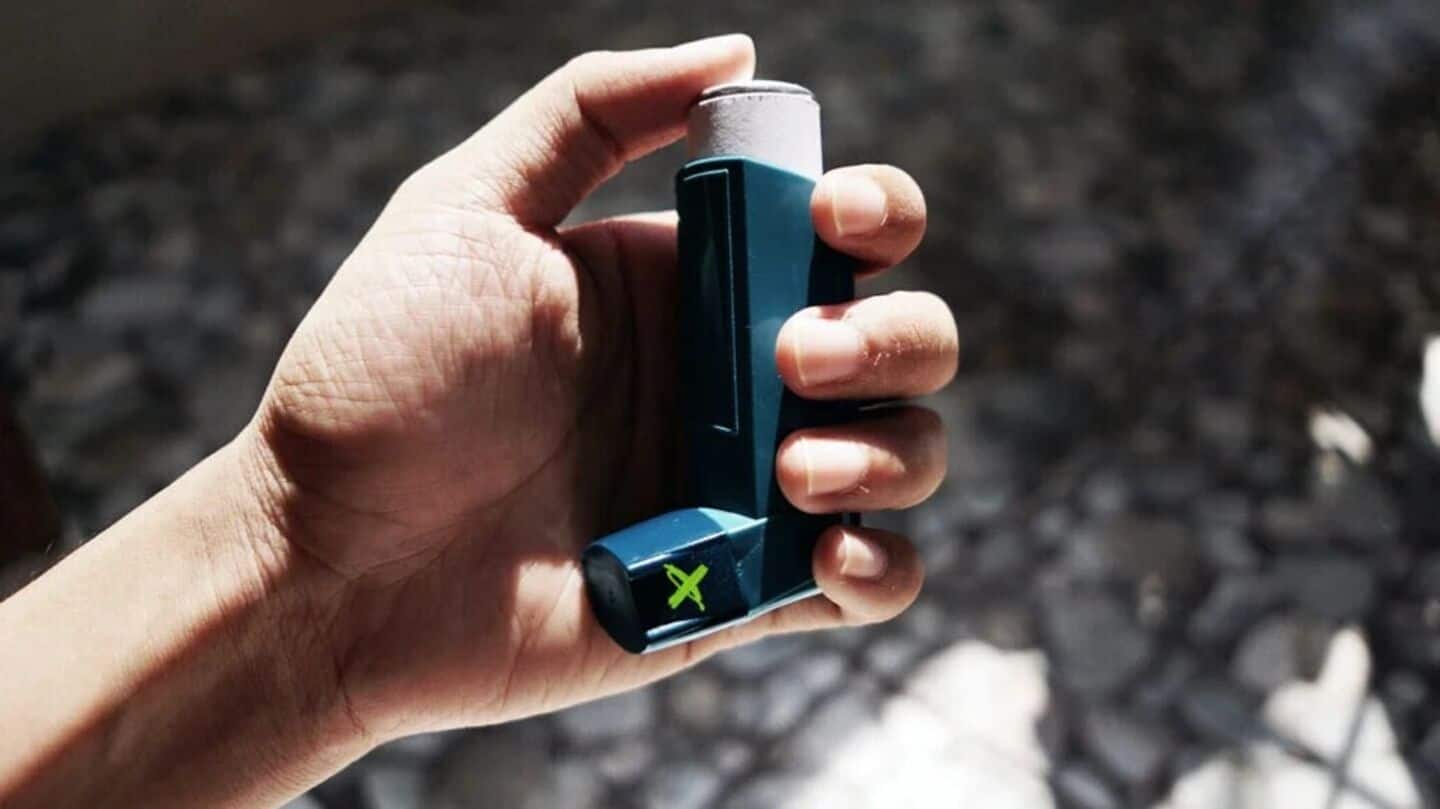
A recent study has revealed that inhalers used to treat asthma and chronic obstructive pulmonary disease (COPD) significantly contribute to greenhouse gas emissions. Conducted by scientists from the University of California and Harvard University, the research found that these devices produce annual emissions equivalent to those of over half a million petrol-powered cars in the US alone.

The study’s findings were published in the *Journal of the American Medical Association* and highlight an often-overlooked environmental impact of common medical treatments.

### Metered-Dose Inhalers: The Biggest Culprit

The research examined global warming pollution from three types of inhalers between 2014 and 2024. It found that metered-dose inhalers (MDIs), which use hydrofluoroalkane (HFA) propellants to deliver medication, are the most damaging. These devices accounted for a staggering 98% of inhaler-related emissions over the decade.

In total, US patients with commercial insurance and government programs such as Medicaid and Medicare produced an estimated 24.9 million metric tons of carbon dioxide equivalent during this period—highlighting a significant environmental footprint.

### Eco-Friendly Alternatives Exist but Are Not Widely Used

Unlike metered-dose inhalers, dry powder inhalers (DPIs) and soft mist inhalers do not use propellants. DPIs rely on a patient’s breath to release medicine, while soft mist inhalers convert liquid medication into a fine spray. Both alternatives have a much lower environmental impact.

William Feldman, lead author from UCLA, emphasized that only a small portion of patients actually require metered-dose inhalers for their treatment. Despite this, the adoption of these greener alternatives remains limited.

### Barriers to Adoption: Insurance and Market Challenges

Feldman pointed out that most patients could switch to dry powder or soft mist inhalers. However, insurance coverage and market barriers have slowed their uptake in the United States.

For instance, a dry-powder version of albuterol—the most commonly used inhaler drug—is available but typically not covered by insurance. Additionally, budesonide-formoterol, a drug widely sold in dry powder form across Europe, is not presently available in the US market.

### Calling for Policy and Pricing Reform

Feldman stressed that this research is not about blaming patients but rather a call for policy reform to make lower-emission inhalers more accessible. A related commentary in *JAMA* by Alexander Rabin of the University of Michigan echoed this sentiment, urging insurers and policymakers to ensure that environmentally friendly inhalers are affordable and accessible to everyone.

As awareness grows about the environmental impact of medical devices, policy changes and improved insurance coverage could play critical roles in reducing the carbon footprint of asthma and COPD treatments while maintaining patient care quality.
https://www.newsbytesapp.com/news/science/asthma-inhalers-pollute-as-much-as-half-a-million-cars/story

Japan’s Elderly Forced to Pay 20% of Medical Costs from October

At a recycling warehouse in Niiza, Saitama Prefecture, 77-year-old Januma refurbishes used washing machines. He receives a pension of around 200,000 yen a month, supplemented by about 100,000 yen from his part-time work, giving him an income of roughly 300,000 yen in total. Yet even with this, he worries about the growing burden of healthcare costs.

“So far it hasn’t been too heavy, but I know it’ll keep increasing as I get older and go to the hospital more often. It’s inevitable,” he said while continuing to work.

The higher payments affect about 3.1 million people nationwide. Until now, most people aged 75 and over paid 10% of their medical bills, but since October 2022, those with certain income levels have been required to pay 20%. A temporary relief measure capped the increase at 3,000 yen per month, but this limit was abolished on October 1st, fully implementing the 20% co-payment for outpatient visits.

For instance, someone with 50,000 yen in monthly medical costs previously paid 8,000 yen, but now pays 10,000 yen, a rise of 2,000 yen.

For Januma, whose favorite pastime is karaoke with friends, the impact feels personal.

“If medical costs keep rising, there’s a chance I might have to give up going to karaoke,” he said. “That would be really sad because singing is my main joy in life.”

At local clinics, confusion was seen on October 1st as notices were posted informing patients that consideration measures for the 20% co-payment have ended and that personal payment amounts may rise. A 75-year-old woman visiting a clinic for persistent coughing said she had just learned her fees would increase that day.

Her payment of 430 yen for a visit seemed small, but it was double what she paid before the reform.

“It may not sound like much, but I go to the hospital many times a month. It adds up to around 5,000 or 6,000 yen. It’s quite tough,” she said.

Doctors are also worried that rising costs could cause patients to avoid necessary care.

“With prices rising everywhere, patients are anxious. Some skip tests or choose cheaper medicines to cut costs. We’re already seeing diabetic or hypertensive patients who’ve run out of essential prescriptions,” said Ito, a physician.

Behind the reform lies a generational issue: roughly 40% of medical costs for those aged 75 and over are paid by the working-age population. As the baby-boom generation moves into the late-elderly bracket, this burden is increasing. To ease the strain on younger generations, a portion of seniors with higher income levels were asked to shoulder more.

Nomura, a policy analyst, said, “It’s important that we review waste in the healthcare system. We all have to share the responsibility fairly, but we also need to reduce unnecessary treatments and optimize costs.”

In Tokyo’s Itabashi Ward, at the Takashimadaira housing complex, an 83-year-old man said his total monthly spending is about 250,000 yen. Rent and service fees for his assisted living apartment cost 150,000 yen, food expenses are 40,000 yen, and social expenses total 50,000 yen. Medical costs are around 5,000 yen a month but will now rise.

“I’ll probably have to withdraw from my savings. I can’t really cut back on other things—I still want to enjoy life while I can,” he said.

Others are choosing small sacrifices.

“We try not to be extravagant,” said one woman. “My husband loves eel, but now it’s just for special occasions. If we have to cut somewhere, it’ll be food. There’s no other way but to save.”

Experts emphasize that the key lies in extending healthy life expectancy.

“If seniors can stay active in society and continue social connections—whether through hobbies, volunteer work, or group activities—it helps maintain health and reduce long-term medical costs,” said one gerontology specialist.

At a shopping street, an elderly woman affected by the new rule was seen buying discounted groceries during a senior sale.

“I waited an hour in line to save money. The free local bus also helps, so I’m cutting costs wherever I can,” she said.

For many like her, saving on daily necessities has become essential to offset rising medical expenses.

The discussion now extends beyond healthcare to the entire social welfare system, as Japan faces the challenge of sustaining support for a rapidly aging population while ensuring that seniors can still live with dignity and enjoyment.
https://newsonjapan.com/article/147157.php

Japan’s Elderly Forced to Pay 20% of Medical Costs from October

At a recycling warehouse in Niiza, Saitama Prefecture, 77-year-old Januma refurbishes used washing machines. He receives a pension of around 200,000 yen a month, supplemented by about 100,000 yen from his part-time work, giving him an income of roughly 300,000 yen in total. Yet, even with this, he worries about the growing burden of healthcare costs.

“So far it hasn’t been too heavy, but I know it’ll keep increasing as I get older and go to the hospital more often. It’s inevitable,” he said while continuing to work.

The higher payments affect about 3.1 million people nationwide. Until now, most people aged 75 and over paid 10% of their medical bills, but since October 2022, those with certain income levels have been required to pay 20%.

A temporary relief measure capped the increase at 3,000 yen per month, but this limit was abolished on October 1st, fully implementing the 20% co-payment for outpatient visits. For instance, someone with 50,000 yen in monthly medical costs previously paid 8,000 yen, but now pays 10,000 yen—a rise of 2,000 yen.

For Januma, whose favorite pastime is karaoke with friends, the impact feels personal. “If medical costs keep rising, there’s a chance I might have to give up going to karaoke,” he said. “That would be really sad because singing is my main joy in life.”

At local clinics, confusion was seen on October 1st as notices were posted informing patients that consideration measures for the 20% co-payment have ended and that personal payment amounts may rise.

A 75-year-old woman visiting a clinic for persistent coughing said she had just learned her fees would increase that day. Her payment of 430 yen for a visit seemed small, but it was double what she paid before the reform.

“It may not sound like much, but I go to the hospital many times a month. It adds up to around 5,000 or 6,000 yen. It’s quite tough,” she said.

Doctors are also worried that rising costs could cause patients to avoid necessary care.

“With prices rising everywhere, patients are anxious. Some skip tests or choose cheaper medicines to cut costs. We’re already seeing diabetic or hypertensive patients who’ve run out of essential prescriptions,” said Ito, a physician.

Behind the reform lies a generational issue: roughly 40% of medical costs for those aged 75 and over are paid by the working-age population. As the baby-boom generation moves into the late-elderly bracket, this burden is increasing.

To ease the strain on younger generations, a portion of seniors with higher income levels were asked to shoulder more.

Nomura, a policy analyst, said, “It’s important that we review waste in the healthcare system. We all have to share the responsibility fairly, but we also need to reduce unnecessary treatments and optimize costs.”

In Tokyo’s Itabashi Ward, at the Takashimadaira housing complex, an 83-year-old man said his total monthly spending is about 250,000 yen. Rent and service fees for his assisted living apartment cost 150,000 yen, food expenses are 40,000 yen, and social expenses total 50,000 yen. Medical costs are around 5,000 yen a month but will now rise.

“I’ll probably have to withdraw from my savings. I can’t really cut back on other things—I still want to enjoy life while I can,” he said.

Others are choosing small sacrifices.

“We try not to be extravagant,” said one woman. “My husband loves eel, but now it’s just for special occasions. If we have to cut somewhere, it’ll be food. There’s no other way but to save.”

Experts emphasize that the key lies in extending healthy life expectancy.

“If seniors can stay active in society and continue social connections—whether through hobbies, volunteer work, or group activities—it helps maintain health and reduce long-term medical costs,” said one gerontology specialist.

At a shopping street, an elderly woman affected by the new rule was seen buying discounted groceries during a senior sale.

“I waited an hour in line to save money. The free local bus also helps, so I’m cutting costs wherever I can,” she said.

For many like her, saving on daily necessities has become essential to offset rising medical expenses.

The discussion now extends beyond healthcare to the entire social welfare system, as Japan faces the challenge of sustaining support for a rapidly aging population while ensuring that seniors can still live with dignity and enjoyment.
https://newsonjapan.com/article/147157.php

Japan’s Elderly Forced to Pay 20% of Medical Costs from October

At a recycling warehouse in Niiza, Saitama Prefecture, 77-year-old Januma refurbishes used washing machines. He receives a pension of around 200,000 yen a month, supplemented by about 100,000 yen from his part-time work, giving him an income of roughly 300,000 yen in total. Yet even with this, he worries about the growing burden of healthcare costs.

“So far it hasn’t been too heavy, but I know it’ll keep increasing as I get older and go to the hospital more often. It’s inevitable,” he said while continuing to work.

The higher payments affect about 3.1 million people nationwide. Until now, most people aged 75 and over paid 10% of their medical bills, but since October 2022, those with certain income levels have been required to pay 20%. A temporary relief measure capped the increase at 3,000 yen per month, but this limit was abolished on October 1st, fully implementing the 20% co-payment for outpatient visits.

For instance, someone with 50,000 yen in monthly medical costs previously paid 8,000 yen, but now pays 10,000 yen, a rise of 2,000 yen.

For Januma, whose favorite pastime is karaoke with friends, the impact feels personal. “If medical costs keep rising, there’s a chance I might have to give up going to karaoke,” he said. “That would be really sad because singing is my main joy in life.”

At local clinics, confusion was seen on October 1st as notices were posted informing patients that consideration measures for the 20% co-payment have ended and that personal payment amounts may rise.

A 75-year-old woman visiting a clinic for persistent coughing said she had just learned her fees would increase that day. Her payment of 430 yen for a visit seemed small, but it was double what she paid before the reform.

“It may not sound like much, but I go to the hospital many times a month. It adds up to around 5,000 or 6,000 yen. It’s quite tough,” she said.

Doctors are also worried that rising costs could cause patients to avoid necessary care.

“With prices rising everywhere, patients are anxious. Some skip tests or choose cheaper medicines to cut costs. We’re already seeing diabetic or hypertensive patients who’ve run out of essential prescriptions,” said Ito, a physician.

Behind the reform lies a generational issue: roughly 40% of medical costs for those aged 75 and over are paid by the working-age population. As the baby-boom generation moves into the late-elderly bracket, this burden is increasing.

To ease the strain on younger generations, a portion of seniors with higher income levels were asked to shoulder more.

Nomura, a policy analyst, said, “It’s important that we review waste in the healthcare system. We all have to share the responsibility fairly, but we also need to reduce unnecessary treatments and optimize costs.”

In Tokyo’s Itabashi Ward, at the Takashimadaira housing complex, an 83-year-old man said his total monthly spending is about 250,000 yen. Rent and service fees for his assisted living apartment cost 150,000 yen, food expenses are 40,000 yen, and social expenses total 50,000 yen. Medical costs are around 5,000 yen a month but will now rise.

“I’ll probably have to withdraw from my savings. I can’t really cut back on other things—I still want to enjoy life while I can,” he said.

Others are choosing small sacrifices.

“We try not to be extravagant,” said one woman. “My husband loves eel, but now it’s just for special occasions. If we have to cut somewhere, it’ll be food. There’s no other way but to save.”

Experts emphasize that the key lies in extending healthy life expectancy.

“If seniors can stay active in society and continue social connections—whether through hobbies, volunteer work, or group activities—it helps maintain health and reduce long-term medical costs,” said one gerontology specialist.

At a shopping street, an elderly woman affected by the new rule was seen buying discounted groceries during a senior sale.

“I waited an hour in line to save money. The free local bus also helps, so I’m cutting costs wherever I can,” she said.

For many like her, saving on daily necessities has become essential to offset rising medical expenses.

The discussion now extends beyond healthcare to the entire social welfare system, as Japan faces the challenge of sustaining support for a rapidly aging population while ensuring that seniors can still live with dignity and enjoyment.
https://newsonjapan.com/article/147157.php

Mumbai: Businessman Files Police Complaint Against Kurla’s Fauziya Hospital For Alleged Negligence Toward Elderly Mother

**Businessman Files Complaint Against Kurla’s Fauziya Hospital Over Alleged Negligence**

Haji Arafat Alamgir Shaikh, a businessman, former Chairman of the Maharashtra State Minority Commission, and BJP Transport Cell President, has lodged a police complaint against Kurla’s Fauziya Hospital. The complaint accuses the hospital management and staff of gross negligence and mistreatment of his 71-year-old mother, Shama Shaikh, who was admitted for treatment.

**Background of the Case**

According to the complaint filed at VB Road Police Station, Shama Shaikh has been suffering from diabetes for five years and had previously experienced a paralysis attack. She was admitted to Fauziya Hospital on September 15 following complaints of vomiting.

**Alleged Fall Due to Safety Lapses**

On September 16, while asleep on her hospital bed, Shama Shaikh allegedly fell to the floor because the bed lacked safety railings. She sustained injuries to her face, eyes, stomach, legs, and knees. Haji Arafat claims that although a domestic aide sounded an alarm, no nurse or ward boy attended to her for nearly 20 minutes.

When the hospital staff finally did respond, the night doctor reportedly dismissed the incident saying, “These small things happen in hospitals. Shift the old woman, we’ll see in the morning.”

**Delayed Medical Attention**

Despite her injuries, Shaikh’s mother reportedly received no medical treatment for over 12 hours. No doctor attended to her until 10 a.m. the following day, by which time swelling and black marks had appeared on her face and under her eyes due to internal bleeding.

Haji Arafat further alleged that it was only after his family doctor, Sohail Khan, visited and insisted on immediate treatment that medical procedures were initiated.

**Accusations Against Hospital Staff**

The complaint names hospital director Dr. Anjum Deshmukh, administrator Usman Shaikh, and duty nurses Amisha Mali and Pratima Gupta as responsible for the negligence. Additionally, Riyaz Shaikh, a hospital staff member who arrived to conduct an X-ray 24 hours later, allegedly behaved rudely towards the elderly patient, reportedly saying in an insulting tone: “Eat later, don’t you understand? I don’t have time for this now.”

**Police Action**

Citing neglect, irresponsibility, and inhumane behavior, Haji Arafat filed a formal complaint at VB Road Police Station. Based on his statement, a case has been registered against the hospital’s directors and staff. The V. B. Marg Police have initiated further investigation into the matter.

This incident raises concerns about patient safety and the quality of care in healthcare institutions, underscoring the importance of strict adherence to medical protocols and compassionate treatment of elderly patients.
https://www.freepressjournal.in/mumbai/mumbai-businessman-files-police-complaint-against-kurlas-fauziya-hospital-for-alleged-negligence-toward-elderly-mother

New Mexico Legislature approves bills to prop up rural health care, underwrite food assistance

**New Mexico Lawmakers Act Swiftly to Support Food Assistance and Rural Health Care Amid Federal Cuts**

SANTA FE, N.M. (AP) — New Mexico lawmakers moved quickly Thursday during a special legislative session to bolster funding for food assistance and rural health care services. This comes in response to federal spending cuts on Medicaid and nutrition programs under President Donald Trump’s administration.

The Democratic-led Legislature sent a bill to Gov. Michelle Lujan Grisham that allocates over $16 million to sustain food assistance through the Supplemental Nutrition Assistance Program (SNAP) and to strengthen food banks. This action addresses federal changes that end SNAP eligibility for many noncitizens and alter benefit calculations for others.

“We need to act to make sure that New Mexicans don’t go hungry with SNAP changes at the federal level,” said Democratic state Sen. George Muñoz of Gallup.

An additional $50 million is designated to support medical services at rural health clinics and hospitals, which often rely heavily on Medicaid funding.

### Opposition from Republicans

Republicans in the legislative minority unanimously opposed the spending provisions. They argued that significant federal changes to Medicaid are still a few years away and emphasized the need for New Mexico to focus on reducing errors in benefit distribution instead.

However, both Democrats and some Republican legislators voted in favor of backfilling subsidies for health insurance on New Mexico’s Affordable Health Care Exchange if federal credits were allowed to expire. These federal subsidies have been a major sticking point in the ongoing budget standoff in Washington, which led to a government shutdown Wednesday.

### Temporary Measures Amid Long-Term Cuts

Many federal health care changes under Trump’s major bill will not take effect until 2027 or beyond. Democratic lawmakers in New Mexico acknowledged that their recent bills serve only as temporary measures.

“Some of the most significant federal cuts are delayed a few years, and these are deeply significant,” said state Rep. Nathan Small of Las Cruces, the lead sponsor of the spending bill. “I want to make sure that we’re all thinking of, not hundreds of millions, but billions of dollars of reduced Medicaid support to our state.”

Gov. Michelle Lujan Grisham, a Democrat, supports key provisions of the bills and holds the authority to veto any spending measures.

Trump’s bill has prompted urgent responses in several Democratic-led states, including New Mexico, while Republican-led states have so far taken a different approach.

### Funding for Food Assistance

New Mexico lawmakers approved a swift infusion of state funds to support food assistance for elderly SNAP recipients. Nearly one in four residents in New Mexico receive food assistance through SNAP, making it a critical resource to combat hunger.

Under the bill, food banks across the state will receive an $8 million increase in direct state support. Additionally, $2 million is allocated to replenishing food pantries in universities and public schools.

The federal bill expands work and reporting requirements for SNAP participants, terminates eligibility for many noncitizens, and changes how benefits are calculated.

### Rural Health Care Concerns

Trump’s bill sets aside $50 billion over five years for rural hospitals, providers, and clinics but these funds may not fully offset significant cuts.

The situation is particularly pressing in New Mexico, where approximately 38% of residents rely on Medicaid. Both Republican and Democratic lawmakers warn of a looming rural health care crisis as the state struggles to retain medical professionals and keep clinics and hospitals operational.

State Sen. Pat Woods, a Republican from New Mexico’s sparsely populated eastern plains, co-sponsored changes to rural health care grants aimed at sustaining existing services at rural clinics and hospitals.

“We’re trying to figure out a way to fund and keep some of these clinics open. What’s going to happen in the future? Who the hell knows,” Woods told a panel of lawmakers. “What I worry about is keeping these clinics and hospitals open until the dust settles.”

The bill passed the House with a vote of 64-3 and was sent to the governor for consideration.

### Insurance Subsidies and Public Broadcasting Funding

Legislators also approved setting aside $17 million to ensure that health insurance subsidies on New Mexico’s Affordable Care Act exchange do not lapse. This effort extends insurance subsidies to middle-income residents whose earnings equal or exceed 400% of the federal poverty level — roughly $128,000 annually for a family of four.

Democratic state Sen. Carrie Hamblen of Las Cruces emphasized that these subsidies are crucial to prevent a “perfect storm” of unaffordability. She warned that rising insurance rates could reduce participation in the exchange and exacerbate coverage gaps.

State health officials have indicated that tens of thousands of residents could drop their insurance coverage if exchange rates increase in 2026.

Separately, the legislature approved $6 million in state funding for public broadcasting stations, including $430,000 for five tribal stations severely impacted by Congress and President Trump’s defunding of the Corporation for Public Broadcasting.

Approved federal grants for these stations for the current federal budget year were rescinded under a bill signed by President Trump in July.

*This legislative session underscores New Mexico’s proactive approach to safeguarding vulnerable populations amid federal funding uncertainties.*
https://mymotherlode.com/news/national/10024690/new-mexico-legislature-approves-bills-to-prop-up-rural-health-care-underwrite-food-assistance.html

Exit mobile version
Sitemap Index