Krafton is now an ‘AI-first company,’ will spend $70 million on a GPU cluster to ‘serve as the foundation for accelerating the implementation of agentic AI’

Earlier this week, Pocketpair Publishing boss John Buckley made it clear that his company isn’t interested in handling games built with generative AI. He stated, “If you’re big on AI stuff or your game is Web3 or uses NFTs, there are lots of publishers out there [who will], but we’re not the right partner for that.”

One of those partners, it seems, is PUBG maker Krafton, which announced today that it is transforming into an “AI-first” company. The goals of this new strategy include fostering change in individuals and organizations, increasing company-wide productivity, and accelerating mid- to long-term corporate value growth, the company said.

To make this vision a reality, Krafton revealed plans to invest roughly 100 billion Korean won ($69.7 million) in a GPU cluster. This infrastructure will support multi-stage tasks requiring sophisticated reasoning and iterative planning, serving as the foundation for accelerating the implementation of agentic AI.

Additionally, Krafton will allocate another 30 billion won ($21 million) annually, starting in 2026, to actively support its employees in directly utilizing and applying various AI tools to their work.

“Through our AI First strategy, Krafton will expand the growth opportunities for each member, expand creative attempts centered on player experience, and lead AI innovation across the gaming industry,” said Krafton CEO Kim Chang-han. “We will establish operational standards centered on AI and present best practices that can be referenced in the global gaming industry.”

What this looks like in practical terms remains to be seen. But on a gut level, I have my doubts. Broadly speaking, I see two likely outcomes:

1. Layoffs – Because C-suite executives often imagine that good video games can be made by thinking machines that don’t need to be paid or given time off.

2. A catastrophic collapse – When the AI bubble bursts and companies find themselves stuck with mountains of Nvidia hardware destined for Craigslist, along with the massive debt they took on to acquire it.

Or maybe it’ll be the classic one-two punch: first layoffs, then collapse. After all, that’s often how these things play out.
https://www.pcgamer.com/software/ai/krafton-is-now-an-ai-first-company-will-spend-usd70-million-on-a-gpu-cluster-to-serve-as-the-foundation-for-accelerating-the-implementation-of-agentic-ai/

Branching in a Sapling Monorepo

Sapling: Solving Branching Challenges for Meta’s Monorepo

Sapling is a scalable, user-friendly, and open-source source control system that powers Meta’s monorepo. At the GitMerge 2024 conference, we discussed the complexities of designing and implementing branching workflows for large monorepos. These workflows involve challenging tradeoffs between scalability and the developer experience.

Following the conference, we designed, implemented, and open sourced our monorepo branching solution within Sapling. While the code is already open source, this article shares valuable learnings on:

– How we resolved scalability and developer experience tradeoffs in the design and implementation.
– The problems this solution addresses.
– Feedback we received from other developers at Meta.

The key technical insight is that two workflows — non-mergeable full-repo branching and mergeable directory branching — solved all branching-related problems for the wide and diverse set of products built at Meta. We hope Sapling’s open-source code and the insights shared here will benefit the wider industry and open source communities.

### How Source Control Is Handled at Meta

At Meta, engineering teams work within a large monorepo with a single main branch. This approach enables:

– Unified dependency management
– Large-scale refactoring
– Easier collaboration
– Code reuse across projects

However, managing multiple versions of code within this setup presents challenges.

In multi-repo environments, teams typically rely on repository branches to manage different versions. Source control tools like cherry-pick and merge help manage differences between versions effectively.

In contrast, in a monorepo, repository branches are less effective. Branches affect the whole repository, so creating a branch means unrelated projects and dependencies remain frozen and quickly become stale. We refer to this approach as *full-repo branching.*

For workflows that do not require merging back to the main branch — such as product releases where the branch ceases to exist after release — full-repo branching works well. Sapling supports this workflow with the `sl bookmark` family of commands.

However, for product development workflows that require merging back to the main branch, full-repo branching is not scalable. This is because full-repo merges create merge commits with multiple parents, producing a wide (high branching factor) and non-linear commit graph.

In large monorepos, this non-linear history causes performance problems for operations like `sl log` and `sl blame`. Maintaining a mostly linear commit graph, where most commits have a single parent, is crucial for keeping these operations fast for all monorepo users, including those not using branches.

The core limitation is that full-repo branches are all-or-nothing. You cannot create a branch limited to the part of the codebase you own. If you need to patch legacy code or maintain a custom variant for a project, branching forks the entire repository, which is inefficient and cumbersome.

A common workaround was for teams to copy their code into multiple directories. However, this causes loss of standard developer tooling for branch management, resulting in duplicated effort and error-prone manual patching between directories.

### Directory Branching: Sapling’s Monorepo Branching Solution

To address these challenges, we introduced a new set of source control tools in Sapling to implement *directory branching*. This approach bridges the gap between multiple repository branches and maintaining code copies in separate directories.

With directory branching, you can treat directories within the monorepo much like traditional repository branches. You:

– Create branches by copying the code
– Maintain the code by cherry-picking and merging changes between directories
– View history for each directory, including all copies and merges

Crucially, while directory branches support merging between directories, at the repository commit graph level they appear as linear commits. This resolves scalability challenges associated with repo-level merge commits while still providing merging workflows at the directory level.

### How Directory Branching Is Implemented in Sapling

Directory branching in Sapling relies on a series of operations centered around the `sl subtree` command.

– To branch a directory, you use `sl subtree copy` to copy a directory or file — either at the current version or from any historical revision — to a new location in the repository.
– Sapling records metadata in the commit to track the source directory, source revision, and copy relationship, allowing complete recovery of the file histories in the new branch.
– If the code you want to branch is not yet in the monorepo, you can use `sl subtree import` to create a directory branch from an external repository.

Once you have a directory branch, you can use:

– `sl subtree graft` and
– `sl subtree merge`

to cherry-pick or merge changes between directory branches. These commands use the stored metadata to reconstruct directory relationships and perform three-way merges scoped to specific directory content.

The merge algorithm locates the common ancestor of the two directory branches (using the copy metadata) and applies a standard three-way merge as done for traditional repository merges, but limited to the directory content.

### Build System and Developer Tooling Integration

One major advantage of directory branching is that the latest versions of all directory branches are visible simultaneously. This means continuous integration (CI) can test against multiple branches with a single checkout, and teams can be confident no hidden old branches are unexpectedly still in use.

At Meta, we use Buck2 as our build system. When a component depends on another component using directory branching, we use Buck config modifiers (i.e., running `buck build` with the `-m` flag) to select the branch being built.

A downside of directory branching is that code searches may return multiple hits across branches. While it is important to recognize the searched-for code appears in multiple places, this can complicate browsing if results from multiple branches intermix. Advanced code search systems capable of ranking results can mitigate this issue.

### User Feedback on Directory Branching

Directory branching has been widely adopted within Meta by diverse engineering teams to help manage multiple versions of code effectively.

Some teams even combine full-repo branching and directory branching by freezing most of the monorepo on an old commit for stability, while using directory branching to merge changes for specific projects.

We identified three common reasons teams choose directory branching:

1. **Reducing CI costs or avoiding disruption:** Teams separate development and production versions of code, enabling better control over when changes deploy to production.

2. **Collaborative experimental changes:** Large groups collaborate over months on changes that might disrupt production. Directory branching offers better scalability than handling many stacked diffs to simulate a branch.

3. **Migrating from Git:** During migration, teams need equivalents of Git branches within the monorepo to complete consolidation. Directory branching provides this functionality without needing to consolidate all Git branches pre-migration.

Despite these exceptions, having a single version of code remains the monorepo’s default assumption. However, when one of the above scenarios applies, directory branching offers extensive branching workflows without sacrificing monorepo benefits.

### Future Work with Directory Branching

We are exploring leveraging directory branching to improve integration of Git repositories into the Sapling monorepo. Specifically, we plan a lightweight repository migration mechanism:

– Instead of committing all Git repository commits irreversibly into the monorepo history, we create a *soft link* to the external Git repository.
– Sapling can then load Git history on demand, lowering the barrier to entry for Git repositories joining the monorepo.
– This approach facilitates preliminary integrations without committing to migrating full history upfront.

This functionality will be available as an option with the `sl subtree import` command when working with external Git repositories.

Stay tuned — we will publish a dedicated article once we have more insights to share on this exciting advancement.

### Acknowledgements

Many contributors across Meta’s Source Control, Developer Experience, and Open Source teams helped design and implement directory branching in Sapling. We would like to thank:

Chris Cooper, George Giorgidze, Mark Juggurnauth-Thomas, Jon Janzen, Pingchuan Liu, Muir Manders, Mark Mendoza, Jun Wu, and Zhaolong Zhu.

To learn more about Meta Open Source, please visit our [website](https://opensource.fb.com).
https://engineering.fb.com/2025/10/16/developer-tools/branching-in-a-sapling-monorepo/


Delhi-NCR air quality worsens; 5 stations record 300+ AQI

**Delhi-NCR Air Quality Worsens; Five Stations Record AQI Above 300**

*By Snehil Singh | Oct 15, 2025, 06:12 pm*

The air quality in the Delhi-National Capital Region (NCR) has further deteriorated, with five monitoring stations registering an Air Quality Index (AQI) exceeding 300. According to data from the Central Pollution Control Board (CPCB), Anand Vihar recorded the highest AQI at a staggering 345.

Other areas also reported alarming AQI figures: DU North Campus and CRRI Mathura Road each recorded 307, while Dwarka Sector 8 and Wazirpur reported 314 and 325, respectively.

**Pollution Response: GRAP Stage-1 Activated**

In response to the worsening air quality, the Commission for Air Quality Management (CAQM) has activated Stage-1 of the Graded Response Action Plan (GRAP) across Delhi-NCR. This comes as AQI levels have fallen between 200 and 300, categorized as “poor.”

Stage-1 implementation mandates strict preventive measures, including the deployment of anti-smog guns and dust suppression activities at construction sites to control pollution sources.

**Pollution Sources: Transport Emissions Lead**

Data from the Decision Support System (DSS) identifies transport emissions as the largest contributor to Delhi’s pollution, accounting for 19.8% of total emissions. On Tuesday, the city recorded an AQI of 201, falling under the “poor” air quality category.

For reference, the CPCB classifies AQI as follows:
– 0-50: Good
– 51-100: Satisfactory
– 101-200: Moderate
– 201-300: Poor
– 301-400: Very Poor
– Above 400: Severe

**Weather Impact**

The India Meteorological Department (IMD) noted that Delhi’s minimum temperature on Wednesday was 18.3°C — slightly below the normal of 19.6°C. This marks the fifth consecutive day with minimum temperatures under 20°C for the 2025-26 winter season. The maximum temperature hovered around 33°C.

Meanwhile, relative humidity was high at 89% as recorded at 8:30 am, factors that could further affect air quality levels.

Residents are advised to take necessary precautions as the air pollution situation remains critical.
https://www.newsbytesapp.com/news/delhi/delhi-ncr-air-quality-worsens-5-stations-record-300-aqi/story

Amit Shah says newly implemented laws will ensure timely and simple justice

Our judicial system has developed a reputation for not delivering justice in a timely manner. However, I am confident in telling the people of Rajasthan that the three new criminal justice laws will ensure timely, accessible, and simple justice, highlighted Union Home Minister Amit Shah.

Prime Minister Narendra Modi has made numerous changes aimed at improving the ease of living. Alongside the implementation of these laws, there will also be a significant transformation in the ease of justice. “Through these laws, our criminal justice system will operate inspired by justice rather than punishment,” Amit Shah asserted.

These reforms have been effectively implemented across the country, with the Ministry of Home Affairs providing assistance and follow-up guidance to all states. Hailing the BJP’s efforts to streamline the justice process, Amit Shah informed that any FIR filed after 2027 will be brought to justice in the Supreme Court within three years.

Highlighting the three new laws introduced by PM Modi, Shah explained, “These laws abolish 160-year-old statutes and will allow any FIR to be filed nationwide after 2027. It will take another two years for the entire system to be fully implemented. However, thanks to this legislation, any FIR filed after 2027 will be resolved in the Supreme Court within three years.”

The Union Home Minister also shared encouraging statistics regarding Rajasthan’s justice system. “In Rajasthan, the conviction rate was previously only 42%. After implementing the three new laws just one year ago, this rate has already risen to 60%. When these laws are fully implemented, we expect the conviction rate to reach up to 90%,” he said.

Amit Shah emphasized that these laws incorporate various scientific methods. To support this, the government has established the National Forensic Science University in 2020 for the smooth implementation of these laws. “By gradually opening affiliated colleges across the country, we are creating a new workforce of youth engaged in scientific work,” he added.

Among the new measures, terrorism, mob lynching, organized crime, and digital crime have been defined for the first time in our judicial system. The three laws also prescribe specific time limits at more than 29 points throughout the process. For example:

– Updates must be provided to victims within 90 days.
– A copy of the police report must be given to the victim within 14 days.
– The charge sheet must be filed within 60 to 90 days.
– The laws also allow for trials in absentia.

These reforms mark a significant step forward in making justice more accessible, efficient, and scientific across India.
https://www.mid-day.com/news/india-news/article/amit-shah-says-newly-implemented-laws-will-ensure-timely-and-simple-justice-23598495

IDF prepares to readjust deployment lines in Gaza Strip amid ceasefire implementation

IDF Prepares to Readjust Deployment Lines in Gaza Strip Ahead of Ceasefire Implementation

The Israel Defense Forces (IDF) have begun adjusting their deployment lines within the Gaza Strip in preparation for the upcoming implementation of ceasefire agreements, expected to take effect this weekend.

Currently, the IDF is operating in Gaza City, ensuring strategic positioning aligns with the terms of the ceasefire. These adjustments are part of coordinated efforts to facilitate a smooth transition following the cessation of hostilities.

Photo credit: IDF Spokesperson Unit

https://www.jpost.com/israel-news/defense-news/article-869867

No method to Netanyahu’s madness

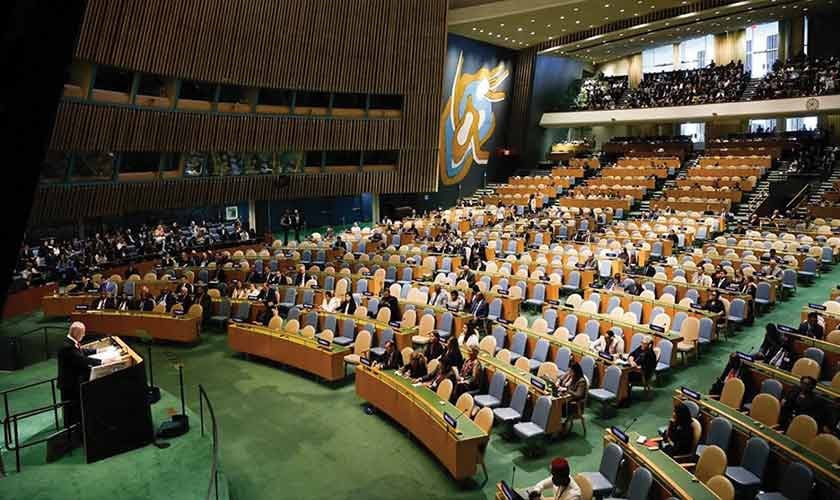
The United Nations 80th General Assembly should have been the stage to discuss the future of peace in the age of artificial intelligence. Sadly, it turned out to be one of the most divisive sessions, dominated by Palestine rather than Israel. The gathering proved that Palestine cannot be brushed aside as an idea, even if a world power stands firmly behind Israel.

Not many member states were eager to listen to Israeli Prime Minister Benjamin Netanyahu at the United Nations General Assembly in New York on September 26—not least Hamas, the enemy he has been obsessed with for the last two years. Netanyahu tried his best to address Hamas directly amid a boycott of his speech.

The biased Western media counted the boycotters in dozens, even as Netanyahu spoke to an almost empty United Nations General Assembly Hall. Diplomats from Arab and Muslim countries walked out, joined by counterparts from several African and some European countries.

The Israeli leader claimed that his intelligence had hacked cell phones across Gaza and used them to broadcast his speech. However, he had nothing new to tell the world or Hamas. He only demanded—for the umpteenth time—the immediate release of the remaining hostages.

Israel claims to be one of the world’s biggest technological forces, especially regarding military use. Fully backed by an even mightier United States, Israel has showcased some of its military gimmicks, like exploding pagers. So why, despite their military muscle and technological superiority, have they failed to secure the release of the remaining hostages?

How can they hope to achieve the even more ambitious target of eliminating Hamas?

Of the 48 hostages left in Gaza, Netanyahu says 20 may still be alive. Despite being focused on a 41-kilometer stretch of land for two years, his high-tech drones and well-armed ground forces have been unable to secure their release. Netanyahu has vowed he will not rest until all hostages have been brought home.

During his speech, the lapel of the Israeli leader’s suit carried a large white badge displaying a QR code. He encouraged people to zoom in and access the code, which leads to a website about the Hamas attacks on October 7, 2023. This seemed to be an attempt to promote the perception that he remains obsessed with achieving the target he set some 730 days ago.

However, the world remains confused about his ultimate objective: is it finishing Hamas, killing all Palestinians, or creating Greater Israel?

The gimmickry continued in New York. According to Netanyahu’s office, they launched a public diplomacy campaign in New York City, organizing billboards and trucks displaying the message “Remember October 7” in Times Square and around the UN building.

Despite these efforts, Pew Research Center’s April 2025 report reveals that support for Israel among Americans has dropped significantly since the start of the Gaza war.

At the world’s biggest forum, Netanyahu stood exposed and more isolated than ever before. His policy inflexibility has forced some of his past allies to abandon him. A growing number of Western countries have found no other option but to recognize Palestinian statehood. Countries such as the United Kingdom, Canada, Australia, Portugal, and France have taken this belated decision—much to Netanyahu’s displeasure.

A few days before his appearance, on September 12, a vote took place in the UN General Assembly Hall. Out of 193 UN member states, amid resounding applause, 142 voted in favor of a declaration on the peaceful settlement of the question of Palestine and the implementation of the two-state solution with Israel.

The New York Declaration was the outcome of an international conference held in July at UN Headquarters, organized by France and Saudi Arabia. Ten nations, including Israel and the United States, opposed the declaration. The other eight countries opposing were Argentina, Hungary, Micronesia, Nauru, Palau, Papua New Guinea, Paraguay, and Tonga. Twelve nations abstained during the vote.

This shows how limited support Tel Aviv is left with.

Netanyahu’s diminishing support is not just about countries; it reflects a more fundamental change in American public opinion. According to Pew Research Center’s April 2025 report, support for Israel among Americans has dropped significantly since the start of the Gaza war. Only 54 percent of Americans now say that the Israeli-Palestinian war is relevant to them, an 11-point drop from 65 percent in January 2024. The percentage of people who believe the war is significant to U.S. national interests has also declined from 75 percent to 66 percent over the same period.

The U.S., Israel’s staunchest ally, is showing signs of fatigue. Former President Donald Trump stated earlier that any attempt by Israel to annex parts of the West Bank would be a red line for him.

Netanyahu still seems not to have grasped the message Western nations wanted to send: that enough is enough; Israel cannot have an indefinite license to kill; there are limits, and those limits have been crossed.

His speech, full of spin and allegations of anti-Semitism, was not heard by many. He is now isolated. The sooner he realizes this, the better it may be for him and for world peace.

According to Gaza’s Health Ministry, since October 7, 2023, over 65,000 Palestinians have been killed. The question now is: how much more killing is needed?

Netanyahu’s speech lacked a roadmap. For those hoping for world peace, that was the most alarming element.
https://www.thenews.com.pk/tns/detail/1348318-no-method-to-netanyahus-madness

No method to Netanyahu’s madness

The United Nations 80th General Assembly should have been the stage to discuss the future of peace in the age of artificial intelligence. Sadly, it turned out to be one of the most divisive sessions, dominated by Palestine rather than Israel. The gathering proved that Palestine cannot be brushed aside as an idea, even if you have a world power at your back.

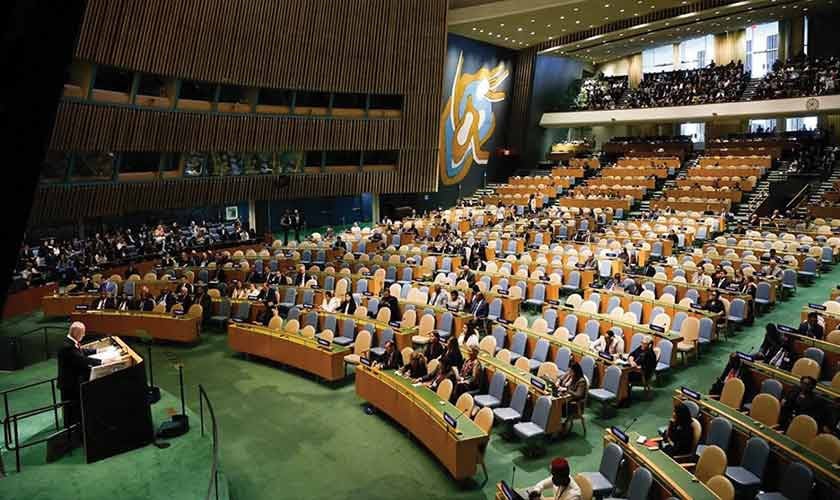
Not many member states were eager to listen to Israeli Prime Minister Benjamin Netanyahu at the United Nations General Assembly in New York on September 26—especially Hamas, the enemy he has been obsessed with for the last two years. Netanyahu tried his best to address Hamas directly amid a boycott of his speech. However, the biased Western media counted the boycotters in dozens, even as Netanyahu spoke to an almost empty United Nations General Assembly Hall after diplomats from Arab and Muslim countries walked out, along with counterparts from several African and some European countries.

The Israeli leader claimed that his intelligence had hacked cell phones across Gaza and used them to play his speech. Despite this dramatic claim, he had nothing new to tell the world or Hamas. He only demanded—for the umpteenth time—the release of the remaining hostages.

Israel claims to be one of the world’s biggest technological forces in terms of military use and is fully backed by the mightier United States. We have seen some of their gimmicks—exploding pagers, for instance. So why, despite their military muscle and technical superiority, have they failed to secure the release of the remaining hostages? How can they achieve the even more ambitious target of eliminating Hamas?

Of the 48 hostages left in Gaza, Netanyahu says 20 may still be alive. Despite focusing on a 41-kilometre stretch of land for two years, his high-tech drones and well-armed ground forces have been unable to secure their release. The Prime Minister has vowed that he will not rest until all hostages have been brought home.

In a notable gesture, the lapel of Netanyahu’s suit bore a large white badge displaying a QR code. He encouraged people to scan it, which leads to a website about the Hamas attacks on October 7, 2023. This appears to be an attempt to promote the perception that he remains obsessed with achieving the target he set himself around 730 days ago. However, the world remains confused about his ultimate objective: finishing Hamas, killing all Palestinians, or creating Greater Israel.

The gimmickry continued in New York. According to Netanyahu’s office, a public diplomacy campaign was organized in New York City, featuring billboards and trucks displaying the message: “Remember October 7” in Times Square and around the UN building.

Meanwhile, public support is shifting. According to Pew Research Center’s April 2025 report, support for Israel among Americans has dropped significantly since the start of the Gaza war. Despite all the political maneuvering, Netanyahu stood exposed at the world’s biggest forum, more isolated than ever. His policy inflexibility has forced some of his past allies to abandon him, and a growing number of Western countries feel compelled to recognize Palestinian statehood.

Countries like the United Kingdom, Canada, Australia, Portugal, and France have taken belated steps to recognize Palestine, much to Netanyahu’s displeasure. A few days before his appearance, on September 12, a vote took place in the UN General Assembly Hall. Out of 193 UN member states, 142 voted in favor of a declaration on the peaceful settlement of the question of Palestine and the implementation of the two-state solution with Israel amid resounding applause.

The “New York Declaration” was the outcome of an international conference held in July at UN Headquarters, organized by France and Saudi Arabia. Ten nations, including Israel and the United States, opposed the declaration. This clearly shows how limited support Tel Aviv now enjoys. The other eight countries opposing were Argentina, Hungary, Micronesia, Nauru, Palau, Papua New Guinea, Paraguay, and Tonga. Twelve countries abstained from the vote.

Netanyahu’s diminishing support is not just about countries; it reflects a more fundamental change in American public opinion. Pew’s April 2025 report highlights that only 54 percent of Americans now say the Israeli-Palestinian war is relevant to them—a drop of 11 points from 65 percent in January 2024. Those who believe the war is significant to US national interests have declined from 75 percent to 66 percent over the same period.

The United States, Israel’s staunchest ally, is showing signs of fatigue. Former President Donald Trump stated that any attempt by Israel to annex parts of the West Bank would be a red line for him.

Despite all these signals, Netanyahu has yet to grasp the message Western nations sent through the rising recognition of Palestinian statehood: enough is enough. Israel cannot have an indefinite license to kill. There is a limit—and it has been crossed.

His speech, full of spin and allegations of anti-Semitism, went largely unheard. He is now isolated, and the sooner he realizes this, the better it may be for him—and for world peace.

According to Gaza’s Health Ministry, since October 7, 2023, over 65,000 Palestinians have been killed. The question now remains: how much more killing is needed?

Netanyahu’s speech lacked a roadmap. For those rooting for world peace, that is the most alarming element of all.
https://www.thenews.com.pk/tns/detail/1348318-no-method-to-netanyahus-madness

No method to Netanyahu’s madness

The United Nations 80th General Assembly should have been a stage to discuss the future of peace in the age of artificial intelligence. Sadly, it turned out to be one of the most divisive sessions, dominated by Palestine rather than Israel. This gathering proved that Palestine cannot be brushed aside as an idea, even when backed by a world power.

Not many member states were eager to listen to Israeli Prime Minister Benjamin Netanyahu at the United Nations General Assembly in New York on September 26 — not least Hamas, the enemy he has been obsessed with for the last two years. Netanyahu tried his best to address Hamas directly, despite a boycott of his speech.

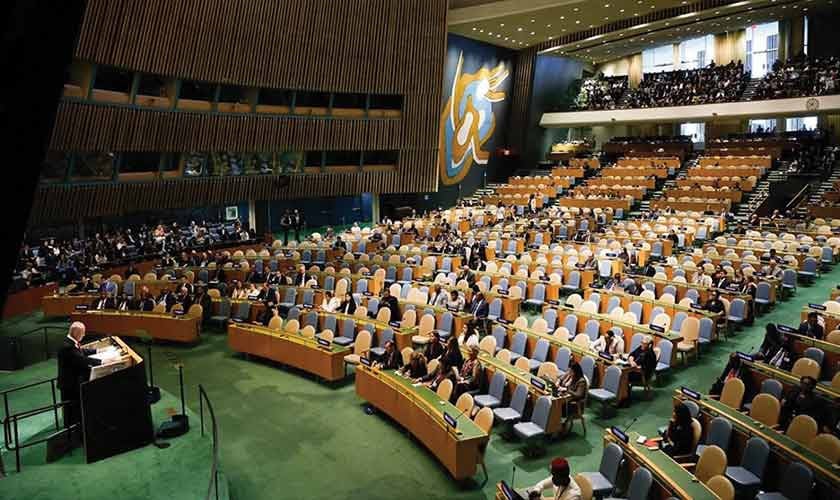
The biased Western media counted the boycotters in dozens, even as Netanyahu spoke to an almost empty General Assembly Hall. Diplomats from Arab and Muslim countries walked out, joined by counterparts from several African and some European nations. The Israeli leader claimed that his intelligence agencies had hacked cell phones across Gaza and used them to broadcast his speech. However, he offered nothing new to the world or to Hamas. He only demanded, for the umpteenth time, the immediate release of the remaining hostages.

Israel claims to be one of the world’s leading technological powers, especially in military applications. It enjoys full backing from the mightier United States. We have seen some of their high-tech gimmicks—exploding pagers, for instance. So why, despite this military muscle and technical superiority, have they failed to secure the release of the remaining hostages? And how can they hope to achieve the even more ambitious goal of eliminating Hamas?

Of the 48 hostages left in Gaza, Netanyahu says 20 may still be alive. Despite focusing on the narrow 41-kilometre stretch of land for two years, his high-tech drones and well-armed ground forces have been unable to rescue them. Netanyahu has vowed that he will not rest until all hostages have been brought home.

During his address, the Israeli leader wore a large white badge on his lapel displaying a QR code. He encouraged the audience to scan it, linking to a website about the Hamas attacks on October 7, 2023. This seemed to be an attempt to promote the perception that he remains obsessed with the objective he set nearly 730 days ago.

However, the world remains confused about his ultimate goals: Is it finishing Hamas, killing all Palestinians, or creating Greater Israel? The gimmickry continued in New York. Netanyahu’s office organized a public diplomacy campaign in the city, including billboards and trucks displaying the message: “Remember October 7” in Times Square and near the UN building.

Meanwhile, support for Israel among Americans has dropped significantly since the start of the Gaza war. According to Pew Research Center’s April 2025 report, Netanyahu appeared more isolated than ever at the world’s biggest forum. His policy inflexibility has alienated some former allies. A growing number of Western countries feel compelled to recognize Palestinian statehood.

Countries such as the United Kingdom, Canada, Australia, Portugal, and France have made this belated decision, much to Netanyahu’s displeasure.

Just days before his appearance, on September 12, a vote took place at the UN General Assembly. Out of 193 member states, 142 voted in favor of a declaration calling for the peaceful settlement of the Palestinian question and the implementation of a two-state solution with Israel. The “New York Declaration” was a result of an international conference held at UN Headquarters in July, organized by France and Saudi Arabia.

Ten nations, including Israel and the United States, opposed the declaration. The other eight opposing countries were Argentina, Hungary, Micronesia, Nauru, Palau, Papua New Guinea, Paraguay, and Tonga. Twelve nations abstained from the vote. This outcome clearly shows the limited support Tel Aviv currently enjoys.

Netanyahu’s diminishing support is not limited to countries—it reflects a fundamental shift in American public opinion. The Pew Research Center’s report highlights that only 54 percent of Americans now say the Israeli-Palestinian war is relevant to them, marking an 11-point drop since January 2024. Moreover, those who believe the conflict is significant to U.S. national interests have decreased from 75 to 66 percent.

The United States, Israel’s staunchest ally, is showing signs of fatigue. Former President Donald Trump declared that any Israeli attempt to annex parts of the West Bank would be a red line for him. Despite these signals, Netanyahu has yet to grasp the message Western nations are sending through long-overdue recognition of Palestinian statehood: enough is enough. Israel cannot have an indefinite license to kill; there are limits—and those limits have been crossed.

His speech, filled with spin and allegations of anti-Semitism, went largely unheard. Netanyahu is increasingly isolated, and the sooner he realizes this, the better it may be—for him and for world peace.

According to Gaza’s Health Ministry, since October 7, 2023, over 65,000 Palestinians have been killed. The pressing question remains: How much more killing is needed?

Above all, Netanyahu’s speech lacked a clear roadmap. For those rooting for peace, that absence was the most alarming element of all.
https://www.thenews.com.pk/tns/detail/1348318-no-method-to-netanyahus-madness

Exit mobile version
Sitemap Index