公明代表、企業献金規制強化を 臨時国会、「野党案も選択肢」


title: 公明代表、企業献金規制強化を臨時国会で推進 「野党案も選択肢に」
date: 2025-10-12 11:14
categories: 政治

公明党の斉藤鉄夫代表は12日、企業・団体献金の規制強化に関する政治資金規正法改正案について、「できるだけ早く、次の臨時国会でも各党合意が得られれば成立させるべきだ」と東京都内で記者団に述べました。

今回の改正案は、政党や政治家への企業献金をより厳しく規制することを目的としており、政治資金の透明性向上を図る狙いがあります。

斉藤代表は、比較第1党としての責任を強調し、「野党案も選択肢の一つとして検討しながら、幅広い合意形成を進めたい」と今後の対応方針を示しました。

政治資金規正法改正案の成立は、政治と企業の関係に対する国民の関心が高まる中、重要な課題となっています。各党の協力が期待されるところです。

※本記事は有料会員限定です。続きをご覧になりたい方は7日間無料トライアル(一日37円~)、または年払いプランをご利用ください。


https://www.nishinippon.co.jp/item/1410439/

Between languages and ladders

Summer ended on the first weekend of October. The morning was bright, embodying every cliché made for it, and the weather was cool enough for a walk. This is how I like Lahore: breathable, on my side for once, full of possibilities.

At this year’s Indus Conclave, there was something for everyone. For the environmentalists, just as smog season approaches; for the economists whose arguments should see past the confines of drawing-room walls; for literature enthusiasts hoping to continue to learn (long after our time), to never exit the endless, living conversation of our respective fields.

On entering Hall One in Alhamra, the first thing you saw was *A Gentle Apocalypse*, curated by Saher Sohail. It didn’t announce itself as an exhibition so much as a quiet arrangement of restlessness: a shrine-like cabinet lined with terracotta bowls of herbs and seeds, the glow of its rain-blue panels catching the eye immediately, painted hands caught mid-motion — praying, pleading, offering, perhaps all at the same time.

The wall text explaining the art installation spoke of progress as a double-edged sword: the promise of creation that’s shadowed by loss. There was no sound in the room despite the significant number of viewers, just the low hum of conversation and tyre screeches heard from outside. I lingered there longer than I meant to. There was something in the textures, the earth, the pigment, and the repetition of motifs that suggested the fragility of all systems built to last.

It felt like a prelude to the day’s conversations, though I didn’t know it then: that uneasy space between what must be preserved and what must evolve, between the languages we inherit and the ones we are still learning to use.

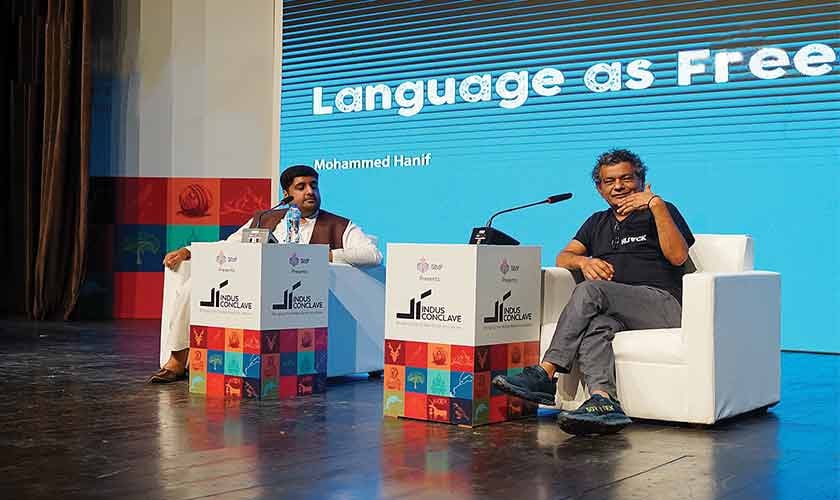
The first session I attended was on *Language as Freedom*, where Jasir Shahbaz spoke to Muhammad Hanif about his career as a novelist. With *A Case of Exploding Mangoes* and *Our Lady of Alice Bhatti*, Hanif has established himself as a stalwart of Pakistani fiction in English. The conversation sounded like an intimate reflection.

Here was a senior writer speaking to his once-student, who grew up speaking Punjabi, detoured into an English-medium education, and later returned to his mother tongue. He spoke of government schools and the slow shift to English-medium classrooms, of the early confusion of sitting through an hour-long lecture without understanding a single word.

English, for him, he said, was first an obstacle, but later a practice. Perhaps the novelist’s task is not to make things understood but to let them be said in whatever language allows them to exist.

Hanif reflected on how this generation became fluent in English literature yet distanced from its own. He said they could speak fluently but felt hollow. Some feelings, he said, cannot be translated. What followed was less confession than diagnosis: an entire country still measuring intellect by accent.

There was no bitterness in his tone, only irony, humour, and a peculiar tenderness. The writer spoke of returning to Punjabi through his YouTube vlogs after years of writing in English. He said he was driven not by nostalgia but necessity — a way to breathe again.

When he turned to teaching, he said, it was exhausting but also the only way to stay porous, to keep language alive through others.

If the first session was about a return, the second began with a departure.

Reading from her new novel, *A Splintering*, Dur-e Aziz Amna opened with a line that could have belonged to either writer: “So let my story begin with rage.” Her protagonist leaves the village for the city, trading mud for marble, faith for aspiration. The rain that falls on her first night in Karachi sounds, she says, like thunder, like the nuclear tests on television.

The conversation that followed traced the novel’s moral topography: class as aspiration, education as ticket and trap, gender as a multiplying rather than reflecting mirror.

Tara’s hunger for self-advancement, Amna noted, was admirable and frightening in equal measure. When does ambition become transgression? When does survival begin to look like betrayal?

These questions, too, refused to stay contained in fiction. They spoke to a middle class perpetually anxious about slipping: too cautious to risk falling, too constrained to truly rise.

“The middle,” she said, “is where you learn how much you can lose.”

Listening to her felt less like attending a literary discussion and more like being handed a mirror — one that showed how our social preoccupations quietly govern our moral choices.

Placed side by side, both sessions seemed to be in conversation with one another. One writer returned to his mother tongue; the other wrote in English but refused to over-explain Pakistan to outsiders.

Both resisted the colonial habit of simplification. Both understood that to write from here is to inhabit contradiction: to long for a wider audience and yet distrust its gaze; to carry one’s native language like a hidden rhythm beneath every English sentence.

If Hanif found refuge in humour, Amna sought clarity in anger. One built bridges through translation; the other tore them down to expose what translation conceals.

Their concerns converged on education, mobility, and the fragility of self-expression in a country still divided by language.

What emerged was a portrait of the writer not as oracle but as witness — one who records the everyday negotiations between privilege and belonging.

Both spoke, too, of teaching: of younger writers afraid to be funny, afraid to sound local.

Their advice was the same, though phrased differently: to write as one truly is, not as one thinks a writer should sound.

I had to leave early. Outside, Lahore was already shifting into a haze; people were queuing up for chips, for samosas; a group of students was singing Nusrat Fateh Ali Khan with a guitar.

Had I left with a better understanding than when I entered? Is that the job of a novelist: to have their readers understand?

Perhaps not; perhaps the novelist’s task is not to make things understood but to let them be said in whatever language allows them to exist.
https://www.thenews.com.pk/tns/detail/1350024-between-languages-and-ladders

平和賞受賞者流出、スパイ活動か ノーベル研究所所長が言及

国際平和賞受賞者流出、スパイ活動か
ノーベル研究所所長が言及
2025年10月12日 8:54 (2025年10月12日 8:55 更新)
※有料会員限定記事

【ロンドン共同】
今年のノーベル平和賞の受賞者が事前に外部に漏れていた疑惑について、ノーベル賞委員会の補佐機関であるノーベル研究所(オスロ)のハルプビケン所長は、国や組織によるインターネット上の「スパイ活動」が関与している可能性を示唆しました。

この記事は有料会員限定です。
残り369文字。7日間無料トライアル、1日37円で読み放題。年払いならさらにお得です。
https://www.nishinippon.co.jp/item/1410415/

横綱豊昇龍らロンドンへ出発 「これが大相撲」と抱負

スポーツ|横綱豊昇龍らロンドンへ出発 「これが大相撲」と抱負

(更新 )

大相撲のロンドン公演(10月15日~19日)に向け、横綱豊昇龍、小結高安ら一行が12日、羽田空港から出発しました。

豊昇龍は「横綱として責任が重い。しっかりやっていく。これが大相撲なんだというのを見せたい」と抱負を述べました。

※この記事は有料会員限定です。残り269文字。7日間無料トライアル、1日37円で読み放題。年払いならもっとお得。

https://www.nishinippon.co.jp/item/1410437/

小林氏「公明は政策パートナー」 自民政調会長


title: 小林氏「公明は政策パートナー」 自民政調会長
date: 2025-10-12 12:25
categories: 政治

自民党の小林鷹之政調会長は12日放送のBSテレ東番組で、連立を離脱した公明党と政策面で引き続き協力していくと強調しました。

小林氏は「重要な政策パートナーであることは変わらない」と述べました。
番組は10日に収録されたものです。

※この記事は有料会員限定です。
残り94文字をご覧いただけます。
7日間無料トライアル、1日37円で読み放題。年払いならさらにお得です。
https://www.nishinippon.co.jp/item/1410452/

France: 60-year-old ex-firefighter commits robbery to visit grandson in prison

**Bizarre Acts of Love: A Retired Firefighter’s Desperate Robbery**

Adding to the list of bizarre things people have done for love is the story of a 60-year-old retired firefighter with no prior criminal record who entered a supermarket near a local police station. Wearing a balaclava over his mouth and brandishing a firearm, he demanded all the money in the supermarket. Oddly, he also helped himself to a piece of Emmental cheese and some wine before being arrested.

What makes this incident truly unusual is the man’s calm demeanor when he walked with the police to their car, seemingly wanting to be arrested. It later emerged that his motives were heartbreaking rather than criminal.

According to an interview with his court-appointed lawyer, the man was desperate — he didn’t even want the money. All he wished was to see his grandson or at least be allowed to go on a walk with him. The lawyer revealed that the man was heartbroken after seeing his grandson in a waiting room with a broken tooth, a result of being molested by inmates.

The 60-year-old was prosecuted for armed robbery, aggravated assault, and rebellion. He pled guilty, but his circumstances deeply moved everyone involved, including the judge. Ultimately, the judge ruled that the man acted out of desperation and spared him from the typical three to five years of prison.

In the end, the man was ordered to compensate the victims of the robbery, undergo psychological treatment, and was banned from visiting the supermarket he robbed. Importantly, he retained the legal right to visit his grandson without being incarcerated. This story appears to have a hopeful resolution for all parties involved.

**Invite-Only Burger: The World’s Most Expensive Burger**

While burgers are generally popular as pocket-friendly meals, burger prices are on the rise — but nothing like the $11,000 burger served at the Asador Aupa restaurant in Spain. This exclusive burger, costing approximately Rs 97 lakh, is the result of eight years of research and experimentation by the chefs and remains a closely guarded secret.

Unlike typical food joint burgers, this gourmet creation is not listed on the restaurant’s menu. The owner explains that their concept was that luxury doesn’t need to be flashy but rather unattainable. As such, diners must be invited to try this burger.

The restaurant’s website states: *“If you think you should be on the list, you can request it and the request will be processed.”* The exclusivity surrounding this high-priced burger — with no gimmicks, just high-quality ingredients — is certainly fascinating.

**It’s a Mall World: A Shared Dream Phenomenon on Reddit**

Reddit users have been bonding over a strange shared experience: many of them report having dreams set in the same mall-like environment. Although the events within the dreams vary, the similarity of the setting has sparked curiosity and even conspiracy theories.

To discuss this phenomenon, Redditors have created dedicated spaces where people share their dream experiences related to this “mall world,” fueling speculation about the collective subconscious or other unexplained causes.

**Who Let the Frogs In? A Painful Misguided Remedy**

In China, a woman suffering from back pain turned to an unusual and dangerous folk remedy she heard — swallowing live frogs to cure joint pain. Acting on the rumor, she swallowed eight live frogs.

Unfortunately, this extreme measure led to severe health problems, including multiple parasitic infections and blood disorders. This case serves as a cautionary tale against blindly following unverified remedies or rumors when it comes to health treatments.

**Raw-Dogging Boredom: Gen Z’s New Screen Detox Trend**

In a surprising new trend, Gen Z has found a novel method to reduce screen time — by doing absolutely nothing. This challenge, popularized on TikTok, involves staring blankly without any entertainment, sleep, or distraction, simply enduring boredom.

Nicknamed “raw-dogging boredom,” this practice could unexpectedly help teens manage their screen addiction and improve their attention spans. Whether it becomes a lasting remedy for digital overload remains to be seen, but it’s a unique approach to tackling modern life’s screen-heavy habits.
https://www.mid-day.com/news/world-news/article/france-60-year-old-retired-fire-fighter-robs-supermarket-to-see-grandson-in-jail-23598300

万博来場者2500万人突破 閉幕へ、次回はサウジ

社会・くらし

万博来場者2500万人突破、閉幕へ 次回はサウジ開催

2025年10月12日 9:59(10:01更新)
※この記事は有料会員限定記事です

大阪・関西万博会場の夜景=11日午後、大阪市此花区の夢洲にて

日本国際博覧会協会(万博協会)は12日、大阪・関西万博の一般来場者数が11日時点の推計値で2,508万人に達したと発表しました。

「いのち輝く未来社会のデザイン」をテーマに、158カ国・地域が一堂に会した祭典は、まもなく閉幕を迎えます。

次回の万博はサウジアラビアでの開催が予定されています。

※この記事の続きをご覧いただくには、有料会員登録が必要です。7日間無料トライアルも実施中。1日あたり37円で読み放題、年払いならさらにお得です。
https://www.nishinippon.co.jp/item/1410427/

Magnificent Markhal village of Talagang

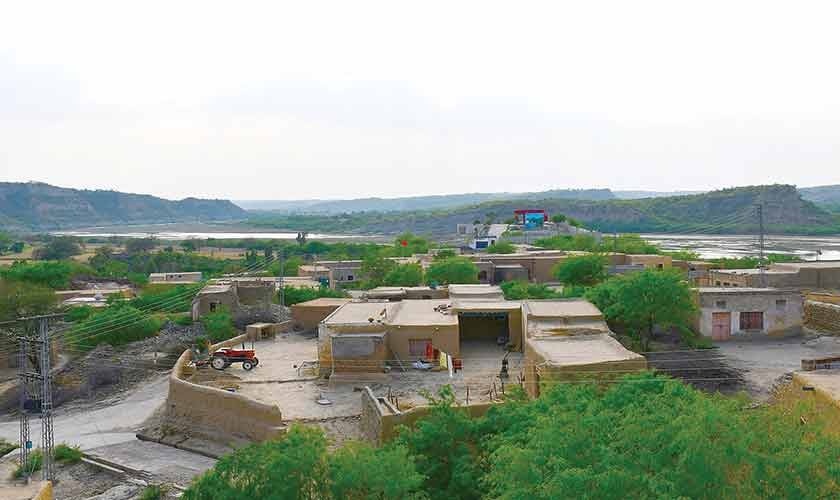
Arkhal is a remote village in Chakwals Talagang tehsil, located on the left bank of the Soan River, approximately 42 kilometres northwest of Talagang town. From the surrounding hills, one can enjoy a beautiful view of the village and the Soan River. Its picturesque setting between the Soan River and the Qavala Nullah makes Arkhal one of the most magnificent villages in the Talagang region. Mud-plastered houses juxtaposed against the hills and the Soan River turn this village into a marvel of Talagang.

Despite its natural beauty, the village faces significant challenges, including a lack of basic healthcare facilities and the absence of a higher secondary school for girls. Arkhal is also noted for its shrines, historic mosque, and tombstones, which reflect the rich cultural heritage of the area.

### Visit to Arkhal Village

I visited Arkhal village with my friend, Tariq Mehmood Malik, a historian and author familiar with the history and heritage of every village in the area. Many of these villages face economic difficulties. In Arkhal, we interviewed several residents about the Jamia Masjid, shrines, and tombstones.

### Jamia Masjid Noorani

During the interviews, I learned that the Jamia Masjid Noorani is the oldest mosque in the village. It was probably built when the village was founded. Originally a small mosque, it was later renovated and expanded. According to Qari Umer Bilal Awan Mairvi, the current pesh-imam of the mosque, the mosque was rebuilt around 1930.

Stone brought from the nearby Arkhal hill was dressed and used in the mosque’s construction. The site from where the stone was extracted was called Kali Watey Wali Jagah. Villagers themselves carried the stone over. Two eminent masons of Arkhal, Mian Muhammad and Baba Gul Muhammad, constructed the mosque.

Stone was the main building material in pre-Partition buildings in most villages in Talagang tehsil. Mosques, mansions, and temples in the area were all built of stone, which was readily available from tributaries of the Soan River.

Although the mosque was rebuilt relatively recently, some original features remain. The western boundary wall is part of the original construction, built using both small and large dressed and undressed stone slabs by Mistri Mian Muhammad and Mistri Baba Gul Muhammad.

In addition, the mosque retains one of its original wooden doors, decorated with geometric and floral patterns. Both the lower and upper sections of the door feature geometric patterns, while the upper part includes bell-shaped designs. These patterns are also found in carved wooden doors of several old havelis and mosques in the Pothohar region.

### Similar Architectural Features in the Region

Wooden doors with similar patterns can be observed in stone-built mosques in Chakwal. Two mosques featuring bell-shaped patterns are located in Vahali and Haral village in Choa Saidan Shah tehsil. Both were constructed by Mistri Sher Muhammad, the most celebrated mason in Chakwal district, who hailed from Takiya Shah Murad village near Khanpur and inspired many masons in both Jhelum and Chakwal.

Jamia Masjid Noorani once had a wooden ceiling that was removed during reconstruction. Mosques in Talagang, constructed in the 19th and 20th centuries, often featured distinctive elements like wooden doors and ceilings. Some of the most impressive wooden ceilings can still be found in:

– The Shahi Jamia Masjid of Khichi village
– Jamia Masjid Farooq-i-Azam of Singwala village
– Jamia Masjid of Jasial village

### Historic Mosques in the Region

**Khichi (Khichian)** is a historic settlement in Talagang tehsil, about 27 kilometres from Talagang city on the Talagang-Khushsab Road. The village is famous for its Mughal-era mosque built in the second quarter of the 18th century. This mosque features remarkable inscriptions, wooden doors, pillars, and ceilings. The main prayer hall is covered with a wooden roof resting on decorative pillars featuring various floral designs.

There are four decorative pillars attached to the eastern wall; a similar number was likely on the western wall, indicated by volutes now concealed within the wall. Each pillar has a single volute carrying floral patterns.

Similar wooden ceilings and pillared halls can be seen in the Jamia Masjid of Chawli, Chakwal, and the Jamia Masjid in Maria Sharif, Pindi Gheb.

**Jasial** is another village notable for its magnificent Jamia Masjid. It boasts a remarkable painted wooden ceiling that reflects the mastery of Talagang’s craftsmen.

The **Jamia Masjid Farooq-i-Azam** in Singwala village is also renowned for its exquisite paintings and woodwork. This mosque was built by Mistri Sirajuddin, a famous mason from Pachnand village in Lawa tehsil.

Such wooden ceilings were common in most stone-built mosques constructed in villages along the Soan River and its tributaries. Unfortunately, many mosques have been renovated or rebuilt, resulting in the removal of original wooden ceilings.

### Skilled Stone Carvers of Arkhal

The masons of Arkhal were also skilled stone carvers. Apart from the mosque, tombstones in the village cemetery attest to their craftsmanship.

The old village cemetery is located near the Government Girls Elementary School and contains several tombstones and cenotaphs marked by two tombstones on the northern and southern sides. These gravestones carry various floral and geometric designs, with notable representations of the musalla (prayer rug) and the lota (ewer). Some women’s graves have carved combs.

Similar decorative gravestones are found in many villages throughout Talagang tehsil. According to Sher Zaman Awan of Arkhal, most of these tombstones were engraved by Mistri Mian Muhammad, Mistri Baba Gul Muhammad, and Mistri Nur Akhmat.

### Shrines of Arkhal

There are four shrines in the village, two of which are located in the cemetery near the school.

The most popular shrine belongs to **Baba Pir Budhey Shah Hamdani**. According to Qari Umer Bilal Awan Mairvi, Baba Pir Budhey Shah Hamdani came from Chakrala village in Mianwali around 1925. This information was conveyed by his father, Fazl Ilahi, who was 97 years old at the time of his passing in 2018. Fazl Ilahi had thorough knowledge of the village’s history and heritage, including details about shrines, their masons, and even Hindu and Sikh shrines.

Baba Pir Budhey Shah Hamdani lived in the village for only four years before his death. Though his descendants wanted to bring his body back to Chakrala for burial, residents of Arkhal wished him to be buried there. His descendants agreed, and a beautiful tomb was built over his grave.

His *urs* (death anniversary) is held every March, featuring qawwali performances at the shrine, along with traditional sports and games such as bull races and kabaddi.

### Notable Residents and Sufi Affiliations

Through discussions with community members, I learned that Arkhal has produced two notable kabaddi players: Baba Sanwal Khan and Malik Jehangir Khan. Baba Sanwal Khan was a renowned kabaddi player and a devoted follower of the Maira Sharif darbar in Pindi Gheb.

Maira Sharif is famous for the shrine of Khwaja Ahmad, a deputy of Pir Pathan (d. 1850). Many residents of Arkhal follow Khwaja Ahmad Mairvi. Another notable disciple of Hazrat Sani (d. 1931), the first sajjada nashin of the Maira Sharif darbar, was Haji Suba Khan.

Today, many followers of the Maira Sharif Darbar identify with the suffix *Mairvi* as a sign of their Sufi affiliation. Maulvi Ahmed Mairvi was a disciple of Khawaja Faqir Muhammad Abdullah Mairvi (d. 1975). Moreover, Qari Umer Bilal Awan Mairvi follows Sahibzada Farooq Ahmed, the current sajjada nashin of the darbar of Khwaja Ahmad Mairvi.

### Other Shrines and Tribal Composition

Another shrine in the cemetery is dedicated to **Shah Chan Gilani**. The Awan tribe forms the majority of the village population. There are also a few households of Gilani Sadat in Arkhal.

The grave of **Baba Pir Charag Shah Gilani** is located in an enclosure that also contains the graves of his ancestors and descendants, signifying the historical and spiritual significance of the Gilani family in the village.

Arkhal’s rich blend of natural beauty, architectural heritage, and Sufi traditions paints a vivid picture of life in this remarkable Talagang village. Its unique stone and wood craftsmanship, historic mosques, shrines, and community stories continue to inspire those who explore its past and present.
https://www.thenews.com.pk/tns/detail/1350007-magnificent-markhal-village-of-talagang


ノーベル平和賞後に逝った被爆者の父、2世が語り部継承へ 長崎市の小峰英裕さん、「責任」胸に

長崎 社会 ノーベル平和賞後に逝った被爆者の父、2世が語り部継承へ

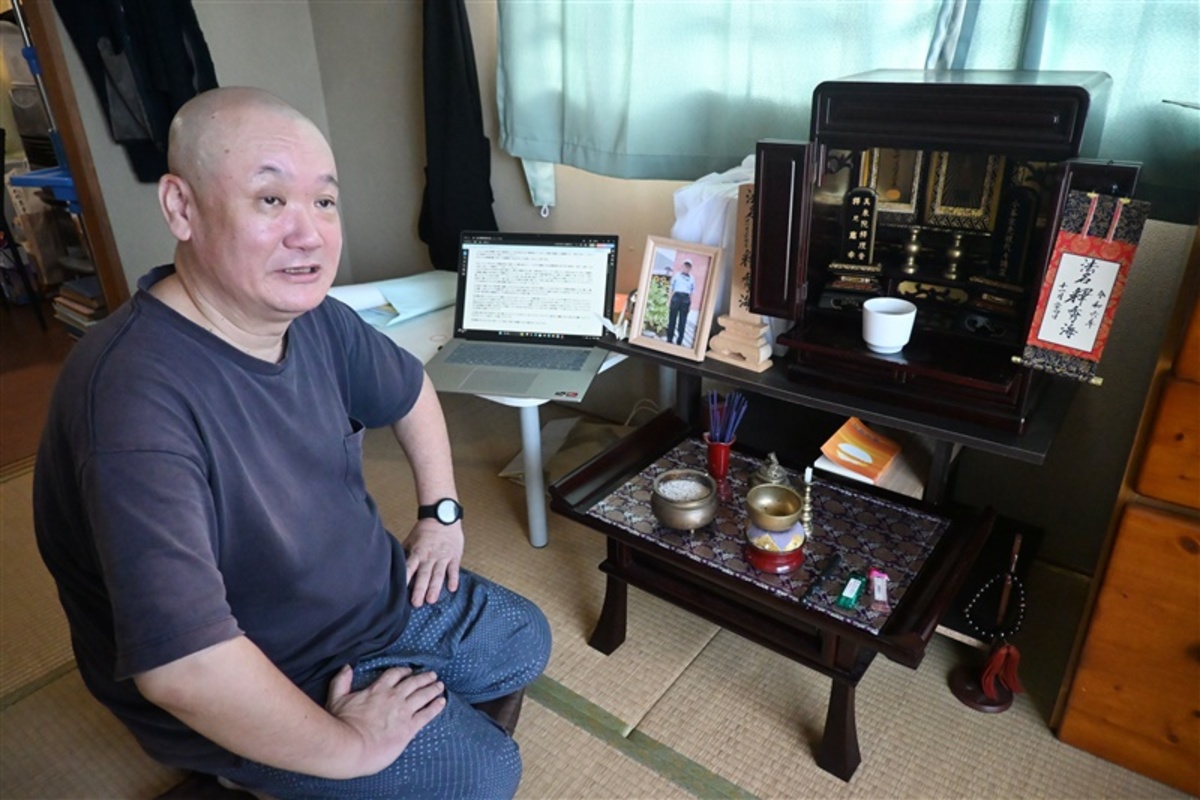
長崎市の小峰英裕さんは、「責任」を胸に、亡き父の被爆講話を受け継ごうと原稿を執筆している。写真は9月中旬、長崎市での様子。

日本原水爆被害者団体協議会(被団協)のノーベル平和賞受賞から11日で1年が経過した。この間、小峰さんは長年続けてきた講演活動をさらに広げ、被爆の実相と平和への願いを語り継いでいる。

被爆者の2世として、父の経験と声をしっかりと受け止め、その責任を強く感じている小峰さん。その思いは今後も次世代へと語り継がれていくことだろう。

(この記事は有料会員限定です。残り1161文字。7日間無料トライアル、1日37円で読み放題。年払いならさらにお得。)

https://www.nishinippon.co.jp/item/1410363/

W杯欧州予選ノルウェー6戦全勝 ハーランドが3得点

【スポーツ】W杯欧州予選ノルウェー、6戦全勝 ハーランドが3得点

(2025年10月12日 8:33 更新)

サッカーW杯予選のイスラエル戦でプレーするノルウェー代表のハーランド=11日、オスロ(ゲッティ=共同)

【ベルリン共同】サッカーの2026年ワールドカップ(W杯)北中米3カ国大会欧州予選は11日、各地で行われ、I組ではノルウェーがイスラエルに5―0で圧勝しました。これにより、ノルウェーは6戦全勝で勝ち点18を獲得しています。

注目のエルリング・ハーランドは、この試合で3得点を挙げ、チームの勝利に大きく貢献しました。

(この記事は有料会員限定です)
https://www.nishinippon.co.jp/item/1410413/

Exit mobile version
Sitemap Index